Second Warrant Agreement by General Physics Corp.
Overview of this form
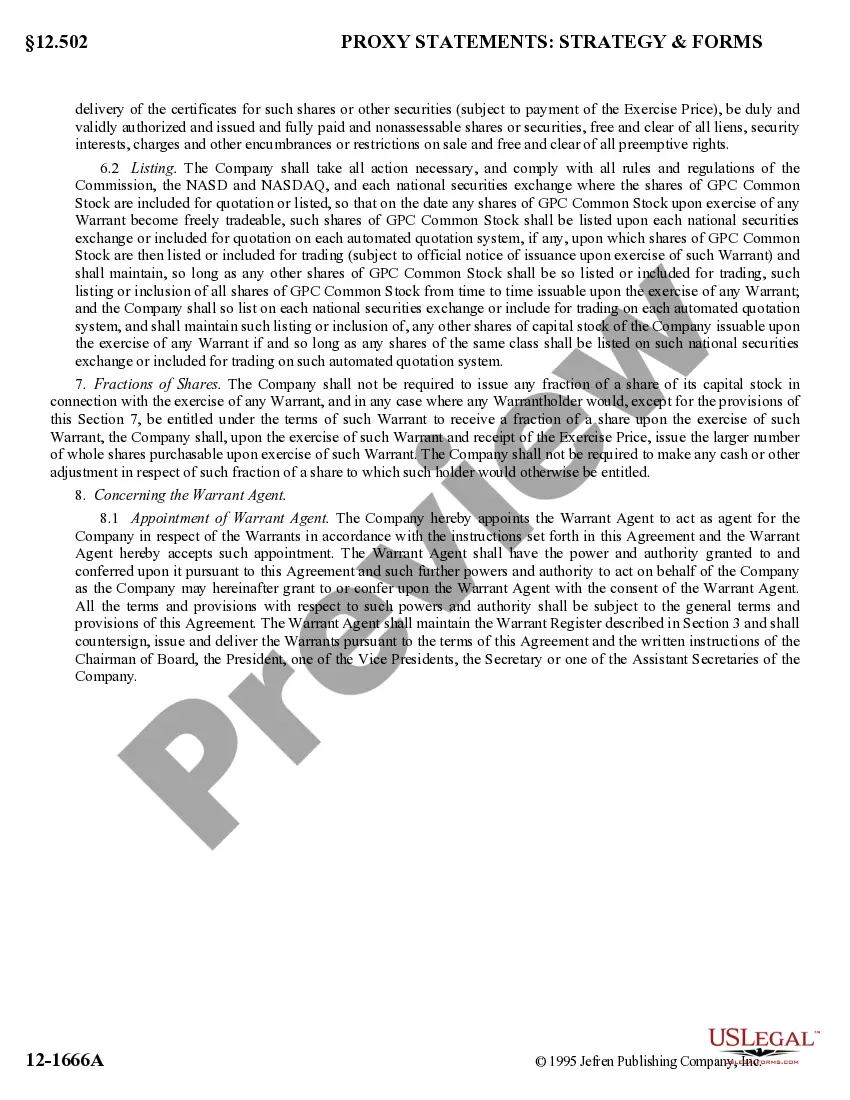
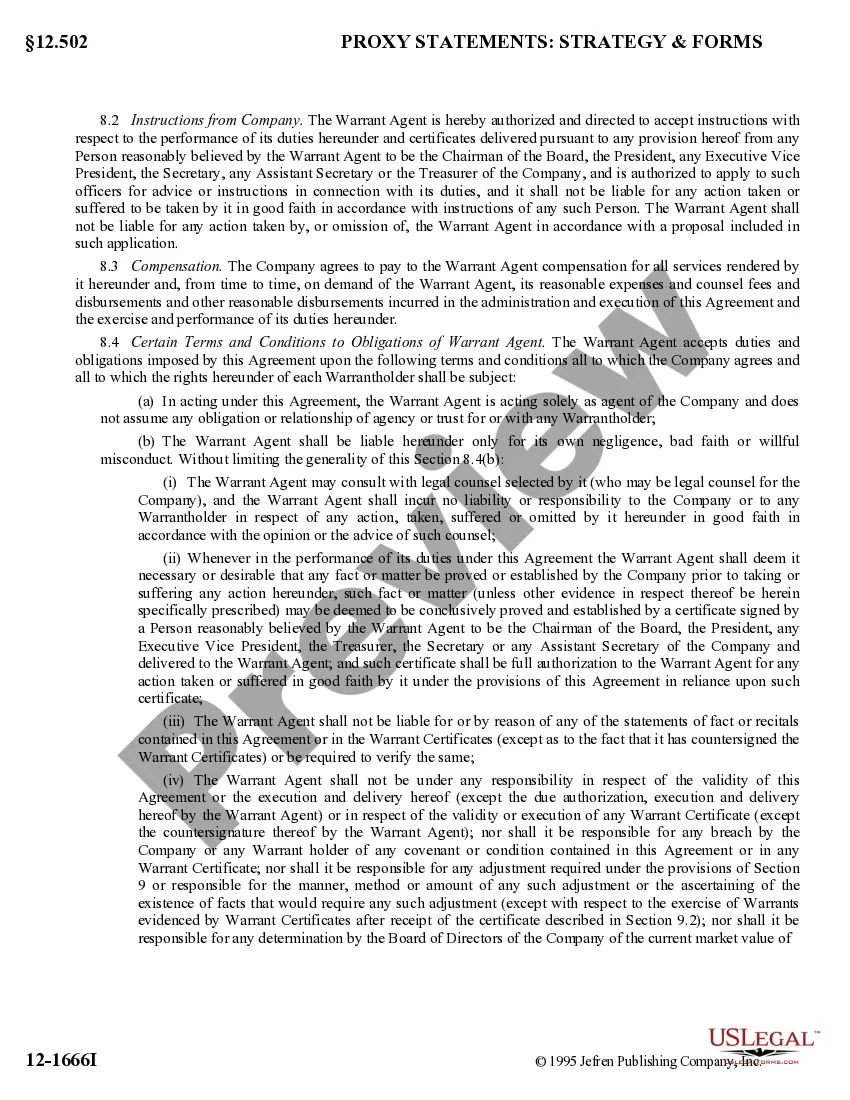
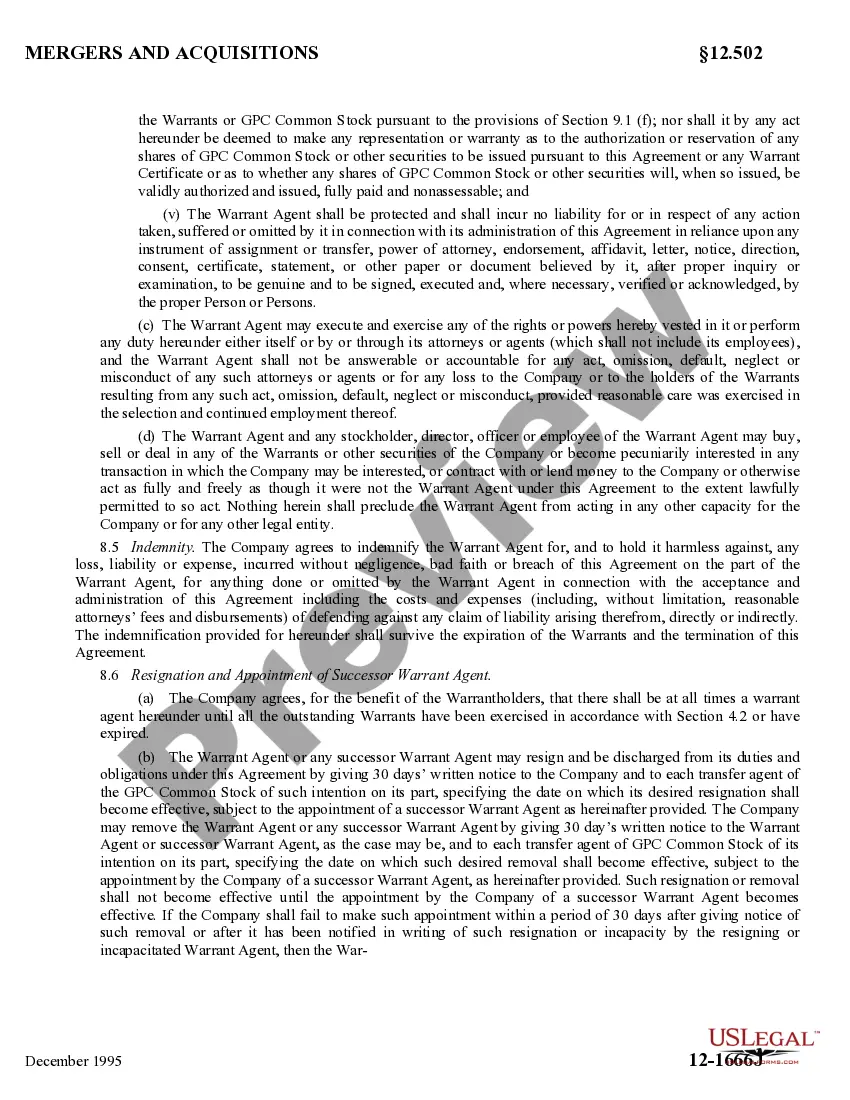
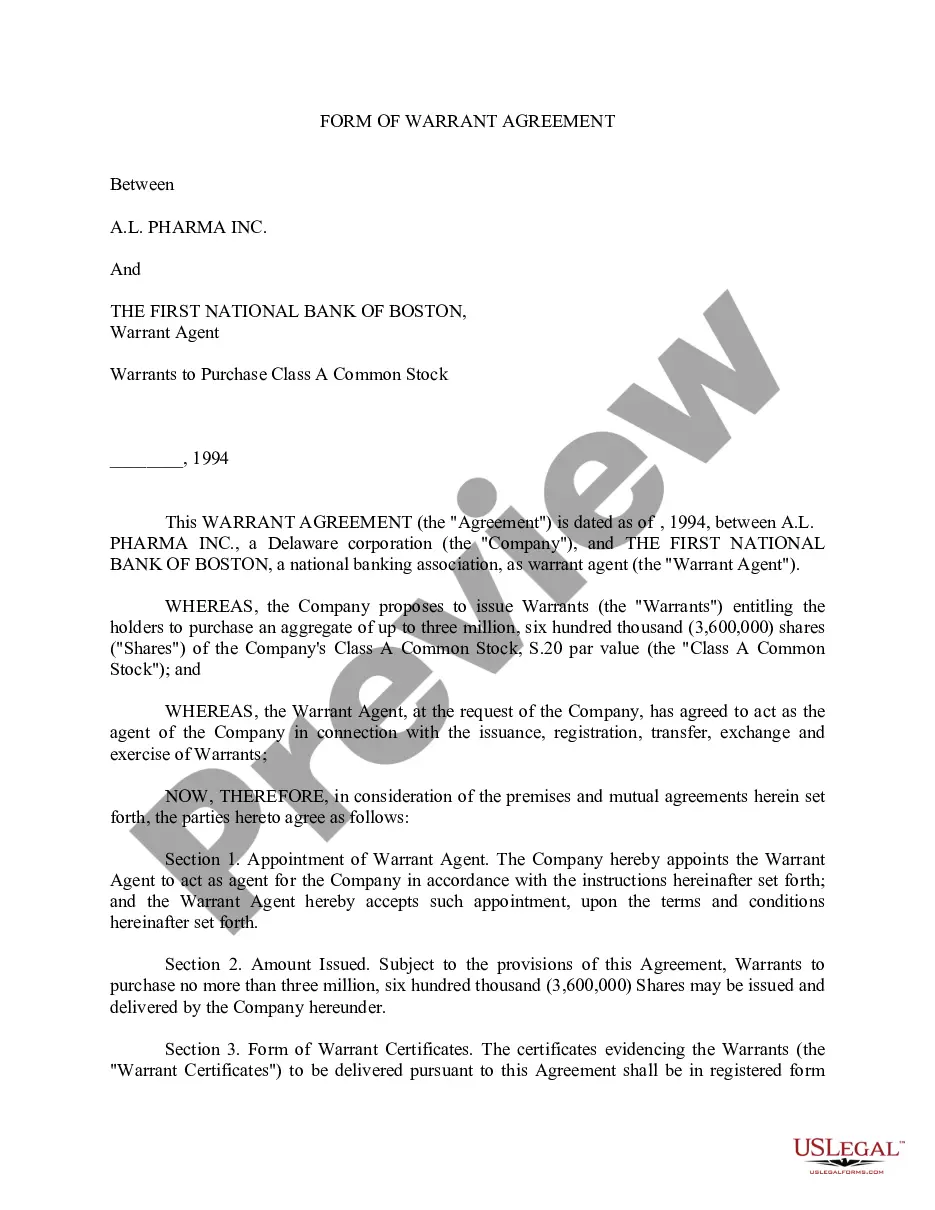
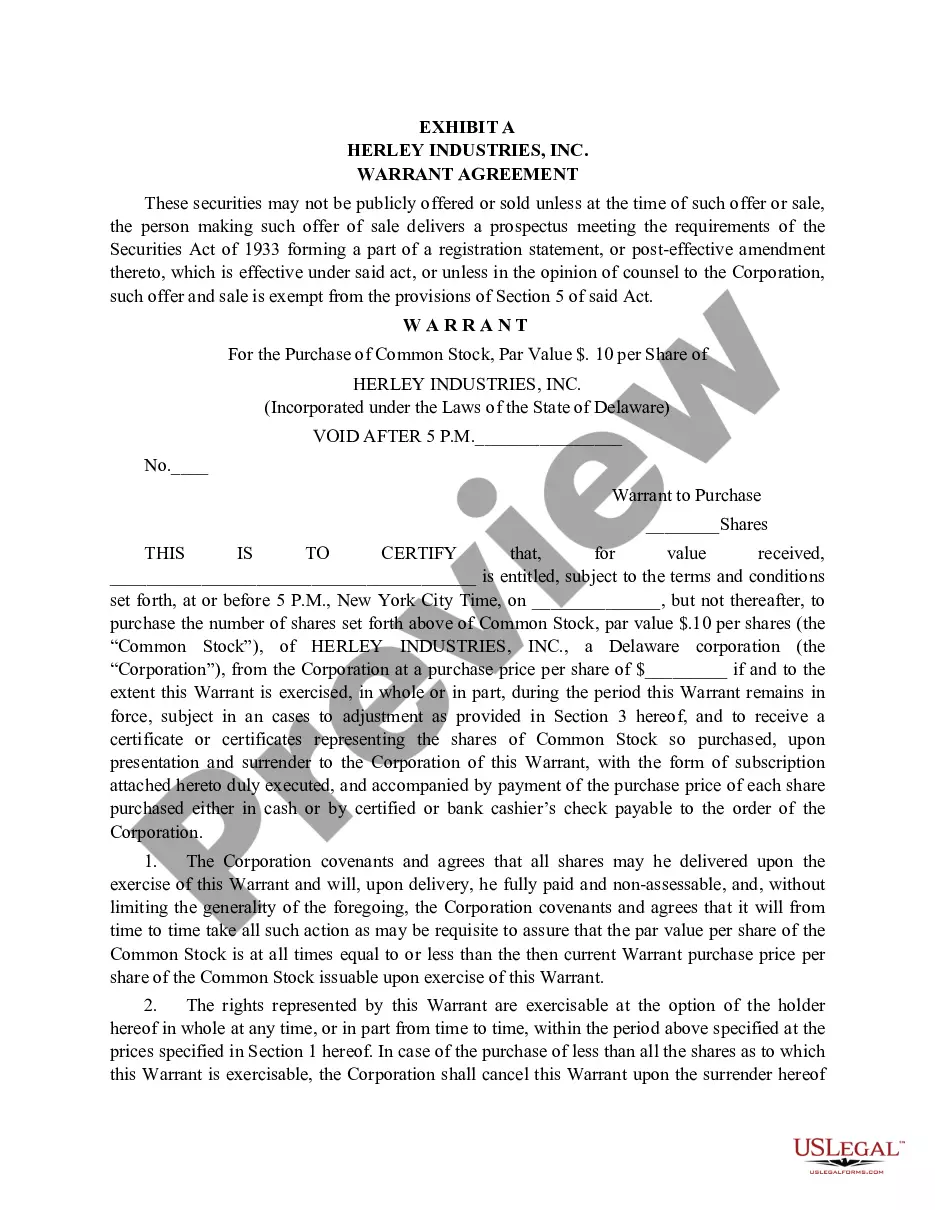
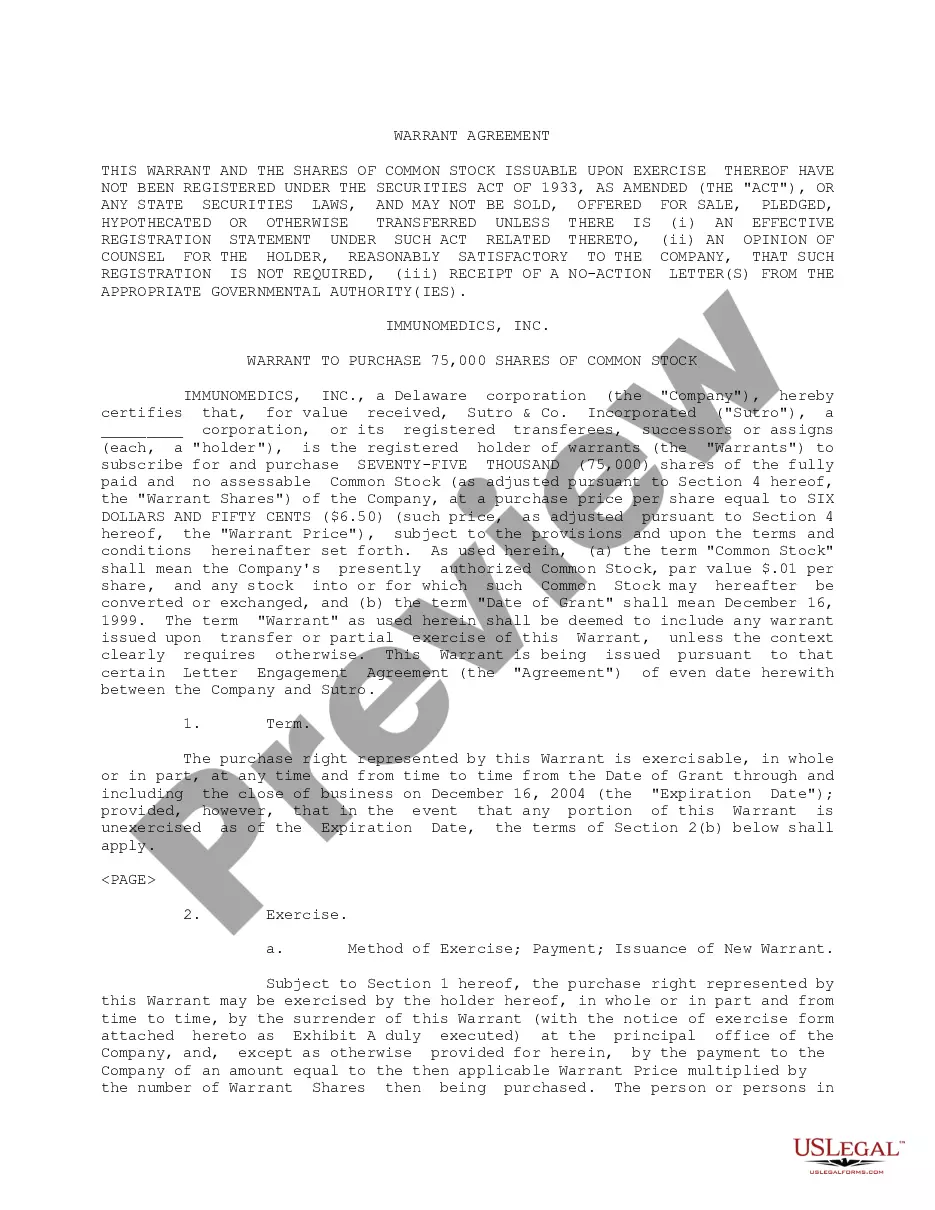
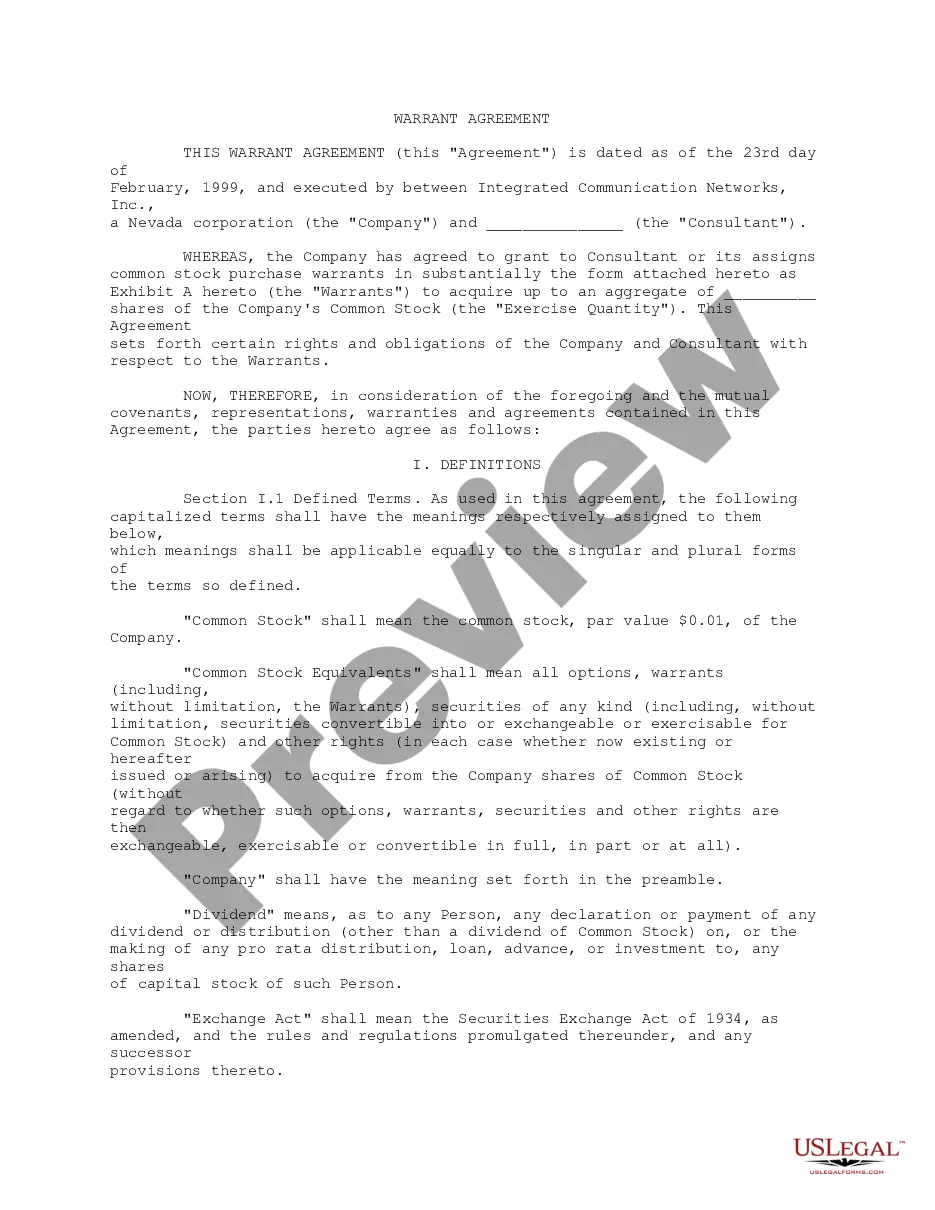
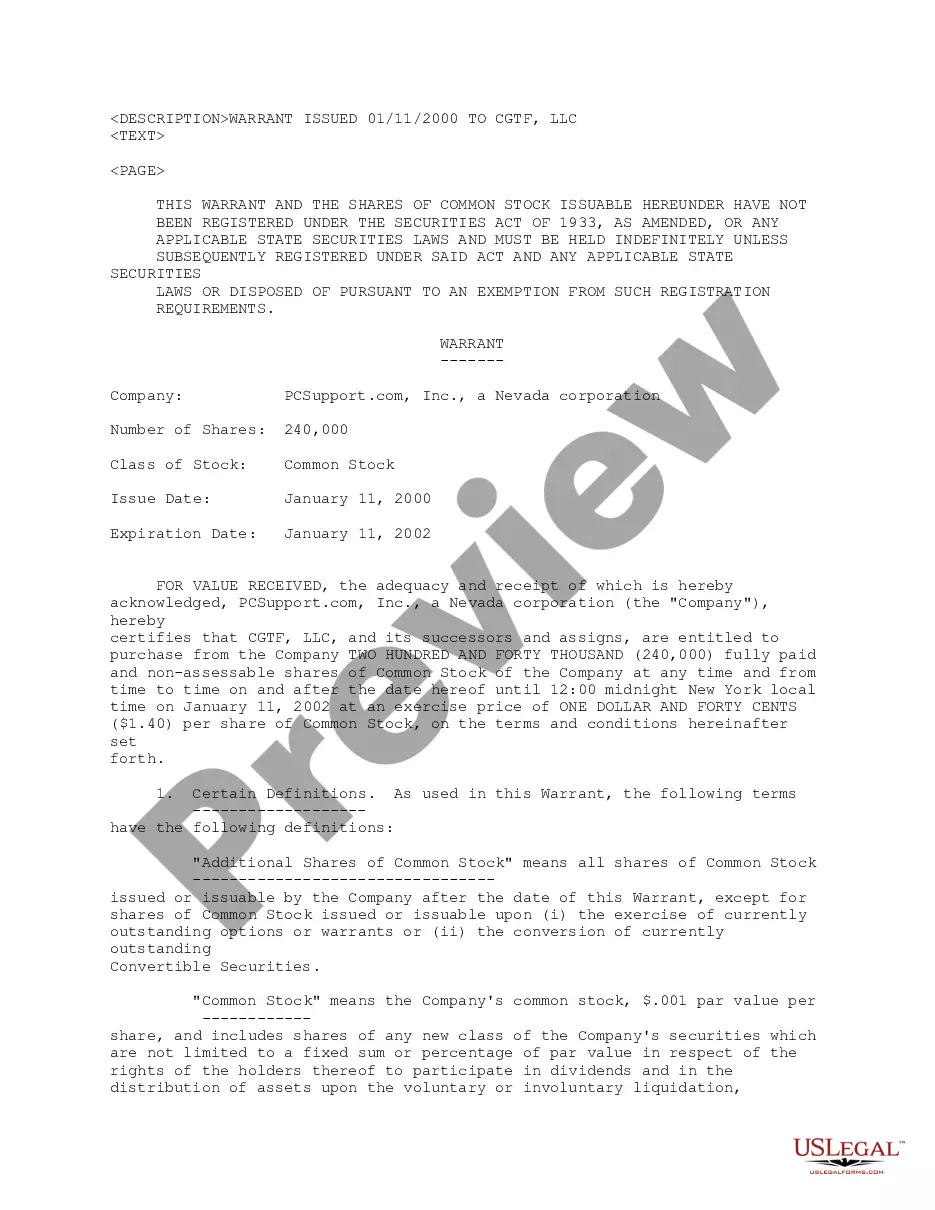
The Second Warrant Agreement by General Physics Corp. is a legal document that outlines the terms and conditions under which a corporation issues stock purchase warrants through an appointed warrant agent. This form serves to formalize the relationship between General Physics Corp. and its warrant agent, detailing the issuance, registration, and transfer of these warrants. Unlike other financial instruments, this specific agreement is tailored to the unique requirements of warrant transactions and ensures compliance with applicable regulations.
Main sections of this form
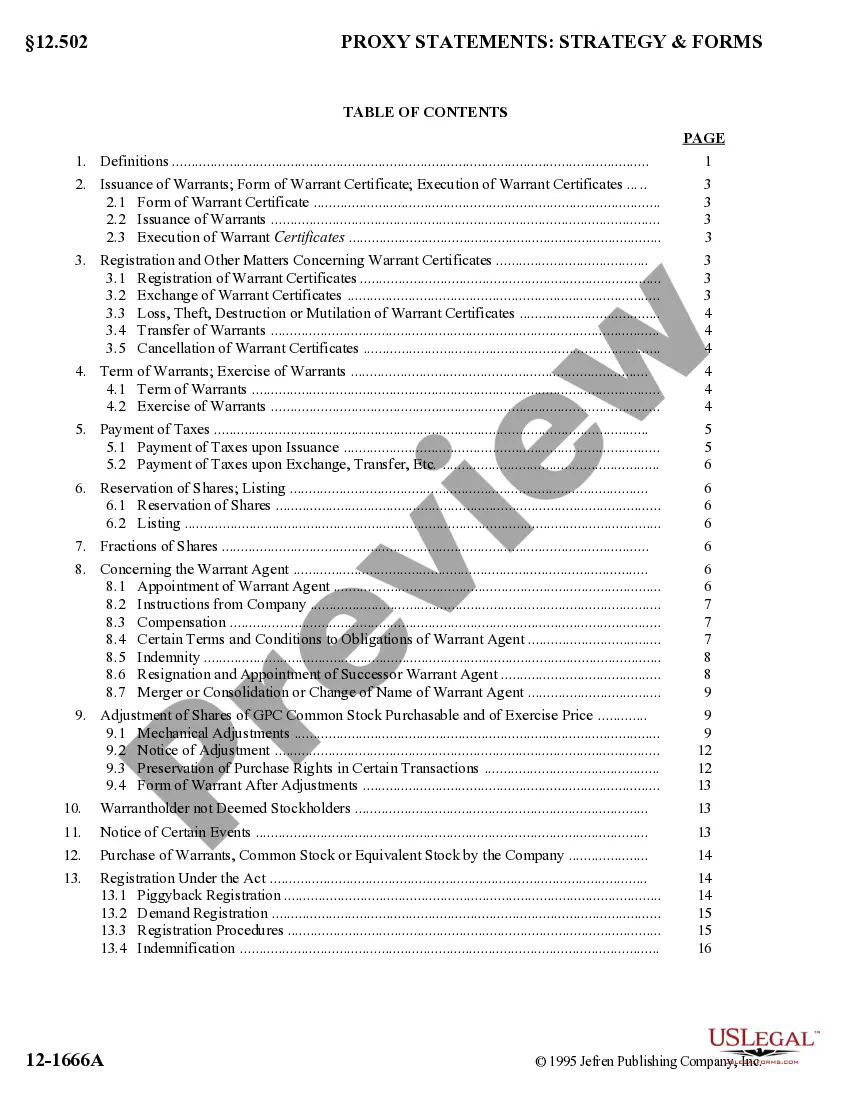
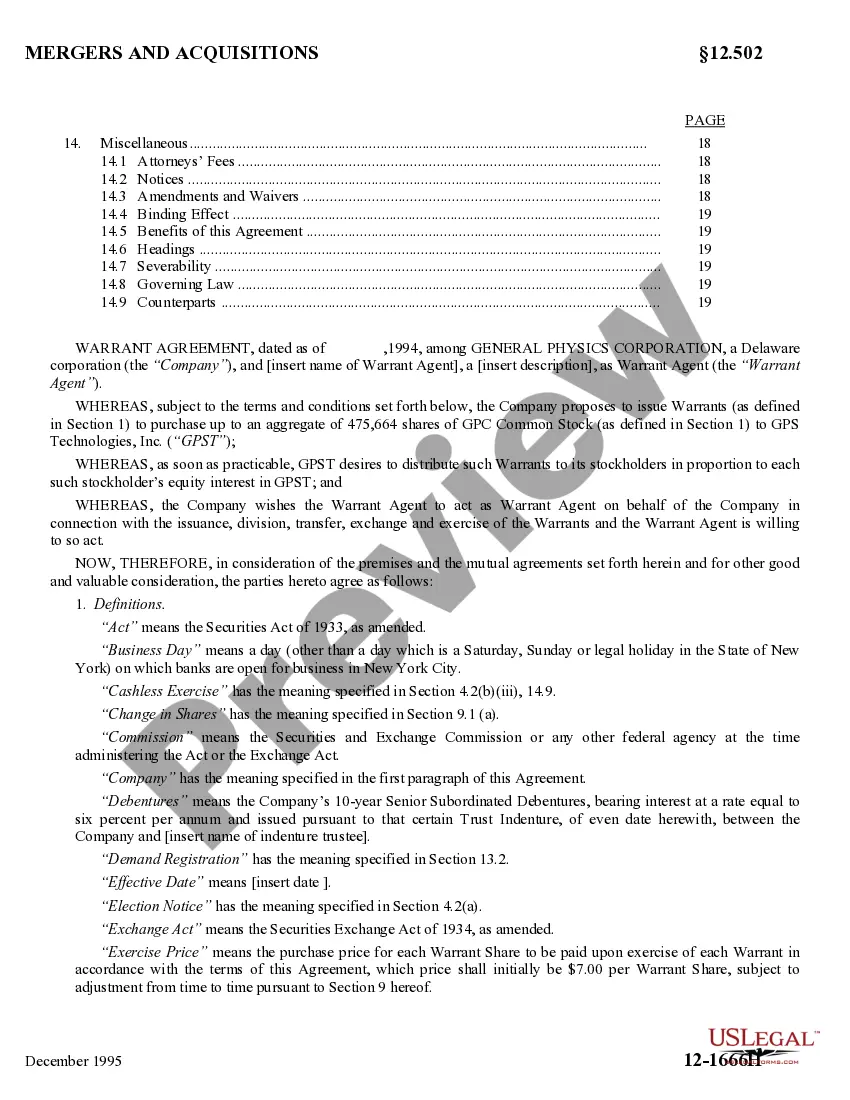
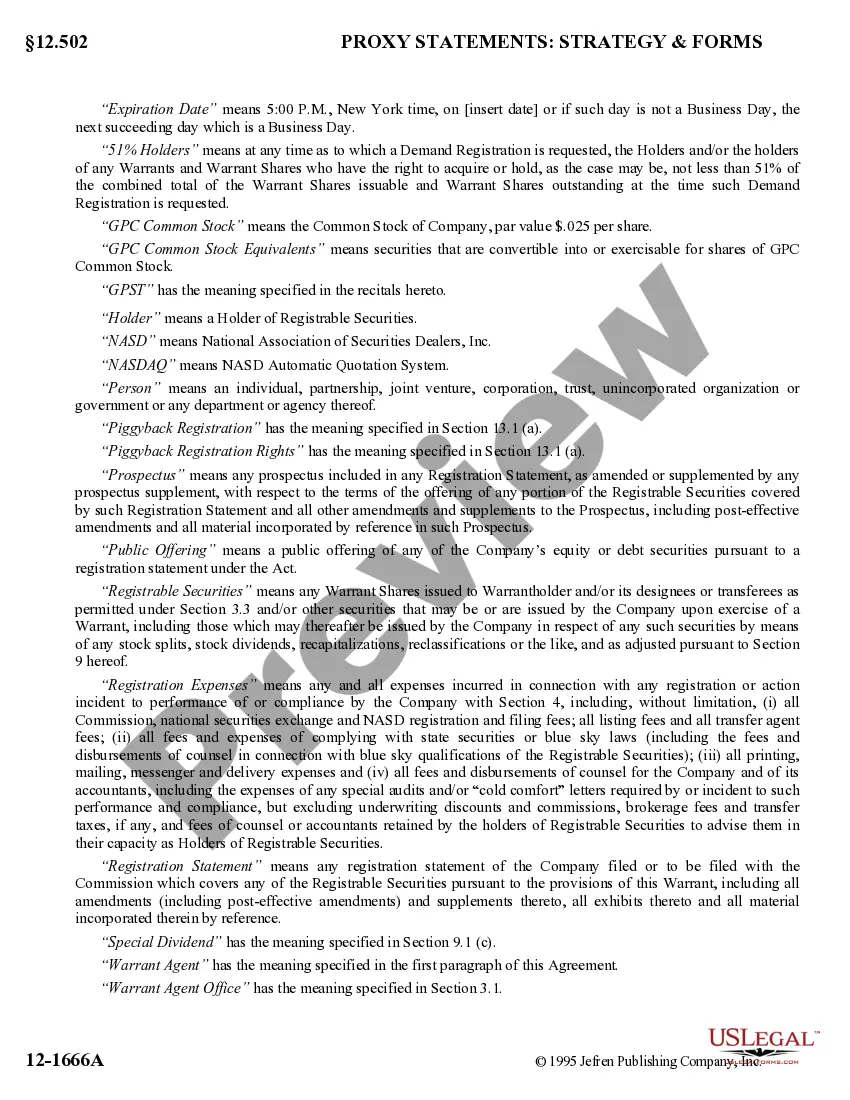
- Definitions: Clarifies key terms used within the agreement.
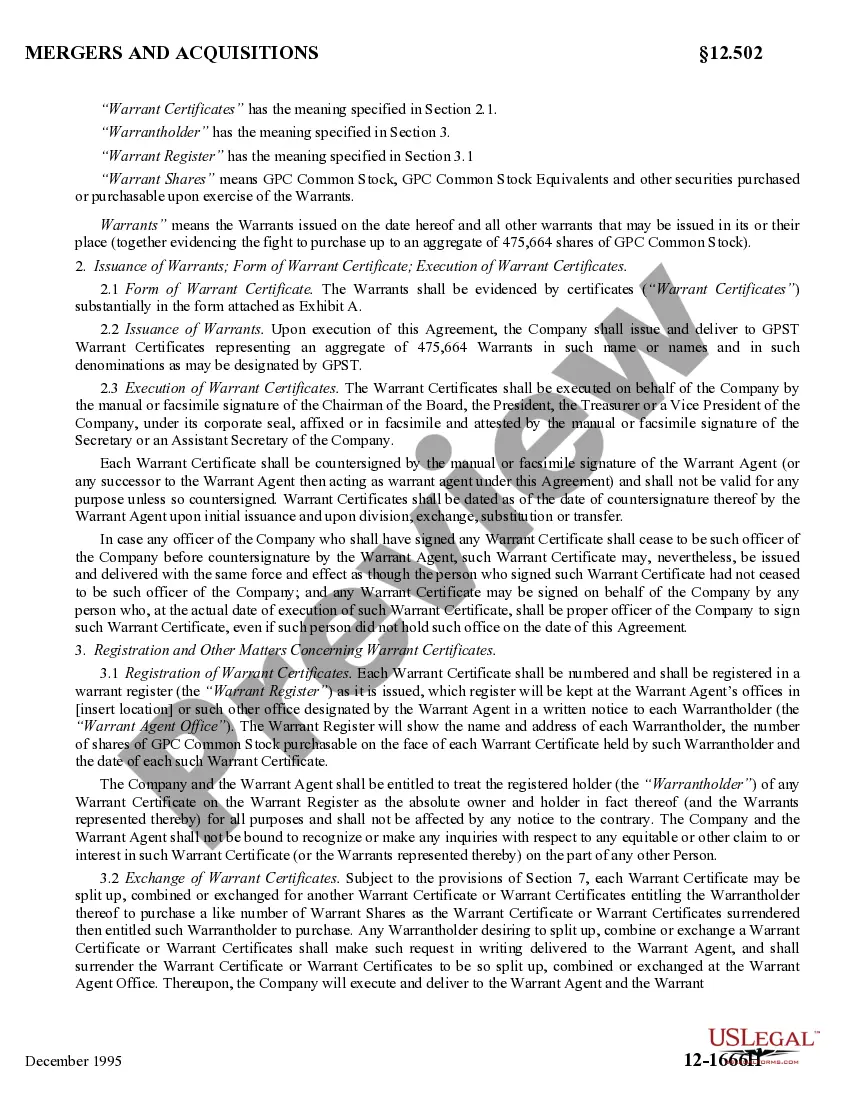
- Issuance of Warrants: Details the process for issuing warrants and the forms of warrant certificates.
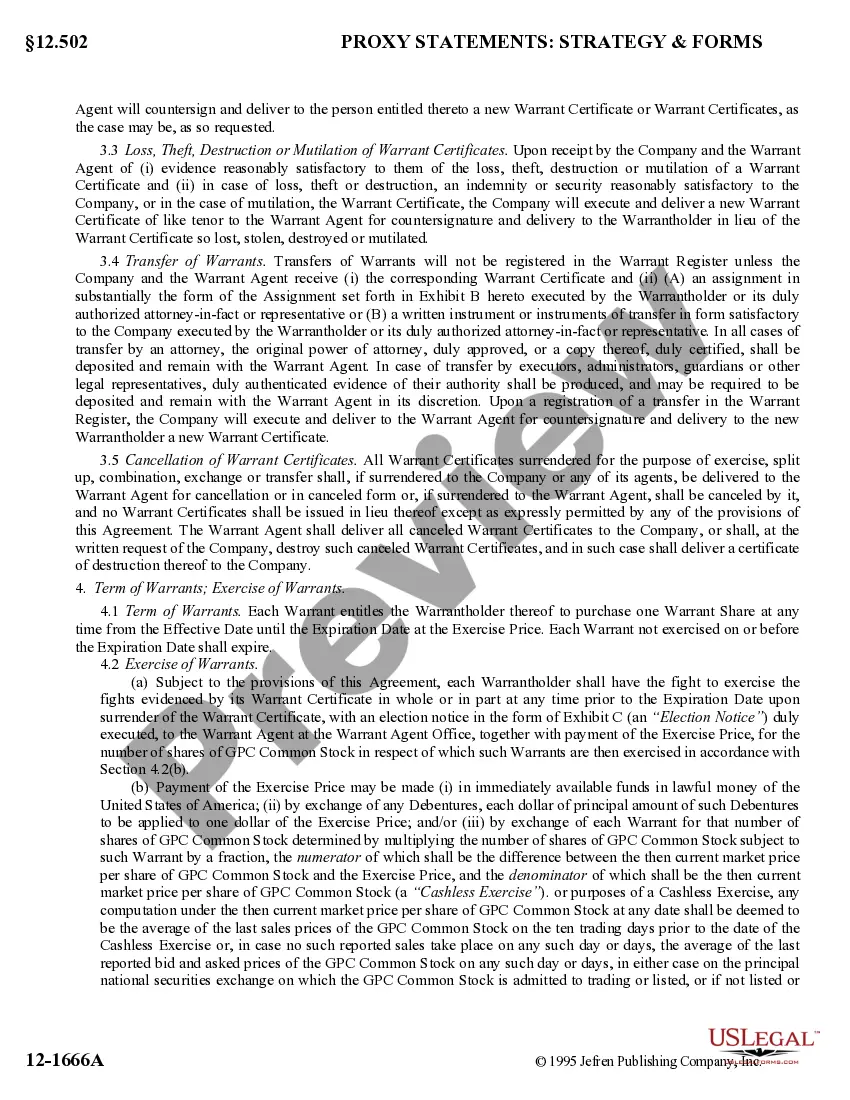
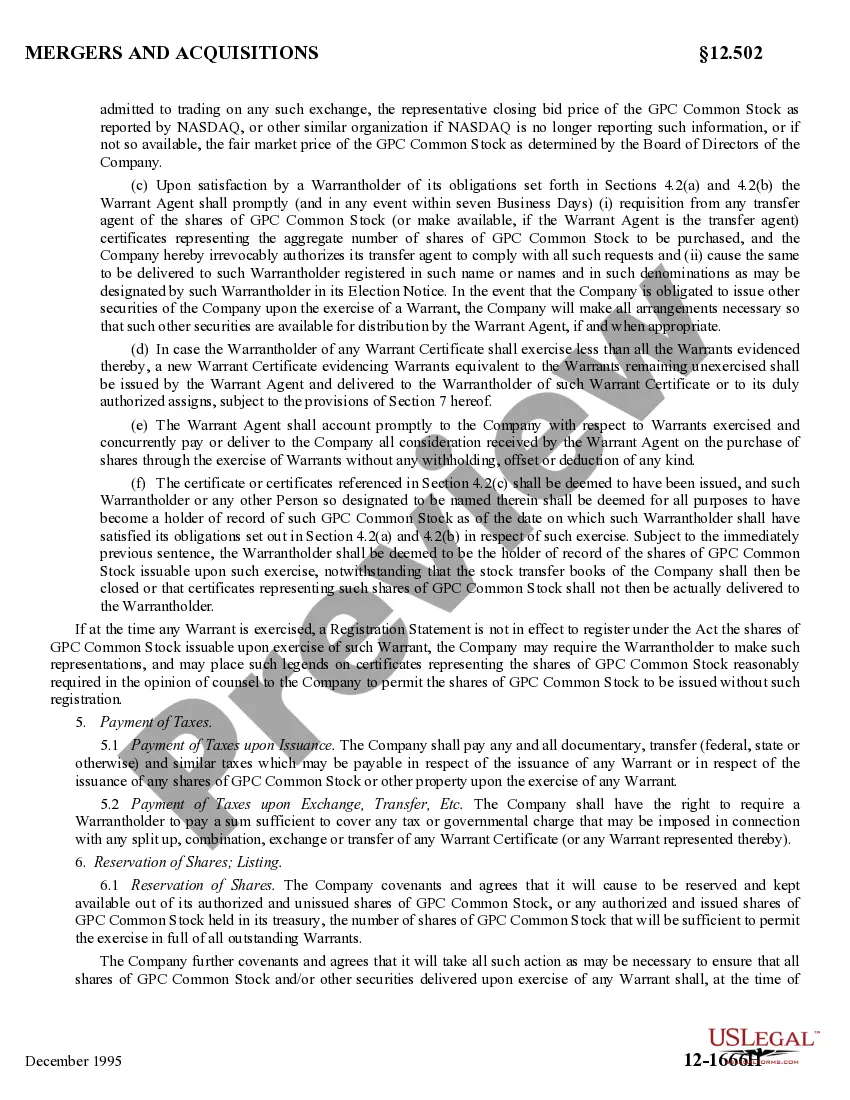
- Exercise of Warrants: Explains the conditions under which warrant holders can exercise their warrants to purchase shares.
- Registration Matters: Outlines how warrant certificates will be registered and transferred.
- Payment of Taxes: Specifies responsibilities for tax payments related to warrant transactions.

When this form is needed
This form should be used when a corporation seeks to issue stock purchase warrants through a warrant agent. It is particularly relevant for companies that intend to raise capital or incentivize shareholders by granting them the right to purchase additional shares at a predetermined price. This agreement is essential when establishing clear rules governing the issuance, transfer, and exercise of the warrants.
Who should use this form
This form is suitable for:
- Corporations looking to issue stock purchase warrants to expand their capital base.
- Warrant agents responsible for managing the issuance and exercise of warrants.
- Investors interested in acquiring warrants from corporations for potential future stock purchases.
Completing this form step by step
- Identify the parties involved, including the corporation and the appointed warrant agent.
- Insert the date of the agreement and relevant details of the warrant issuance.
- Specify the terms of the warrants, including the exercise price and number of shares purchasable.
- Ensure that each warrant certificate is correctly executed and attested.
- Maintain records of all warrant transactions and transfers in the warrant register.
Notarization guidance
In most cases, this form does not require notarization. However, some jurisdictions or signing circumstances might. US Legal Forms offers online notarization powered by Notarize, accessible 24/7 for a quick, remote process.
Get your form ready online
Our built-in tools help you complete, sign, share, and store your documents in one place.
Make edits, fill in missing information, and update formatting in US Legal Forms—just like you would in MS Word.
Download a copy, print it, send it by email, or mail it via USPS—whatever works best for your next step.
Sign and collect signatures with our SignNow integration. Send to multiple recipients, set reminders, and more. Go Premium to unlock E-Sign.
If this form requires notarization, complete it online through a secure video call—no need to meet a notary in person or wait for an appointment.
We protect your documents and personal data by following strict security and privacy standards.

Make edits, fill in missing information, and update formatting in US Legal Forms—just like you would in MS Word.

Download a copy, print it, send it by email, or mail it via USPS—whatever works best for your next step.

Sign and collect signatures with our SignNow integration. Send to multiple recipients, set reminders, and more. Go Premium to unlock E-Sign.

If this form requires notarization, complete it online through a secure video call—no need to meet a notary in person or wait for an appointment.

We protect your documents and personal data by following strict security and privacy standards.
Common mistakes
- Failing to accurately define all terms in the agreement, which may lead to confusion.
- Not properly registering warrants in the warrant register, complicating ownership verification.
- Inaccurate completion of warrant certificates, leading to invalidation upon exercise.
Why complete this form online
- Convenience of easy access and downloading from any location.
- Editability allows for customization to fit specific corporate needs.
- Reliable templates drafted by licensed attorneys ensure legal compliance and efficacy.
Looking for another form?

Form popularity
FAQ
Turning yourself in with a lawyer gives you a better chance of getting a reasonable bond. It will be more traumatic to be apprehended while at a traffic stop, at work, or at home with your loved ones. You will have more time to gather bail money while you are still free.
A judge issues a bench warrant, while a police officer initiates an arrest warrant. In an arrest warrant, the officer will issue a statement to a judge explaining why he or she believes the person named in the warrant has committed a crime.
Police are not allowed to keep you under arrest without charge indefinitely. Unless you are suspected of terrorism, they can only keep you under arrest for six hours before they either charge you with an offence or release you from custody, unless an extension is granted by a detention warrant.
An Arresting Entity arrests a warrant subject. The Arresting Entity generates and sends a Warrant Served Message to the Owning Entity (typically Law Enforcement); this message includes any necessary details of the service such as date and time of service, location of service, arresting officer, etc.
Types of Writs Any direct order that is issued under authority is a writ.A warrant is a writ issued by a judge or magistrate that allows a sheriff, constable, or police officer to search a person or propertycommonly known as a search warrant.
Most stock warrants are similar to call options in that they provide the holder the right, but not the obligation, to buy shares of a company at a specified price (strike price) before the warrant expires. Unlike a listed option, a warrant is issued by a company instead of an option writer.
If a law enforcement officer stops an individual with an outstanding bench warrant against him, the person may be detained on the warrant, and may be held in jail until a bond is posted or a hearing is held on the warrant.
Warrant is having a sanctional force to arrange someone for the production of such person before the court whereas a summon is merely a notice issued by a court for the attendance of any person. Warrant are basically of two types under the Code of Criminal Proceedings: Warrant of arrest. Search warrant.