Notices Provisions - Long-Form Provision
What is this form?
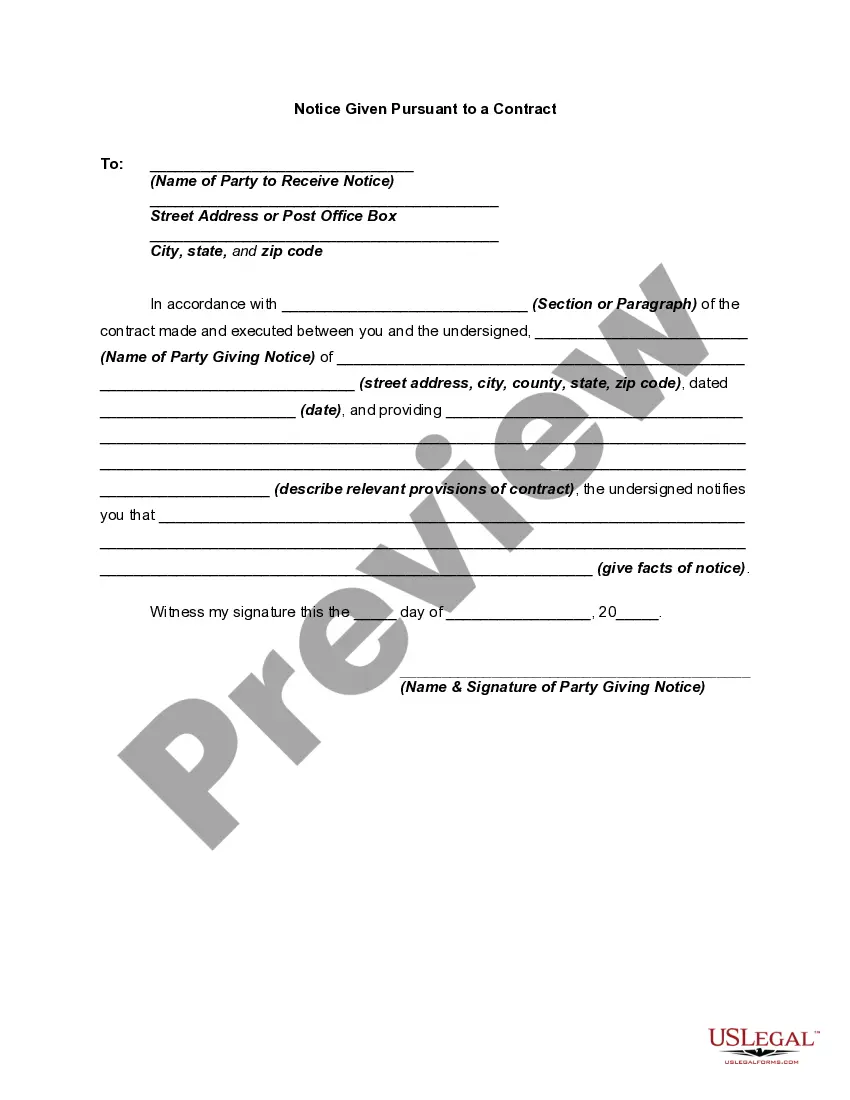
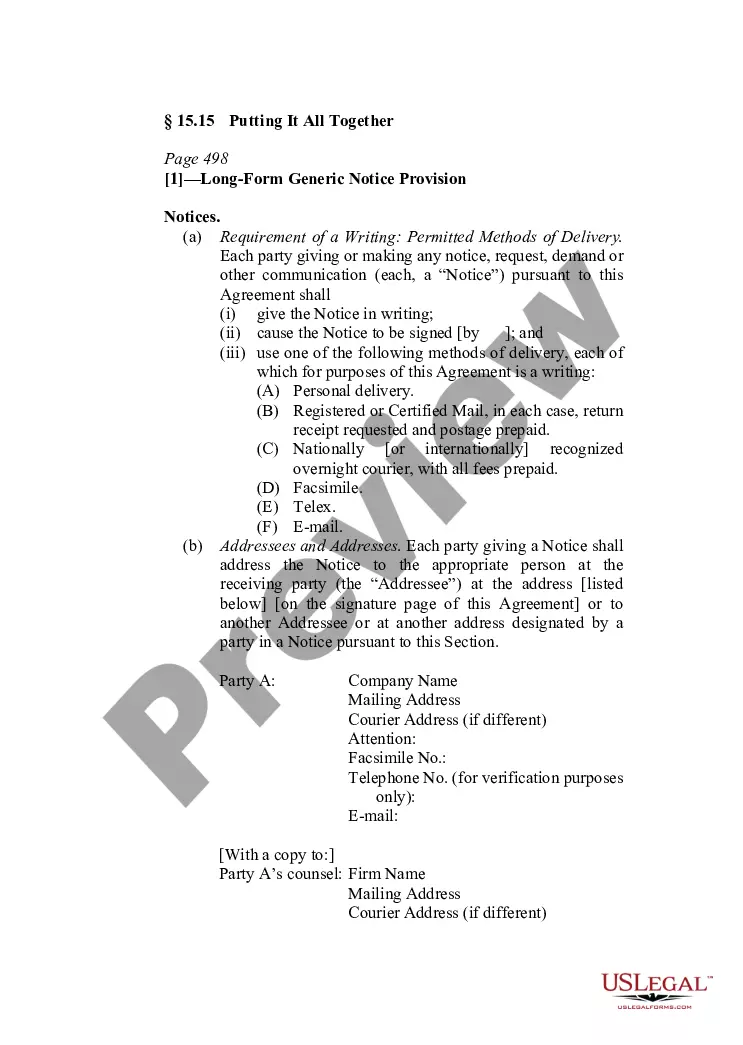
The Notices Provisions - Long-Form Provision is a legal template designed to clarify the requirements and procedures for giving notice under a contract agreement. Unlike standard notice provisions, this long-form template consolidates multiple contract clauses, ensuring that both parties understand how to properly communicate essential information regarding the agreement.
Form components explained
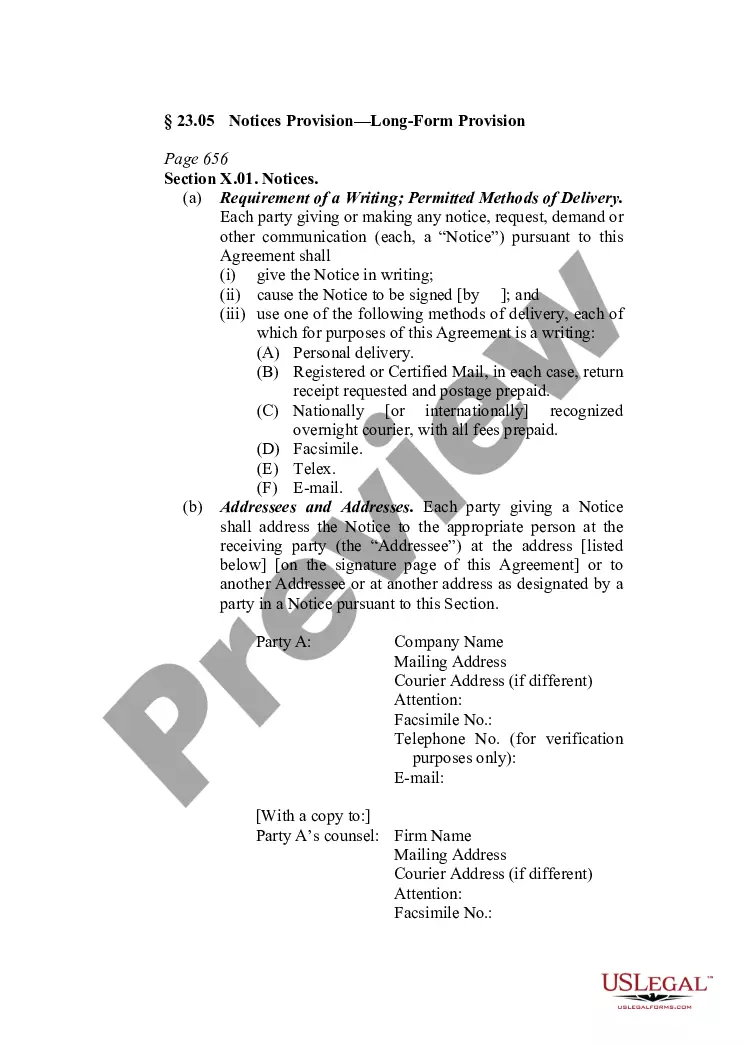
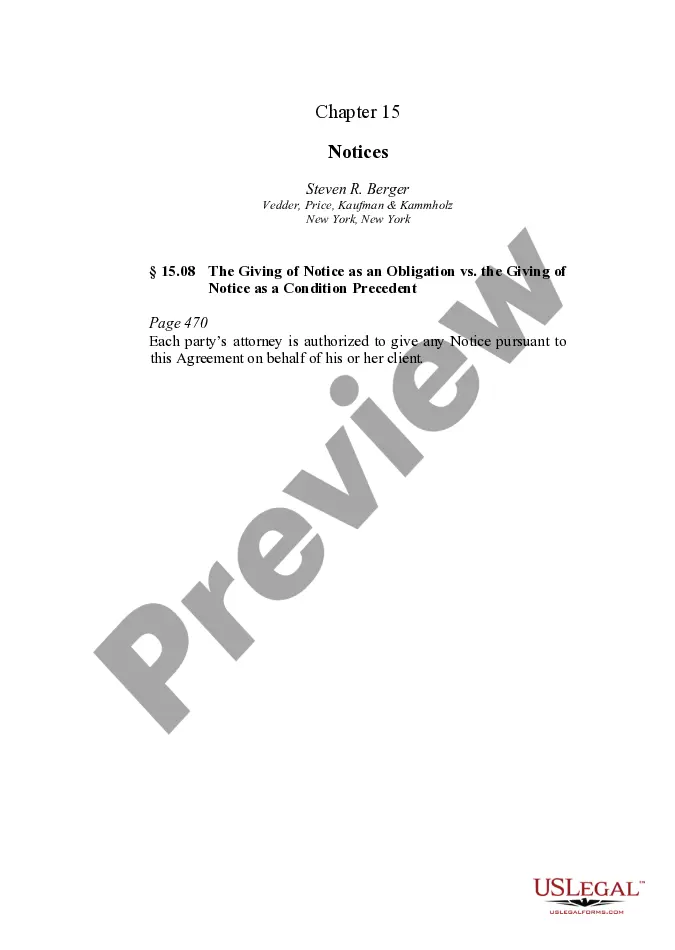
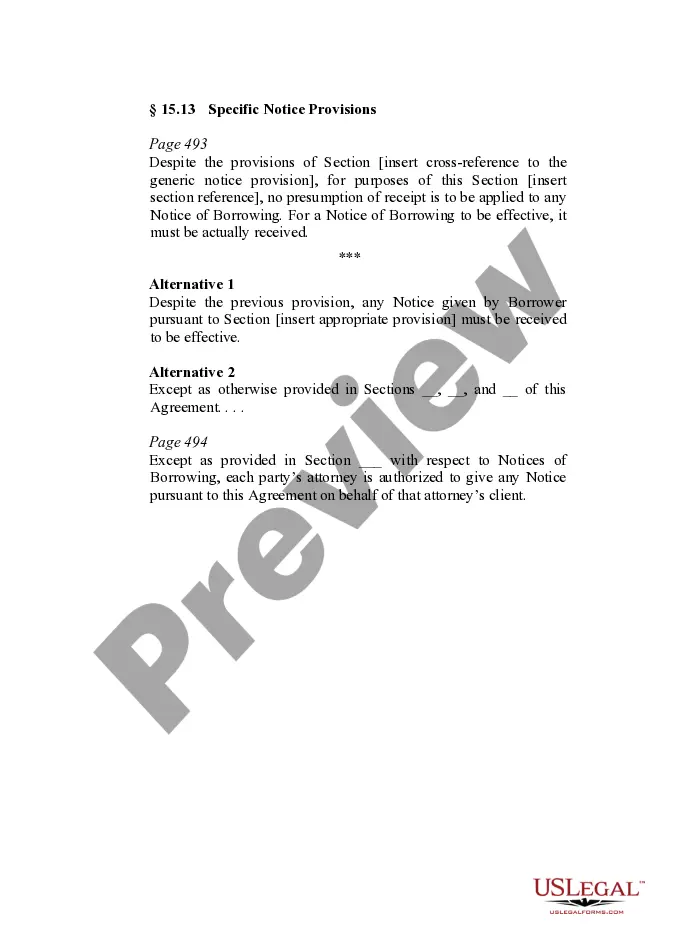
- Requirement of a writing and permitted methods of delivery.
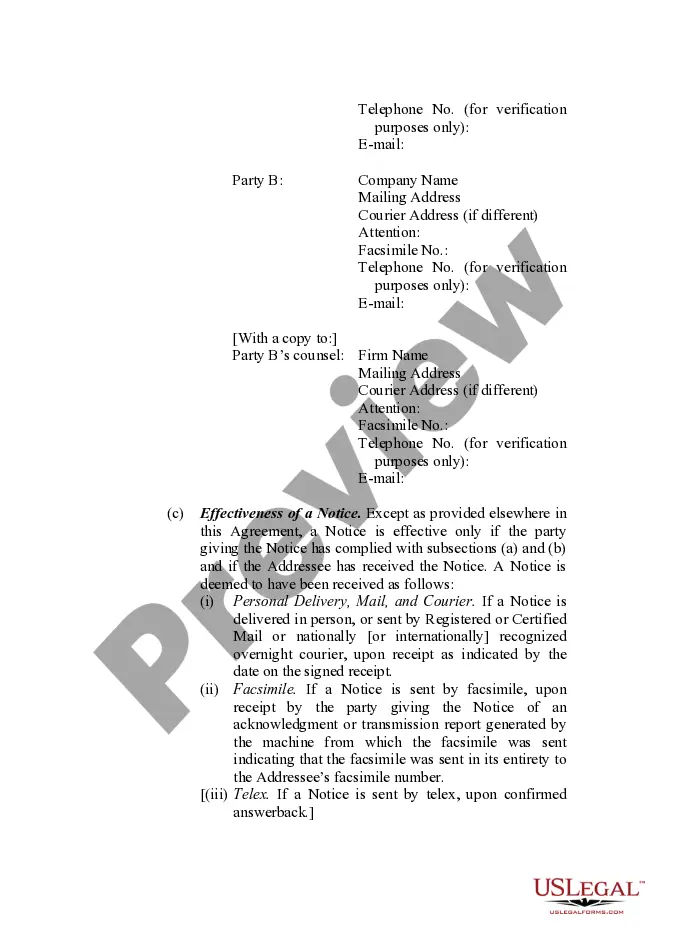
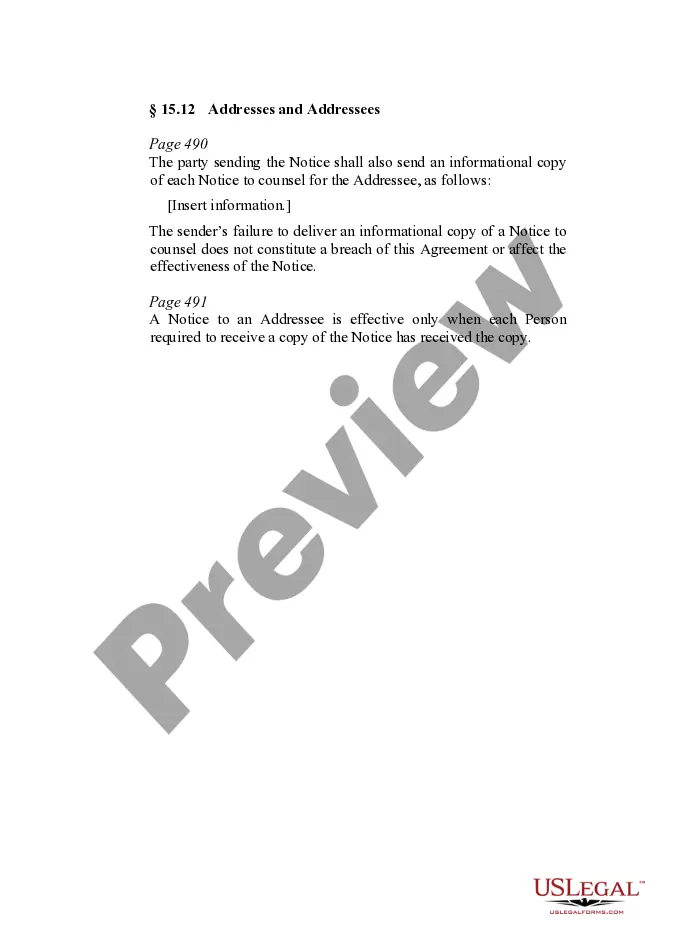
- Details on addressees and addresses for delivering notices.
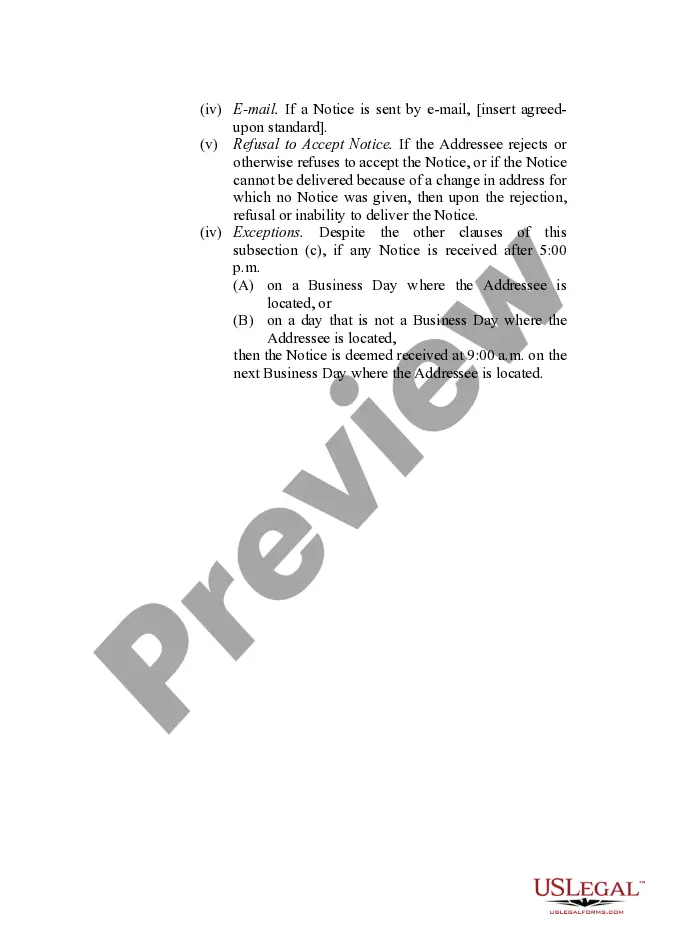
- Specifications for the effectiveness of notices based on the method used.
- Provisions for acknowledgment of receipt of the notice.
- Guidelines on what constitutes refusal to accept notice.
When to use this form
This form is used when parties to a contract need to establish clear procedures for providing notices related to the contract. It is particularly important when contract terms involve disputes, deadlines, or any necessary communications wherein clear documentation is required to ensure that all parties are informed and compliant with the contract's stipulations.
Who should use this form
- Business owners entering into contracts.
- Individuals involved in contractual agreements.
- Attorneys managing contract-related communications.
- Parties requiring clarity on notice requirements in legal documents.
How to prepare this document
- Identify the parties involved in the contract.
- Clearly specify the addressees and their contact details.
- Choose an appropriate method of delivery for the notice.
- Ensure the notice is signed and dated by the relevant parties.
- Document the method and timing of delivery for future reference.
Notarization requirements for this form
Notarization is not commonly needed for this form. However, certain documents or local rules may make it necessary. Our notarization service, powered by Notarize, allows you to finalize it securely online anytime, day or night.
Get your form ready online
Our built-in tools help you complete, sign, share, and store your documents in one place.
Make edits, fill in missing information, and update formatting in US Legal Forms—just like you would in MS Word.
Download a copy, print it, send it by email, or mail it via USPS—whatever works best for your next step.
Sign and collect signatures with our SignNow integration. Send to multiple recipients, set reminders, and more. Go Premium to unlock E-Sign.
If this form requires notarization, complete it online through a secure video call—no need to meet a notary in person or wait for an appointment.
We protect your documents and personal data by following strict security and privacy standards.

Make edits, fill in missing information, and update formatting in US Legal Forms—just like you would in MS Word.

Download a copy, print it, send it by email, or mail it via USPS—whatever works best for your next step.

Sign and collect signatures with our SignNow integration. Send to multiple recipients, set reminders, and more. Go Premium to unlock E-Sign.

If this form requires notarization, complete it online through a secure video call—no need to meet a notary in person or wait for an appointment.

We protect your documents and personal data by following strict security and privacy standards.
Common mistakes
- Failing to include proper addresses for all addressees.
- Using an unapproved method for delivering notices.
- Not documenting the delivery method and date.
- Overlooking specific contract clauses that dictate notice requirements.
Why use this form online
- Easy access to a professionally drafted legal template.
- Editable format that allows customization for your specific needs.
- Reliable, up-to-date legal language crafted by licensed attorneys.
- Time-saving as it reduces the need for extensive legal research.
What to keep in mind
- The form establishes a clear communication framework for contract notices.
- Proper completion ensures that notices are legally effective and recognized.
- Understanding your obligations regarding notice can prevent disputes.
- This template is suitable for various types of contracts and agreements.
Looking for another form?

Form popularity
FAQ
Many of those employers include a notice and cure provision in their employment contracts. When a notice and cure term is included in an employment contract, the agreement includes a length of time during which a problem, or potential terminable event, can be corrected before termination.
Contract notice provisions set out the means by which one party can bring to the attention of another party matters which must be brought to their attention under the contract, by giving "notice".
A "Termination" clause is a clause found in a legal agreement that allows for the agreement to be terminated, or ended, under circumstances specified in the clause. The termination clause is typically placed within a Terms and Conditions agreement of a website or app.
A contract provision is a stipulation within a contract, legal document, or a law. A contract provision often requires action by a specific date or within a specified period of time. Contract provisions are intended to protect the interests of one or both parties in a contract.
This is a provision in an insurance contract stating that the entire agreement between the insured and the insurer is contained in the contract, including the application if it is attached, declarations, insuring agreements, exclusions, conditions and endorsements.
A notice provision is an agreement between parties on how to receive notices about contractual matters, and this clause should be very clear on its requirements. Typically, it will include the following information: How the notice should look. Acceptable methods for sending notices, such as by email, fax, or mail.
Identify the event. Explain how the event impacts performance. Define the relief sought. Do not limit rights or remedies.
The legal right to cure is essentially a principle found in contract law that allows one party in a contract, who has defaulted under a contract provision, to remedy their default by taking steps to ensure compliance or otherwise, cure the default.Generally, the 'right to cure' a loan varies by state.