Notice Provisions - Addresses and Addressees
What this document covers
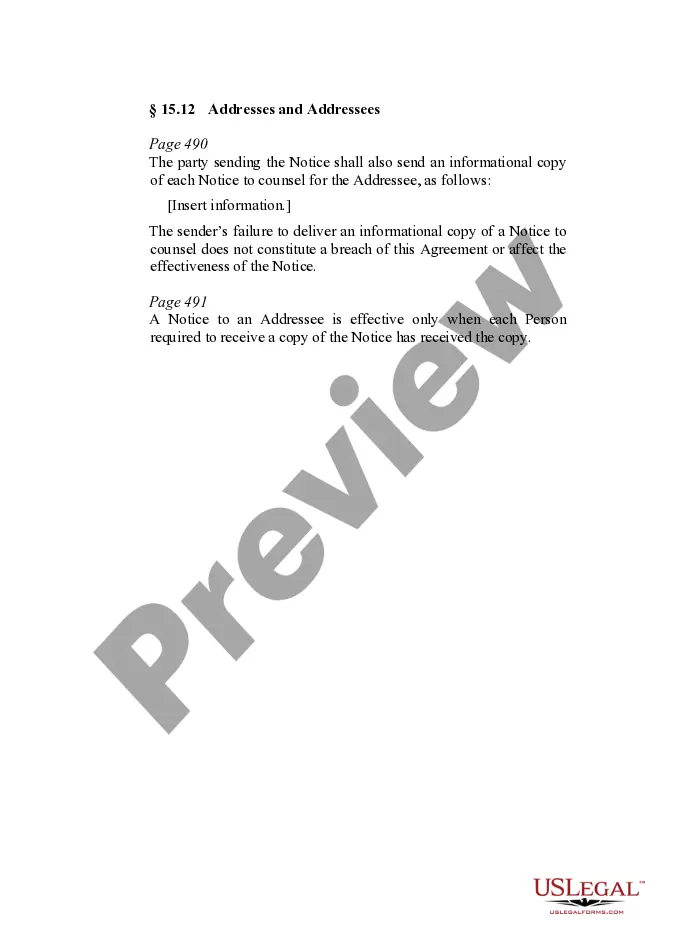
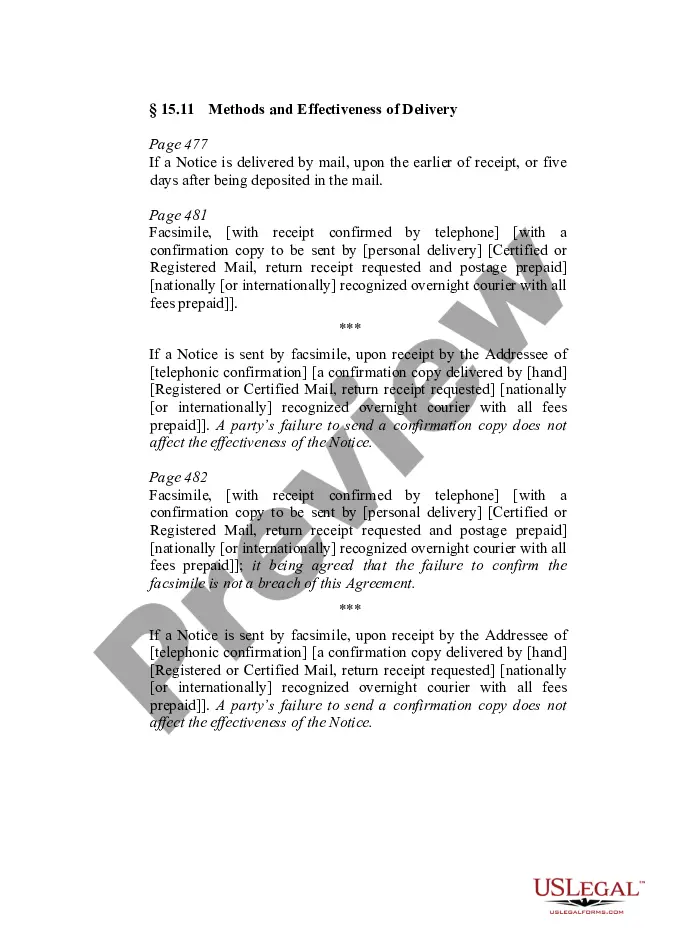
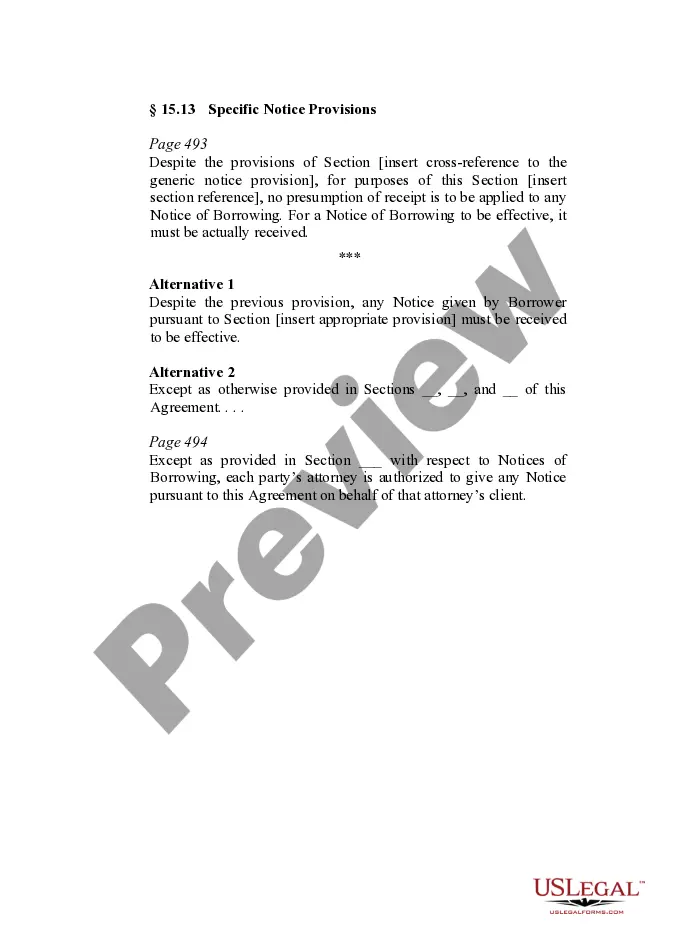
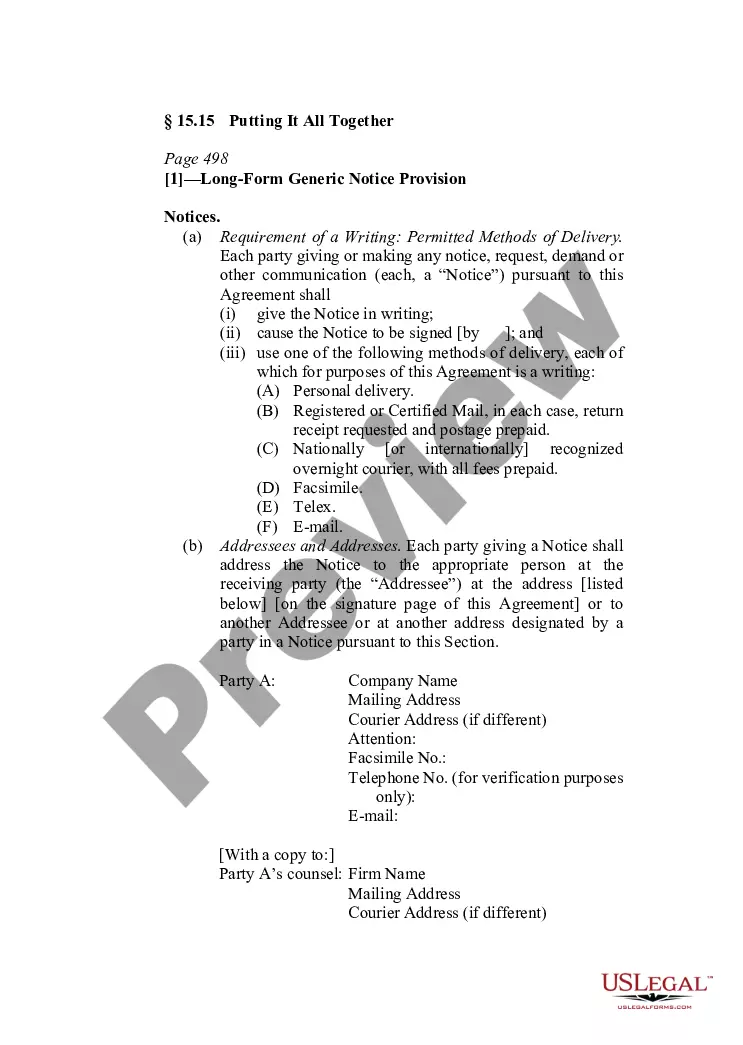
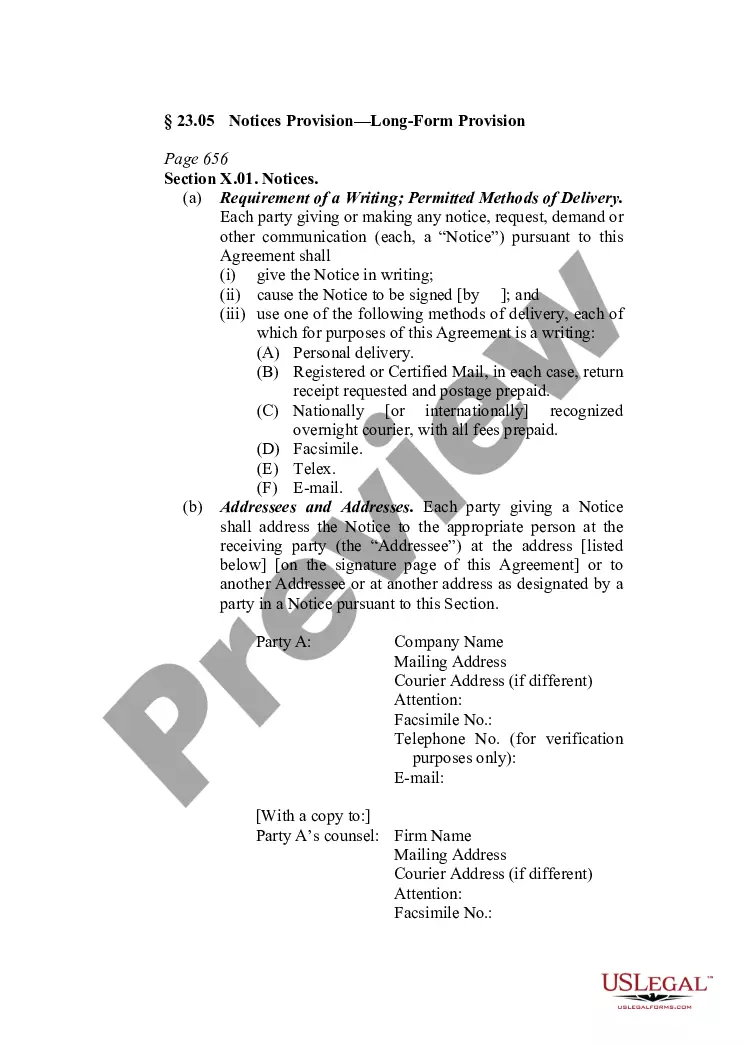
The Notice Provisions - Addresses and Addressees form establishes the specific addresses to which notices under a contract agreement must be sent. This form is essential for ensuring that all parties involved in a contract receive important communications effectively. By clarifying when notices are considered effective, it helps avoid disputes over notification failures, distinguishing it from other generic notice templates.
Main sections of this form
- Addresses for notices, specifying recipients' locations.
- Provisions regarding sending informational copies to counsel.
- Conditions for the effectiveness of notices upon receipt.
- Language options to cater to different legal and personal needs.
Common use cases
This form is necessary when entering agreements that require clear communication between parties. Use it when drafting contracts where timely noticesâsuch as changes, terminations, or other legal communicationsâare critical to ensure compliance and proper record-keeping. It is particularly useful in business contracts, real estate transactions, and employment agreements.
Who this form is for
This form is suitable for:
- Businesses preparing contractual agreements.
- Individuals entering into legally binding contracts.
- Legal professionals drafting contracts for clients.
- Anyone needing clarity on notice delivery procedures.
Instructions for completing this form
- Identify all parties involved in the contract and their legal addresses.
- Insert the address of the person sending the notice.
- Specify any additional recipients, such as legal counsel, and provide their addresses.
- Fill in any relevant details regarding the types of notices that may be sent.
- Review the document for accuracy before finalizing it.
Notarization requirements for this form
This form does not typically require notarization unless specified by local law.
Get your form ready online
Our built-in tools help you complete, sign, share, and store your documents in one place.
Make edits, fill in missing information, and update formatting in US Legal Forms—just like you would in MS Word.
Download a copy, print it, send it by email, or mail it via USPS—whatever works best for your next step.
Sign and collect signatures with our SignNow integration. Send to multiple recipients, set reminders, and more. Go Premium to unlock E-Sign.
If this form requires notarization, complete it online through a secure video call—no need to meet a notary in person or wait for an appointment.
We protect your documents and personal data by following strict security and privacy standards.

Make edits, fill in missing information, and update formatting in US Legal Forms—just like you would in MS Word.

Download a copy, print it, send it by email, or mail it via USPS—whatever works best for your next step.

Sign and collect signatures with our SignNow integration. Send to multiple recipients, set reminders, and more. Go Premium to unlock E-Sign.

If this form requires notarization, complete it online through a secure video call—no need to meet a notary in person or wait for an appointment.

We protect your documents and personal data by following strict security and privacy standards.
Common mistakes
- Failing to include all relevant recipients' addresses.
- Not specifying whether informational copies should be sent.
- Leaving out critical details that may affect awareness of notices.
Benefits of completing this form online
- Convenient download options for immediate access.
- Editability allows for easy customization to meet specific needs.
- Reliability ensures forms are drafted with legal compliance in mind.
- The notice provisions must be clearly communicated to all parties to ensure enforceability.
- Failure to comply with the notice requirements may lead to legal disputes.
- This form serves as an essential component in formalizing contracts and protecting the interests of all parties involved.
Quick recap
- The Notice Provisions form sets clear parameters for communication in contracts.
- Completing this form helps avoid misunderstandings between parties.
- It's important for all parties to ensure they understand the notice requirements detailed in this form.
Looking for another form?
Form popularity
FAQ
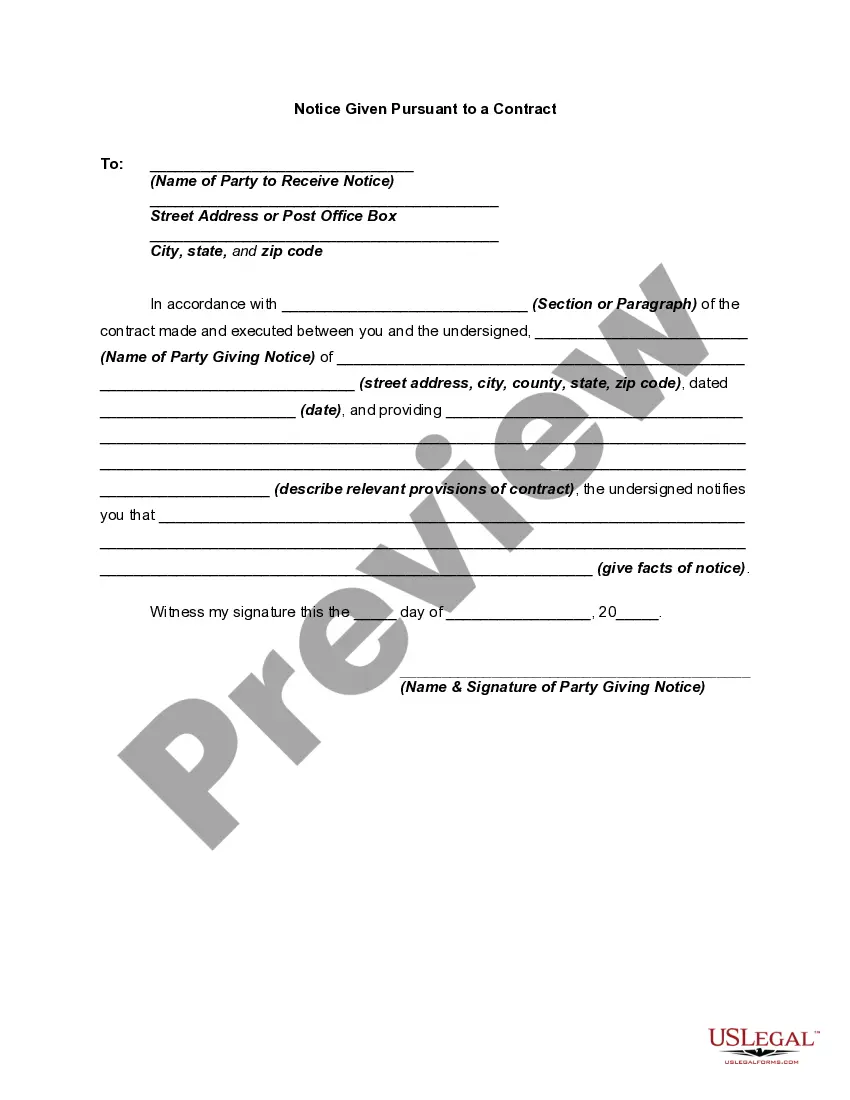
Write the recipient's name on the first line. Write the street address or post office box number on the second line. Write the city, state, and ZIP code on the third.
A contract provision is a stipulation within a contract, legal document, or a law. A contract provision often requires action by a specific date or within a specified period of time. Contract provisions are intended to protect the interests of one or both parties in a contract.
Many of those employers include a notice and cure provision in their employment contracts. When a notice and cure term is included in an employment contract, the agreement includes a length of time during which a problem, or potential terminable event, can be corrected before termination.
Contract notice provisions set out the means by which one party can bring to the attention of another party matters which must be brought to their attention under the contract, by giving "notice".
A "Termination" clause is a clause found in a legal agreement that allows for the agreement to be terminated, or ended, under circumstances specified in the clause. The termination clause is typically placed within a Terms and Conditions agreement of a website or app.
Write the recipient's name on the first line. Write the street address or post office box number on the second line. Write the city, state, and ZIP code on the third.
A notice provision is an agreement between parties on how to receive notices about contractual matters, and this clause should be very clear on its requirements. Typically, it will include the following information: How the notice should look. Acceptable methods for sending notices, such as by email, fax, or mail.
Recipient's name. Business's name (if applicable) Street address (with apartment or suite number) City, State and ZIP code (on the same line) Country
Address for Notice means the addresses, facsimile numbers and emails of the parties set out in Items 1 and 2 of Schedule 1.