Supplemental Retirement Plan
Understanding this form
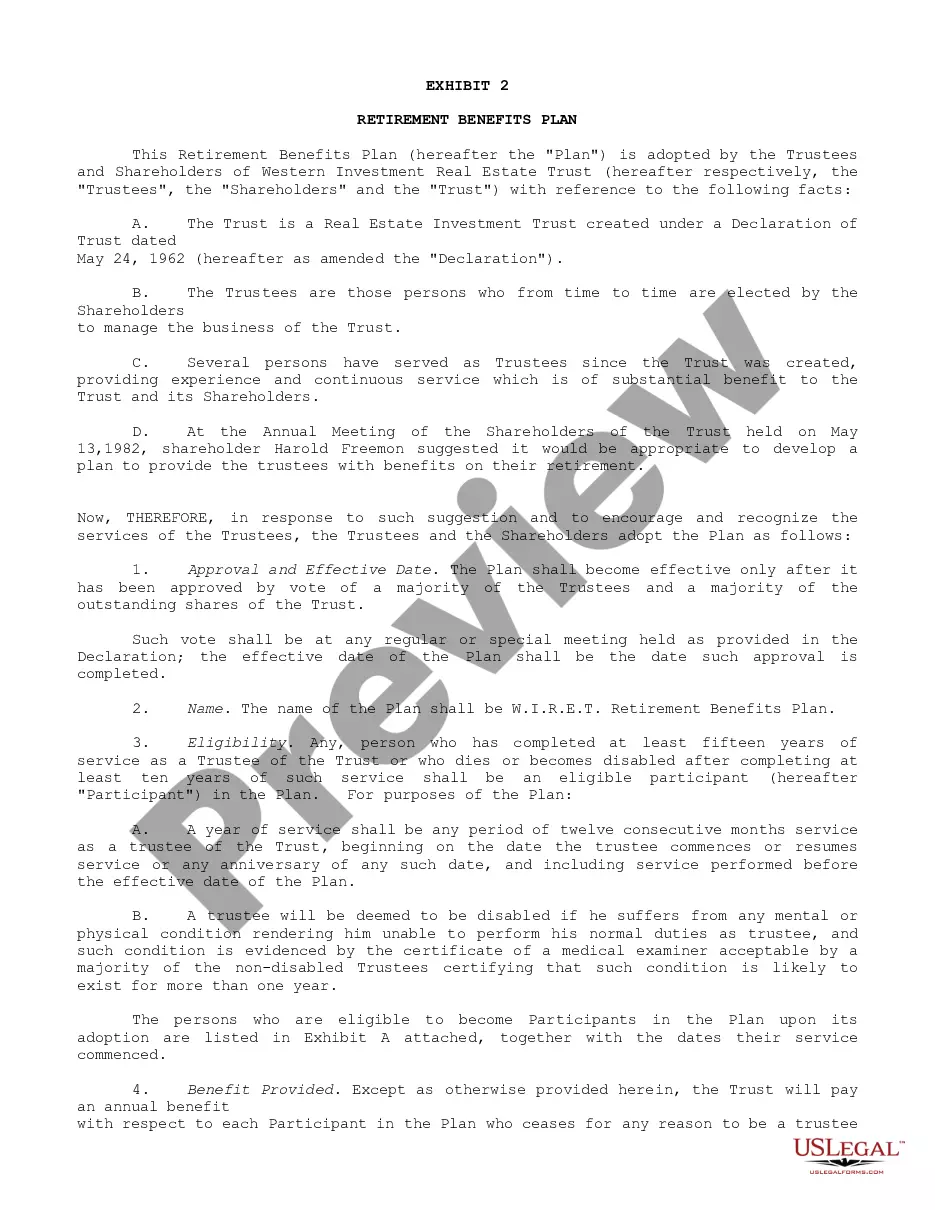
The Supplemental Retirement Plan form is designed to provide eligible management and highly compensated employees with retirement benefits that compensate for limitations imposed by federal tax regulations regarding salary deferrals and contributions. This form specifically addresses how individuals can receive deferred compensation that exceeds standard plan limits, distinguishing it from other retirement plans by targeting a select group of employees with unique compensation structures.
Key parts of this document
- Establishment and Purpose: Details the plan's purpose and eligibility for participants.
- Definitions: Clarifies key terms used throughout the plan, such as "Management Employee" and "Participant."
- Eligibility and Participation: Outlines who can participate and how to elect salary deferrals.
- Benefits: Explains the contributions and how accounts are maintained and invested.
- Administration: Describes the role of the Administrative Committee in managing the plan.
- Amendment and Termination: Covers the conditions under which the plan can be modified or terminated.





When to use this form
This form should be used when a company wishes to establish a supplemental retirement plan for its management and highly compensated employees. It is particularly relevant in scenarios where employees are unable to maximize their contributions due to IRS limits on 401(k) plans, ensuring they can still secure adequate retirement benefits. This form is useful for companies aiming to attract or retain top talent by offering competitive retirement compensation options.
Who this form is for
This form is intended for:
- Employers looking to implement a supplemental retirement plan for their eligible management employees.
- Human resource professionals responsible for employee benefits and compensation packages.
- Highly compensated employees who may be affected by contribution limits on traditional retirement plans.
Instructions for completing this form
- Identify the participating companies and ensure they are eligible to adopt the plan.
- Determine the eligible management employees who can participate in the plan.
- Specify the contributions that eligible employees wish to defer, as allowed by the plan.
- Ensure that each participant completes the necessary salary deferral election form prior to the plan year.
- Maintain records of contributions and participant accounts as directed by the Administrative Committee.
Notarization guidance
This form does not typically require notarization unless specified by local law. However, participants should check state-specific requirements to confirm.
Get your form ready online
Our built-in tools help you complete, sign, share, and store your documents in one place.
Make edits, fill in missing information, and update formatting in US Legal Forms—just like you would in MS Word.
Download a copy, print it, send it by email, or mail it via USPS—whatever works best for your next step.
Sign and collect signatures with our SignNow integration. Send to multiple recipients, set reminders, and more. Go Premium to unlock E-Sign.
If this form requires notarization, complete it online through a secure video call—no need to meet a notary in person or wait for an appointment.
We protect your documents and personal data by following strict security and privacy standards.

Make edits, fill in missing information, and update formatting in US Legal Forms—just like you would in MS Word.

Download a copy, print it, send it by email, or mail it via USPS—whatever works best for your next step.

Sign and collect signatures with our SignNow integration. Send to multiple recipients, set reminders, and more. Go Premium to unlock E-Sign.

If this form requires notarization, complete it online through a secure video call—no need to meet a notary in person or wait for an appointment.

We protect your documents and personal data by following strict security and privacy standards.
Typical mistakes to avoid
- Failing to properly identify all eligible employees for participation in the plan.
- Not keeping accurate records of contributions and deferrals.
- Ignoring deadlines for salary deferral elections, leading to missed opportunities for contributions.
Why complete this form online
- Convenient access to comprehensive legal templates tailored for supplemental retirement plans.
- Editability allows customization based on specific company needs and employee profiles.
- Reliable legal compliance, as forms are drafted by licensed attorneys to meet federal guidelines.
Legal use & context
- The plan is established as a deferred compensation arrangement specifically for select management employees.
- It is exempt from certain Employee Retirement Income Security Act (ERISA) regulations, emphasizing its tailored nature.
- Employers maintain significant discretion in how contributions are structured and managed under the plan.
What to keep in mind
- The Supplemental Retirement Plan is crucial for highly compensated employees seeking to maximize retirement contributions.
- Understanding the eligibility criteria is essential for both employees and employers in managing participation.
- Proper administration and timely elections are key to the successful execution of the retirement plan benefits.
Glossary of terms used in this form
- Management Employee: Employees classified as senior management or officers eligible for the plan.
- Participant: A Management Employee who has elected to participate in the plan.
- Deferral Contributions: Amounts set aside by employees for retirement savings beyond traditional limits.
Looking for another form?



Form popularity
FAQ
A supplemental executive retirement plan (SERP) is an employer-sponsored non-qualified deferred compensation plan. It allows employers to provide highly compensated key employees with additional retirement benefits beyond those provided by qualified plans (401(k), IRA, etc.).
Key Takeaways. A Supplemental Executive Retirement Plan is a non-qualified deferred compensation plan that a company offers only to select employees such as executives and other key HCEs. Employers contribute with their own dollars and can choose either funded plans or unfunded plans.
Supplemental benefits products are insurance policies that provide financial protection against expenses associated with accidents or illnesses not covered by major medical insurance.
The purpose of the Supplemental 401(k) Plan (the Plan) is to provide a select group of management or highly compensated employees who are officers and key employees of Travelers Express Company, Inc. (the Company), and its subsidiaries or affiliates with an opportunity to accumulate pre-tax savings for retirement.
SERP withdrawals are taxed as regular income, but taxes on that income are deferred until you start making withdrawals. Much like other tax-deferred retirement plans, SERP funds grow tax-free until retirement. If you withdraw your SERP funds in a lump sum, you'll pay the taxes at all once.
Also, 401(k) money is protected from creditors in the event you had to file for personal bankruptcy, and by cashing it out, you will lose this protection. 1feff You will also be eroding your nest egg and would be better off using an IRA rollover or making a transfer to a new 401(k) plan instead of cashing in this money.
Step 1: Start with your goals. Your retirement plan should be based on your specific needs and goals. Step 2: See where you stand. Step 3: Decide how you'll save and invest. Step 4: Check and update your plan, regularly.
The Basic Retirement Plan is a defined contribution retirement plan. Contributions to the plan are tax-deferred.Section 401(a) is a qualified retirement plan that both for-profit and non-profit employers may offer. All retirement savings plan contributions and earnings are vested immediately.
401(k). Solo 401(k). 403(b). 457(b). IRA. Roth IRA. Self-directed IRA. SIMPLE IRA.