Summary Plan Description of University Retirement Plan
Overview of this form
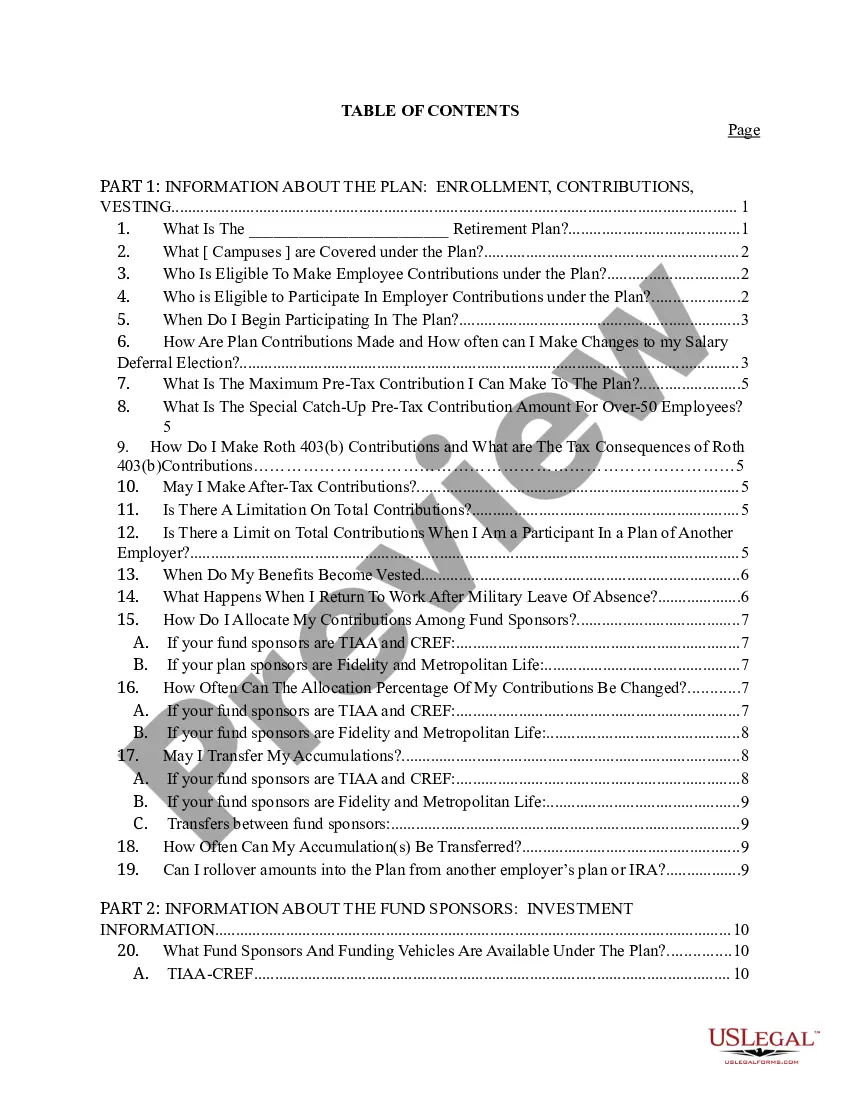
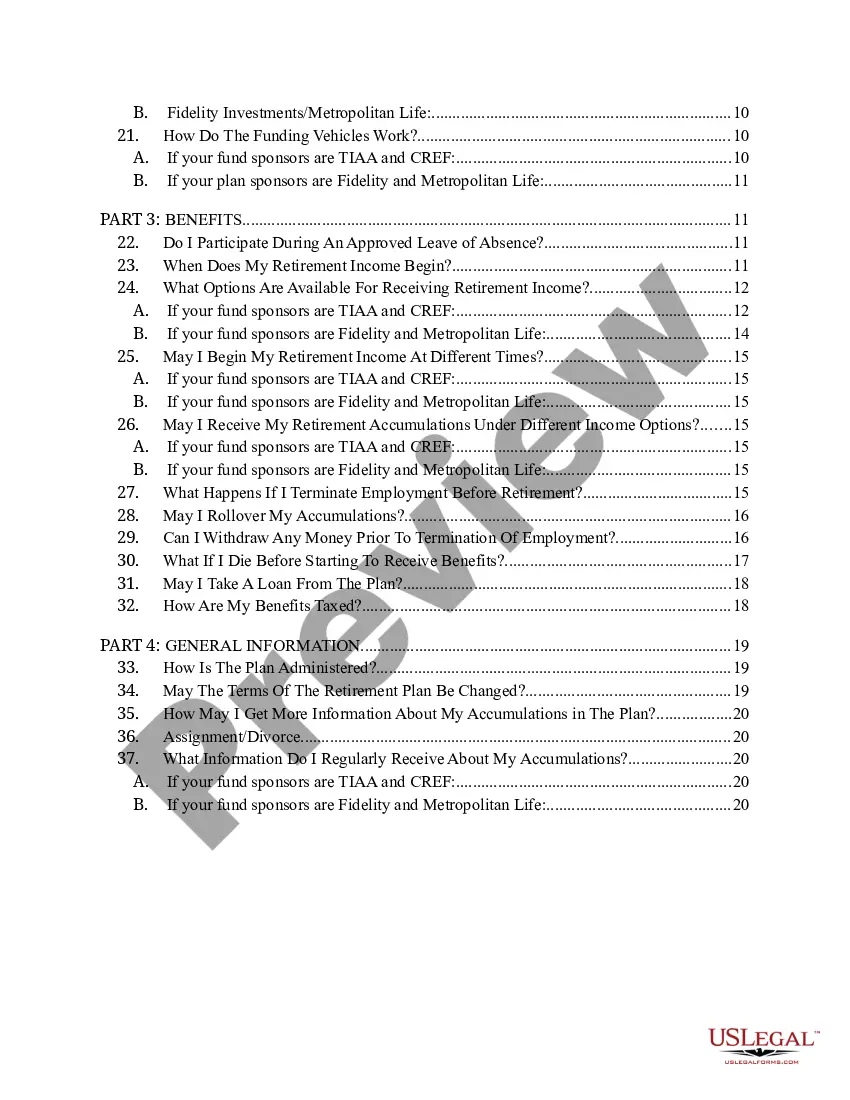
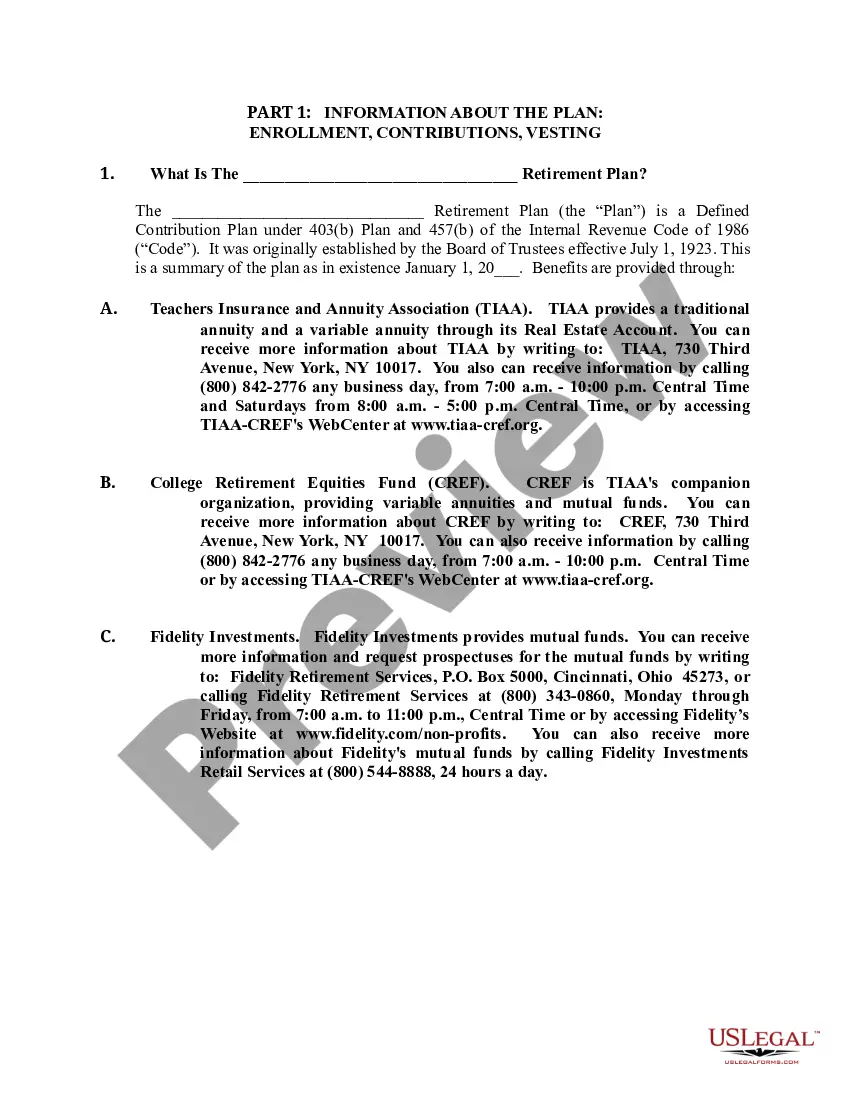
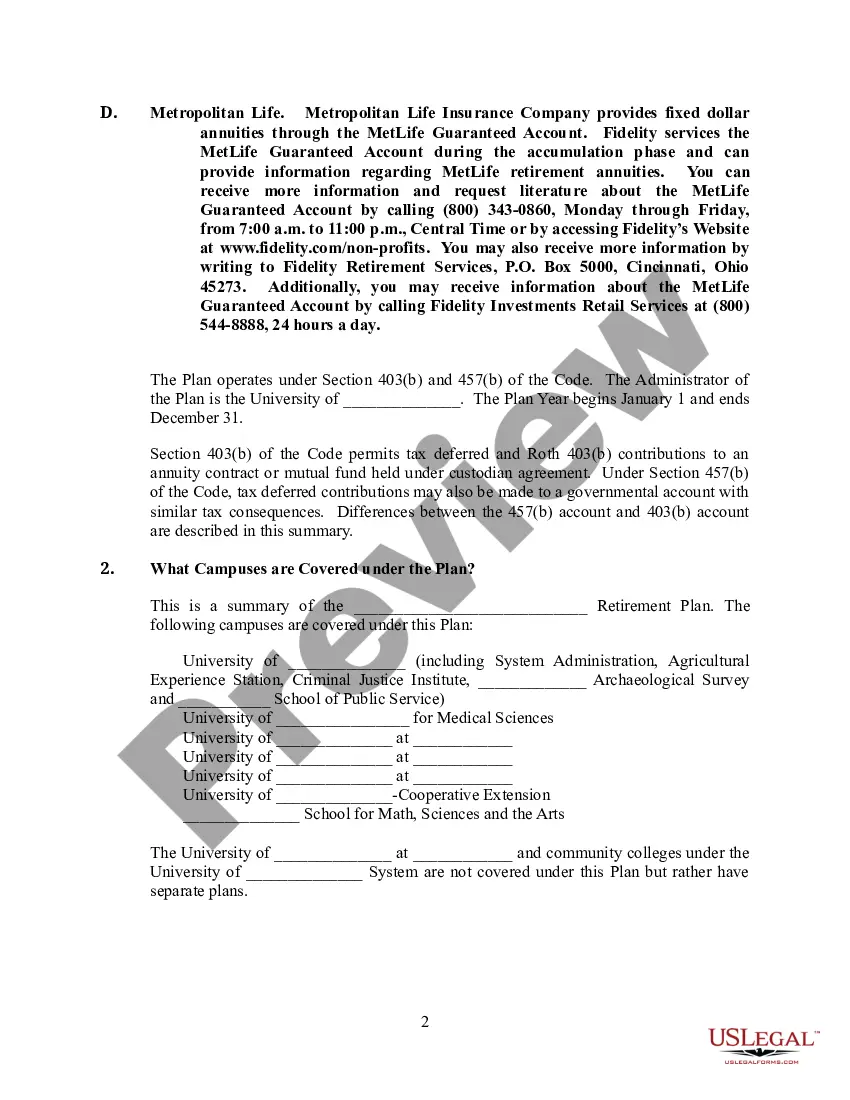
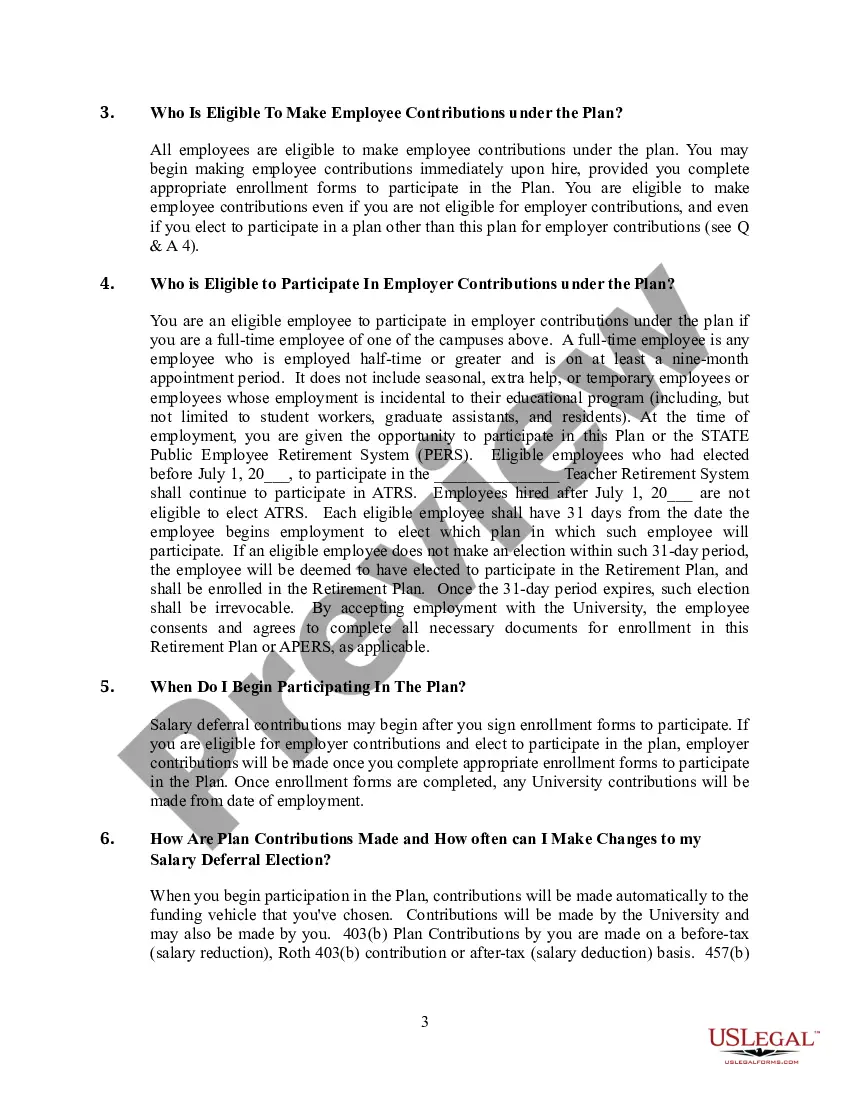
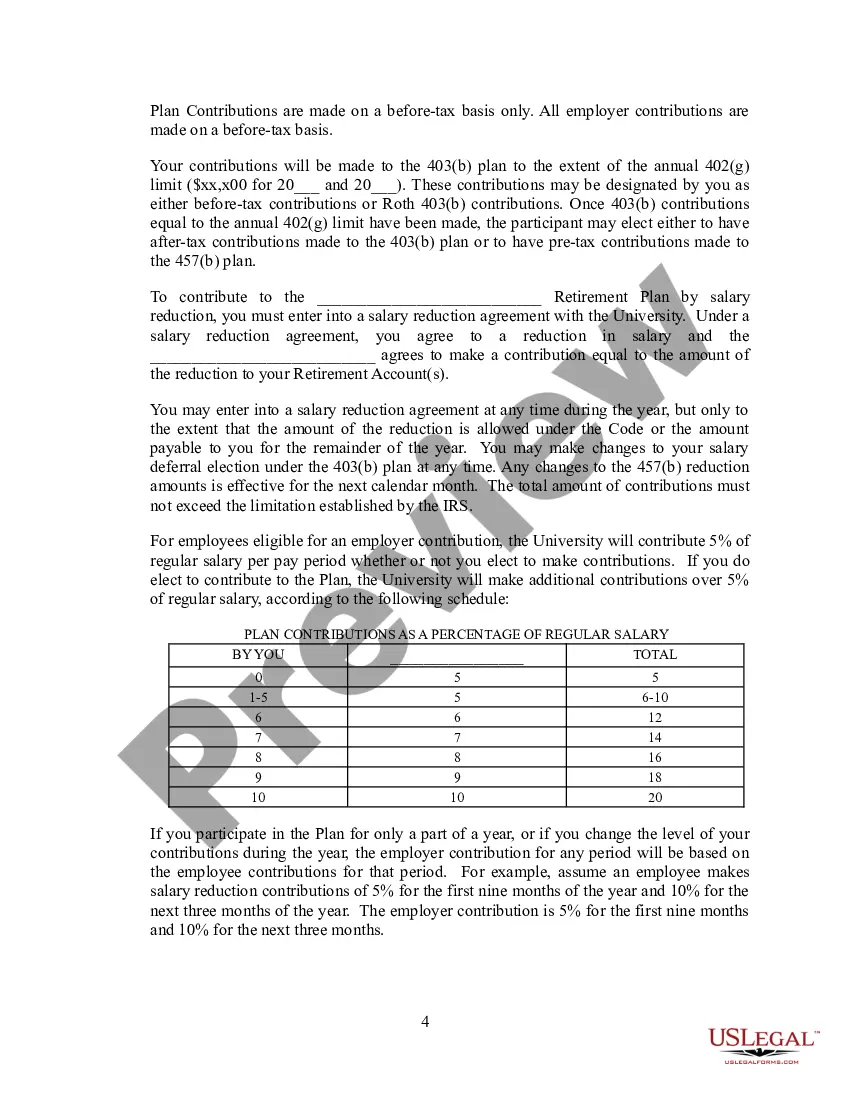
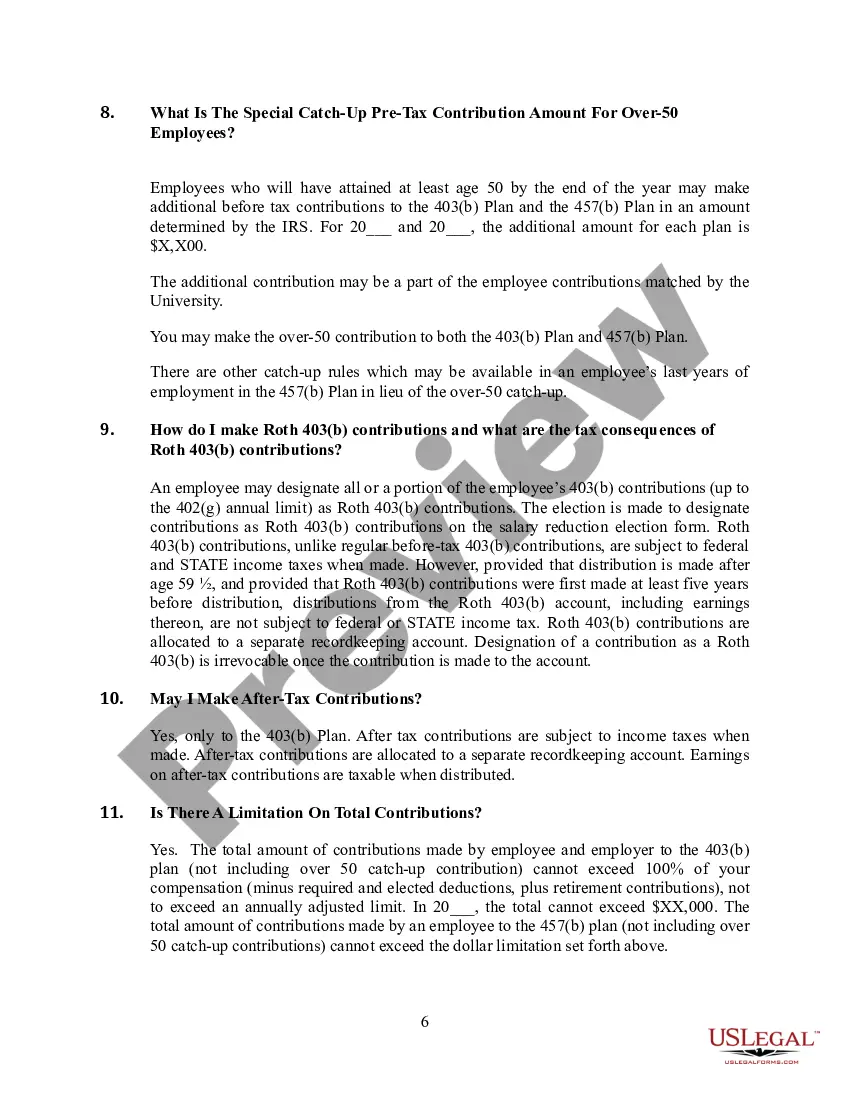
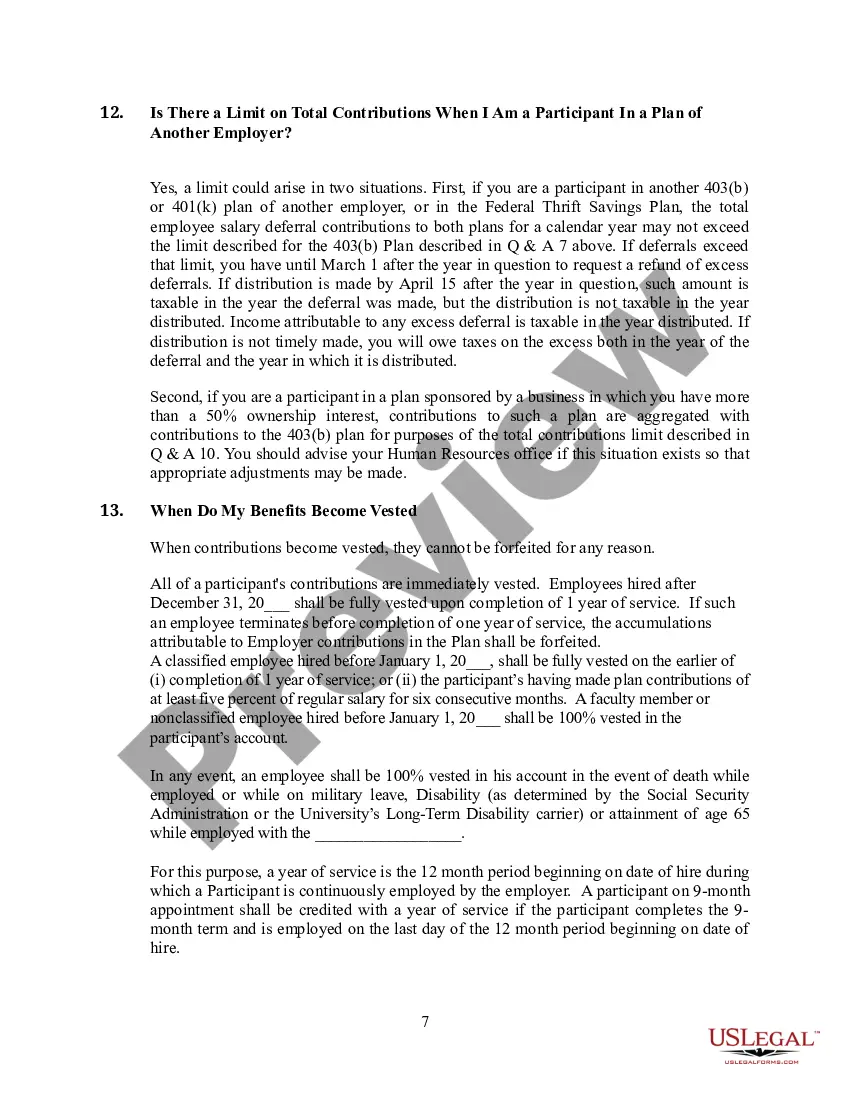
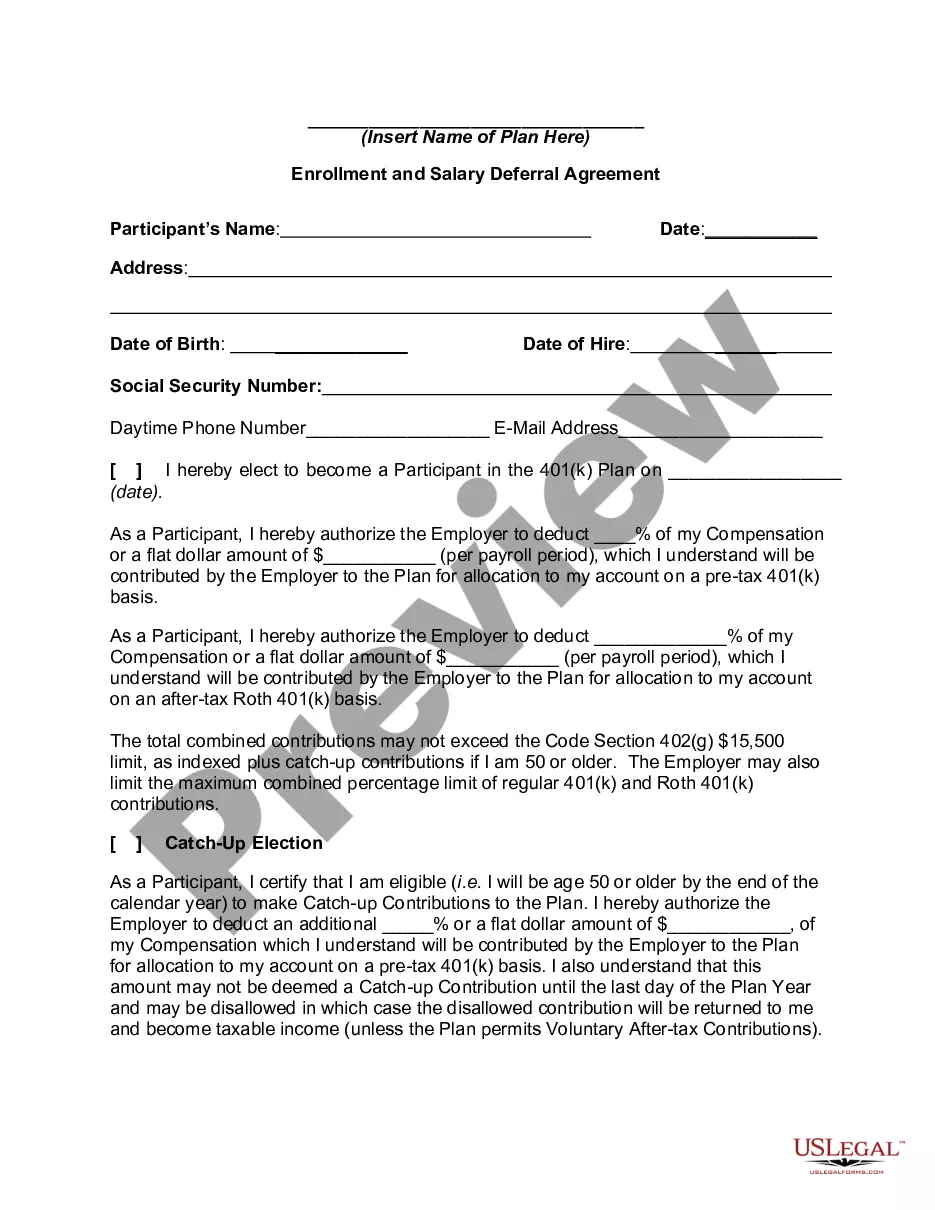
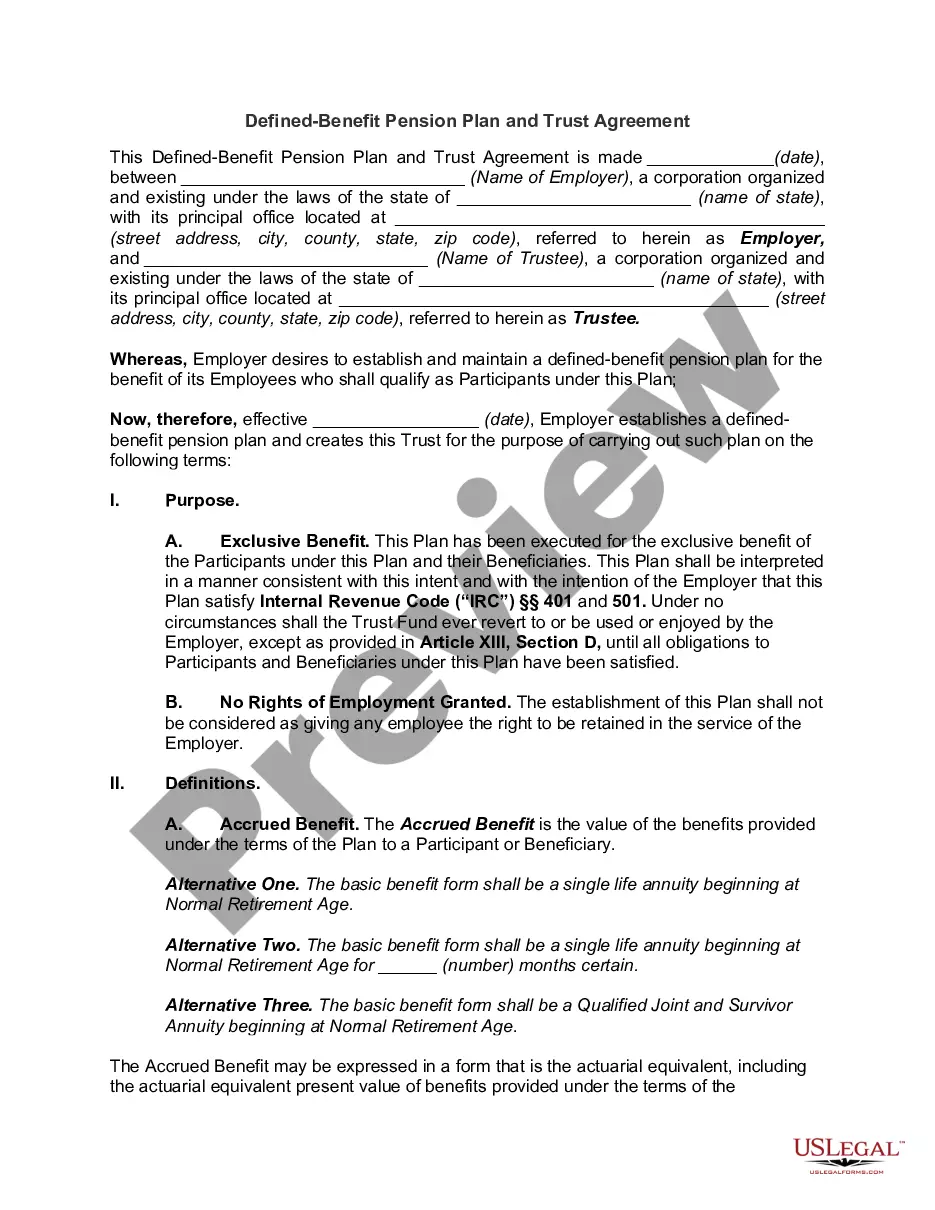
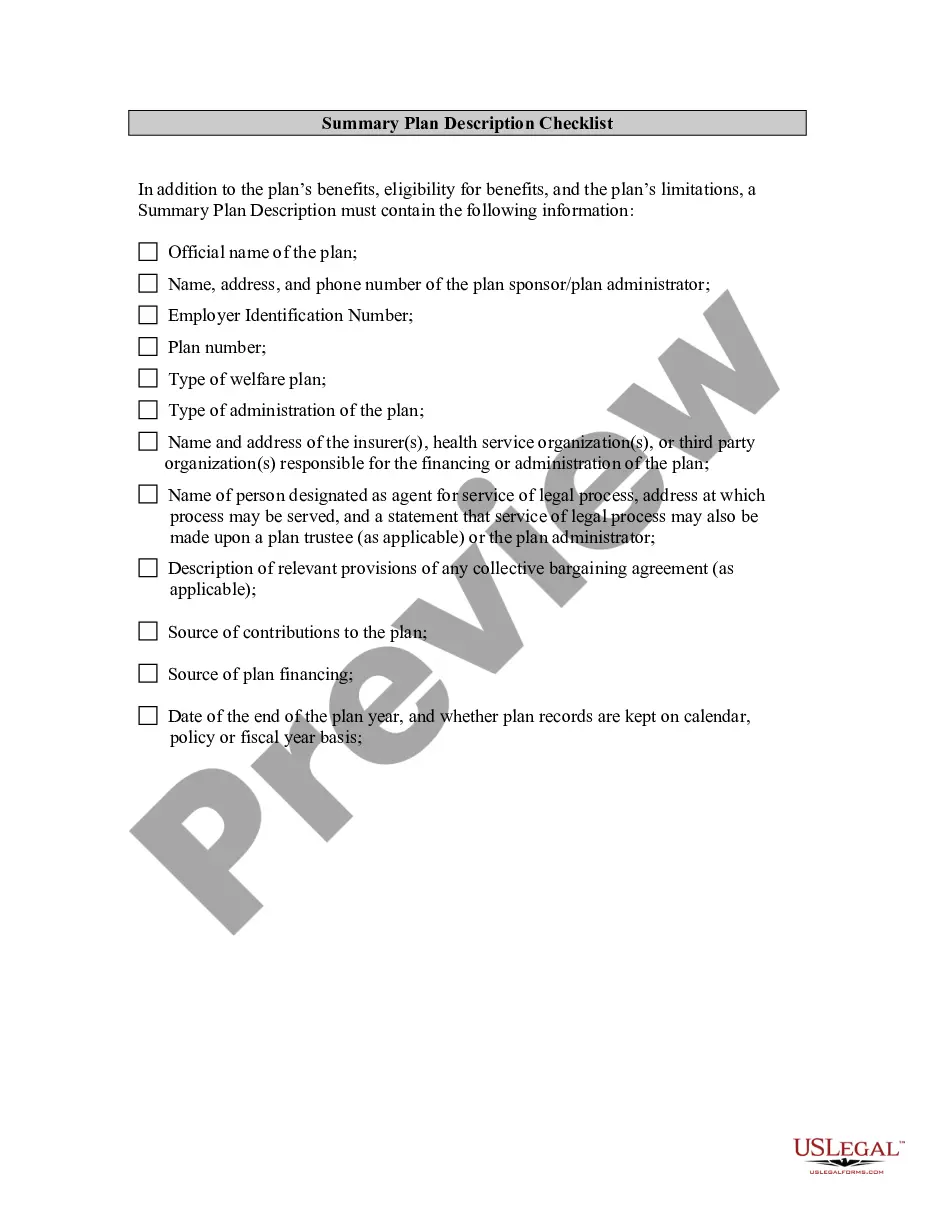
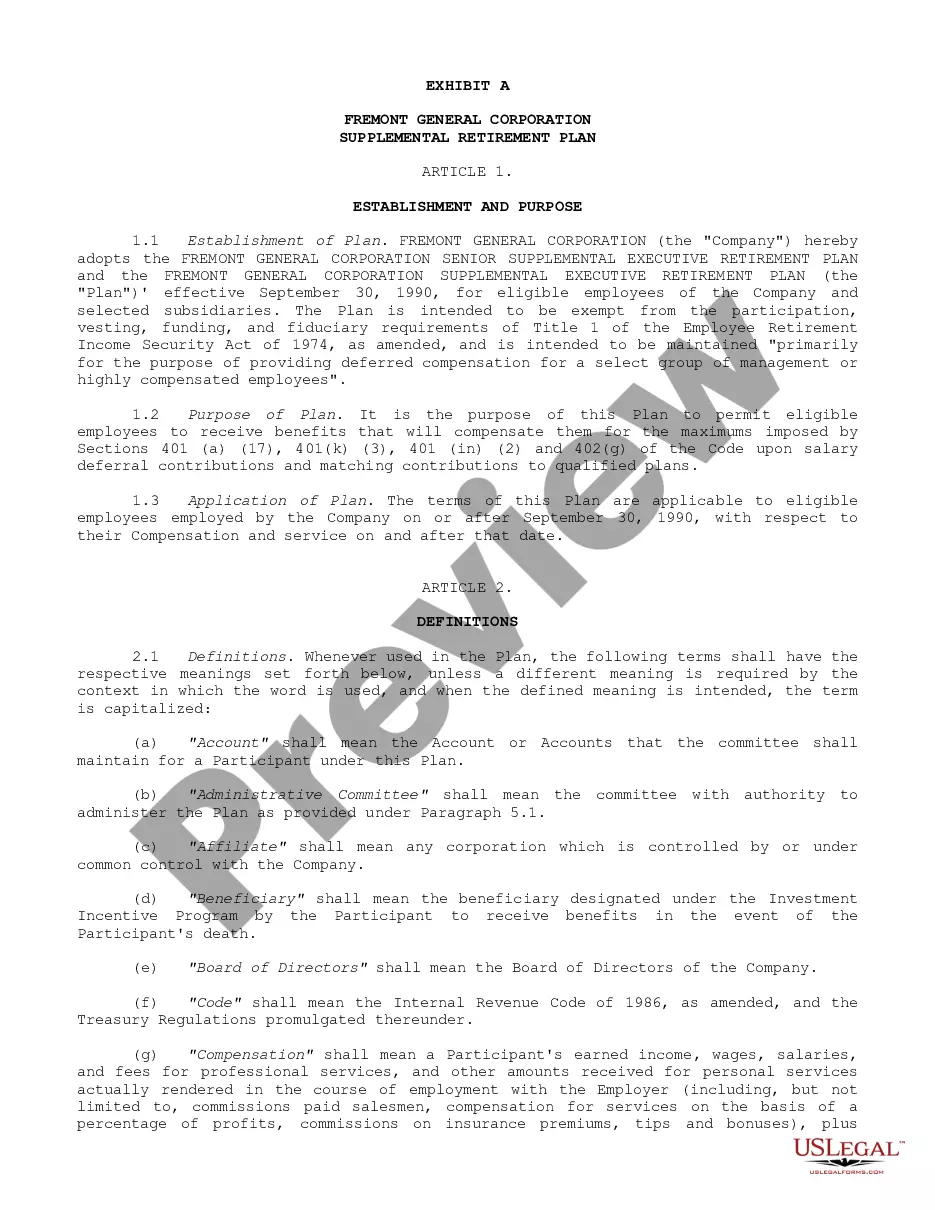
The Summary Plan Description of the University Retirement Plan provides essential information regarding the retirement plan options available to participants. This document outlines how the retirement plan operates, eligibility criteria, contribution limits, and investment options. Unlike other retirement-related documents, this form specifically focuses on the provisions of the university's plan and helps participants understand their rights and responsibilities within it.
Key components of this form
- Detailed description of the retirement plan options and eligibility criteria.
- Information on contribution types, limits, and vesting schedules.
- Instructions for investment allocation among fund sponsors.
- Explanations of retirement income options and withdrawals.
- Clarifications on contributions during military leave and non-matching contributions.



When to use this document
This form is essential when enrolling in the University Retirement Plan, especially for new employees. It is also useful for current participants to better understand their benefits and when making decisions related to contributions, withdrawals, or changing retirement income options. It serves as a valuable reference for faculty and staff considering various retirement strategies.
Who should use this form
- New employees of the university looking to enroll in the retirement plan.
- Current university employees seeking clarity on their retirement plan benefits.
- Faculty and staff making adjustments to their retirement contributions.
- Participants interested in understanding the implications of withdrawals or retirement income options.
Completing this form step by step
- Read through the entire Summary Plan Description to understand your benefits.
- Fill out the appropriate enrollment forms to participate in the retirement plan.
- Specify the types of contributions you wish to make, including pre-tax or Roth 403(b) options.
- Choose your investment allocations among TIAA-CREF and Fidelity funds, if applicable.
- Submit the completed forms to your Human Resources department for processing.
Does this form need to be notarized?
In most cases, this form does not require notarization. However, some jurisdictions or signing circumstances might. US Legal Forms offers online notarization powered by Notarize, accessible 24/7 for a quick, remote process.
Get your form ready online
Our built-in tools help you complete, sign, share, and store your documents in one place.
Make edits, fill in missing information, and update formatting in US Legal Forms—just like you would in MS Word.
Download a copy, print it, send it by email, or mail it via USPS—whatever works best for your next step.
Sign and collect signatures with our SignNow integration. Send to multiple recipients, set reminders, and more. Go Premium to unlock E-Sign.
If this form requires notarization, complete it online through a secure video call—no need to meet a notary in person or wait for an appointment.
We protect your documents and personal data by following strict security and privacy standards.

Make edits, fill in missing information, and update formatting in US Legal Forms—just like you would in MS Word.

Download a copy, print it, send it by email, or mail it via USPS—whatever works best for your next step.

Sign and collect signatures with our SignNow integration. Send to multiple recipients, set reminders, and more. Go Premium to unlock E-Sign.

If this form requires notarization, complete it online through a secure video call—no need to meet a notary in person or wait for an appointment.

We protect your documents and personal data by following strict security and privacy standards.
Typical mistakes to avoid
- Failing to complete enrollment forms within the specified time frame.
- Overlooking contribution limits, leading to excess contributions.
- Neglecting to update beneficiary designations after life events.
- Misunderstanding the vesting schedule and its implications.
Why use this form online
- Convenient access to the form allows for immediate downloading and completion.
- Easy to edit and customize according to your specific retirement plan needs.
- Reliable updates ensure you have the most current information on the retirement plan.
Legal use & context
- This form complies with federal regulations governing retirement plans.
- Participants must be aware of their rights under the Summary Plan Description.
- Legally binding upon completion and submission, ensuring adherence to the specified guidelines.
Main things to remember
- The Summary Plan Description is crucial for understanding your retirement benefits.
- Complete necessary enrollment forms promptly to secure your participation.
- Familiarize yourself with contribution limits and investment options to maximize your retirement savings.
Looking for another form?


Form popularity
FAQ
The summary plan description is an important document that tells participants what the plan provides and how it operates. It provides information on when an employee can begin to participate in the plan and how to file a claim for benefits.
A Summary Plan Description (SPD) is a document that employers must give free to employees who participate in Employee Retirement Income Security Act-covered retirement plans or health benefit plans. The SPD is a detailed guide to the benefits the program provides and how the plan works.
A summary plan description (SPD) is a ?plain English summary? of many of the important features of the plan. It covers eligibility, participant obligations, and provides important contact information for the plan's fiduciaries.
The summary plan description (SPD) is simply a summary of the plan document required to be written in such a way that the participants of the benefits plan can easily understand it. Unlike the plan document, the SPD is required to be distributed to plan participants.
Is John Hopkins University Ivy League? Ans. Johns Hopkins is not a member of the Ivy League. It is, however, one of the top universities in the country.
The summary plan description is an important document that tells participants what the plan provides and how it operates. It provides information on when an employee can begin to participate in the plan and how to file a claim for benefits.
A 403(b) plan (tax-sheltered annuity plan or TSA) is a retirement plan offered by public schools and certain charities. It's similar to a 401(k) plan maintained by a for-profit entity. Just as with a 401(k) plan, a 403(b) plan lets employees defer some of their salary into individual accounts.
Johns Hopkins Hospital and its School of Medicine are considered to be the founding institutions of modern American medicine and the birthplace of numerous famous medical traditions including rounds, residents and house staff.