Wisconsin Last Will and Testament Package
What is this form package?
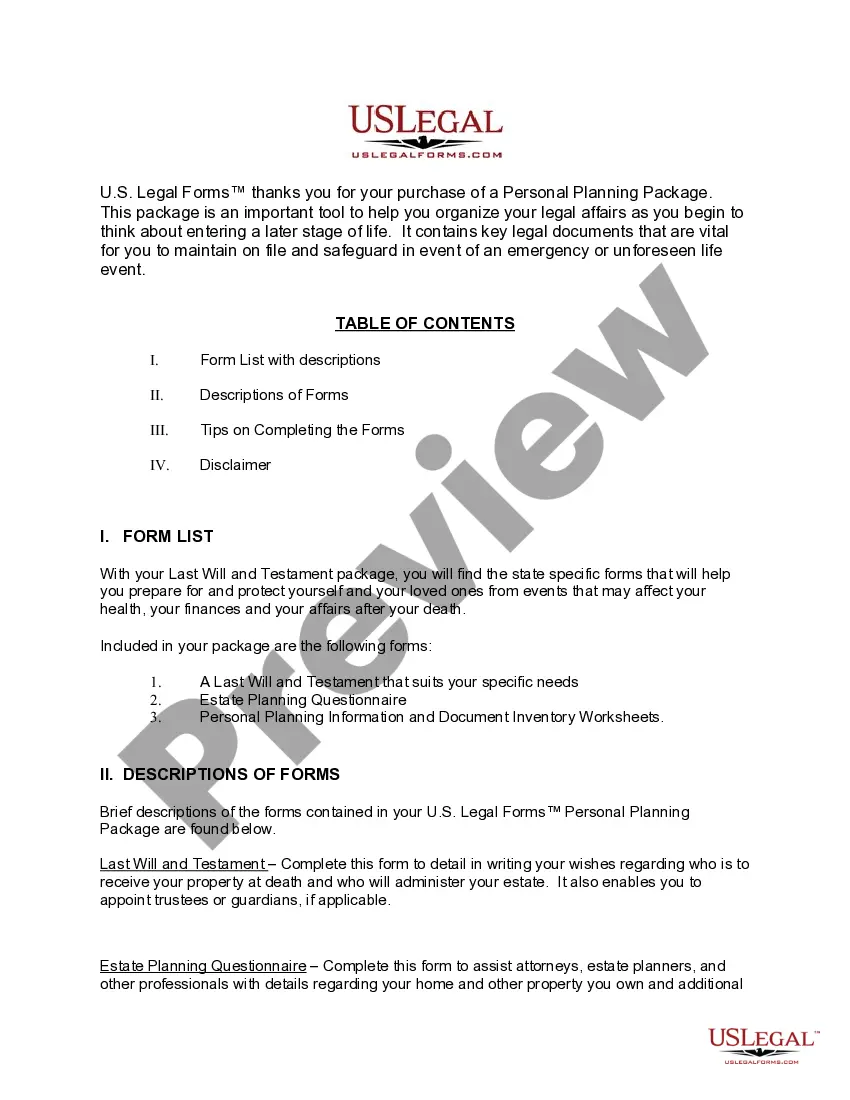
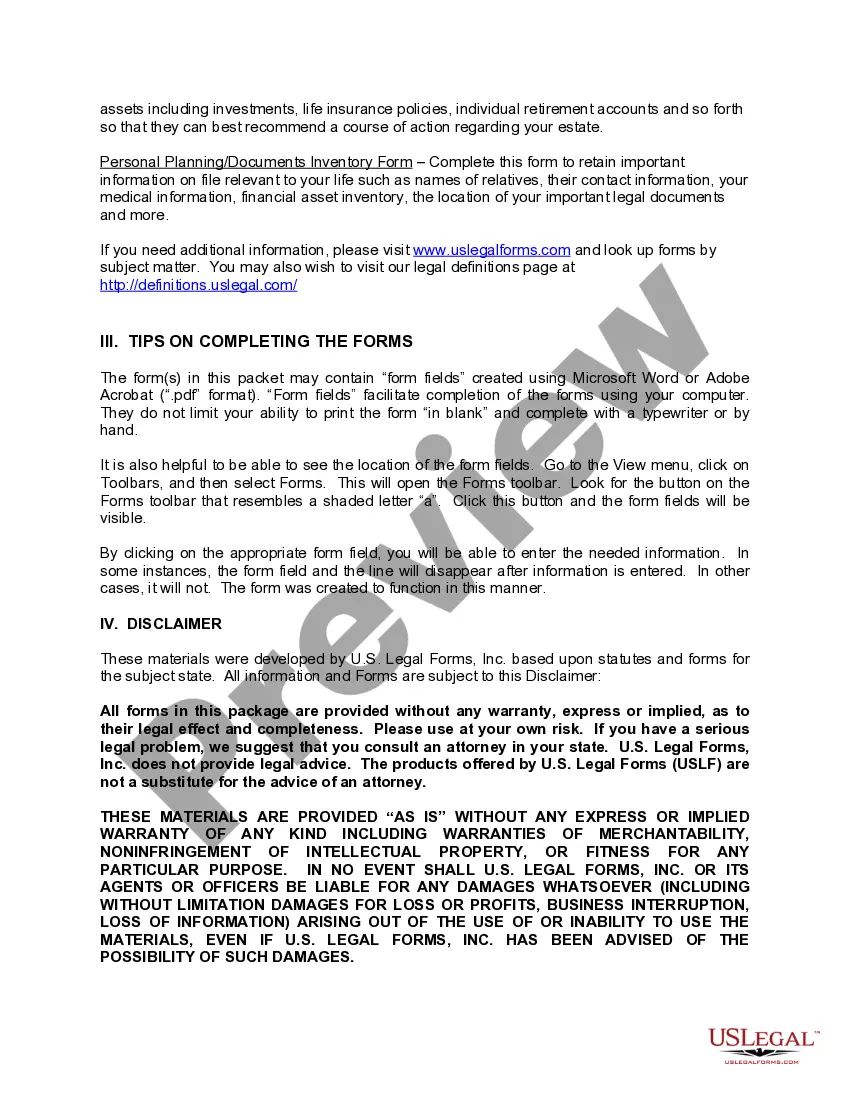
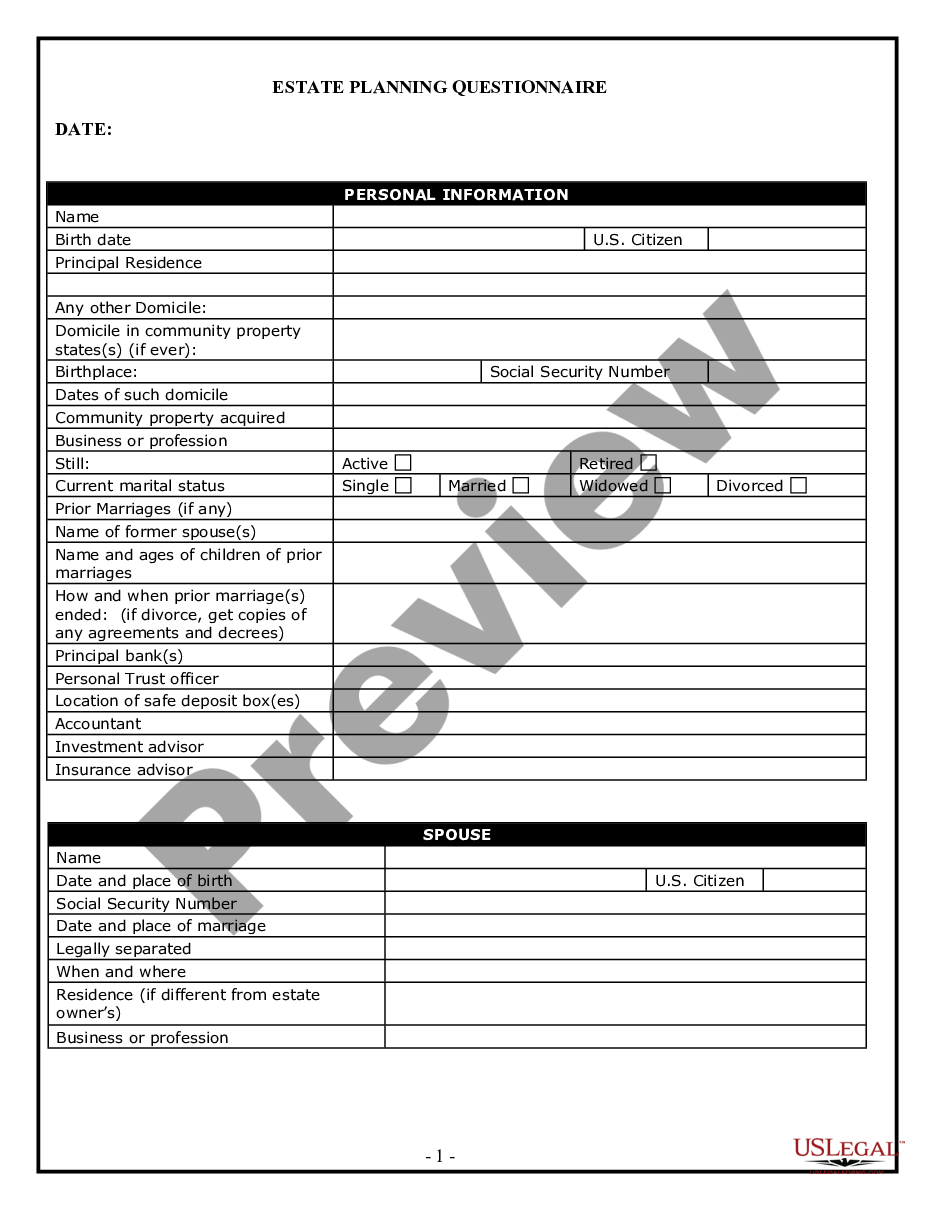
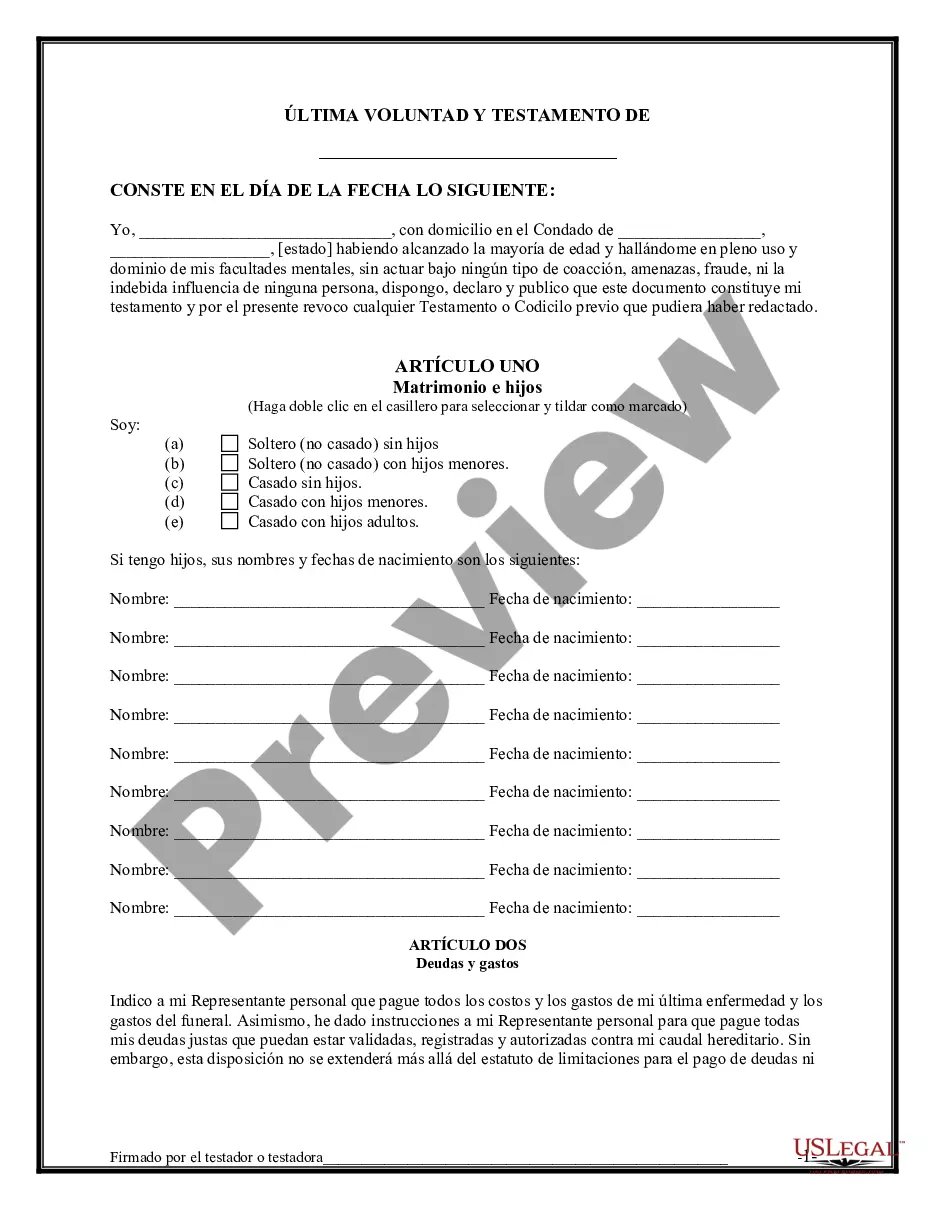
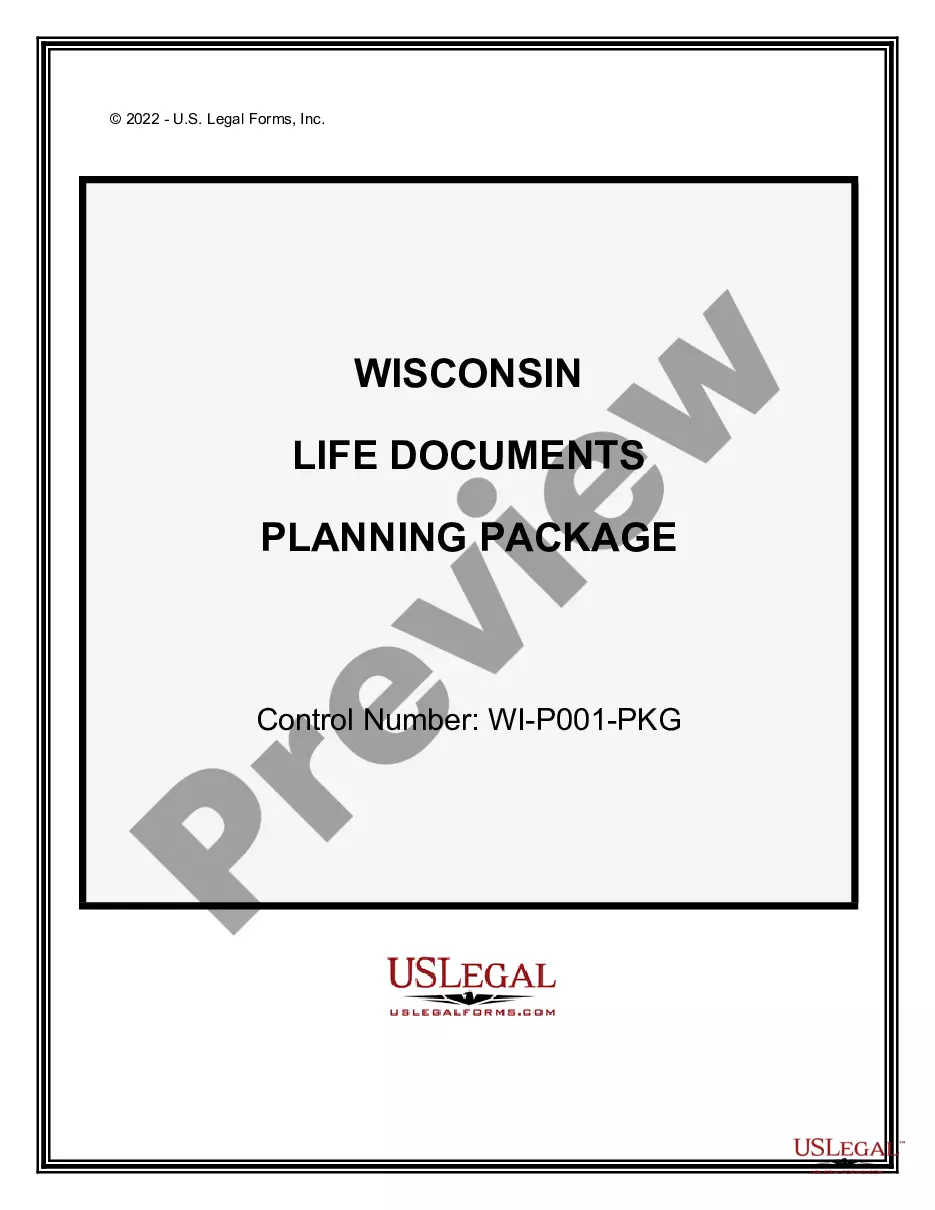
The Wisconsin Last Will and Testament Package provides essential legal documents designed to help you create a valid last will and effectively manage your estate plan. This package includes a customized Last Will and Testament, along with supporting forms like an Estate Planning Questionnaire and Document Inventory Worksheets. Unlike other packages, it also offers a completed sample of your selected Will at no extra cost, ensuring you have a clear reference when drafting your own document.
Forms included in this package



When to use this document
This package is ideal for individuals looking to prepare for the future by designating how their assets should be distributed upon their passing. You may need this form package if you:
- Want to ensure your assets are distributed according to your wishes.
- Have dependents or specific heirs you wish to provide for after your death.
- Are planning for potential health issues that may affect your ability to manage your affairs.
- Want to minimize family disputes regarding asset distribution.
Who this form package is for
- Individuals who are married, divorced, or single.
- Parents, guardians, or caregivers of minor children.
- Individuals who own property or have financial assets.
- Anyone looking to create a legally binding last will in Wisconsin.
How to complete these forms
- Review the included forms to familiarize yourself with the requirements.
- Complete the Estate Planning Questionnaire to provide relevant personal and financial information.
- Fill out the Last Will and Testament form, ensuring your wishes regarding asset distribution are clearly articulated.
- Use the Document Inventory Worksheets to keep essential information organized and accessible.
- Consult the completed sample of the Will to guide your document preparation.
Do forms in this package need to be notarized?
Forms in this package typically do not require notarization unless required by local law. However, it is advisable to have your Last Will and Testament signed in the presence of witnesses in order to enhance its validity. Using notarization can further affirm the authenticity of your Will and protect against potential disputes.
Get your form ready online
Our built-in tools help you complete, sign, share, and store your documents in one place.
Make edits, fill in missing information, and update formatting in US Legal Forms—just like you would in MS Word.
Download a copy, print it, send it by email, or mail it via USPS—whatever works best for your next step.
Sign and collect signatures with our SignNow integration. Send to multiple recipients, set reminders, and more. Go Premium to unlock E-Sign.
If this form requires notarization, complete it online through a secure video call—no need to meet a notary in person or wait for an appointment.
We protect your documents and personal data by following strict security and privacy standards.
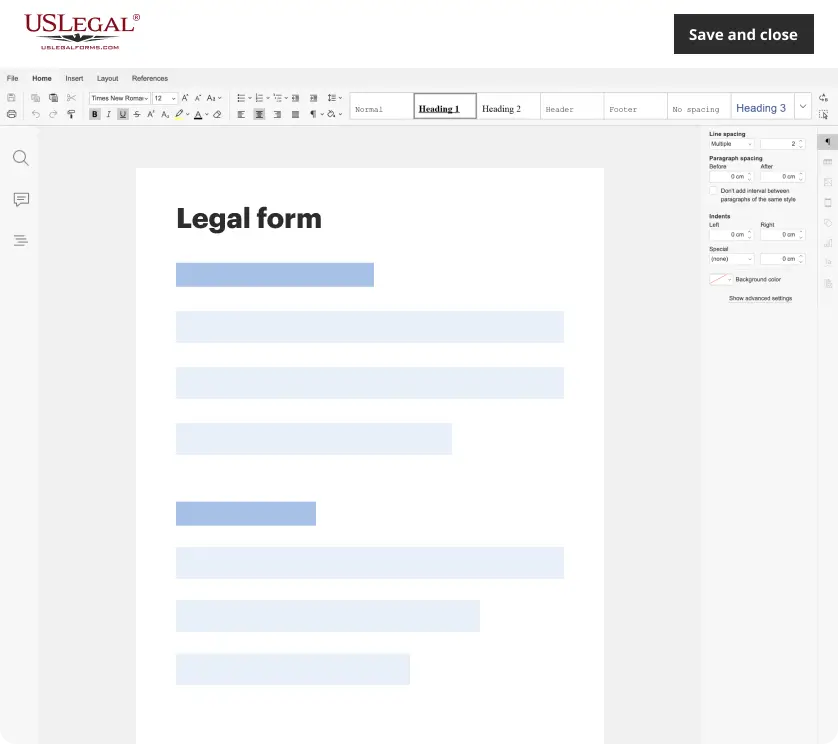
Make edits, fill in missing information, and update formatting in US Legal Forms—just like you would in MS Word.
Download a copy, print it, send it by email, or mail it via USPS—whatever works best for your next step.
Sign and collect signatures with our SignNow integration. Send to multiple recipients, set reminders, and more. Go Premium to unlock E-Sign.
If this form requires notarization, complete it online through a secure video call—no need to meet a notary in person or wait for an appointment.
We protect your documents and personal data by following strict security and privacy standards.
Mistakes to watch out for
- Not clearly specifying beneficiaries, leading to potential disputes.
- Failing to sign and date the Will according to state requirements.
- Leaving out important assets or not updating the Will after major life changes.
- Neglecting to appoint an executor for your estate.
Benefits of using this package online
- Convenient downloading allows you to access forms from home at any time.
- Edit the forms digitally or print them for hand completion, making it flexible for your needs.
- Reliable legal documents crafted by licensed attorneys ensure compliance with state laws.
- Access to a completed sample helps guide your form completion process.
Legal use & context
- The Last Will and Testament serves as a legal declaration of how your assets should be distributed after your death.
- It is important to follow state laws regarding the execution of a will to ensure it is enforceable.
- Proper documentation and completion of these forms can prevent potential disputes among heirs.
Summary of main points
- The Wisconsin Last Will and Testament Package provides essential documents for effective estate planning.
- It includes a customizable Will, along with worksheets to help organize your financial affairs.
- This package is suitable for anyone wishing to ensure their assets are distributed according to their wishes.
- Completing these forms is straightforward and can be done at your own pace.
Looking for another form?


Form popularity
FAQ
Physical assets such as a house, cars or jewellery. Financial assets such as shares or bank savings, and. Heirlooms or possessions with sentimental value.
A person's last will and testament outlines what to do with possessions, whether the deceased will leave them to another person, a group or donate them to charity, and what happens to other things that they are responsible for, such as custody of dependents and management of accounts and financial interests.
Contrary to popular belief, you do not need to have an attorney draft a will for you. Anyone can write this document on their own, and as long as it meets all of the legal requirements of the state, courts will recognize one you wrote yourself.
No. You can make your own will in Wisconsin, using Nolo's do-it-yourself will software or online will programs. However, you may want to consult a lawyer in some situations. For example, if you think that your will might be contested or if you want to disinherit your spouse, you should talk with an attorney.
Bank accounts. Brokerage or investment accounts. Retirement accounts and pension plans. A life insurance policy.
Your will should state who gets what from your savings and property, including your home, investments and cash. It should cover all the things you own, such as cars, furniture, pictures and jewelry.
Age: The testator must be at least 18 years old. Capacity: The testator must be of sound mind. Signature: The will must be signed by the testator or by someone else in the testator's name in his conscious presence, by his direction.
There are certain types of property that legally cannot be included in a person's will. Depending on state laws, these may include: Any Property that is Co-Owned with Someone Else Through Joint-Tenancy: Married couples typically own the marital home in joint tenancy.Property being held in a living trust.
Probate matters in Wisconsin are handled at the local circuit court level. If there is a will, it must be filed with the court, even if probate isn't needed to distribute the decedent's property.