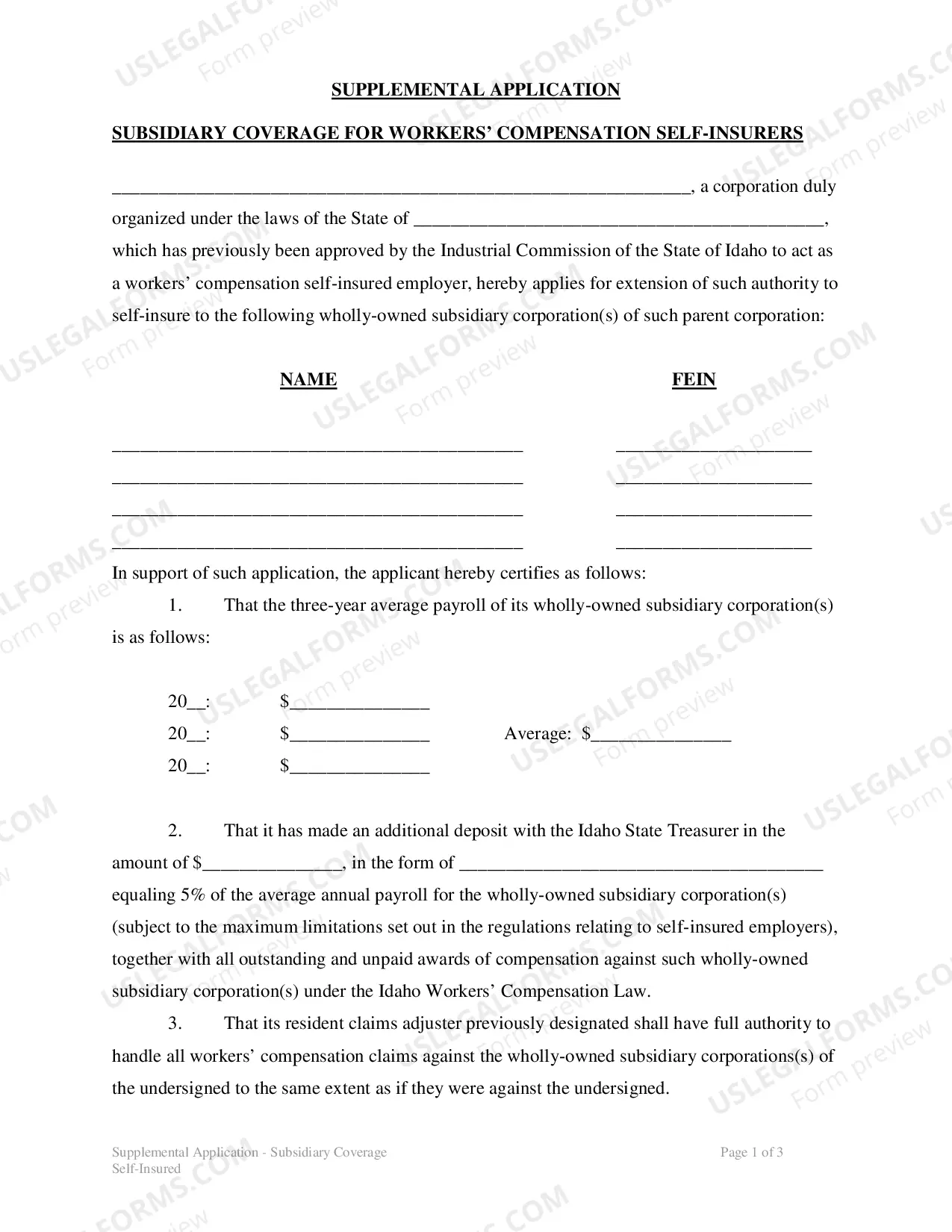
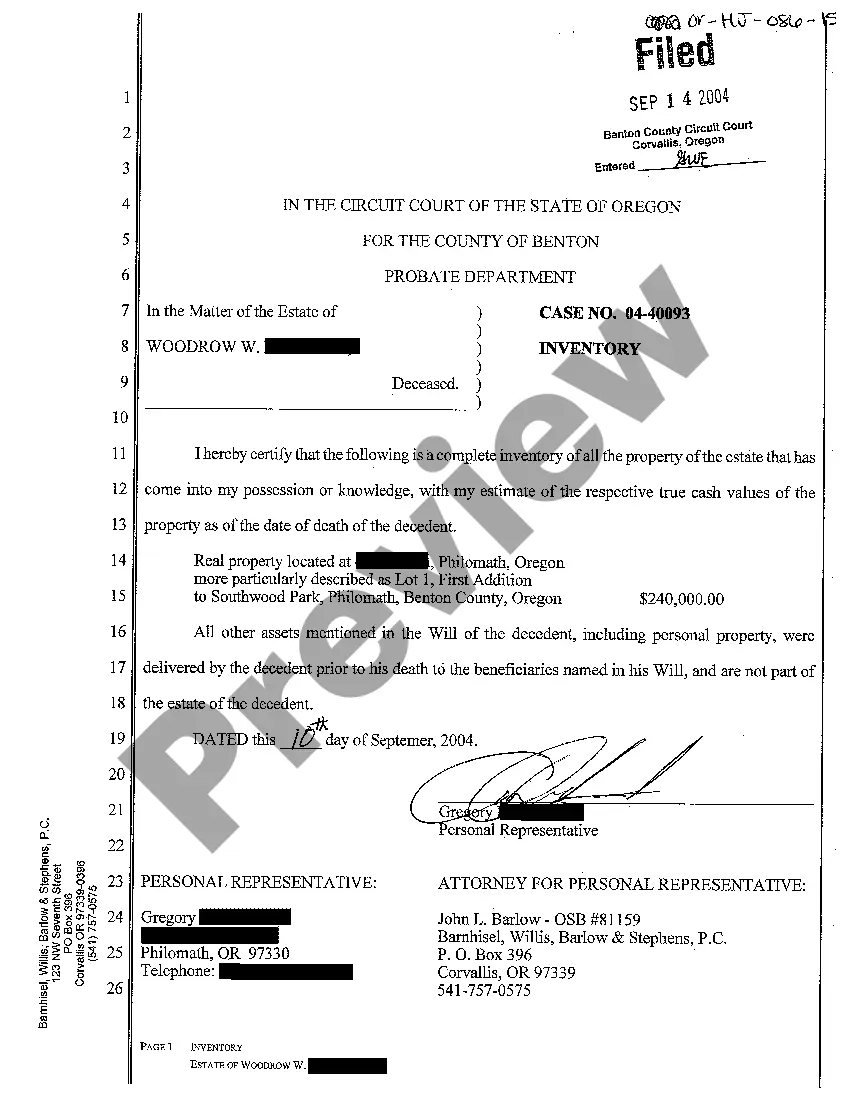
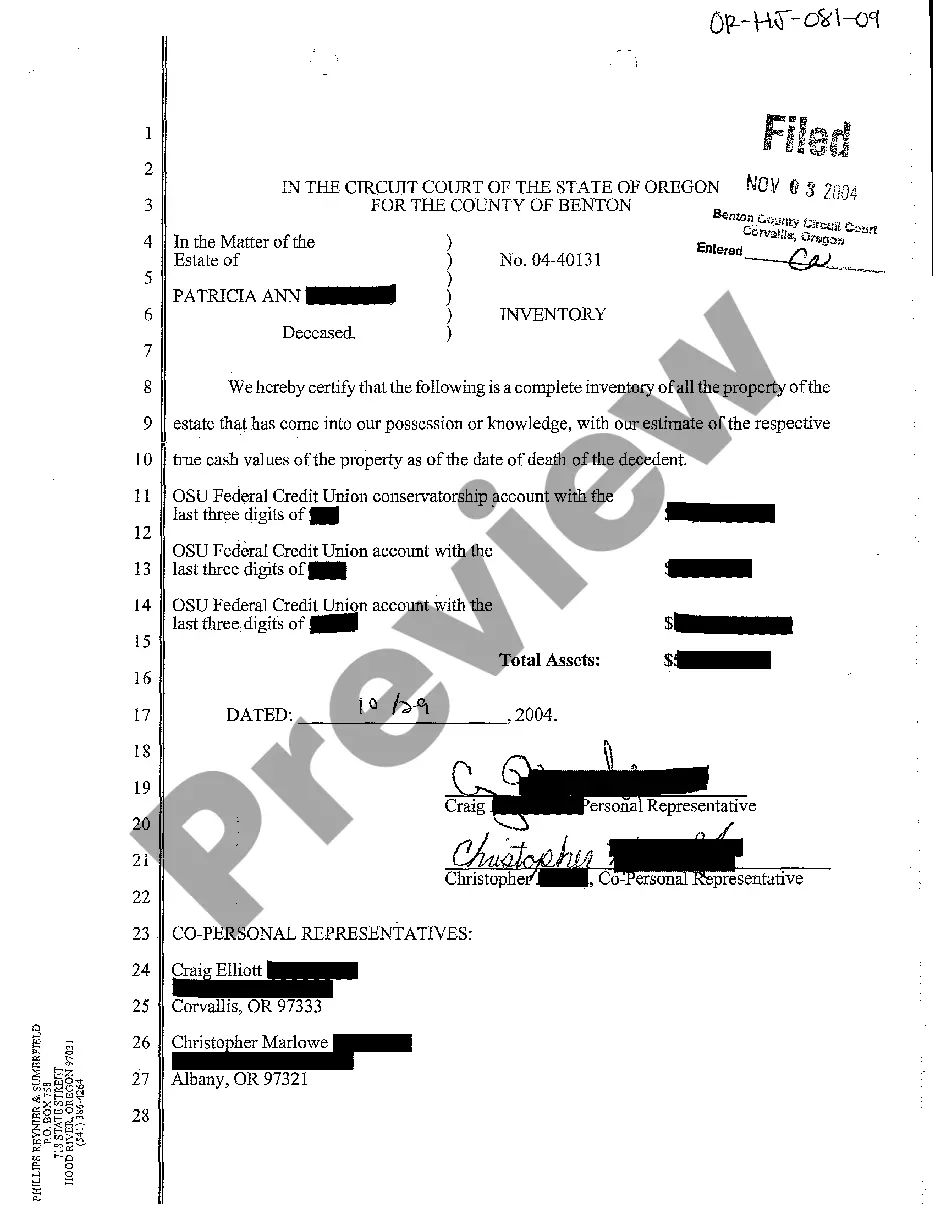
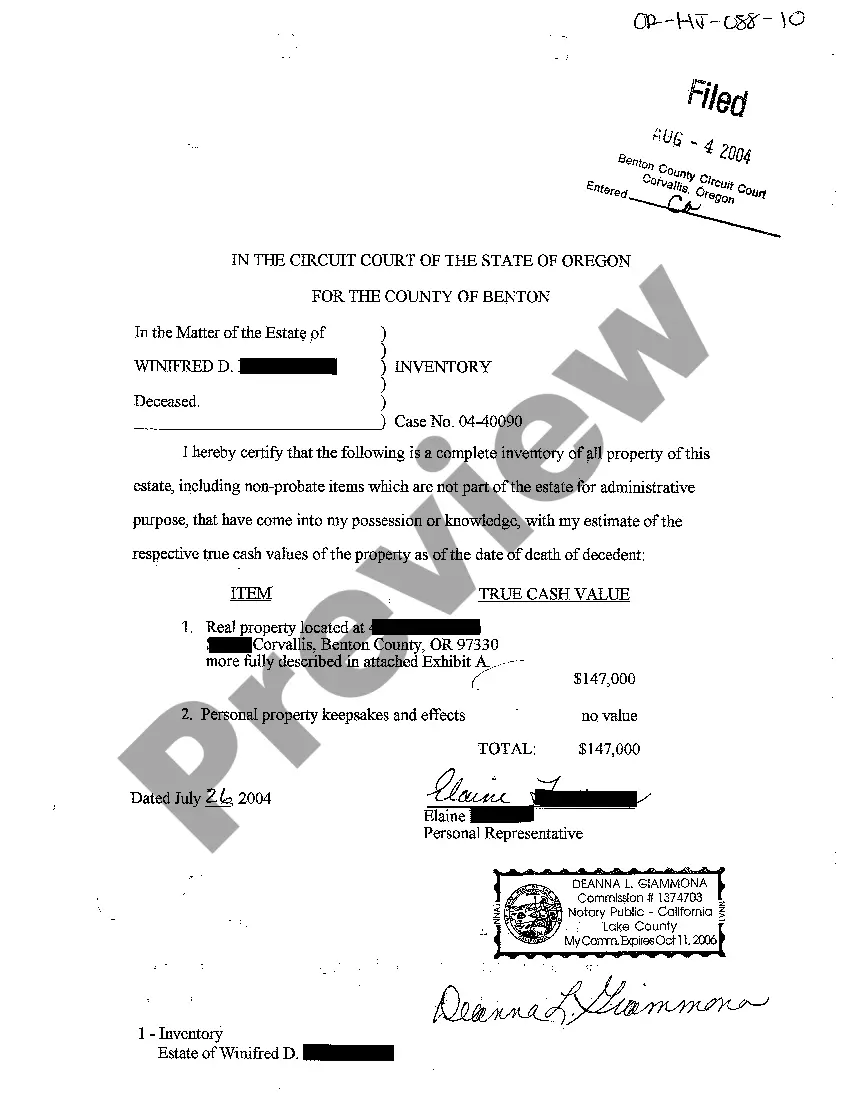
Oregon Inventory of Estate
Description
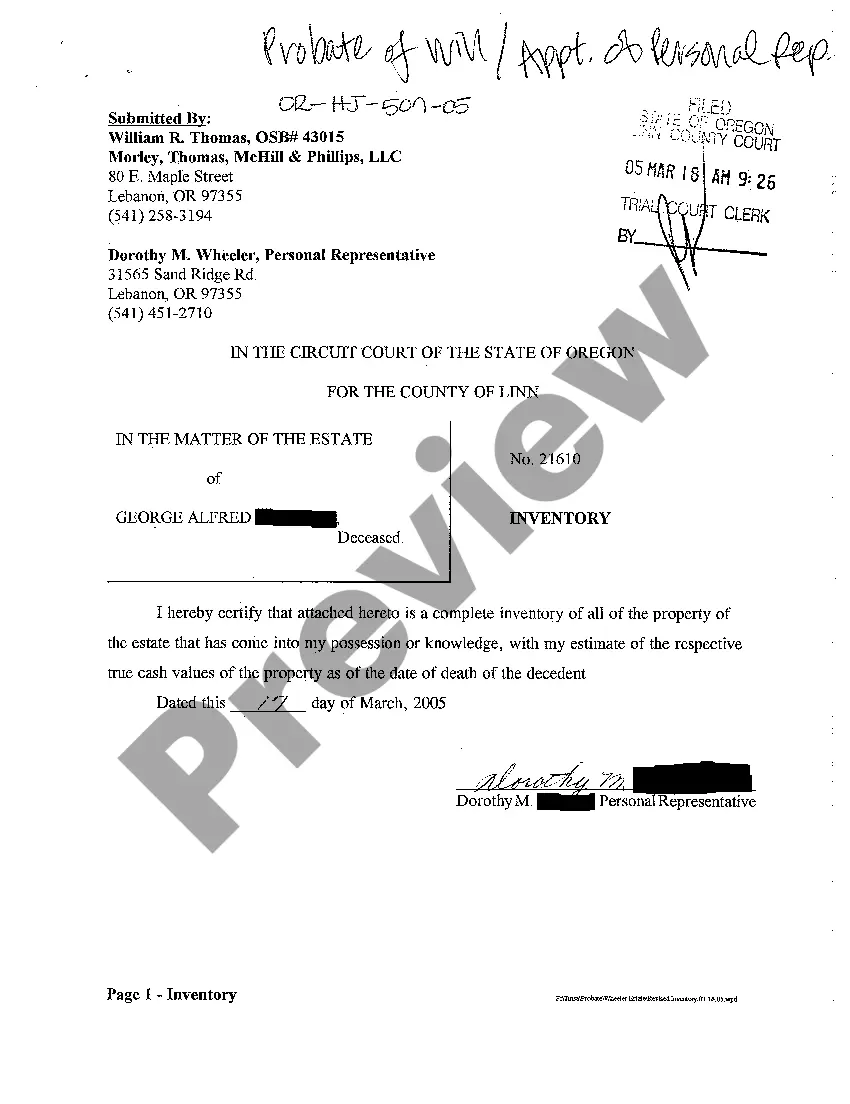
How to fill out Oregon Inventory Of Estate?
In terms of filling out Oregon Inventory of Estate, you probably think about an extensive procedure that consists of getting a ideal sample among countless very similar ones after which having to pay legal counsel to fill it out for you. In general, that’s a slow-moving and expensive option. Use US Legal Forms and choose the state-specific form within just clicks.
In case you have a subscription, just log in and click Download to have the Oregon Inventory of Estate sample.
If you don’t have an account yet but need one, stick to the step-by-step manual listed below:
- Be sure the file you’re saving applies in your state (or the state it’s needed in).
- Do this by reading the form’s description and through clicking on the Preview function (if offered) to see the form’s content.
- Simply click Buy Now.
- Pick the appropriate plan for your financial budget.
- Subscribe to an account and choose how you would like to pay: by PayPal or by credit card.
- Save the file in .pdf or .docx file format.
- Get the file on your device or in your My Forms folder.
Professional lawyers work on creating our templates to ensure that after saving, you don't need to bother about modifying content material outside of your individual info or your business’s information. Sign up for US Legal Forms and receive your Oregon Inventory of Estate example now.
Form popularity
FAQ
Under Oregon law, a small estate affidavit can be filed if the estate has no more than $75,000 in personal property and no more that $200,000 in real property. These limits may be subject to change. A larger estate may require probate.
Your inventory should include the number of shares of each type of stock, the name of the corporation, and the name of the exchange on which the stock is traded. Meanwhile, you should note the total gross amount of a bond, the name of the entity that issued it, the interest rate on the bond, and its maturity date.
In general, an estate inventory checklist will include financial assets that belonged to the deceased.You will need a certified copy of the death certificate to show the bank to find out the amounts held in each account. Probate inventory samples generally list savings bonds, annuities and certificates of deposit.
Determine Your State's Laws Regarding Inventory Forms. Review the Instructions Provided. Identify Real Property. Identify Personal Property. Identify Bank Accounts. Identify Retirement Accounts. Identify Non-Probate Assets. File the Form With the Court.
Real Estate, Bank Accounts, and Vehicles.Stocks and Bonds.Life Insurance and Retirement Plans.Wages and Business Interests.Intellectual Property.Debts and Judgments.