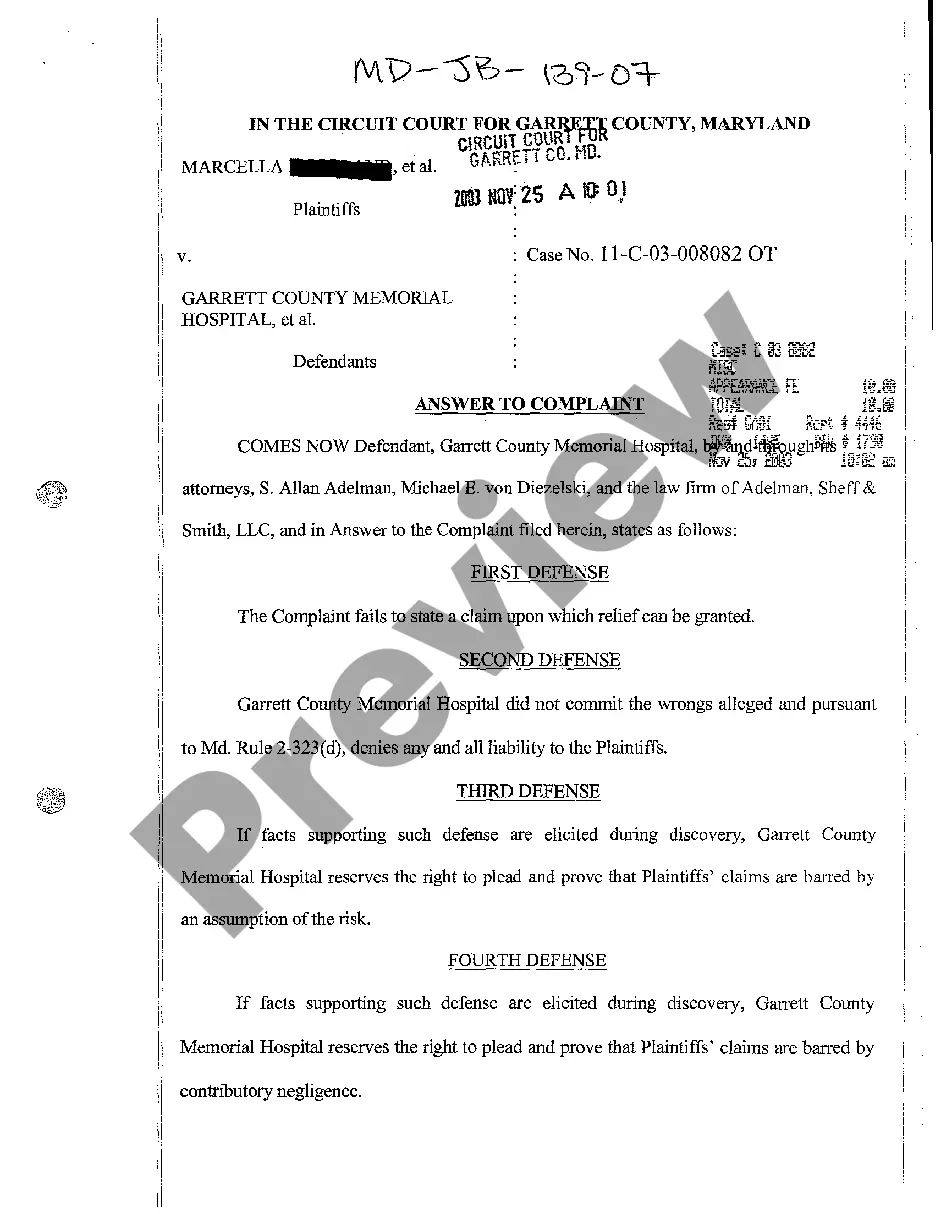
Failure to File a Tax Return - Requirement That a Return Be Filed
What this document covers
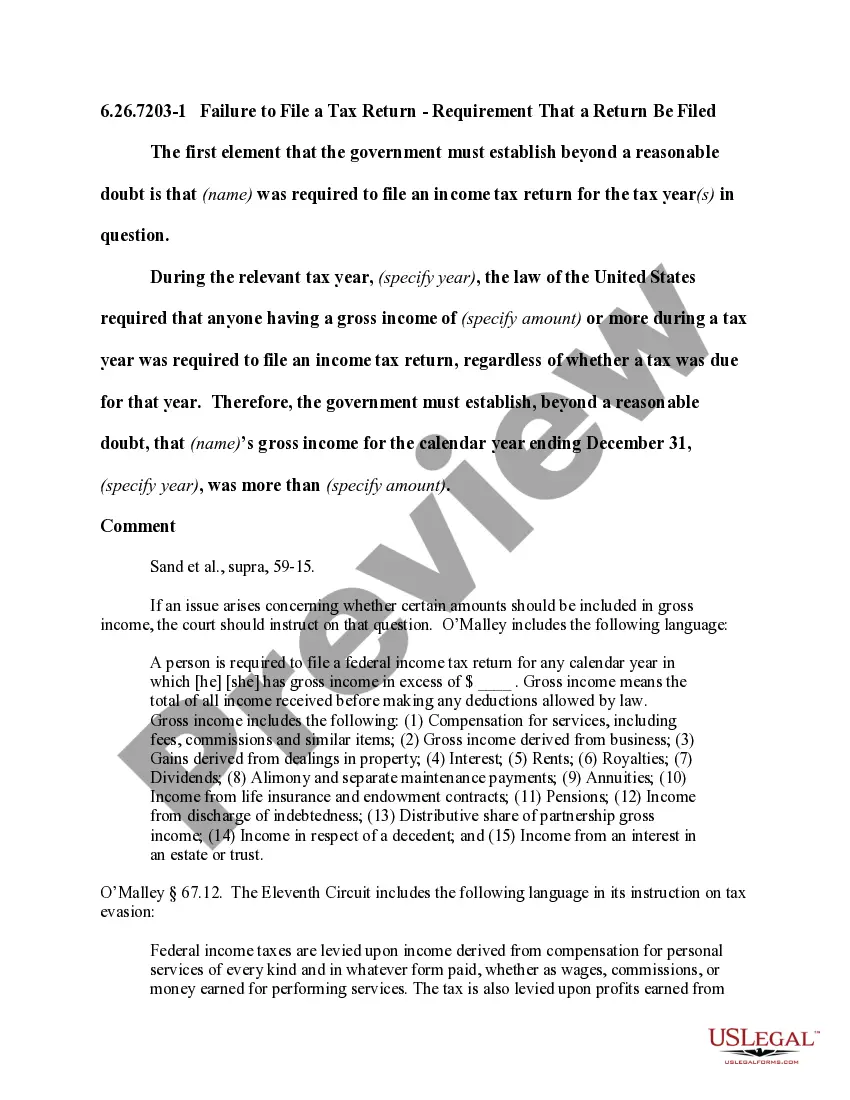
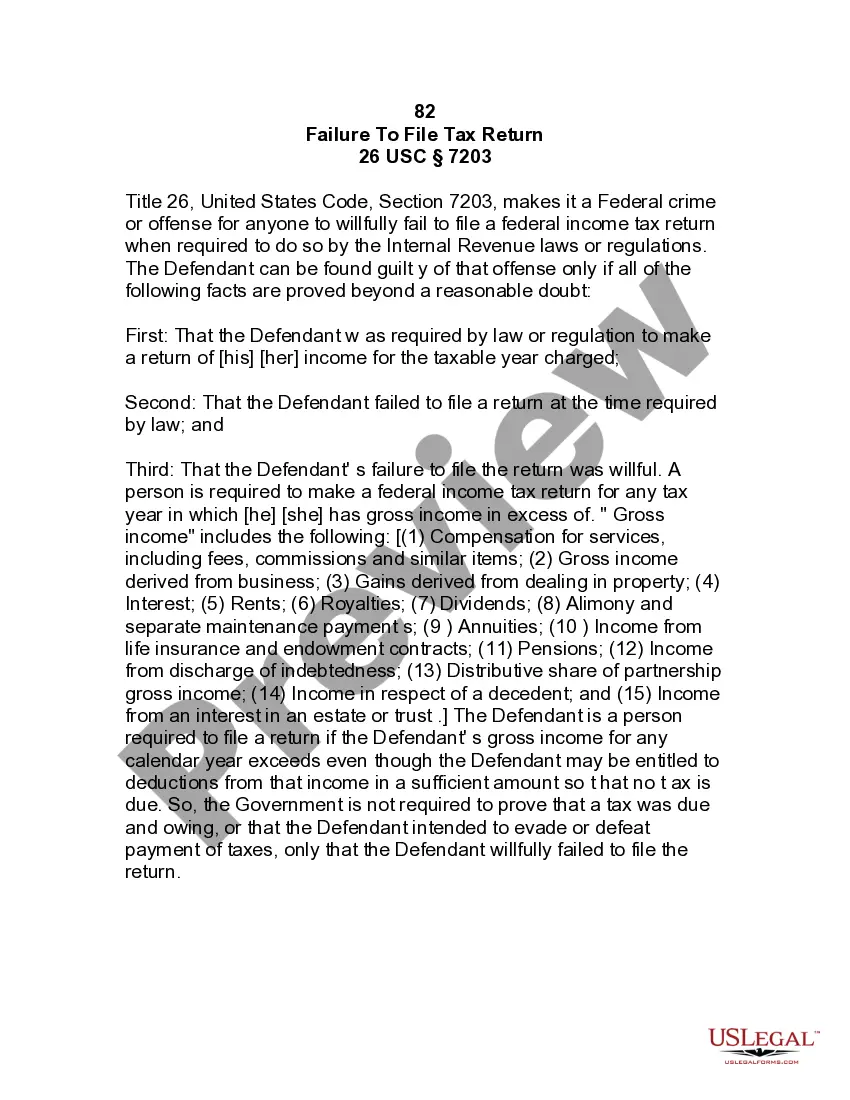
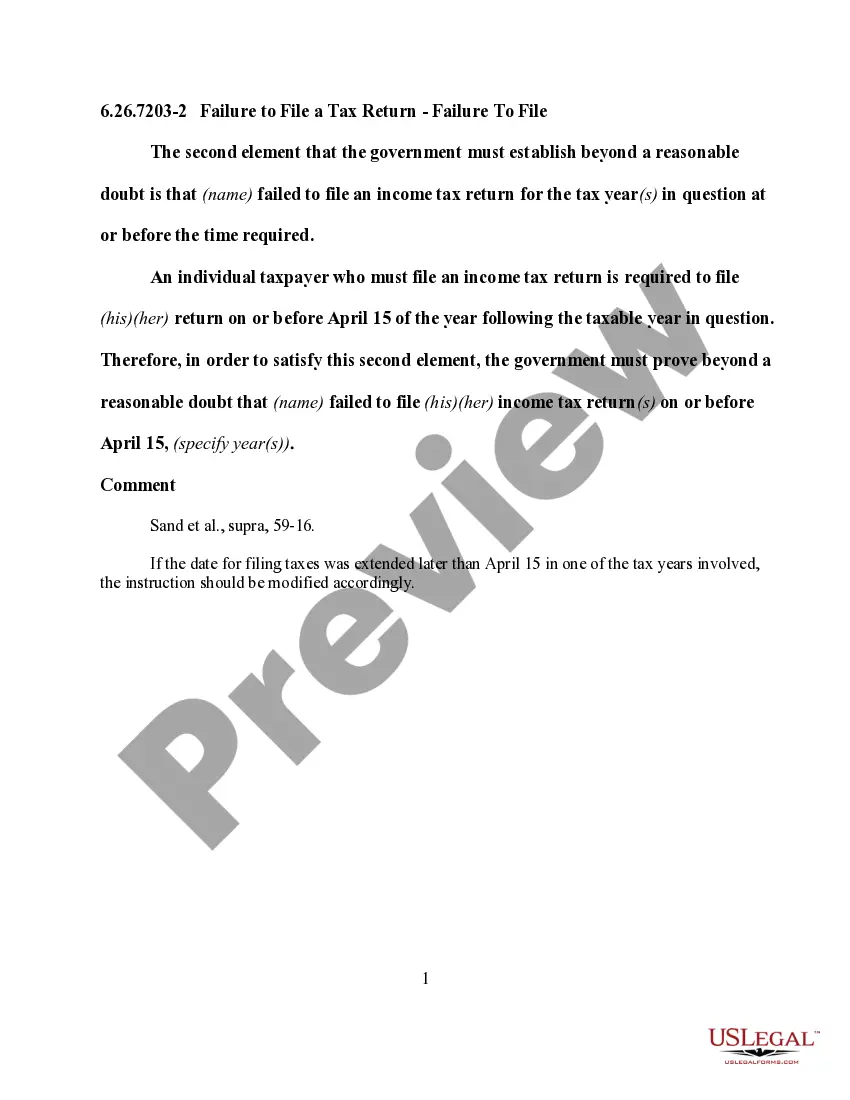
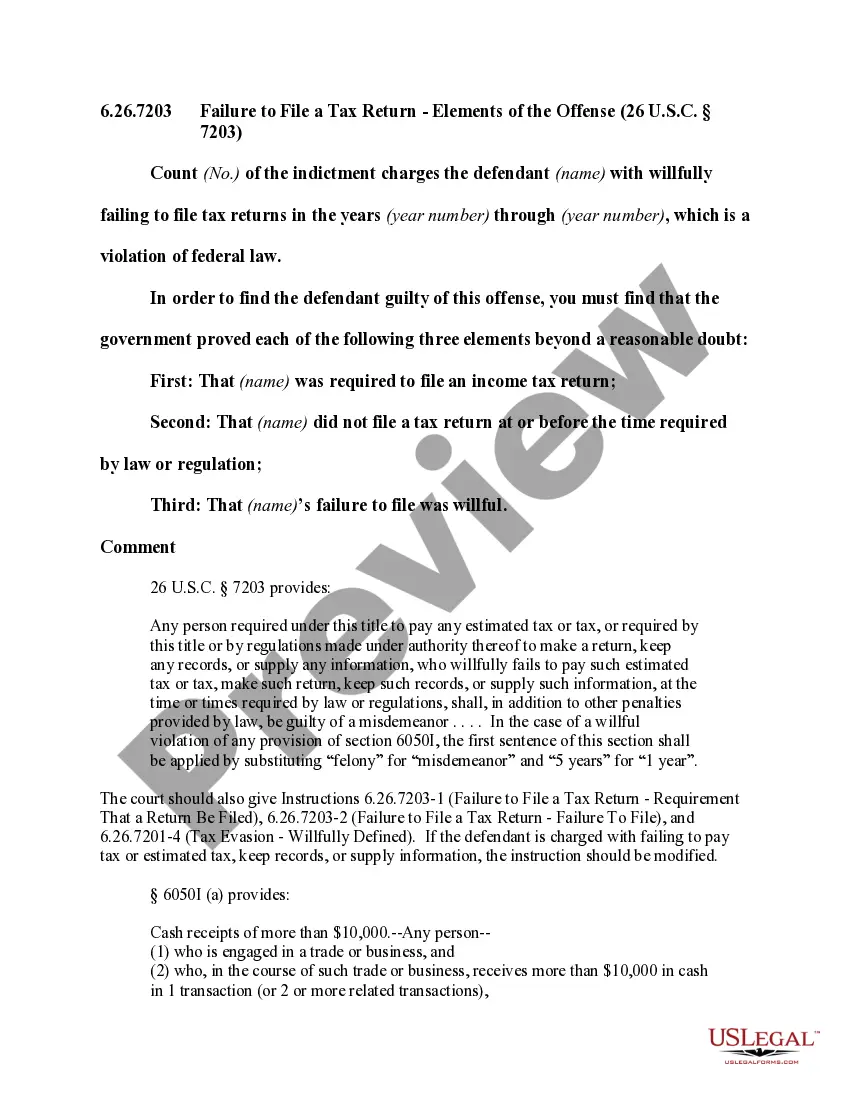
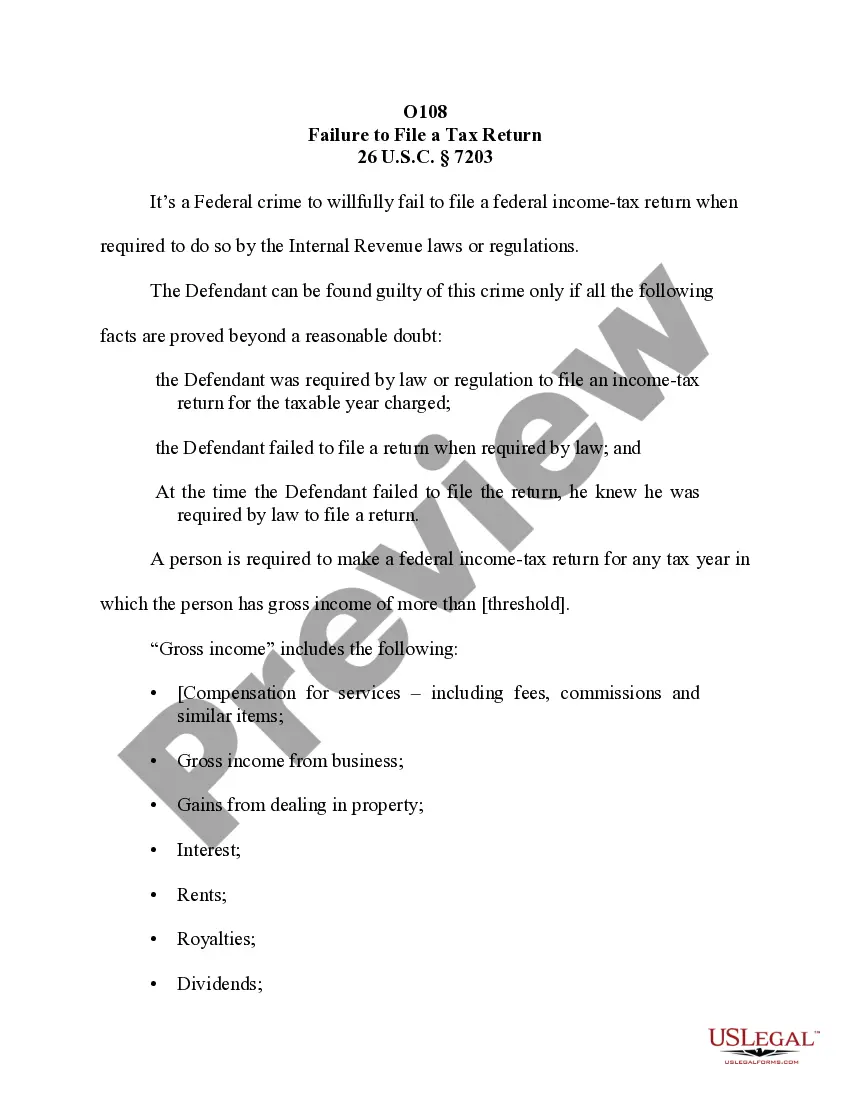
The "Failure to File a Tax Return - Requirement That a Return Be Filed" form is used in legal proceedings to establish whether an individual was obligated to file an income tax return for specific tax years. This form serves to outline what constitutes gross income and the legal requirements surrounding tax filings, distinguishing it from other tax-related forms and obligations.
What’s included in this form
- Identification of the individual who allegedly failed to file a tax return.
- Specification of the tax year(s) in question.
- Definition and breakdown of gross income for the relevant tax year(s).
- Details of the gross income thresholds that necessitate filing.
- Instructions regarding what amounts are included and excluded from gross income.

Situations where this form applies
This form is needed in cases where an individual is being prosecuted for failing to file an income tax return. It is typically utilized during criminal trials to demonstrate the prosecution's argument that the individual met the income requirements that mandated a tax return filing for the specified years.
Who needs this form
- Prosecutors in tax-related criminal cases.
- Defendants accused of failing to file their tax returns.
- Attorneys representing clients in tax-related legal matters.
How to prepare this document
- Identify the name of the individual accused of failing to file.
- Specify the relevant tax year(s) being addressed.
- Document the gross income amount required for filing during those years.
- Clarify the components that contribute to gross income based on federal guidelines.
- Add any necessary contextual data for legal arguments regarding tax obligations.
Does this document require notarization?
This form usually doesn’t need to be notarized. However, local laws or specific transactions may require it. Our online notarization service, powered by Notarize, lets you complete it remotely through a secure video session, available 24/7.
Get your form ready online
Our built-in tools help you complete, sign, share, and store your documents in one place.
Make edits, fill in missing information, and update formatting in US Legal Forms—just like you would in MS Word.
Download a copy, print it, send it by email, or mail it via USPS—whatever works best for your next step.
Sign and collect signatures with our SignNow integration. Send to multiple recipients, set reminders, and more. Go Premium to unlock E-Sign.
If this form requires notarization, complete it online through a secure video call—no need to meet a notary in person or wait for an appointment.
We protect your documents and personal data by following strict security and privacy standards.

Make edits, fill in missing information, and update formatting in US Legal Forms—just like you would in MS Word.

Download a copy, print it, send it by email, or mail it via USPS—whatever works best for your next step.

Sign and collect signatures with our SignNow integration. Send to multiple recipients, set reminders, and more. Go Premium to unlock E-Sign.

If this form requires notarization, complete it online through a secure video call—no need to meet a notary in person or wait for an appointment.

We protect your documents and personal data by following strict security and privacy standards.
Common mistakes
- Not accurately identifying the years in question.
- Failing to provide precise income thresholds for gross income.
- Omitting critical income sources that must be included in gross income calculations.
Why use this form online
- Convenient access to legal form templates crafted by licensed attorneys.
- Ability to download and edit forms at your own pace.
- Ensure compliance with legal standards through professionally drafted content.
Looking for another form?



Form popularity
FAQ
In most cases, if you only receive Social Security benefits, you won't need to file a tax return. If you receive Social Security benefits and also receive tax-exempt income, the tax-exempt income may cause your Social Security benefits to be taxable.
Examples of valid reasons for failing to file or pay on time may include: Fires, natural disasters or civil disturbances. Inability to get records. Death, serious illness or unavoidable absence of the taxpayer or immediate family.
Willful failure to file a tax return is a misdemeanor pursuant to IRC 7203. In cases where an overt act of evasion occurred, willful failure to file may be elevated to a felony under IRC 7201. If you are charged with a criminal tax violation, the punishment can be severe and may include fines and jail time.
The Crime of Omission Under 26 U.S.C. § 7203, it is a crime to intentionally fail to file a return, pay a tax, keep necessary records, or provide information that is required by the IRS.
Failure to File applies when you don't file your tax return by the due date. Failure to Pay applies when you don't pay the tax you owe by the due date. Accuracy-Related applies when you don't claim all your income or when you claim deductions or credits for which you don't qualify.
Ing to the Supreme Court in Spies v. United States, willful failure to pay tax must be proved by evidence demonstrating that the defendant had the ability to pay tax but intentionally and deliberately refused to do so.
Why would a taxpayer file a tax return if not required to do so? If a taxpayer's income does not exceed a certain amount, then he or she is not required to file a tax return. However, if a taxpayer paid taxes during the year, he or she would need to file a return in order to claim and receive a refund.