Failure to File a Tax Return
About this form
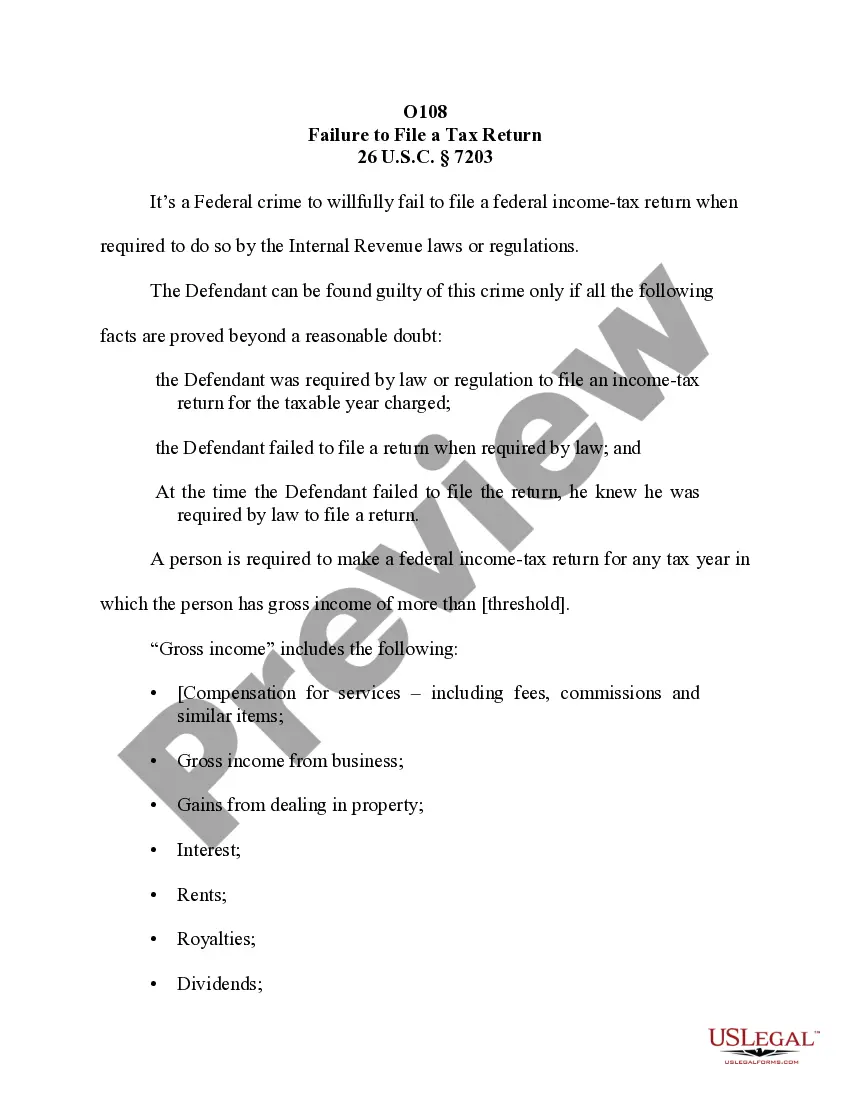
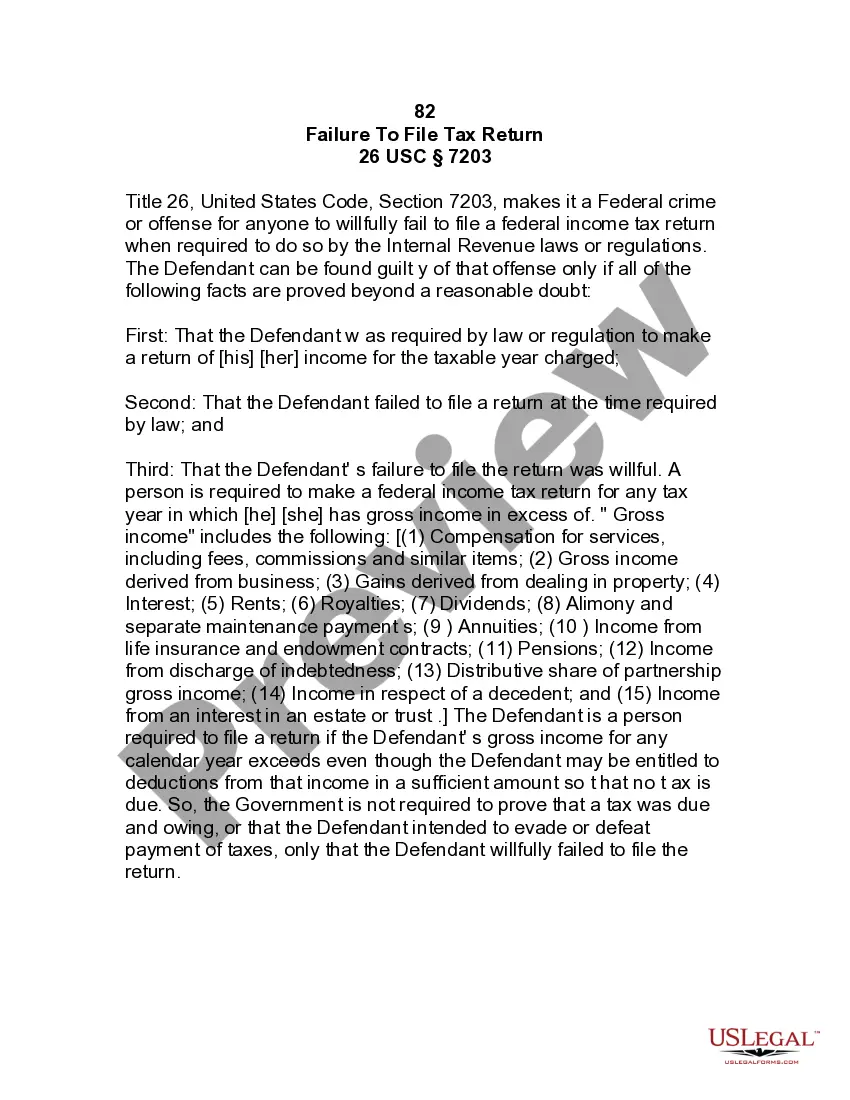
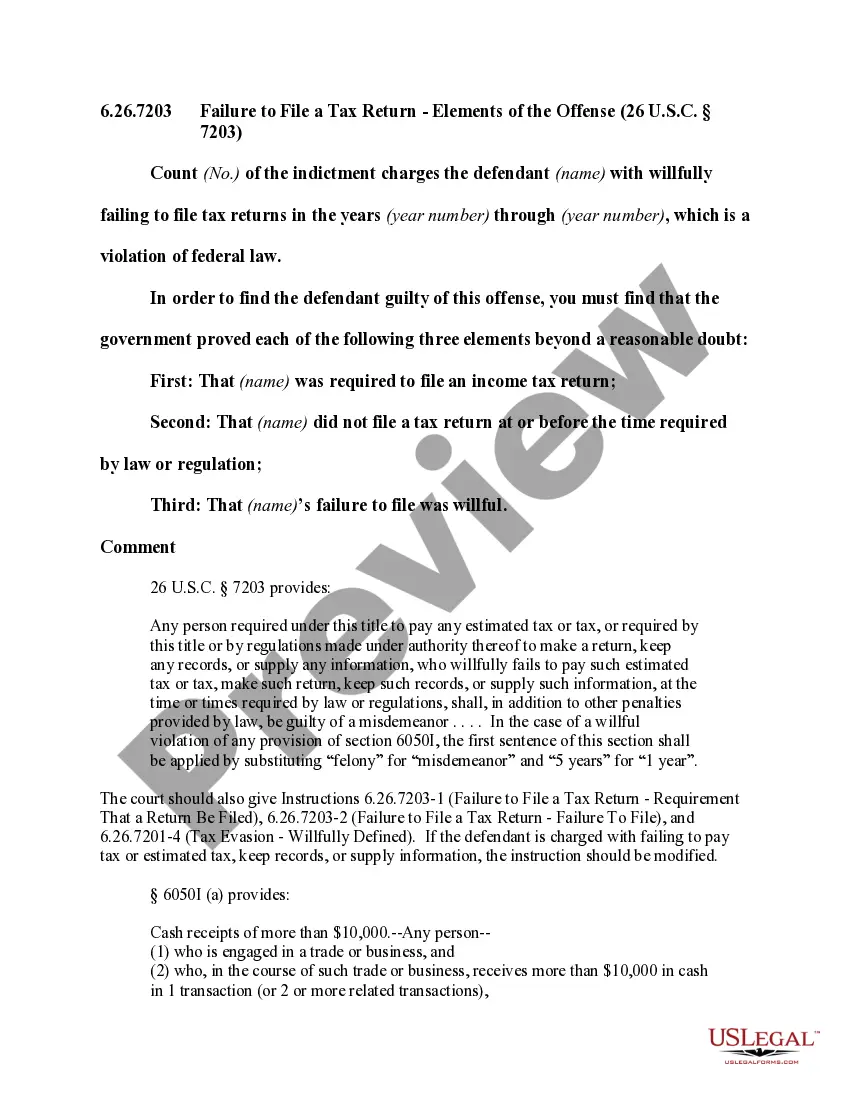
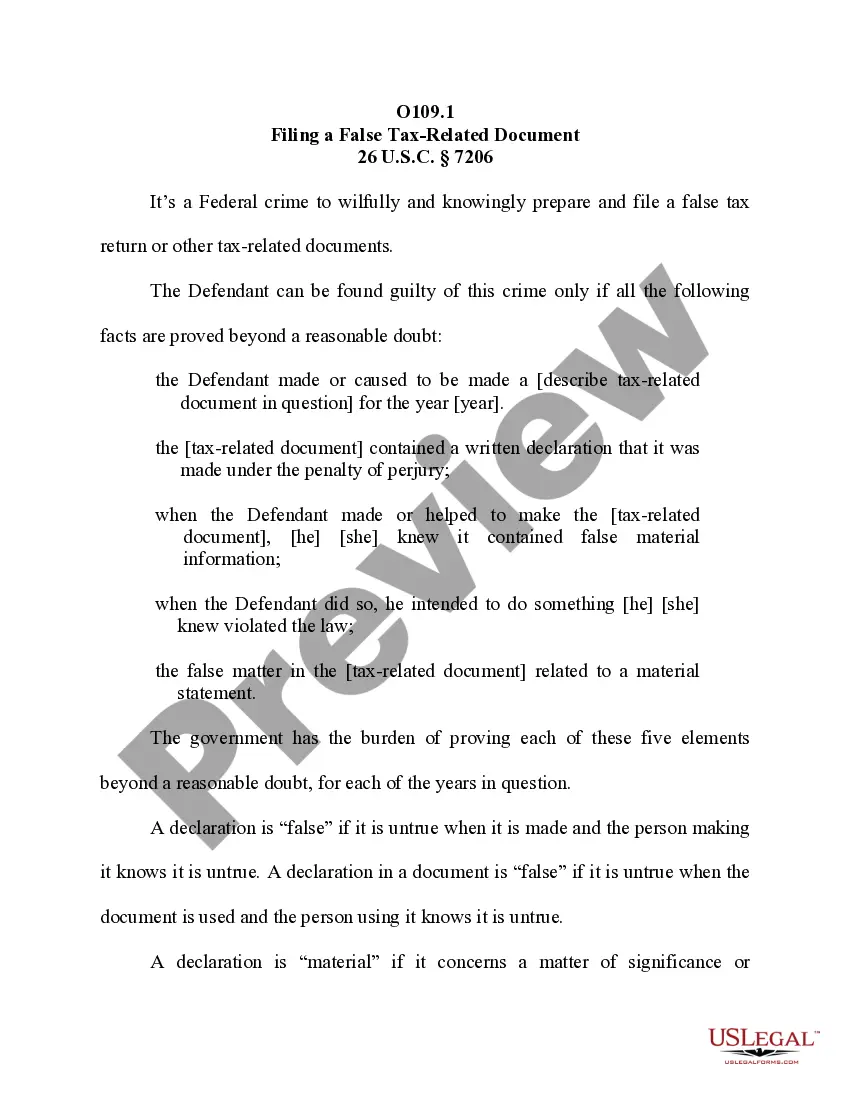
The Failure to File a Tax Return form is a legal document that addresses the federal crime of willfully failing to file a federal income-tax return when required. This form is essential for understanding the legal implications if a person has not submitted their tax return despite being legally obligated to do so. The form outlines the necessary components that must be proven for a conviction under 26 U.S.C. § 7203 and serves as an important resource for those needing clarification on their tax responsibilities.
Key components of this form
- Definition of "failure to file" under federal law.
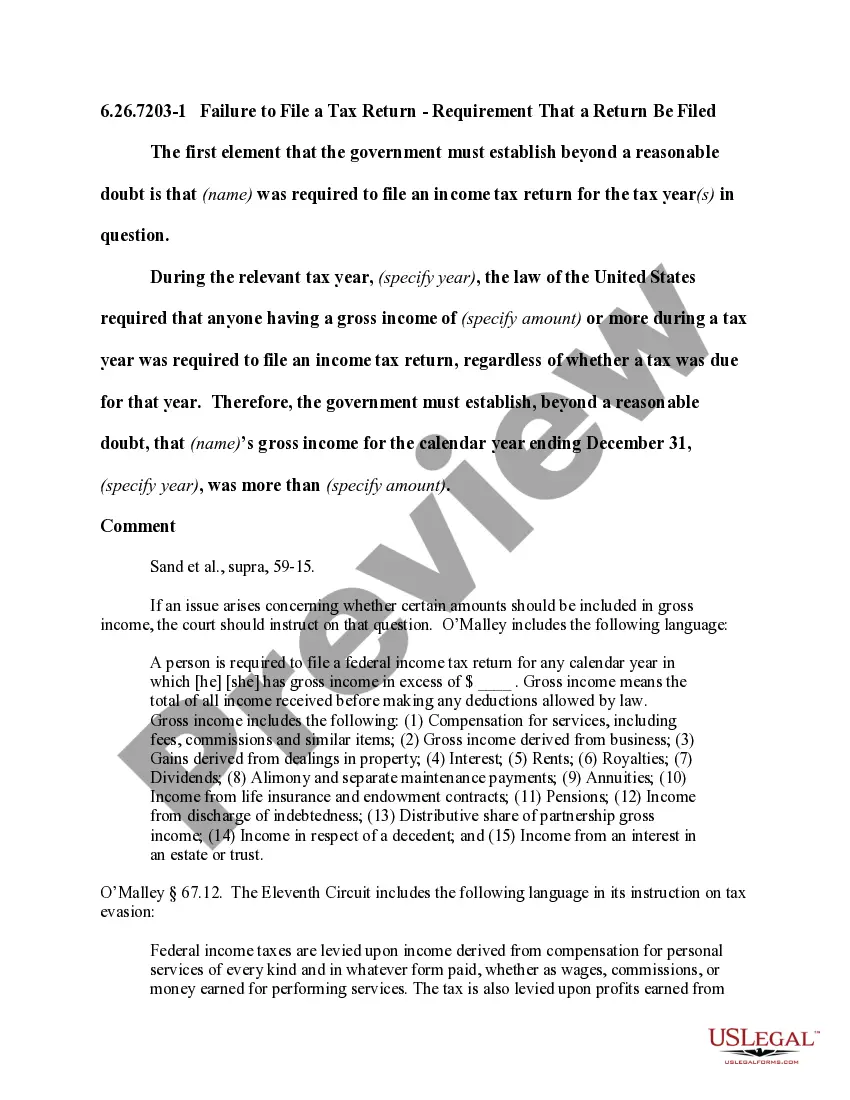
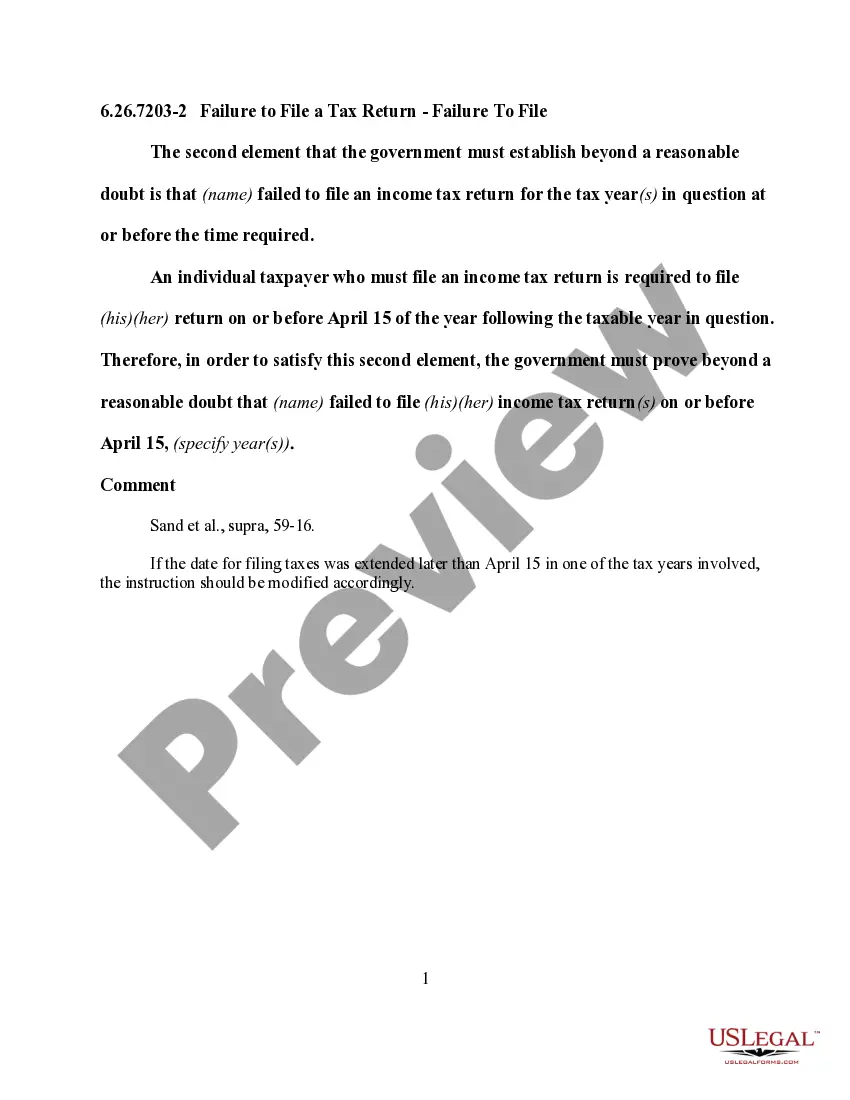
- The criteria that establish guilt beyond a reasonable doubt.
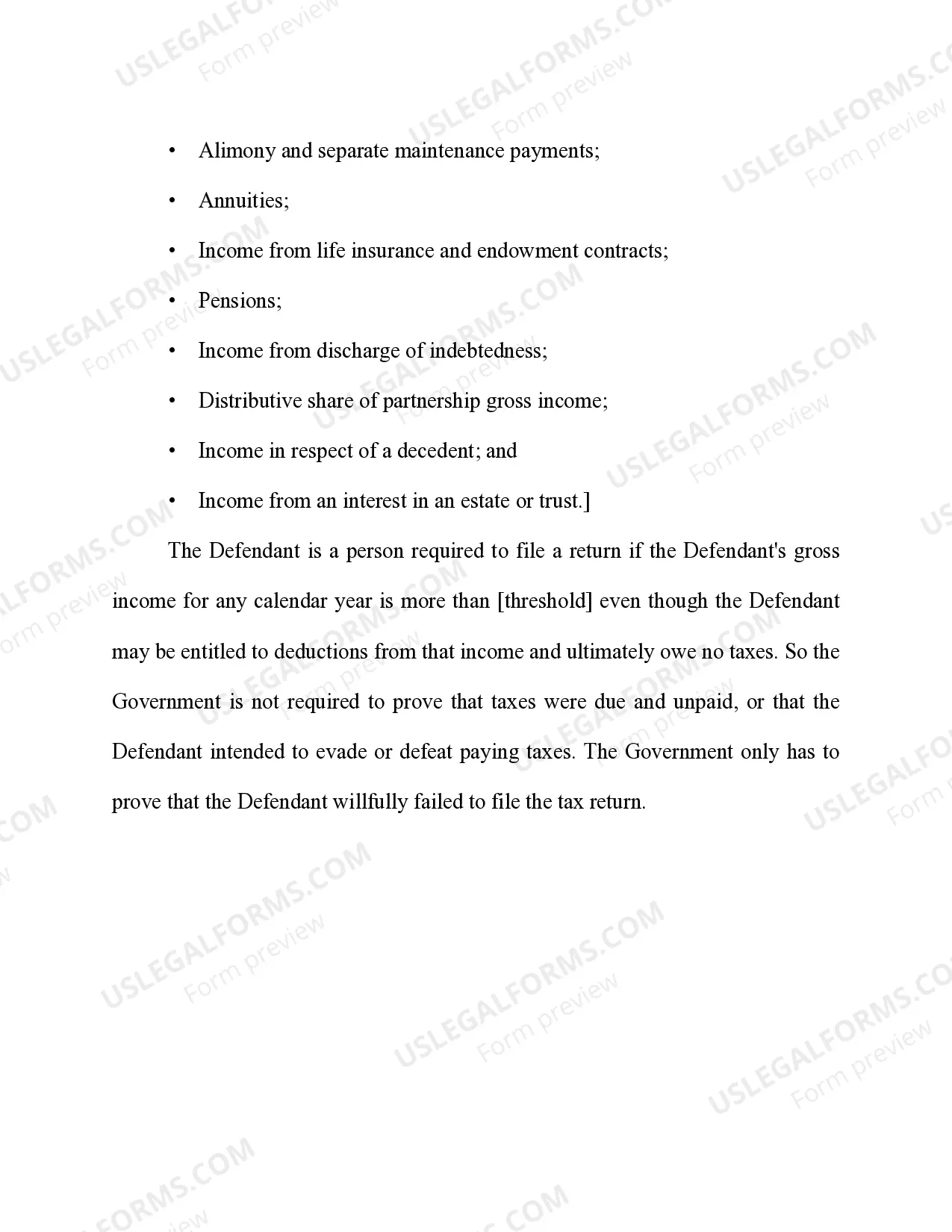
- Explanation of gross income and its components.
- Clarification that the government does not need to prove owed taxes or intent to evade payment.
Situations where this form applies
This form should be used when an individual has failed to file their federal income-tax return and there is a likelihood of legal action or inquiry regarding this failure. It is particularly relevant if a person has received communication from the Internal Revenue Service (IRS) or is facing charges related to non-filing of tax returns.
Who this form is for
This form is intended for:
- Individuals who have not filed their federal income-tax returns.
- Taxpayers who are being investigated or charged for failing to file.
- Legal professionals needing a template to represent clients accused of this federal crime.
Completing this form step by step
- Identify the taxable year for which the return was not filed.
- Verify if your gross income exceeded the threshold requiring a tax return.
- Confirm that you were aware of the requirement to file a return.
- Fill out sections related to income sources, including wages, business income, and any other qualifying income.
- Review the form for accuracy before submission or prior to legal proceedings.
Does this document require notarization?
This form does not typically require notarization unless specified by local law.
Get your form ready online
Our built-in tools help you complete, sign, share, and store your documents in one place.
Make edits, fill in missing information, and update formatting in US Legal Forms—just like you would in MS Word.
Download a copy, print it, send it by email, or mail it via USPS—whatever works best for your next step.
Sign and collect signatures with our SignNow integration. Send to multiple recipients, set reminders, and more. Go Premium to unlock E-Sign.
If this form requires notarization, complete it online through a secure video call—no need to meet a notary in person or wait for an appointment.
We protect your documents and personal data by following strict security and privacy standards.

Make edits, fill in missing information, and update formatting in US Legal Forms—just like you would in MS Word.

Download a copy, print it, send it by email, or mail it via USPS—whatever works best for your next step.

Sign and collect signatures with our SignNow integration. Send to multiple recipients, set reminders, and more. Go Premium to unlock E-Sign.

If this form requires notarization, complete it online through a secure video call—no need to meet a notary in person or wait for an appointment.

We protect your documents and personal data by following strict security and privacy standards.
Typical mistakes to avoid
- Failing to recognize the threshold for filing based on gross income.
- Not understanding that intent to evade taxes is not required for a conviction.
- Neglecting to gather all sources of income before filling out the form.
Why complete this form online
- Easy to access and download directly, saving time.
- Editability allows users to fill out the form at their convenience.
- Reliability of templates drafted by licensed attorneys ensures legal compliance.
- Failure to file a tax return is considered a criminal offense under federal law.
- The government does not need to prove tax due; failure to file is sufficient for prosecution.
- The form aids in understanding legal responsibilities and potential consequences of non-compliance.
Summary of main points
- Failure to file can result in serious legal consequences.
- Understanding your obligations under federal tax law is crucial.
- The form is designed to clarify the implications of willfully not filing tax returns.
Looking for another form?

Form popularity
FAQ
How far back can the IRS go for unfiled taxes? The IRS can go back six years to audit and assess additional taxes, penalties, and interest for unfiled taxes. However, there is no statute of limitations if you failed to file a tax return or if the IRS suspects you committed fraud.
State tax agencies have their own rule and many have more time to collect. For example, California can collect state taxes up to 20 years after the assessment date.
There is no statute of limitations on an unfiled return. This means that there is no time limit for IRS to prepare a Substitute for Return (SFR). Even if you hadn't filed for 20 years, the IRS could theoretically go back through that entire time period and assess taxes against you for any of the years that you owe.
How far back can the IRS go for unfiled taxes? The IRS can go back six years to audit and assess additional taxes, penalties, and interest for unfiled taxes. However, there is no statute of limitations if you failed to file a tax return or if the IRS suspects you committed fraud.
The penalty for not filing your return is typically 5% of the tax you owe for each month or partial month your return is late. This penalty also maxes out at 25% of your unpaid taxes. If your return was over 60 days late, the minimum penalty is $435 for 2022 or 100% of the tax on the return ? whichever is less.
The law requires you to file every year that you have a filing requirement. The government can hit you with civil and even criminal penalties for failing to file your return.
Failure to file or failure to pay tax could also be a crime. The IRS recognizes several crimes related to evading the assessment and payment of taxes. Under the Internal Revenue Code § 7201, any willful attempt to evade taxes can be punished by up to 5 years in prison and $250,000 in fines.
If you haven't filed a tax return in a few years, the IRS will pull your tax documents from those years and use them to calculate your tax. They will then mail you a letter known as an assessment letter that details how much tax you owe.