Filing a False Tax-Related Document
Understanding this form
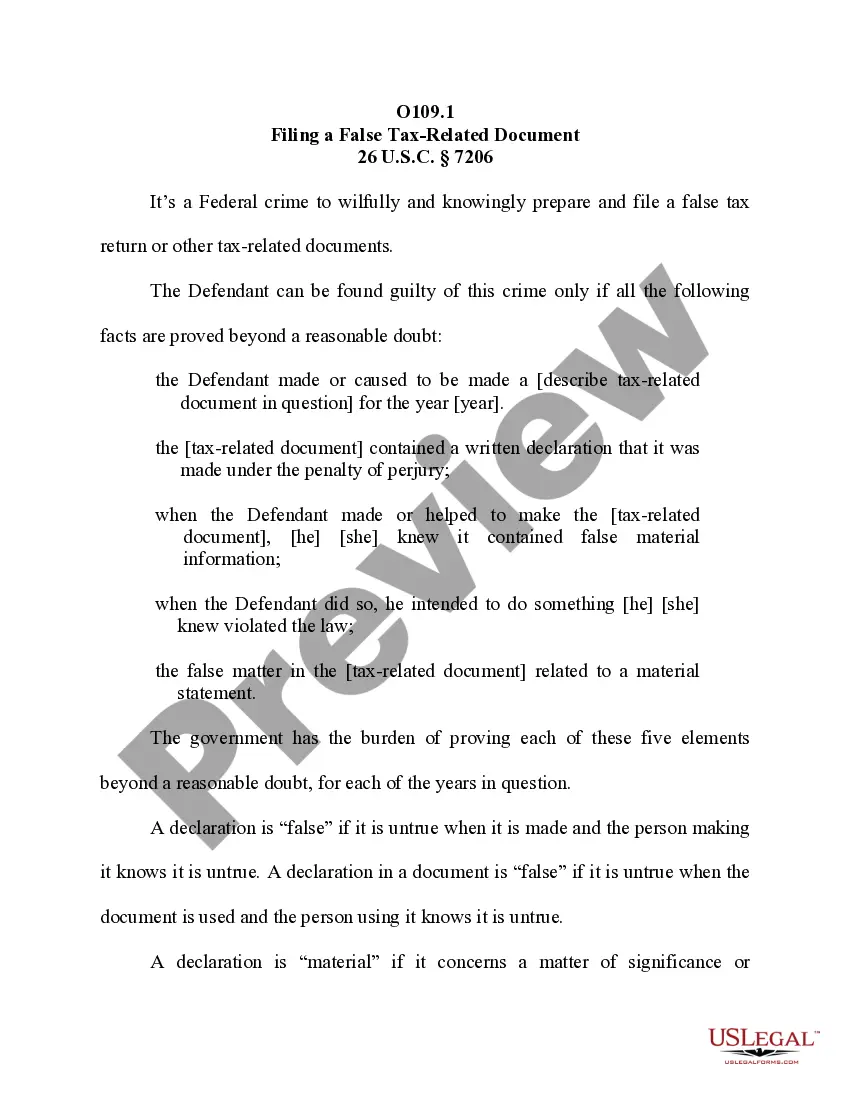
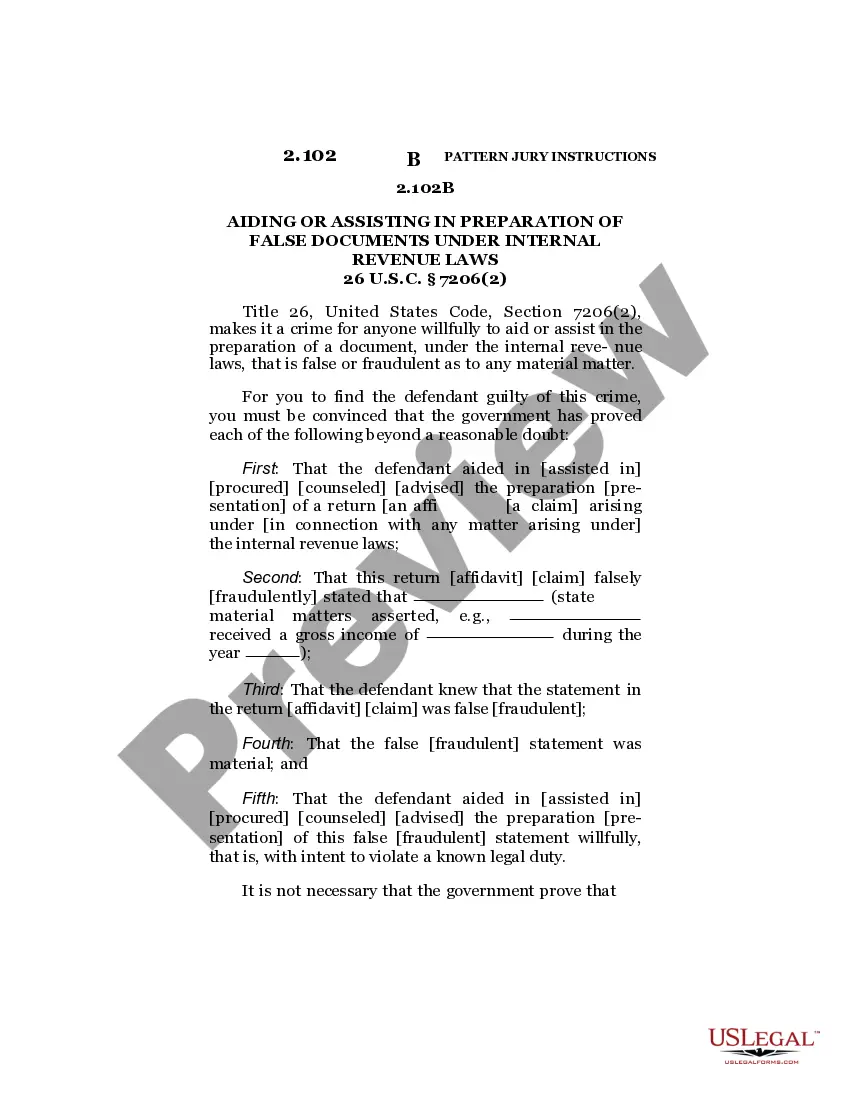
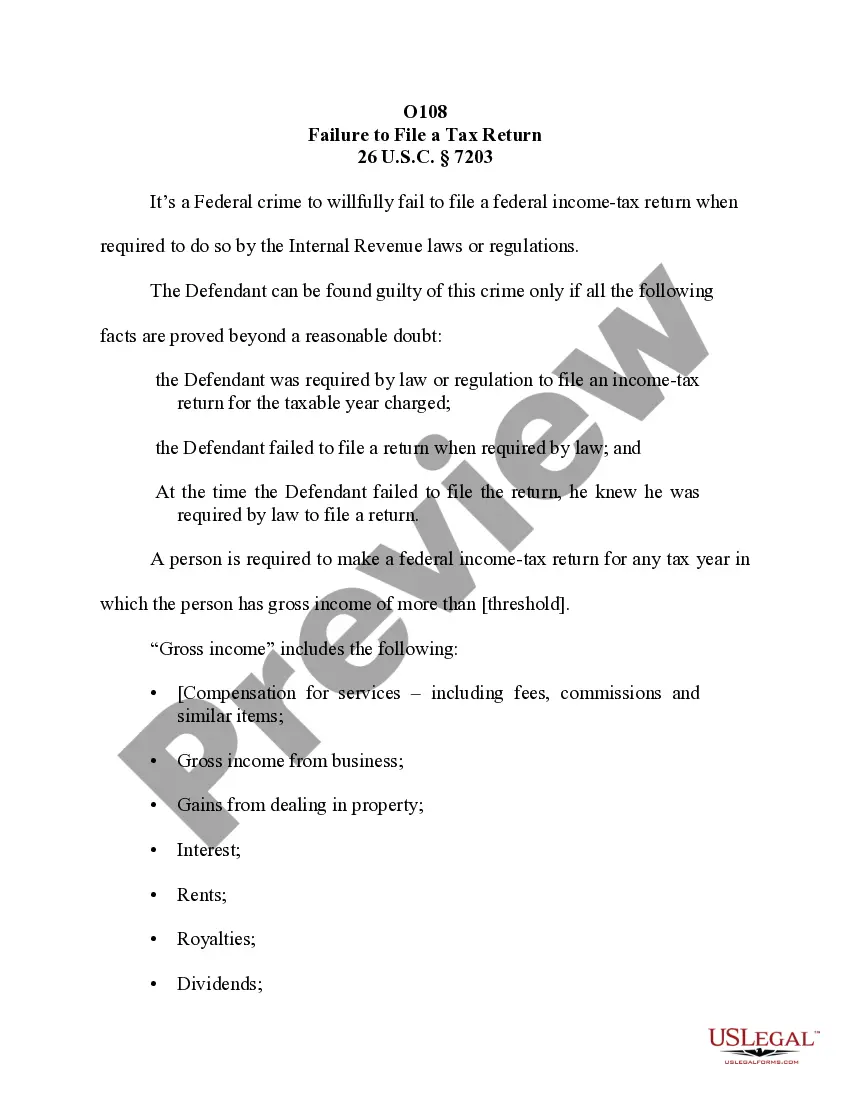
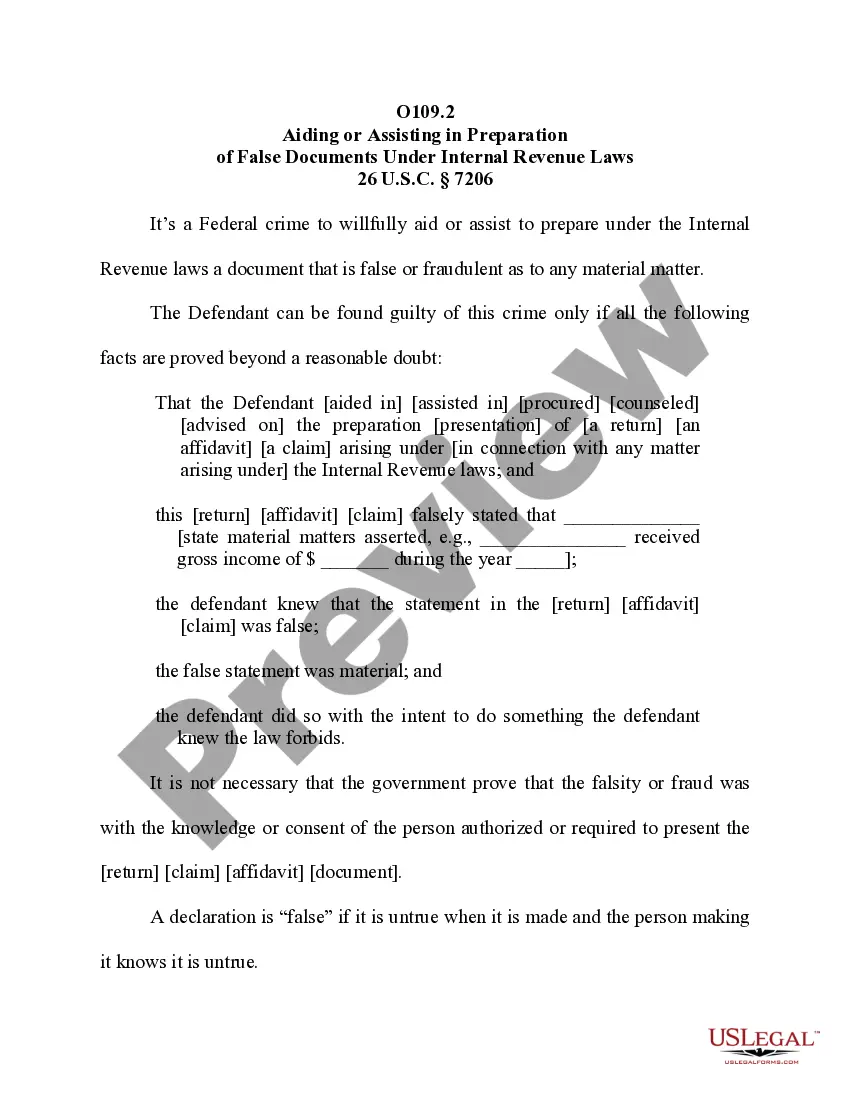
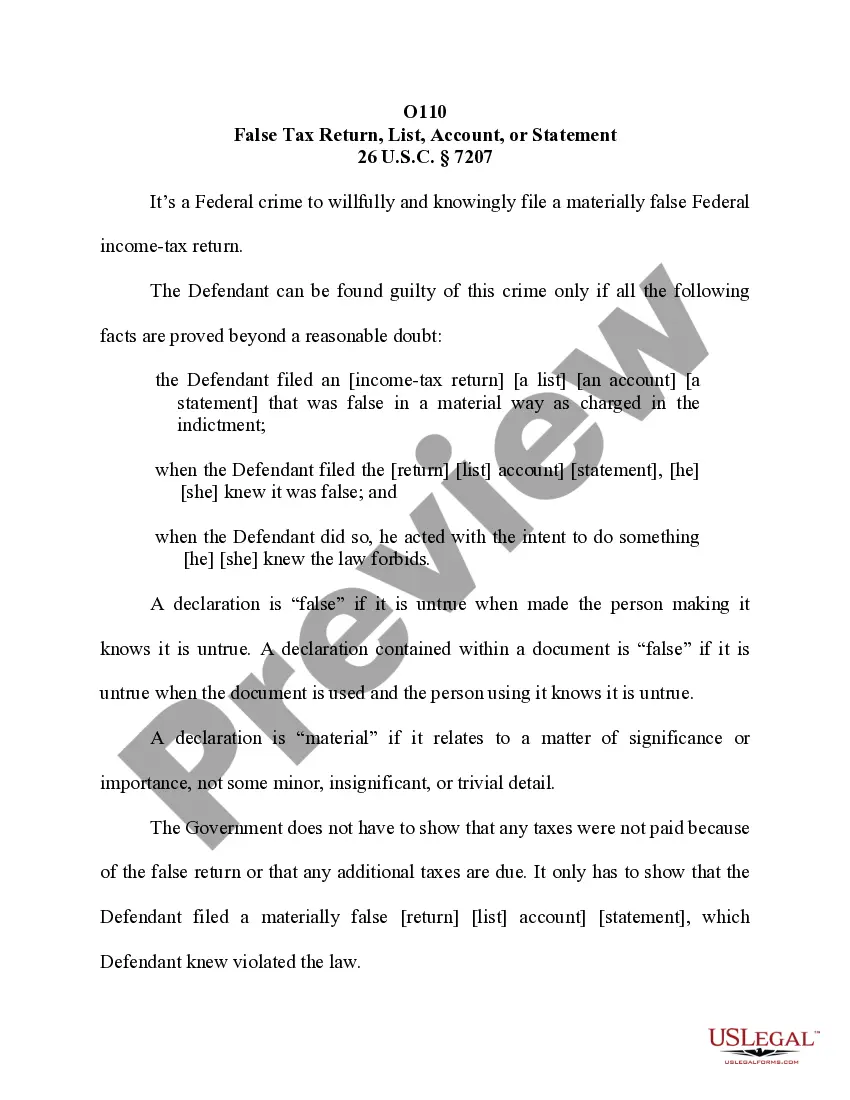
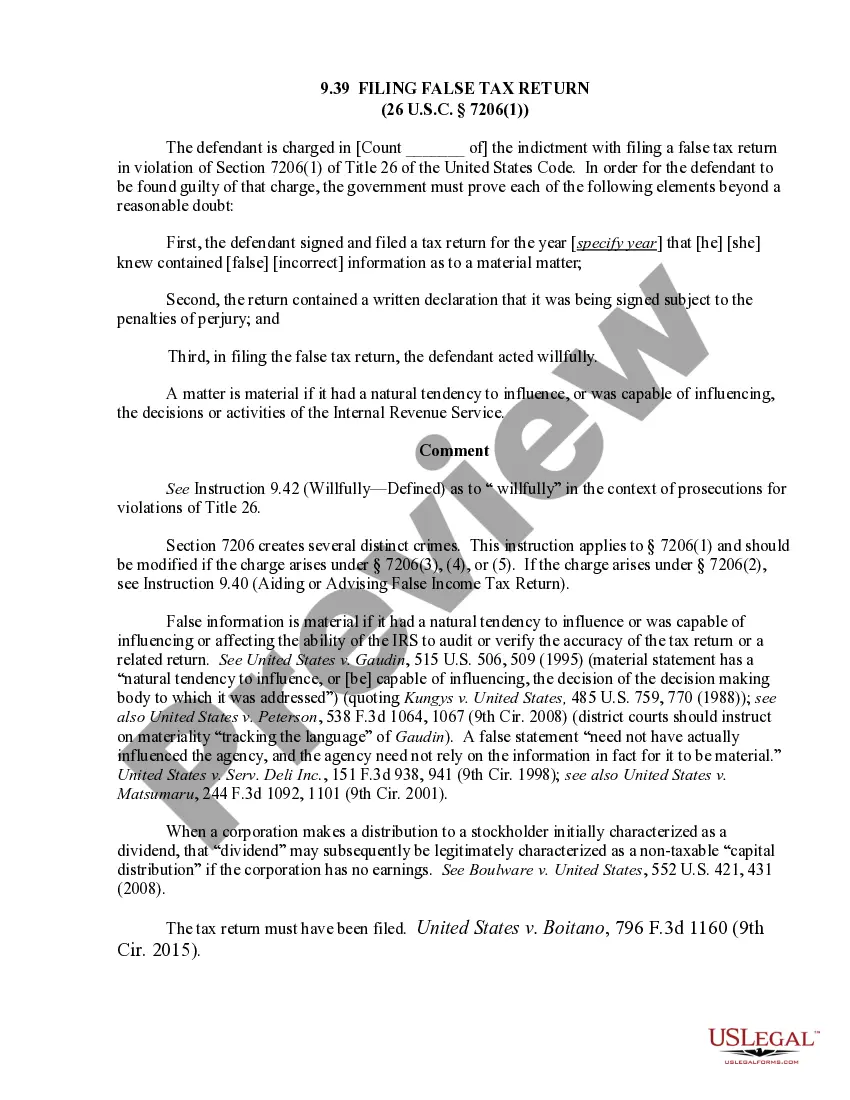
The Filing a False Tax-Related Document form outlines federal criminal law related to the preparation and submission of false tax returns or other tax-related documents. This form serves as guidance for determining the legal implications and requirements when someone is accused of knowingly filing false tax information. It differs from other tax forms in that it specifically addresses the legal standards and elements required to establish guilt in false tax-related cases.
Main sections of this form
- The document must describe the specific tax-related document in question.
- A declaration stating the document was prepared under penalty of perjury.
- Details of the Defendant's knowledge of false information in the document.
- Evidence of the Defendant's intent to violate tax law.
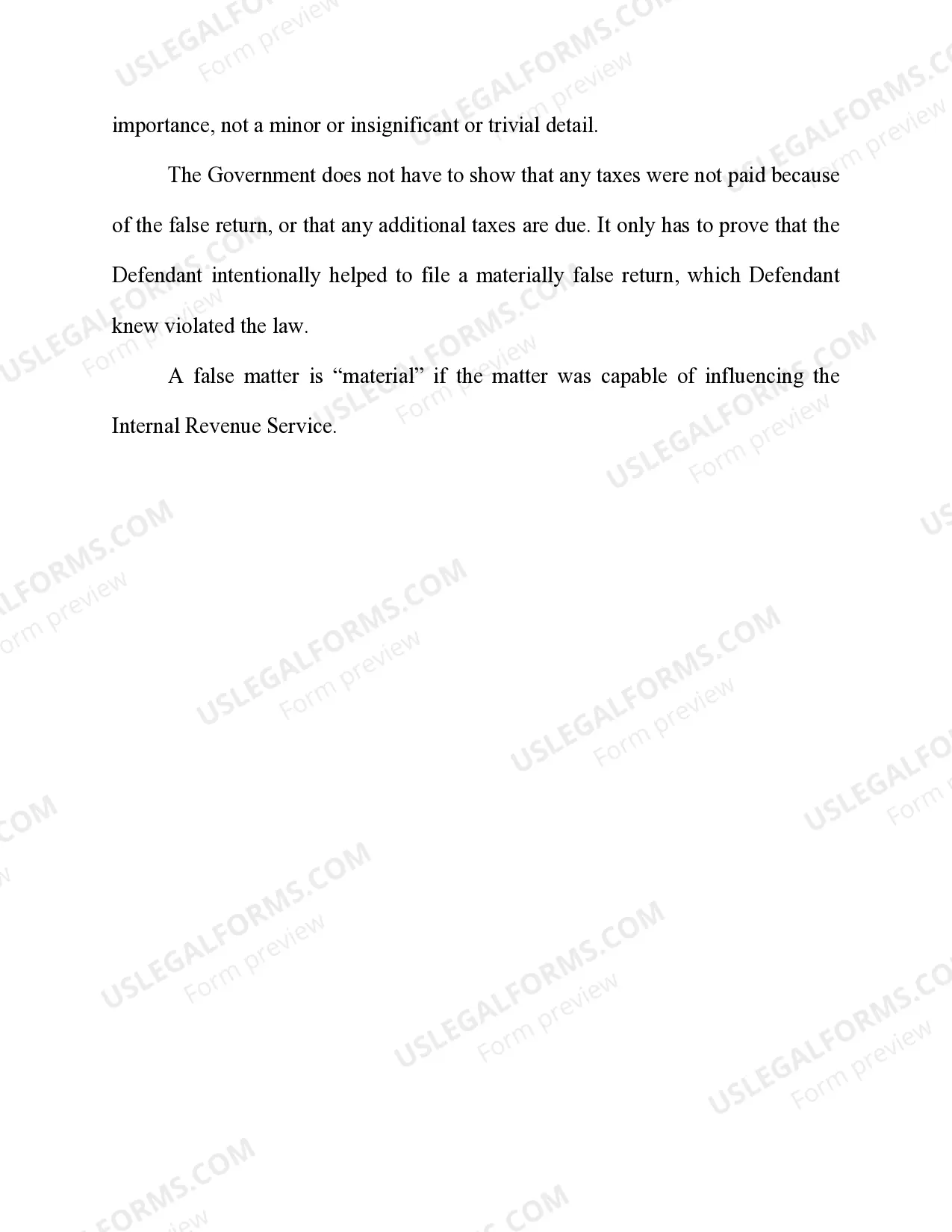
- Clarification that the false information must be material, influencing the Internal Revenue Service's actions.
When to use this form
This form should be used when an individual faces accusations of filing a false tax return or other tax-related documents. It is necessary in legal proceedings to determine the elements that constitute the crime and to develop a defense strategy based on the specific facts of the case.
Who should use this form
- Individuals accused of filing false tax-related documents.
- Attorneys representing clients in tax-related criminal cases.
- Tax professionals who need to understand the legal implications of false filings.
- Individuals seeking to prepare a defense against allegations of tax fraud.
How to prepare this document
- Identify and describe the specific tax-related document in question.
- State the year for which the document pertains.
- Ensure the declaration includes that it was made under penalty of perjury.
- Review and confirm all statements made are true and accurate to avoid legal repercussions.
- Consult with legal counsel to ensure compliance with all legal requirements and potential defenses.
Is notarization required?
Notarization is generally not required for this form. However, certain states or situations might demand it. You can complete notarization online through US Legal Forms, powered by Notarize, using a verified video call available anytime.
Get your form ready online
Our built-in tools help you complete, sign, share, and store your documents in one place.
Make edits, fill in missing information, and update formatting in US Legal Forms—just like you would in MS Word.
Download a copy, print it, send it by email, or mail it via USPS—whatever works best for your next step.
Sign and collect signatures with our SignNow integration. Send to multiple recipients, set reminders, and more. Go Premium to unlock E-Sign.
If this form requires notarization, complete it online through a secure video call—no need to meet a notary in person or wait for an appointment.
We protect your documents and personal data by following strict security and privacy standards.

Make edits, fill in missing information, and update formatting in US Legal Forms—just like you would in MS Word.

Download a copy, print it, send it by email, or mail it via USPS—whatever works best for your next step.

Sign and collect signatures with our SignNow integration. Send to multiple recipients, set reminders, and more. Go Premium to unlock E-Sign.

If this form requires notarization, complete it online through a secure video call—no need to meet a notary in person or wait for an appointment.

We protect your documents and personal data by following strict security and privacy standards.
Avoid these common issues
- Failing to accurately describe the tax-related document and its contents.
- Omitting the essential declaration of perjury.
- Overlooking evidence of intent and knowledge regarding the false information.
- Neglecting to consult legal counsel before submission.
Why complete this form online
- Convenient access to download the form anytime.
- Edit the form directly to fit specific needs.
- Reliable and professionally drafted content by licensed attorneys.
- Immediate availability for urgent legal situations.
Legal use & context
- This form is used to establish the legal grounds needed to pursue or defend against charges of filing false tax-related documents.
- Understanding the criteria set forth in this form can aid individuals in preparing for legal proceedings.
- Proper use of this form can help clarify intentions and defuse potential legal issues before they escalate.
Main things to remember
- Filing a false tax document is a serious federal offense with stringent requirements for proof.
- Accurate completion of this form is crucial in defending against charges of tax fraud.
- Users must ensure that they have all necessary information and evidence to support their case.
Looking for another form?

Form popularity
FAQ
Am I Responsible If My Tax Preparer Makes a Mistake? Yes. If you signed on the bottom line, you are responsible for a mistake on your tax returns and you are on the hook for any penalties the IRS charges. That said, the professional who prepared your return may offer to reimburse you for any losses due to errors.
Check your federal tax return status Check your tax refund status using the IRS Where's My Refund tool. Sign in to view your IRS online account information. Call the IRS.Look for email or status updates from your e-filing website or software.
The Criminal Consequences Of Filing A False Tax Return It is a federal crime for anyone to knowingly and willfully file an income tax return that they know to be false in some material way. 26 U.S.C.
The IRS receives and processes most tax returns without further examination. However, there are a variety of factors that may attract their attention in a way that would make the return more likely to be audited through a correspondence exam or assigned to an auditor for further inquiry.
Lying on your tax returns can result in fines and penalties from the IRS, and can even result in jail time.
In rare cases, the IRS can press criminal charges. When the IRS identifies fraud, the IRS can pursue civil or criminal charges. The IRS prosecutes relatively few cases each year ? and they usually involve large omissions of income, tax evasion or tax protest schemes, or lying to the IRS in an audit.
You cannot go to jail for making a mistake or filing your tax return incorrectly. However, if your taxes are wrong by design and you intentionally leave off items that should be included, the IRS can look at that action as fraudulent, and a criminal suit can be instituted against you.
You should amend your return if you reported certain items incorrectly on the original return, such as filing status, dependents, total income, deductions or credits. However, you don't have to amend a return because of math errors you made; the IRS will correct those.