False Tax Return, List, Account, or Statement
About this form
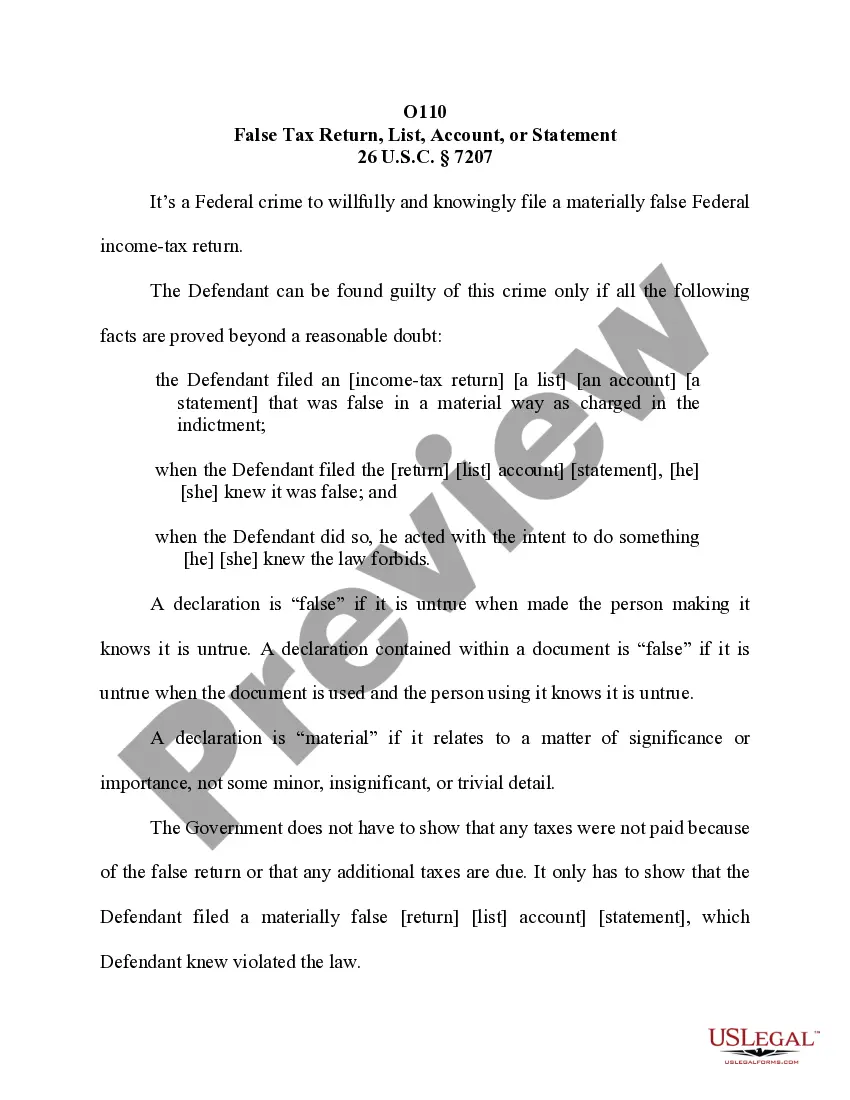
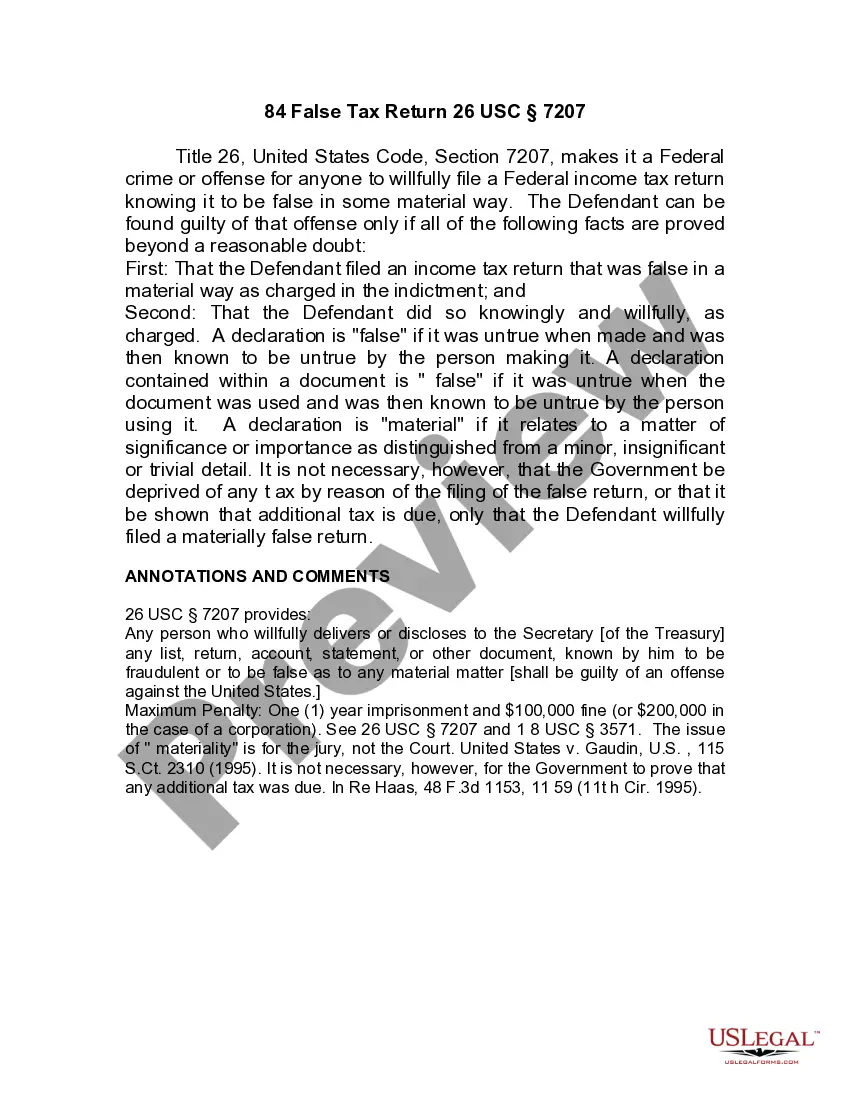
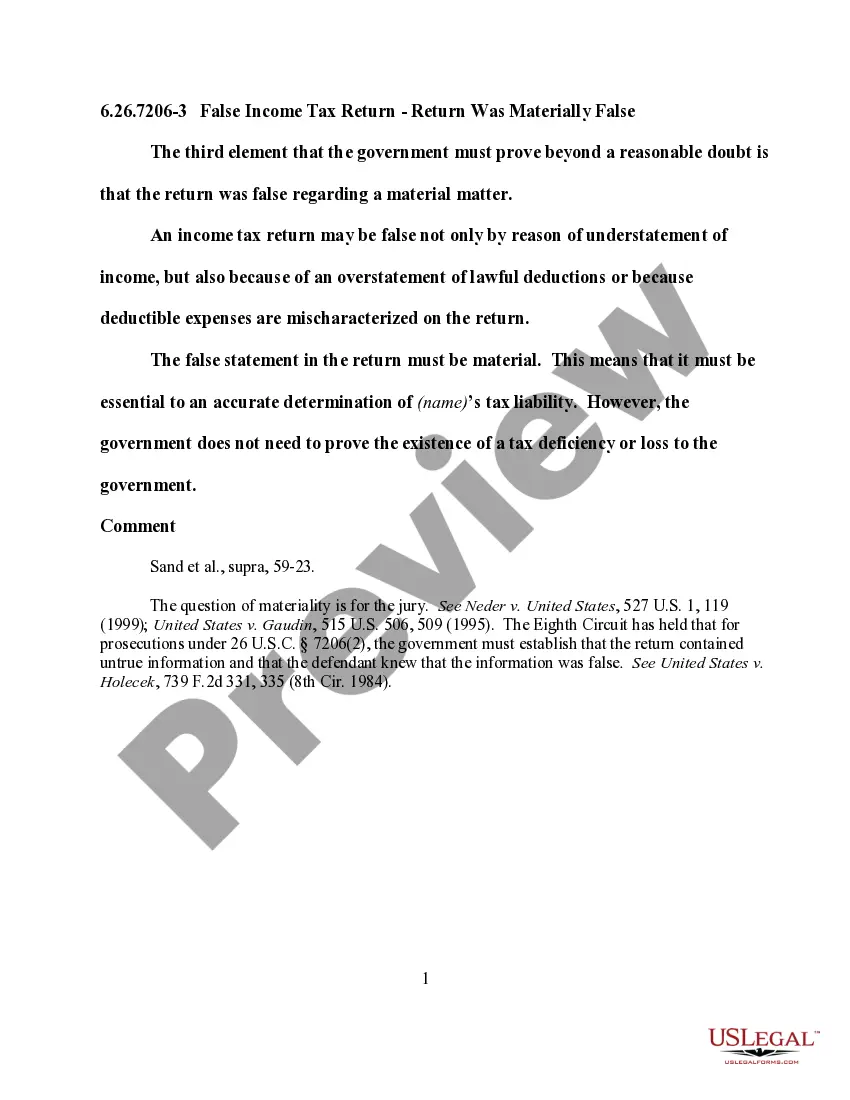
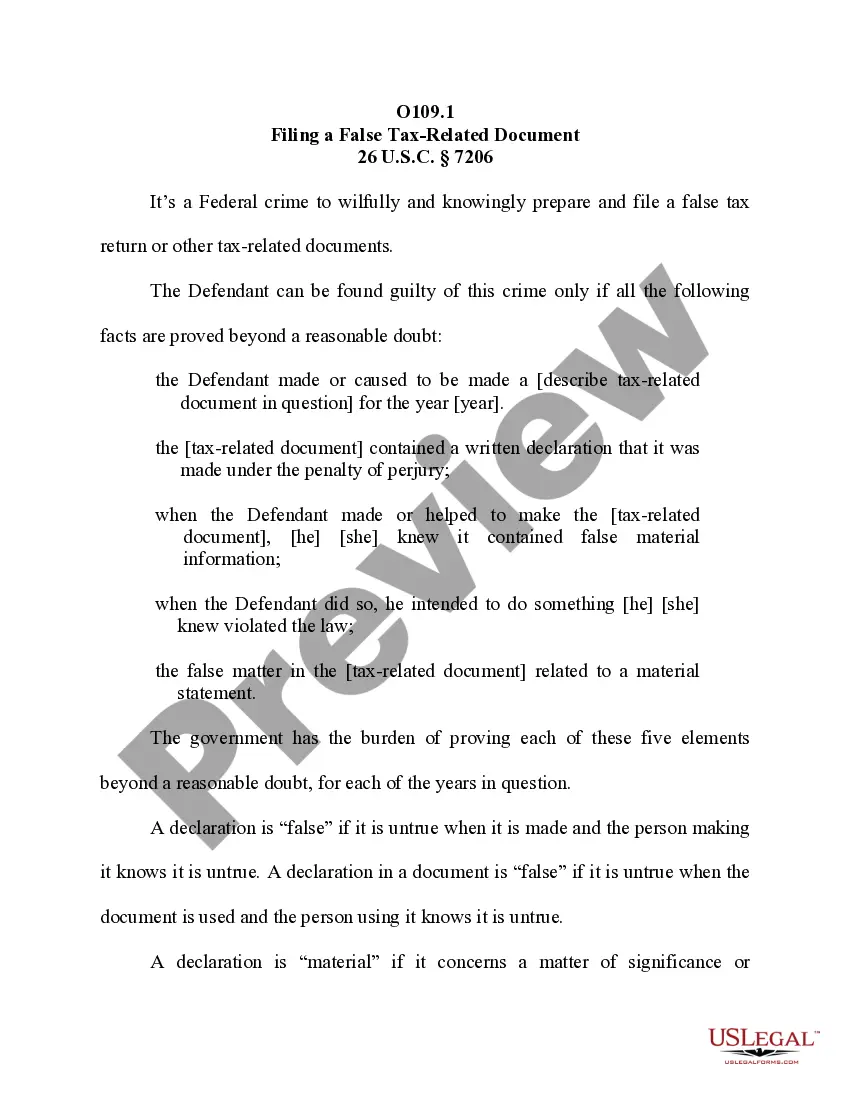
The false tax return form is a critical legal document used in cases involving the willful and knowing submission of a materially false federal income-tax return, list, account, or statement. Laid out under 26 U.S.C. § 7207, this form emphasizes the penalties for submitting fraudulent tax information. Unlike other tax forms, this one specifically addresses the legal ramifications of falsifying financial documents related to income tax returns, thereby protecting the integrity of the tax reporting system.
Form components explained
- Defendant's Actions: A declaration that the Defendant submitted a false return, list, account, or statement.
- Knowledge of Falsehood: Proof that the Defendant knew the document was false at the time of filing.
- Intent: A requirement to demonstrate that the Defendant acted with intent to violate the law.
- Materiality: The false declaration must relate to a significant matter, not trivial details.
- No Need for Tax Impact Evidence: The Government does not need to show unpaid taxes were a result of the false submission.
Situations where this form applies
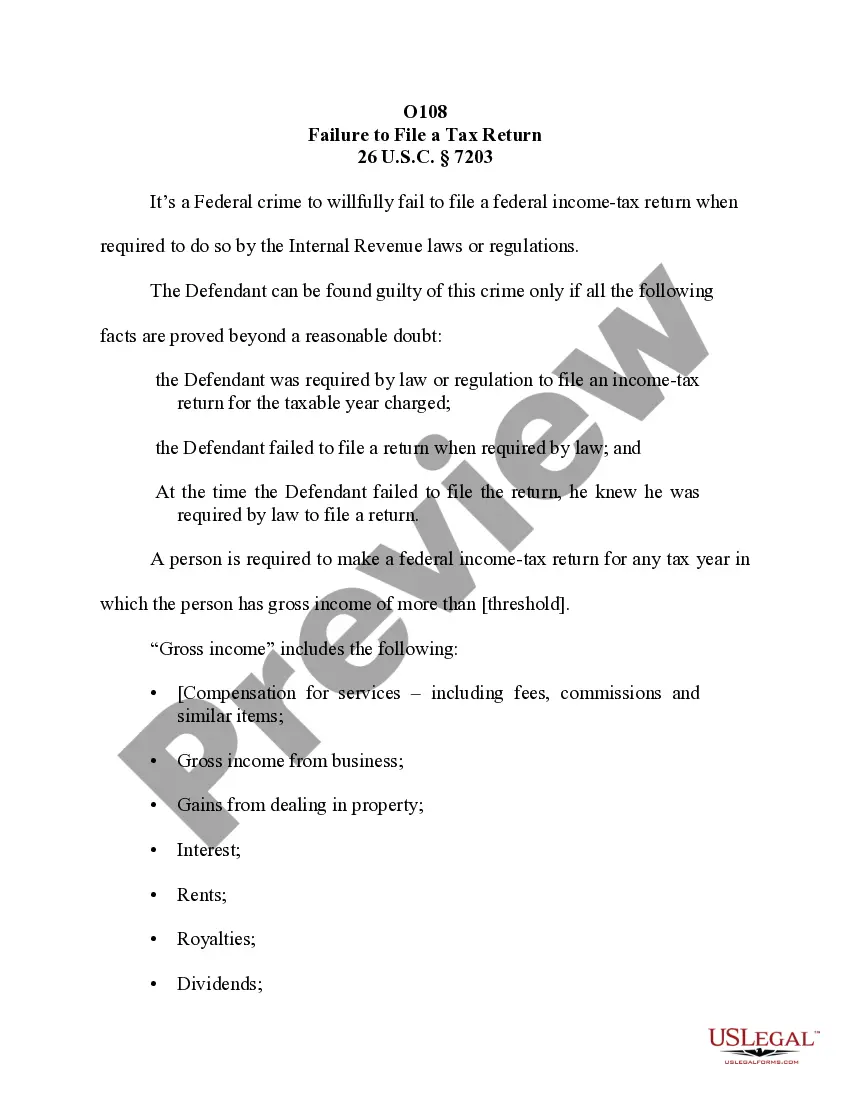
This form is required in situations where an individual is accused of filing a false tax return or related document. It is typically utilized during federal criminal cases involving tax fraud allegations, where the prosecution needs to outline the elements of the crime clearly. Taxpayers should be cautious and use this form to understand the implications of submitting inaccurate financial information.
Who can use this document
- Individuals facing allegations of tax fraud and needing to understand their legal standing.
- Tax professionals advising clients on matters of legal compliance and fraudulent submissions.
- Legal representatives preparing defense for individuals accused of submitting false information to federal authorities.
Instructions for completing this form
- Identify the Defendant: Begin by clearly stating the name of the Defendant accused of filing the false return.
- Specify the Document: Indicate whether the false submission is an income tax return, list, account, or statement.
- Detail the Falsehood: Clearly outline how the return was false in a material way as specified in the indictment.
- Demonstrate Knowledge: Include information that supports the claim that the Defendant knew the information was false.
- Illustrate Intent: Provide evidence or statements that show the Defendant acted with the intent to violate the law.
Notarization requirements for this form
This form does not typically require notarization to be legally valid. However, some jurisdictions or document types may still require it. US Legal Forms provides secure online notarization powered by Notarize, available 24/7 for added convenience.
Get your form ready online
Our built-in tools help you complete, sign, share, and store your documents in one place.
Make edits, fill in missing information, and update formatting in US Legal Forms—just like you would in MS Word.
Download a copy, print it, send it by email, or mail it via USPS—whatever works best for your next step.
Sign and collect signatures with our SignNow integration. Send to multiple recipients, set reminders, and more. Go Premium to unlock E-Sign.
If this form requires notarization, complete it online through a secure video call—no need to meet a notary in person or wait for an appointment.
We protect your documents and personal data by following strict security and privacy standards.

Make edits, fill in missing information, and update formatting in US Legal Forms—just like you would in MS Word.

Download a copy, print it, send it by email, or mail it via USPS—whatever works best for your next step.

Sign and collect signatures with our SignNow integration. Send to multiple recipients, set reminders, and more. Go Premium to unlock E-Sign.

If this form requires notarization, complete it online through a secure video call—no need to meet a notary in person or wait for an appointment.

We protect your documents and personal data by following strict security and privacy standards.
Mistakes to watch out for
- Failing to clearly articulate how the return was false.
- Not providing sufficient evidence of the Defendant's knowledge of the falsehood.
- Neglecting to specify the significance of the false declaration.
- Misrepresenting the intent behind filing the falsely stated information.
Advantages of online completion
- Access to a reliable and legally vetted document.
- Ability to download and fill out the form at your convenience.
- Editability allows for accurate completion tailored to your specific case.
Legal use & context
- This form is essential in legal proceedings involving accusations of tax fraud and is used to frame the elements of the alleged crime.
- Enforcement of this form helps to maintain the integrity of tax reporting and prevent fraudulent submissions.
- Individuals using this form should be aware of the serious legal implications of filing a false return, which can include significant penalties.
Quick recap
- The false tax return form highlights the serious legal implications of submitting inaccurate tax information.
- It is crucial for the Defendant to understand the elements of the crime and gather necessary evidence for defense.
- Using this form can clarify the Defendant's legal standing in a tax fraud case.
Looking for another form?
Form popularity
FAQ
They require any form of acceptable proof such as receipts, bank statements, credit card statements, cancelled checks, bills or invoices from suppliers and service providers. Without the appropriate documentation, the IRS won't allow your deductions. Remember, it's better to be safe than sorry.
Examples of tax fraud include claiming false deductions; claiming personal expenses as business expenses; using a false Social Security number; and not reporting income. Tax evasion, or illegally avoiding payment of taxes owed, may be construed as an example of tax fraud.
When you draw up an income statement, you're reporting to investors how much revenue you earned, and what it cost you to generate that income. The two reports operate under different accounting rules, so the income you claim on your taxes may not match what you report on your income statement.
Income and expense information: Your accountant needs to verify the income amount, so sales invoices, bank statements, and receipts for payments will be necessary.
It is a federal crime to commit tax fraud and you can be fined substantial penalties and face jail time.
When paying taxes as a small business, it's important to share any documents that show how much income your business made in the preceding year. This can include: Bank statements: Share your most recent bank statement. Deposit slips: Share deposit slips from the year prior.
Documents for expenses include the following: Canceled checks or other documents reflecting proof of payment/electronic funds transferred. Cash register tape receipts. Account statements.
If you're claiming actual expenses, things like gas, oil, repairs, insurance, registration fees, lease payments, depreciation, bridge and tunnel tolls, and parking can all be deducted." Just make sure to keep a detailed log and all receipts, he advises, and keep track of your yearly mileage and then deduct the