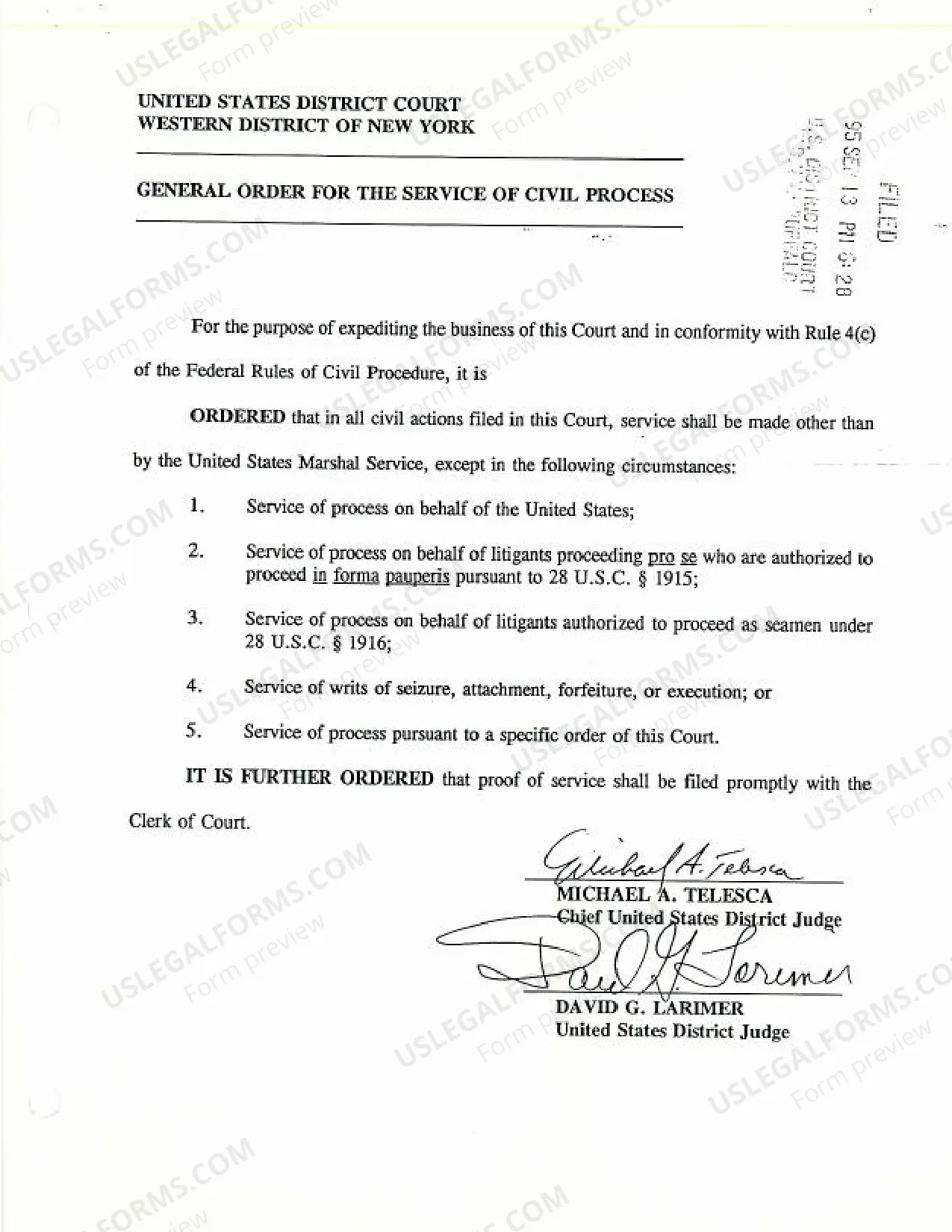
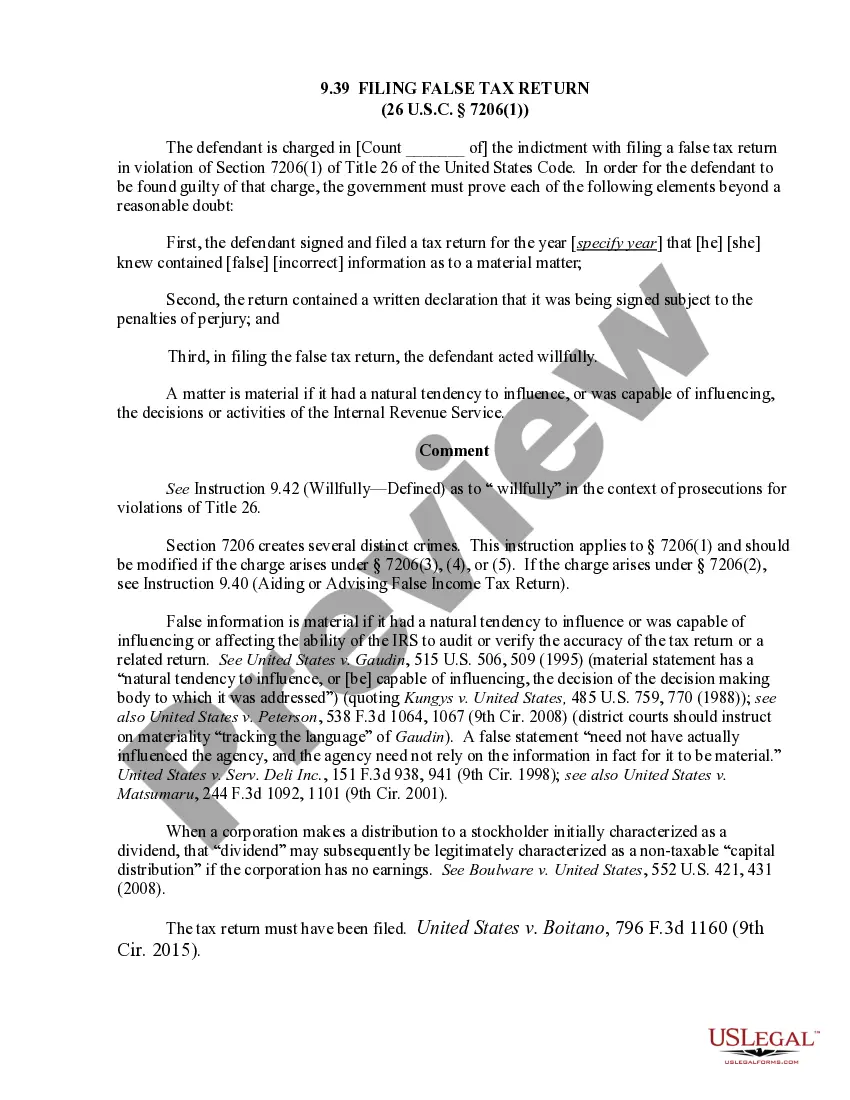
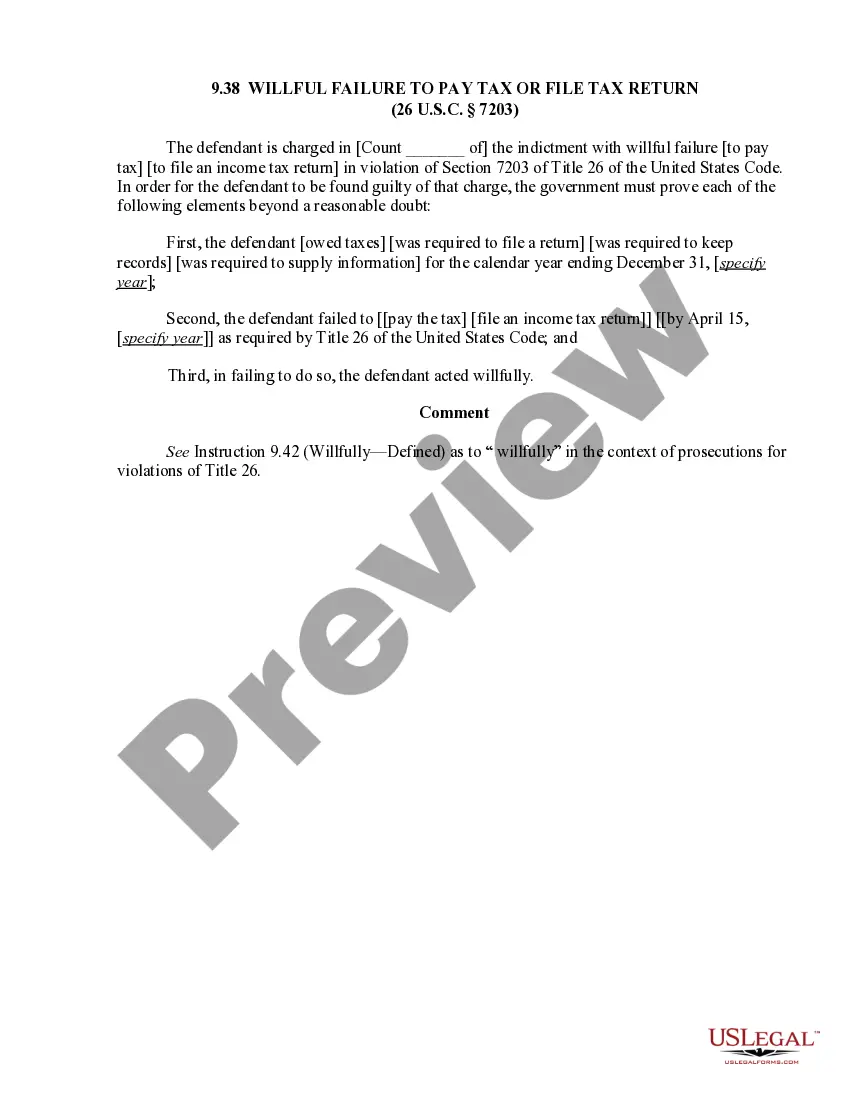
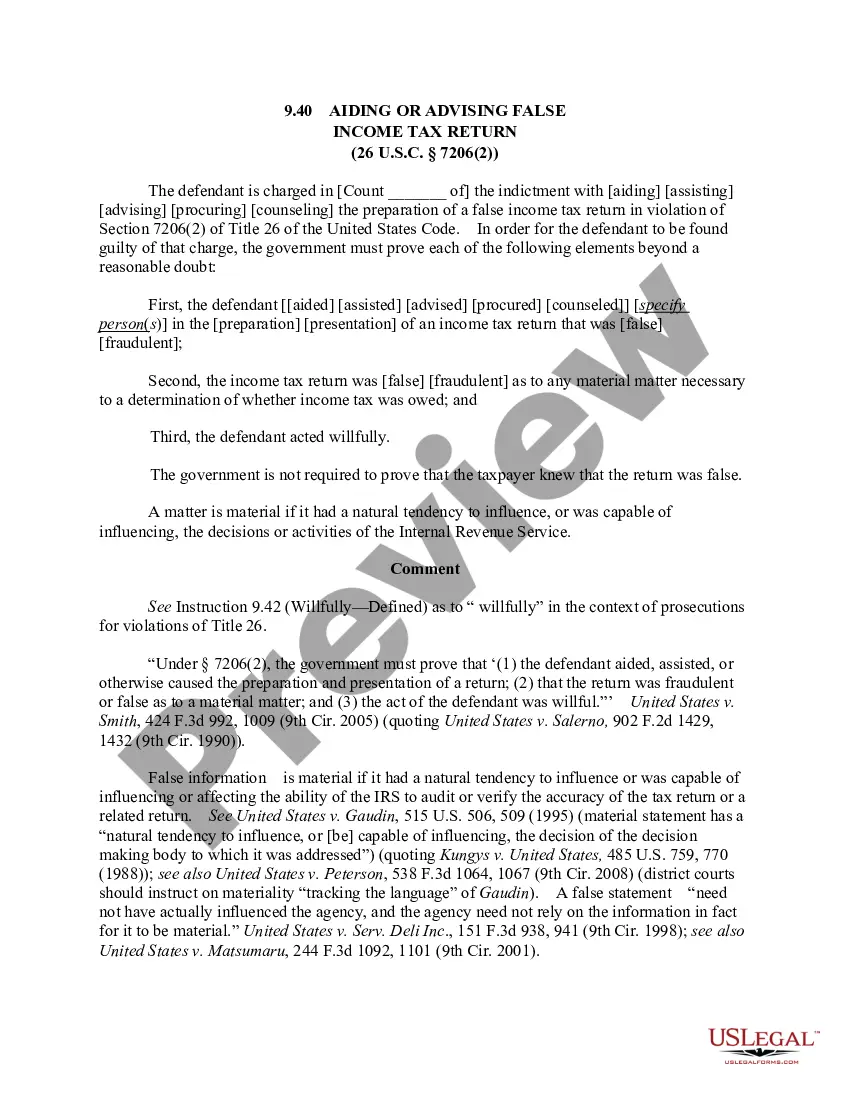
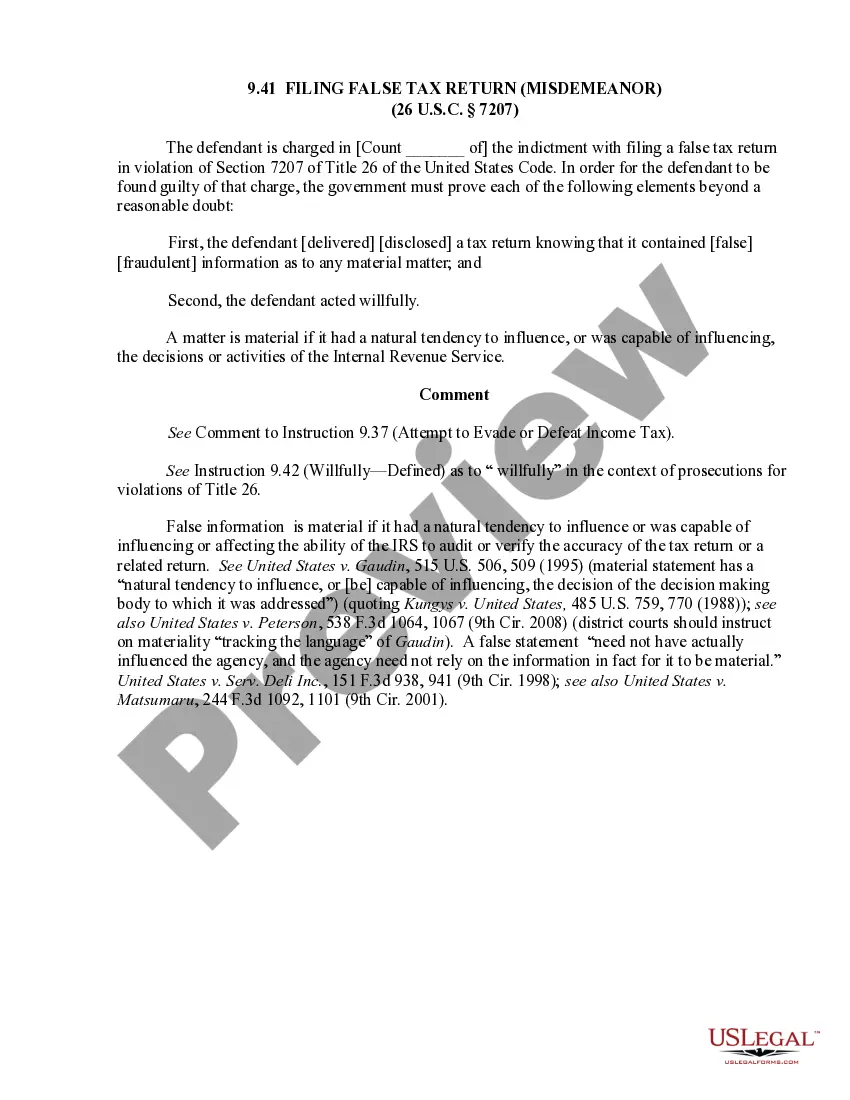
9.39 Filing False Tax Return

Does this document require notarization?
This form usually doesn’t need to be notarized. However, local laws or specific transactions may require it. Our online notarization service, powered by Notarize, lets you complete it remotely through a secure video session, available 24/7.
Get your form ready online
Our built-in tools help you complete, sign, share, and store your documents in one place.
Make edits, fill in missing information, and update formatting in US Legal Forms—just like you would in MS Word.
Download a copy, print it, send it by email, or mail it via USPS—whatever works best for your next step.
Sign and collect signatures with our SignNow integration. Send to multiple recipients, set reminders, and more. Go Premium to unlock E-Sign.
If this form requires notarization, complete it online through a secure video call—no need to meet a notary in person or wait for an appointment.
We protect your documents and personal data by following strict security and privacy standards.

Make edits, fill in missing information, and update formatting in US Legal Forms—just like you would in MS Word.

Download a copy, print it, send it by email, or mail it via USPS—whatever works best for your next step.

Sign and collect signatures with our SignNow integration. Send to multiple recipients, set reminders, and more. Go Premium to unlock E-Sign.

If this form requires notarization, complete it online through a secure video call—no need to meet a notary in person or wait for an appointment.

We protect your documents and personal data by following strict security and privacy standards.
Looking for another form?
Form popularity
FAQ
Section 6065 provides that any return shall ?contain or be verified by a written declaration that it is made under the penalties of perjury.?
Tax fraud occurs when an individual or business entity willfully and intentionally falsifies information on a tax return to limit the amount of tax liability.
For fraud and tax evasion, the tax law dictates that if you're convicted, you may be fined up to $100,000 and sent to jail for up to five years. The maximum fine for corporations is $500,000.
Tax evasion is a risky crime, a felony, punishable by five years imprisonment and a $250,000 fine. Incarceration may include prison time, home confinement, electronic monitoring or a combination.
The statute of limitations for the crime of fraud and false statement under 26 U.S.C. § 7206 (1) and (2) is six years. For a false tax return, the Government has six years to bring charges from the date of filing.
Can You be Prosecuted for Perjury or False Statements in Your Tax Returns? Yes, the Internal Revenue Code has its very own perjury and false statements statute. This crime is separate from the tax evasion statute, and different elements must be present for the taxpayer to be charged with perjury and false statements.
Intentionally lying on a tax return, even if it's a white lie, is a federal crime. It's called tax perjury and it occurs one of two ways: when individuals intentionally file fraudulent documents or assist someone else in doing the same.
Criminal Penalties: §7213 specifies that willful unauthorized disclosure of returns or return information by an employee or former employee is a felony. The penalty can be a fine of up to $5,000 or up to five (5) years in jail, or both, plus costs of prosecution.