Letter from Tenant to Landlord about Landlord using Unlawful Self-Help to Gain Possession
Overview of this form
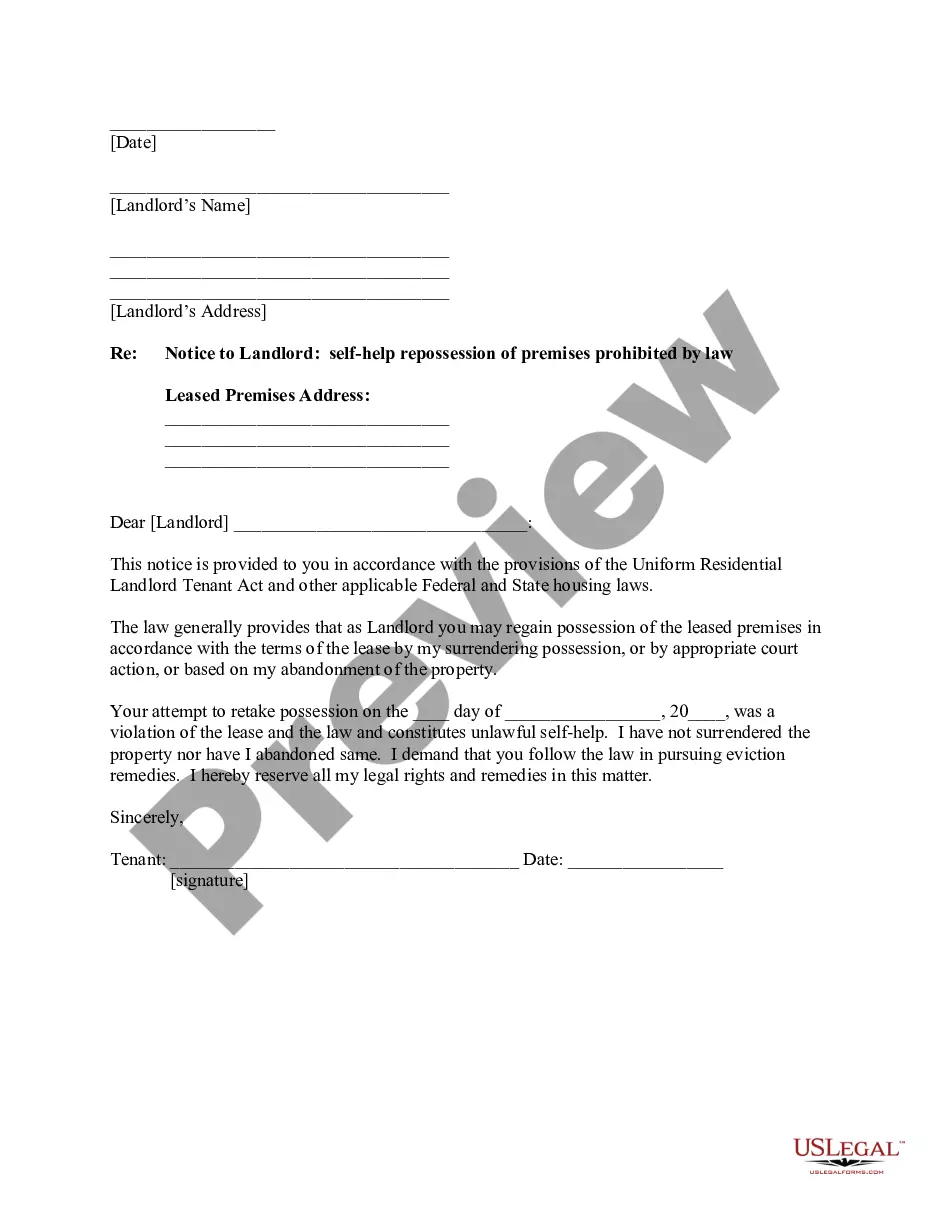
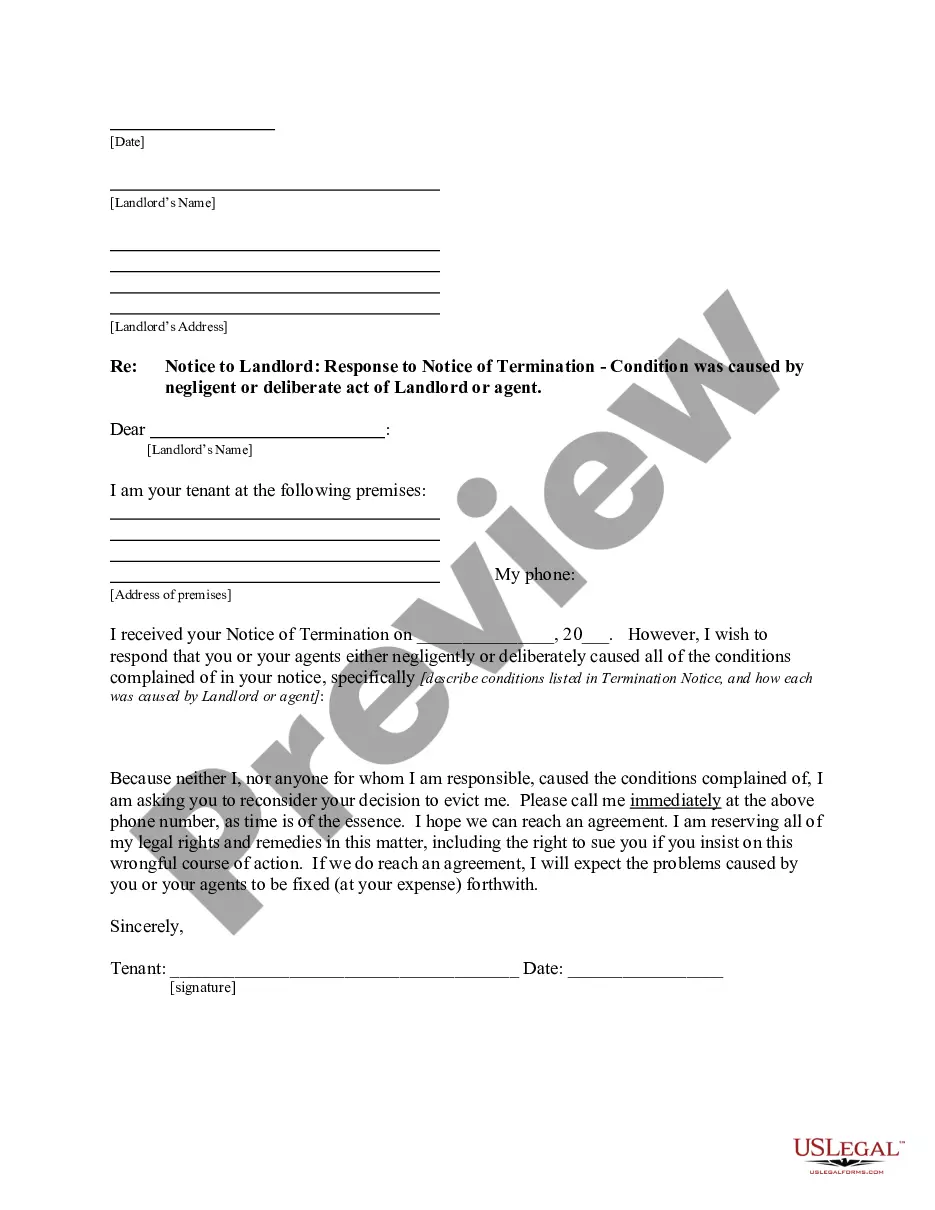
This form is a letter from a tenant to their landlord regarding unlawful self-help in gaining possession of a rental property. It clearly outlines the legal avenues a landlord must follow to reclaim possession, emphasizing that unlawful methods are prohibited. This letter serves as a formal notice to the landlord about their obligations under the lease agreement and applicable laws, helping tenants protect their rights when faced with eviction attempts outside of legal procedures.
Form components explained
- Date: The date when the letter is prepared.
- Landlord's Name and Address: The full name and address of the landlord.
- Subject Line: A clear statement indicating the notice is about self-help repossession being prohibited by law.
- Leased Premises Address: The address of the rental property in question.
- Notification Content: A detailed explanation stating that the landlord's actions constitute unlawful self-help.
- Tenant's Signature: The tenant must sign and date the letter to validate it.


When this form is needed
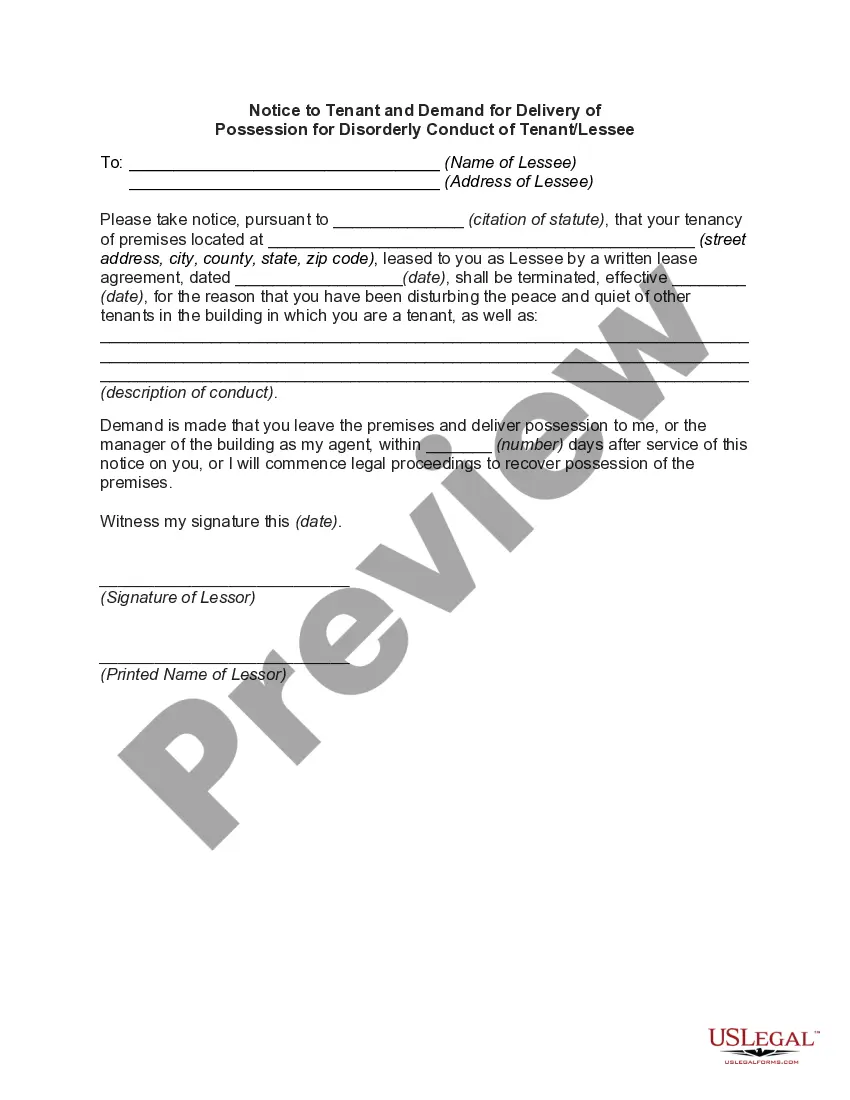
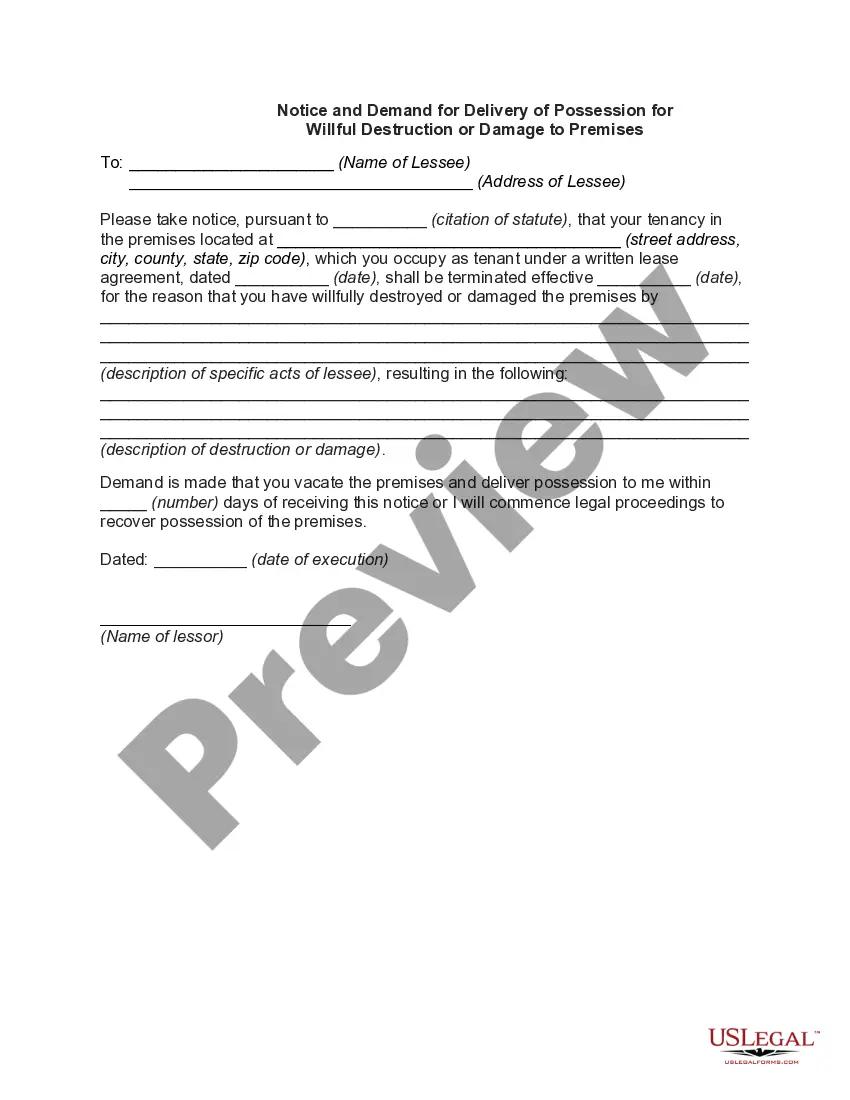
This form should be used when a tenant believes that their landlord is attempting to regain possession of the rental property through illegal means, rather than through authorized eviction procedures. Situations may include instances where the landlord changes locks, removes the tenant's property, or takes other actions without following the required legal processes. Utilizing this letter can help establish a record of communication regarding the landlord's unlawful actions.
Who needs this form
- Tenants who feel threatened by unlawful eviction attempts.
- Individuals renting residential properties under lease agreements.
- Anyone seeking to notify their landlord about potential legal violations regarding possession of rental premises.
Steps to complete this form
- Fill in the date at the top of the letter.
- Provide the landlord's full name and address.
- Specify the address of the leased premises.
- Clearly explain the unlawful actions taken by the landlord, including dates and details.
- Sign and date the letter to validate your notice to the landlord.
Does this form need to be notarized?
This form does not typically require notarization unless specified by local law. However, verifying local requirements is advisable to ensure compliance with any additional legal standards.
Get your form ready online
Our built-in tools help you complete, sign, share, and store your documents in one place.
Make edits, fill in missing information, and update formatting in US Legal Forms—just like you would in MS Word.
Download a copy, print it, send it by email, or mail it via USPS—whatever works best for your next step.
Sign and collect signatures with our SignNow integration. Send to multiple recipients, set reminders, and more. Go Premium to unlock E-Sign.
If this form requires notarization, complete it online through a secure video call—no need to meet a notary in person or wait for an appointment.
We protect your documents and personal data by following strict security and privacy standards.

Make edits, fill in missing information, and update formatting in US Legal Forms—just like you would in MS Word.

Download a copy, print it, send it by email, or mail it via USPS—whatever works best for your next step.

Sign and collect signatures with our SignNow integration. Send to multiple recipients, set reminders, and more. Go Premium to unlock E-Sign.

If this form requires notarization, complete it online through a secure video call—no need to meet a notary in person or wait for an appointment.

We protect your documents and personal data by following strict security and privacy standards.
Typical mistakes to avoid
- Failing to provide accurate information about the landlord and the property.
- Not specifying the date of the landlord's unlawful actions.
- Neglecting to sign the letter, which is essential for its effectiveness.
- Using vague language instead of clearly outlining the unlawful self-help actions.
Benefits of completing this form online
- Convenient access to a legally vetted template.
- Easy to customize the form to fit individual situations.
- Quick download for immediate use, saving time on drafting.
Legal use & context
- The letter serves as a formal notice to the landlord regarding unlawful actions.
- It can strengthen a tenant's position in legal disputes related to unlawful eviction.
- This form is supported by relevant state laws that protect tenant rights.
What to keep in mind
- This letter informs a landlord of unlawful self-help eviction methods.
- It emphasizes the legal requirement for landlords to follow eviction laws.
- The form protects tenant rights and can be used in multiple states.
Looking for another form?

Form popularity
FAQ
The rights of a tenant The right to live in a property that's safe and in a good state of repair. The right to have your deposit returned at the end of the tenancy (provided that you meet the terms of your tenancy agreement).
If the property is found to not be in reasonable repair through no negligence or intentional action by the tenant, then it's the landlord's responsibility to fix the problem. The nature of the repairs will determine whether or not they must be fixed urgently, which is generally defined as within three days.
No, a landlord cannot just kick you out. They need to follow the formal eviction process provided in your state. If a landlord uses illegal self-help measures, such as changing the locks or throwing out your belongings, you should be able to hold the landlord accountable and remain on the property.
Fundamental responsibilities of landlords include: providing and maintaining the property in a clean and reasonable standard; giving proper receipts and maintaining records of all transactions pertaining to the tenancy; paying council rates and taxes; maintaining locks to ensure the property's security; and lodging the