Wisconsin Living Trust for Individual Who is Single, Divorced or Widow or Widower with No Children

Understanding this form
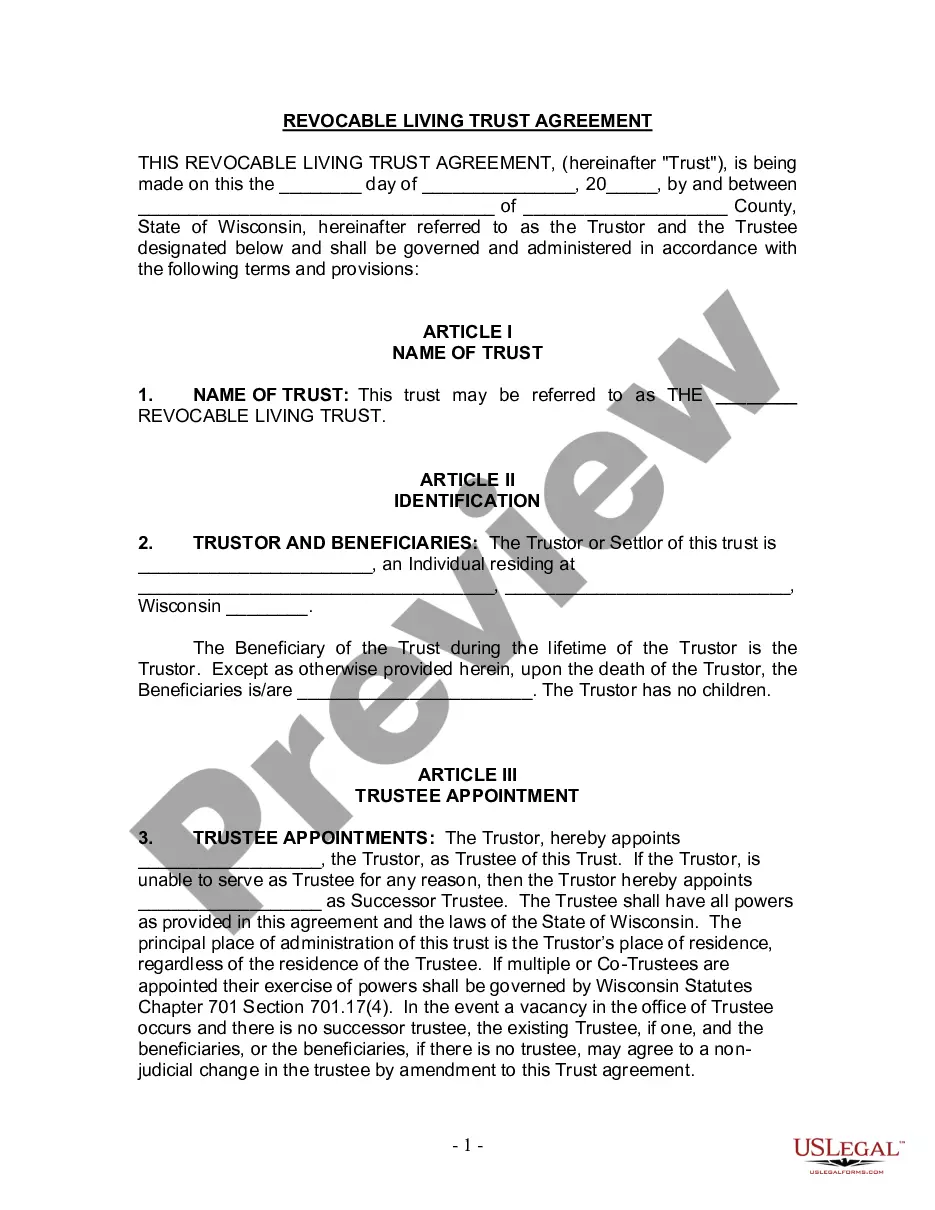
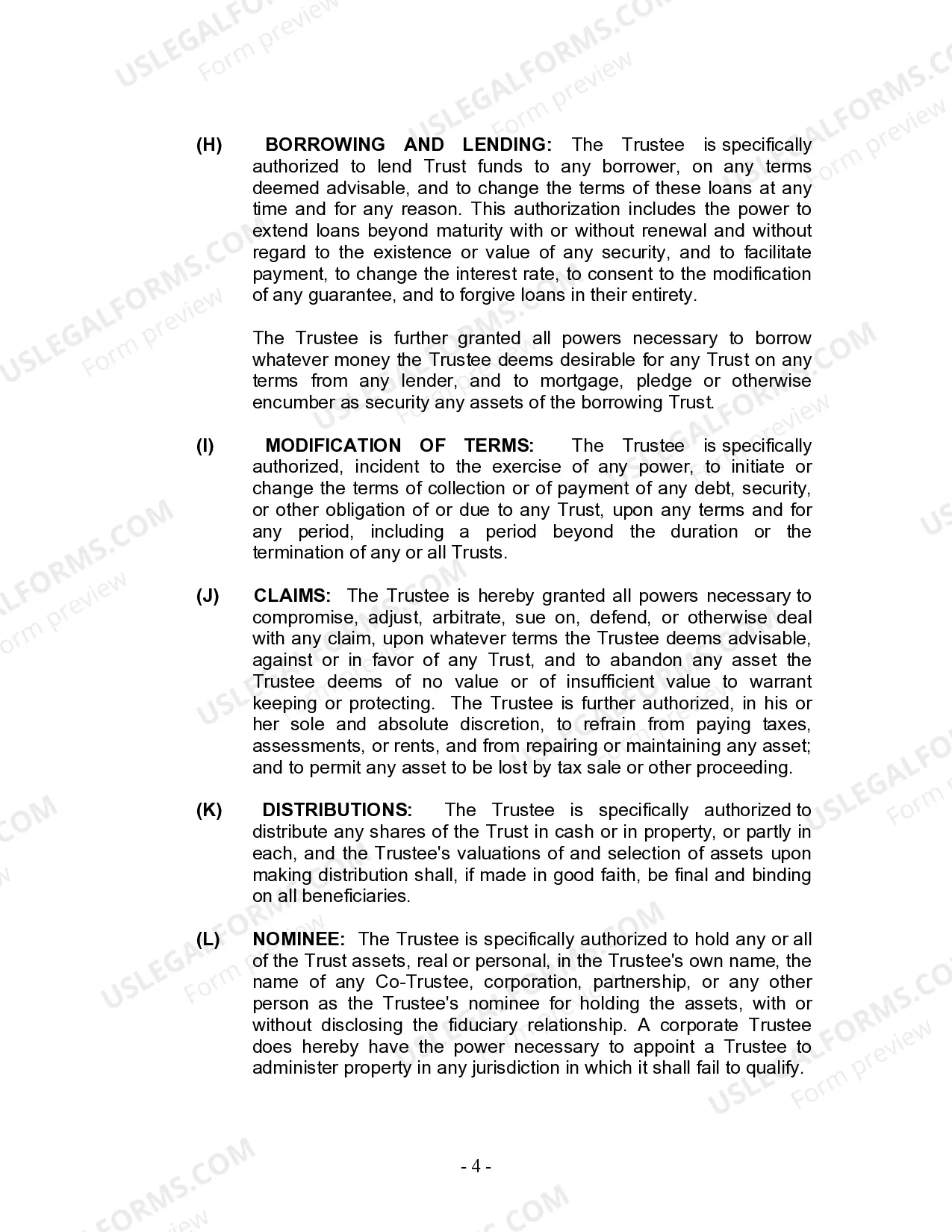
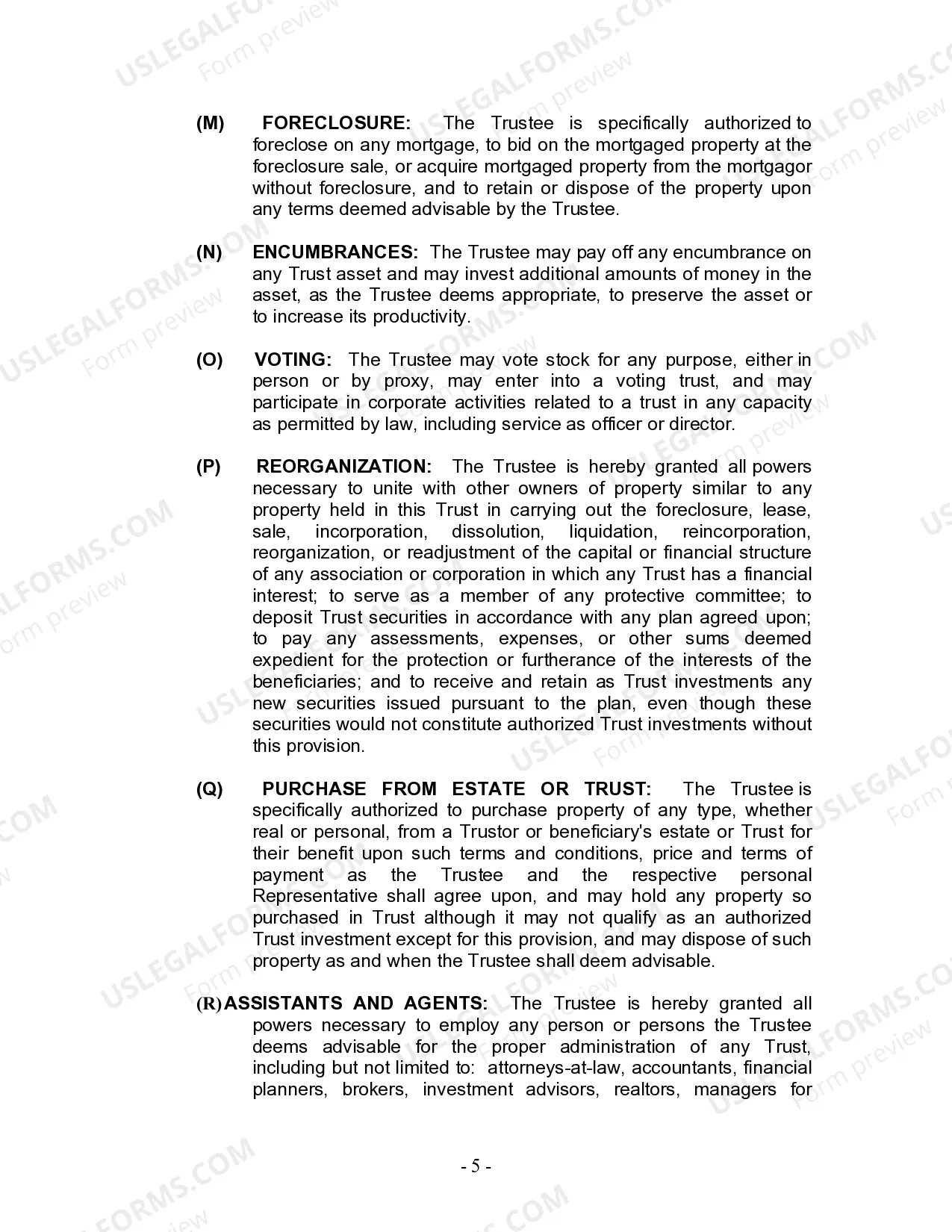
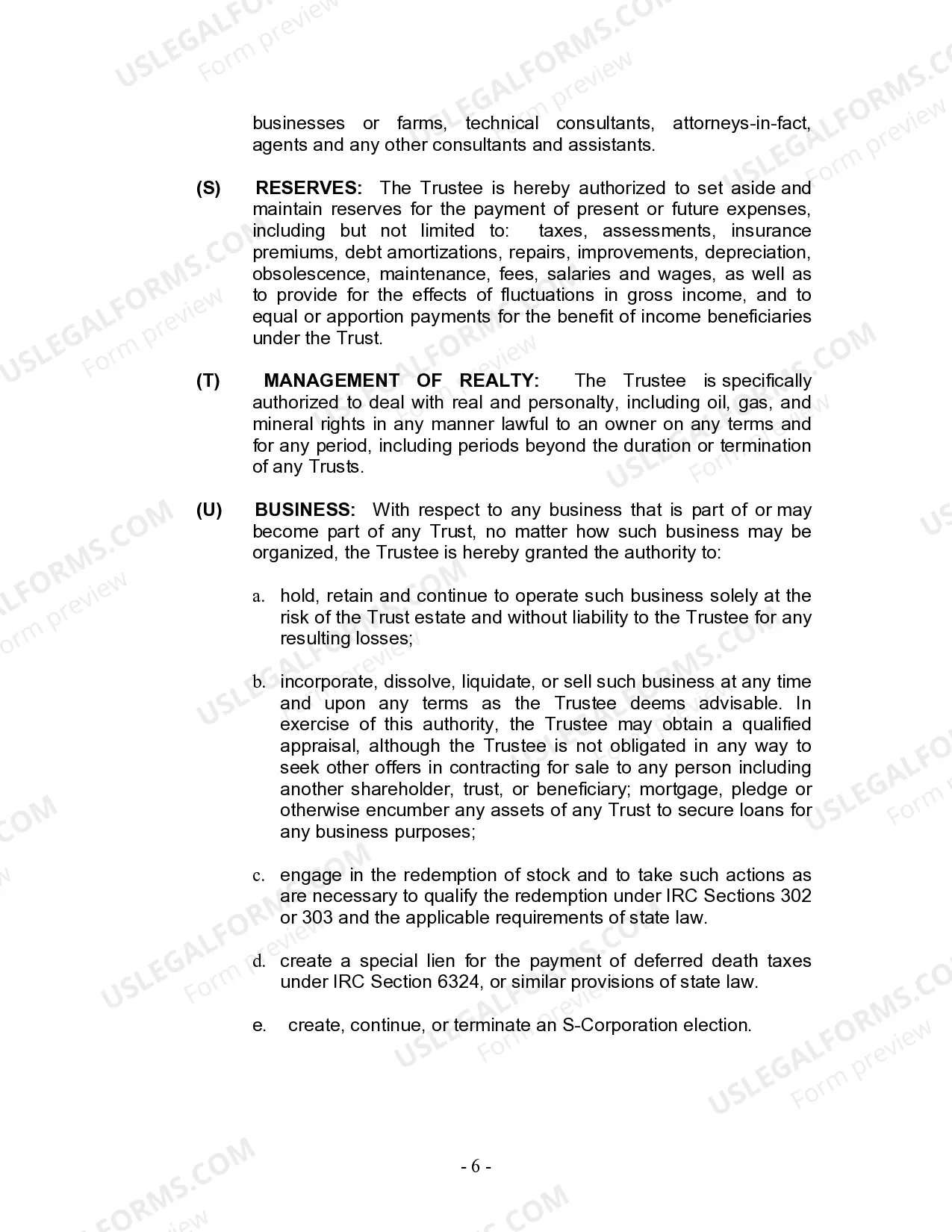
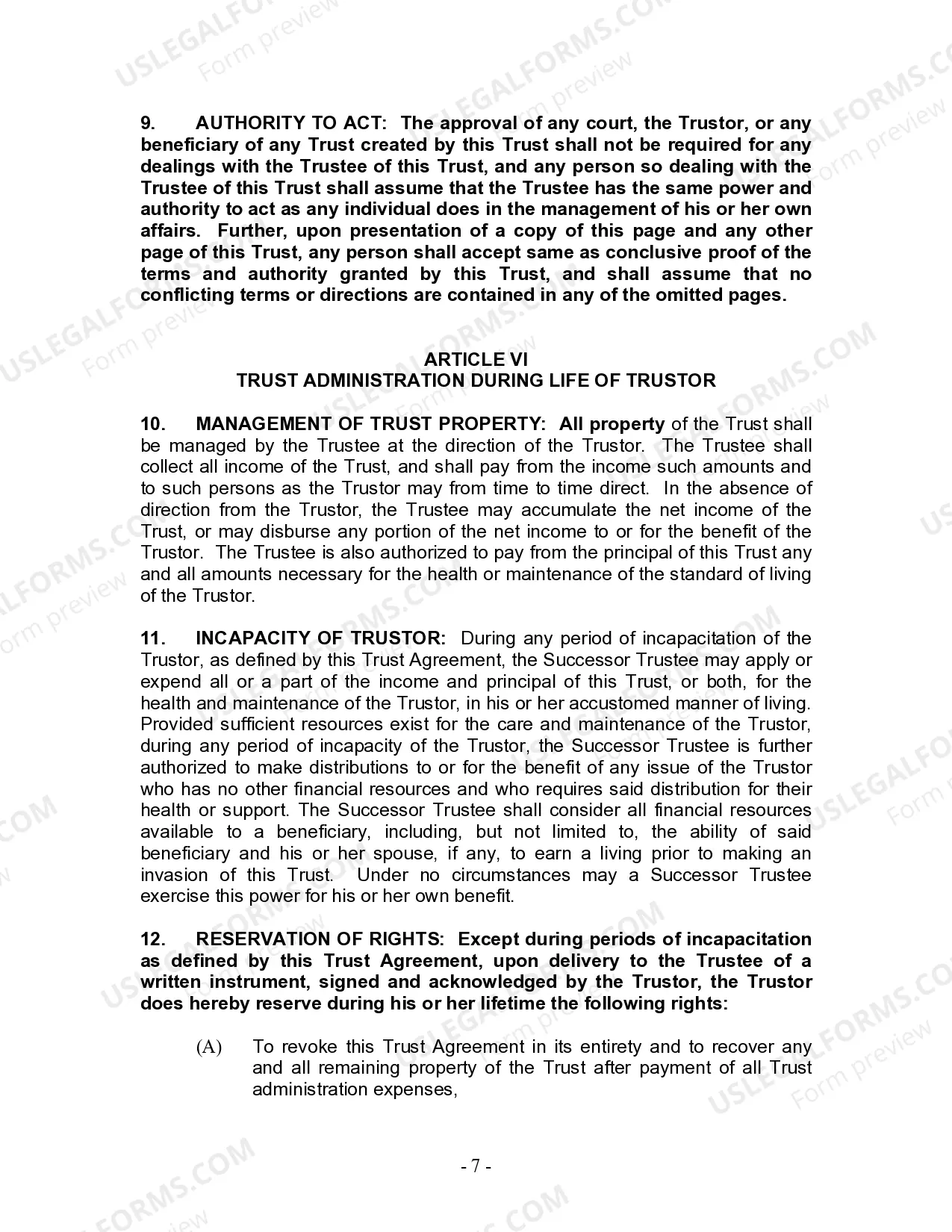
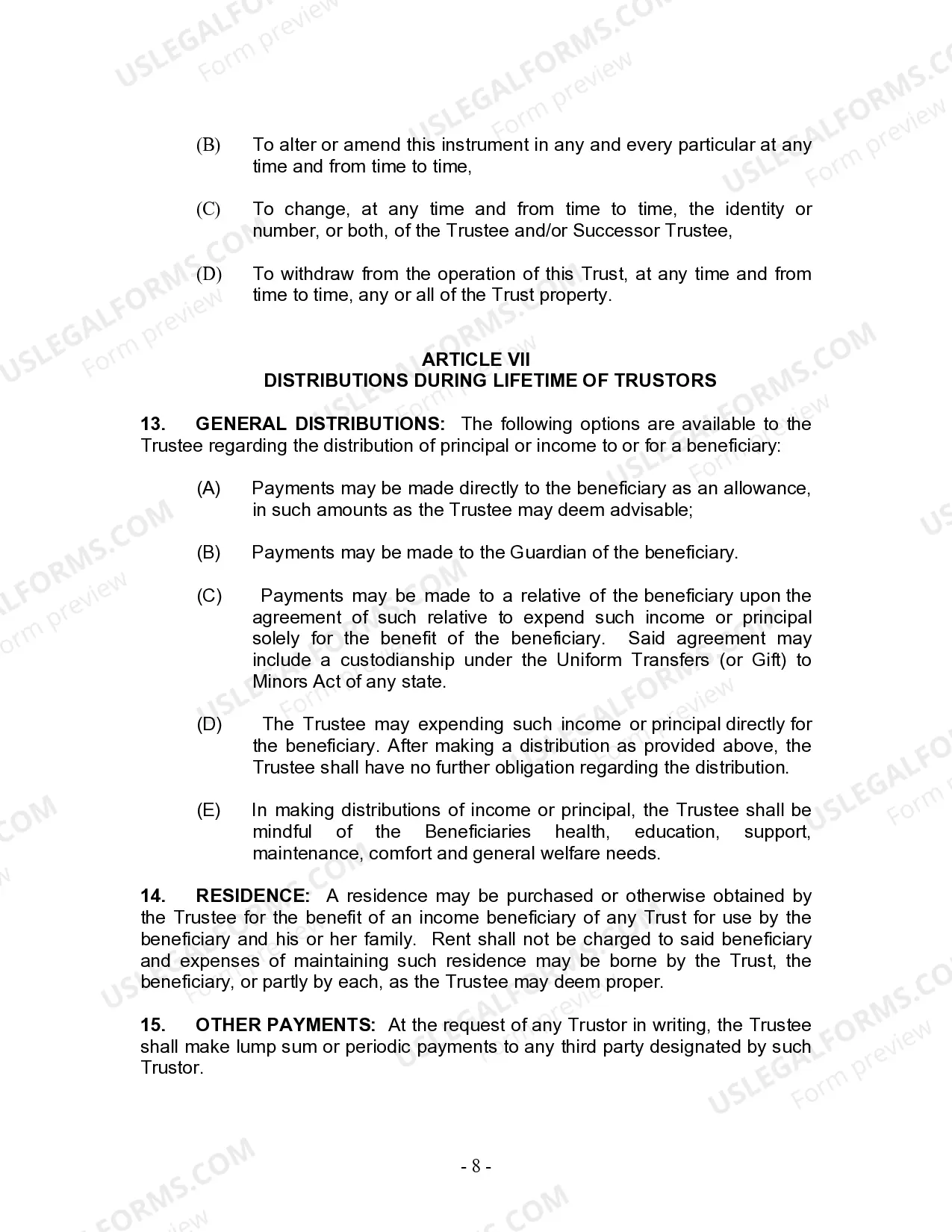
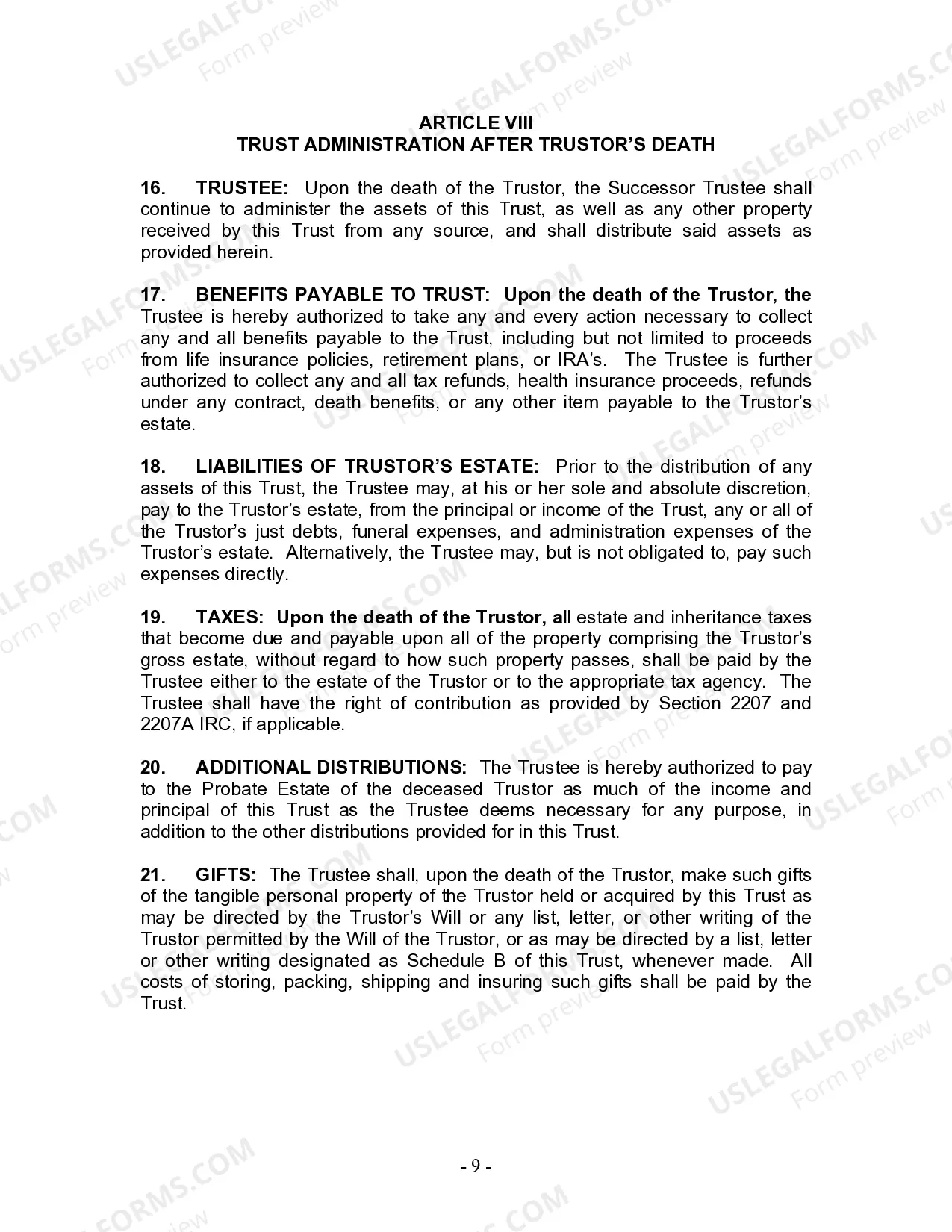
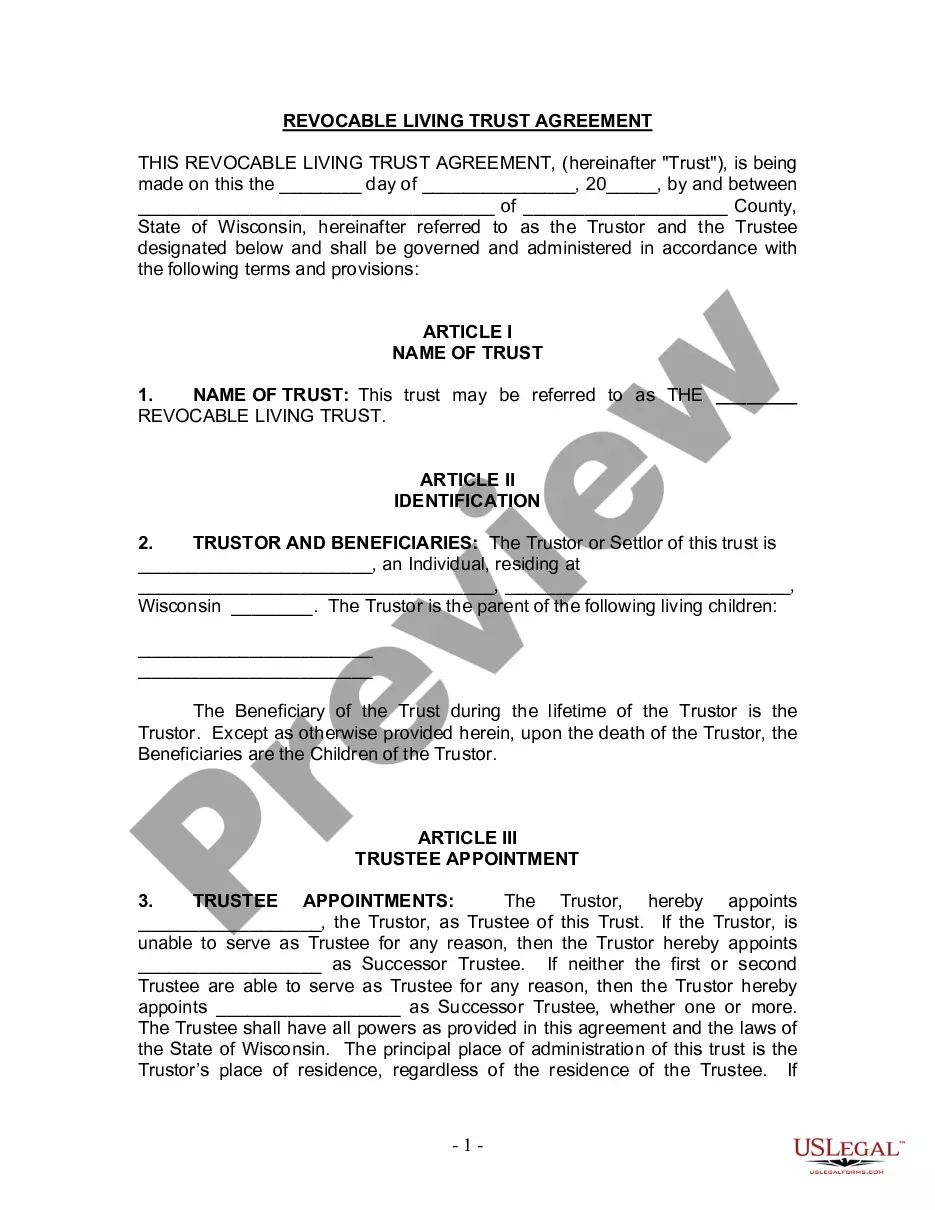
This Living Trust for Individual Who is Single, Divorced or Widow (or Widower) with No Children is a legal document that allows you to manage your assets during your lifetime and specify how they should be distributed upon your death. Unlike a will, a living trust can help avoid probate, making the transfer of your assets more efficient and private. This trust is specifically designed for individuals without children, ensuring that your wishes regarding your estate are clear and legally binding.
Key parts of this document
- Trustor Identification: Details of the individual creating the trust.
- Trustee Appointment: Designation of the individual responsible for managing the trust.
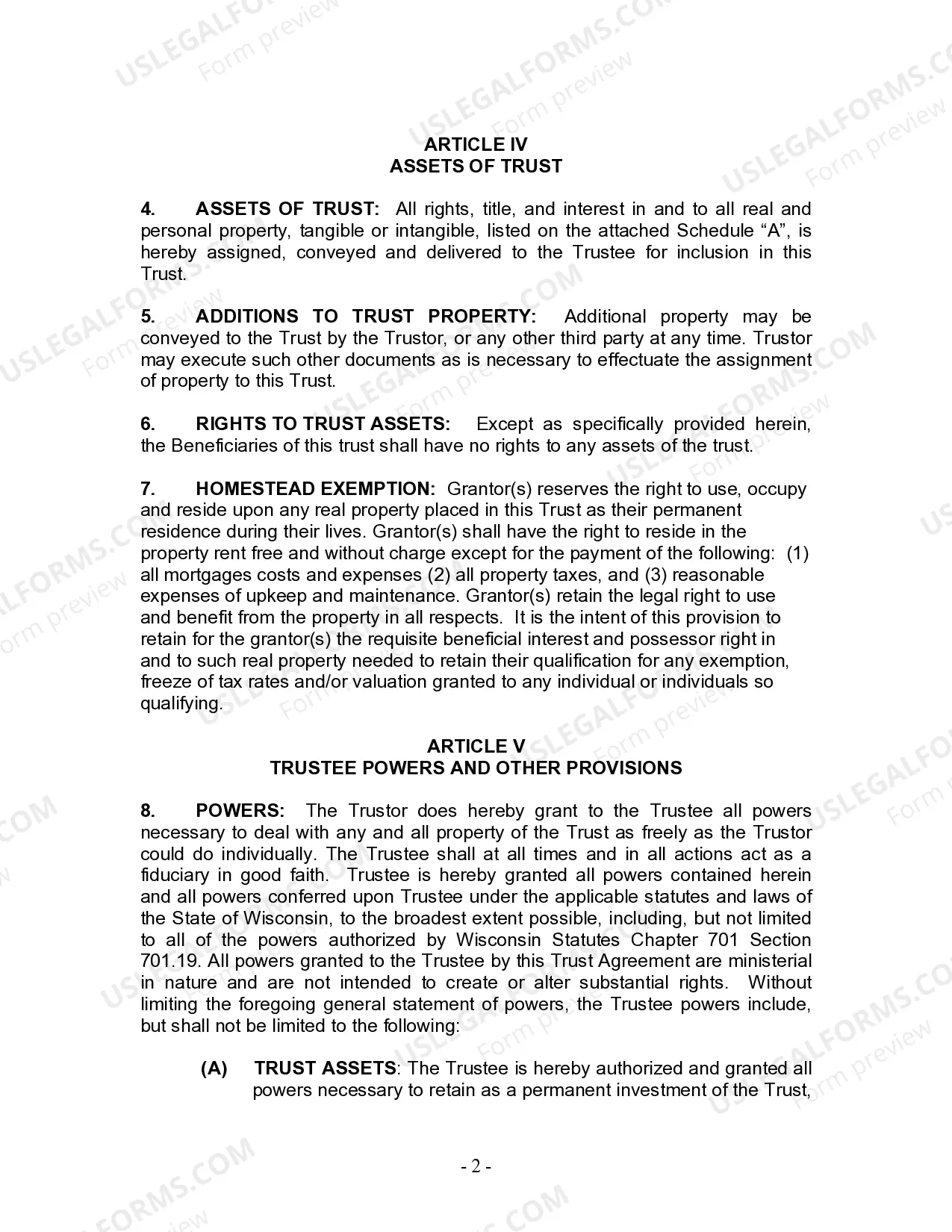
- Assets of Trust: Listing of properties and assets included in the trust.
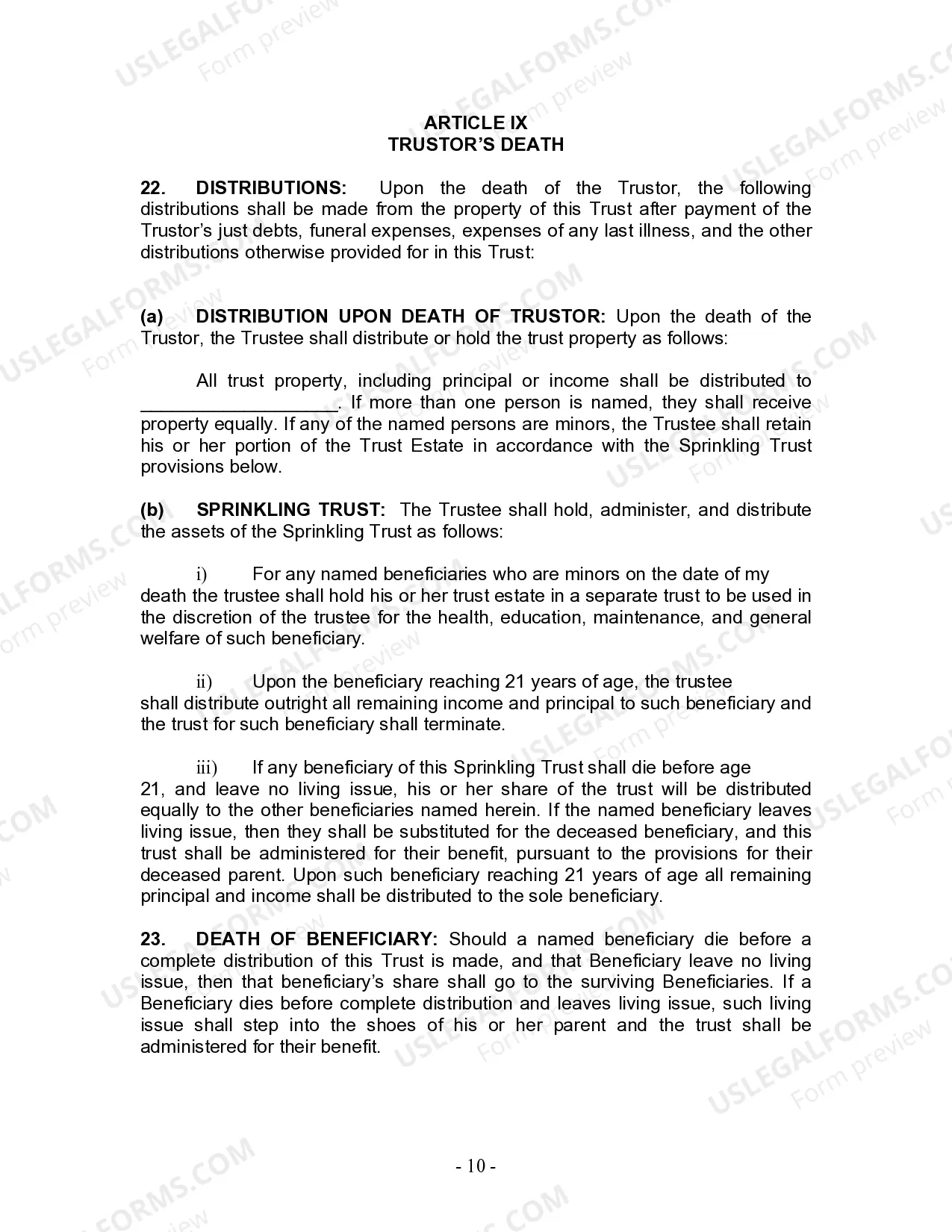
- Distribution Provisions: Instructions on how assets should be distributed after the trustor's death.
- Successor Trustee: Appointment of a backup trustee if the primary trustee cannot serve.




Common use cases
This form is useful when you want to ensure your assets are managed and distributed according to your wishes while avoiding the lengthy probate process. It is especially relevant for individuals who are single, divorced, or widowed without children and want to secure their estate planning needs efficiently. This trust can also be beneficial if you anticipate potential changes to your asset distribution in the future.
Who needs this form
This form is intended for:
- Individuals who are single, divorced, or widowed.
- People without children looking to manage their estate.
- Anyone who wishes to avoid the probate process for their assets.
How to prepare this document
- Identify the trustor by entering your name and residence details.
- Designate a trustee (which can be yourself) and enter their information.
- List all assets being placed into the trust in the appropriate section.
- Specify how you wish the assets to be distributed upon your death.
- Ensure all parties sign the document as required, and obtain notarization if necessary.
Does this form need to be notarized?
To make this form legally binding, it must be notarized. Our online notarization service, powered by Notarize, lets you verify and sign documents remotely through an encrypted video session.
Get your form ready online
Our built-in tools help you complete, sign, share, and store your documents in one place.
Make edits, fill in missing information, and update formatting in US Legal Forms—just like you would in MS Word.
Download a copy, print it, send it by email, or mail it via USPS—whatever works best for your next step.
Sign and collect signatures with our SignNow integration. Send to multiple recipients, set reminders, and more. Go Premium to unlock E-Sign.
If this form requires notarization, complete it online through a secure video call—no need to meet a notary in person or wait for an appointment.
We protect your documents and personal data by following strict security and privacy standards.

Make edits, fill in missing information, and update formatting in US Legal Forms—just like you would in MS Word.

Download a copy, print it, send it by email, or mail it via USPS—whatever works best for your next step.

Sign and collect signatures with our SignNow integration. Send to multiple recipients, set reminders, and more. Go Premium to unlock E-Sign.

If this form requires notarization, complete it online through a secure video call—no need to meet a notary in person or wait for an appointment.

We protect your documents and personal data by following strict security and privacy standards.
Common mistakes
- Failing to list all assets intended for the trust.
- Not updating the trust when significant life events occur.
- Overlooking the need for a successor trustee.
Advantages of online completion
- Convenient access to trusted legal templates 24/7.
- Edit your trust easily to reflect changing circumstances.
- Ensured compliance with state-specific legal requirements.
Looking for another form?


Form popularity
FAQ
Generally, no. Most living or revocable trusts become irrevocable upon the death of the trust's maker or makers. This means that the trust cannot be altered in any way once the successor trustee takes over management of it.
Like a will, a living trust can be altered whenever you wish.After one spouse dies, the surviving spouse is free to amend the terms of the trust document that deal with his or her property, but can't change the parts that determine what happens to the deceased spouse's trust property.
The process of funding your living trust by transferring your assets to the trustee is an important part of what helps your loved ones avoid probate court in the event of your death or incapacity. Qualified retirement accounts such as 401(k)s, 403(b)s, IRAs, and annuities, should not be put in a living trust.
Many married couples own most of their assets jointly with the right of survivorship. When one spouse dies, the surviving spouse automatically receives complete ownership of the property. This distribution cannot be changed by Will.
When one spouse dies, the joint trust will continue to operate for the benefit of the surviving spouse as a Survivor's Trust. Any specific gifts of tangible property from the first spouse to beneficiaries (other than the surviving spouse) will be given to those people.
A living trust is a trust that becomes effective during your lifetime, as opposed to only becoming effective after your death. Like other types of trusts, property transferred to a living trust will be held and managed by your trustee until it is time to transfer the trust property to your heirs.
What happens in this type of trust is that the trust is a joint revocable trust when both spouses are alive. When one of the spouses dies, the trust will then split into two trusts automatically. Each trust will have half the assets of the trust along with the separate property of the spouse.
When they pass away, the assets are distributed to beneficiaries, or the individuals they have chosen to receive their assets. A settlor can change or terminate a revocable trust during their lifetime. Generally, once they die, it becomes irrevocable and is no longer modifiable.
The owner transfers assets into the account during their lifetime. When they pass away, the assets are distributed to beneficiaries, or the individuals they have chosen to receive their assets. A settlor can change or terminate a revocable trust during their lifetime.