South Dakota Newly Divorced Individuals Package
What is this form package?
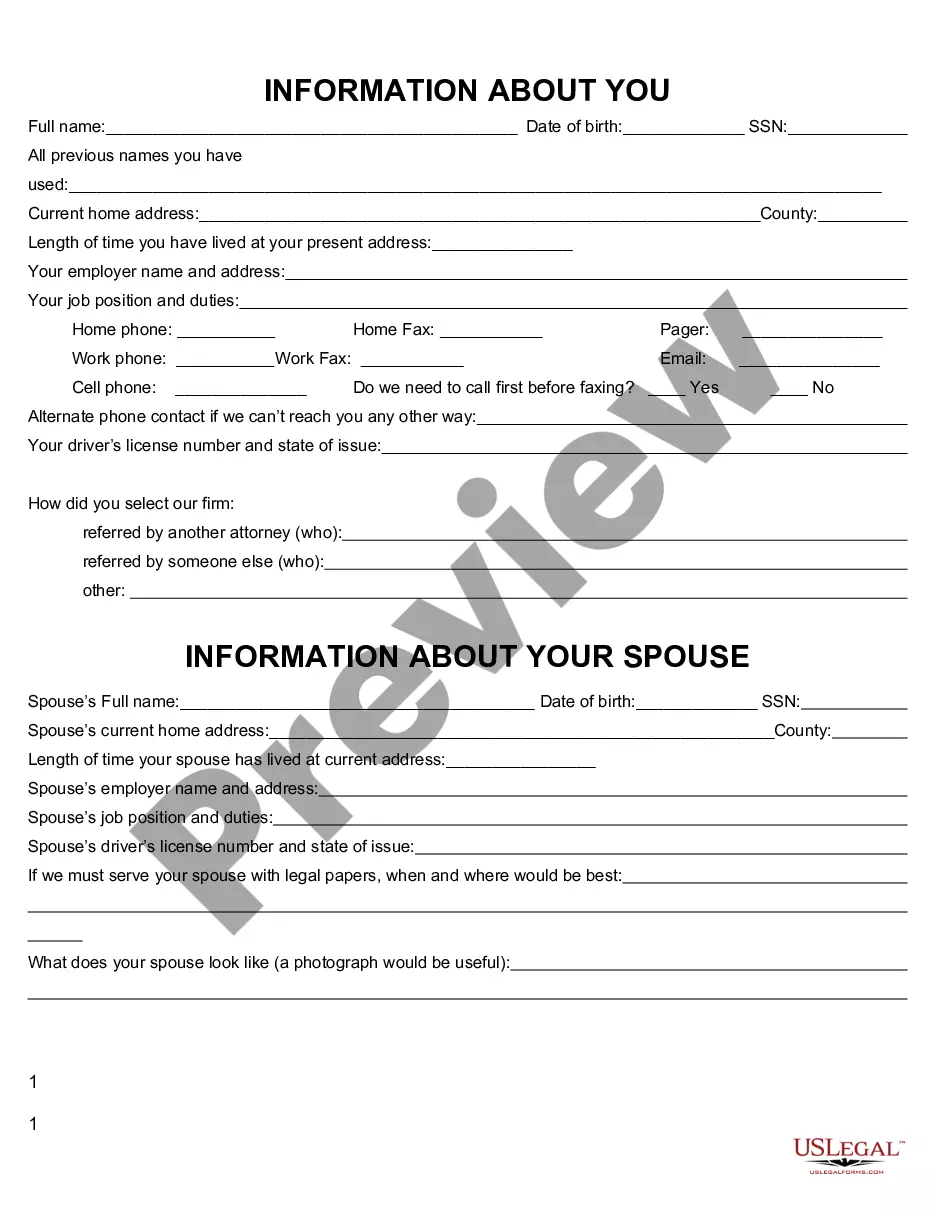
The South Dakota Newly Divorced Individuals Package is a collection of essential legal documents specifically designed for individuals who have recently gone through a divorce. This package aims to help users organize their legal affairs and make necessary updates to their estate planning and personal information. It includes state-specific forms that comply with South Dakota laws, allowing newly divorced individuals to navigate their legal life with confidence and ease.
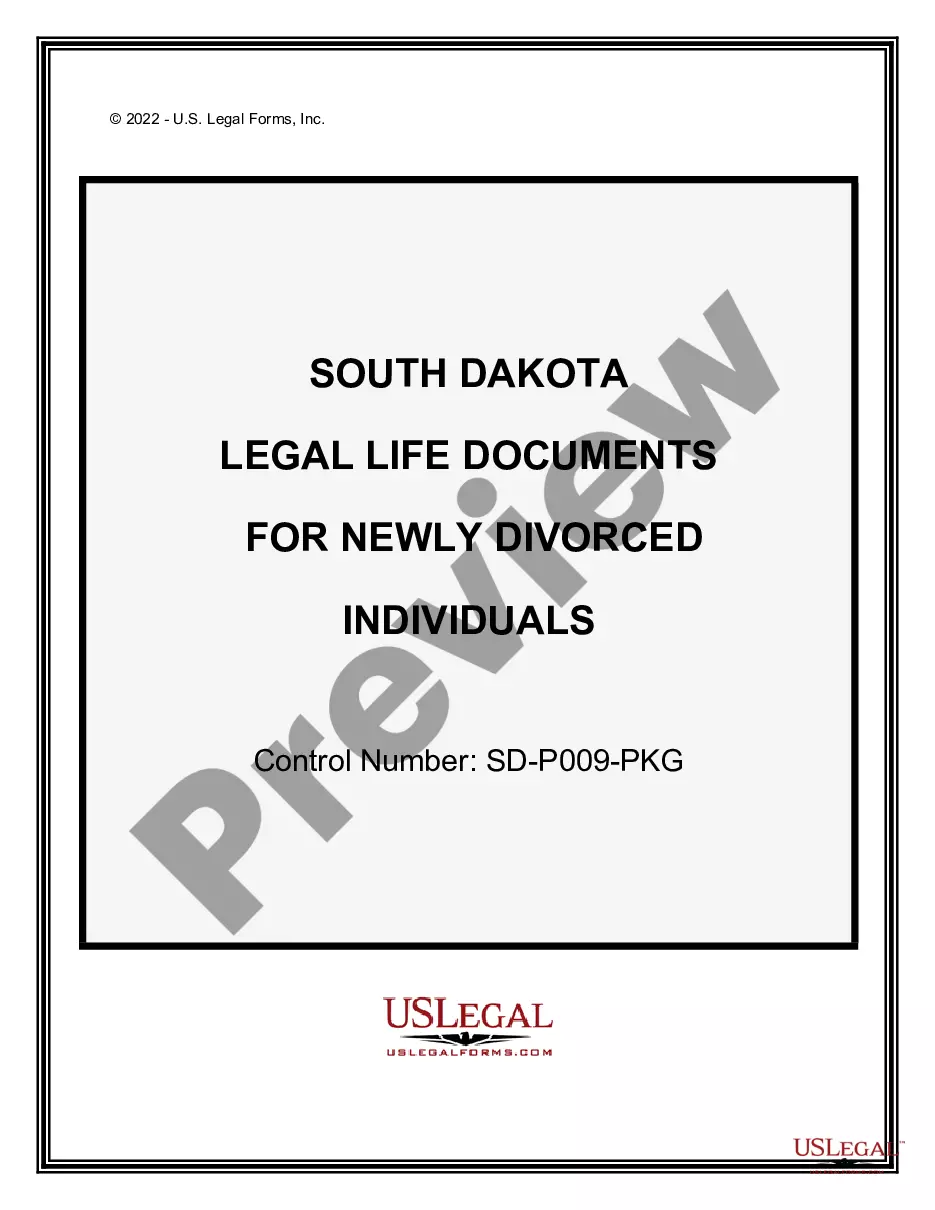
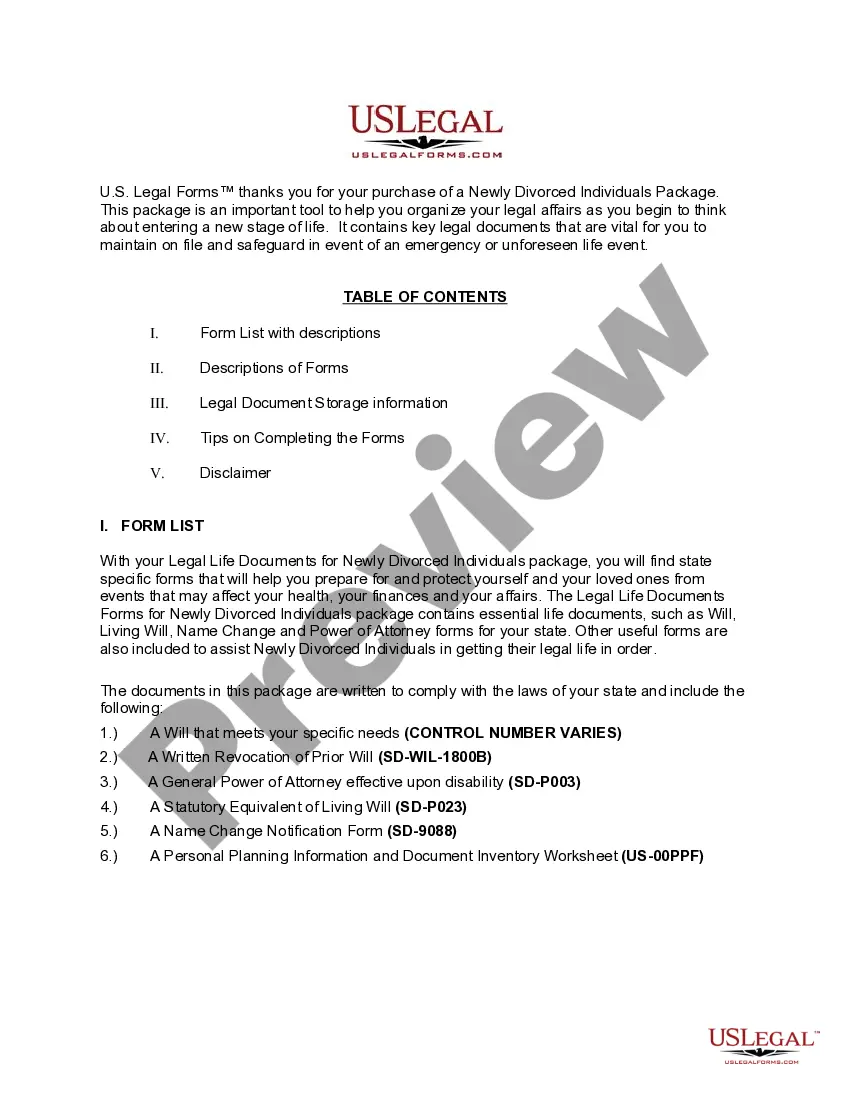
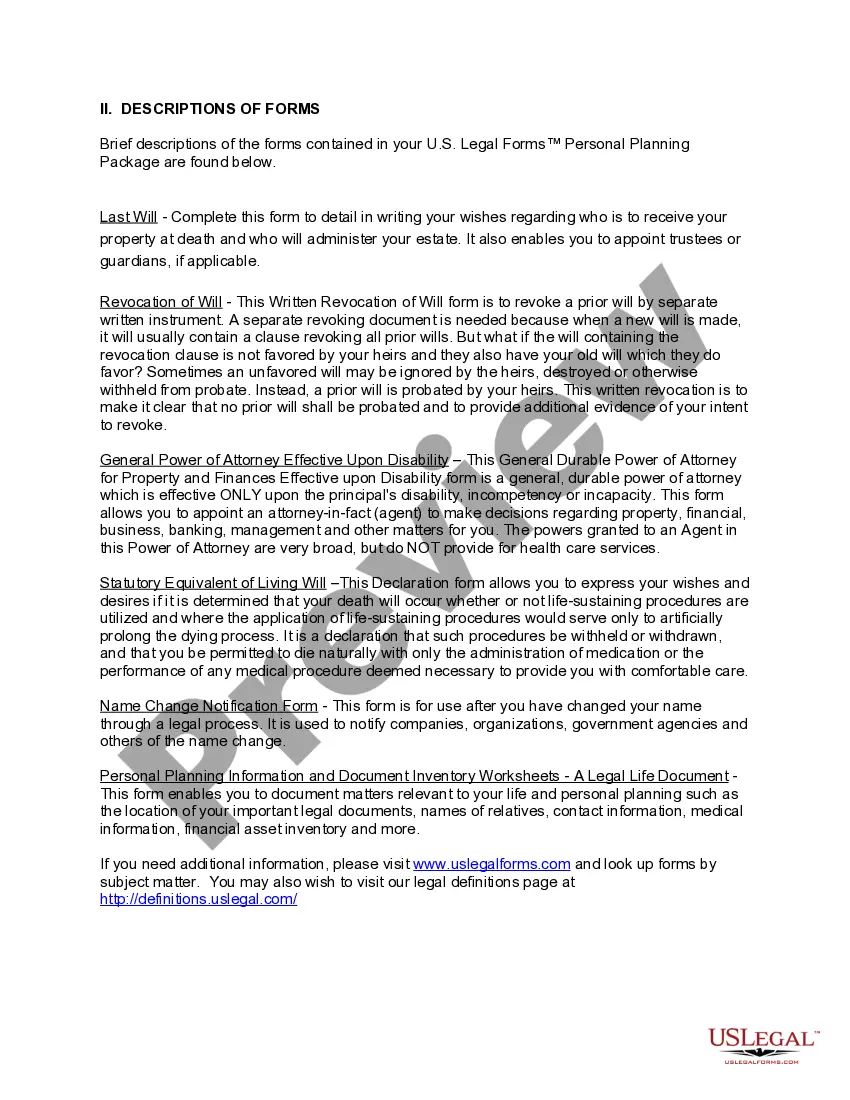
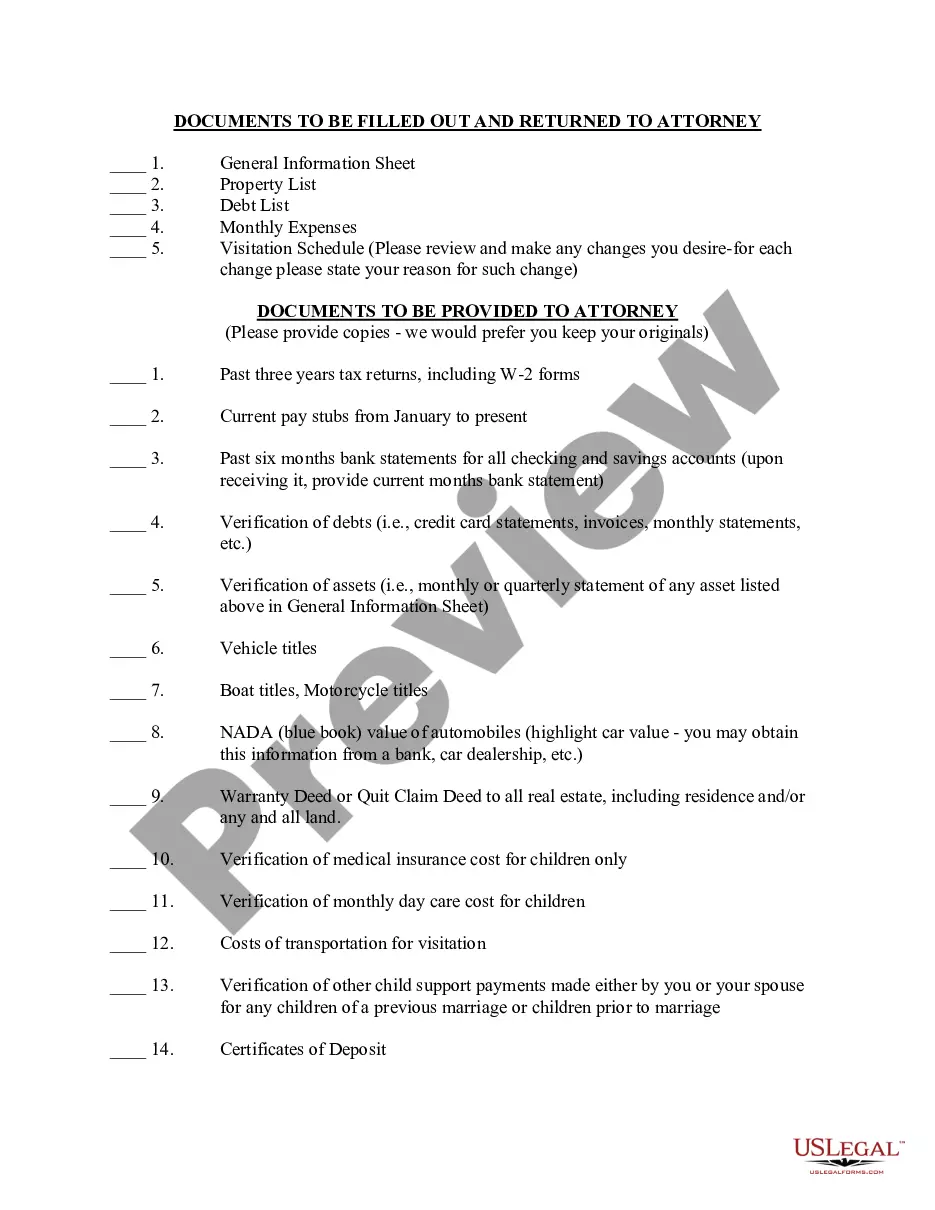
Documents contained in this package
When to use this form package
This package is ideal for you if:
- You have filed for divorce or recently finalized your divorce.
- You need to update your estate planning documents, such as a Will or Power of Attorney.
- You wish to revoke any prior Wills that are no longer valid or desired.
- You need to notify relevant parties about a legal name change.
- You want to ensure that your health care wishes are respected through a Living Will.
Intended users of this form package
- Individuals who have recently divorced in South Dakota.
- Anyone looking to update their estate planning after a significant life change.
- Those who want to ensure their legal and health care preferences are documented.
- Individuals requiring a structured approach to managing personal legal documents.
Completing these forms step by step
- Review all the included forms to understand their purposes and how they apply to your situation.
- Identify the parties involved, such as yourself and any heirs or agents you wish to designate.
- Enter the required information in the form fields provided, ensuring accuracy and completeness.
- Sign and date the documents where indicated; some forms may require witnesses or notarization.
- Store your completed documents securely, and inform a trusted individual of their location for safekeeping.
Notarization guidance for this package
Some forms in this package need notarization to be legally binding. Our online notarization service, powered by Notarize, lets you verify and sign documents remotely through an encrypted video session, available 24/7.
Get your form ready online
Our built-in tools help you complete, sign, share, and store your documents in one place.
Make edits, fill in missing information, and update formatting in US Legal Forms—just like you would in MS Word.
Download a copy, print it, send it by email, or mail it via USPS—whatever works best for your next step.
Sign and collect signatures with our SignNow integration. Send to multiple recipients, set reminders, and more. Go Premium to unlock E-Sign.
If this form requires notarization, complete it online through a secure video call—no need to meet a notary in person or wait for an appointment.
We protect your documents and personal data by following strict security and privacy standards.

Make edits, fill in missing information, and update formatting in US Legal Forms—just like you would in MS Word.

Download a copy, print it, send it by email, or mail it via USPS—whatever works best for your next step.

Sign and collect signatures with our SignNow integration. Send to multiple recipients, set reminders, and more. Go Premium to unlock E-Sign.

If this form requires notarization, complete it online through a secure video call—no need to meet a notary in person or wait for an appointment.

We protect your documents and personal data by following strict security and privacy standards.
Common mistakes to avoid
- Failing to revoke prior Wills, leading to potential confusion about your estate wishes.
- Not signing or dating the documents, which can render them invalid.
- Neglecting to notify institutions and agencies of a name change promptly.
- Leaving out critical information in the forms, which may delay processes.
Benefits of completing this package online
- Convenience of downloading and completing forms from the comfort of your home.
- Editable documents that allow customization to suit your specific needs.
- Reliability of forms created and vetted by licensed attorneys familiar with South Dakota law.
- Cost savings of up to 40% compared to purchasing forms separately.
Legal use & context
- These documents are designed to fulfill state-specific legal requirements for newly divorced individuals.
- Properly executed, these forms can help avoid probate challenges and provide clarity in legal matters.
Summary of main points
- This form package is designed for newly divorced individuals in South Dakota.
- Includes essential documents for estate planning and personal affairs management.
- Review and fill out these forms carefully to ensure they meet your needs.
Looking for another form?



Form popularity
FAQ
South Dakota Divorce Overview In South Dakota, a divorce can be completed on average in a minimum of 60 days, with court fees of $95.00. Unlike many states, South Dakota does not have any divorce residency requirements determining how long the appellant must have lived in South Dakota prior to filing for divorce.
Unlike some other states, South Dakota does not accept joint divorce petitions, even for uncontested divorces. Instead, the spouse who prepares and files the initial paperwork, the "plaintiff," must file the following documents with the court before the court proceeds with the case: Case Filing Statement.
South Dakota Divorce Overview In South Dakota, a divorce can be completed on average in a minimum of 60 days, with court fees of $95.00. Unlike many states, South Dakota does not have any divorce residency requirements determining how long the appellant must have lived in South Dakota prior to filing for divorce.
Grounds are legally acceptable reasons for divorce. You can get a divorce in South Dakota without claiming that your spouse is at fault (a no-fault divorce). The judge can grant you a no-fault divorce if the judge finds that there are irreconcilable differences between you and your spouse.
You can still get a divorce even if your spouse does not want one. States do not force a couple to stay together if one person no longer wants to be married. However, it can definitely complicate the process if the other party does not want to go through with it.
If you post the divorce documents, your spouse must sign and return to you the Acknowledgement of Service (Divorce) as proof of service. You will need to file this document at the court. If you post the documents but do not get the Acknowledgement of Service (Divorce), you must try to serve your spouse in another way.
You answer the divorce petition to let the court know your position in the divorce case.If you don't answer the divorce petition and you don't go to a hearing, it's still possible that the judge can grant the divorce. If that happens, the judge also can make other decisions in the divorce.
A divorce or legal separation case begins when the plaintiff the party who starts the court case files a formal complaint at the courthouse. The defendant, the other party, may answer within 28 days. If an answer is filed, the case is contested. If the defendant does not file an answer, the case is uncontested.
One of the main legal advantages that a person gains by filing the divorce petition before his or her spouse does is that the filer can request a Standing Order from the court when filing the petition.If the matter should go to a hearing, the person who files the petition usually presents his or her case first.