South Dakota Statutory Living Will
About this form
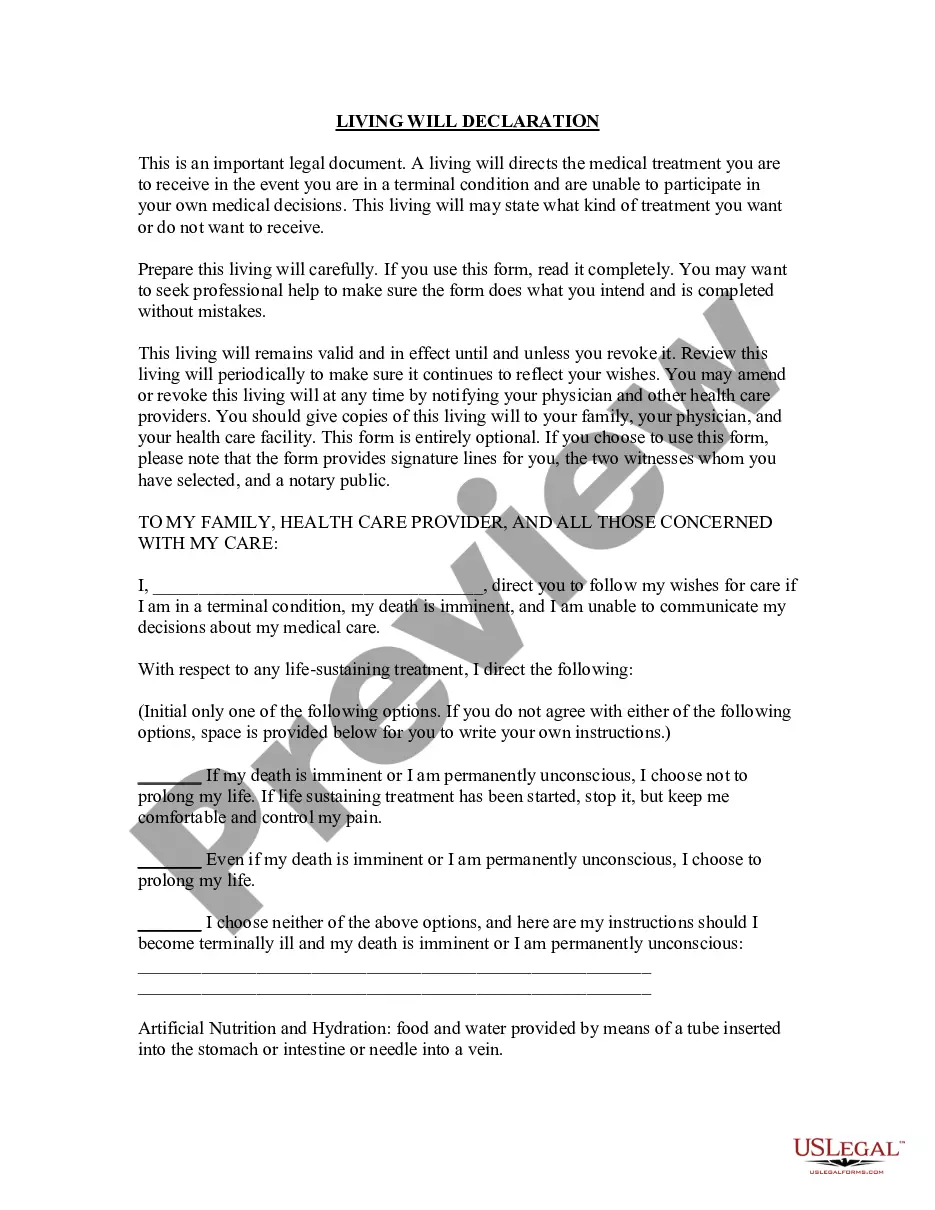
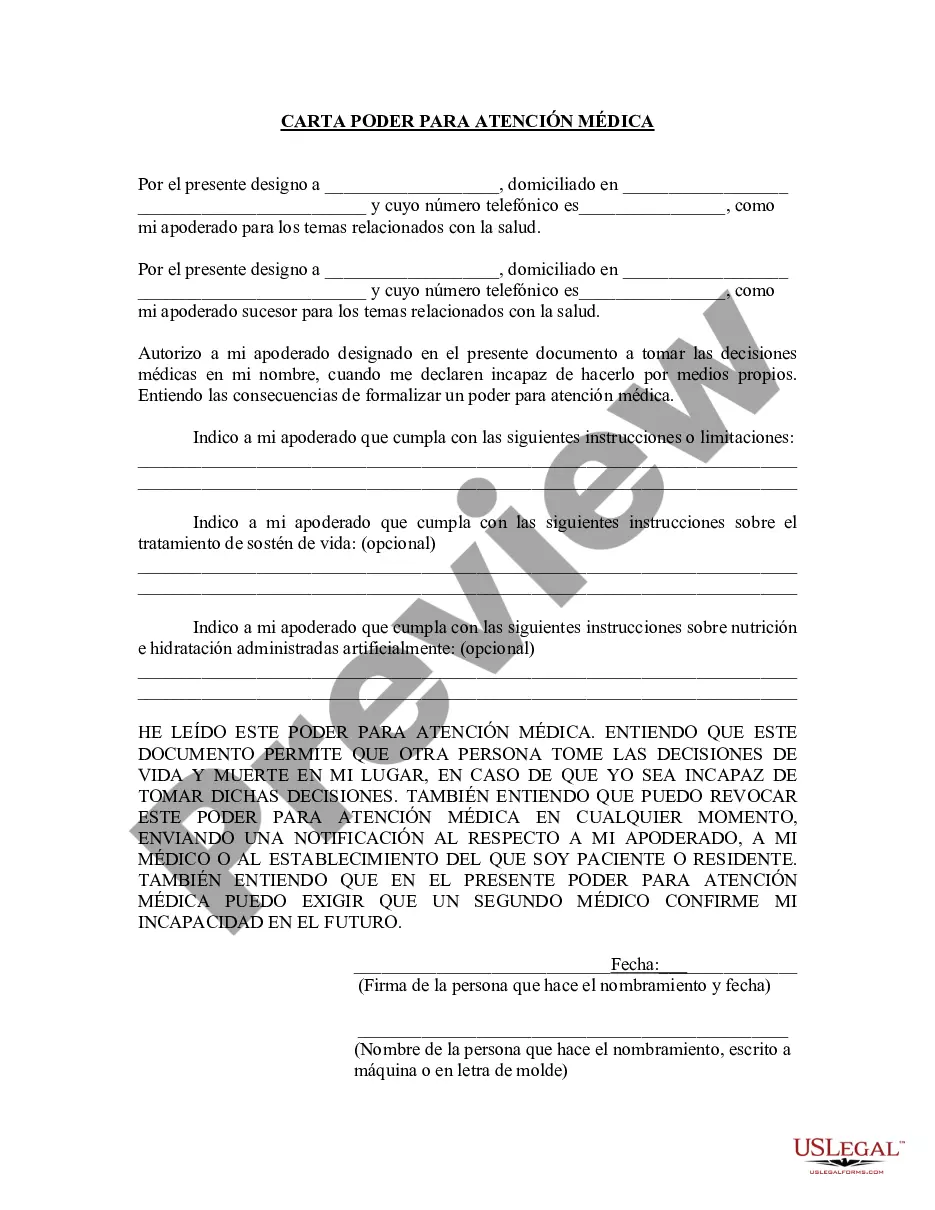
The Statutory Living Will is a legal document that allows you to outline your medical treatment preferences in the event you are unable to communicate due to a terminal condition. Unlike general advance directives, this living will specifically focuses on your wishes regarding life-sustaining treatments and ensures that your desires are respected during critical moments of care.
Form components explained
- Declarative statement for expressing treatment preferences.
- Options regarding life-sustaining procedures, including withdrawal of such treatments.
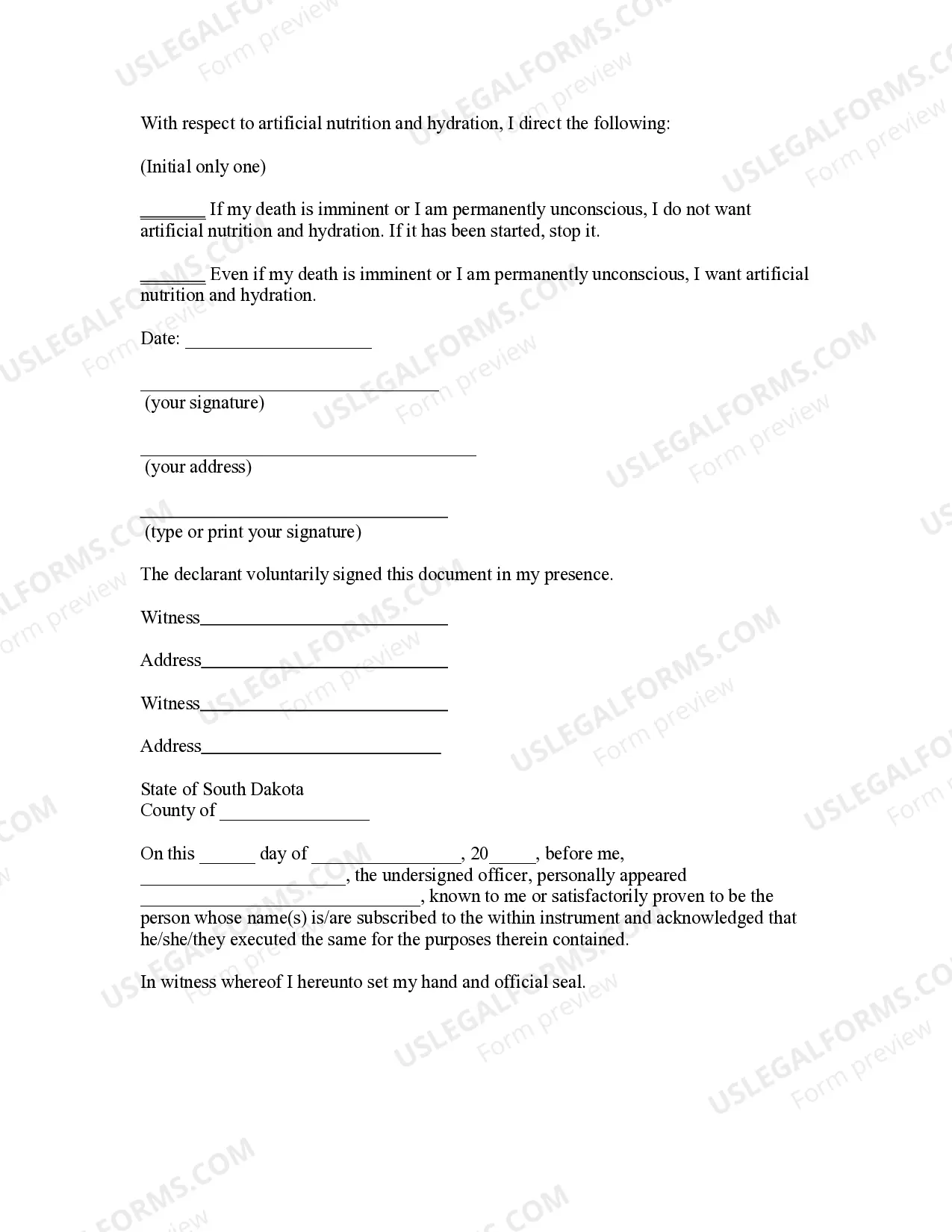
- Instructions on artificial nutrition and hydration.
- Signature lines for the declarant, witnesses, and a notary public.

When to use this form
This form is essential when you want to ensure that your preferences for medical treatment are honored, especially if you find yourself in a terminal condition and cannot communicate your wishes. It is particularly important during situations in hospitals or care facilities where decisions about life support are required.
Who needs this form
- Individuals who want to specify their medical treatment preferences in advance.
- Those with terminal illnesses or individuals facing significant health risks.
- Anyone wishing to relieve loved ones from decision-making burdens during emotional times.
How to prepare this document
- Read the entire document to understand the choices you are making.
- Fill in your personal information, including your name and address.
- Select your preferences regarding life-sustaining treatments by initialing your choice.
- Decide on your stance regarding artificial nutrition and hydration and initial accordingly.
- Sign the document in the presence of witnesses and a notary public as required.
Notarization guidance
Yes, this form must be notarized to be legally valid. US Legal Forms offers integrated online notarization, allowing you to complete this process securely via video call, ensuring compliance with legal requirements without the need for travel.
Get your form ready online
Our built-in tools help you complete, sign, share, and store your documents in one place.
Make edits, fill in missing information, and update formatting in US Legal Forms—just like you would in MS Word.
Download a copy, print it, send it by email, or mail it via USPS—whatever works best for your next step.
Sign and collect signatures with our SignNow integration. Send to multiple recipients, set reminders, and more. Go Premium to unlock E-Sign.
If this form requires notarization, complete it online through a secure video call—no need to meet a notary in person or wait for an appointment.
We protect your documents and personal data by following strict security and privacy standards.

Make edits, fill in missing information, and update formatting in US Legal Forms—just like you would in MS Word.

Download a copy, print it, send it by email, or mail it via USPS—whatever works best for your next step.

Sign and collect signatures with our SignNow integration. Send to multiple recipients, set reminders, and more. Go Premium to unlock E-Sign.

If this form requires notarization, complete it online through a secure video call—no need to meet a notary in person or wait for an appointment.

We protect your documents and personal data by following strict security and privacy standards.
Typical mistakes to avoid
- Failing to read the entire form before signing.
- Not having the required witnesses present during signing.
- Neglecting to notify healthcare providers and family members about the form.
- Forgetting to review and update the living will over time as preferences may change.
Why complete this form online
- Convenient access for personalizing your wishes anytime.
- Easy to download and store securely for future reference.
- Reliable templates drafted by licensed attorneys ensure legal validity.
Legal use & context
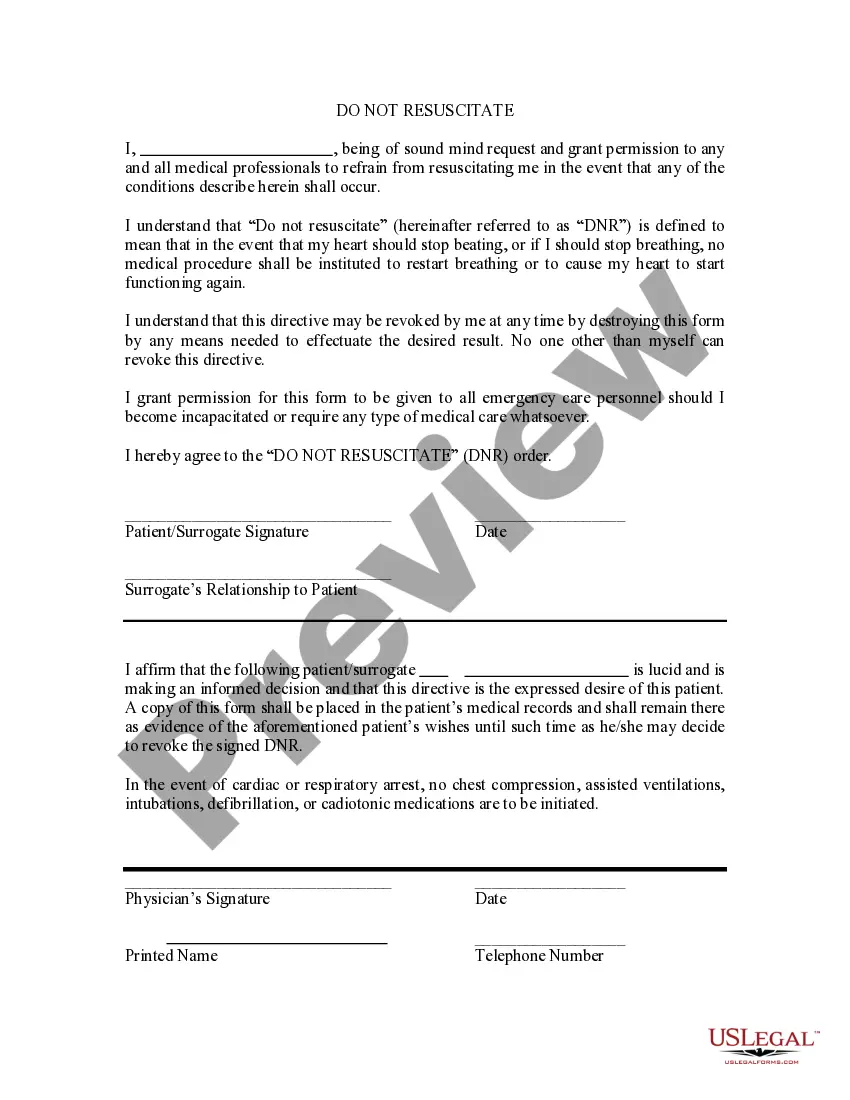
- This living will serves as a binding document for medical professionals to follow your specified care preferences.
- It becomes effective when you are unable to communicate your wishes due to a terminal condition.
- Continual review is encouraged to ensure ongoing alignment with your current wishes and medical conditions.
Key takeaways
- A Statutory Living Will is crucial for articulating your medical treatment preferences.
- Regularly review and update the document to reflect your current wishes.
- Ensuring notarization and adhering to local laws is essential for validity.
Looking for another form?



Form popularity
FAQ
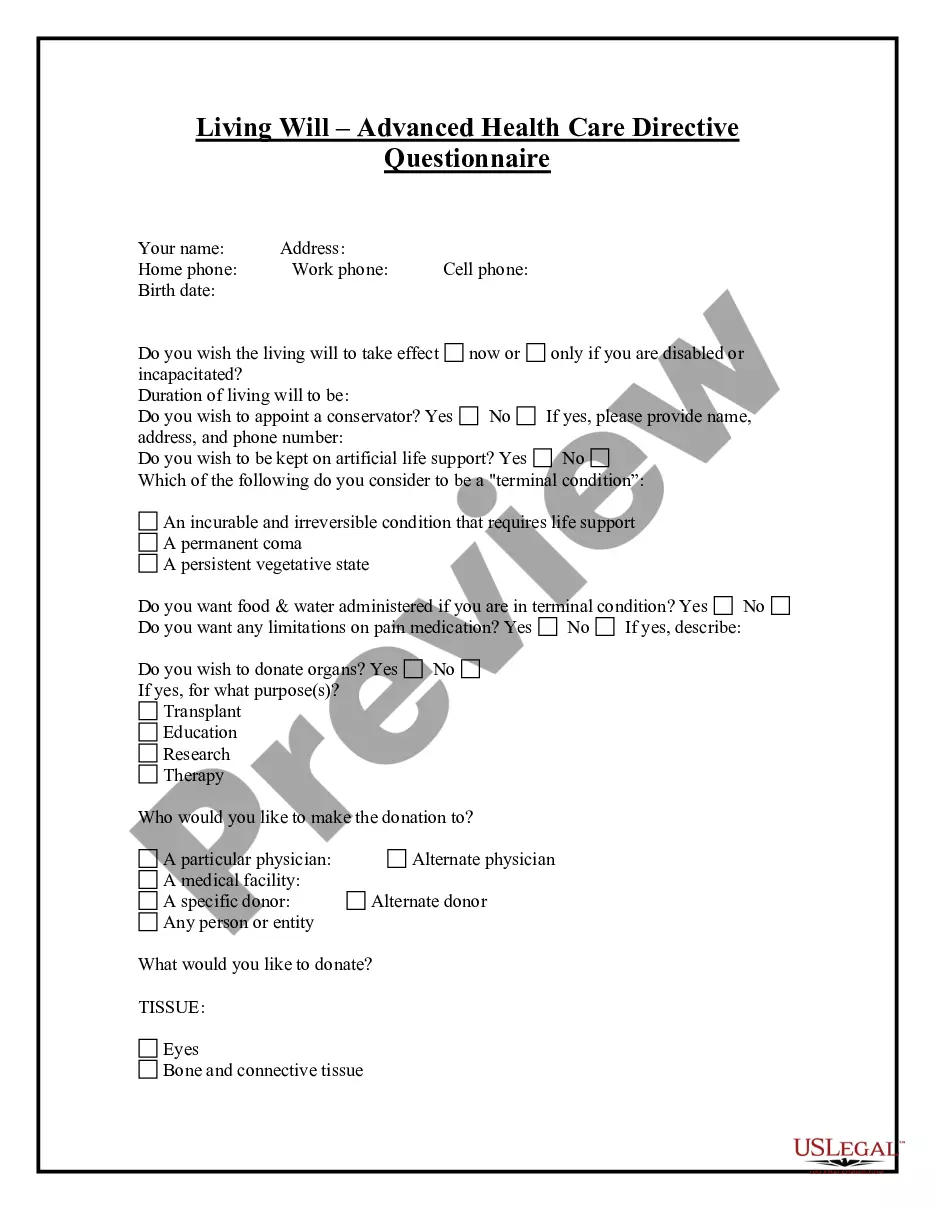
Living will. A living will is a written, legal document that spells out medical treatments you would and would not want to be used to keep you alive, as well as your preferences for other medical decisions, such as pain management or organ donation. In determining your wishes, think about your values.
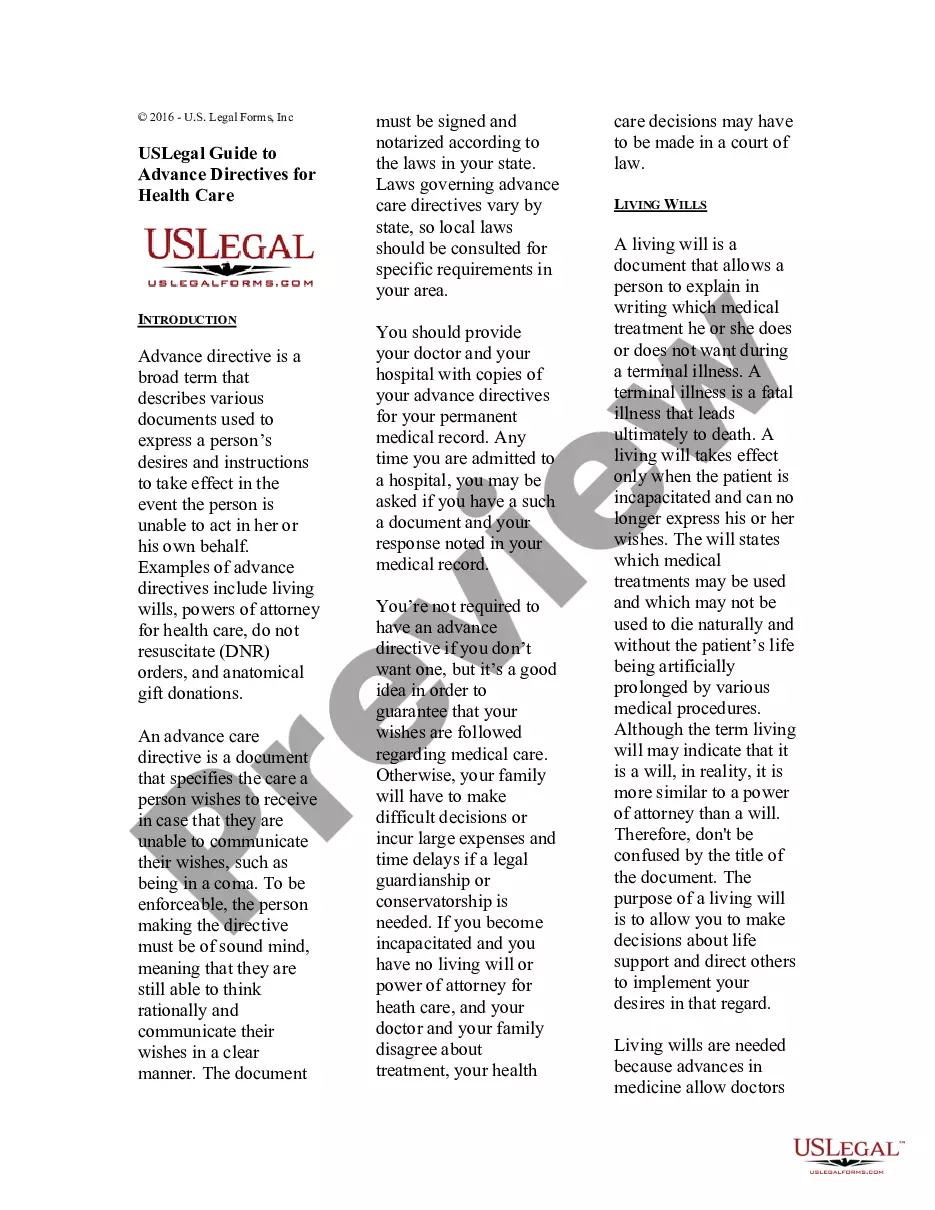
Advance directives are oral and written instructions about future medical care should your parent become unable to make decisions (for example, unconscious or too ill to communicate).A living will is one type of advance directive. It takes effect when the patient is terminally ill.
A living will is a vital part of the estate plan.But your family cannot override your living will. They cannot take away your authority to make your own treatment and care plans. In fact, you always retain the right to override your own decisions.
Living will. A living will is a written, legal document that spells out medical treatments you would and would not want to be used to keep you alive, as well as your preferences for other medical decisions, such as pain management or organ donation. In determining your wishes, think about your values.
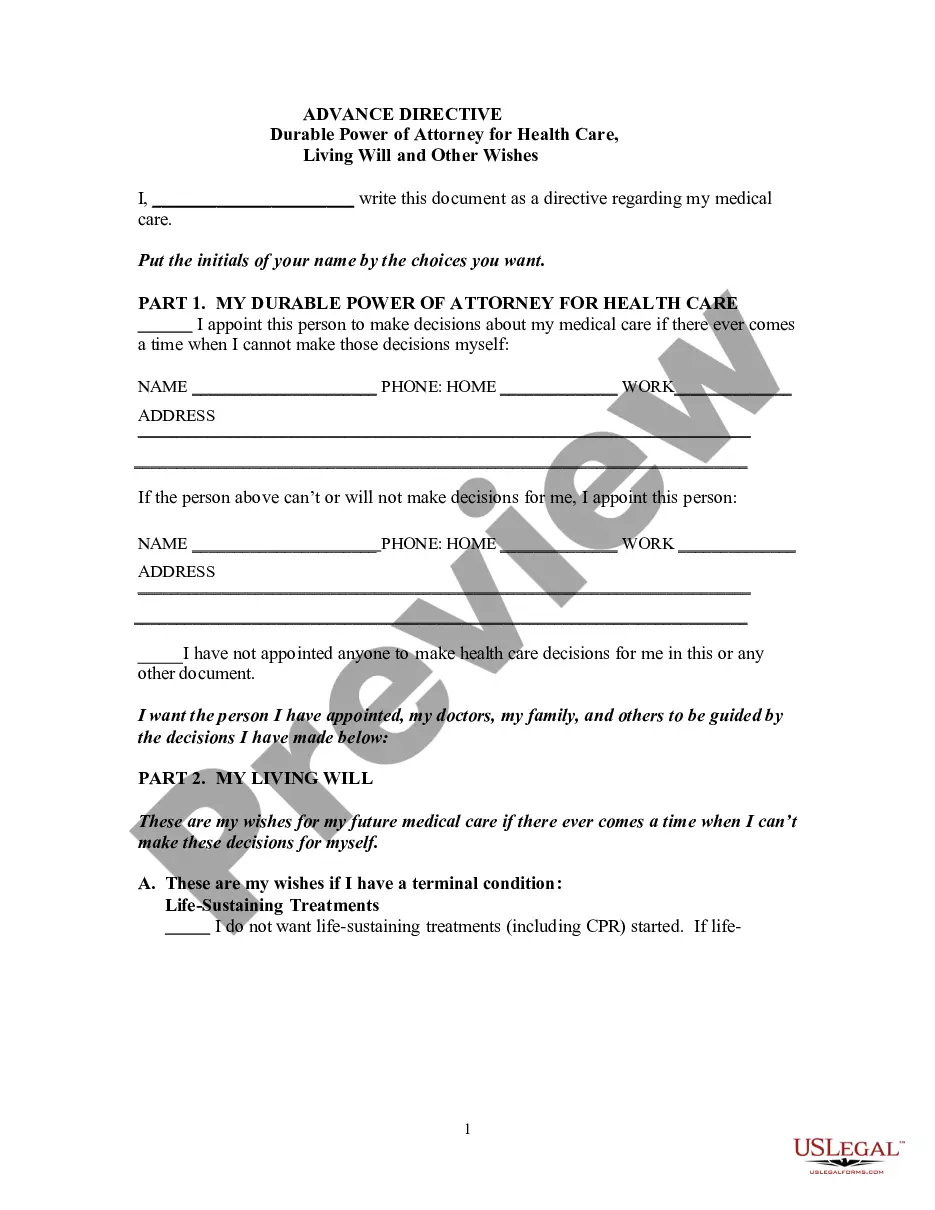
An advance directive is a set of instructions someone prepares in advance of ill health that determines his healthcare wishes. A living will is one type of advance directive that becomes effective when a person is terminally ill.
A living will is a vital part of the estate plan.But your family cannot override your living will. They cannot take away your authority to make your own treatment and care plans. In fact, you always retain the right to override your own decisions.
Two witnesses and a notary are required for a living will. Medical power of attorney for health care also requires two witnesses and a notary. Declaration to physicians (living will) requires two witnesses, but is not valid if pregnant. Power of attorney for health care requires two witnesses.
A living will becomes effective when your primary physician decides that you can no longer make your own healthcare decisions. If you are ill or injured and cannot express your healthcare wishes, and your doctor certifies this fact in writing, your living will takes effect.
Living Wills are Binding Legal Documents You need to legally outline your wishes in compliance with state law. Your living will needs to cover what you wish to happen if you become terminally ill, permanently unconscious, or unable to convey your own wishes.