South Dakota Easement - general fill in blank purposes
Understanding this form
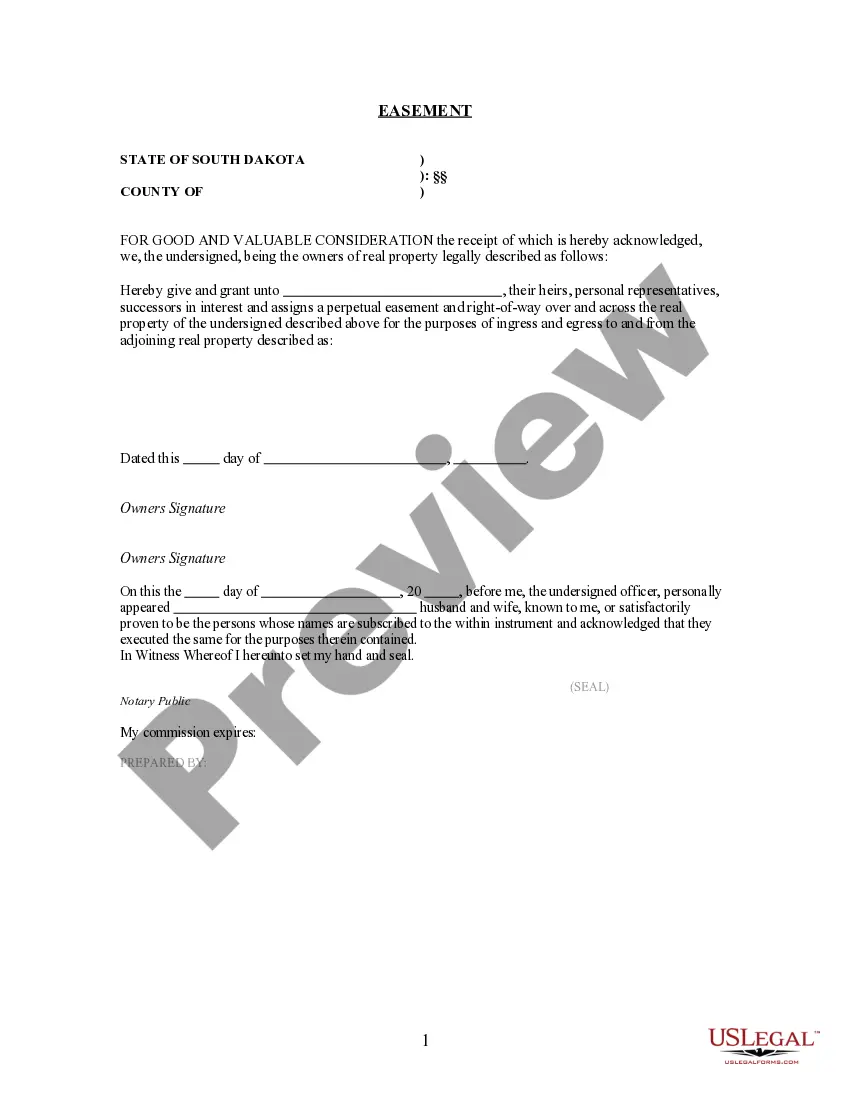
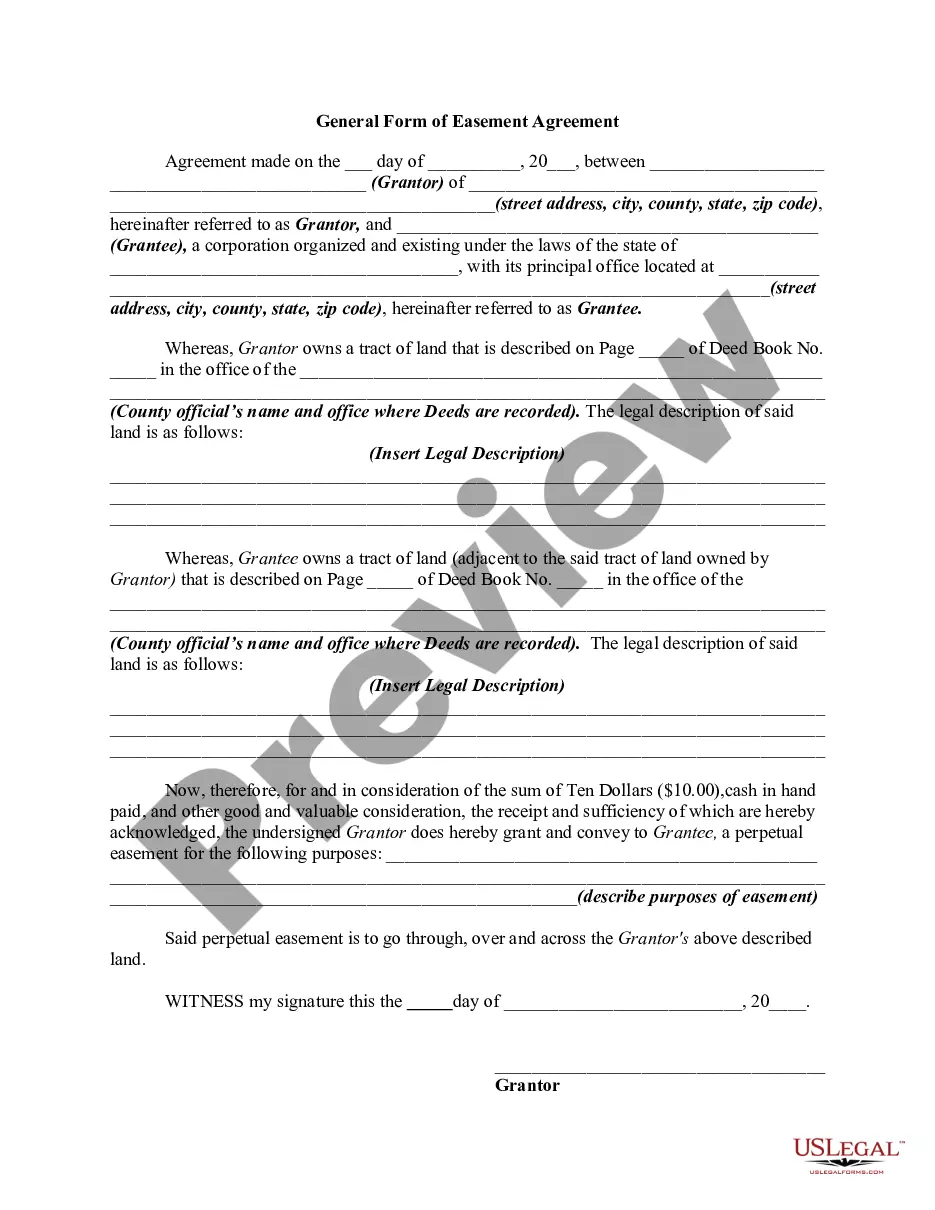
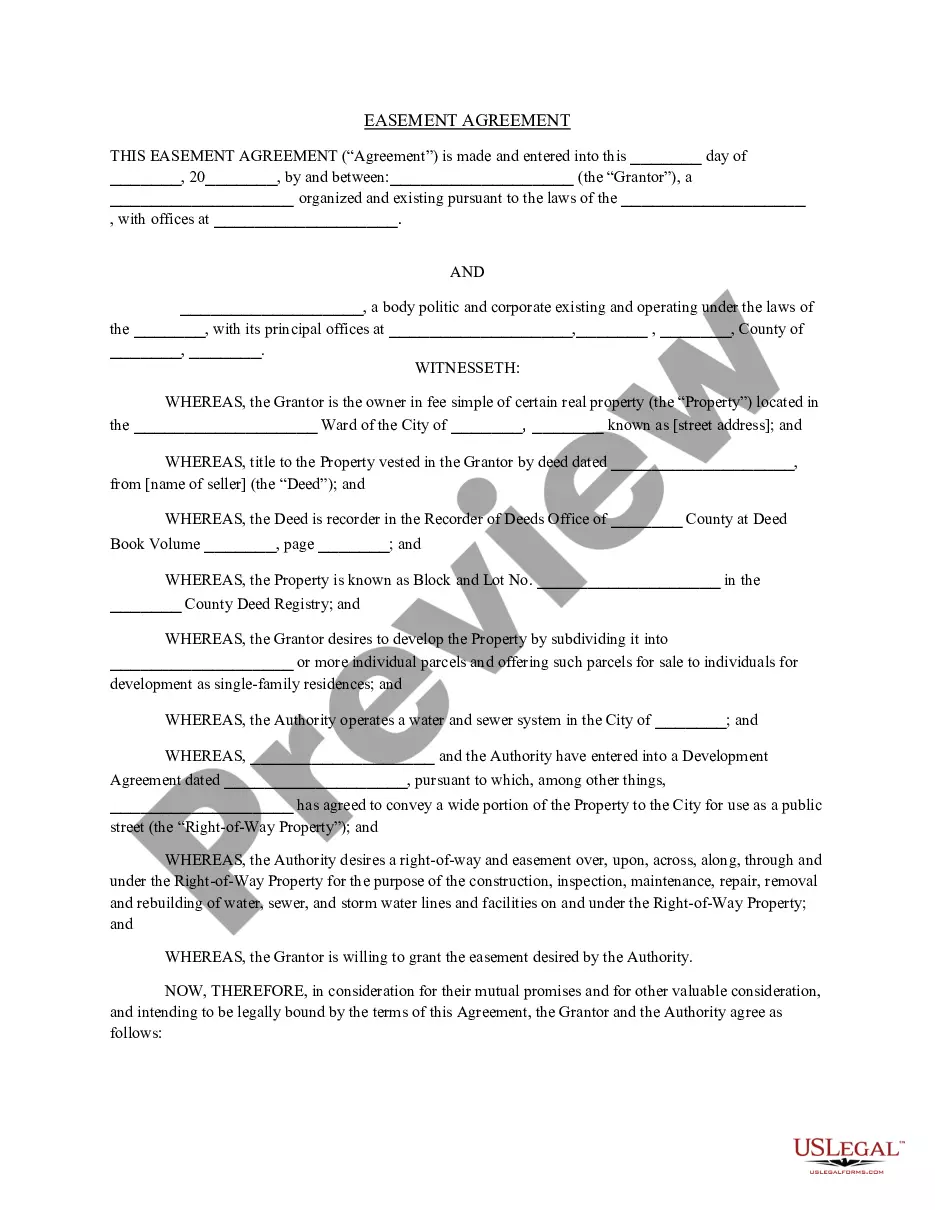
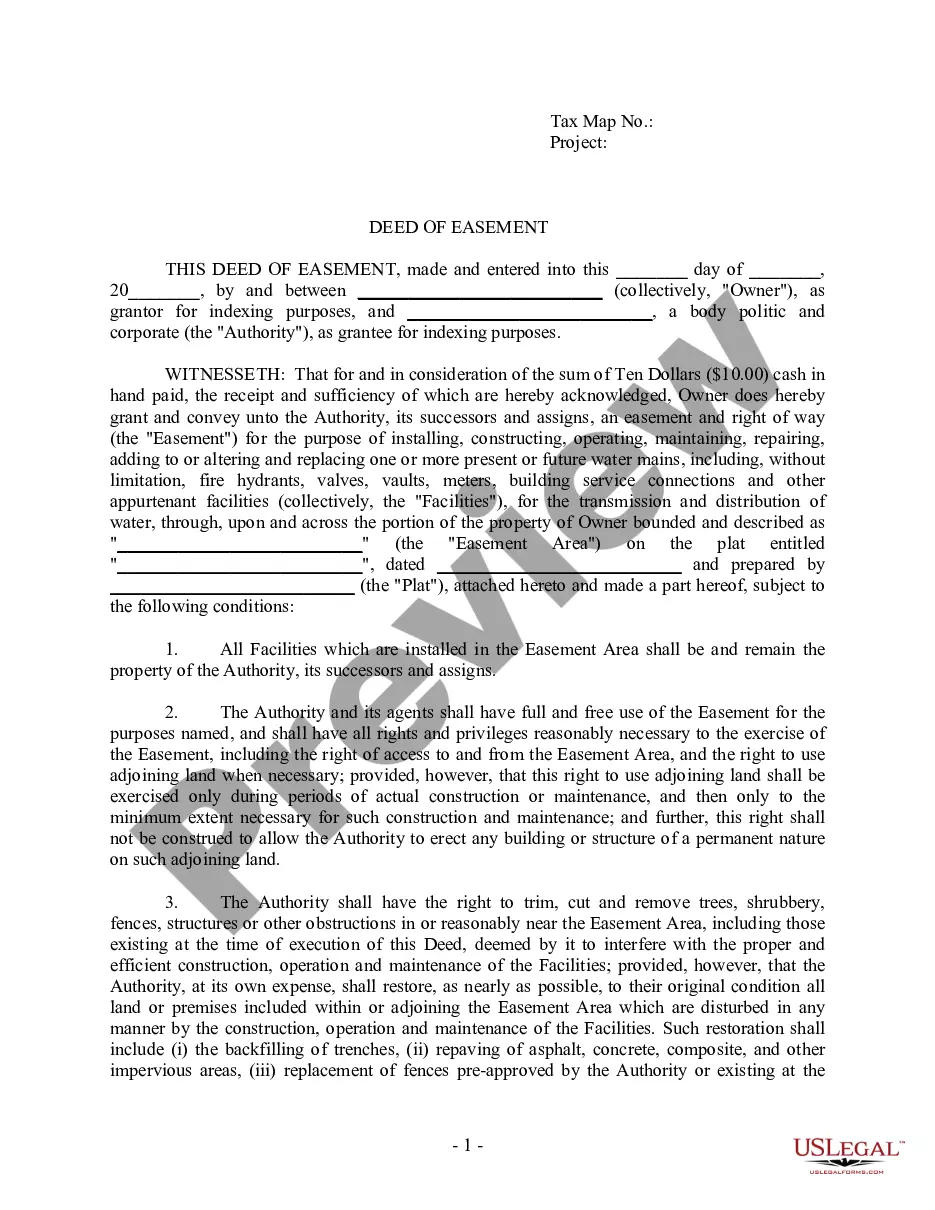
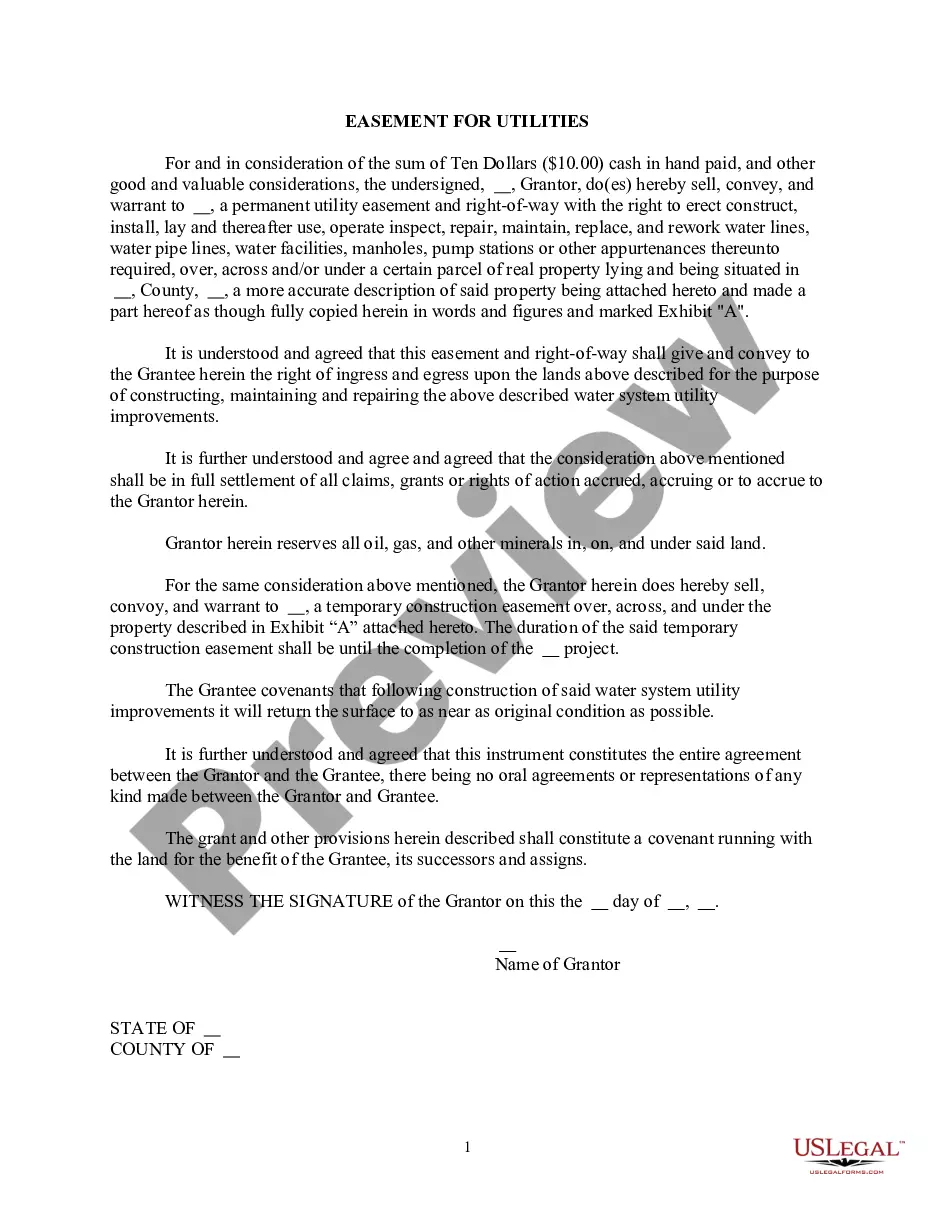
The Easement form provides a legal agreement that grants one party the right to use a portion of another party's property for a specific purpose. This form captures the essential details needed to create a perpetual easement and right-of-way, allowing access or use of the land in a specified manner. Unlike other property-related documents, this easement form is tailored for a variety of fill-in-the-blank purposes, ensuring that it meets diverse needs without the complexity of more specialized forms.
Form components explained
- Identification of the parties involved in the easement agreement.
- Detailed description of the property being affected by the easement.
- Specified rights granted, such as access to utilities or passage over the land.
- Duration of the easement and any conditions attached.
- Signatures of the parties involved to validate the agreement.
When to use this document
This easement form should be used when one party needs to legally access another party's property for specific purposes, such as utility installations, access for maintenance, or crossing land for livestock movement. It is particularly useful for property owners negotiating rights of way or for businesses requiring ongoing access to their services or facilities.
Who this form is for
- Property owners granting access to their land for utilities or other parties.
- Individuals or businesses needing access to another property for legitimate purposes.
- Legal professionals drafting this easement for clients.
- Landowners negotiating agreements with neighboring properties.
Instructions for completing this form
- Identify the parties involved by entering their full legal names.
- Provide a clear description of the property subject to the easement.
- Specify the rights granted by the easement, including any conditions for use.
- Indicate the duration of the easement and any specific terms.
- Ensure all parties sign the document to validate the agreement.
Is notarization required?
This form does not typically require notarization unless specified by local law. However, including notarization can add an extra layer of validity to your easement agreement.
Get your form ready online
Our built-in tools help you complete, sign, share, and store your documents in one place.
Make edits, fill in missing information, and update formatting in US Legal Forms—just like you would in MS Word.
Download a copy, print it, send it by email, or mail it via USPS—whatever works best for your next step.
Sign and collect signatures with our SignNow integration. Send to multiple recipients, set reminders, and more. Go Premium to unlock E-Sign.
If this form requires notarization, complete it online through a secure video call—no need to meet a notary in person or wait for an appointment.
We protect your documents and personal data by following strict security and privacy standards.

Make edits, fill in missing information, and update formatting in US Legal Forms—just like you would in MS Word.

Download a copy, print it, send it by email, or mail it via USPS—whatever works best for your next step.

Sign and collect signatures with our SignNow integration. Send to multiple recipients, set reminders, and more. Go Premium to unlock E-Sign.

If this form requires notarization, complete it online through a secure video call—no need to meet a notary in person or wait for an appointment.

We protect your documents and personal data by following strict security and privacy standards.
Common mistakes to avoid
- Failing to clearly identify the property involved.
- Vague descriptions of the rights being granted.
- Not including signatures from all parties involved.
- Overlooking local laws that may affect easement terms.
Benefits of using this form online
- Conveniently fill out and customize the form at your own pace.
- Access to templates drafted by licensed attorneys for reliability.
- Easily downloadable for immediate use or distribution.
- Secure storage and retrieval options for your completed forms.
Legal use & context
- An easement allows the easement holder to use another party's land, creating a legal right that is enforceable in court.
- The terms of the easement should be clearly defined to prevent misunderstandings.
- It's essential to respect local laws regarding property access and easement rights.
What to keep in mind
- The Easement form provides a structured way to grant legal access to property for specified uses.
- Users must ensure all details related to the easement are clearly stated to avoid disputes.
- Checking local laws is crucial to ensure the validity of the easement.
Looking for another form?
Form popularity
FAQ
An easement can decrease the value of a real estate, increase the value of the real estate or it can have no impact on the value of the real estate at all. The most important fact is that each property and situation should be evaluated on individual basis, taking into account all the circumstances.
An easement can decrease the value of a real estate, increase the value of the real estate or it can have no impact on the value of the real estate at all. The most important fact is that each property and situation should be evaluated on individual basis, taking into account all the circumstances.
A permissive easement is simply permission to use the land of another. It is essentially a license, which is fully revocable at any time by the property owner.Use of this road is permissive and may be revoked at any time by the owner."
Types of Easements An easement may be classified as either an easement appurtenant or an easement in gross. Easement Appurtenant. An easement appurtenant is an easement that benefits one parcel of land, known as the dominant tenement, to the detriment of another parcel of land, known as the servient tenement.
There are four types of easement Section. 5 of Easement Act deals with the types of easement. It provides that the easements are either continuous or discontinuous ,apparent or non apparent. A continuous easement is one whose enjoyment is, or may be, continual without the act of man.
An easement is a right which the owner or occupier of certain land possesses, as such, for the beneficial enjoyment of that land, to do and continue to do something, or to prevent and continue to prevent something being done, in or upon, or in respect of certain other land not his own. Kinds/ Types of Easement -
An easement is a "nonpossessory" property interest that allows the holder of the easement to have a right of way or use property that they do not own or possess. An easement doesn't allow the easement holder to occupy the land or to exclude others from the land unless they interfere with the easement holder's use.
So, having an easement on a property may have a permanent outcome on the property with rights of the home owner. But not all easements are bad.If you live in a rural area, you run into bad easement issues more often, typically where the easement was created by a parcel owner next to your land.
An easement is a property right that provides its holder with a non-possessory interest on another person's land.If there are only personal individual benefits from an easement the term used is in gross. The majority of easements are affirmative, this means that they authorise the use of another person's land.