New York Quitclaim Deed for Three Individuals to Two Individuals as Joint Tenants with the Right of Survivorship
About this form
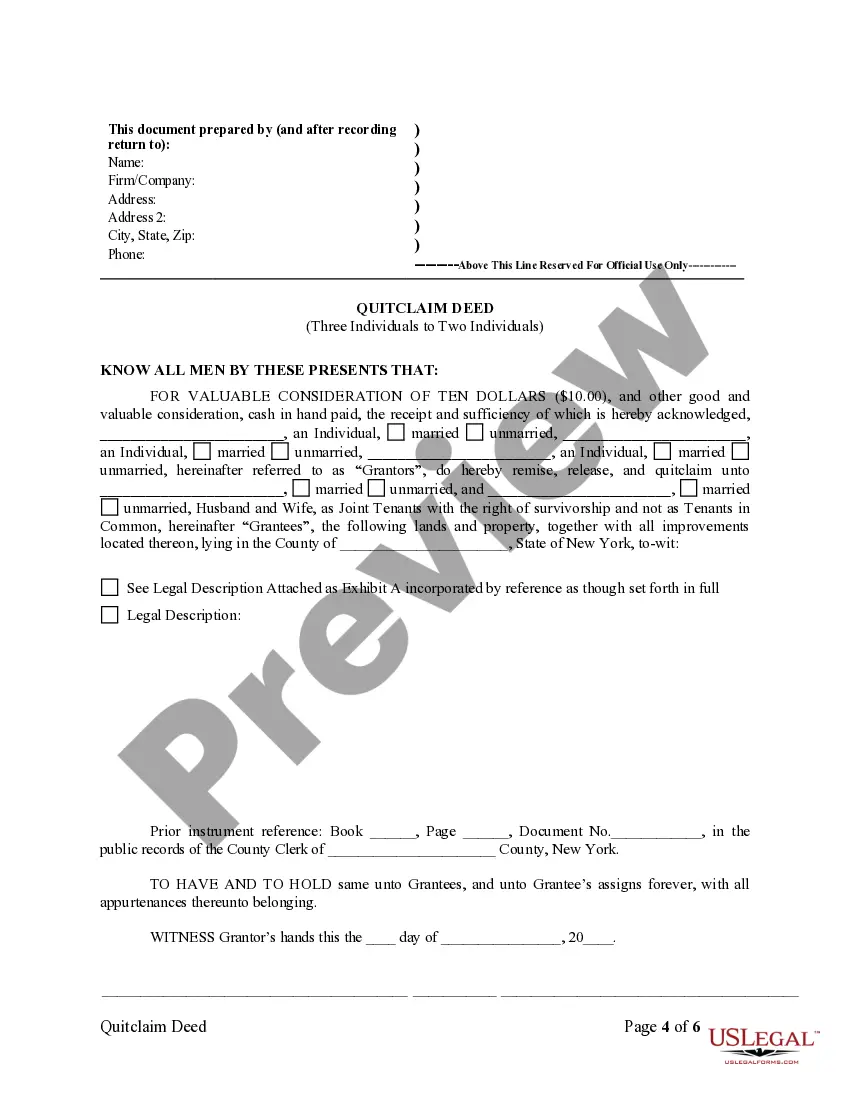
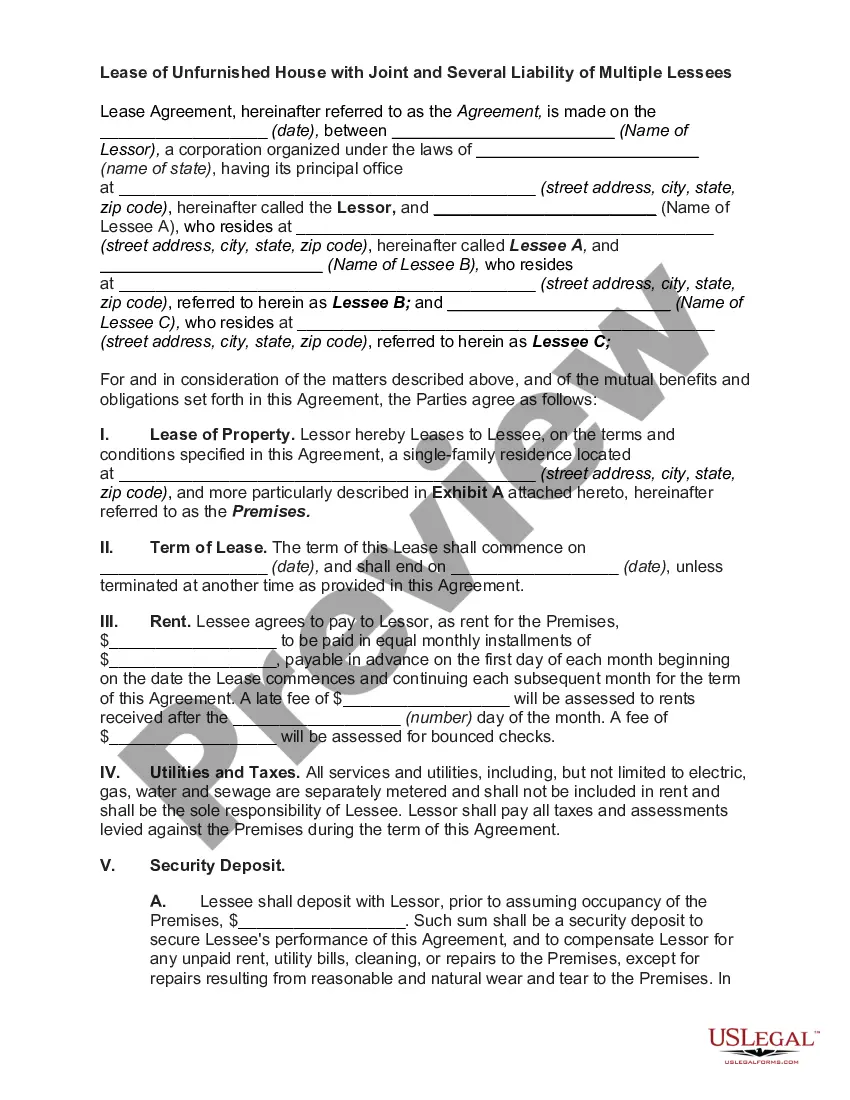
This Quitclaim Deed allows three individuals (grantors) to transfer property to two individuals (grantees) as joint tenants with the right of survivorship. This form is different from a warranty deed as it does not guarantee the grantors' ownership rights, making it a simpler method for transferring property ownership without a warranty.
Main sections of this form
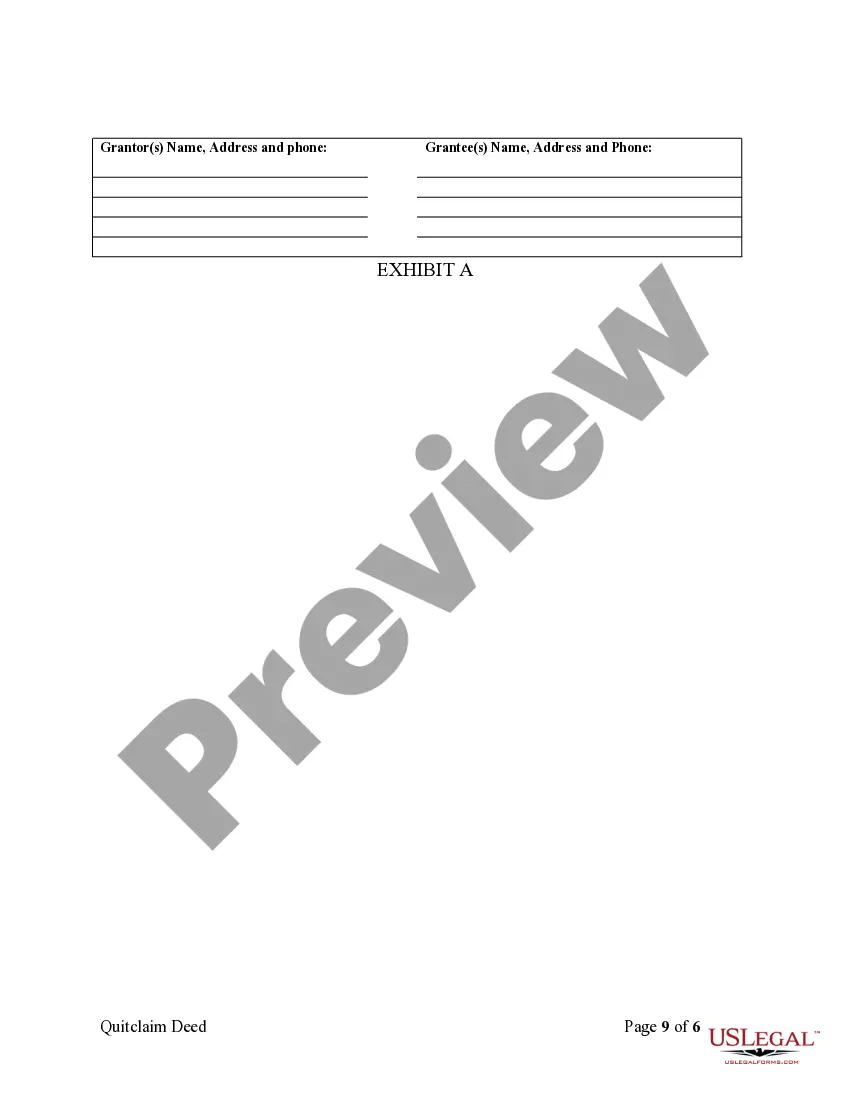
- Grantors and Grantees: Names of the individuals involved in the transfer.
- Property Description: Legal description of the property being transferred.
- Joint Tenancy: Specifies that the grantees will hold the property as joint tenants with rights of survivorship.
- Date of Transfer: The date the deed is executed.
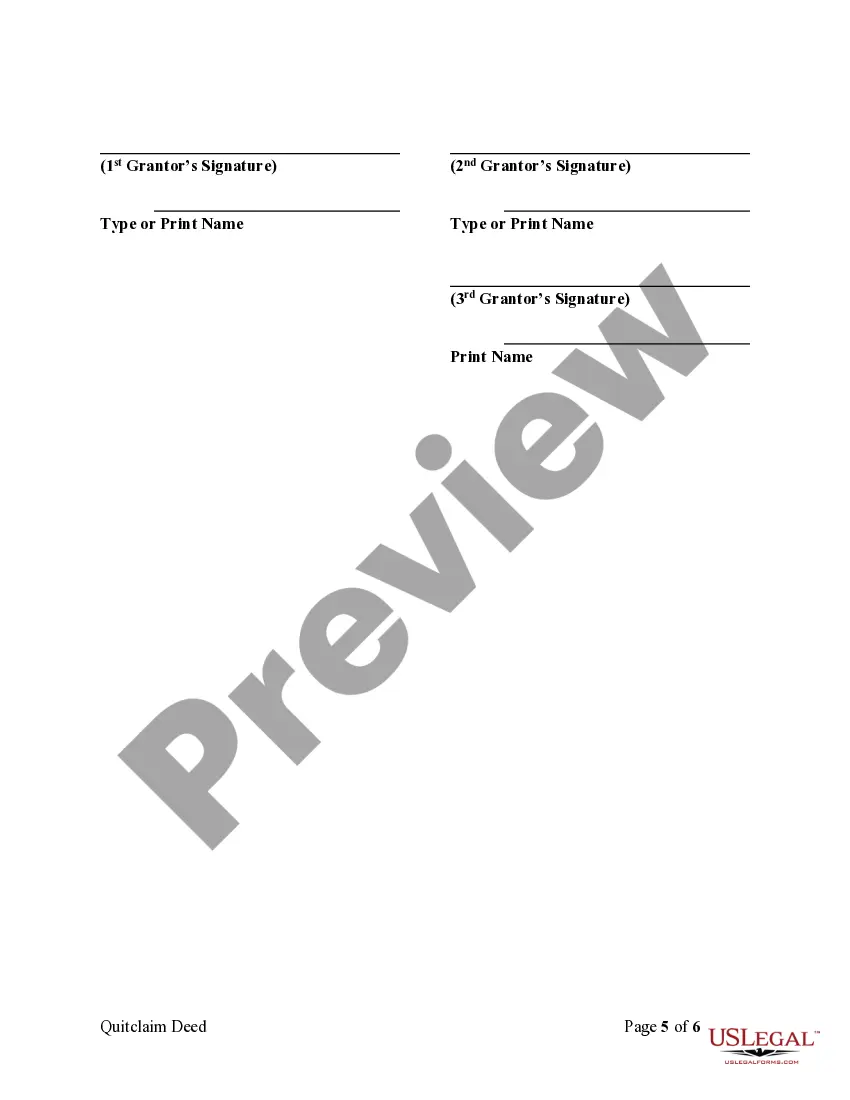
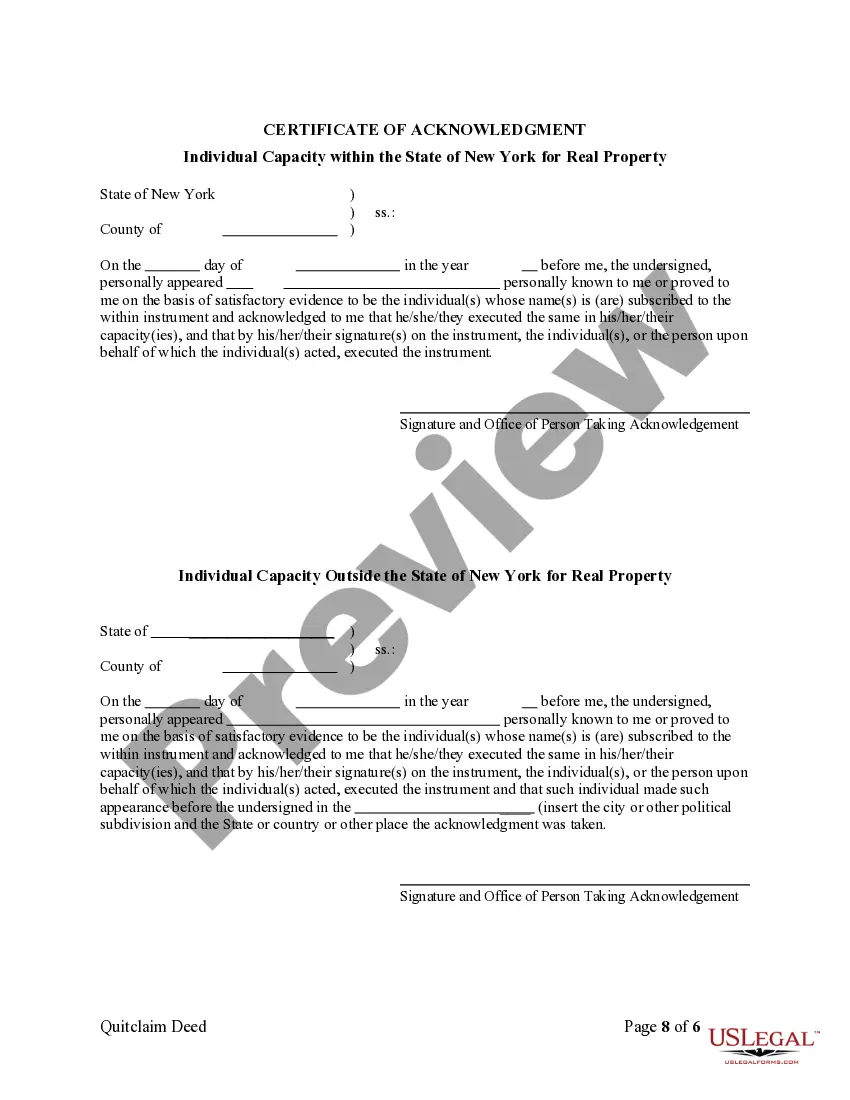
- Signatures: Spaces for signatures of the grantors, required for legal validity.



When to use this form
This form is used when property owners wish to transfer their interest in real estate to another party without the warranties associated with a traditional sale. Common scenarios include family estate planning, gifting property to loved ones, or changes in joint ownership.
Who should use this form
- Individuals looking to transfer real property to family or friends.
- Co-owners who wish to modify ownership interests in property.
- People involved in estate planning or settling an estate.
How to complete this form
- Identify the grantors and grantees by entering their full legal names.
- Provide the legal description of the property being transferred.
- Specify the date of the transfer.
- Sign the deed in the designated areas, ensuring all grantors sign.
- File the completed deed with the county clerk in the appropriate jurisdiction.
Is notarization required?
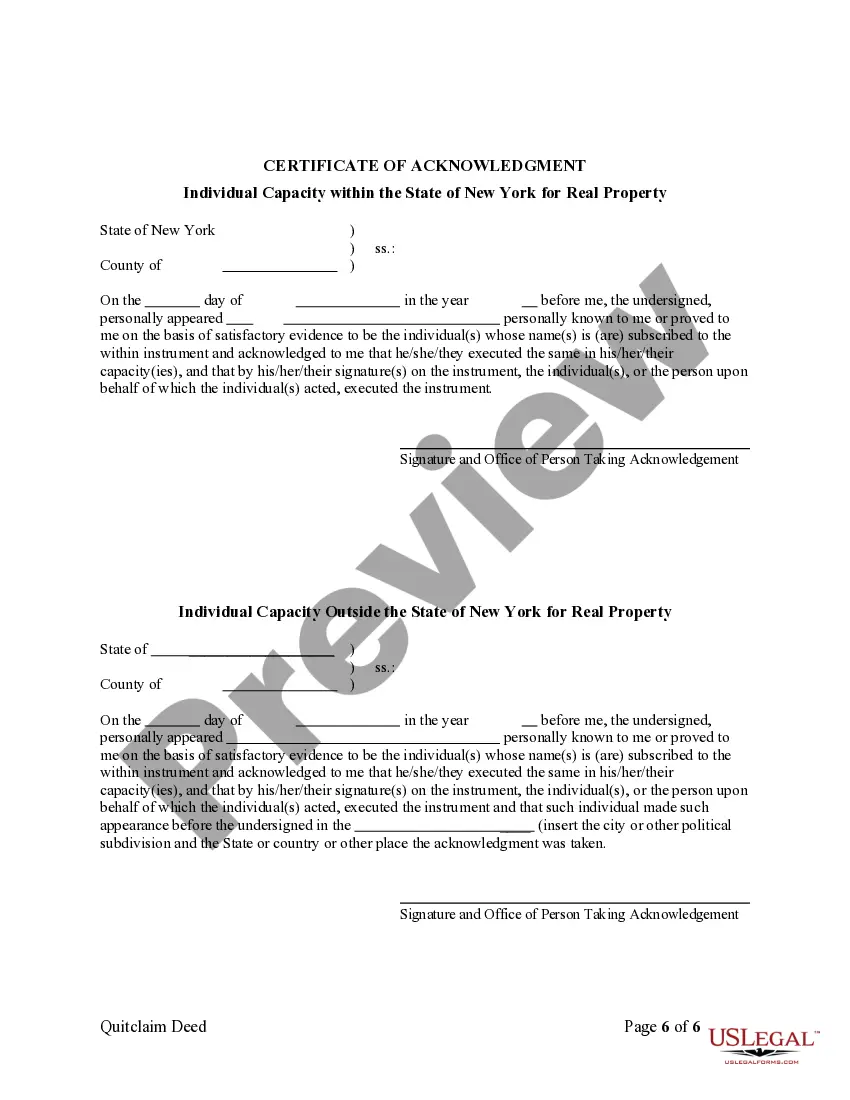
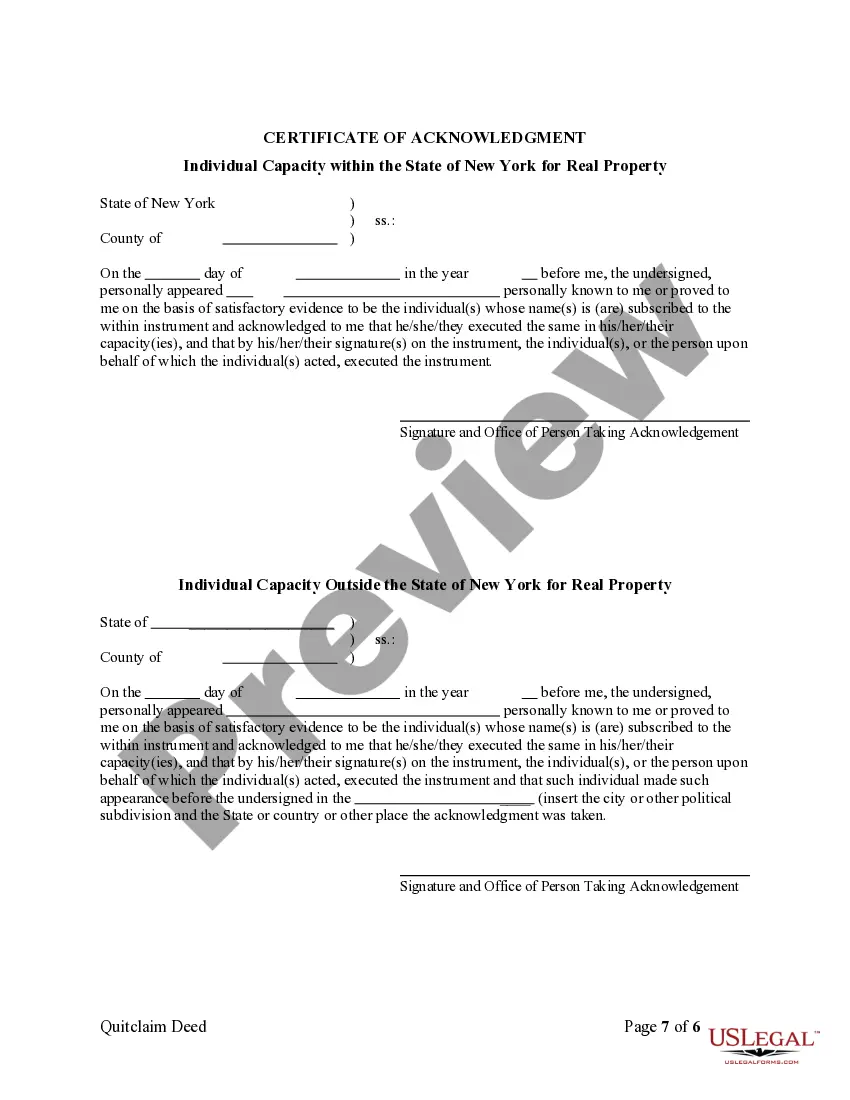
Notarization is required for this form to take effect. Our online notarization service, powered by Notarize, lets you verify and sign documents remotely through an encrypted video session, available 24/7.
Get your form ready online
Our built-in tools help you complete, sign, share, and store your documents in one place.
Make edits, fill in missing information, and update formatting in US Legal Forms—just like you would in MS Word.
Download a copy, print it, send it by email, or mail it via USPS—whatever works best for your next step.
Sign and collect signatures with our SignNow integration. Send to multiple recipients, set reminders, and more. Go Premium to unlock E-Sign.
If this form requires notarization, complete it online through a secure video call—no need to meet a notary in person or wait for an appointment.
We protect your documents and personal data by following strict security and privacy standards.

Make edits, fill in missing information, and update formatting in US Legal Forms—just like you would in MS Word.

Download a copy, print it, send it by email, or mail it via USPS—whatever works best for your next step.

Sign and collect signatures with our SignNow integration. Send to multiple recipients, set reminders, and more. Go Premium to unlock E-Sign.

If this form requires notarization, complete it online through a secure video call—no need to meet a notary in person or wait for an appointment.

We protect your documents and personal data by following strict security and privacy standards.
Mistakes to watch out for
- Failing to include the full legal description of the property.
- Not having all grantors sign the document.
- Neglecting to check local filing requirements before submission.
Advantages of online completion
- Convenient access to forms drafted by licensed attorneys.
- Edit and fill in forms digitally for accuracy.
- Downloadable for easy printing and filing.
Key takeaways
- This Quitclaim Deed facilitates the transfer of property between multiple individuals.
- Understanding joint tenancy with right of survivorship is crucial for the grantees.
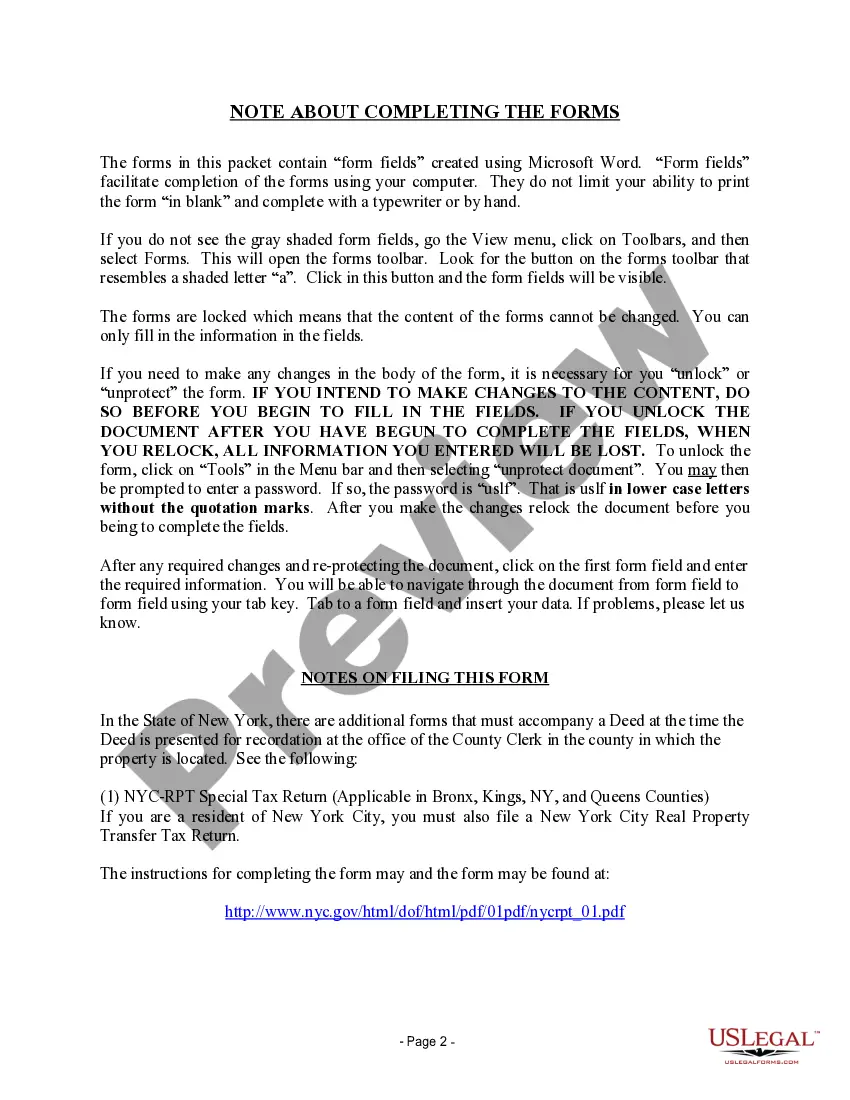
- Ensure adherence to New York's additional filing requirements for a smooth transaction.
Looking for another form?
Form popularity
FAQ
Joint tenancy is a form of property ownership normally associated with real estate. Each party in a joint tenancy has an equal interest in the propertythe financial obligations as well as any benefits.
Here are some of the options: Joint Ownership. If mom, daughter, and (perhaps) son-in-law own the house as joint tenants with right of survivorship, when mom passes away the house will go to the other owners without going through probate.
Four conditions that are required in order for there to be a formation of a joint tenancy. The four unities are: time, title, interest and possession.
When you opt to co-own an asset with another individual, you can enter into a legal ownership agreement known as joint tenants with rights of survivorship or JTWROS. Upon the death of one of the owners, the surviving owner automatically becomes sole owner of the property, whether it's a vacation home, a plane, or
The dangers of joint tenancy include the following: Danger #1: Only delays probate. When either joint tenant dies, the survivor usually a spouse or child immediately becomes the owner of the entire property. But when the survivor dies, the property still must go through probate.
In order to transfer ownership of the marital home pursuant to a divorce, one spouse is going to need to sign a quitclaim deed, interspousal transfer deed, or a grant deed, in order to convey the title to the property.
To create a joint tenancy, all you need to do is put the right words on the title document, such as a deed to real estate, a car's title slip, or the signature card establishing a bank account.
Adding someone to your house deed requires the filing of a legal form known as a quitclaim deed. When executed and notarized, the quitclaim deed legally overrides the current deed to your home. By filing the quitclaim deed, you can add someone to the title of your home, in effect transferring a share of ownership.
1Serve a written notice of the change (a 'notice of severance') on the other owners - a conveyancer can help you do this.2Download and fill in form SEV to register a restriction without the other owners' agreement.3Prepare any supporting documents you need to include.Joint property ownership: Change from joint tenants to tenants in\nwww.gov.uk > joint-property-ownership > change-from-joint-tenants-to-te...