New York Quitclaim Deed for Three Individuals to Husband and Wife as Joint Tenants with Right of Survivorship
About this form
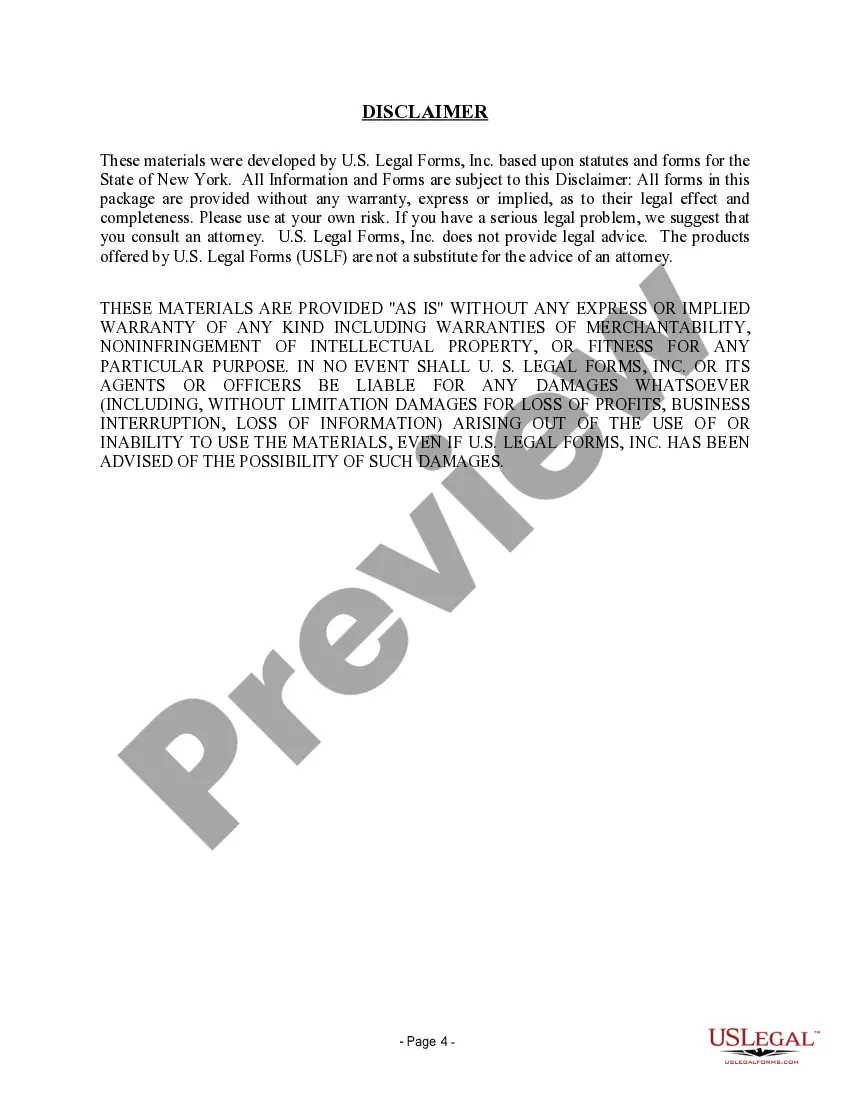
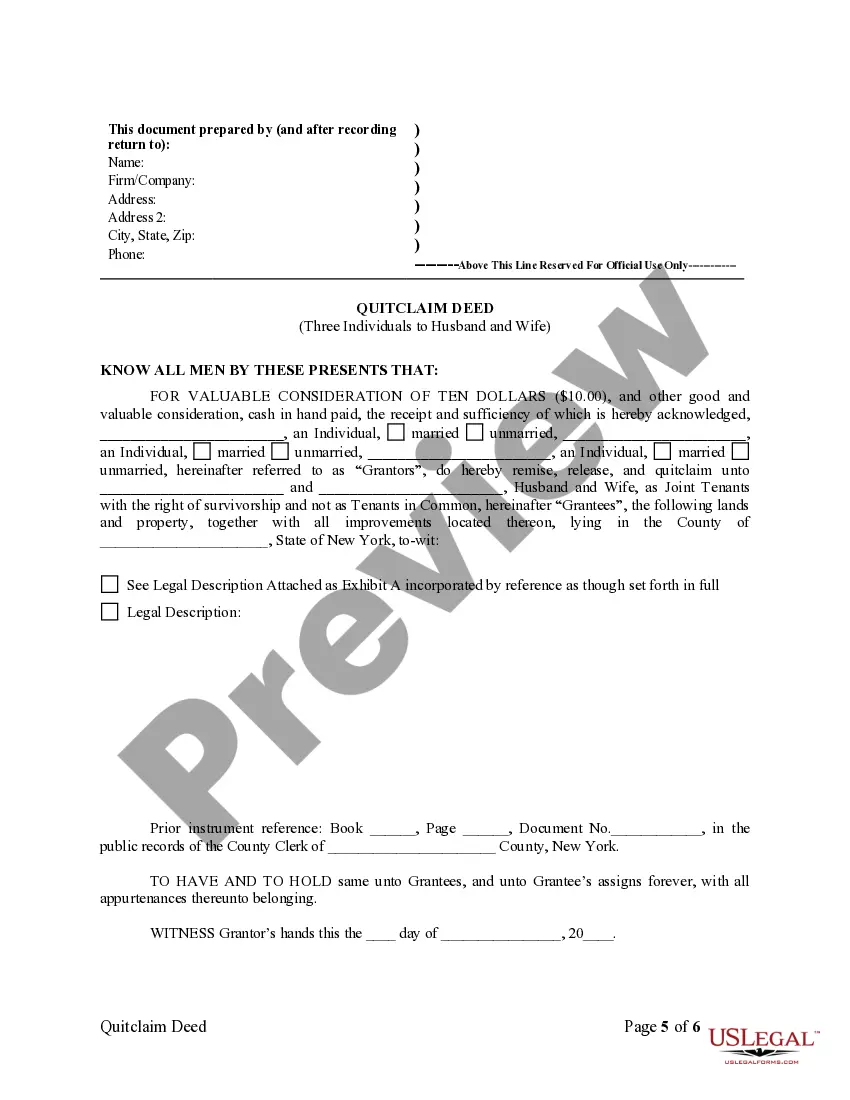
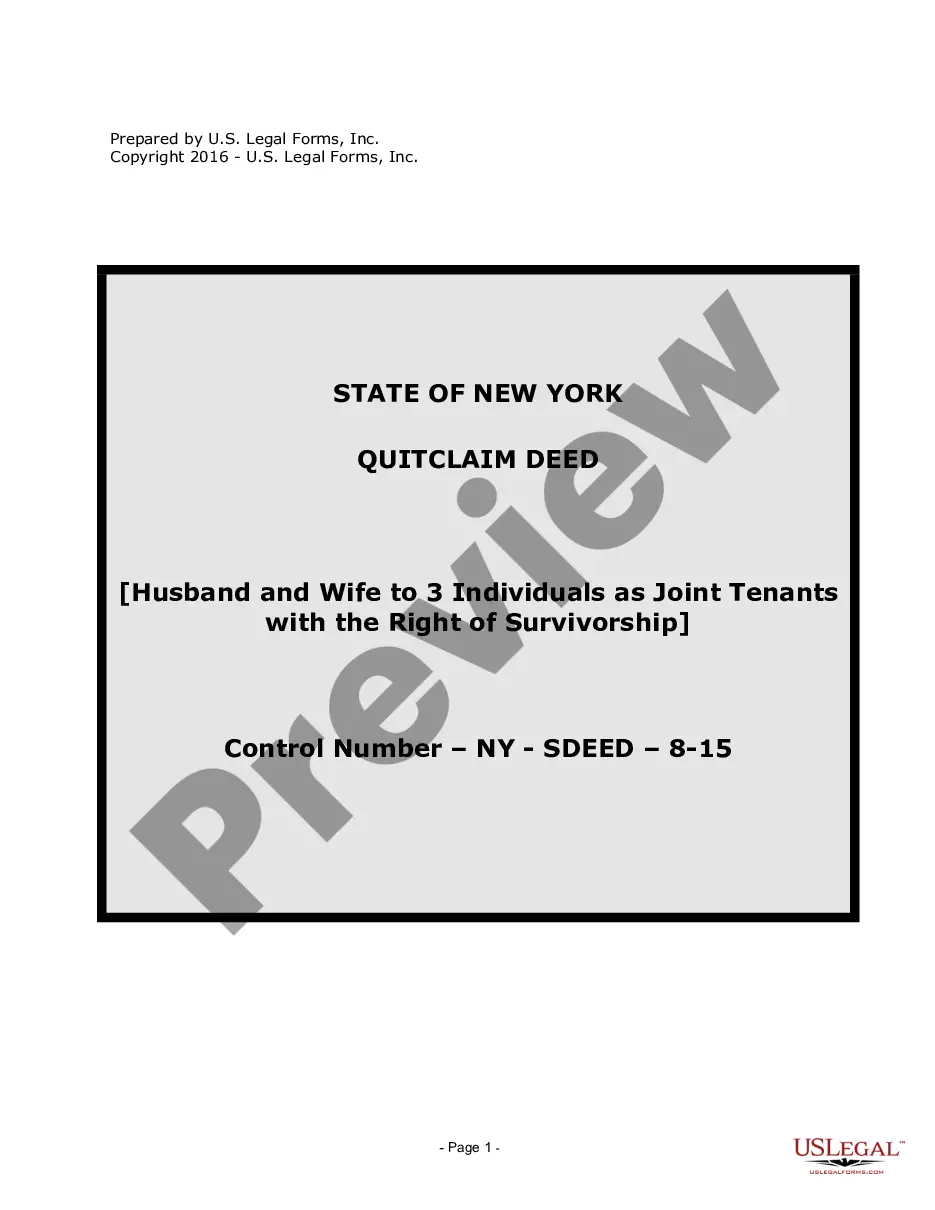
The Quitclaim Deed for Three Individuals to Husband and Wife as Joint Tenants with Right of Survivorship is a legal document that transfers an interest in real estate from three individuals (grantors) to a married couple (grantees). This form is particularly important because it establishes joint tenancy with the right of survivorship, meaning that if one spouse passes away, the other automatically inherits the entire property. It differs from other types of deeds as it specifically outlines this survivorship feature, making it suitable for spouses who wish to jointly own property without complication upon death.
Form components explained
- Grantors and grantees: Identifies the three individuals transferring the property and the husband and wife receiving it.
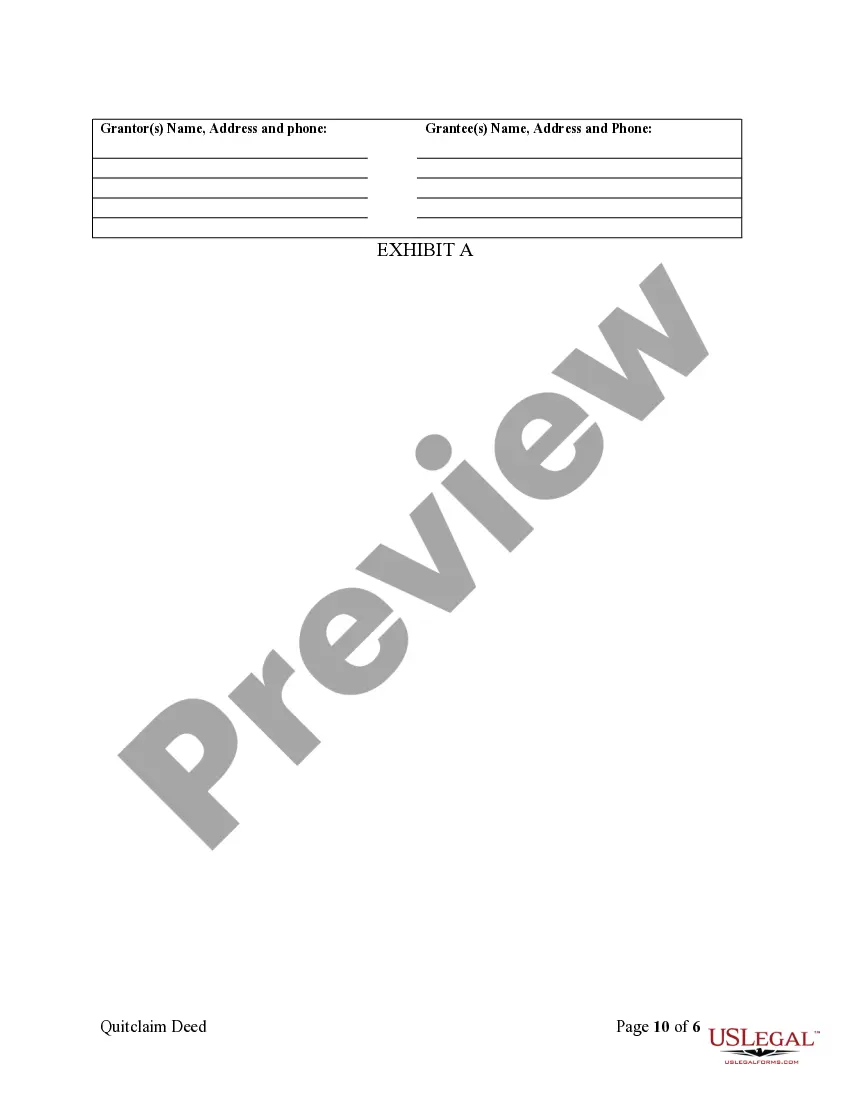
- Property description: Details the real estate involved, ensuring clarity about the property being conveyed.
- Joint tenancy clause: Includes specific language that establishes the joint tenancy and right of survivorship.
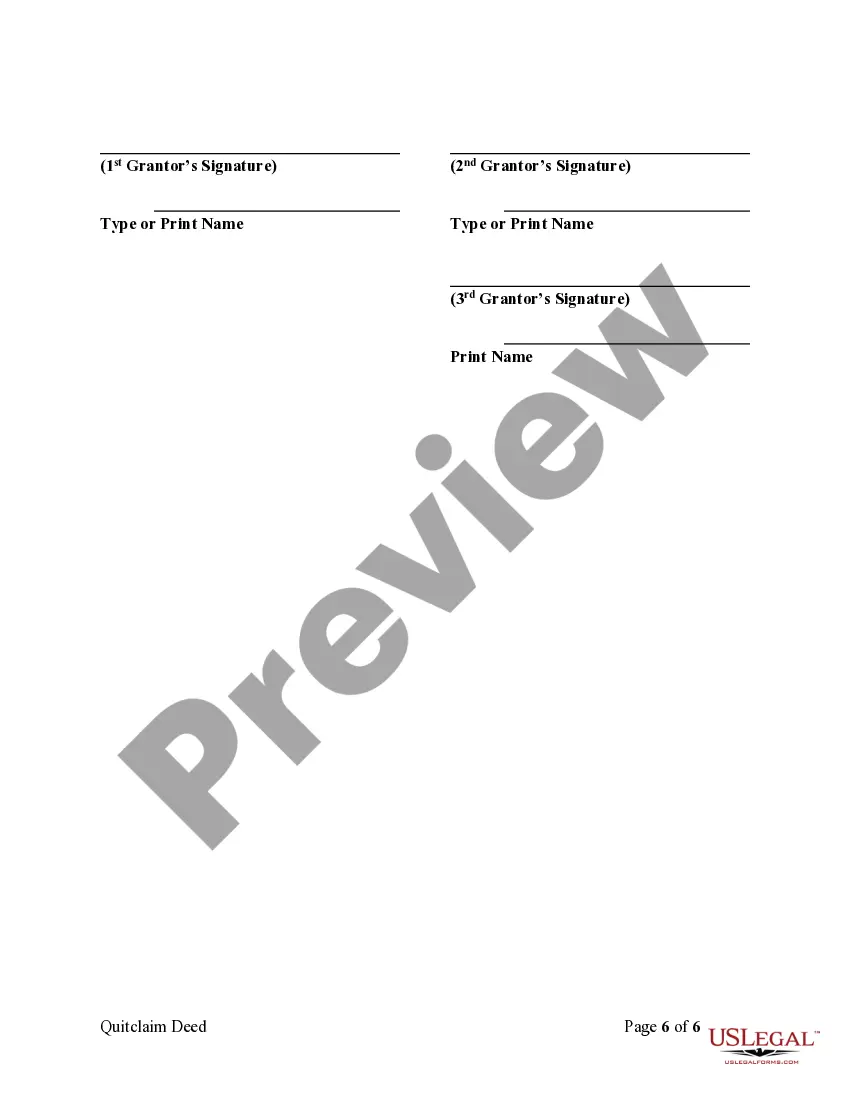
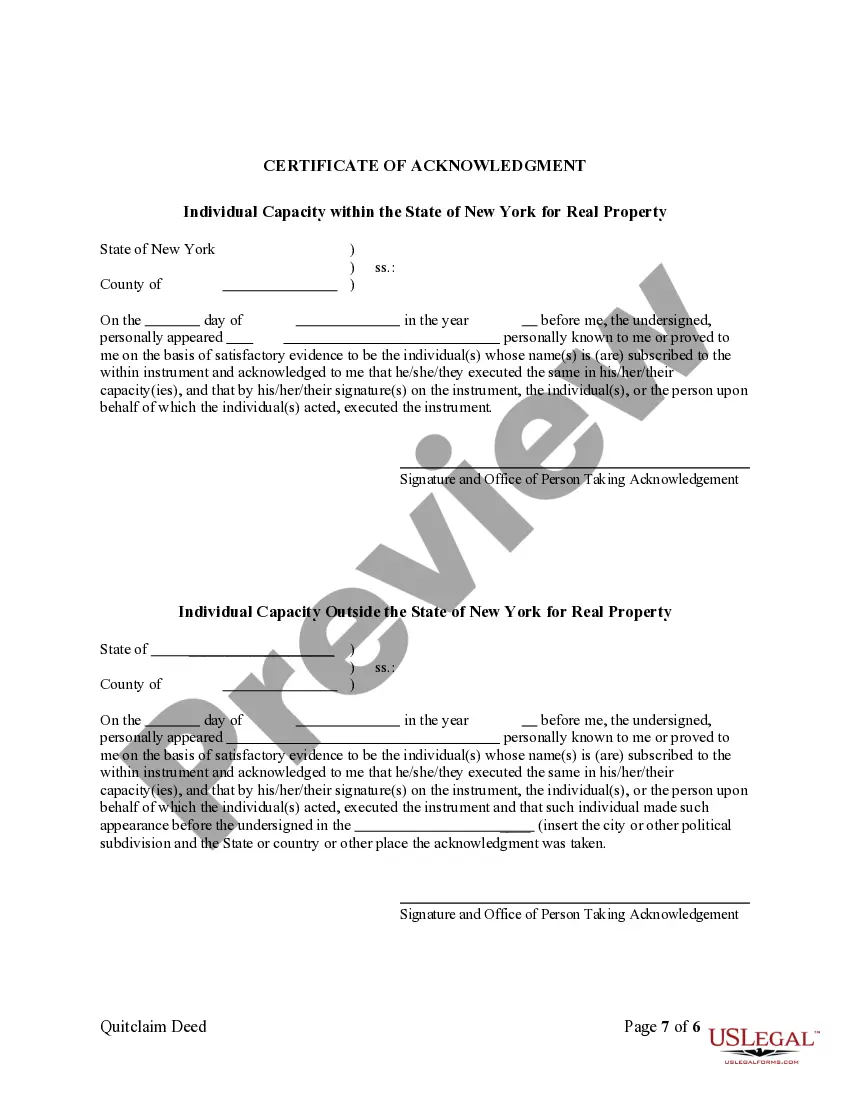
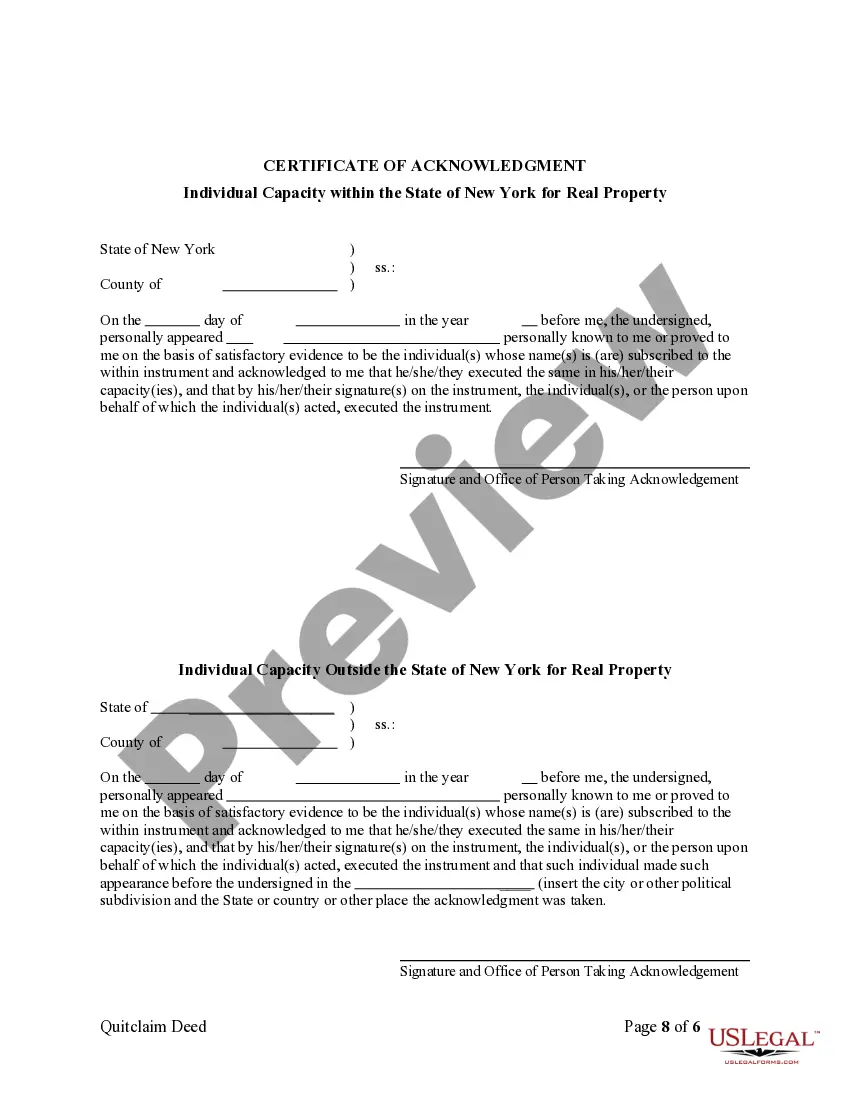
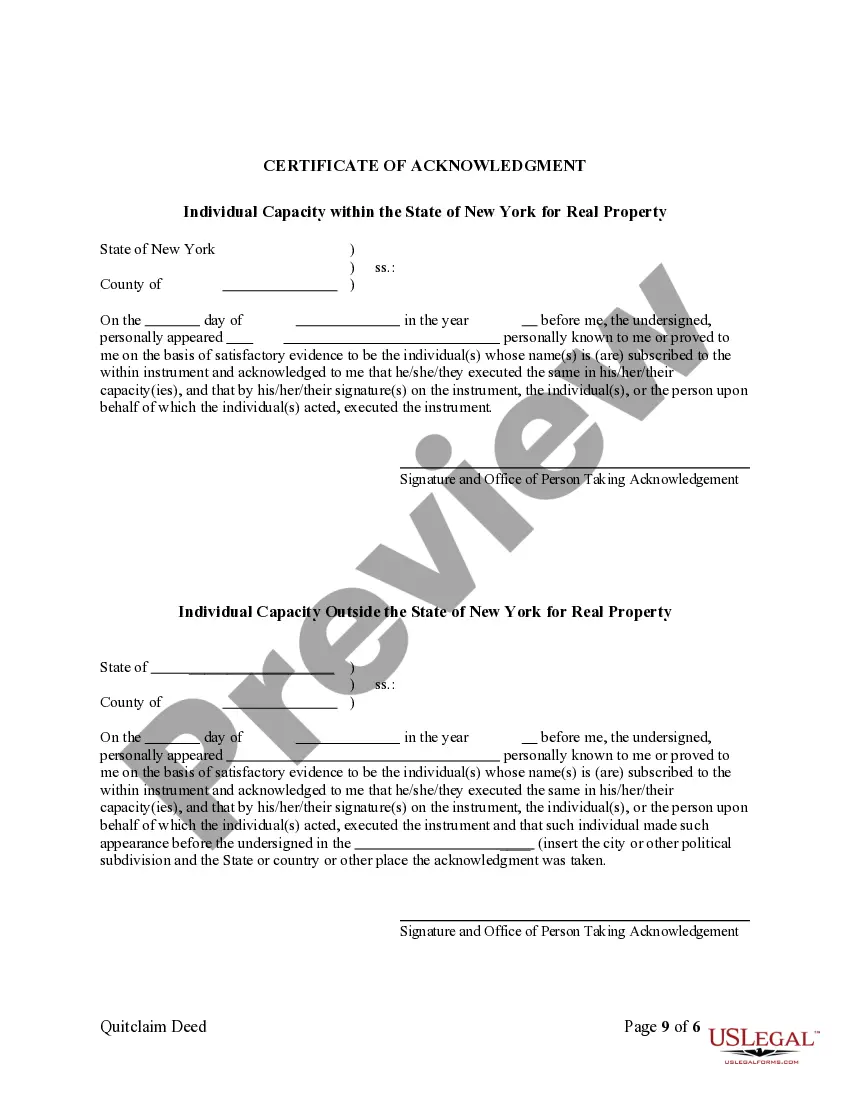
- Signatures: Requires the signatures of the grantors and the acknowledgment of a notary for validation.
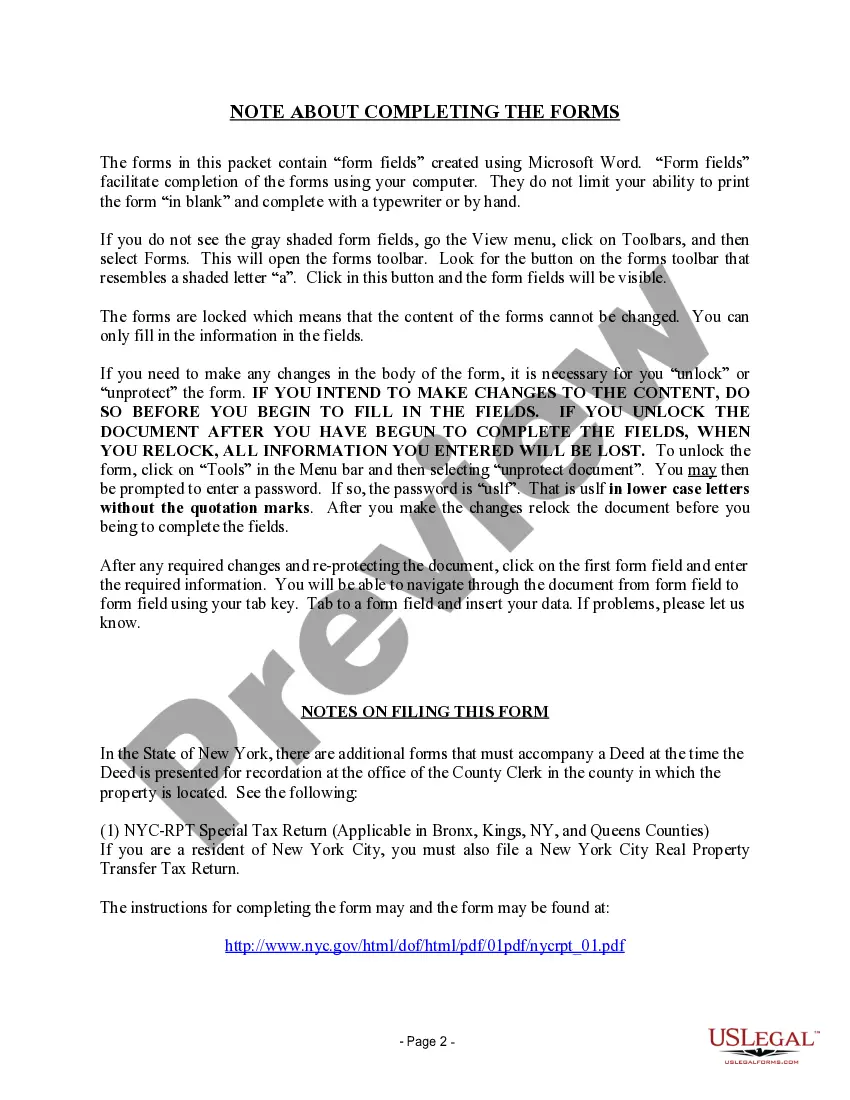
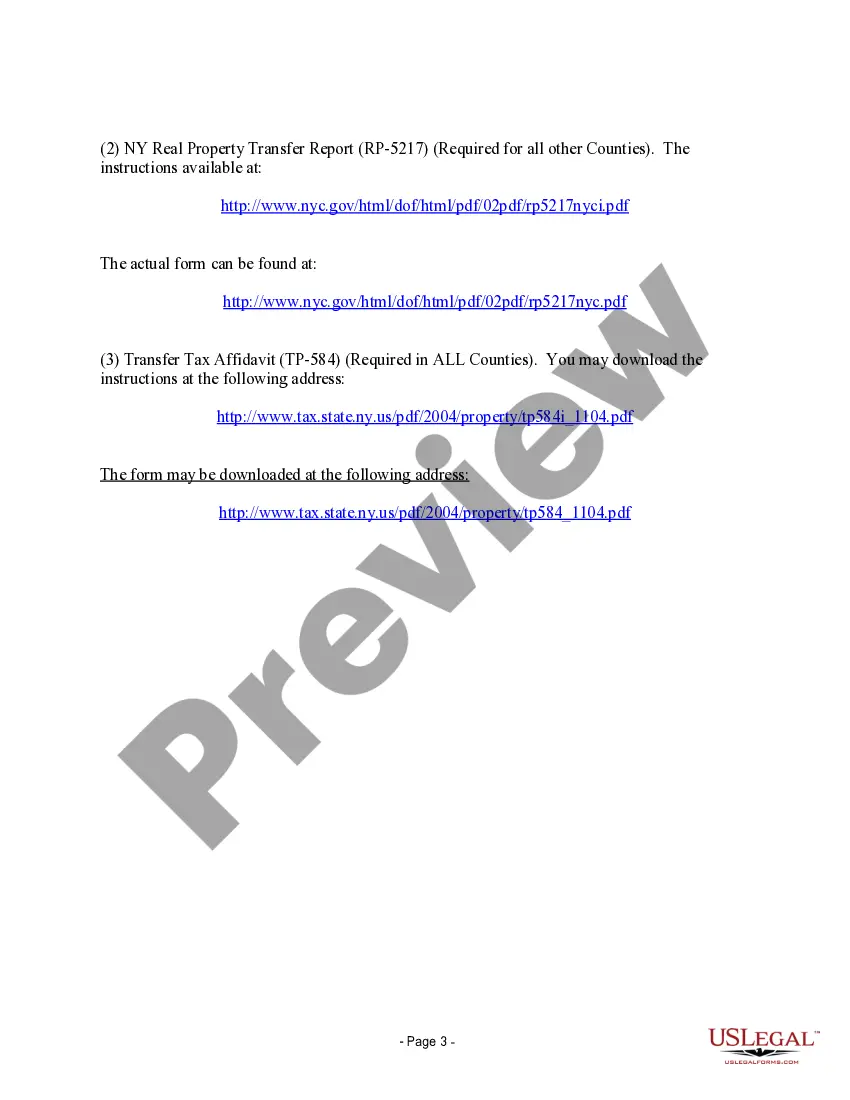
- Legal notices: Provides instructions on additional forms needed for recording in the relevant jurisdiction.



When this form is needed
This Quitclaim Deed is used when three individuals wish to transfer property ownership to a married couple while establishing joint tenancy with the right of survivorship. It is especially beneficial in scenarios where family members want to ensure that the property passes directly to the surviving spouse without going through probate after the death of one spouse.
Who needs this form
- Individuals transferring property to their family or friends.
- Married couples who want to establish joint ownership with survivorship rights.
- Those who want to avoid probate complications regarding property inheritance.
- Real estate professionals assisting clients in transferring property ownership.
Instructions for completing this form
- Identify the parties: Clearly indicate the names of the three individuals transferring the property and the names of the husband and wife receiving it.
- Specify the property: Provide a detailed description of the property being transferred.
- Fill in the date: Indicate the date of the transfer.
- Sign the document: Ensure all grantors sign the deed in the designated areas.
- Notarize the document: Have a notary public acknowledge the signatures to make the deed legally valid.
- Prepare for filing: Complete any necessary supplementary forms as required for local recording.
Does this document require notarization?
This document requires notarization to meet legal standards. US Legal Forms provides secure online notarization powered by Notarize, allowing you to complete the process through a verified video call, available 24/7.
Get your form ready online
Our built-in tools help you complete, sign, share, and store your documents in one place.
Make edits, fill in missing information, and update formatting in US Legal Forms—just like you would in MS Word.
Download a copy, print it, send it by email, or mail it via USPS—whatever works best for your next step.
Sign and collect signatures with our SignNow integration. Send to multiple recipients, set reminders, and more. Go Premium to unlock E-Sign.
If this form requires notarization, complete it online through a secure video call—no need to meet a notary in person or wait for an appointment.
We protect your documents and personal data by following strict security and privacy standards.

Make edits, fill in missing information, and update formatting in US Legal Forms—just like you would in MS Word.

Download a copy, print it, send it by email, or mail it via USPS—whatever works best for your next step.

Sign and collect signatures with our SignNow integration. Send to multiple recipients, set reminders, and more. Go Premium to unlock E-Sign.

If this form requires notarization, complete it online through a secure video call—no need to meet a notary in person or wait for an appointment.

We protect your documents and personal data by following strict security and privacy standards.
Common mistakes to avoid
- Failing to provide a complete legal description of the property.
- Not having the signatures notarized, which could render the deed invalid.
- Overlooking local tax forms that must accompany the deed when filing.
- Not double-checking the names of grantors and grantees for accuracy.
Advantages of online completion
- Convenience of instant downloading and printing the form from home.
- Editability of the form to ensure all information is accurately filled.
- Access to reliable legal templates prepared by licensed attorneys.
- Cost-effectiveness compared to hiring an attorney for simple property transfers.
Looking for another form?


Form popularity
FAQ
It is also crucial that a spouse know about the loan, even if he or she is not on the mortgage. In general, the spouse must sign a deed of trust, the Truth in Lending and Right to Cancel documents. By signing these documents, they are simply acknowledging the existence of the mortgage.
Property held in joint tenancy, tenancy by the entirety, or community property with right of survivorship automatically passes to the survivor when one of the original owners dies. Real estate, bank accounts, vehicles, and investments can all pass this way. No probate is necessary to transfer ownership of the property.
As with the tenancy-in-common, a joint tenancy can exist in three or more people. Obviously, each party must have an interest that is equal to one divided by the total number of joint tenants. If one of the joint tenants dies, the others share his or her interest and they remain joint tenants with each other.
Get a copy of the probated will. Obtain a certified copy of the death certificate. Draft a new deed that names you as the property owner. Sign the new deed and have it notarized.
In order to transfer ownership of the marital home pursuant to a divorce, one spouse is going to need to sign a quitclaim deed, interspousal transfer deed, or a grant deed, in order to convey the title to the property.
If it was inherited, succession law comes into play. Once the beneficiaries and their shares, rights and liabilities are decided, the property has to be transferred in their names. For this you need to apply for property transfer at the sub-registrar's office.
To hold a real estate property in joint tenancy, you and the co-owners have to write the abbreviation for joint tenants with the right of survivorship, or JTWROS, on the official real estate deed or title. This creates a legally binding joint tenancy.
If the deceased was sole owner, or co-owned the property without right of survivorship, title passes according to his will. Whoever the will names as the beneficiary to the house inherits it, which requires filing a new deed confirming her title. If the deceased died intestate -- without a will -- state law takes over.
In most cases, the surviving owner or heir obtains the title to the home, the former owner's death certificate, a notarized affidavit of death, and a preliminary change of ownership report form. When all these are gathered, the transfer gets recorded, the fees are paid, and the county issues a new title deed.