New York Quitclaim Deed from Husband and Wife to Three Individuals as Joint Tenants with the Right of Survivorship
Understanding this form
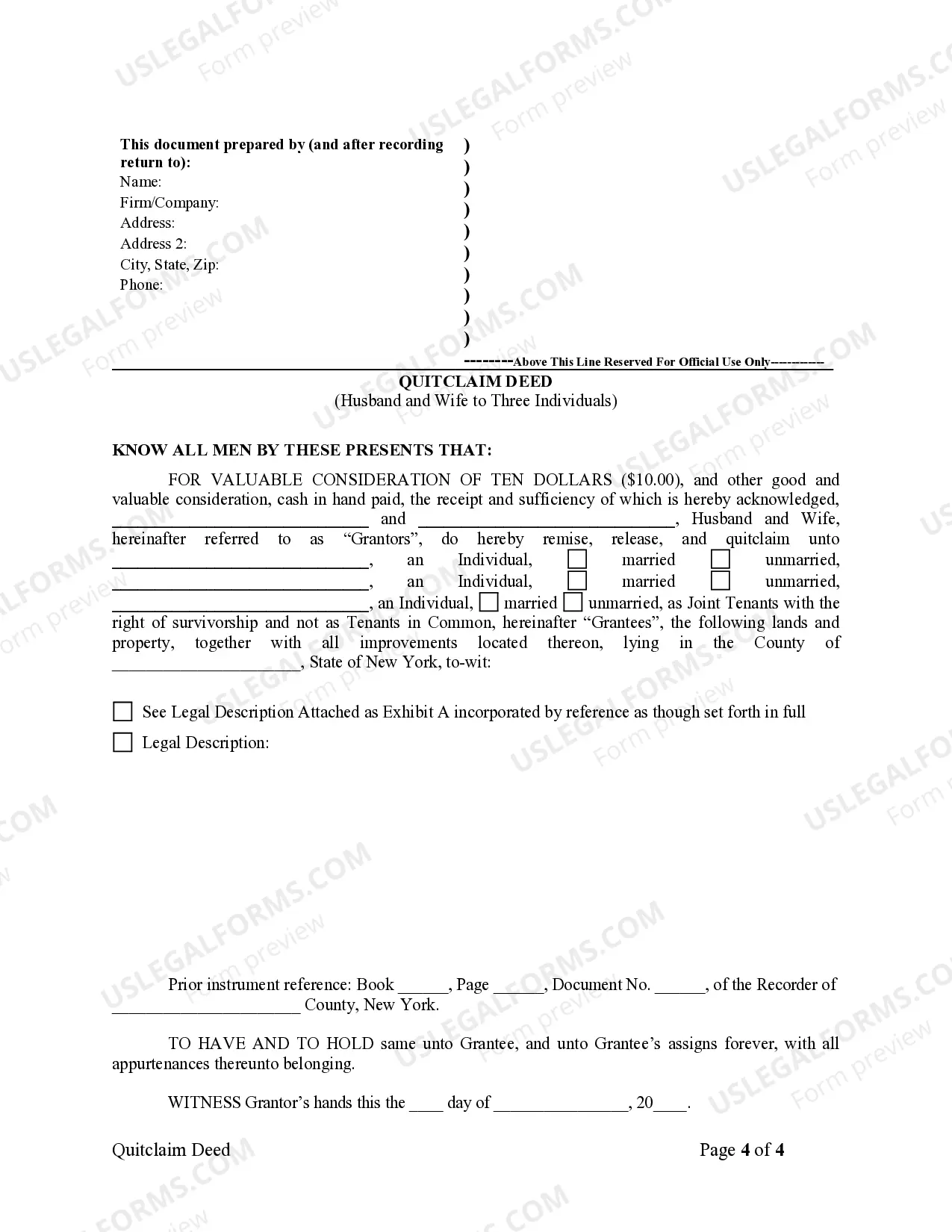
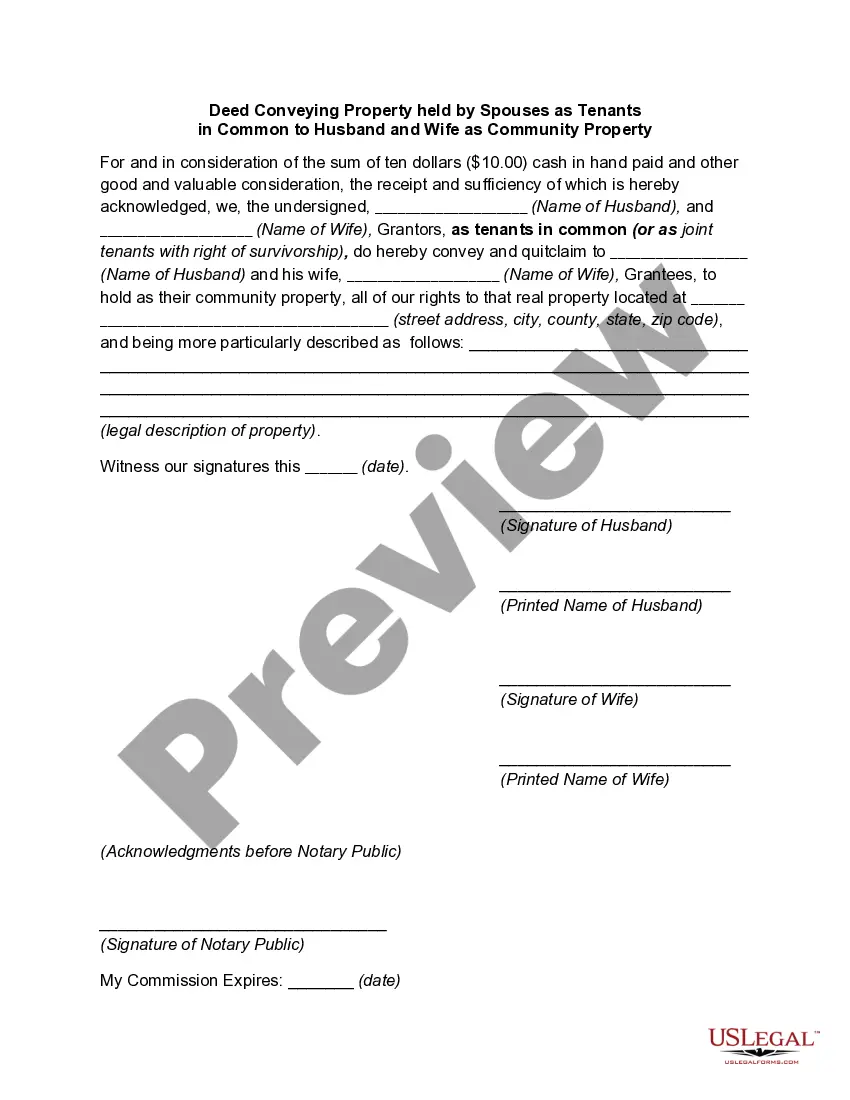
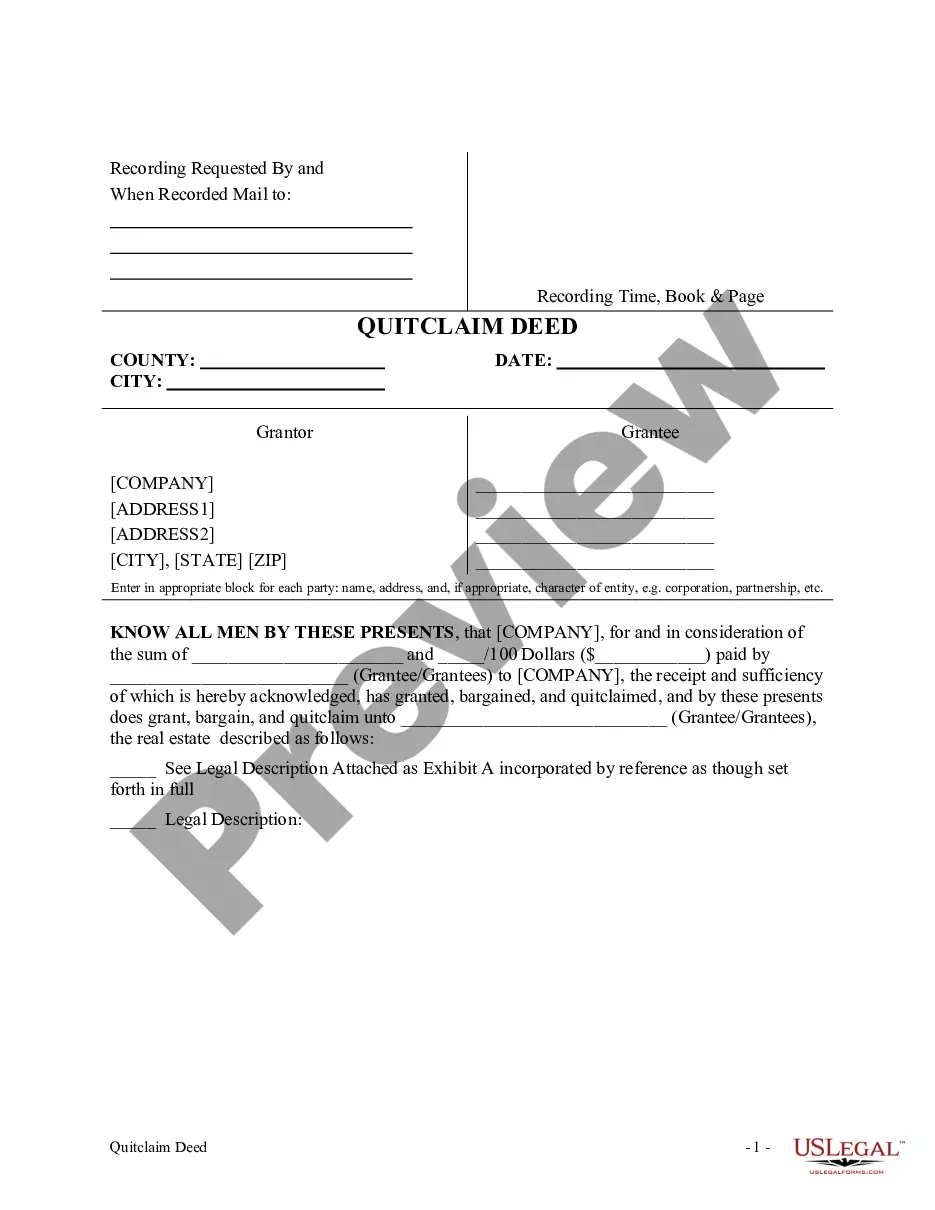
This Quitclaim Deed allows a husband and wife to transfer their property interest to three individuals as joint tenants with the right of survivorship. Unlike other deeds, a quitclaim deed does not guarantee that the grantors own the property outright, nor does it provide any warranties regarding the property title. Itâs a straightforward way to transfer ownership without extensive legal requirements.
Key components of this form
- The names of the grantors (husband and wife) who are transferring property.
- The names of the grantees (the three individuals) receiving the property.
- A description of the property being transferred.
- The statement granting the property with the right of survivorship.
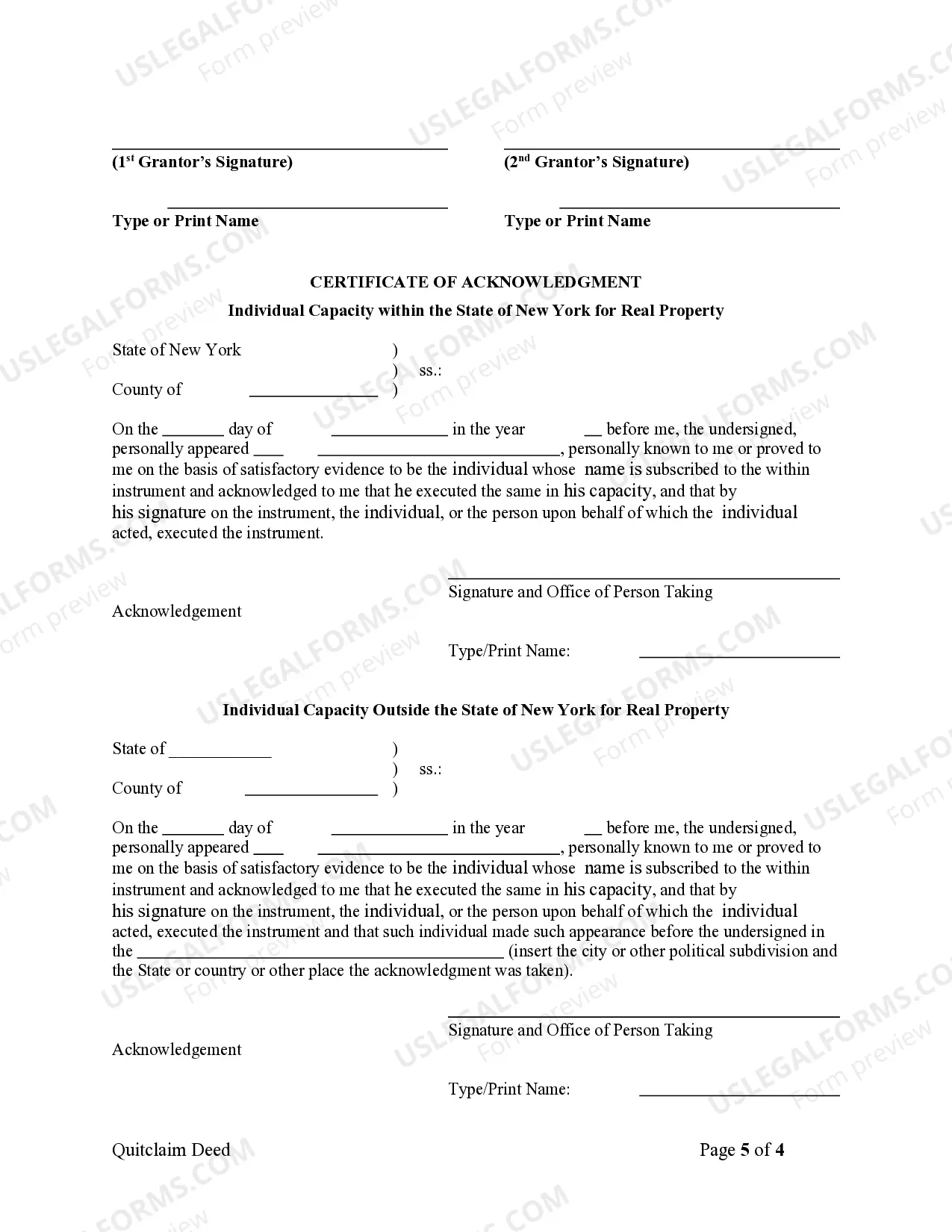
- The signatures of the grantors, along with the date of the transfer.


Situations where this form applies
This form should be used when a husband and wife wish to transfer their ownership in a property to three individuals who will hold the title as joint tenants. This scenario often arises in family situations, estate planning, or when consolidating property ownership within a group. It is crucial to be aware of the implications of joint tenancy, including the right of survivorship, which means that if one of the joint tenants passes away, their share automatically transfers to the surviving tenants.
Who this form is for
This form is intended for:
- Couples who own property together and want to transfer it to three individuals.
- Individuals involved in family estate planning.
- Those consolidating property ownership between multiple parties.
How to prepare this document
- Identify the parties: Enter the names of the husband and wife as grantors and the three individuals as grantees.
- Specify the property: Clearly describe the property being transferred, including any legal descriptions.
- Enter the date: Fill in the date when the deed is being signed.
- Obtain signatures: Have both grantors sign the deed in the designated areas.
- Complete any required additional forms: If applicable, make sure to fill out and submit the necessary accompanying documentation.
Notarization guidance
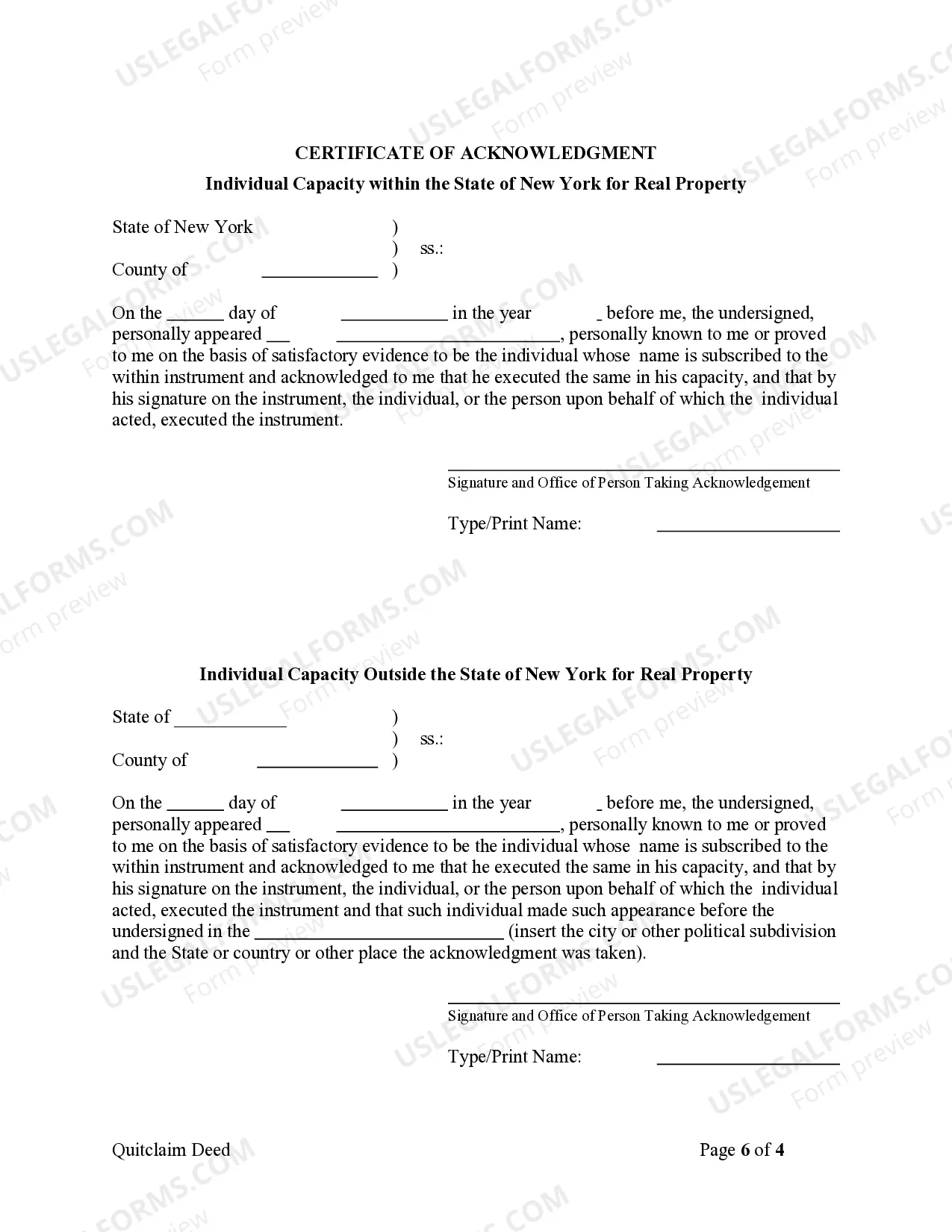
This form must be notarized to be legally valid. Notarization confirms the identities of the signing parties and ensures that the signatures are authentic. US Legal Forms offers integrated online notarization services, allowing you to complete this step securely from your home via a video call at any time.
Get your form ready online
Our built-in tools help you complete, sign, share, and store your documents in one place.
Make edits, fill in missing information, and update formatting in US Legal Forms—just like you would in MS Word.
Download a copy, print it, send it by email, or mail it via USPS—whatever works best for your next step.
Sign and collect signatures with our SignNow integration. Send to multiple recipients, set reminders, and more. Go Premium to unlock E-Sign.
If this form requires notarization, complete it online through a secure video call—no need to meet a notary in person or wait for an appointment.
We protect your documents and personal data by following strict security and privacy standards.

Make edits, fill in missing information, and update formatting in US Legal Forms—just like you would in MS Word.

Download a copy, print it, send it by email, or mail it via USPS—whatever works best for your next step.

Sign and collect signatures with our SignNow integration. Send to multiple recipients, set reminders, and more. Go Premium to unlock E-Sign.

If this form requires notarization, complete it online through a secure video call—no need to meet a notary in person or wait for an appointment.

We protect your documents and personal data by following strict security and privacy standards.
Mistakes to watch out for
- Failing to include complete property descriptions, which can cause delays in the recording process.
- Not obtaining the required signatures from both grantors.
- Omitting to file supplementary forms with the County Clerk, leading to potential legal issues.
Benefits of using this form online
- Convenient access: Download and fill out the form anytime and anywhere.
- Editability: Easily make changes to the form without hassle before finalizing it.
- Legal reliability: Forms are drafted by licensed attorneys, ensuring compliance with state laws.
Key takeaways
- This quitclaim deed is for transferring property from a husband and wife to three joint tenants.
- It is essential to include a detailed property description and obtain notarization.
- Follow state-specific requirements for proper filing to ensure legality.
Looking for another form?
Form popularity
FAQ
Joint tenancy is a form of property ownership normally associated with real estate. Each party in a joint tenancy has an equal interest in the propertythe financial obligations as well as any benefits.
Serve a written notice of the change (a 'notice of severance') on the other owners - a conveyancer can help you do this. Download and fill in form SEV to register a restriction without the other owners' agreement. Prepare any supporting documents you need to include.
In order to transfer ownership of the marital home pursuant to a divorce, one spouse is going to need to sign a quitclaim deed, interspousal transfer deed, or a grant deed, in order to convey the title to the property.
A Yes, you will have to draw up new wills if you decide to own your home as tenants in common by severing your joint tenancy.
When one joint owner (called a joint tenant, though it has nothing to do with renting) dies, the surviving owners automatically get the deceased owner's share of the joint tenancy property.The surviving joint tenant will automatically own the property after your death.
Joint tenancy can only be created if the four people obtain their interest at the same time. In other words, if three people own a building, they cannot add a fourth person to the deed and create a joint tenancy.
The following applies to joint tenancy and to tenancy in common. Up to four people can be named as legal owners. If there are more than four owners then ownership is through the device of a trust. The additional owners (and there can be any number) can be named as beneficiaries of the resulting trust for sale.
As with the tenancy-in-common, a joint tenancy can exist in three or more people. Obviously, each party must have an interest that is equal to one divided by the total number of joint tenants. If one of the joint tenants dies, the others share his or her interest and they remain joint tenants with each other.
It is also crucial that a spouse know about the loan, even if he or she is not on the mortgage. In general, the spouse must sign a deed of trust, the Truth in Lending and Right to Cancel documents. By signing these documents, they are simply acknowledging the existence of the mortgage.