Pennsylvania Newly Divorced Individuals Package
Understanding this form package
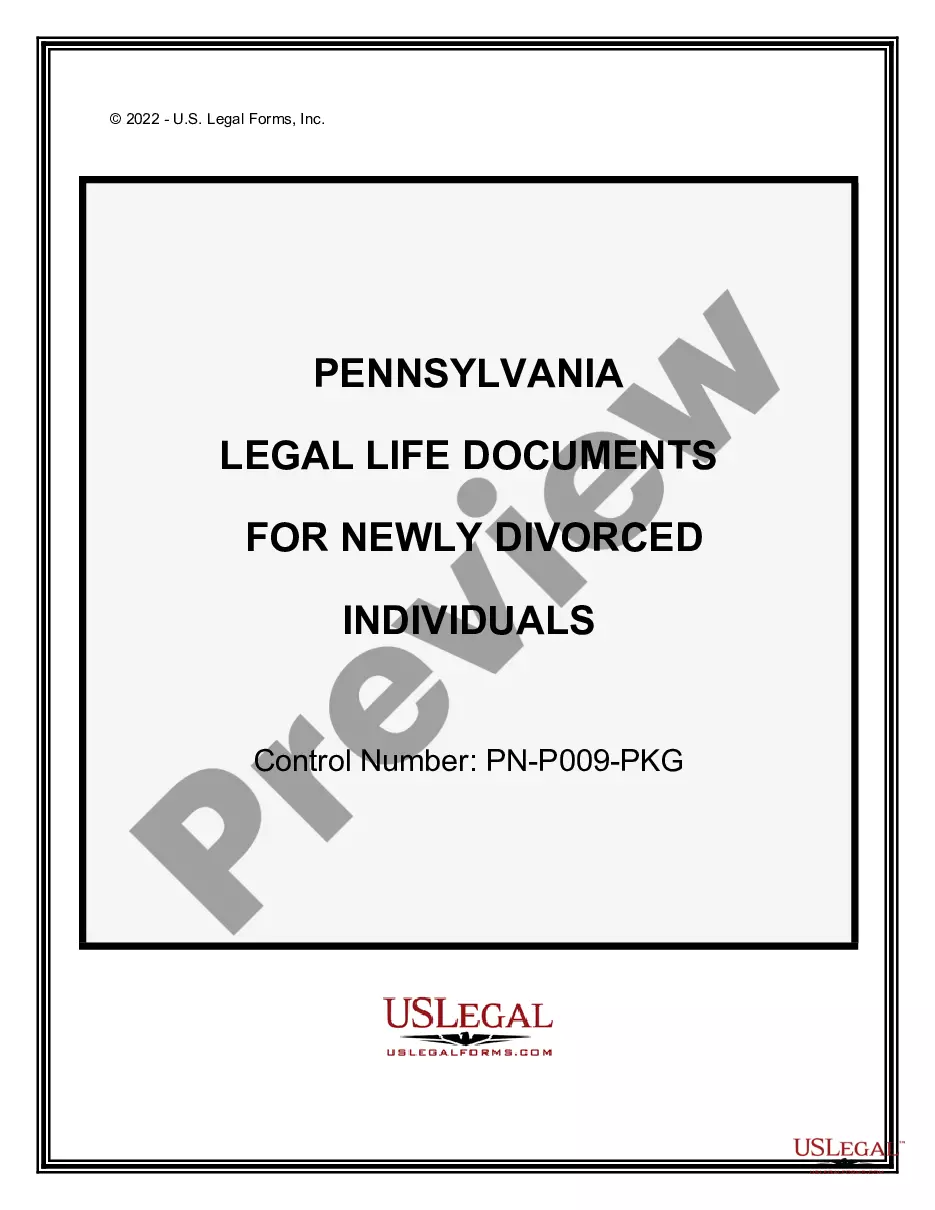
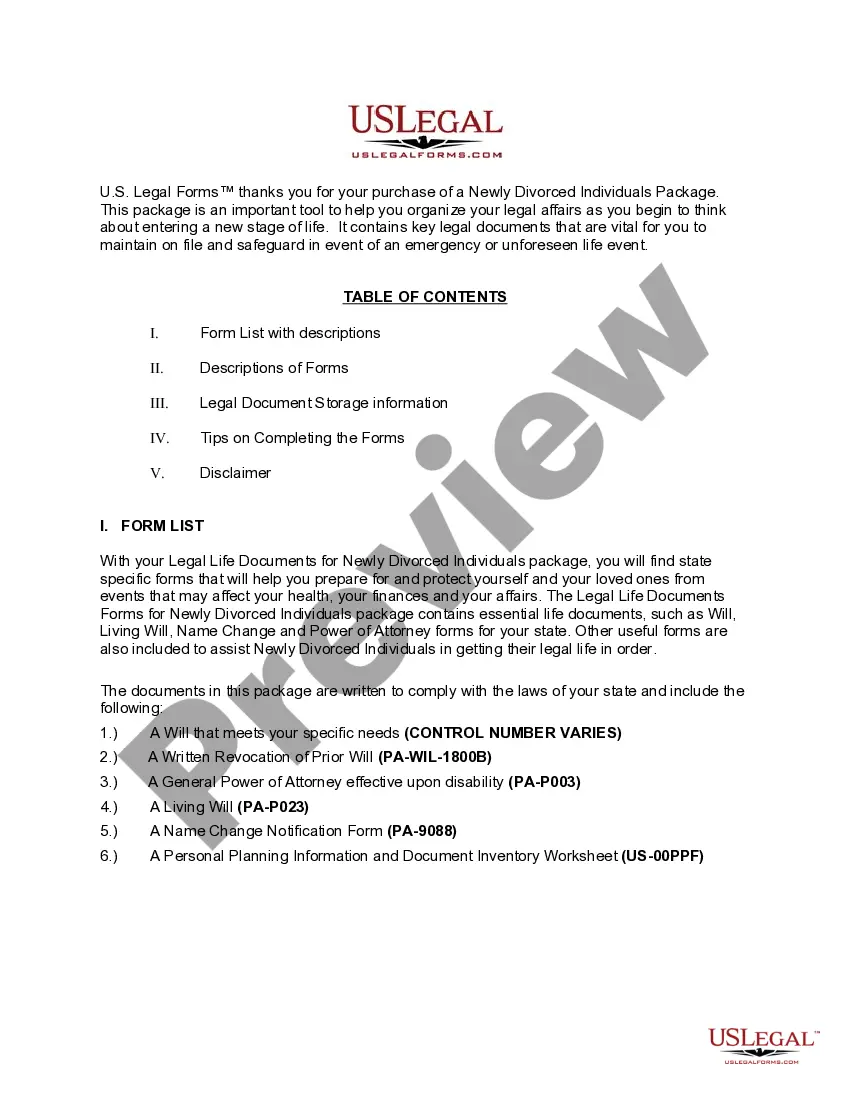
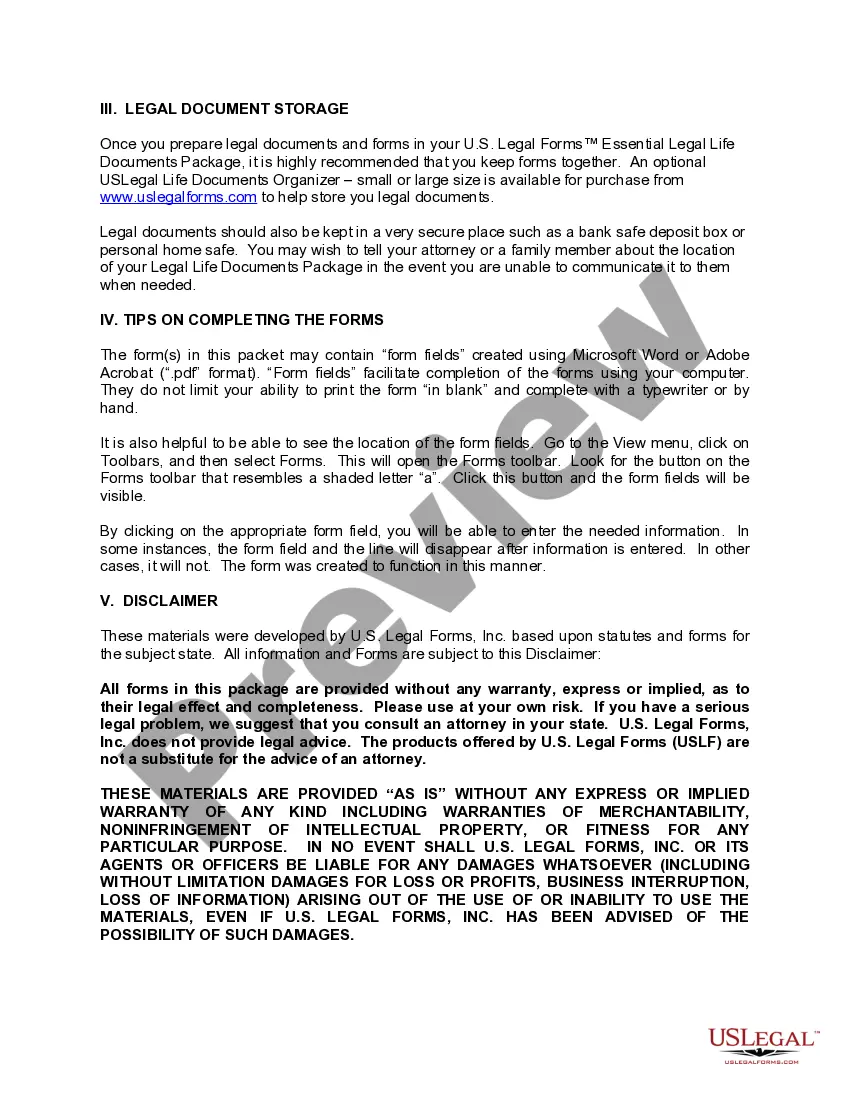
The Pennsylvania Newly Divorced Individuals Package includes essential legal documents specifically designed for individuals who have recently finalized their divorce. This package helps you reorganize your legal life efficiently and effectively. It stands out from similar packages by focusing on the unique needs of newly divorced individuals, offering documents that cover various aspects of personal planning and legal organization.
Forms included in this package
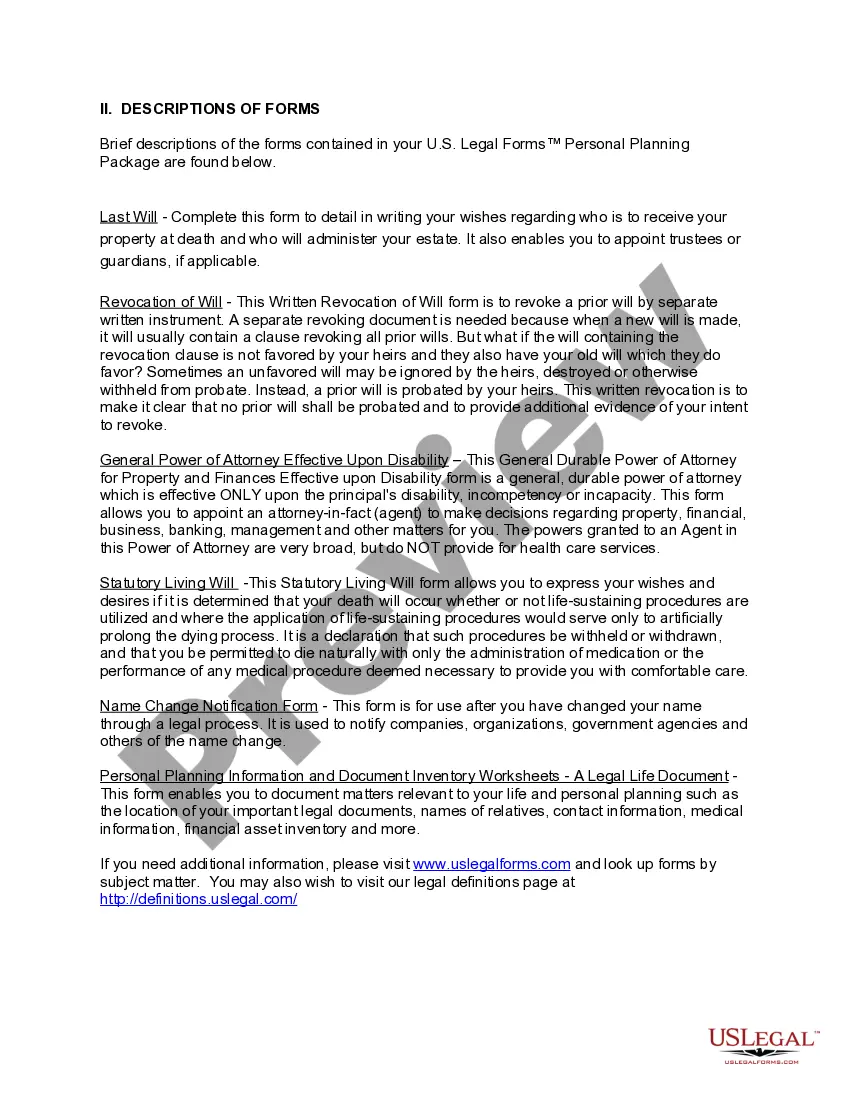
- Last Will and Testament
- Name Change Notification Form
- General Durable Power of Attorney for Property and Finances or Financial Effective upon Disability
- Statutory Living Will - Advance Directive for Healthcare - Statutory form
- Written Revocation of Will
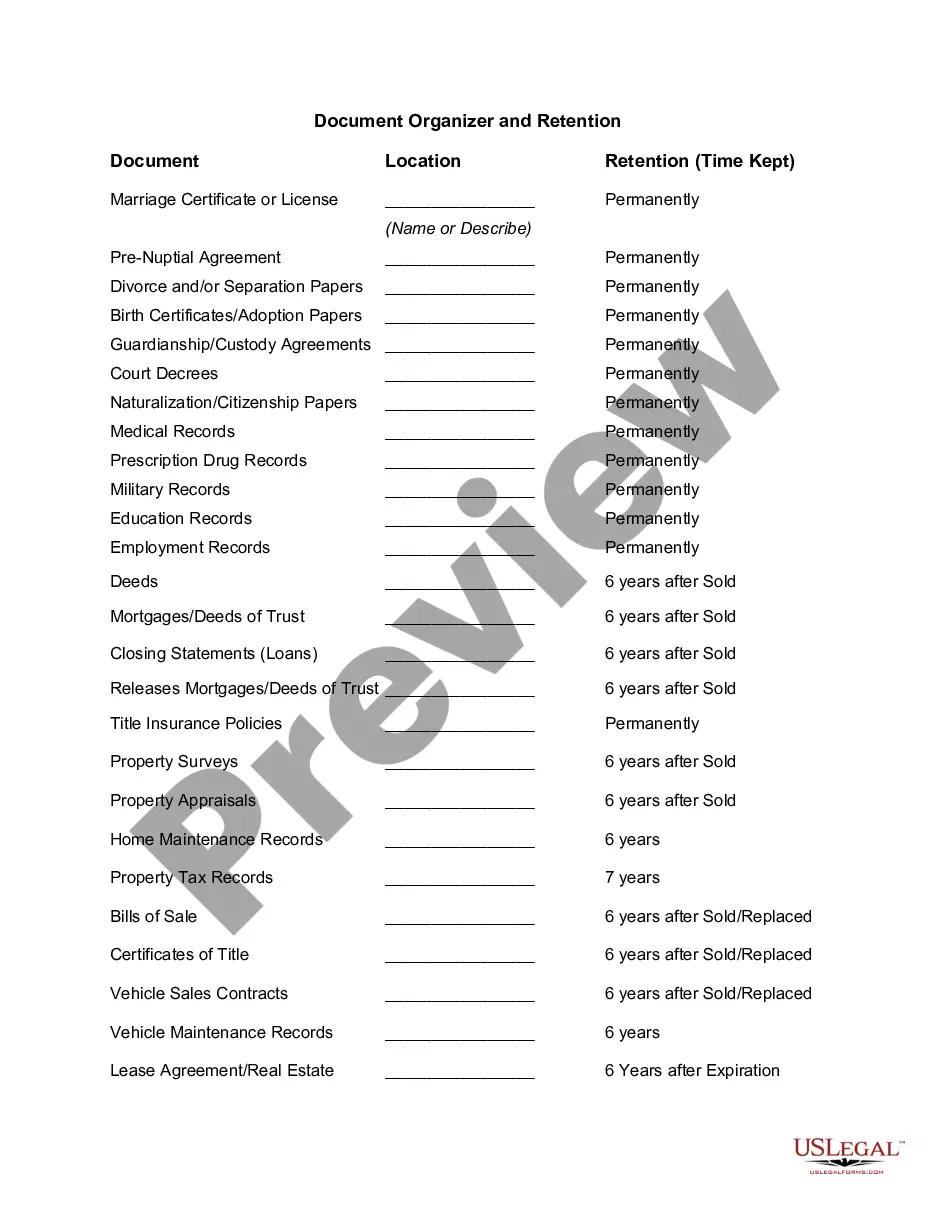
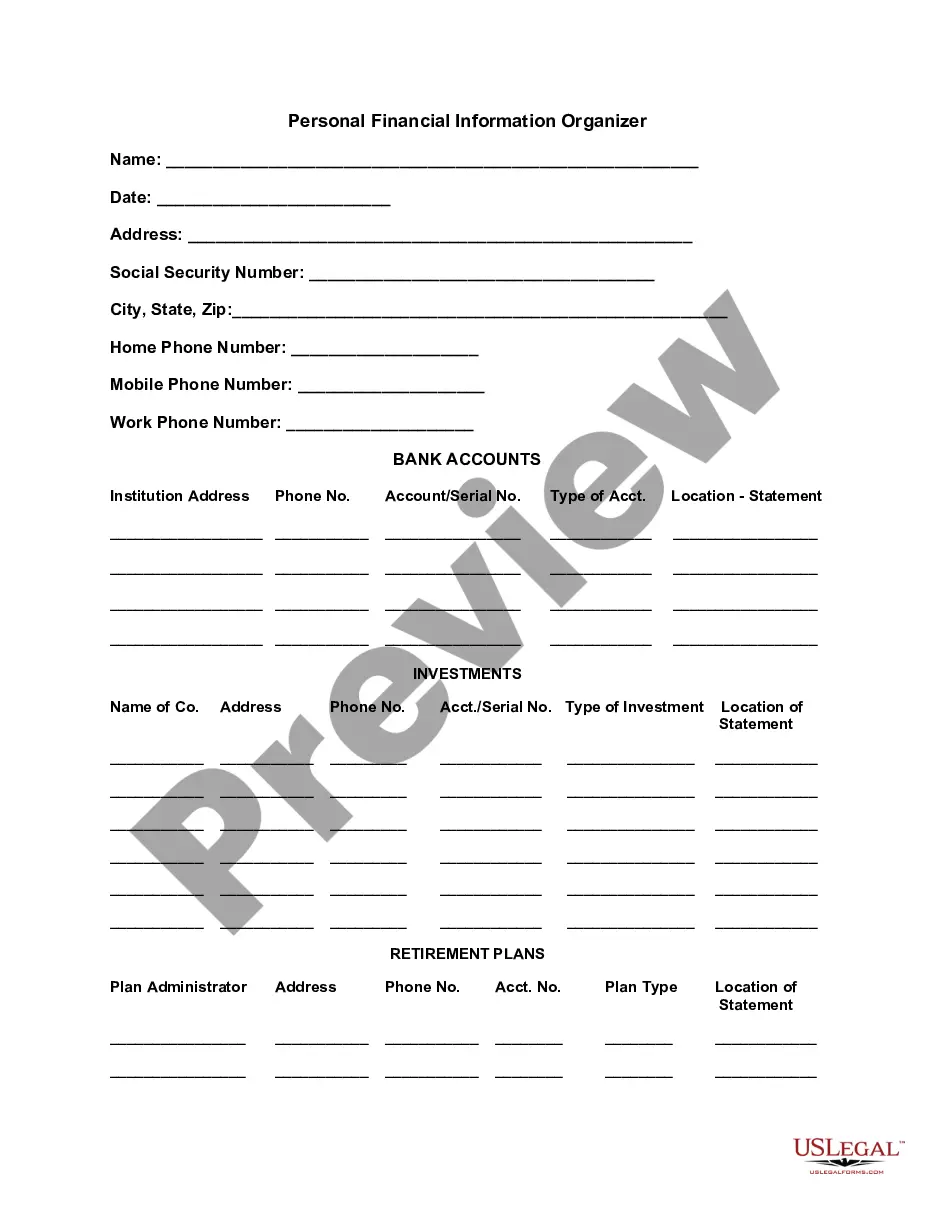
- Personal Planning Information and Document Inventory Worksheets - A Legal Life Document
When this form package is needed
This package is ideal for use after your divorce is finalized. You may need this form package in situations such as:
- Planning your estate and ensuring your Will reflects your current wishes.
- Revoking a prior Will that no longer aligns with your intentions.
- Designating a trusted individual to manage your financial affairs in case of disability.
- Communicating your healthcare preferences in a Living Will.
- Notifying relevant parties about your name change.
- Creating an inventory of important documents and personal information.
Who can use this document
- Recently divorced individuals looking to organize their legal documents.
- Individuals seeking to update their estate plans to reflect post-divorce circumstances.
- Those who need to handle name changes or revoke prior legal documents.
- Anyone requiring a Personal Planning Information and Document Inventory Worksheet for better organization.
How to complete these forms
- Review the included forms carefully to ensure they fit your needs.
- Identify and fill in all required information, including names, dates, and specific details.
- Sign each form as requiredâsome documents may need witnesses or notarization.
- Store your completed forms securely, such as in a safe deposit box or a personal safe.
- Communicate the location of these documents to a trusted family member or attorney.
Do documents in this package require notarization?
Forms in this package typically do not require notarization unless required by local law. However, itâs always advisable to check specific document requirements, particularly for the Will and Power of Attorney forms, which may need to be notarized for validity.
Get your form ready online
Our built-in tools help you complete, sign, share, and store your documents in one place.
Make edits, fill in missing information, and update formatting in US Legal Forms—just like you would in MS Word.
Download a copy, print it, send it by email, or mail it via USPS—whatever works best for your next step.
Sign and collect signatures with our SignNow integration. Send to multiple recipients, set reminders, and more. Go Premium to unlock E-Sign.
If this form requires notarization, complete it online through a secure video call—no need to meet a notary in person or wait for an appointment.
We protect your documents and personal data by following strict security and privacy standards.

Make edits, fill in missing information, and update formatting in US Legal Forms—just like you would in MS Word.

Download a copy, print it, send it by email, or mail it via USPS—whatever works best for your next step.

Sign and collect signatures with our SignNow integration. Send to multiple recipients, set reminders, and more. Go Premium to unlock E-Sign.

If this form requires notarization, complete it online through a secure video call—no need to meet a notary in person or wait for an appointment.

We protect your documents and personal data by following strict security and privacy standards.
Avoid these common issues
- Failing to revoke any previous wills, leaving conflicting documents.
- Not properly signing or witnessing the forms, which may invalidate them.
- Overlooking the completion of important fields, leading to incomplete documents.
- Not informing loved ones about the location of your legal documents.
Why complete this package online
- Convenience of downloading and printing documents from home at your own pace.
- Editability allows for quick adjustments to meet your specific needs.
- Trustworthy forms prepared by licensed attorneys experienced in Pennsylvania law.
- Cost savings, as purchasing the full package is often cheaper than buying individual forms separately.
Looking for another form?


Form popularity
FAQ
In a Pennsylvania divorce, the court divides marital property on an equitable basis. However, this does not necessarily mean that the court will evenly split property between the two spouses. Rather, the judge presiding over the case will split up the property in a way that he or she deems fair.
A spouse is entitled to alimony only if the court decides that alimony is necessary. To decide whether alimony is necessary, how much should be paid, and how long it should be paid, the court must consider many factors including but not limited to the relative income and earning capacities of the parties, the ages
In a perfect world, separated and divorcing spouses in Pennsylvania would not start dating until their divorce was final, but that's easier said than done.If you start seeing someone else before you and your spouse decide to divorce or before you physically separate, it is considered adultery.
One of the main legal advantages that a person gains by filing the divorce petition before his or her spouse does is that the filer can request a Standing Order from the court when filing the petition.If the matter should go to a hearing, the person who files the petition usually presents his or her case first.
Pennsylvania divides marital property under the theory of equitable distribution.Community property states attempt a 50-50 distribution, as best as possible. Equitable distribution states divide property based on a determination of what's fair under the circumstances of each case.
There's no minimum length of time that a spouse has to be married in order for alimony to apply. While the length of the marriage is an important factor in the alimony statute, it's one of 17 factors that the court will consider.
Accordingly, the person who files the divorce first controls the divorce process because if the other spouse files later, the spouse who filed first can have the second divorce dismissed (knocked out of court).
As long as the spouse who is served the divorce papers does not deny that the spouses have been living apart for at least one year or that the marriage is irretrievably broken, the divorce may proceed even though only one party filed for divorce.
At divorce, community property is generally divided equally between the spouses, while each spouse keeps his or her separate property. Equitable distribution. In all other states, assets and earnings accumulated during marriage are divided equitably (fairly), but not necessarily equally.