Arizona Judgment Renewal Affidavit
About this form
The Judgment Renewal Affidavit is a legal document used to renew a court judgment. It is essential for creditors who wish to extend the enforceability of a judgment that has not been paid within the specified time frame. This form differs from other types of affidavits as it specifically addresses the renewal of judgments and provides a clear record of the judgment's status, including any payments made and the remaining balance owed.
What’s included in this form
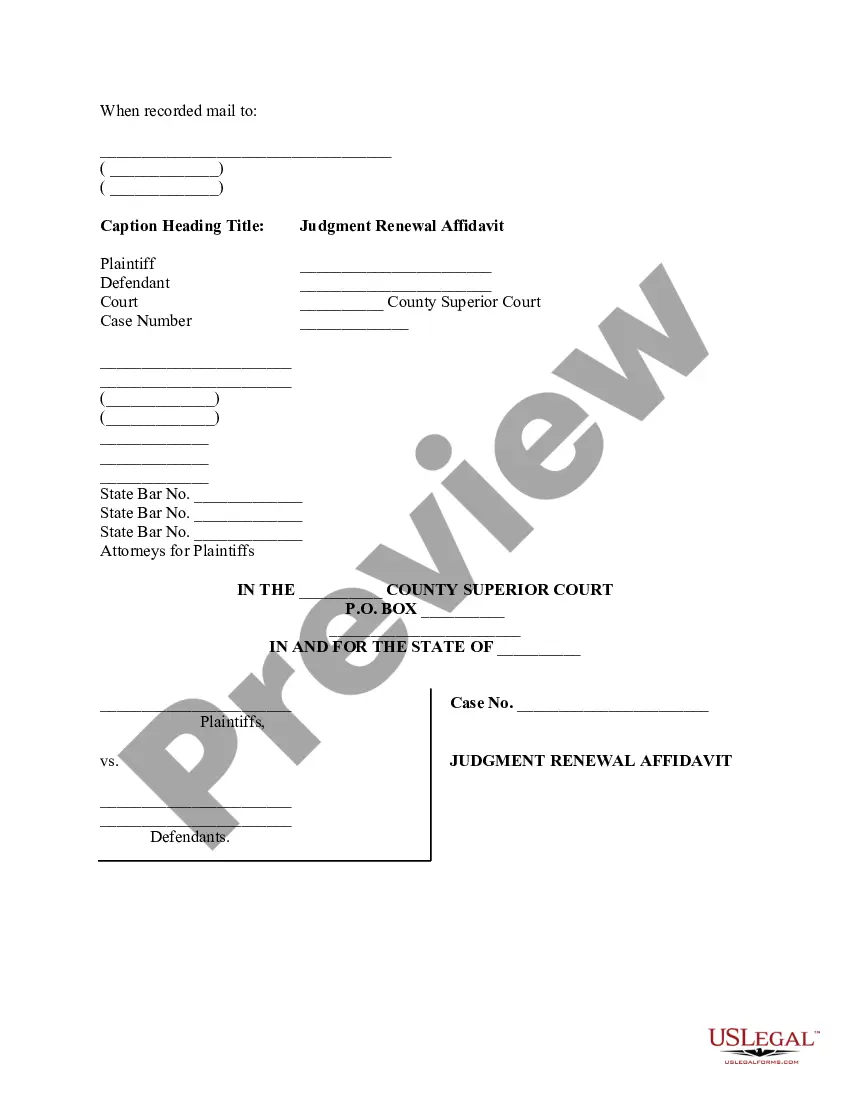
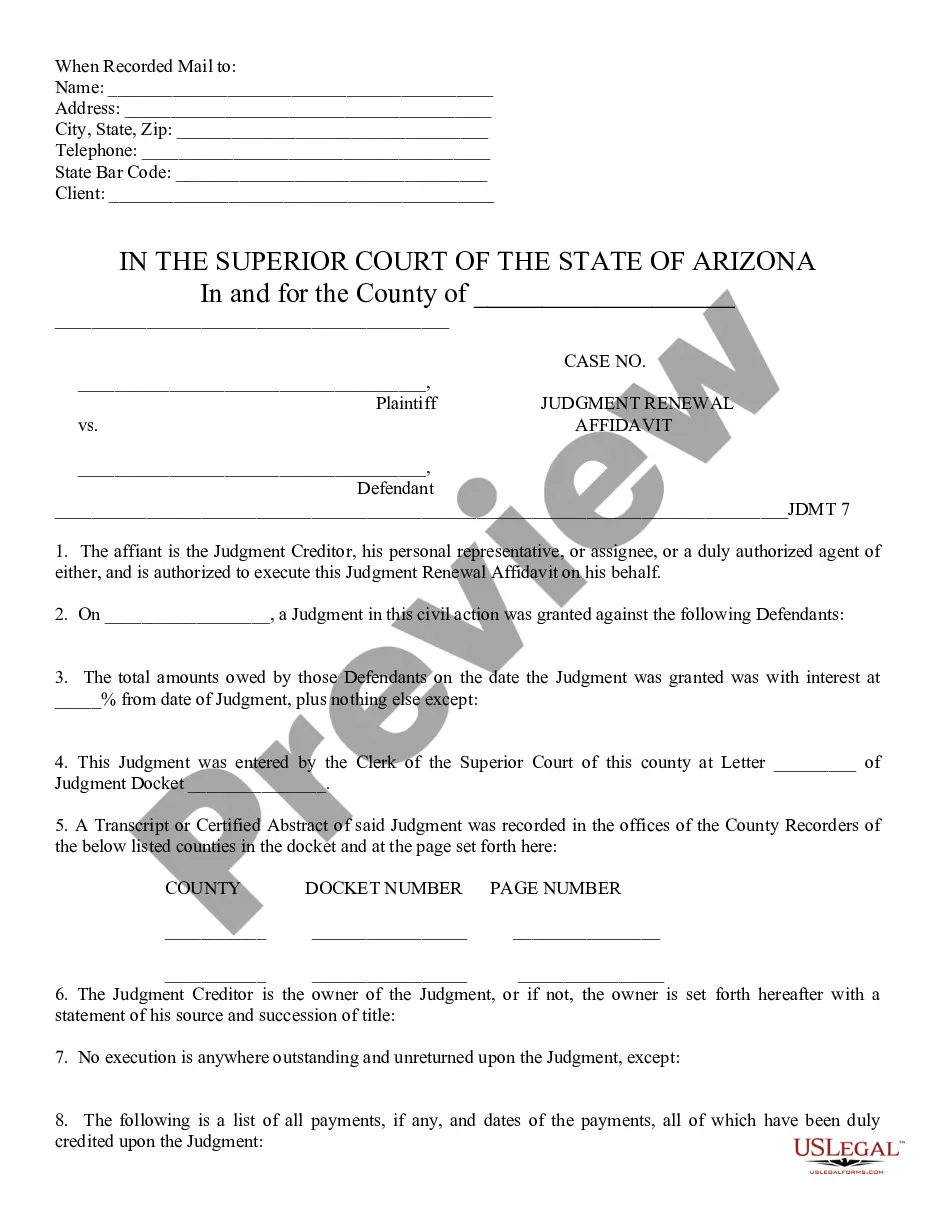
- Caption Heading: Identifies the parties involved, including the plaintiff and defendant.
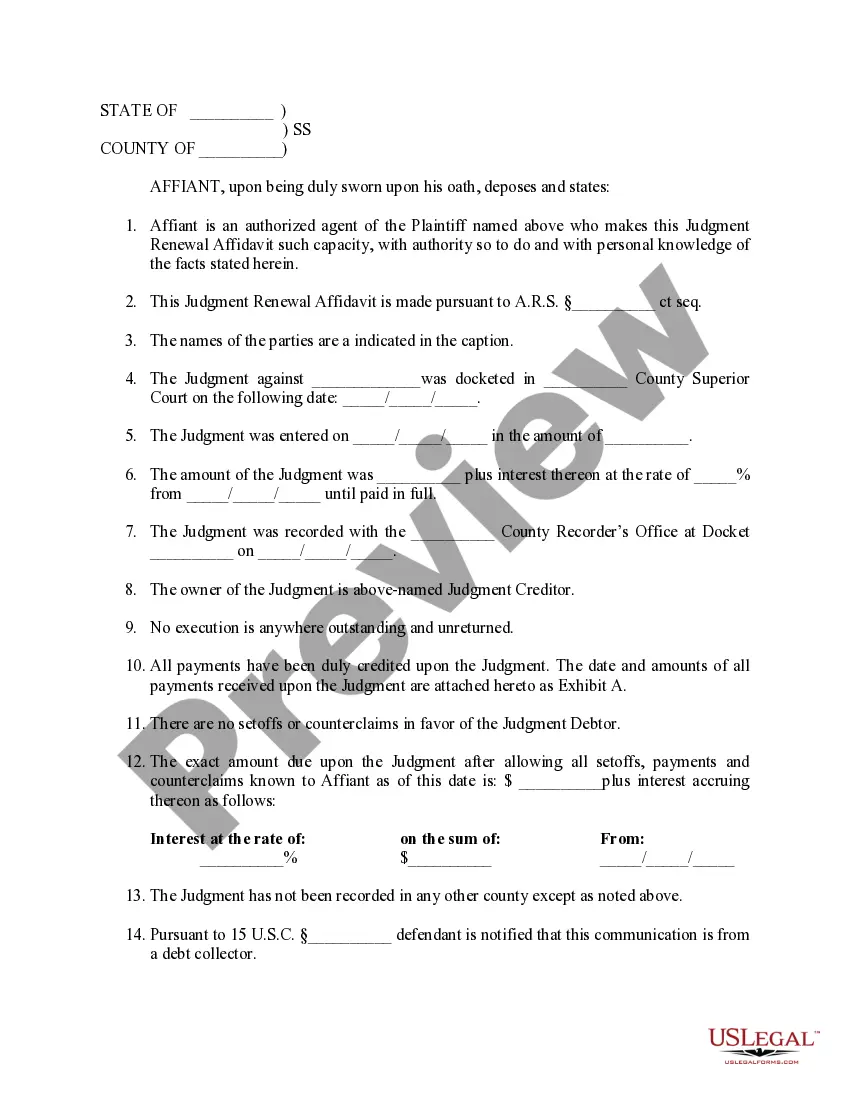
- Judgment Details: Includes the original amount of the judgment, date entered, and the court where it was filed.
- Interest Calculation: Specifies any accrued interest since the judgment was entered.
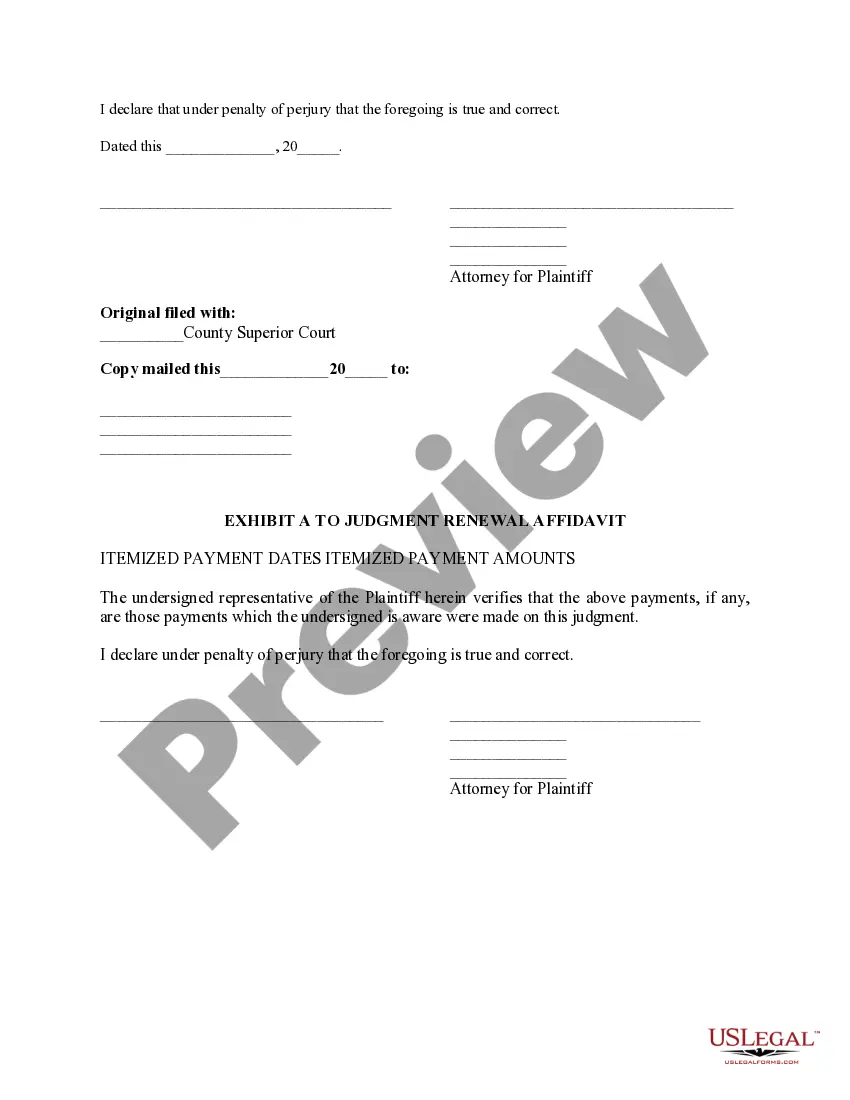
- Exhibit A: An attachment detailing all payments received and their dates.
- Declaration of Creditor: Certifies the accuracy of the information provided and confirms no outstanding executions remain.

When this form is needed
You should use the Judgment Renewal Affidavit when a judgment previously awarded to a creditor is close to expiring or has expired, but the amount owed remains unpaid. This situation often arises when a debtor makes partial payments or if the creditor wishes to prolong their ability to collect the owed amount. Renewing a judgment ensures that the creditor retains the legal right to enforce the judgment and collect the debt.
Who this form is for
- Creditors seeking to renew an existing court judgment.
- Authorized agents representing plaintiffs in judgment renewal cases.
- Attorneys handling debt collection and judgment renewal matters.
- Any individual or entity with a judgment that has not yet been satisfied.
Completing this form step by step
- Identify the parties: Fill in the names of the plaintiff and defendant as indicated in the caption.
- Enter case details: Include the court name, county, and case number associated with the original judgment.
- Detail the judgment: Provide the original judgment amount, date entered, and applicable interest rate calculations.
- Attach Exhibit A: List all payments made towards the judgment, including dates and amounts.
- Sign and date the affidavit: Both the affiant and the attorney must sign the form to validate it.
Notarization requirements for this form
This form does not typically require notarization unless specified by local law. However, some jurisdictions may have specific requirements, so check local regulations to confirm the need for notarization.
Get your form ready online
Our built-in tools help you complete, sign, share, and store your documents in one place.
Make edits, fill in missing information, and update formatting in US Legal Forms—just like you would in MS Word.
Download a copy, print it, send it by email, or mail it via USPS—whatever works best for your next step.
Sign and collect signatures with our SignNow integration. Send to multiple recipients, set reminders, and more. Go Premium to unlock E-Sign.
If this form requires notarization, complete it online through a secure video call—no need to meet a notary in person or wait for an appointment.
We protect your documents and personal data by following strict security and privacy standards.

Make edits, fill in missing information, and update formatting in US Legal Forms—just like you would in MS Word.

Download a copy, print it, send it by email, or mail it via USPS—whatever works best for your next step.

Sign and collect signatures with our SignNow integration. Send to multiple recipients, set reminders, and more. Go Premium to unlock E-Sign.

If this form requires notarization, complete it online through a secure video call—no need to meet a notary in person or wait for an appointment.

We protect your documents and personal data by following strict security and privacy standards.
Avoid these common issues
- Failing to include all payments made towards the judgment in Exhibit A.
- Neglecting to sign the affidavit or having an unauthorized individual sign it.
- Submitting the form after expiration of the judgment period without renewal.
- Incorrectly calculating the interest accruing on the judgment amount.
Why complete this form online
- Convenience: Download the form anytime and complete it at your convenience.
- Editability: Easily fill in required fields according to your specific judgment details.
- Reliability: Access templates created by licensed attorneys to ensure legal compliance.
Looking for another form?

Form popularity
FAQ
To file a judgment in Arizona, begin by gathering the necessary forms, including the Arizona Judgment Renewal Affidavit. Once you have completed the forms, you will submit them to the appropriate court in your jurisdiction. Additionally, ensure you include any required fees with your submission. If you're unsure about the process, consider using the US Legal Forms platform for easy access to templates and assistance in filing your judgment correctly.
An Arizona judgment is valid for five years initially, starting from the date it is issued. To keep the judgment enforceable beyond this period, filing an Arizona Judgment Renewal Affidavit is necessary. This affidavit extends the judgment's validity for another five years, safeguarding your ability to pursue debt recovery. For detailed guidance on this procedure, you can rely on US Legal Forms as a dependable resource.
In Arizona, a judgment remains valid for five years from the date it is entered. After this period, it is crucial to file an Arizona Judgment Renewal Affidavit to maintain its enforceability. This affidavit renews the judgment for an additional five years, ensuring that you can still collect on any outstanding debts. To navigate this process smoothly, consider using the services available at US Legal Forms.
To renew your judgment in Oklahoma, you need to file a motion for renewal with the appropriate court. This motion typically includes documentation of the original judgment and a request for an extended enforcement period. The process is somewhat similar to filing an Arizona Judgment Renewal Affidavit, as both ensure you maintain your ability to collect on outstanding debts.
The three primary types of judgment are default judgments, summary judgments, and consent judgments. Default judgments occur when a party fails to respond, summary judgments decide cases based on facts without a trial, and consent judgments result from a mutual agreement between parties. Understanding these distinctions can be beneficial when considering the Arizona Judgment Renewal Affidavit.
An Arizona judgment is generally valid for five years from the date it was issued. However, you can renew it before expiration using an Arizona Judgment Renewal Affidavit. By doing so, you can continue to enforce your rights and ensure that the judgment remains valid for another five years.
Renewal of judgment means extending the life of a court's judgment beyond its original expiration. In Arizona, this is accomplished through the Arizona Judgment Renewal Affidavit, which reaffirms the validity of the debt. Renewing a judgment helps creditors maintain their ability to collect and enforce the judgment against debtors.
Renewing a judgment in Texas involves filing an application for renewal with the appropriate court. This application must be supported by an affidavit that includes the original judgment details. While this process differs from the Arizona Judgment Renewal Affidavit, both aim to protect your rights and keep your judgment enforceable.
To renew a judgment in Arizona, you must file an Arizona Judgment Renewal Affidavit with the court. This affidavit should include the original judgment details and any relevant supporting documents. By submitting this renewal, you can extend the enforceability of your judgment, ensuring you maintain your rights to collect on the debt.
A judgment affidavit is a legal document that outlines the details of a court judgment. It confirms that a judgment exists and provides crucial information such as the date of the judgment and the names of the parties involved. In Arizona, a judgment affidavit serves as an essential tool for those seeking to renew a judgment.