Sample Letter for Offer Advice - Personal
About this form
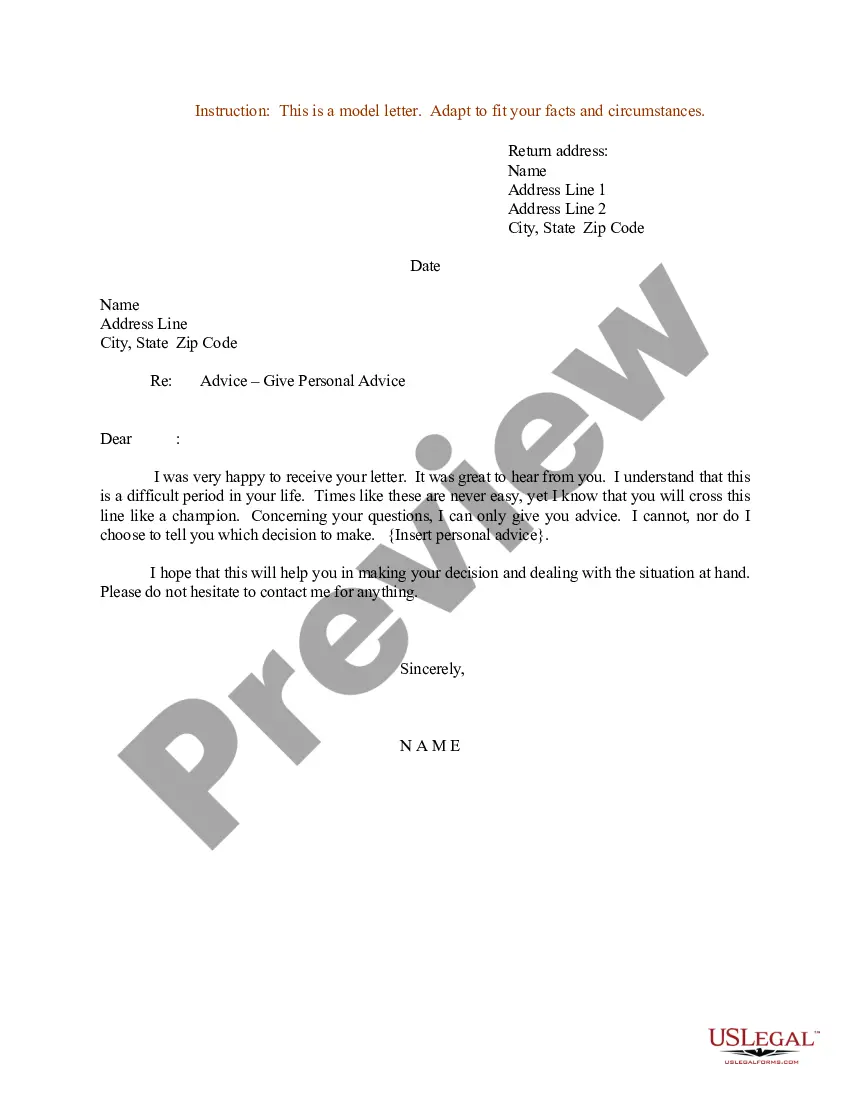
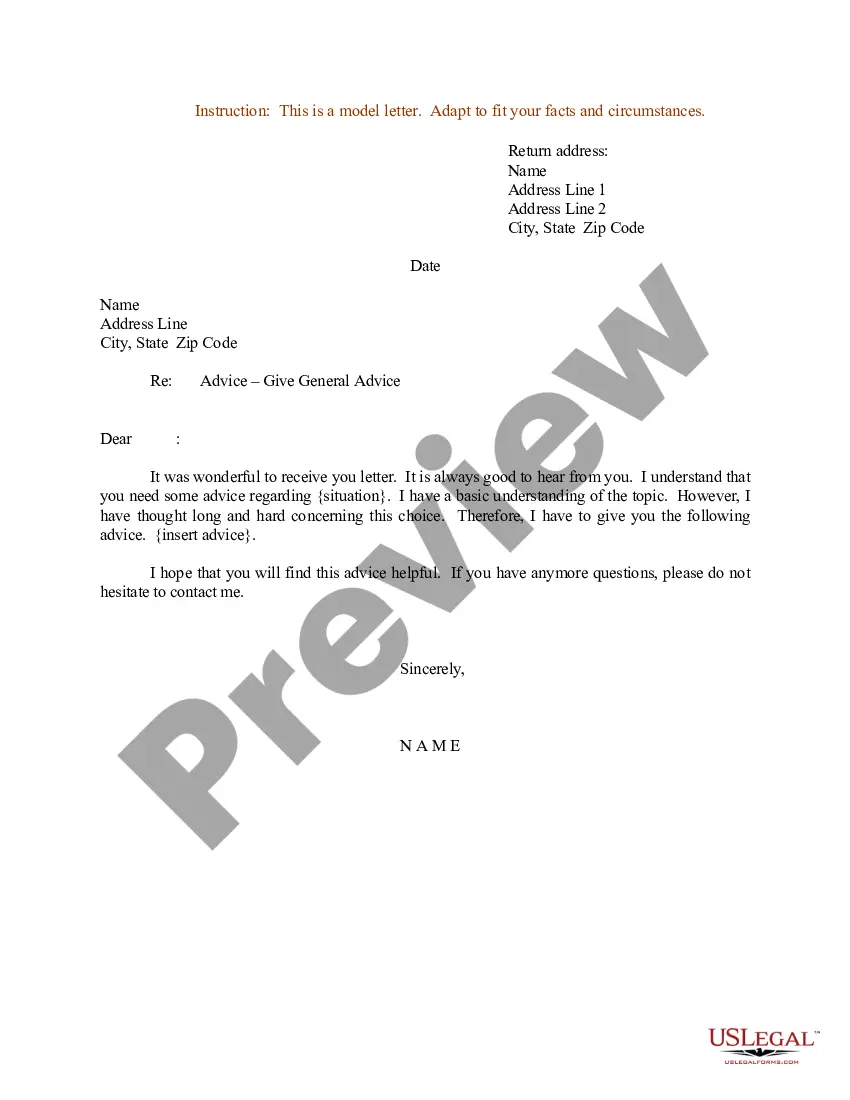
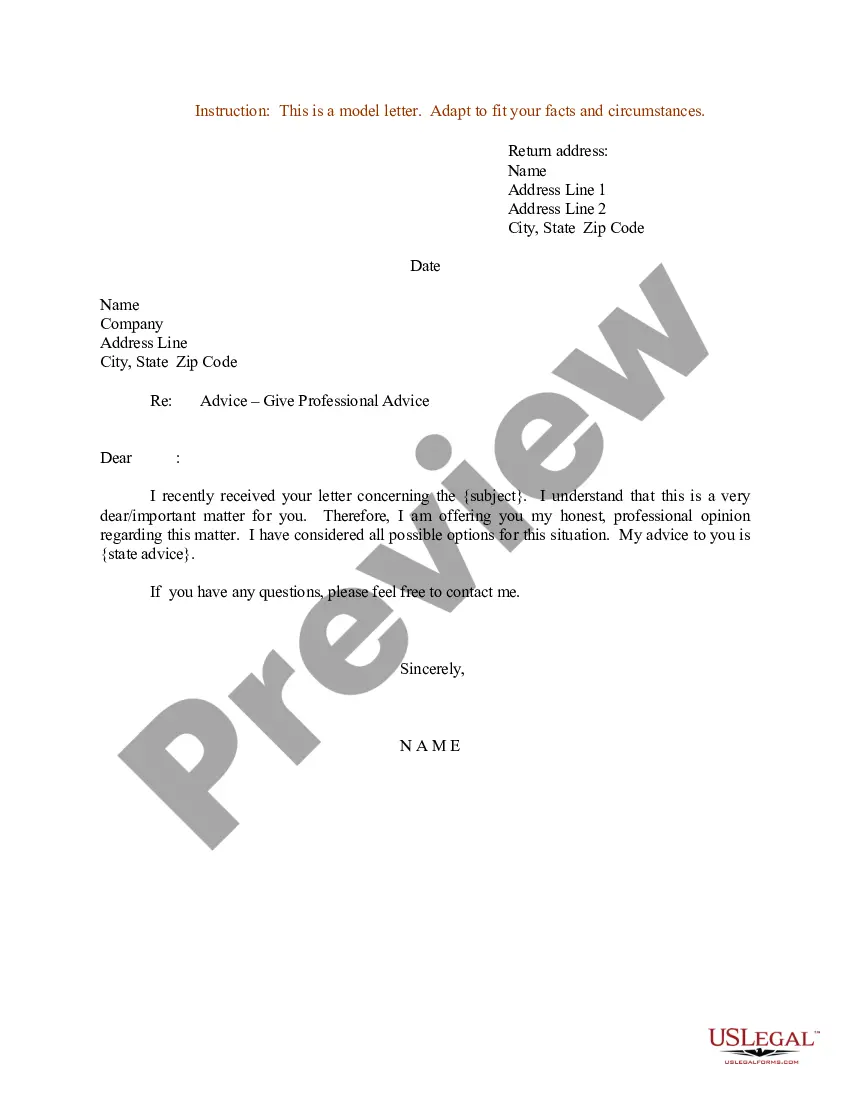
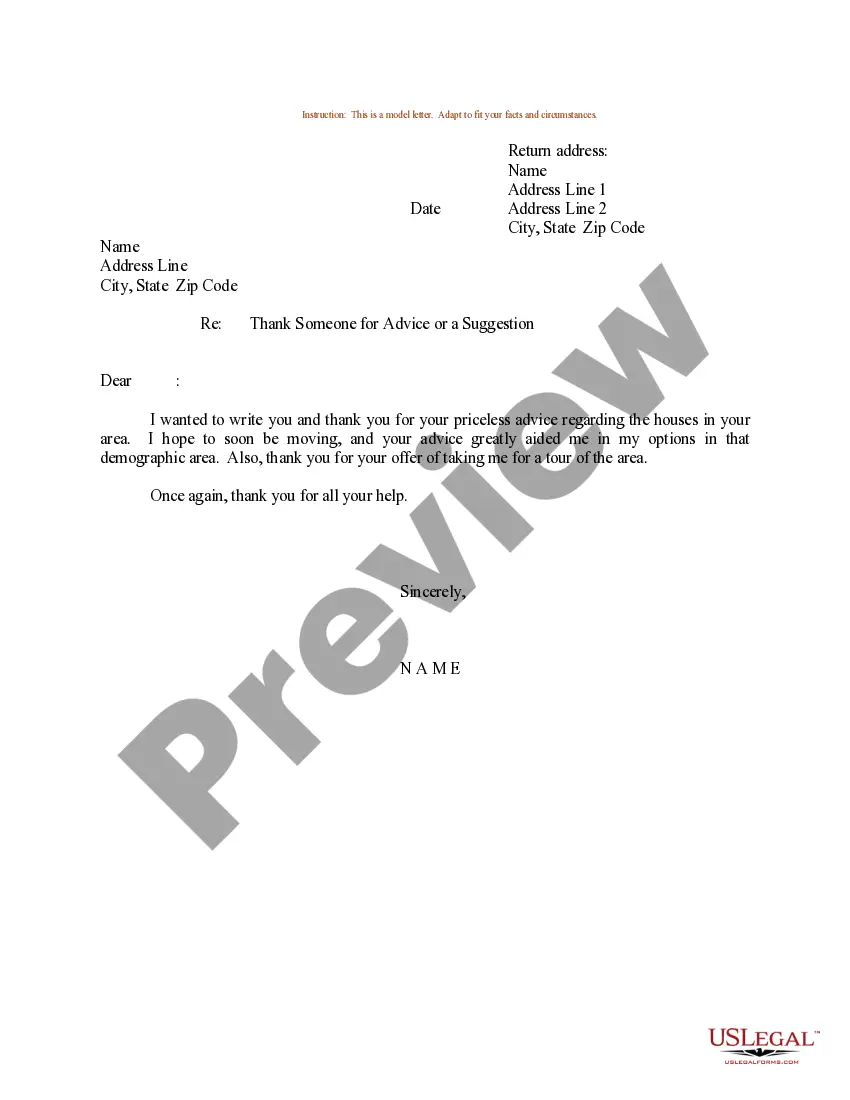
This Sample Letter for Offer Advice - Personal is a template designed to help individuals communicate personal advice effectively. It serves as a formal yet friendly way to offer guidance or support to someone who may need assistance with a specific decision or situation. Unlike other legal forms, this template focuses specifically on delivering personal advice in a letter format, making it easy to personalize and tailor according to the needs of the recipient.
What’s included in this form
- Return address: Sender's name and address
- Date: The date the letter is written
- Recipient's address: Name and address of the person receiving the letter
- Subject line: Clearly states the purpose of the letter
- Body: The main content offering personal advice
- Closing: A friendly sign-off and sender's name
Situations where this form applies
This form is useful when you want to offer personal advice to a friend, family member, or colleague. It may be appropriate in various situations, such as providing encouragement during a difficult time, sharing insights on a decision-making process, or simply reaching out to check on someoneâs well-being.
Intended users of this form
This form is intended for:
- Individuals looking to offer personal support or advice
- Friends or family members wishing to maintain communication during challenging times
- Anyone needing a structured way to express their thoughts in writing
Steps to complete this form
- Identify the parties: Fill in your name and address at the top of the letter.
- Enter the date: Write the date the letter is being sent.
- Specify the recipientâs information: Include the name and address of the person receiving the letter.
- Compose the body: Clearly write the advice or message you wish to convey.
- Finish with a closing statement: Sign off with a friendly greeting and your name.
Notarization requirements for this form
This form does not typically require notarization unless specified by local law. You can confidently use this format to share your advice without the need for a notary, making it quick and easy to send your message.
Get your form ready online
Our built-in tools help you complete, sign, share, and store your documents in one place.
Make edits, fill in missing information, and update formatting in US Legal Forms—just like you would in MS Word.
Download a copy, print it, send it by email, or mail it via USPS—whatever works best for your next step.
Sign and collect signatures with our SignNow integration. Send to multiple recipients, set reminders, and more. Go Premium to unlock E-Sign.
If this form requires notarization, complete it online through a secure video call—no need to meet a notary in person or wait for an appointment.
We protect your documents and personal data by following strict security and privacy standards.

Make edits, fill in missing information, and update formatting in US Legal Forms—just like you would in MS Word.

Download a copy, print it, send it by email, or mail it via USPS—whatever works best for your next step.

Sign and collect signatures with our SignNow integration. Send to multiple recipients, set reminders, and more. Go Premium to unlock E-Sign.

If this form requires notarization, complete it online through a secure video call—no need to meet a notary in person or wait for an appointment.

We protect your documents and personal data by following strict security and privacy standards.
Common mistakes to avoid
- Forgetting to include the return address or date.
- Using vague language that may confuse the recipient.
- Neglecting to proofread before sending to avoid typos.
Advantages of online completion
- Convenient access: Download and fill out the form from anywhere.
- Editability: Easily customize the text to fit your personal tone and message.
- Reliability: Templates are created by licensed attorneys for legal soundness.
Quick recap
- The Sample Letter for Offer Advice - Personal is ideal for providing supportive advice in a structured format.
- Personalize the letter to enhance sincerity and effectiveness.
- Avoid common mistakes to ensure your message is clear and impactful.
Looking for another form?

Form popularity
FAQ
Business acquaintances, teachers, professors or academic advisors, volunteer leaders, religious workers, friends, coaches, and neighbors are all potential personal references. If possible, don't choose someone who you've only had limited or casual interactions with.
Address the Seller By Name. Highlight What You Like Most About the Home. Share Something About Yourself. Throw in a Personal Picture. Discuss What You Have in Common. Keep it Short. Close the Letter Appropriately.
Start by explaining your relationship to the candidate. Include long you've known the candidate. Add positive personal qualities with specific examples. Close with a statement of recommendation. Offer your contact information.
Asking for advice. I am writing to ask if you could help me with 2026. I would appreciate it if you could give me some advice about 2026. I am writing to ask for your advice /I would be grateful if you could offer your advice 2026. Could you possibly offer your advice 2026.. I wonder if you could help me with a problem, etc.
In your letter, include information on how you know the person. As well, share details about the person's morals and values, experience, or background as is applicable to the situation. If, for example, you are writing for a college student applying for a fellowship, you'll want to emphasize their academic talents.
Always put an offer in writing. The offer needs to be in writing so an email or letter is fine. Add 'subject to contract' to any offer in writing. Include as much detail as possible. Be as flexible as possible on timing. Use evidence to back up your price.
Many experts recommend writing a personal offer letter to the seller. If there are multiple offers, we always suggest buyers write a letter of introduction as a way to put a personality behind the number, says Josh Rubin, a broker at Douglas Elliman in New York City. After all, selling is an emotional process.
Address the Seller By Name. Highlight What You Like Most About the Home. Share Something About Yourself. Throw in a Personal Picture. Discuss What You Have in Common. Keep it Short. Close the Letter Appropriately.
Build a Connection. Keep It Short. Stay Positive. Show, Don't Tell. Leave Out Remodeling Plans. Finish Strong. Proofread It. The Bottom Line.