Mississippi Doctor Affidavit
What this document covers
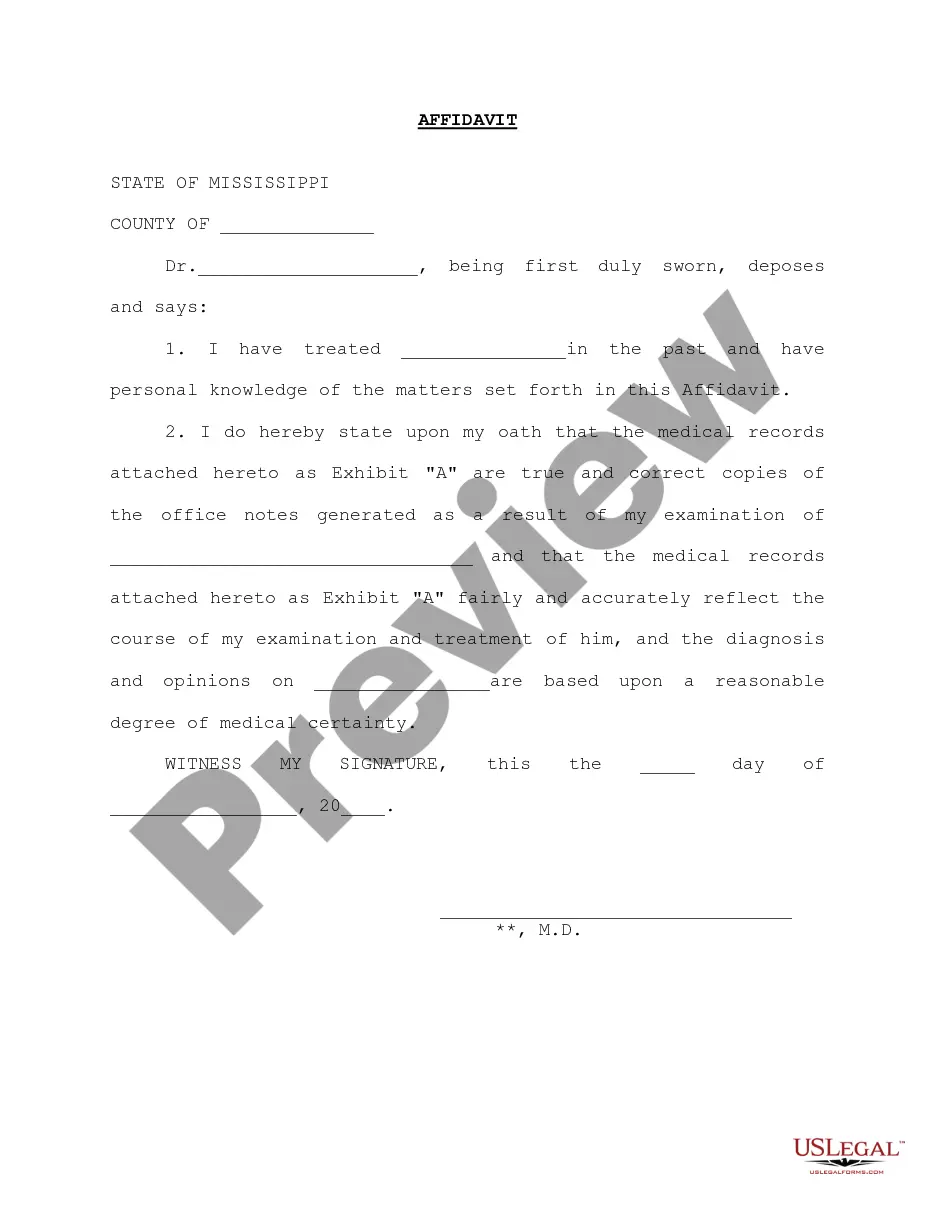
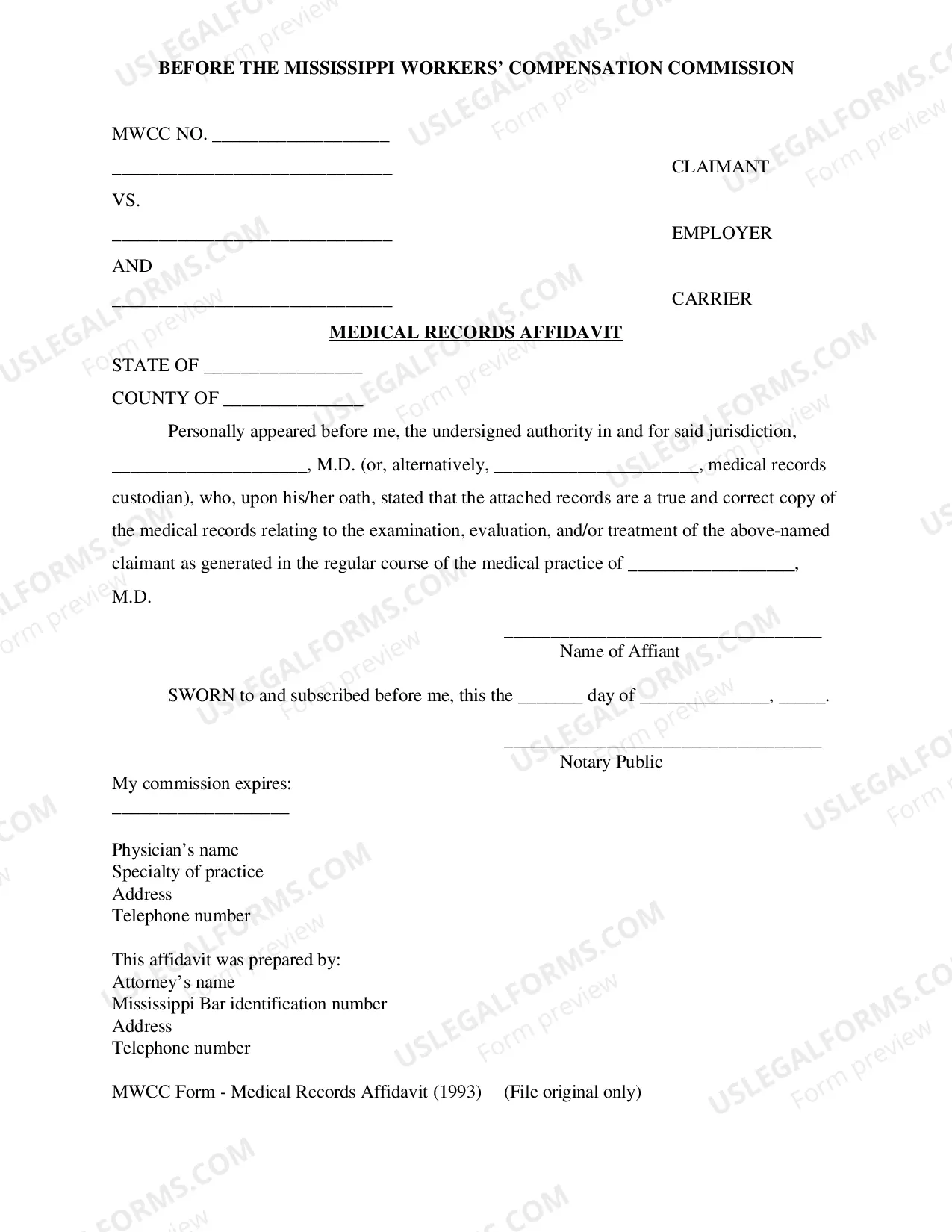
The Doctor Affidavit is a legal document in which a physician provides a sworn statement about a patient's medical condition and treatment. This form serves as formal evidence in legal proceedings and verifies the accuracy of the attached medical records. Unlike other affidavits, the Doctor Affidavit specifically focuses on medical facts and the physician's professional observations.
What’s included in this form
- Identifying information of the doctor and patient.
- A sworn statement by the doctor regarding their examination and treatment of the patient.
- Verification of attached medical records as true and correct copies.
- Signature of the doctor, affirming the affidavit's contents.
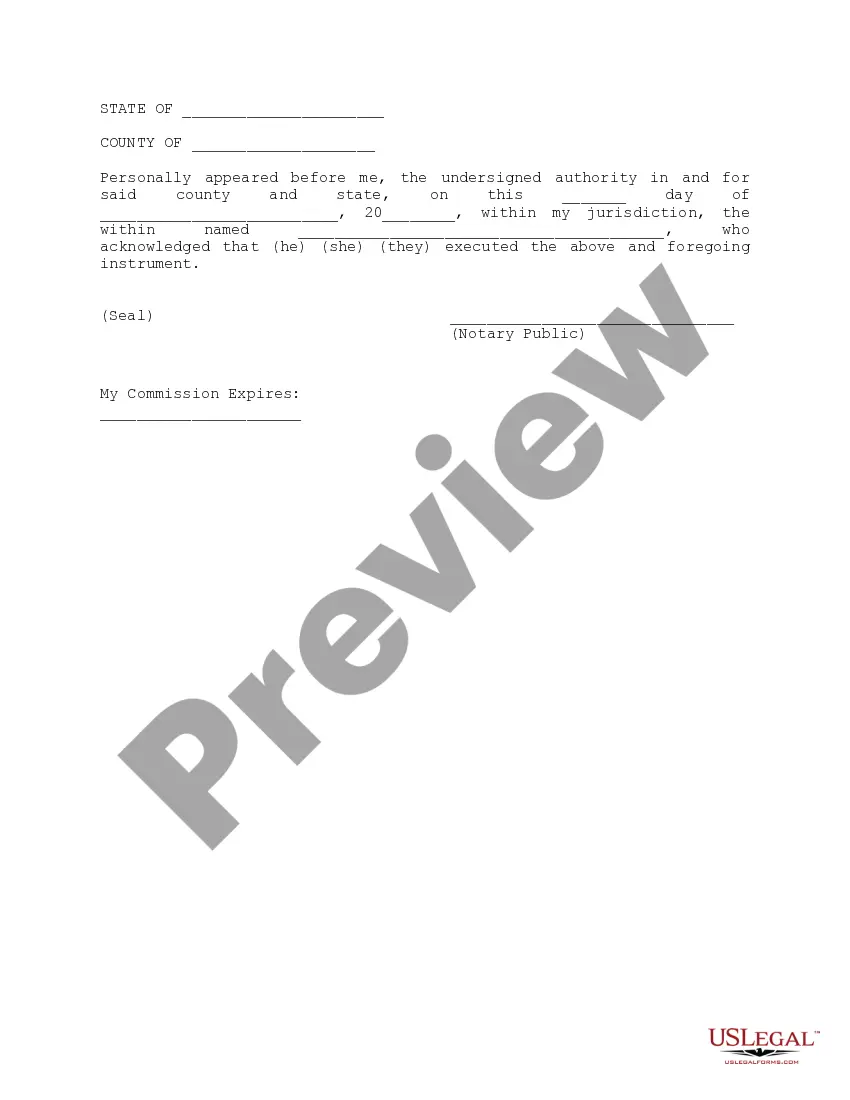
- Signature of a Notary Public to validate the affidavit's execution.
When to use this document
You may need to use the Doctor Affidavit in various situations, including but not limited to: when providing evidence for court cases, such as personal injury claims; when verifying a patient's medical status for disability applications; or when the law requires a sworn medical statement regarding a specific condition. This affidavit is essential in confirming the physician's insights and findings.
Who should use this form
- Doctors treating patients who require legal documentation of their medical condition.
- Patients needing to provide proof of medical status in legal or administrative contexts.
- Legal representatives seeking to collect and present medical evidence in cases involving health-related matters.
Instructions for completing this form
- Enter the administering doctor's name and their medical qualifications.
- Fill in the name of the patient being examined.
- Attach the relevant medical records and refer to them as Exhibit A.
- State the doctor's sworn statement about the accuracy of the attached records.
- Sign and date the affidavit in the presence of a Notary Public.
Is notarization required?
This form needs to be notarized to ensure legal validity. US Legal Forms provides secure online notarization powered by Notarize, allowing you to complete the process through a verified video call, available anytime.
Get your form ready online
Our built-in tools help you complete, sign, share, and store your documents in one place.
Make edits, fill in missing information, and update formatting in US Legal Forms—just like you would in MS Word.
Download a copy, print it, send it by email, or mail it via USPS—whatever works best for your next step.
Sign and collect signatures with our SignNow integration. Send to multiple recipients, set reminders, and more. Go Premium to unlock E-Sign.
If this form requires notarization, complete it online through a secure video call—no need to meet a notary in person or wait for an appointment.
We protect your documents and personal data by following strict security and privacy standards.

Make edits, fill in missing information, and update formatting in US Legal Forms—just like you would in MS Word.

Download a copy, print it, send it by email, or mail it via USPS—whatever works best for your next step.

Sign and collect signatures with our SignNow integration. Send to multiple recipients, set reminders, and more. Go Premium to unlock E-Sign.

If this form requires notarization, complete it online through a secure video call—no need to meet a notary in person or wait for an appointment.

We protect your documents and personal data by following strict security and privacy standards.
Common mistakes to avoid
- Not updating the affidavit with the latest medical records.
- Failing to have the affidavit notarized, which may invalidate it.
- Leaving sections incomplete or unclear, leading to confusion during legal proceedings.
Benefits of using this form online
- Convenient access to downloadable templates for immediate use.
- Editability allows customization to fit specific patient scenarios.
- Reliability and assurance that forms are drafted by licensed attorneys.
Looking for another form?

Form popularity
FAQ
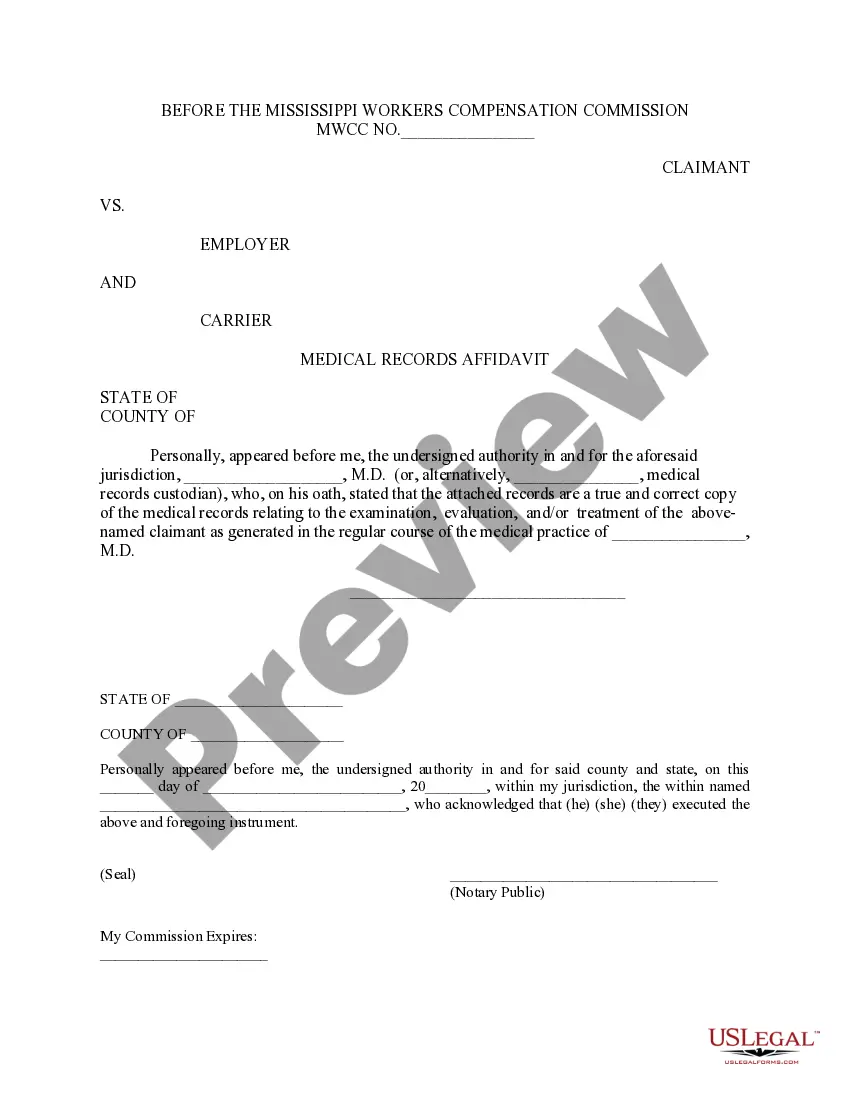
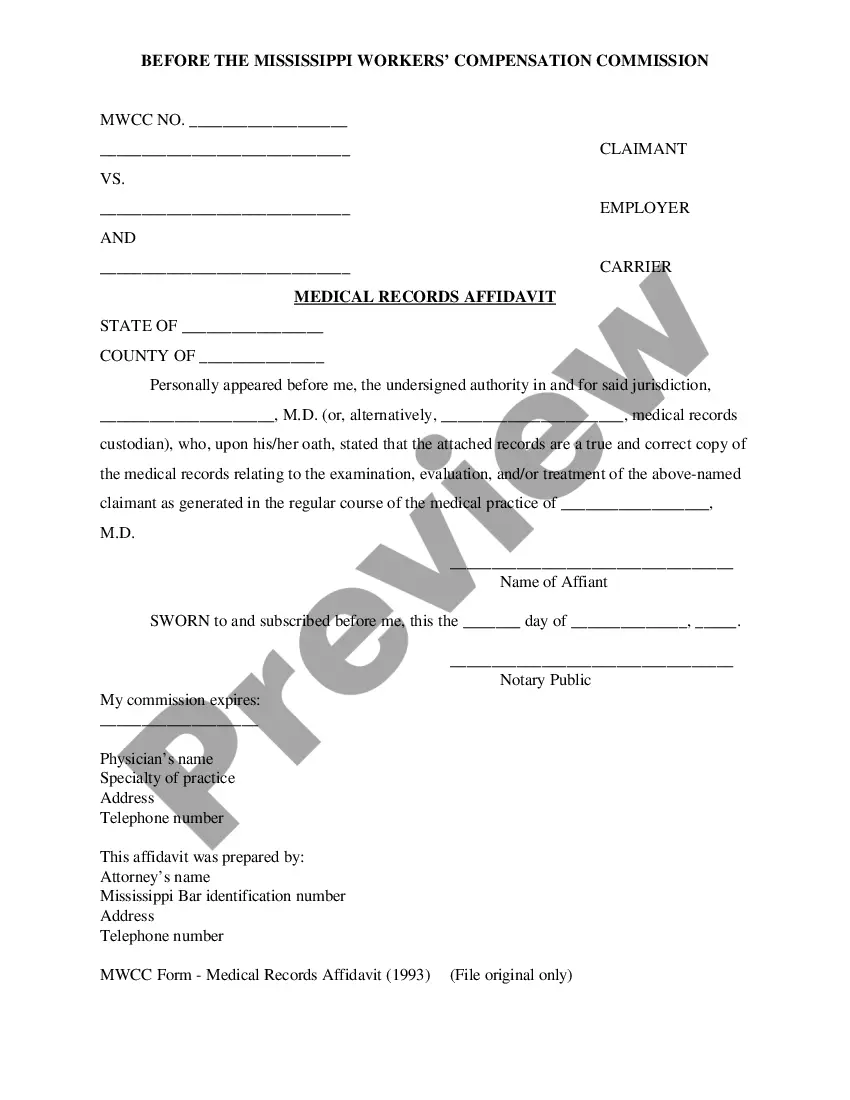
The Mississippi Doctor Affidavit is a sworn statement by a physician about a patient’s medical condition and treatment, used as formal evidence in legal proceedings and to verify attached medical records. It focuses on medical facts and professional observations in Mississippi workers’ compensation contexts, and includes identifying information for the doctor and patient, a sworn statement, verified medical records, and signatures by the doctor and a Notary Public.
Identifying information of the doctor and patient is included to establish who authored the sworn statement and who it concerns. This helps align the affidavit with the correct patient file and case, ensuring the document can be properly linked to the medical history and the relevant legal matter.
The doctor swears to their examination and treatment of the patient, providing professional observations about the medical condition and care. The statement also notes that the attached medical records are true and correct copies, forming an evidentiary package for review.
Verifying that attached medical records are true and correct copies helps ensure the evidentiary integrity of the medical information presented, supports the doctor’s sworn statements, and provides a reliable basis for the court or agency reviewing the case.
The doctor signs to affirm the contents of the affidavit, and a Notary Public signs to validate its execution. The notary’s signature confirms authenticity and proper witnessing for use in legal proceedings in Mississippi.
This form is designed for Mississippi workers’ compensation contexts, requiring a doctor’s sworn statement, the verification of attached records, and both the doctor’s and a Notary Public signatures. It emphasizes medical facts and professional observations specific to the Mississippi case rather than generic medical affidavits.