Massachusetts Marital Domestic Separation and Property Settlement Agreement Minor Children Parties May have Joint Property or Debts effective Immediately
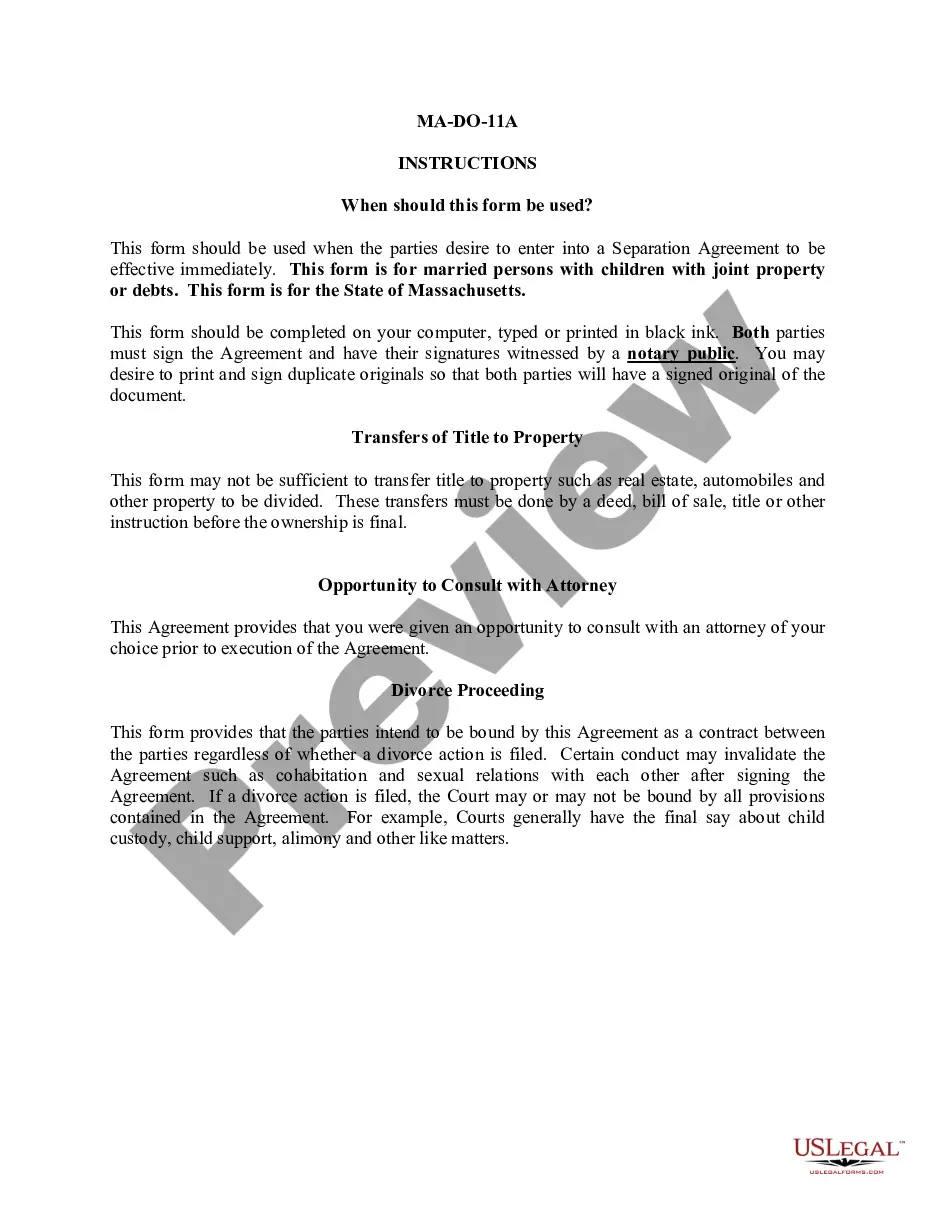
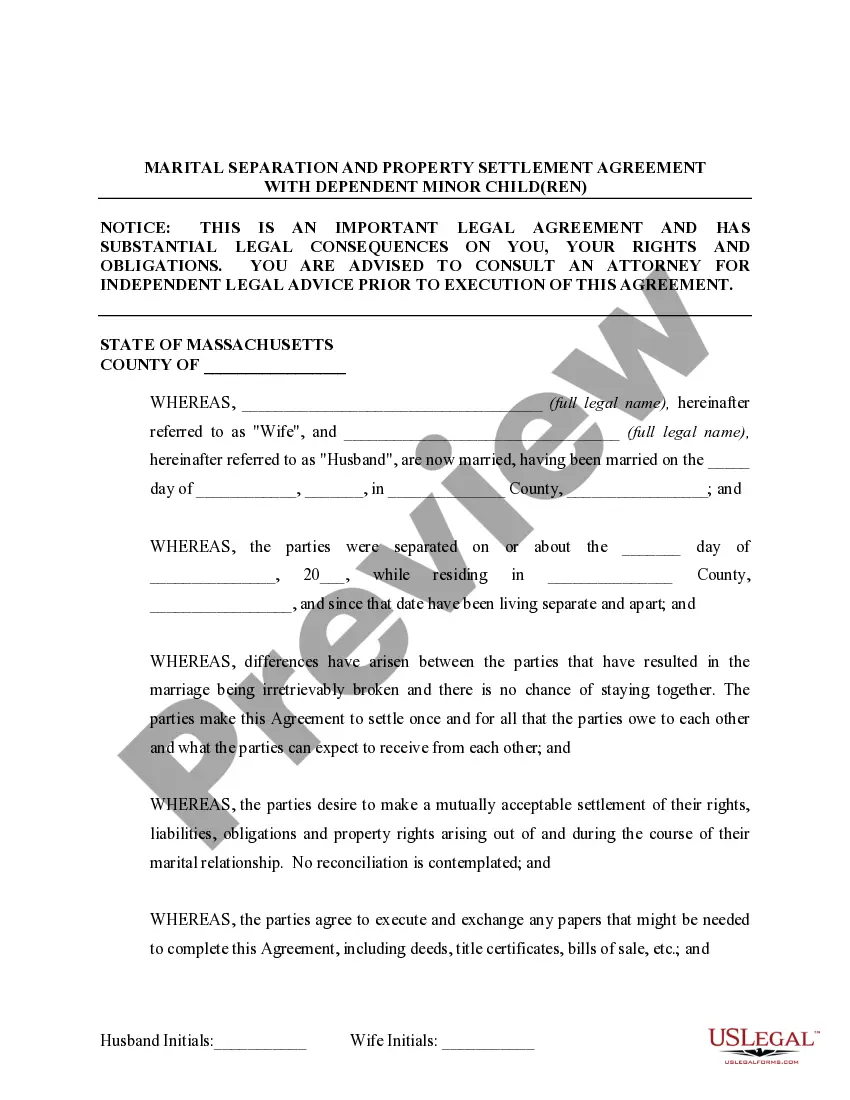
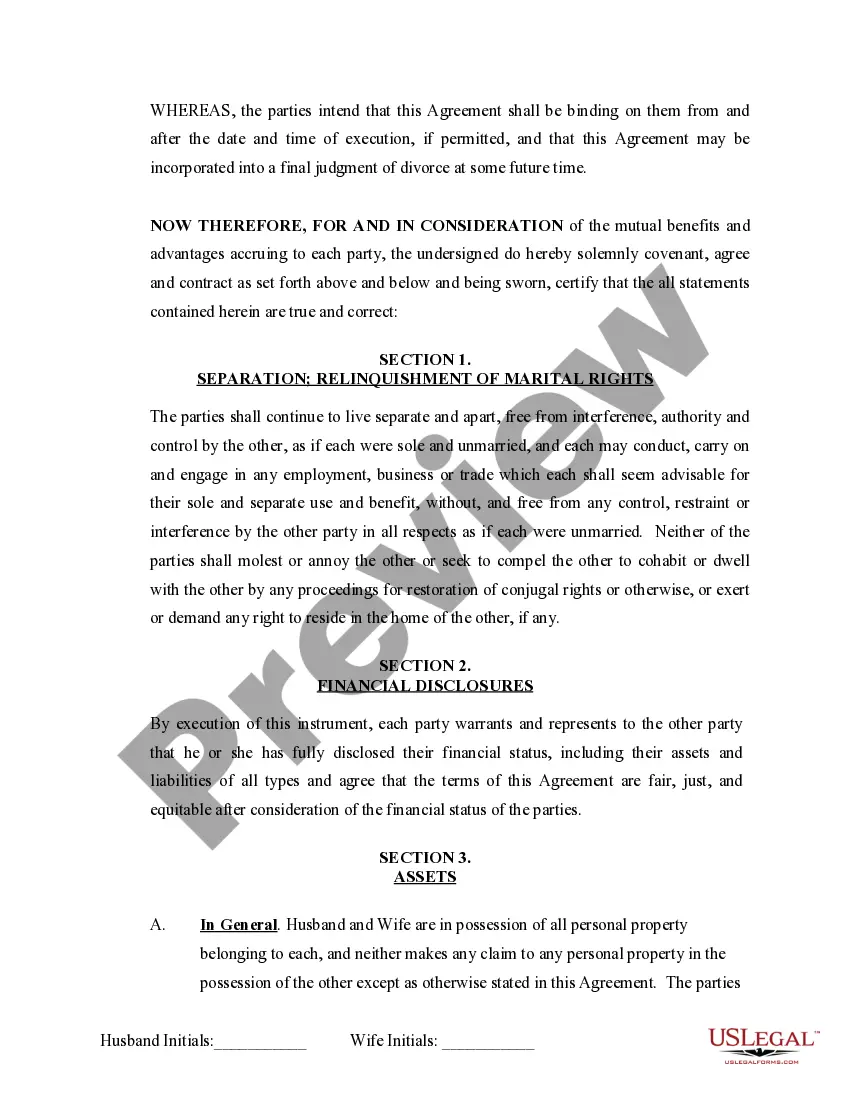
Overview of this form
This Marital Domestic Separation and Property Settlement Agreement is a legal document designed for married couples who share minor children and have joint property or debts. It serves to outline the terms of separation, asset division, and custody arrangements, becoming effective immediately upon signing. This document may later be integrated into a divorce decree, establishing the terms agreed upon by both parties in a legally binding manner.
What’s included in this form
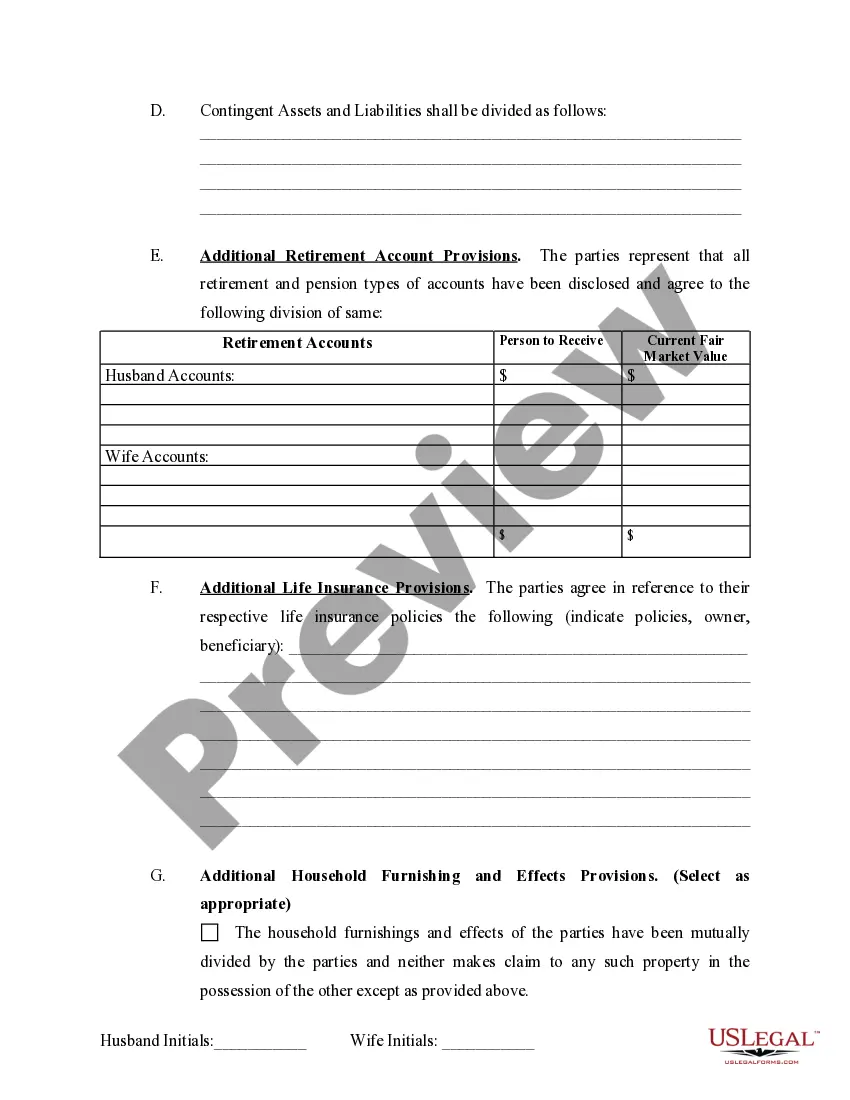
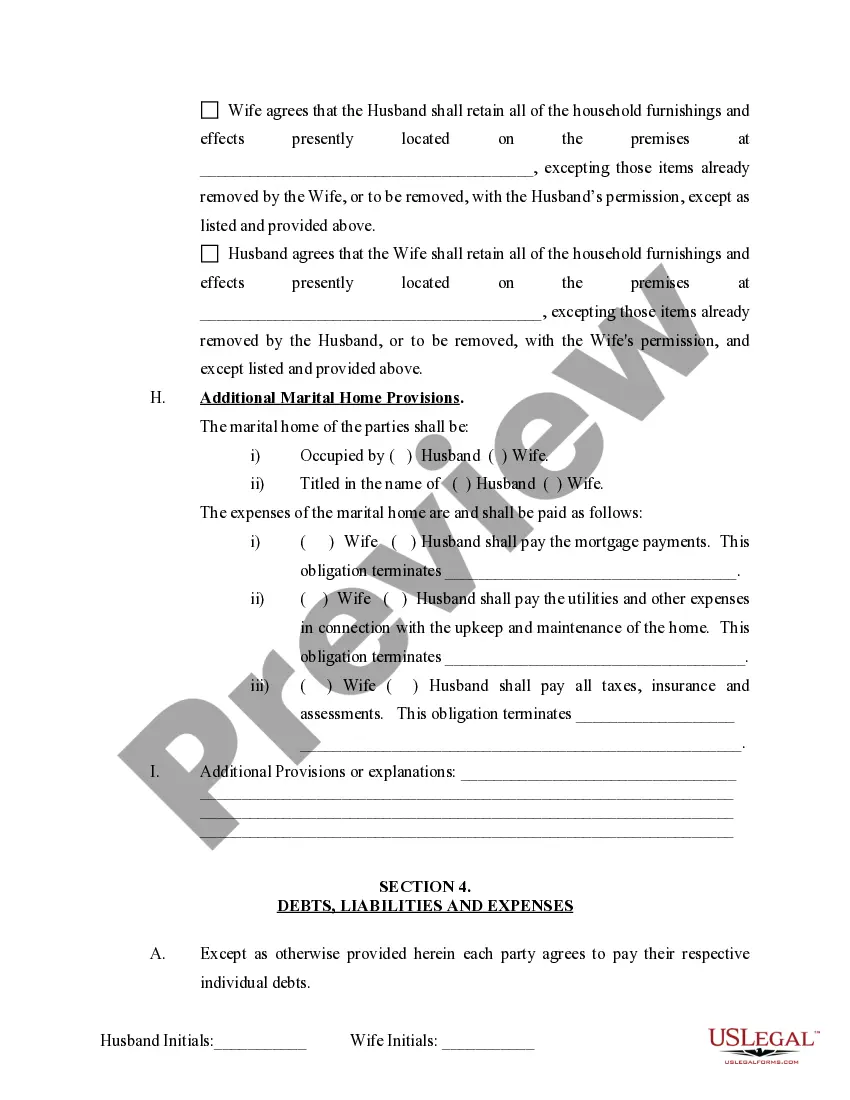
- Separation and Property Settlement: Details how the parties will live separately and manage their rights and responsibilities.
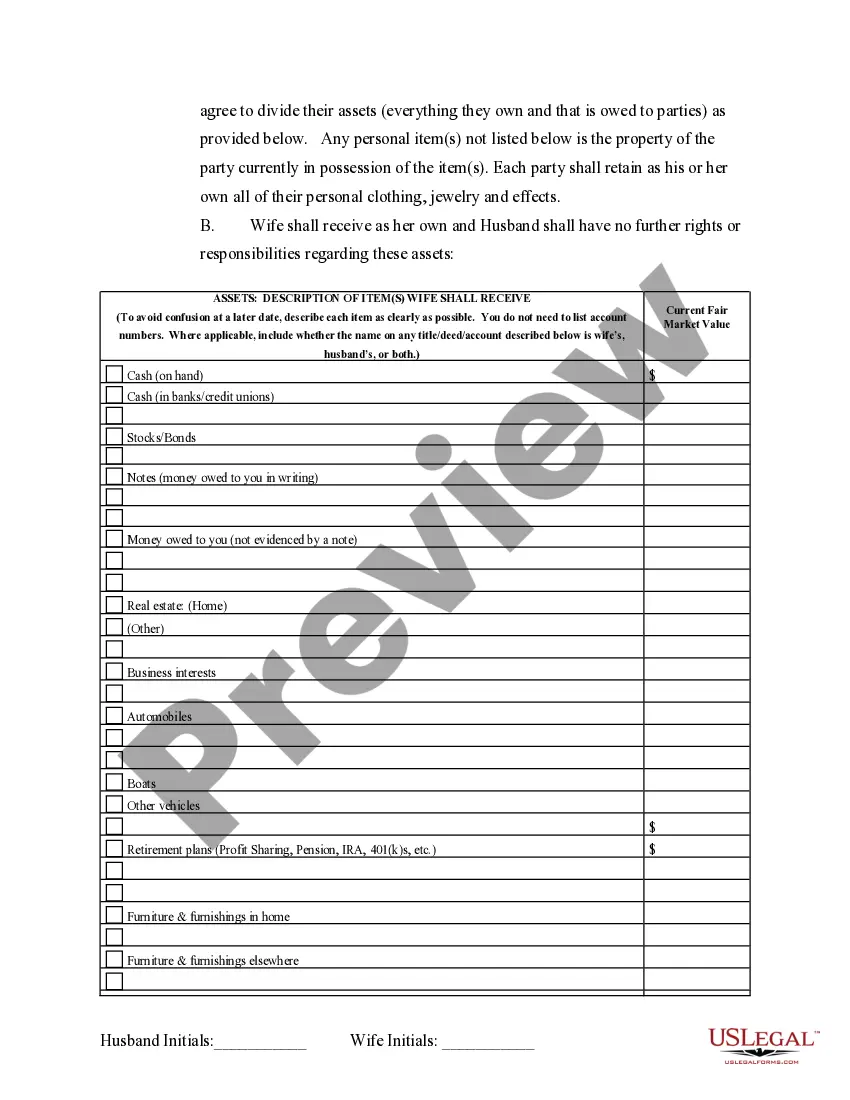
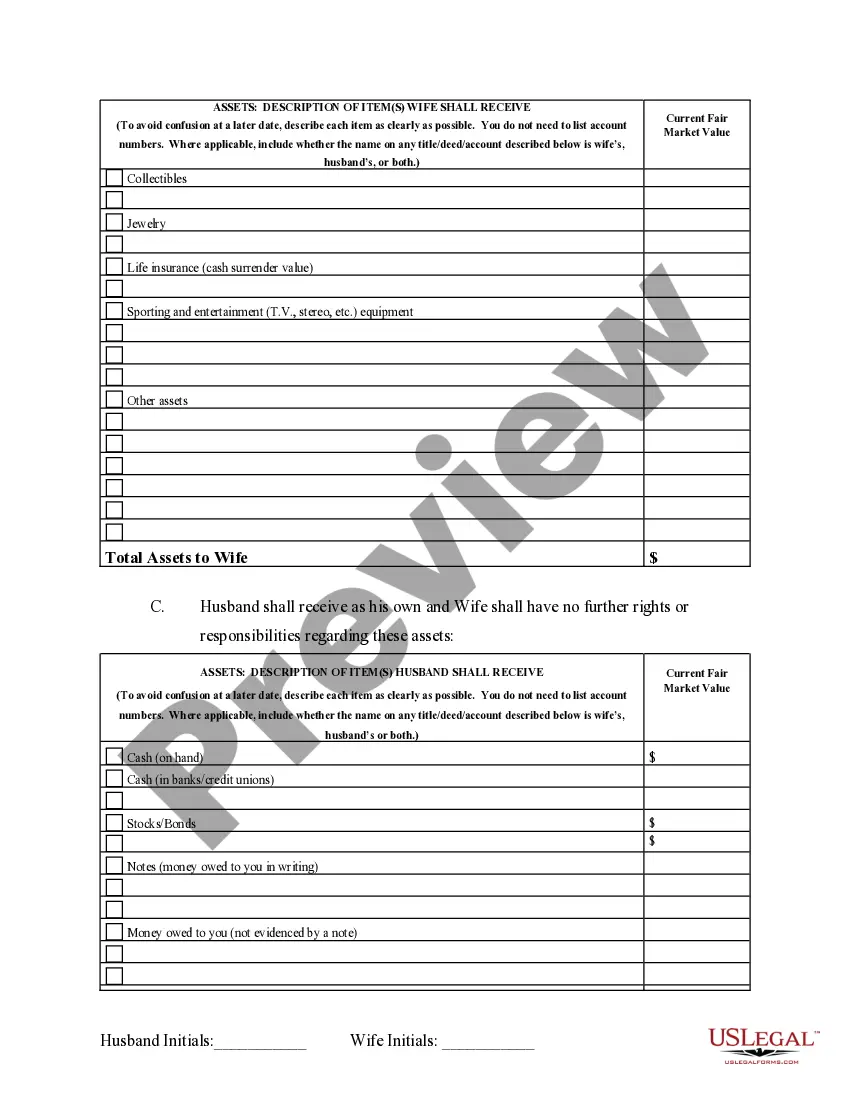
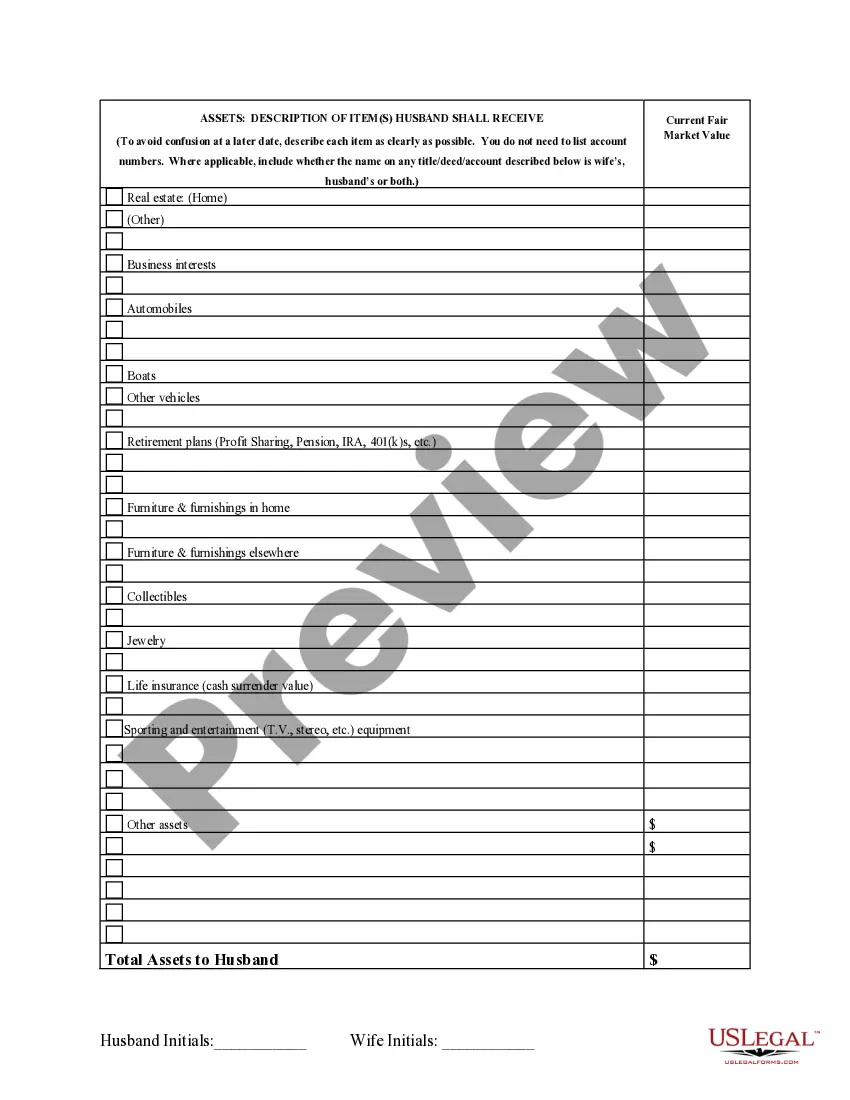
- Asset Division: Specifies how joint property, including real estate and personal possessions, will be divided.
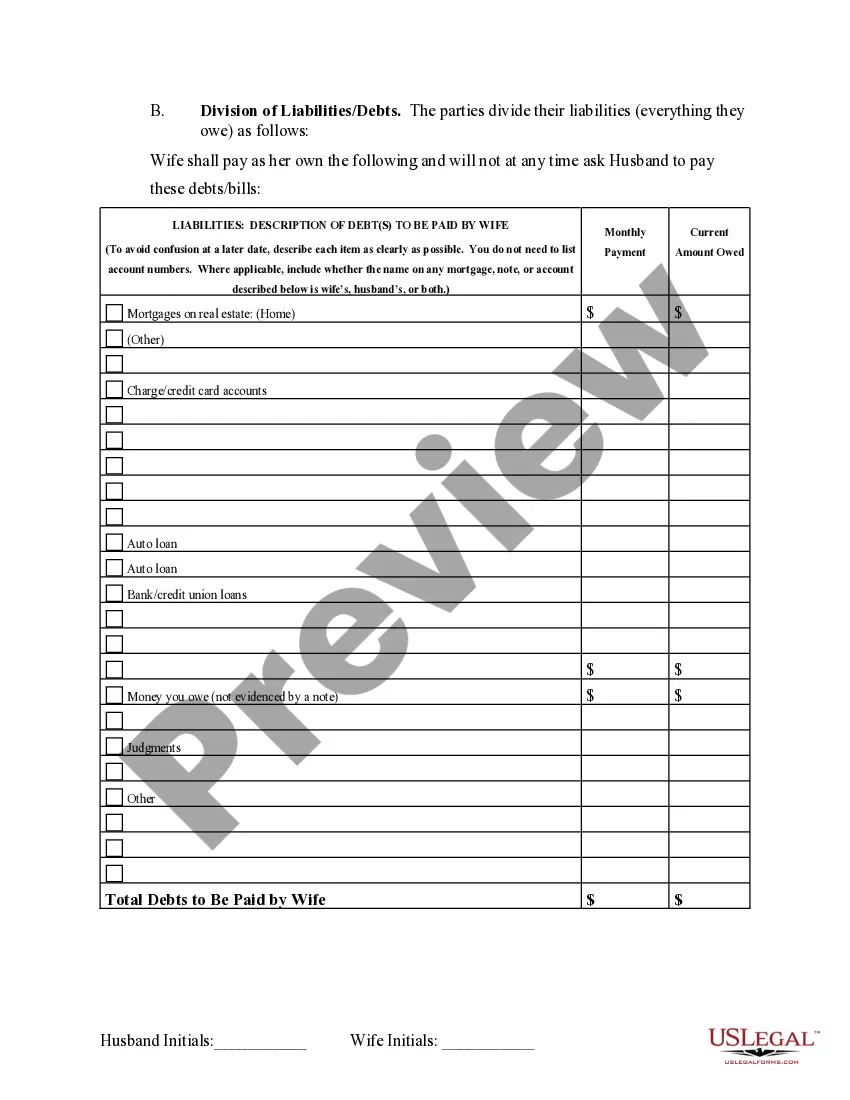
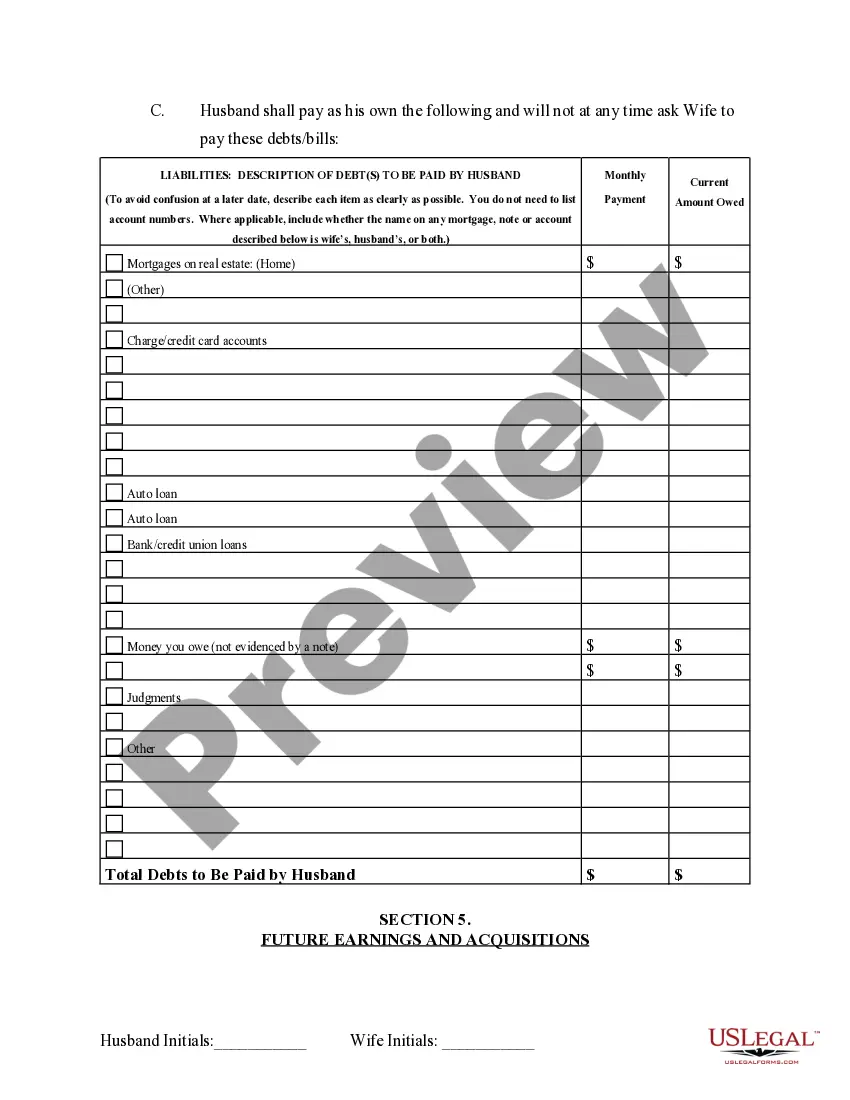
- Liabilities Allocation: Outlines how debts and financial obligations are shared or assigned to each party.
- Child Custody and Support: Defines custody arrangements for minor children, including visitation rights and child support payments.
- Alimony Provisions: Addresses any potential spousal support obligations, if applicable.

Common use cases
This form should be utilized when a married couple with minor children decides to separate and wishes to establish legally binding agreements regarding their finances, property, and custodial arrangements. It is particularly pertinent when both parties are in agreement and want to clarify their responsibilities and rights while ensuring the best interests of the children are prioritized during the separation period.
Who this form is for
Eligibility for this form includes:
- Married individuals seeking legal separation while having minor children.
- Couples who share joint property or debts and need clarity on financial obligations.
- Parties looking to outline various aspects of custody and child support before filing for divorce.
Completing this form step by step
To complete this form, follow these steps:
- Identify the parties involved by entering full legal names.
- Specify the assets, debts, and property each party is entitled to in the appropriate sections.
- Detail child custody arrangements, including visitation schedules and support obligations.
- Include signatures from both parties along with a notary public to validate the agreement.
- Make copies for each party to retain a signed original document.
Notarization guidance
Yes, this form must be notarized to be legally valid. Having the signatures witnessed by a notary public helps ensure that the agreement is enforceable in court. US Legal Forms provides integrated online notarization, making it easy to complete this step securely through video conferencing, available 24/7, without needing to travel.
Get your form ready online
Our built-in tools help you complete, sign, share, and store your documents in one place.
Make edits, fill in missing information, and update formatting in US Legal Forms—just like you would in MS Word.
Download a copy, print it, send it by email, or mail it via USPS—whatever works best for your next step.
Sign and collect signatures with our SignNow integration. Send to multiple recipients, set reminders, and more. Go Premium to unlock E-Sign.
If this form requires notarization, complete it online through a secure video call—no need to meet a notary in person or wait for an appointment.
We protect your documents and personal data by following strict security and privacy standards.

Make edits, fill in missing information, and update formatting in US Legal Forms—just like you would in MS Word.

Download a copy, print it, send it by email, or mail it via USPS—whatever works best for your next step.

Sign and collect signatures with our SignNow integration. Send to multiple recipients, set reminders, and more. Go Premium to unlock E-Sign.

If this form requires notarization, complete it online through a secure video call—no need to meet a notary in person or wait for an appointment.

We protect your documents and personal data by following strict security and privacy standards.
Common mistakes to avoid
- Failing to fully disclose financial information, which could lead to disputes later.
- Not specifying all joint assets or debts, which may result in misunderstandings.
- Neglecting to have signatures notarized, which is essential for the agreement's validity.
- Overlooking specific provisions regarding child custody and support that may be required by the court.
Benefits of completing this form online
- Convenience of downloading and completing the form at your own pace.
- Editability allows for easy modifications to suit individual circumstances.
- Access to reliable templates drafted by licensed attorneys, ensuring legal compliance.
Quick recap
- The agreement is crucial for couples with minor children who are separating or seeking a divorce.
- It clarifies property division, custody, and support obligations, minimizing conflict.
- This form is specific to Massachusetts and must be completed and notarized for validity.
Looking for another form?

Form popularity
FAQ
The main reasons for divorce or separation agreements to be set aside include duress, coercion, unconscionability, mistake and lack of complete financial disclosure. These are mistakes that are often made when there has been no independent legal advice.
What Rights do Spouses Have During Separation? In a legal separation proceeding, a court can decide matters such as child custody and support, alimony and property division. However, as stated above, the spouses will remain legally married and cannot remarry unless and until they get a divorce.
Number two: It must be signed by both parties. A separation agreement that's not signed by the husband and the wife is not an agreement. You have to have the signatures of both people. And the documents are typically signed in duplicate, meaning we sign two copies at the same time.
Yes, it is mandatory. Each party must obtain independent legal advice prior to signing a separation agreement. You also cannot use the same lawyer and should not use the same law firm. If you fail to obtain advice from a lawyer, the separation agreement will be unenforceable.
The spouses' right to live separately. Custody of the children. A visitation schedule, or a provision for reasonable visitation. Child support. Alimony or spousal support. The children's expenses, including medical, dental, educational and recreational. Property and debt division. Insurance, including medical, dental and life.
Separation agreement is a general term used to describe a written contract that spouses enter into to address some or all issues arising from their marital separation.Therefore, if a spouse refuses to sign a separation agreement, the other spouse cannot force the unwilling spouse to do so.
Your divorce settlement agreement should cover everything that is important to you, including custody of your children, child support payments, alimony, and the separation of your property, such as your family home, vehicles, and other assets.
Rights to Property after Separation: When You're Married and Getting a Divorce. The benefit of getting married is that, in the event of a divorce or separation, you are entitled to a share of the property.The right to stay in your home unless a court order excludes it.
#1. Start with the Basics. #2. Include the Details. #3. Confirm Your Agreement. #4. Identify and Divide Assets and Debts. #5. Create a Parenting Plan for Custody and Visitation. #6. Agree on Child Support and Spousal Support (Alimony) #7. Polishing Your Agreement. Conclusion.