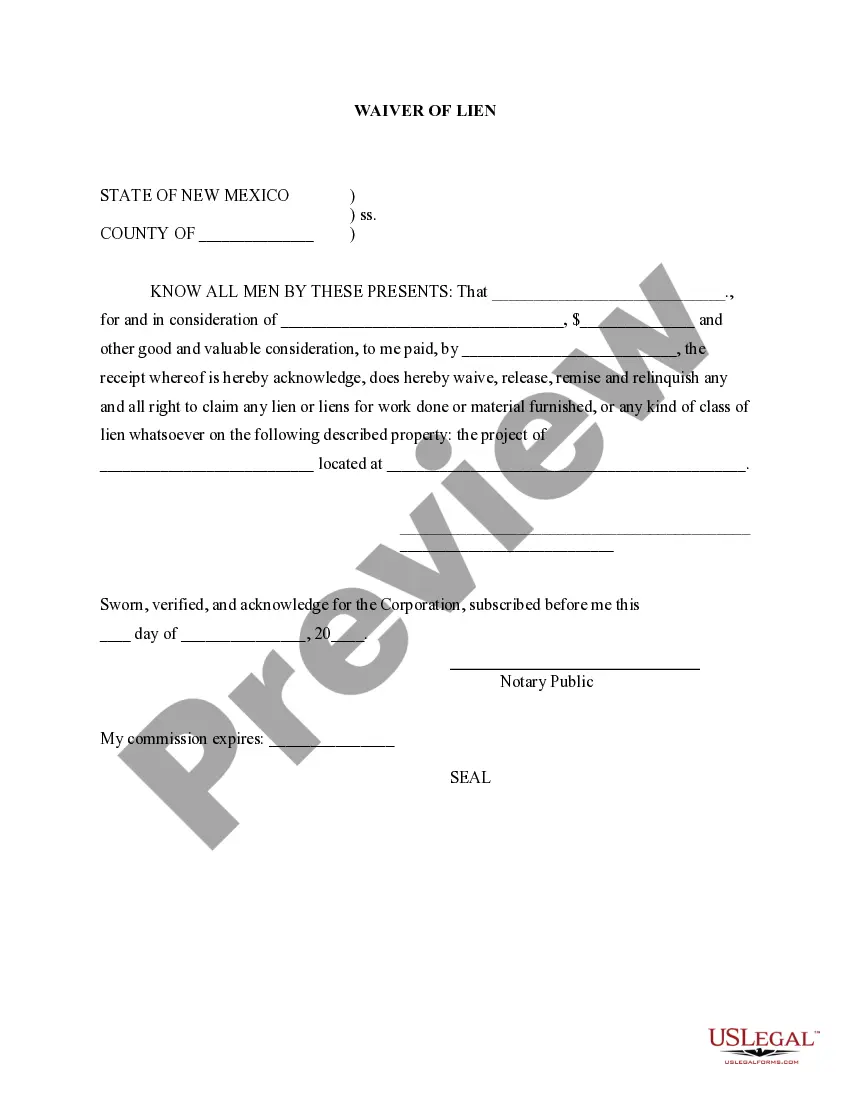
New Mexico Waiver of Lien
What is this form?
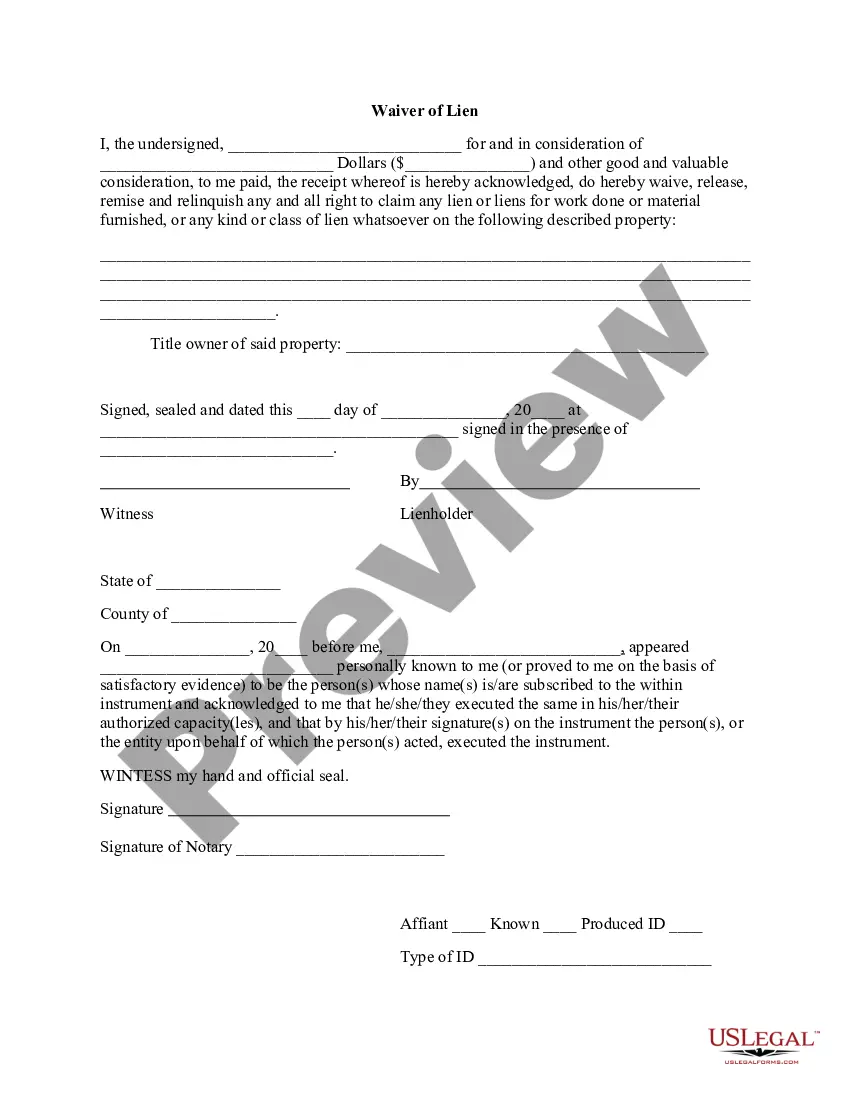
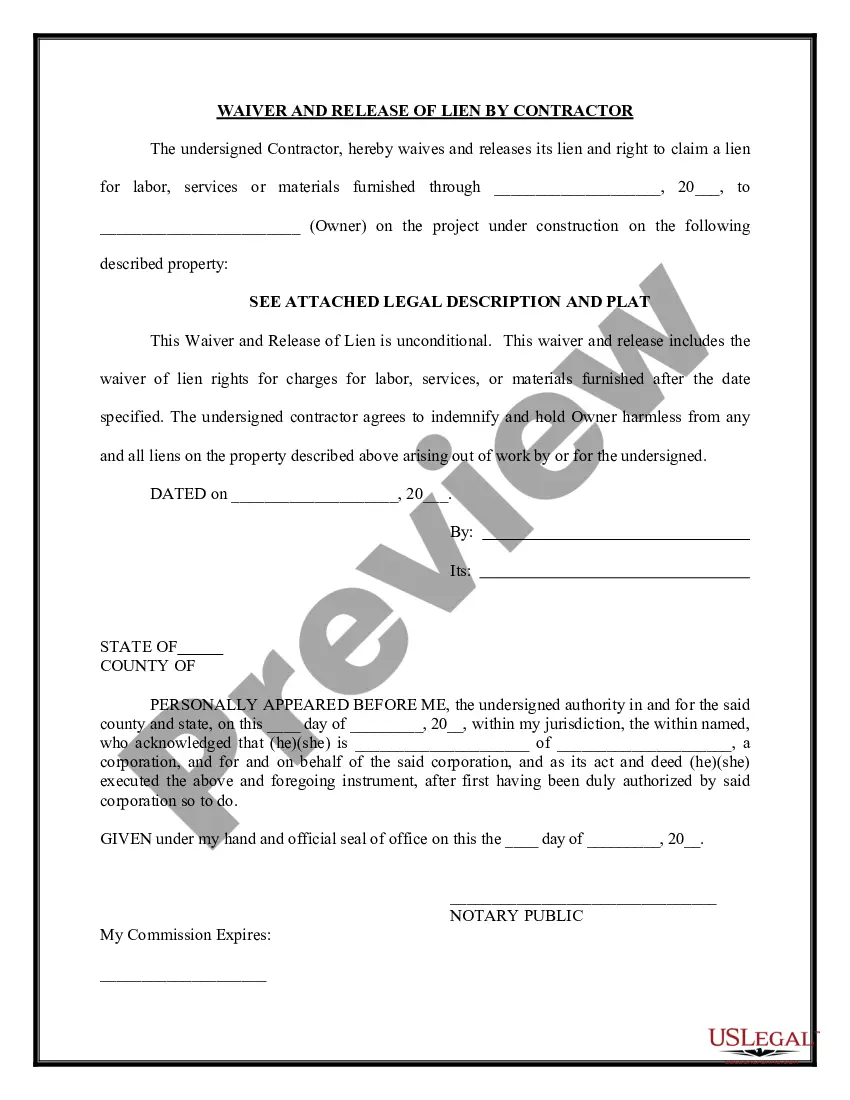
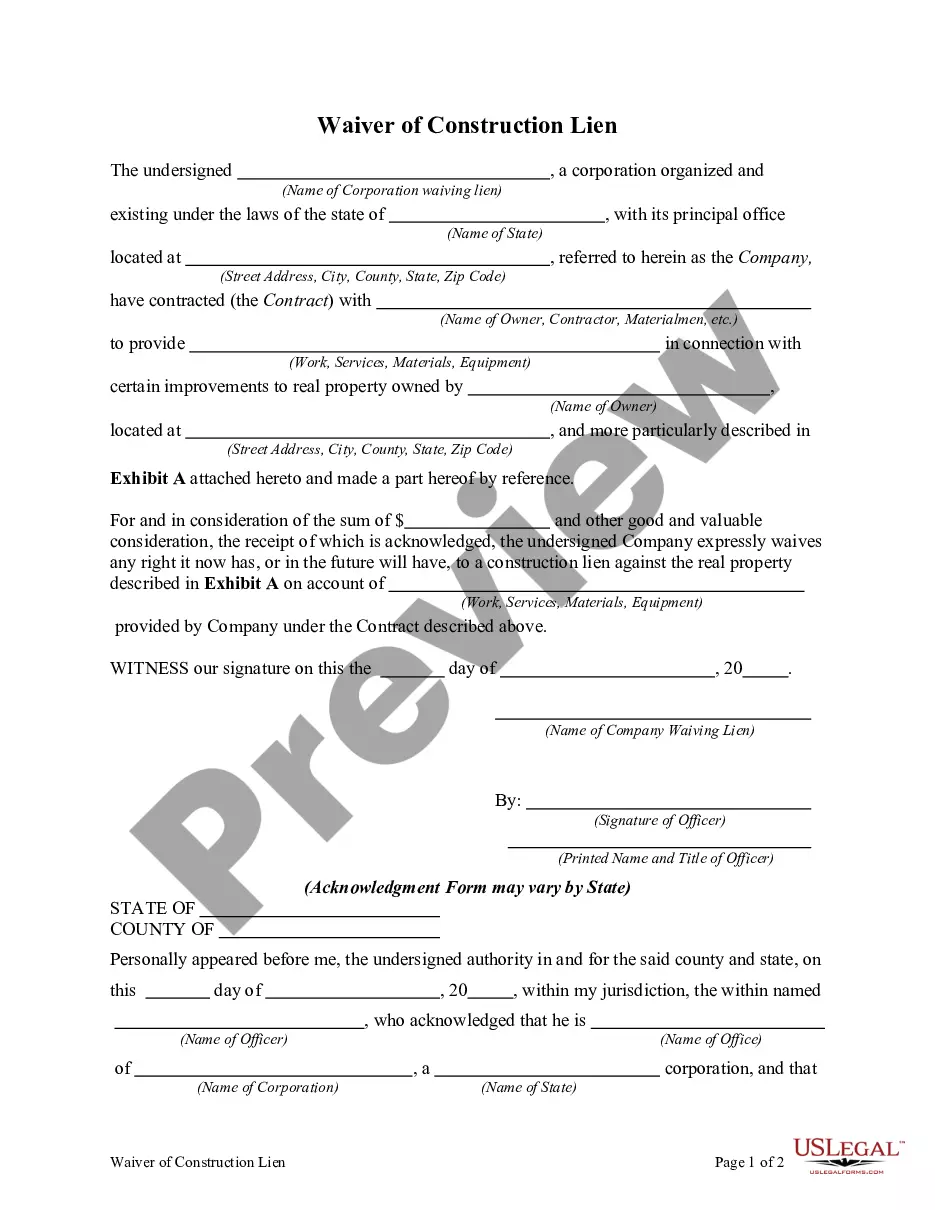
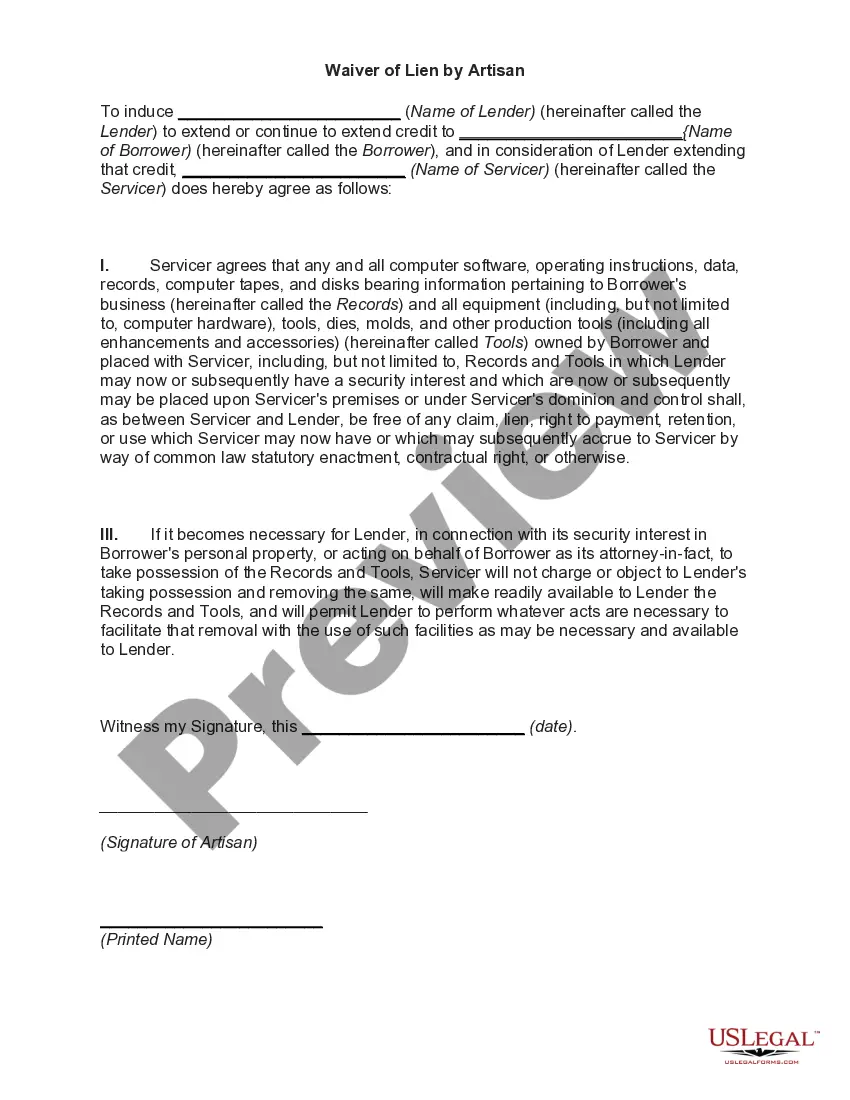
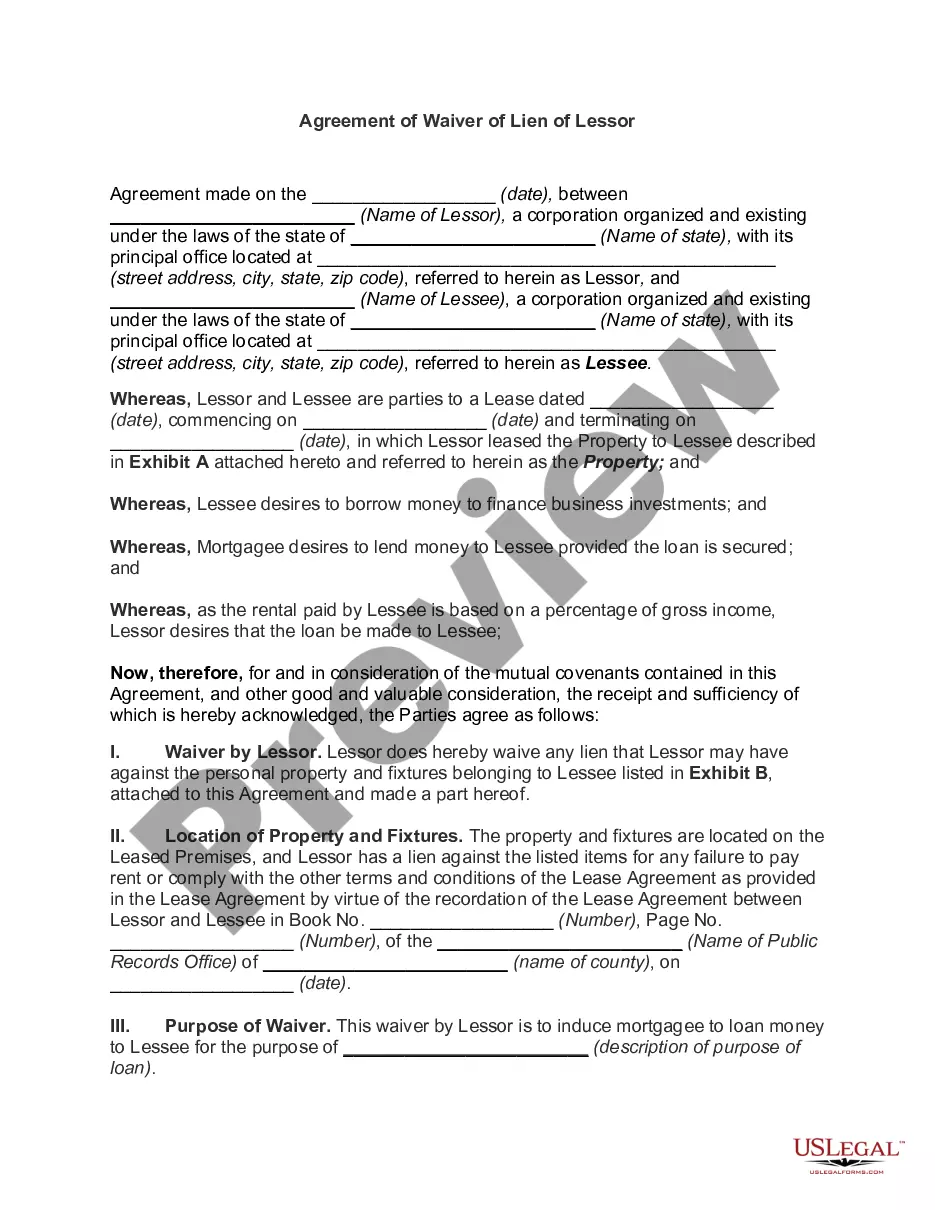
The Waiver of Lien is a legal document in which a contractor, vendor, or supplier relinquishes their right to claim a lien against a property for work performed or materials provided. This form serves to protect property owners from potential claims by those who have worked on or supplied materials to a property. Unlike similar documents, which may outline payment terms or contractual agreements, this form specifically addresses the waiver of lien rights, making it essential for both contractors and property owners involved in construction or renovation projects.
Key components of this form
- Parties Involved: Names of the contractor or vendor and the property owner.
- Consideration: The amount paid or promised, which justifies the waiver.
- Property Description: A detailed description of the property involved in the contractual agreement.
- Notarization Section: Area for the notary public to validate the waiver.
- Date and Signatures: Space for the date and signatures of the involved parties confirming the waiver.
When to use this document
The Waiver of Lien should be used in scenarios where a contractor, supplier, or vendor has completed work or provided materials for a property and wishes to ensure that they cannot later place a lien on that property for non-payment. It is commonly utilized at the end of a project or upon receipt of final payment to formally document the waiver of rights to claim a lien against the property.
Who needs this form
- Contractors and subcontractors who have performed work on real estate.
- Material suppliers who have provided goods for specific projects.
- Property owners looking to secure clear title against potential claims.
- Anyone involved in construction contracts who wishes to document lien waivers.
Steps to complete this form
- Identify the parties: Enter the names of the vendor/provider and the property owner.
- Specify the consideration: Detail the amount paid or the value of work/materials provided.
- Describe the property: Clearly outline the location and details of the property involved.
- Fill in the date: Write the date when the waiver is being signed.
- Sign and notarize: Ensure the forms are signed by all involved parties and notarized if required.
Does this document require notarization?
Yes, this form must be notarized to be legally valid. Notarization helps to authenticate the identities of those signing the document and adds an extra layer of security to the transaction. US Legal Forms offers integrated online notarization services that are available 24/7 through secure video calls, ensuring convenience and legal equivalence without the hassle of travel.
Get your form ready online
Our built-in tools help you complete, sign, share, and store your documents in one place.
Make edits, fill in missing information, and update formatting in US Legal Forms—just like you would in MS Word.
Download a copy, print it, send it by email, or mail it via USPS—whatever works best for your next step.
Sign and collect signatures with our SignNow integration. Send to multiple recipients, set reminders, and more. Go Premium to unlock E-Sign.
If this form requires notarization, complete it online through a secure video call—no need to meet a notary in person or wait for an appointment.
We protect your documents and personal data by following strict security and privacy standards.

Make edits, fill in missing information, and update formatting in US Legal Forms—just like you would in MS Word.

Download a copy, print it, send it by email, or mail it via USPS—whatever works best for your next step.

Sign and collect signatures with our SignNow integration. Send to multiple recipients, set reminders, and more. Go Premium to unlock E-Sign.

If this form requires notarization, complete it online through a secure video call—no need to meet a notary in person or wait for an appointment.

We protect your documents and personal data by following strict security and privacy standards.
Typical mistakes to avoid
- Failing to include complete property descriptions, which may lead to confusion.
- Not providing the correct amount in the consideration field, which can invalidate the waiver.
- Neglecting to have the document notarized when required by local law.
Why complete this form online
- Convenience: Download and complete the form from the comfort of your home.
- Editability: Easily fill in specific details relevant to your project.
- Reliability: Forms are created and reviewed by licensed attorneys to ensure legal validity.
Looking for another form?



Form popularity
FAQ
LIen waivers are not required to be notarized. The primary times that a document needs to be notarized is if it is going to be filed with the county recorder or it is an affidavit. There are some other documents that often use notarization, but lien waivers don't fall into any of those that "need to be notarized."
Lien waivers that are given after payment is received and which generally cover payments received in a prior pay period are considered trailing lien waivers.Lien waiv- ers are typically provided with each requisition during the course of the project and at final completion of the project.
The main purpose of a lien waiver is to provide protection to the paying party. In exchange for such payment, the lien waiver waives the payee's right to file a lien for the exact value of the payment they have received.
A lien waiver is signed before a lien is actually filed. The party submitting the lien waiver states that they waive the right to lien against the project. In some instances, the property owner or general contractor may request that you sign and deliver a lien waiver before payment is disbursed.
A lien is a claim on property to ensure payment of a debt. When you borrow money to purchase a car, the lender files a lien on the vehicle with the state to insure that if the loan defaults, the lender can take the car. When the debt is fully repaid, a release of the lien is provided by the lender.