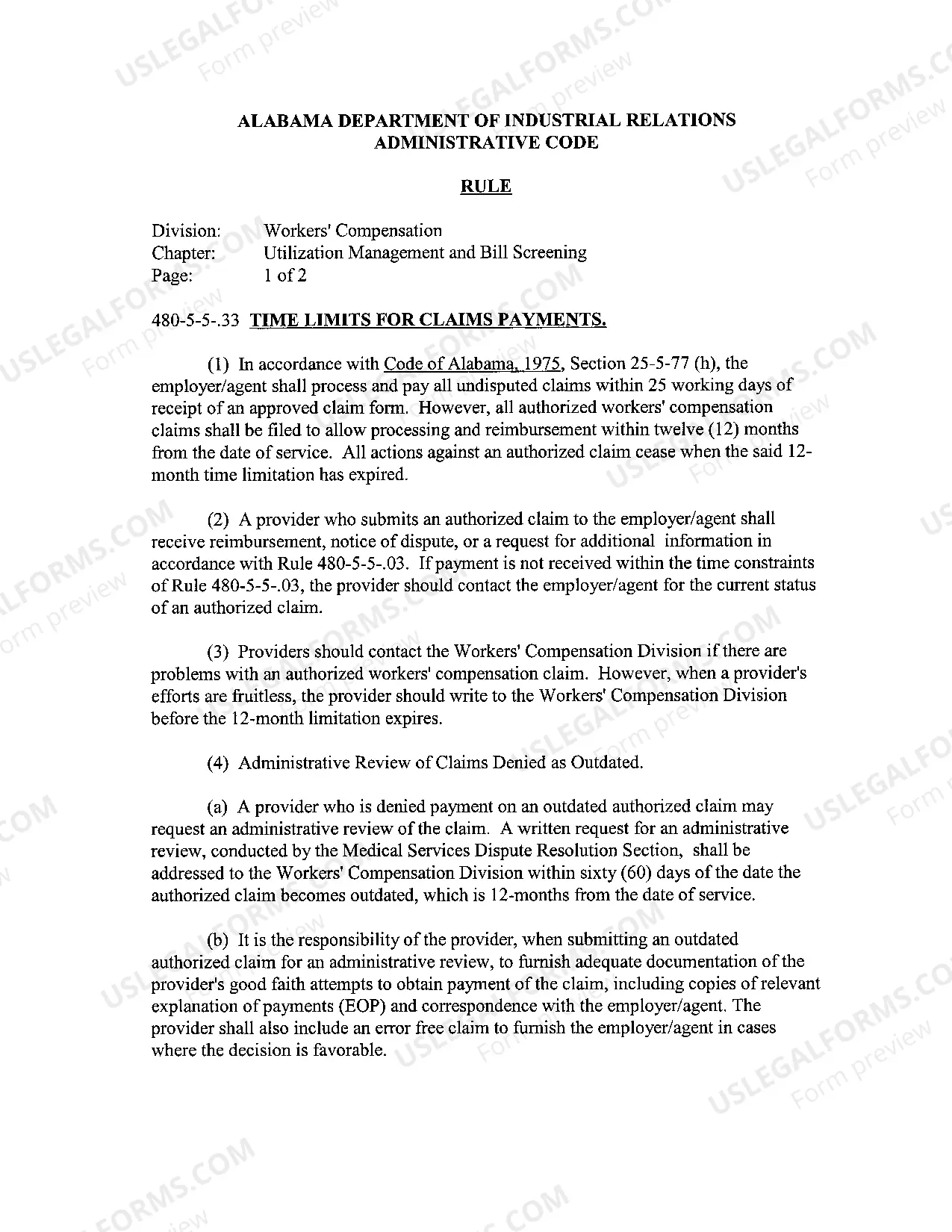
Ohio Living Trust for Individual Who is Single, Divorced or Widow (or Widower) with No Children

Overview of this form
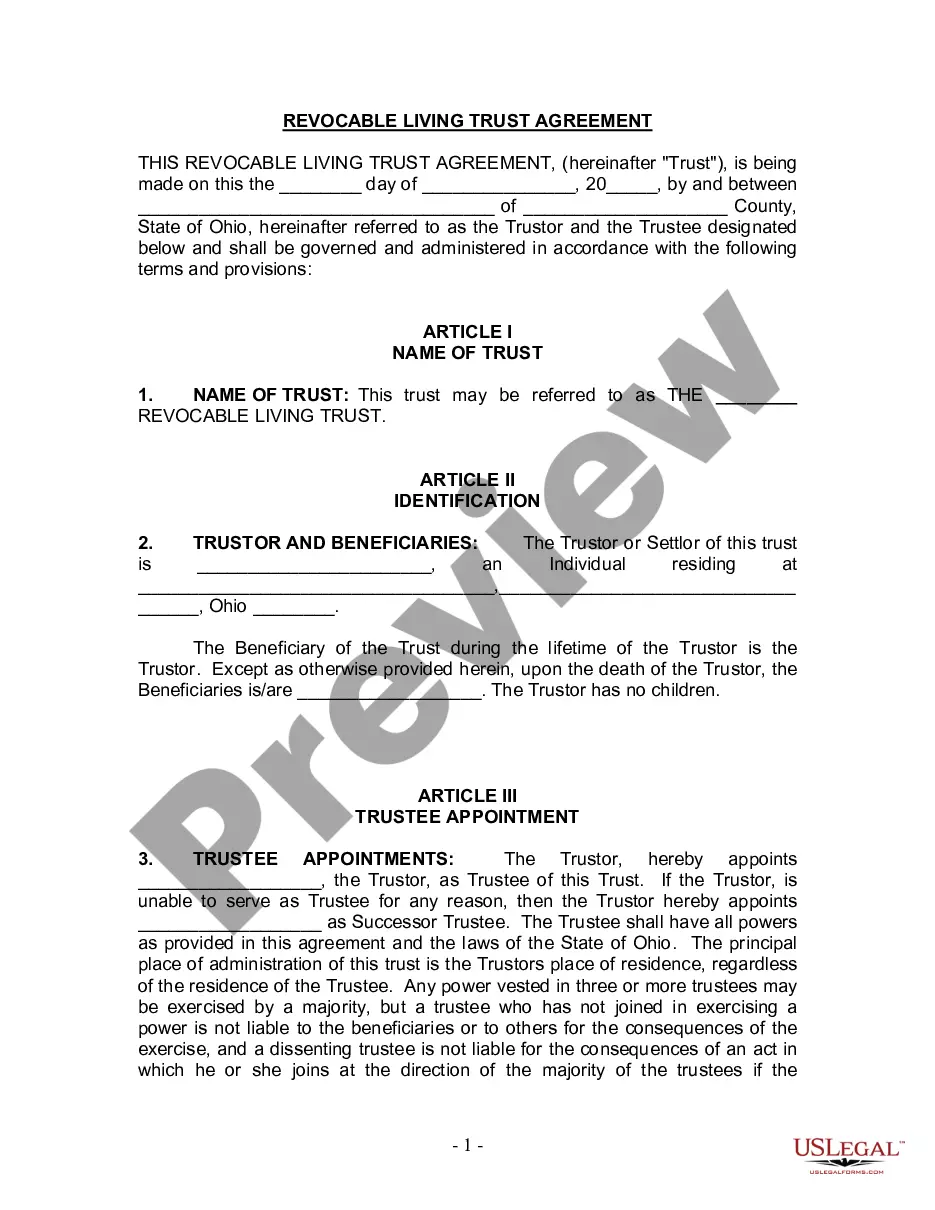
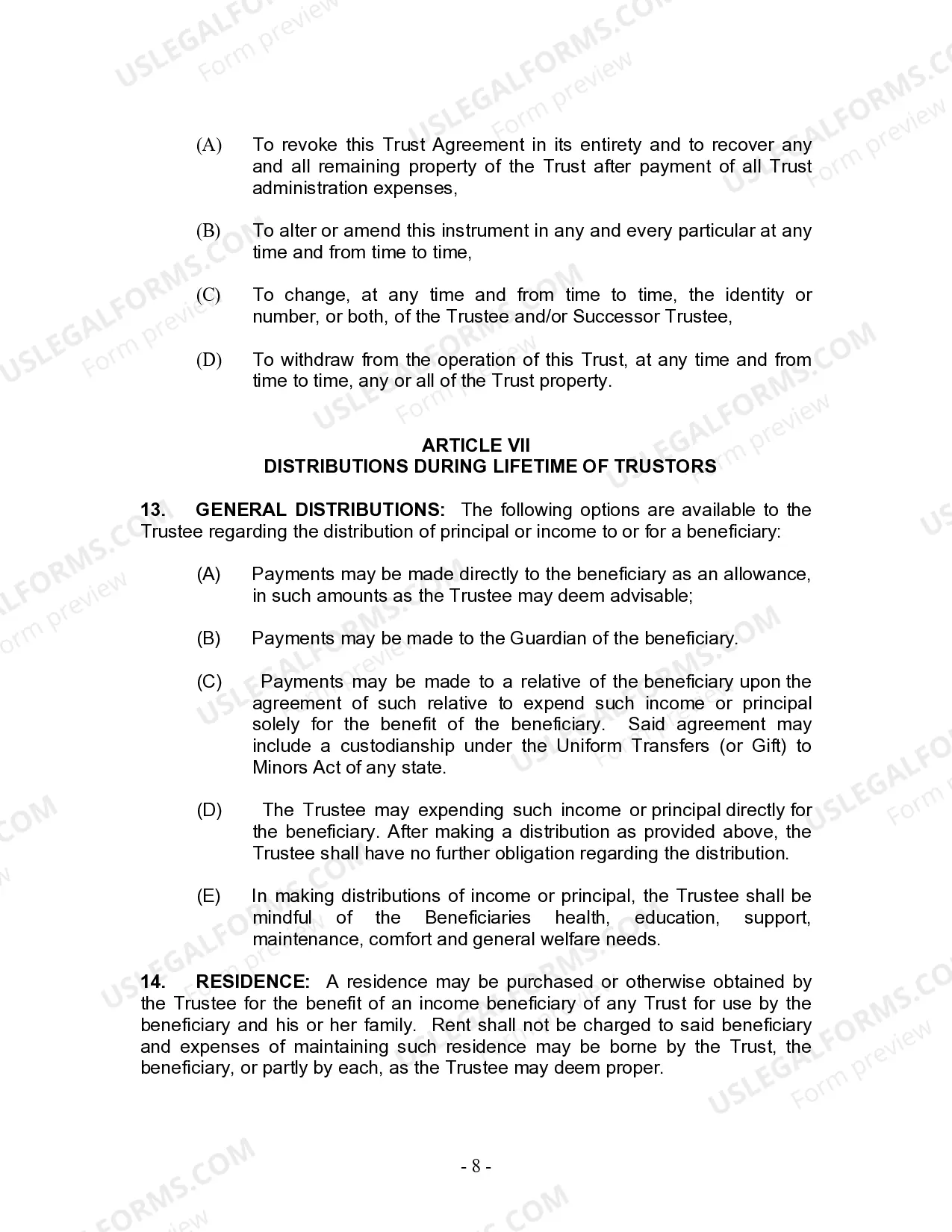
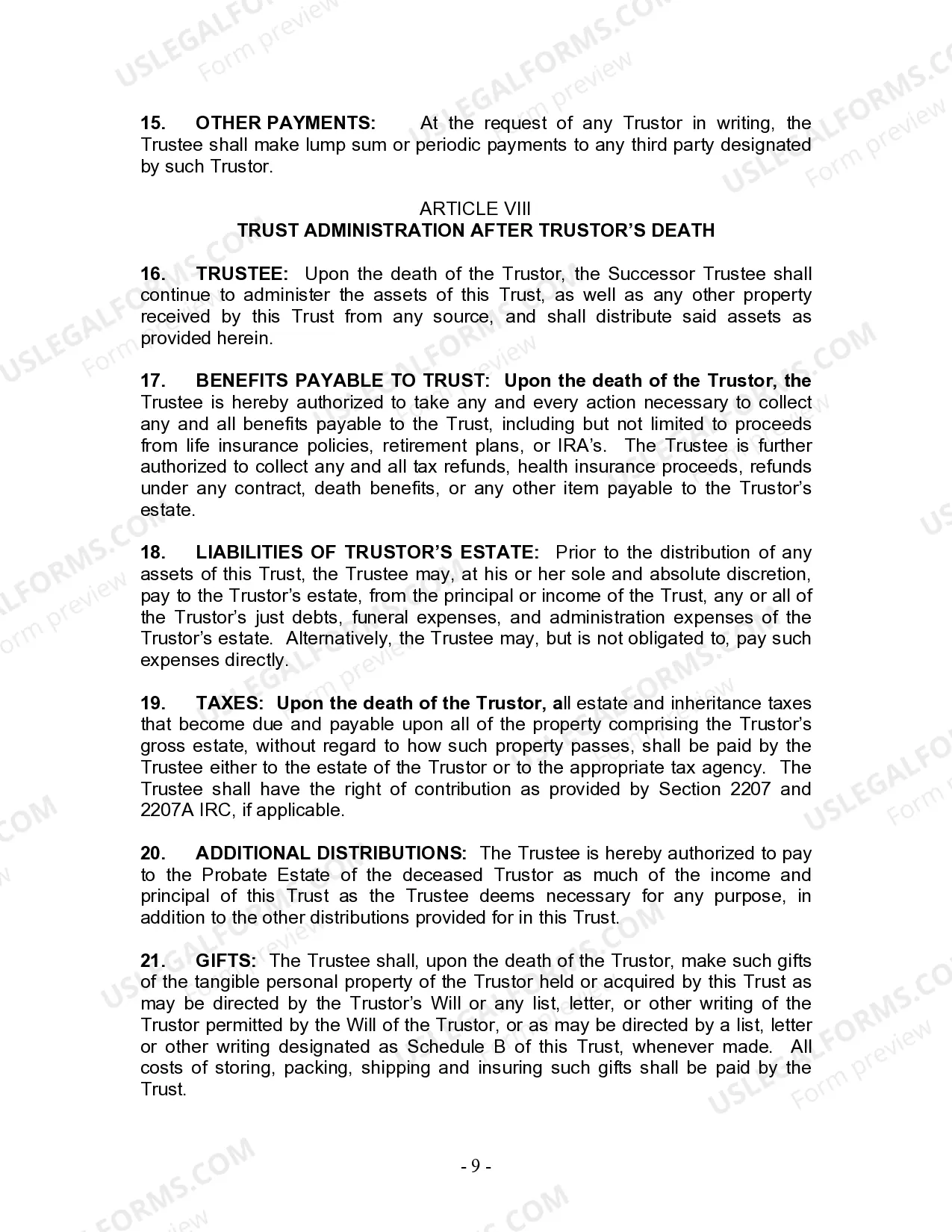
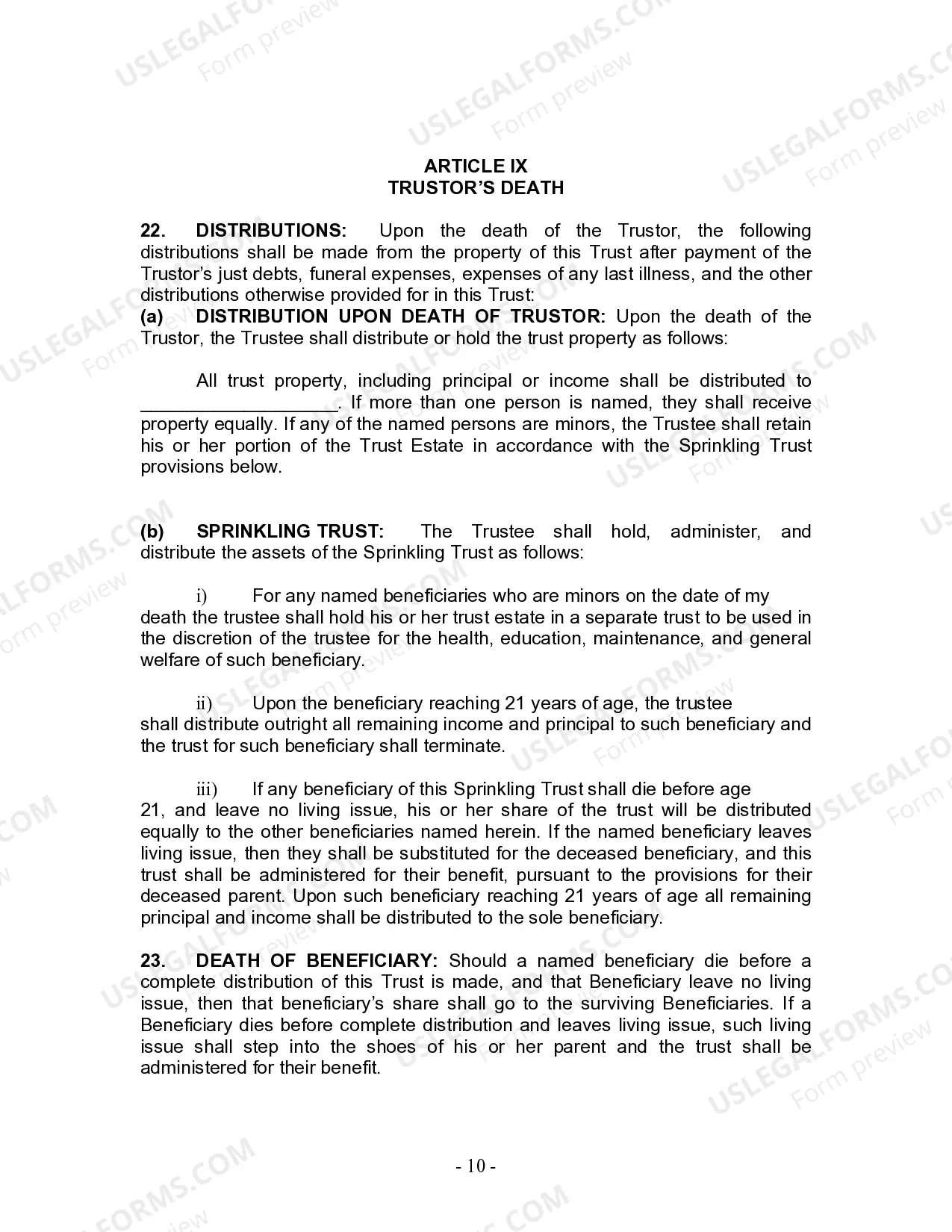
This Living Trust for Individual Who is Single, Divorced or Widow (or Widower) with No Children is a legal document that allows a single individual, or one who is divorced or widowed without children, to manage their assets during their lifetime and specify how those assets will be distributed upon their death. Unlike a Last Will and Testament, a living trust can help avoid the probate process, allowing for a faster transfer of assets to beneficiaries. This form is designed to cater specifically to individuals in these personal circumstances, ensuring clarity and legal compliance in estate planning.
Key components of this form
- Name of Trust: Specification of the trust's designated name.
- Identification of Parties: Details about the Trustor (the person creating the trust) and any beneficiaries.
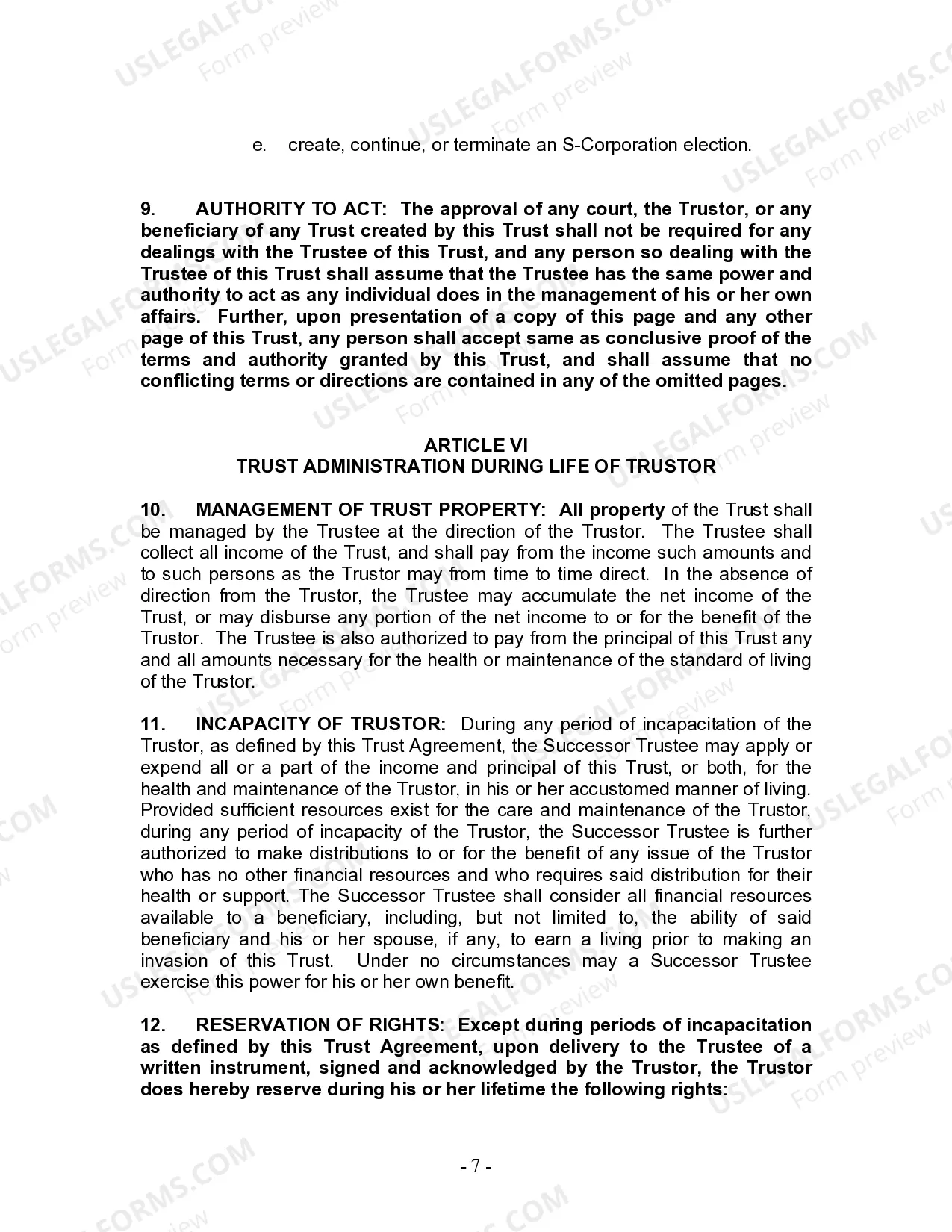
- Trustee Appointment: Designation of the person managing the trust and any successor trustees.
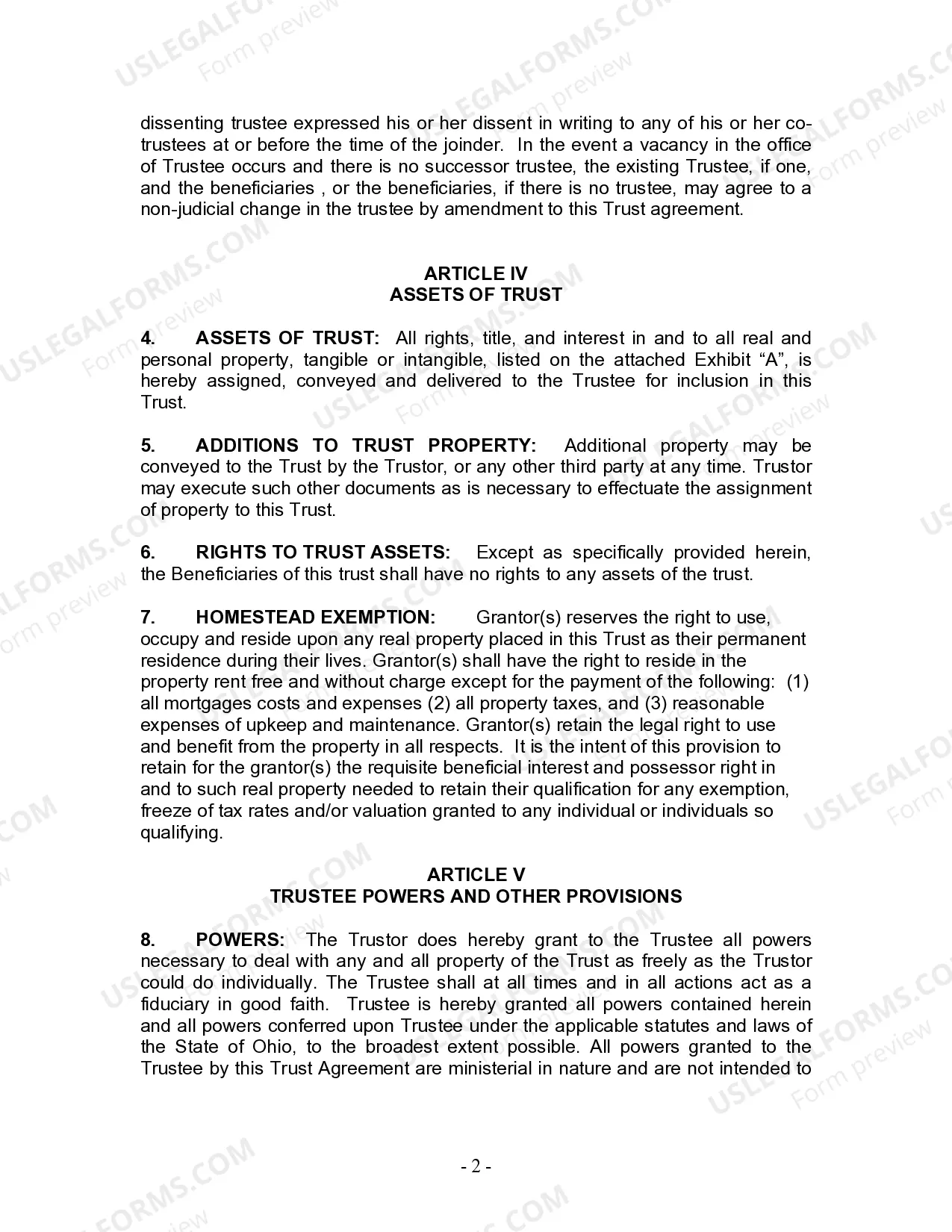
- Assets of Trust: Definition of the real and personal property included in the trust.
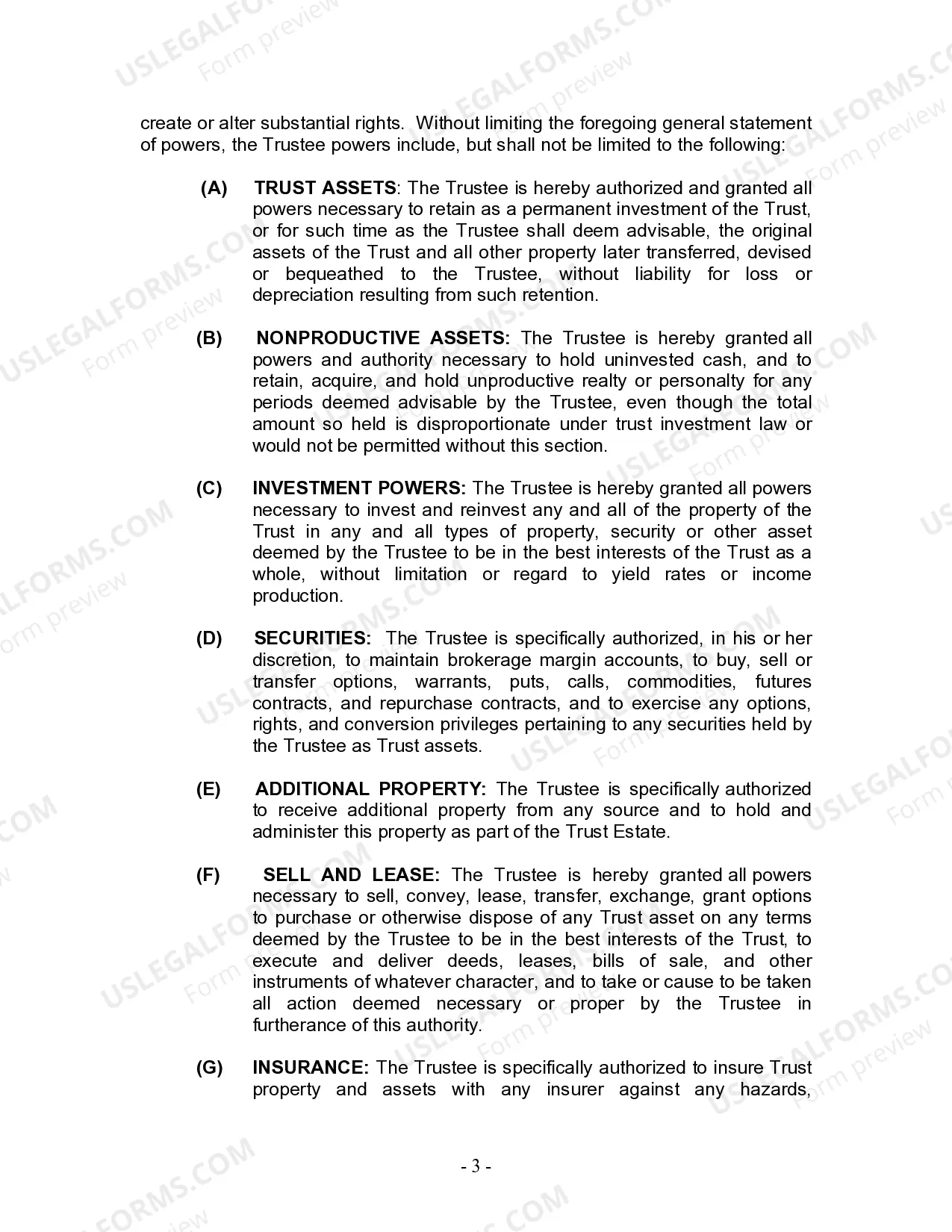
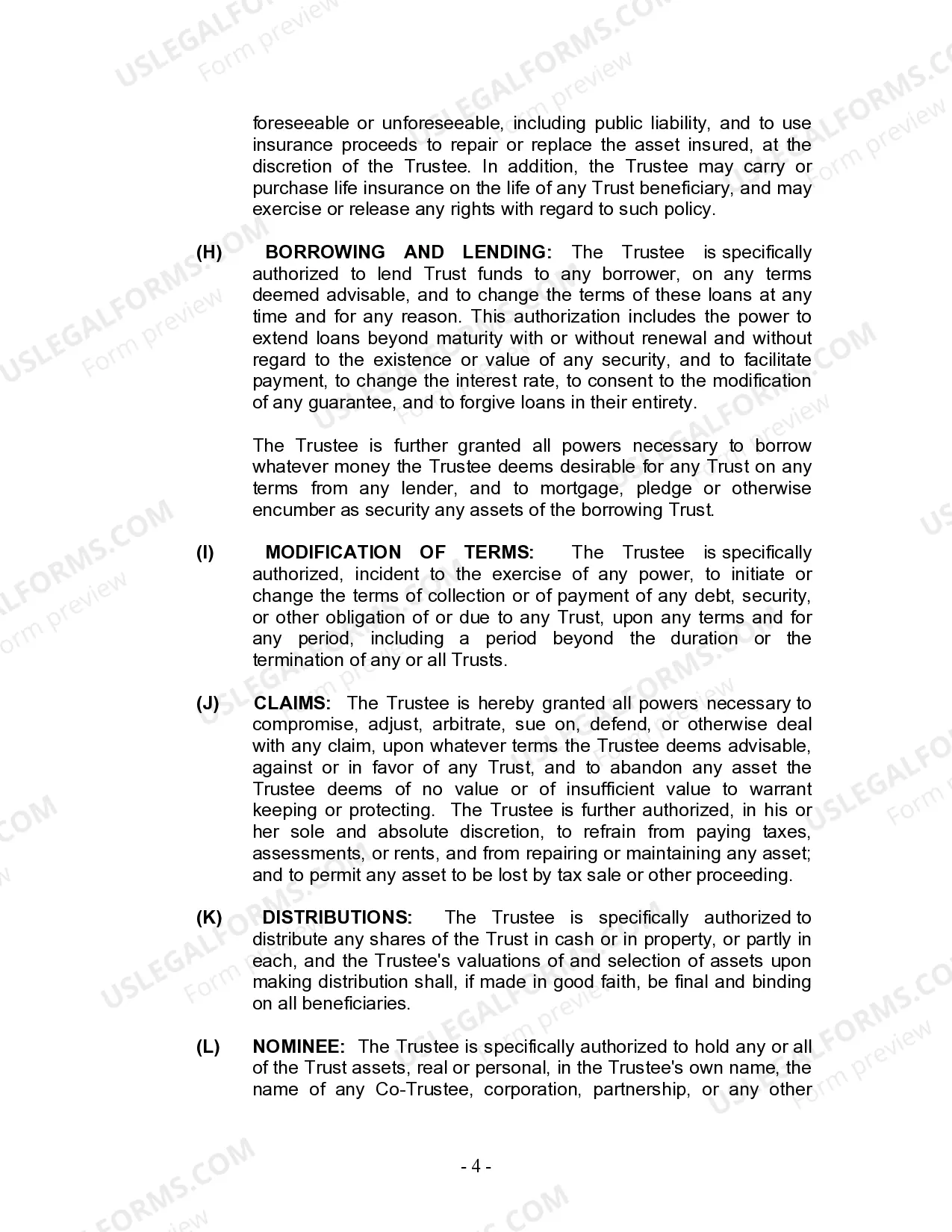
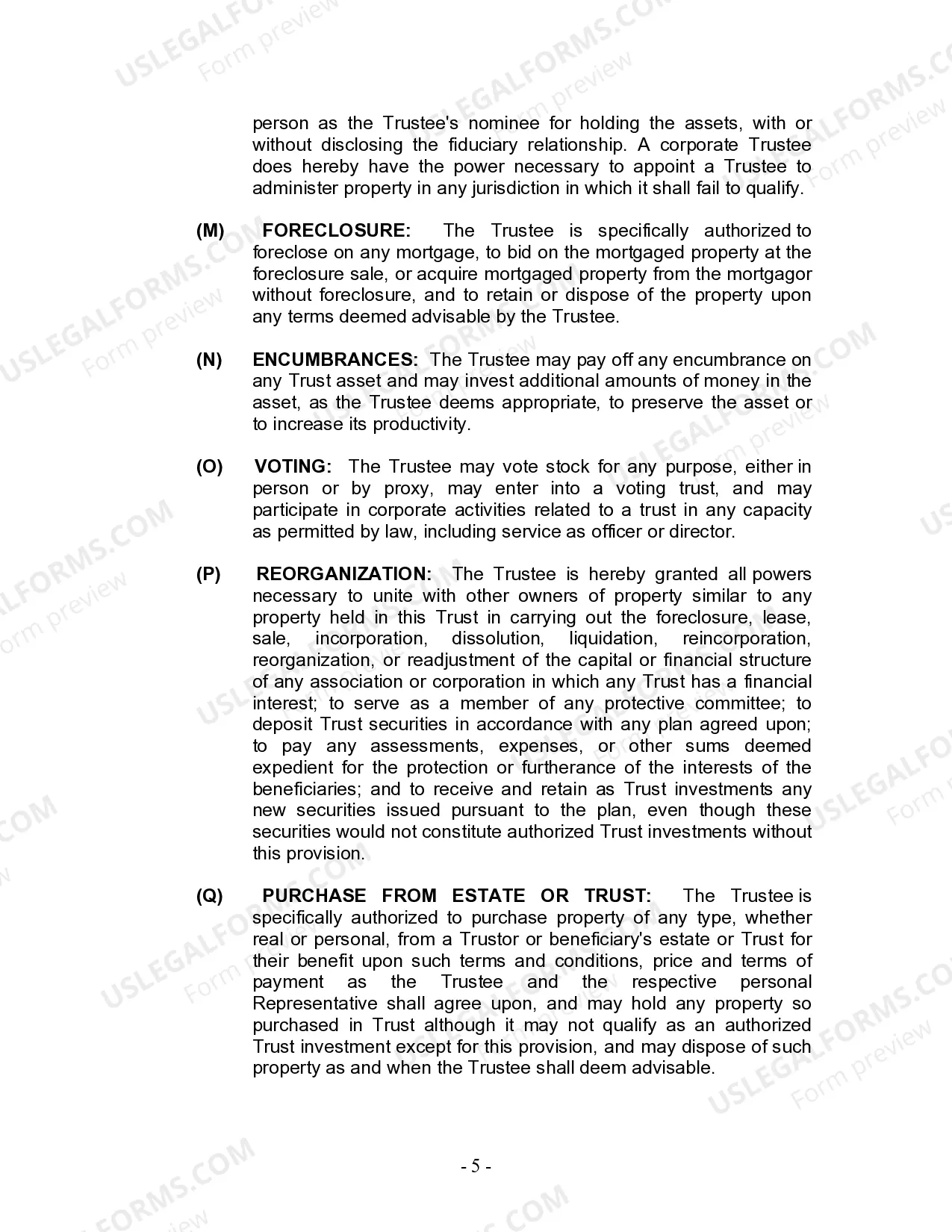
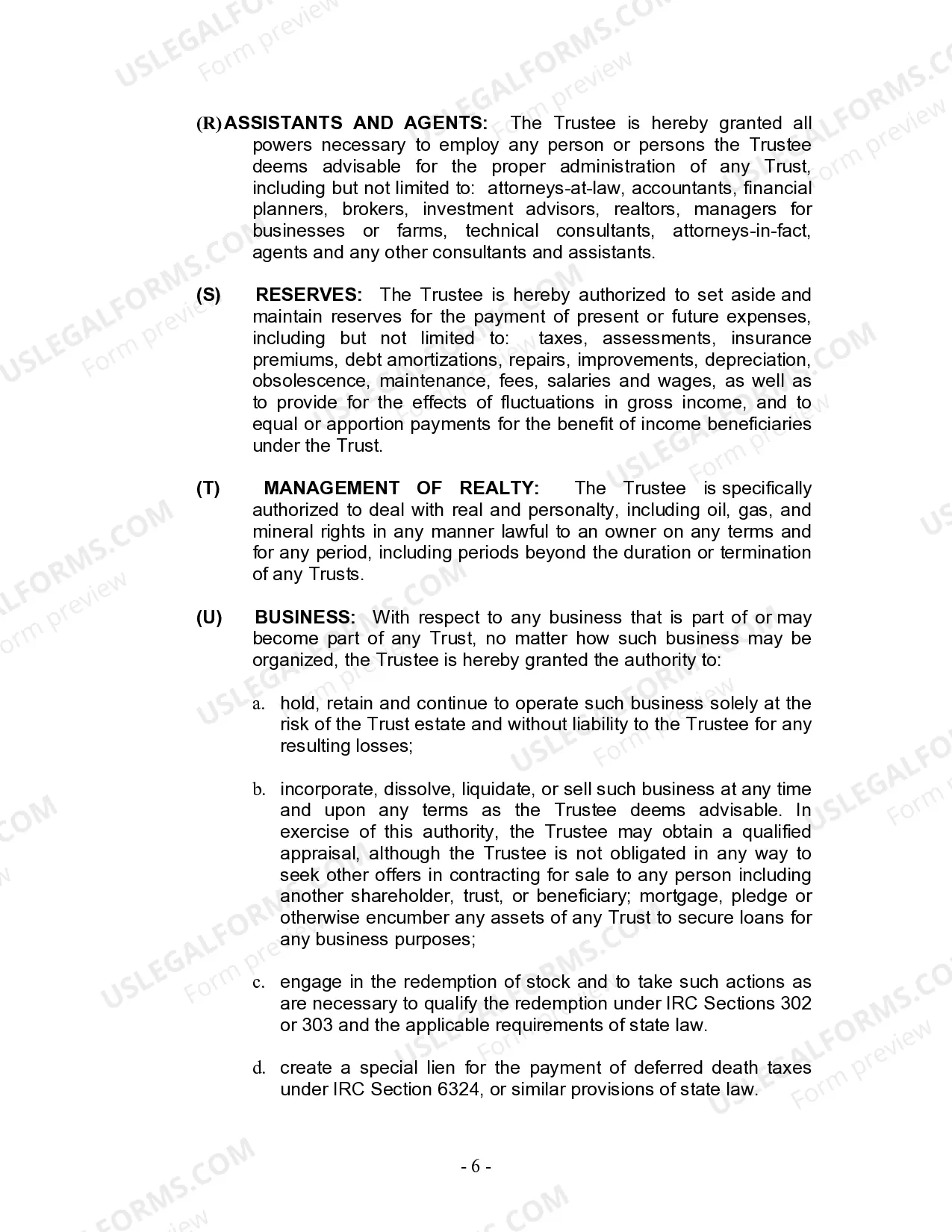
- Trustee Powers: Powers granted to the trustee to manage trust assets effectively.
- Distribution Provisions: Instructions on how the trust assets should be distributed upon the Trustor's death.





Common use cases
This form is required when an individual, who is either single, divorced, or widowed and has no children, wants to establish a living trust. It is particularly useful for estate planning purposes to safeguard assets, avoid probate, and outline clear instructions for asset distribution after death. This trust helps maintain control over one's assets and ensures that their wishes are respected while simplifying the transfer of property to chosen beneficiaries.
Who should use this form
- Individuals who are single, divorced, or widowed without children.
- People seeking to manage their assets during their lifetime and dictate their distribution after death.
- Those who wish to avoid the complexities of probate court.
- Individuals wanting to ensure their assets are distributed according to their wishes.
Steps to complete this form
- Identify the Trustor by filling in their name and address in the designated section.
- Choose a name for the trust and enter it accordingly in the form.
- Appoint a Trustee and include their details; optionally name a Successor Trustee.
- List all assets intended to be included in the trust on the attached Exhibit A.
- Sign the document in the presence of a notary to finalize the trust.
Does this form need to be notarized?
This form must be notarized to be legally valid. US Legal Forms provides secure online notarization powered by Notarize, allowing you to complete the process through a verified video call.
Get your form ready online
Our built-in tools help you complete, sign, share, and store your documents in one place.
Make edits, fill in missing information, and update formatting in US Legal Forms—just like you would in MS Word.
Download a copy, print it, send it by email, or mail it via USPS—whatever works best for your next step.
Sign and collect signatures with our SignNow integration. Send to multiple recipients, set reminders, and more. Go Premium to unlock E-Sign.
If this form requires notarization, complete it online through a secure video call—no need to meet a notary in person or wait for an appointment.
We protect your documents and personal data by following strict security and privacy standards.

Make edits, fill in missing information, and update formatting in US Legal Forms—just like you would in MS Word.

Download a copy, print it, send it by email, or mail it via USPS—whatever works best for your next step.

Sign and collect signatures with our SignNow integration. Send to multiple recipients, set reminders, and more. Go Premium to unlock E-Sign.

If this form requires notarization, complete it online through a secure video call—no need to meet a notary in person or wait for an appointment.

We protect your documents and personal data by following strict security and privacy standards.
Avoid these common issues
- Failing to list all relevant assets or properties in the trust.
- Not appointing a successor trustee, which can complicate management after incapacity or death.
- Inaccurate or incomplete execution, such as missing signatures or not notarizing the document.
- Overlooking state-specific requirements, which can affect validity.
- Not updating the trust after significant life changes, such as remarriage or changes in asset ownership.
Why complete this form online
- Convenience of completing the form at your own pace and from anywhere.
- Editability allows for quick changes as circumstances evolve.
- Access to reliable legal templates drafted by licensed attorneys, ensuring compliance with legal standards.
- Digital storage options to keep your legal documents organized and easily retrievable.
- Easy sharing with advisors or family members when necessary.
Legal use & context
- The living trust is a legally recognized document that allows individuals to manage their estates.
- It provides benefits such as avoiding probate and maintaining privacy over asset distribution.
- Ensure compliance with state laws to avoid complications in the enforcement of trust provisions.
Summary of main points
- The form establishes an efficient way to manage and transfer assets.
- It's tailored for single individuals without children to facilitate estate planning.
- Proper completion and notarization are essential for legality and effectiveness.
- Understanding state-specific requirements can enhance the utility and enforceability of the trust.
Looking for another form?
Form popularity
FAQ
Using a revocable living trust instead of a will means assets owned by your trust will bypass probate and flow to your heirs as you've outlined in the trust documents. A trust lets investors have control over their assets long after they pass away.
Paperwork. Setting up a living trust isn't difficult or expensive, but it requires some paperwork. Record Keeping. After a revocable living trust is created, little day-to-day record keeping is required. Transfer Taxes. Difficulty Refinancing Trust Property. No Cutoff of Creditors' Claims.
A living trust holds your assets during your lifetime and allows them to be distributed to the people you choose upon your death. To more easily understand how a living trust works, think of a trust as an empty box. You can put your assets into this box, including financial accounts and real estate.
When it comes to protecting your loved ones, having both a will and a trust is essential. The difference between a will and a trust is when they kick into action. A will lays out your wishes for after you die. A living revocable trust becomes effective immediately.