Pennsylvania Residential Real Estate Sales Disclosure Statement
What this document covers
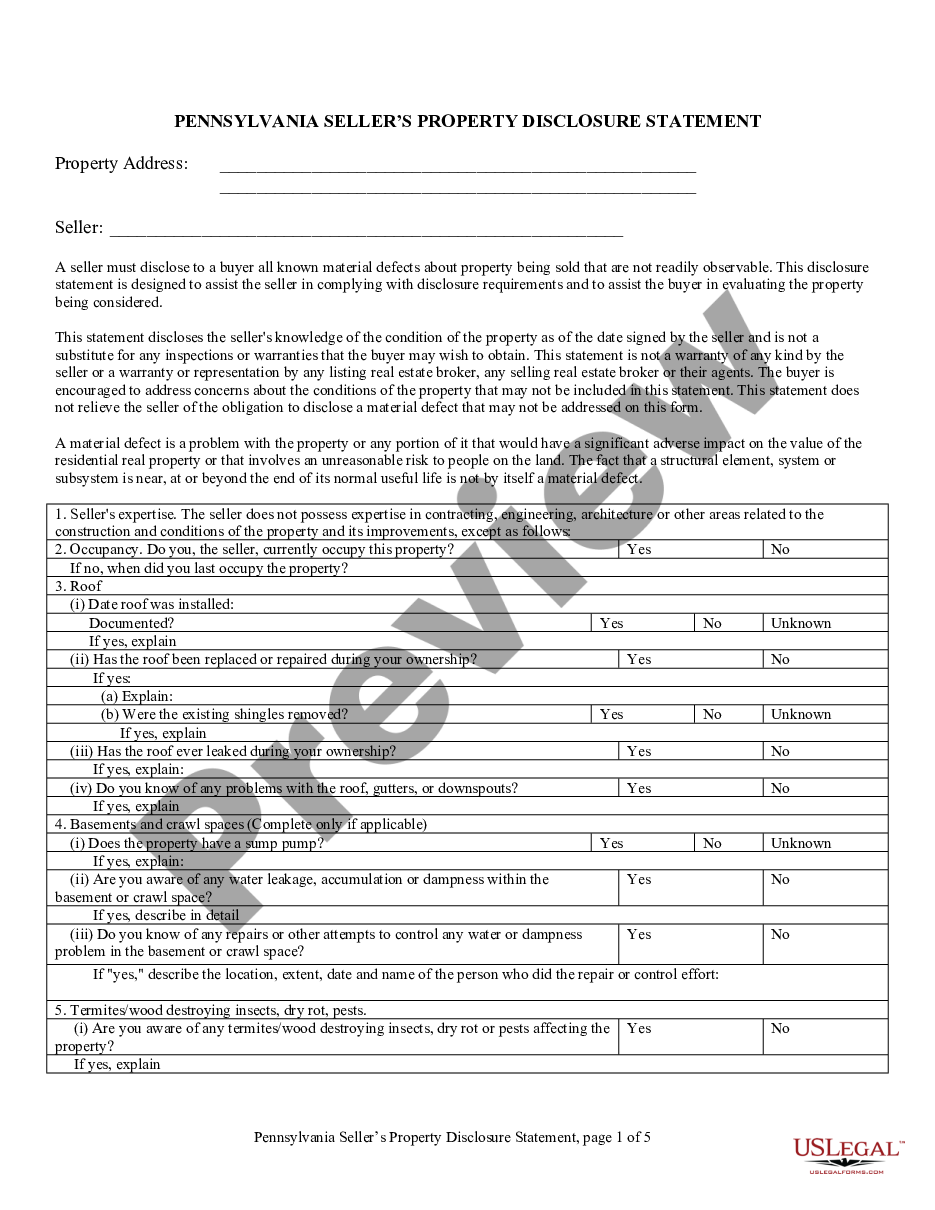
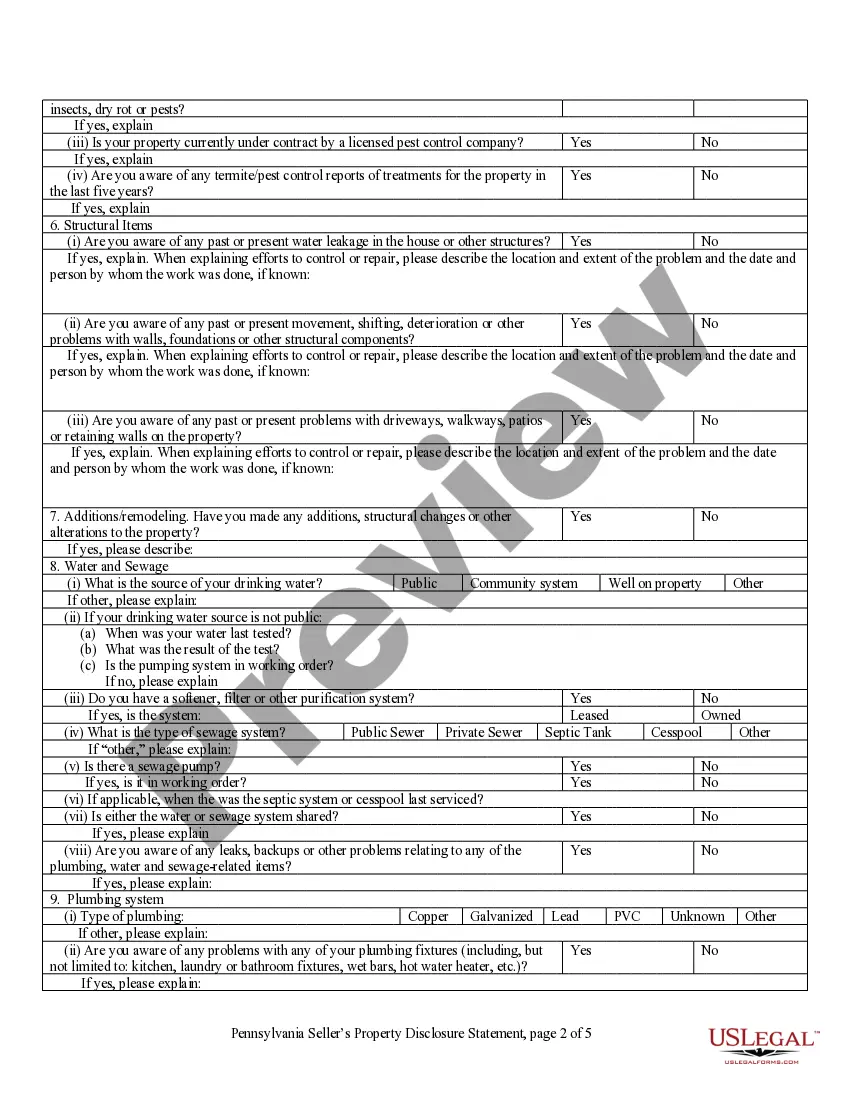
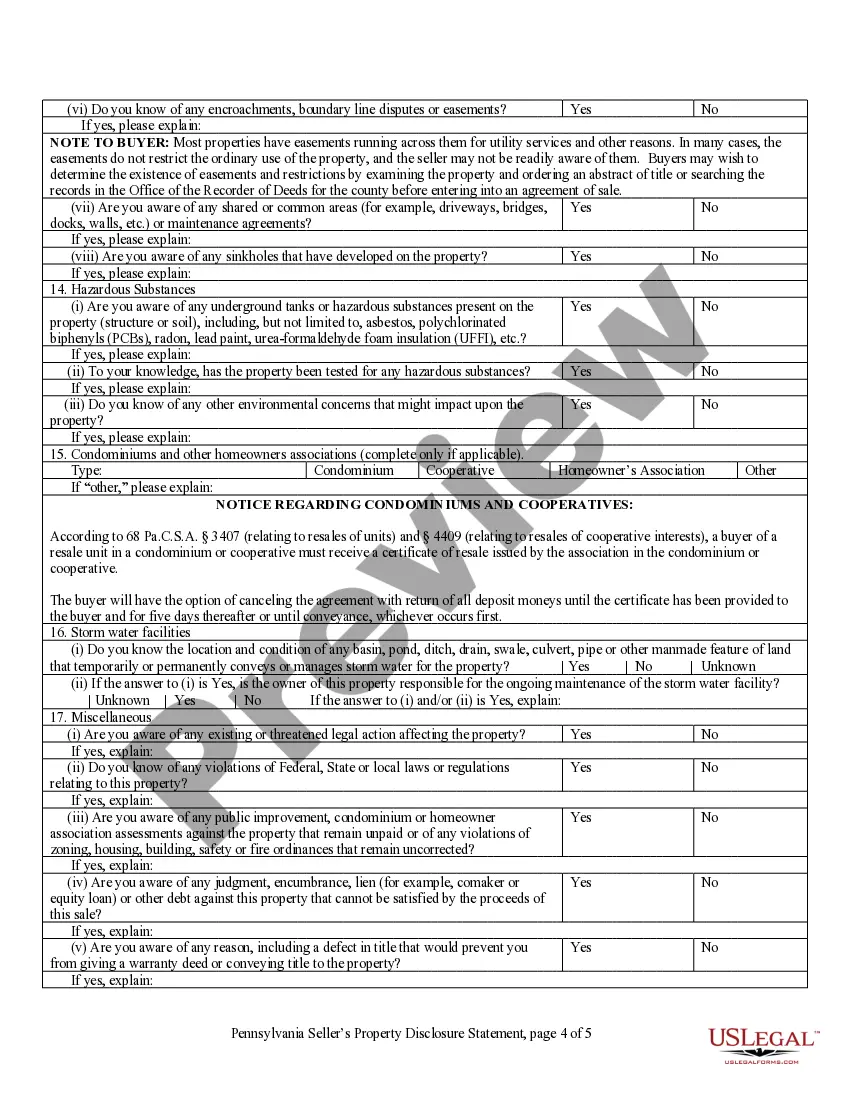
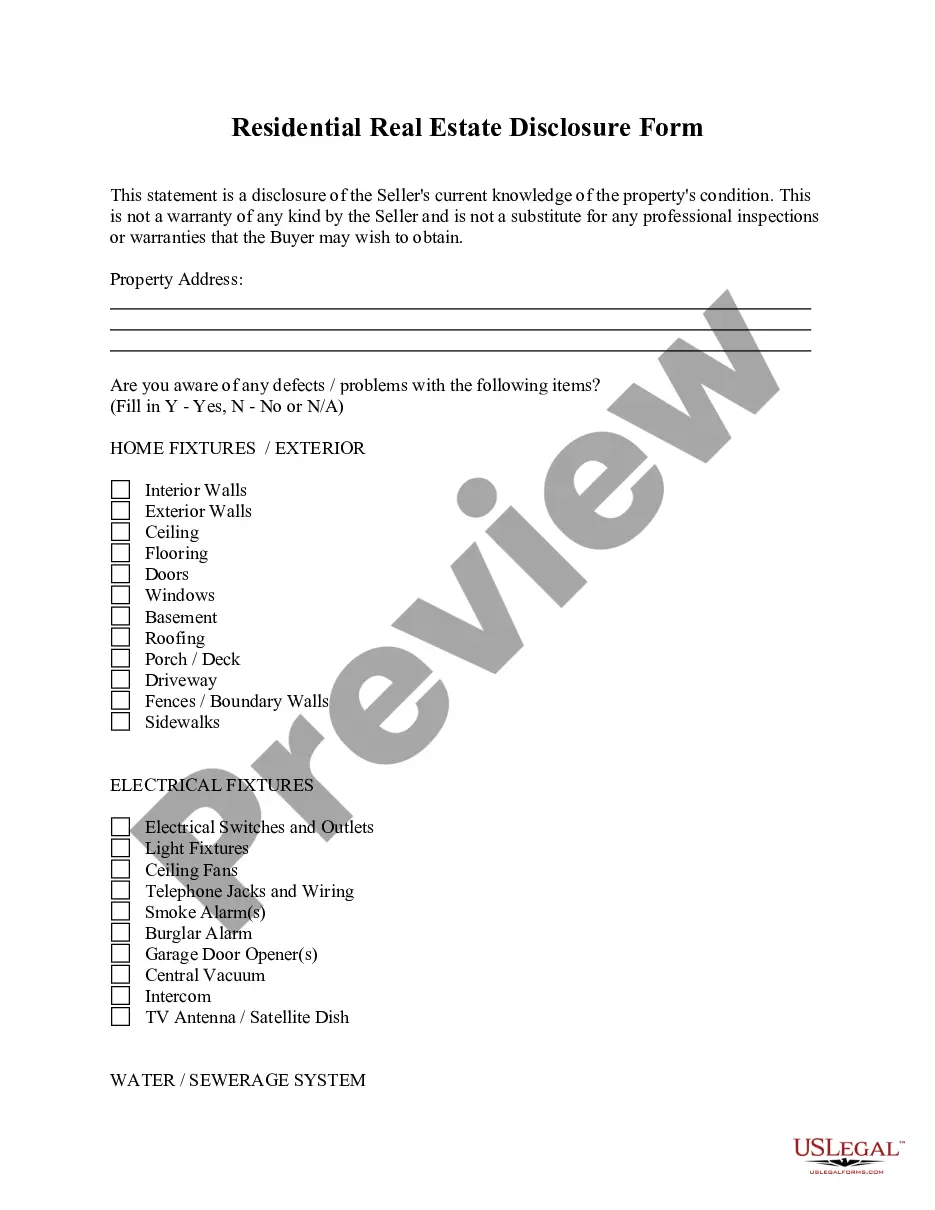
The Residential Real Estate Sales Disclosure Statement is a critical document used in Pennsylvania's residential sales transactions. This form is completed by the seller to disclose known material defects of the property, aiding buyers in understanding the condition of the home they are considering. Unlike general property sales forms, this disclosure statement focuses specifically on material defects that may affect the property's value or safety, ensuring transparency during the sale process.
Key components of this form
- Seller's identification and property address
- Disclosure of known material defects
- Occupancy status of the property
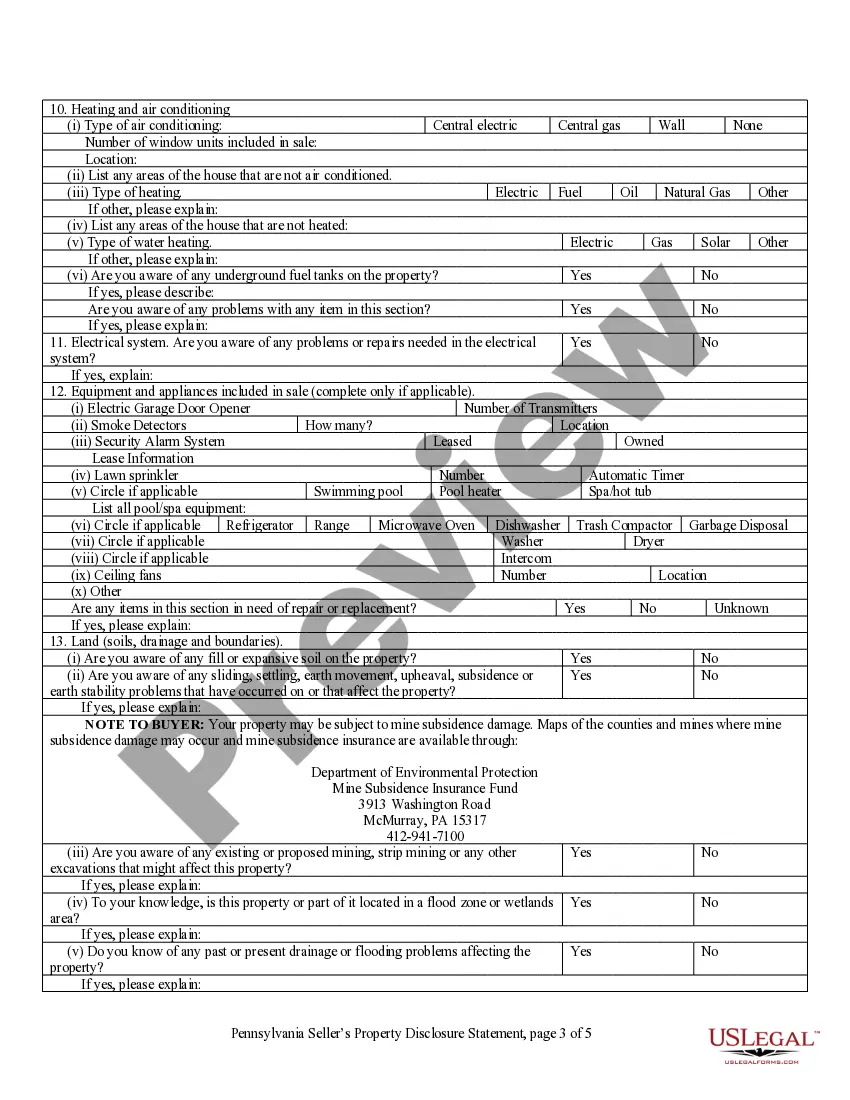
- Detailed sections addressing the condition of the roof, basement, plumbing, and electrical systems
- Information about termites, environmental hazards, and legal issues
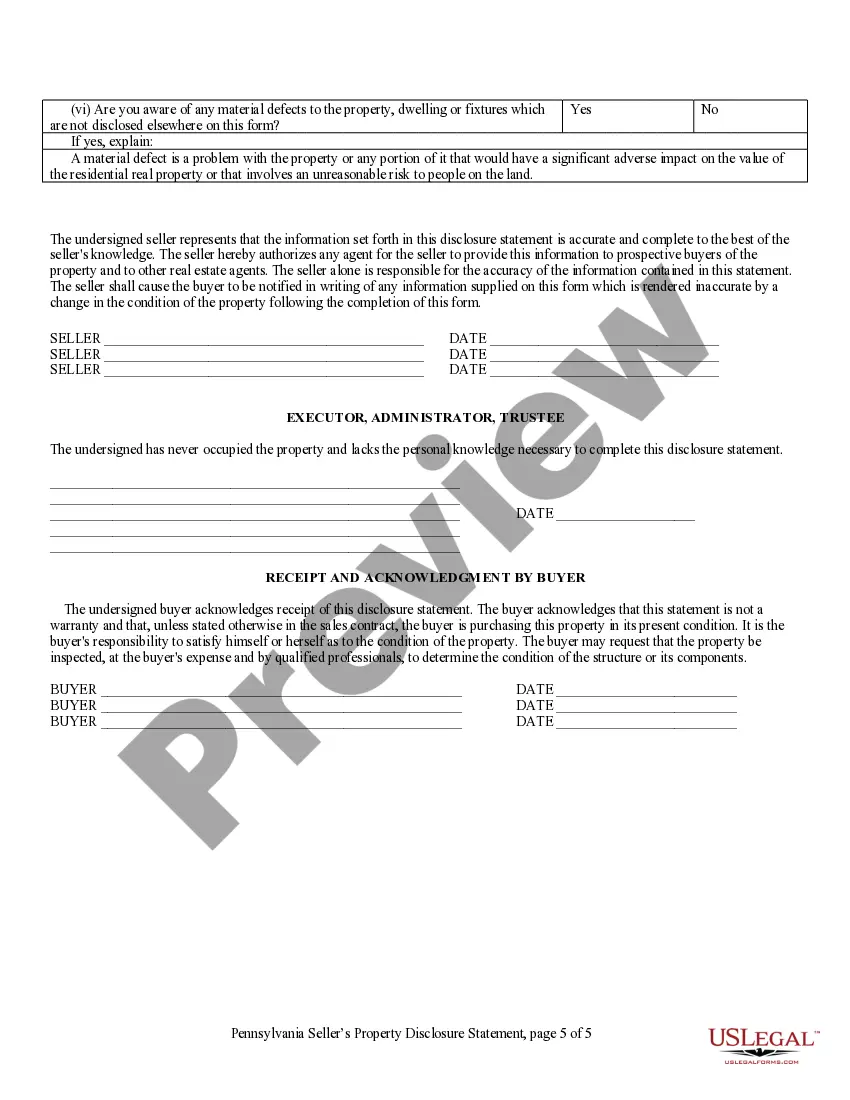
- Buyer's acknowledgment of receipt of the disclosure statement
When this form is needed
This form should be used when a seller is preparing to sell a residential property in Pennsylvania. It is essential for sellers to provide this disclosure to potential buyers as it helps establish trust and transparency about the property's condition. This form is particularly important in cases where the property has known issues that may impact its value or safety, as failing to disclose such information could lead to legal complications.
Who can use this document
- Sellers of residential properties in Pennsylvania
- Real estate agents representing sellers
- Buyers who want to understand the condition of a property before purchase
- Investors considering purchasing residential properties
Instructions for completing this form
- Provide the property address and your information as the seller.
- Answer the questions about your expertise and the property's occupancy status.
- Complete all sections regarding the condition of specific systems, such as plumbing and electrical.
- Disclose any known defects, previous repairs, and relevant details about the property.
- Sign and date the form, authorizing its use to inform prospective buyers.
Notarization requirements for this form
Notarization is not commonly needed for this form. However, certain documents or local rules may make it necessary. Our notarization service, powered by Notarize, allows you to finalize it securely online anytime, day or night.
Get your form ready online
Our built-in tools help you complete, sign, share, and store your documents in one place.
Make edits, fill in missing information, and update formatting in US Legal Forms—just like you would in MS Word.
Download a copy, print it, send it by email, or mail it via USPS—whatever works best for your next step.
Sign and collect signatures with our SignNow integration. Send to multiple recipients, set reminders, and more. Go Premium to unlock E-Sign.
If this form requires notarization, complete it online through a secure video call—no need to meet a notary in person or wait for an appointment.
We protect your documents and personal data by following strict security and privacy standards.

Make edits, fill in missing information, and update formatting in US Legal Forms—just like you would in MS Word.

Download a copy, print it, send it by email, or mail it via USPS—whatever works best for your next step.

Sign and collect signatures with our SignNow integration. Send to multiple recipients, set reminders, and more. Go Premium to unlock E-Sign.

If this form requires notarization, complete it online through a secure video call—no need to meet a notary in person or wait for an appointment.

We protect your documents and personal data by following strict security and privacy standards.
Common mistakes
- Failing to disclose known defects, which can lead to legal repercussions.
- Not providing accurate or complete information regarding previous repairs.
- Omitting details about occupancy, which can mislead buyers.
Advantages of online completion
- Convenient access to legally vetted templates created by licensed attorneys.
- Ability to edit and customize the form to fit individual property needs.
- Time-efficient; download the form instantly and complete it at your convenience.
Legal use & context
- The disclosure statement is a legal requirement in Pennsylvania residential sales.
- Providing false information can result in legal consequences for the seller.
- The form is not a warranty of property condition but coordinates disclosure obligations.
Summary of main points
- Accurate disclosure of property defects is critical to a successful real estate transaction.
- The form helps protect all parties involved by clearly stating property conditions.
- Consult a licensed attorney if you have questions about the disclosure process.
Looking for another form?
Form popularity
FAQ
You will need to check into your state's law.In fact, in some states, sellers are explicitly told (within the law or by court decisions) that they do NOT need to disclose deaths on the property to buyers. This is the case in Arizona, Georgia, and Pennsylvania, for example.
Under California law, all material facts that affect the value or desirability of the property must be disclosed to the buyer. There is no specific definition or rule on what is considered to be a material fact.
In Pennsylvania, the sellers of a house are usually required by law to disclose the condition of that home.Where applicable, the law requires a seller to disclose to a buyer all known material defects about the property being sold that are not readily observable.
California's Especially Stringent Disclosure Requirements Sellers must fill out and give the buyers a disclosure form listing a broad range of defects, such as a leaky roof, deaths that occurred within three years on the property, neighborhood nuisances such as a dog that barks every night, and more.
So, in Pennsylvania, the law continues to require sellers to disclose only identifiable damage. Another example of what is not included: what the neighbors are like.
The Property Condition Disclosure Act requires the seller of residential real property to cause this disclosure statement or a copy thereof to be delivered to a buyer or buyer's agent prior to the signing by the buyer of a binding contract of sale.
In Pennsylvania, the sellers of a house are usually required by law to disclose the condition of that home.Where applicable, the law requires a seller to disclose to a buyer all known material defects about the property being sold that are not readily observable.
Who Must Make These Seller Disclosures in California. As a broad rule, all sellers of residential real estate property containing one to four units in California must complete and provide written disclosures to the buyer.
Selling a house as-is in Pennsylvania is not tricky. Determining if spending time and money repair the property is worth it, can be. Before sellers take on a project, they should ask, is this even worth it?.