Arkansas Annual Minutes
Understanding this form
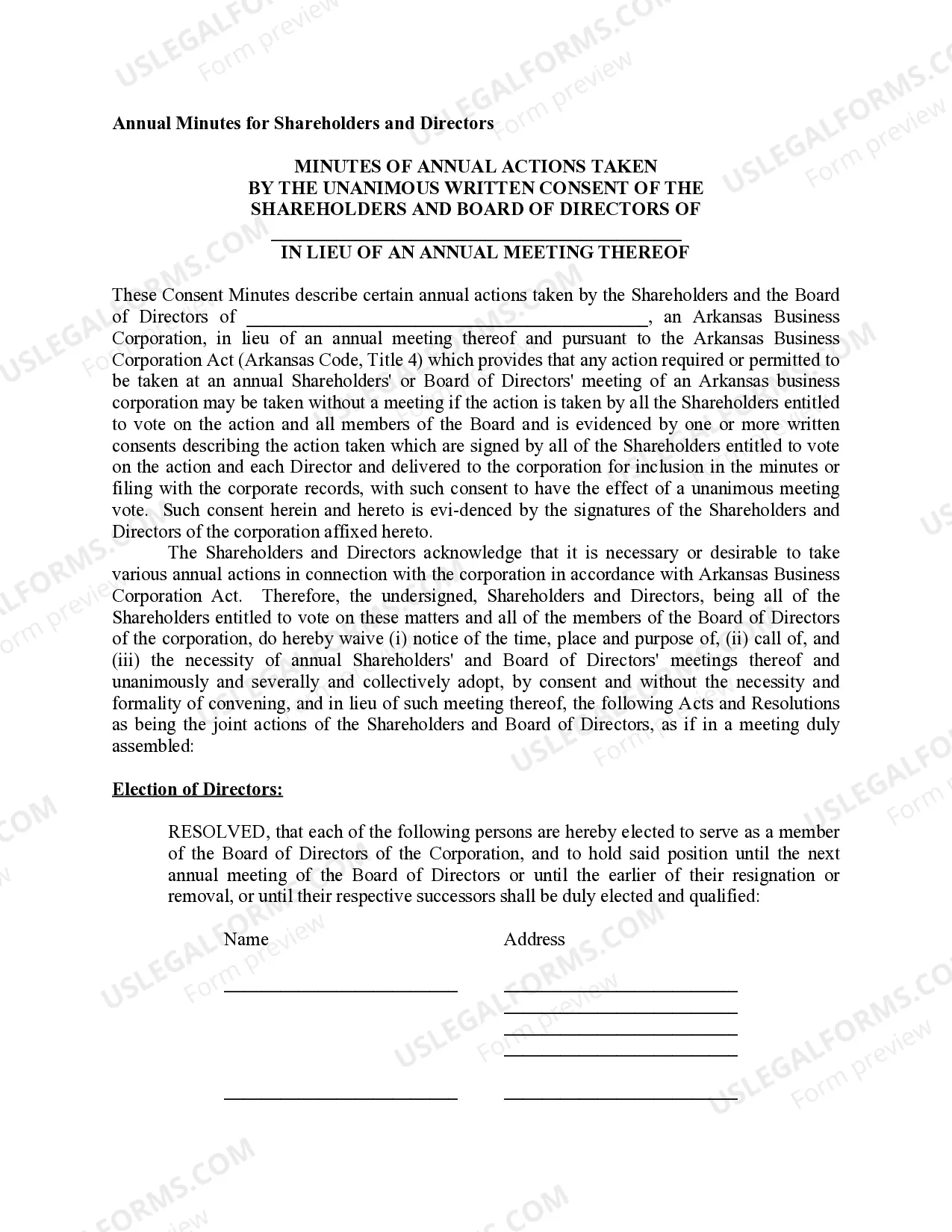
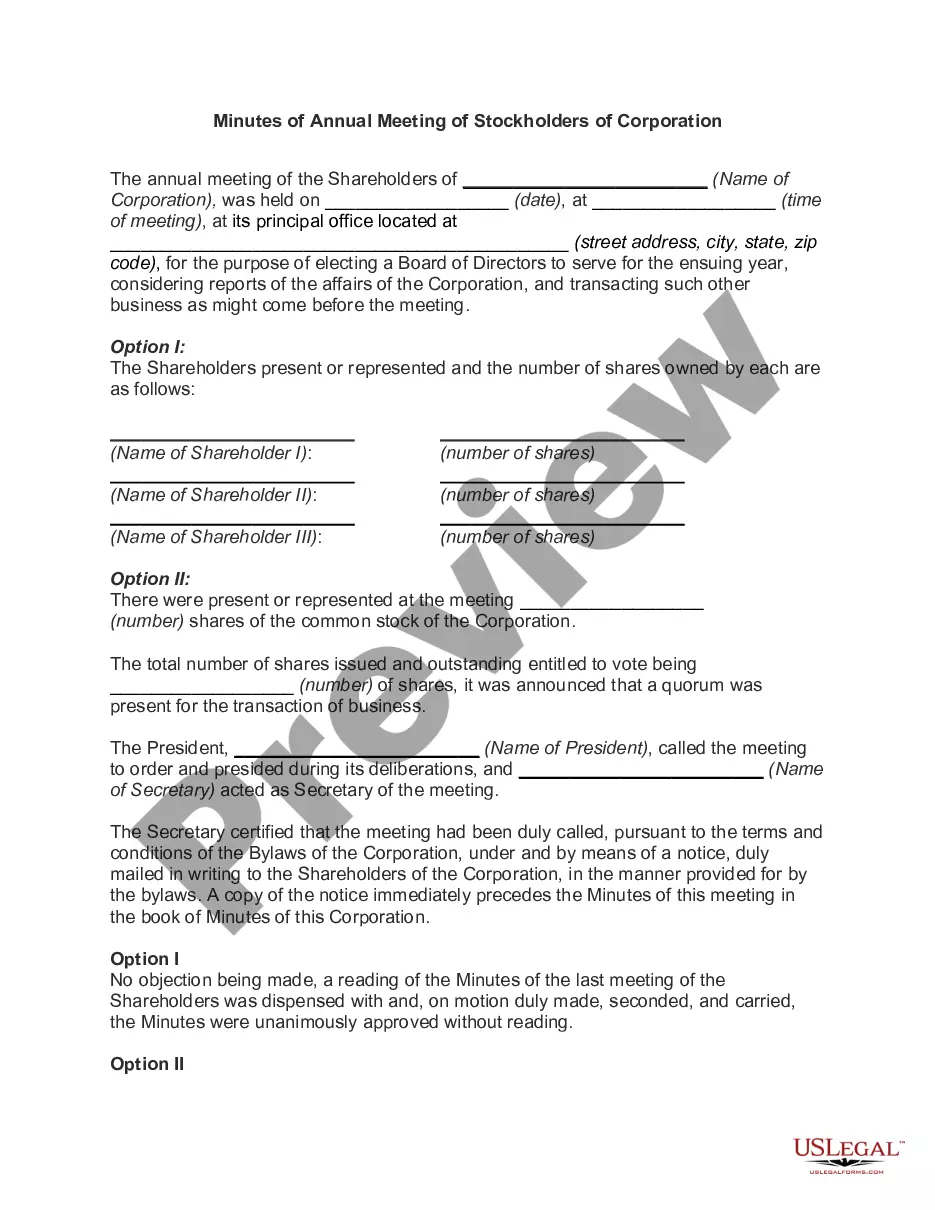
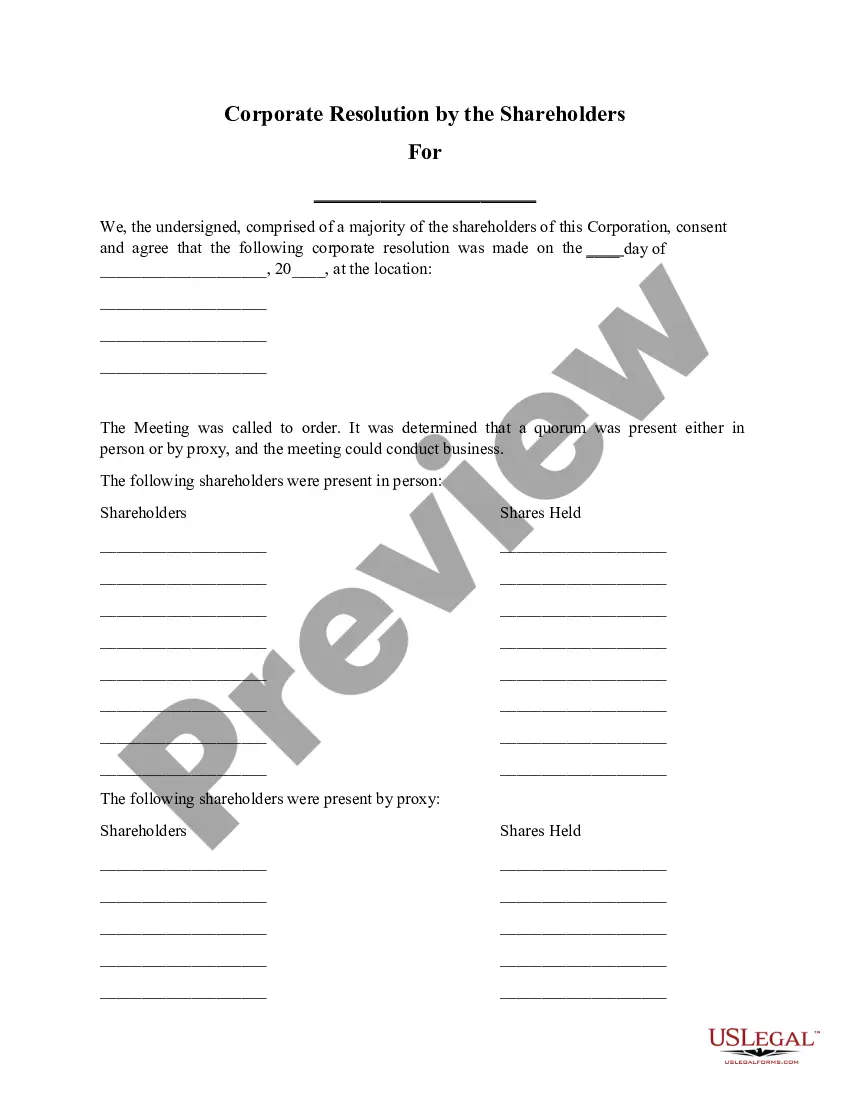
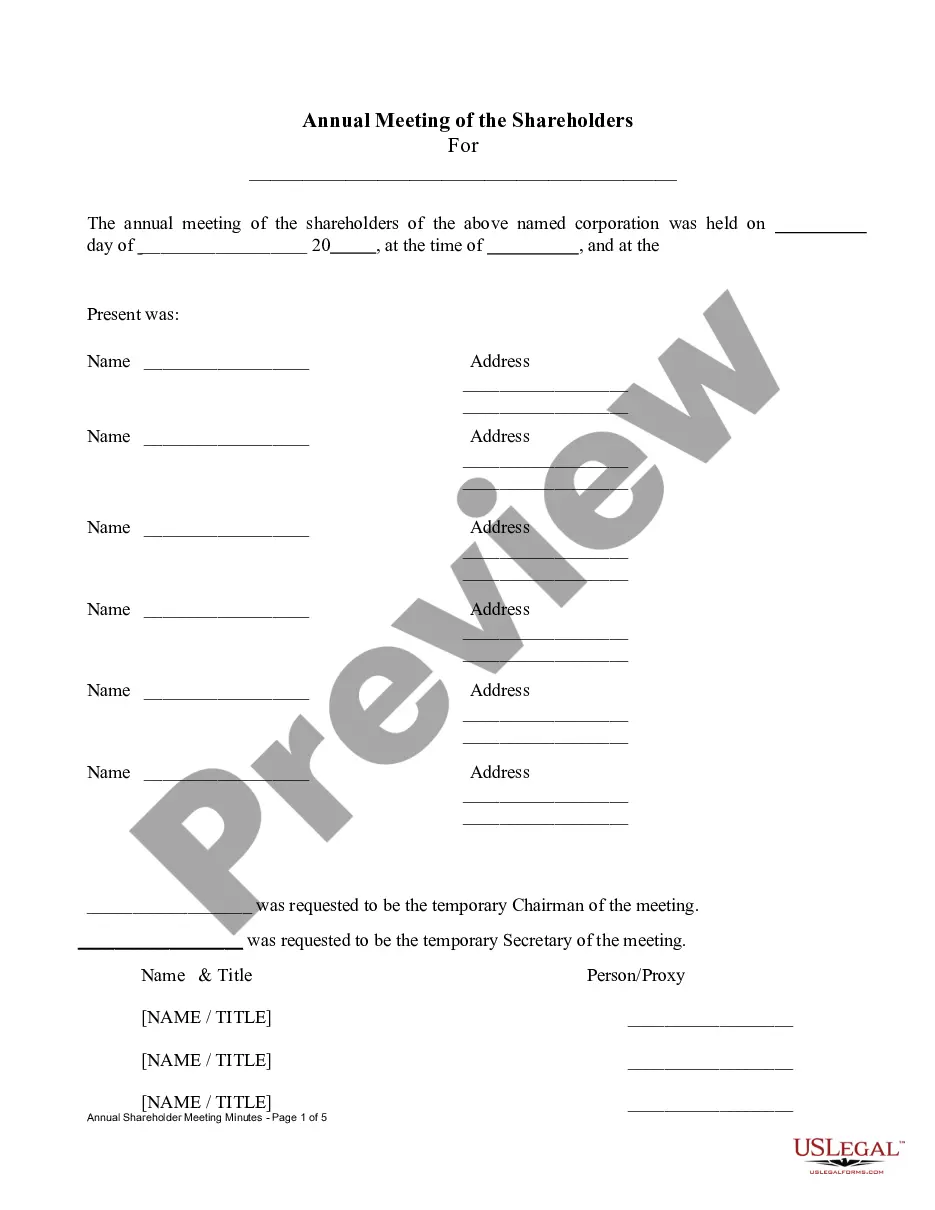
The Annual Minutes form is a crucial legal document used by corporations to record and document organizational activities, decisions, and changes made during the year. Unlike other corporate documents, this form allows for the actions of shareholders and board members to be documented without holding a formal annual meeting, streamlining corporate governance and compliance. It captures the resolutions passed, directors elected, and significant actions taken throughout the fiscal year.
Main sections of this form
- Identification of the corporation and purpose of the meeting
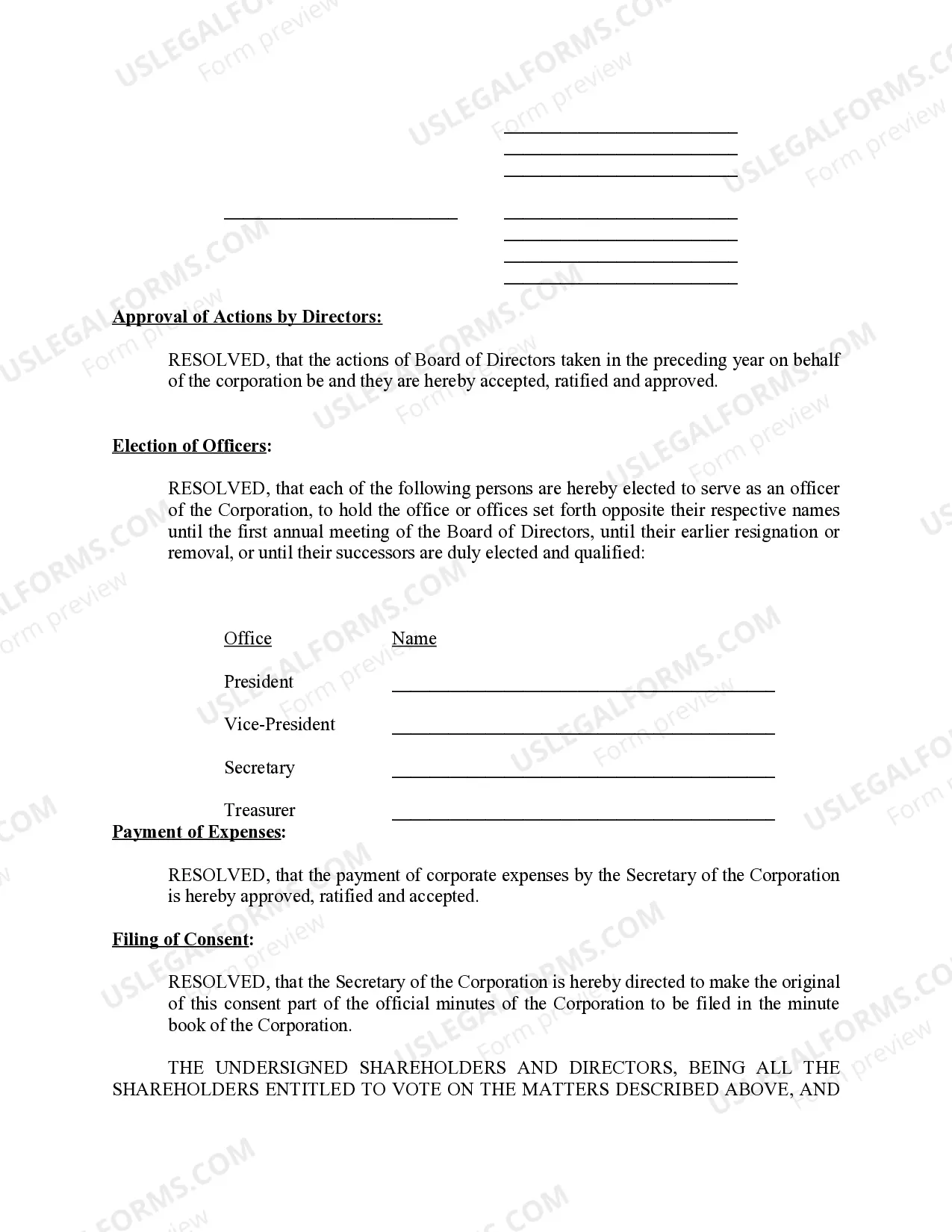
- Election of Directors and Officers
- Approval of actions taken by the Board of Directors
- Documentation of expenses and payments approved
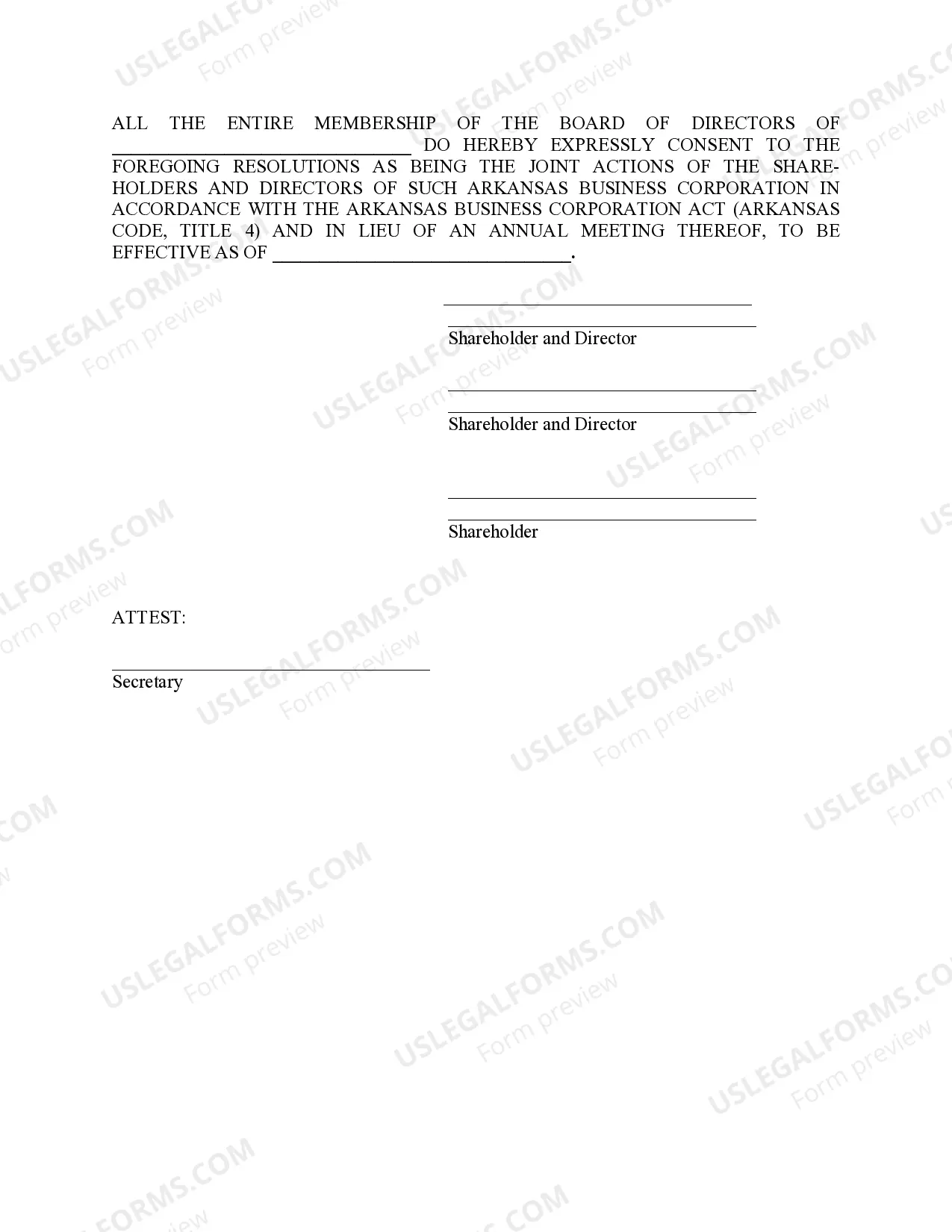
- Signatures of all shareholders and directors
When to use this document
This form should be used annually by corporations to formally document important actions and decisions made by shareholders and directors. It is essential when there is a need to record elections of directors or officers, ratify previous business decisions, or show compliance with state corporate laws without convening a formal meeting.
Who this form is for
- Corporation owners and shareholders
- Board members of a corporation
- Corporate secretaries responsible for maintaining records
How to complete this form
- Enter the name of the corporation in the designated field.
- List the names and addresses of all directors being elected.
- Provide names and titles of officers being elected.
- Include resolutions to approve actions taken by the Board in the previous year.
- Ensure all shareholders and directors sign the document.
Notarization requirements for this form
This form usually doesn’t need to be notarized. However, local laws or specific transactions may require it. Our online notarization service, powered by Notarize, lets you complete it remotely through a secure video session, available 24/7.
Get your form ready online
Our built-in tools help you complete, sign, share, and store your documents in one place.
Make edits, fill in missing information, and update formatting in US Legal Forms—just like you would in MS Word.
Download a copy, print it, send it by email, or mail it via USPS—whatever works best for your next step.
Sign and collect signatures with our SignNow integration. Send to multiple recipients, set reminders, and more. Go Premium to unlock E-Sign.
If this form requires notarization, complete it online through a secure video call—no need to meet a notary in person or wait for an appointment.
We protect your documents and personal data by following strict security and privacy standards.

Make edits, fill in missing information, and update formatting in US Legal Forms—just like you would in MS Word.

Download a copy, print it, send it by email, or mail it via USPS—whatever works best for your next step.

Sign and collect signatures with our SignNow integration. Send to multiple recipients, set reminders, and more. Go Premium to unlock E-Sign.

If this form requires notarization, complete it online through a secure video call—no need to meet a notary in person or wait for an appointment.

We protect your documents and personal data by following strict security and privacy standards.
Avoid these common issues
- Failing to obtain signatures from all necessary shareholders and directors.
- Omitting important resolutions or actions taken during the year.
- Not including the date when the consent form is effective.
Benefits of using this form online
- Convenience of downloading and filling out forms from anywhere.
- Editability allows for customization based on specific corporate needs.
- Reliability of having attorney-drafted templates that comply with state laws.
Looking for another form?

Form popularity
FAQ
Annual meeting minutes are approved by following Robert's Rules of Order, which is a widely accepted parliamentary authority. After the minutes are presented, members can suggest amendments before a motion is made to approve them. Once the motion is seconded, a vote is taken, and if the majority agrees, the minutes are officially approved. Understanding this process can enhance the effectiveness of meeting documentation, particularly regarding Arkansas Annual Minutes.
In Arkansas, teachers typically have a set number of duties as outlined by their contracts and state regulations. The specific number of minutes can vary based on the school, district policies, and the teacher's role. It is important for teachers to be aware of their responsibilities and the time allocated for each duty. Regularly documenting these responsibilities in Arkansas Annual Minutes promotes accountability and clarity.
Arkansas Code 6-17-111 addresses the ethical standards and responsibilities expected of educators in the state. This code outlines specific behaviors and actions that educators must uphold to ensure a safe and productive learning environment. Violations can result in disciplinary action from the Arkansas Department of Education. Understanding this code can be crucial for teachers, and integrating discussions about it into Arkansas Annual Minutes can help in compliance.
Examples of teacher ethics violations in Arkansas include inappropriate relationships with students, misuse of school resources, or failing to report suspected abuse. Such violations can lead to disciplinary measures, including termination or loss of teaching credentials. Recognizing these issues is important for educators to maintain professional standards. Keeping accurate records as part of Arkansas Annual Minutes can also highlight ethical discussions held in meetings.
Annual minutes compliance refers to the adherence to legal requirements for documenting and approving meeting minutes each year. This process includes ensuring that minutes are detailed, accurate, and filed appropriately, especially in Arkansas. Proper compliance helps organizations avoid legal issues and maintain transparency with stakeholders. If you need assistance, consider using uslegalforms for templates that meet Arkansas Annual Minutes standards.
Neglect of duty for a teacher refers to a failure to perform essential responsibilities and obligations. In Arkansas, this can involve not adequately preparing lessons, neglecting student safety, or failing to follow school policies. Such neglect may lead to disciplinary action by school authorities. Understanding these duties is crucial for teachers, let alone for accurate record-keeping like Arkansas Annual Minutes.
Yes, annual meeting minutes do need to be approved to ensure accuracy and legitimacy. Once the minutes are drafted, they are typically presented at the next meeting for review. Members can suggest changes or corrections before a formal vote. This process helps maintain proper records and compliance, especially regarding Arkansas Annual Minutes.
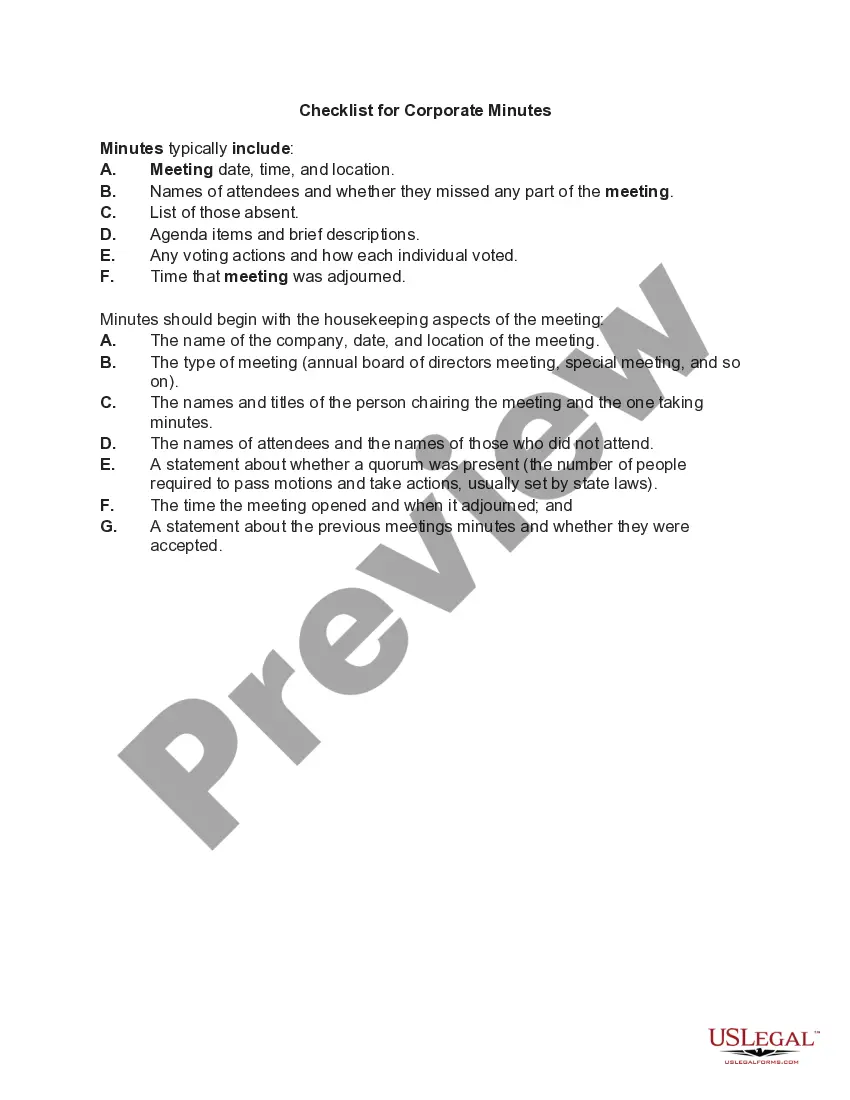
Doing annual minutes involves summarizing the critical discussions, decisions, and resolutions from the year. Make sure to record the meeting date, time, and participants, as well as significant topics like financial reports and major company changes. Utilizing a platform like US Legal Forms can streamline this process, ensuring your Arkansas Annual Minutes are thorough and compliant with legal standards.
To keep minutes for an LLC, document all significant decisions made during meetings. Ensure that you note the date, time, and attendees present. Keeping detailed Arkansas Annual Minutes not only aids in transparency but also supports legal requirements, helping to protect the interests of the LLC and its members.
In Arkansas, the minimum age to work is 14, but there are specific regulations for minors under 16. It is essential to understand the restrictions on hours and types of work available to younger individuals. These rules allow young people to gain valuable work experience while adhering to labor laws, ensuring they have opportunities for employment.