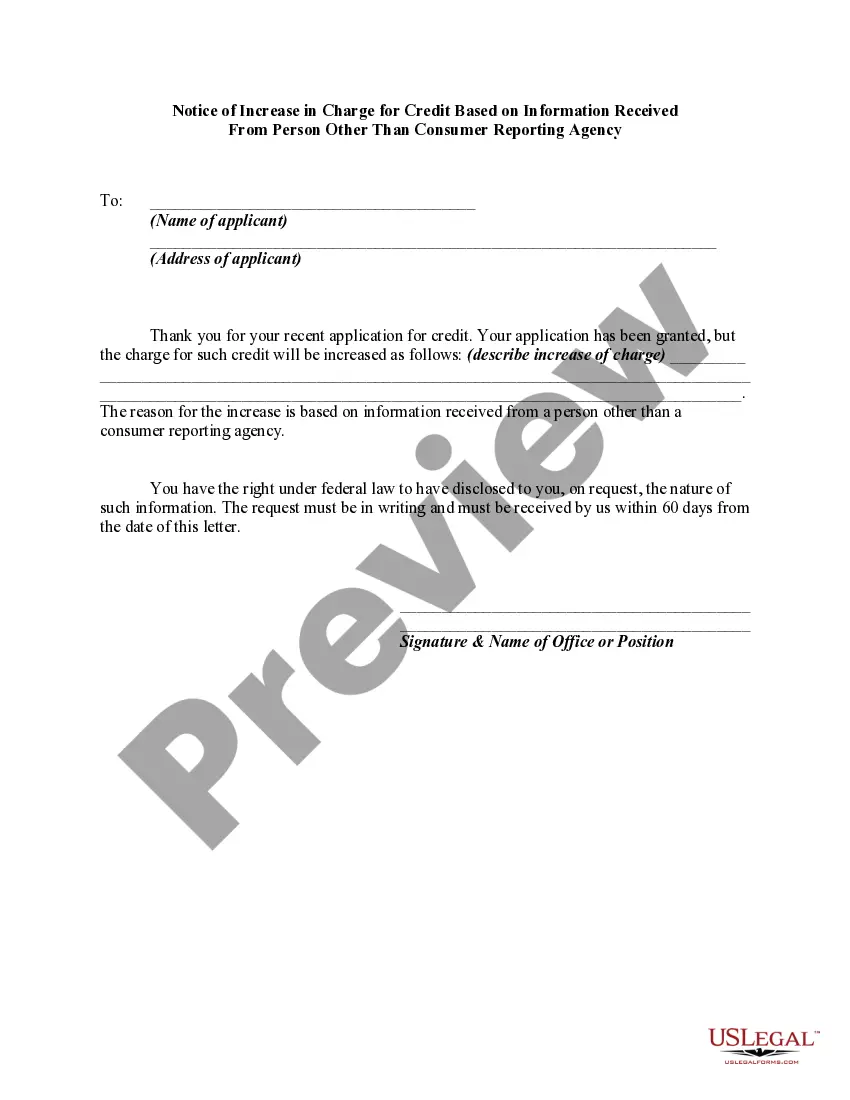
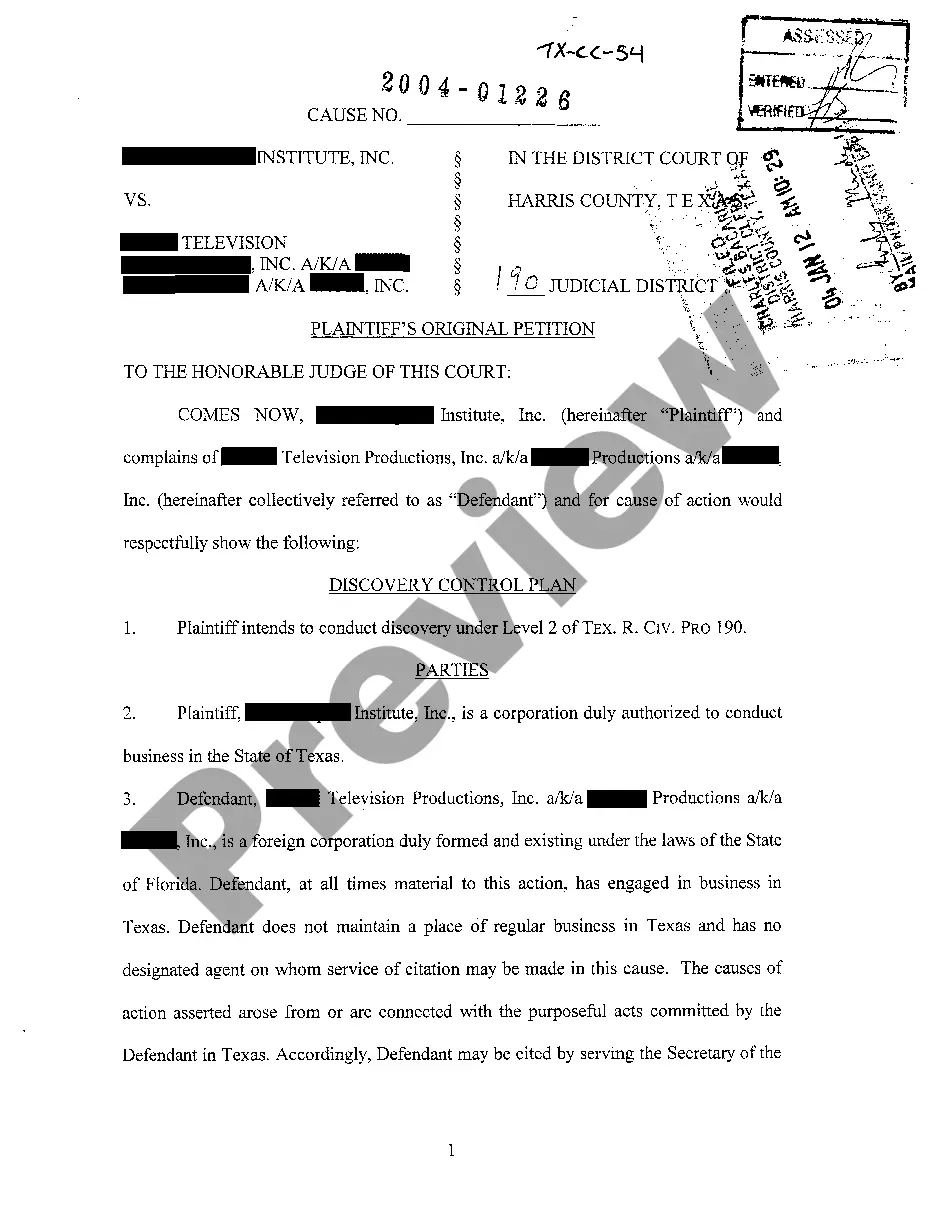
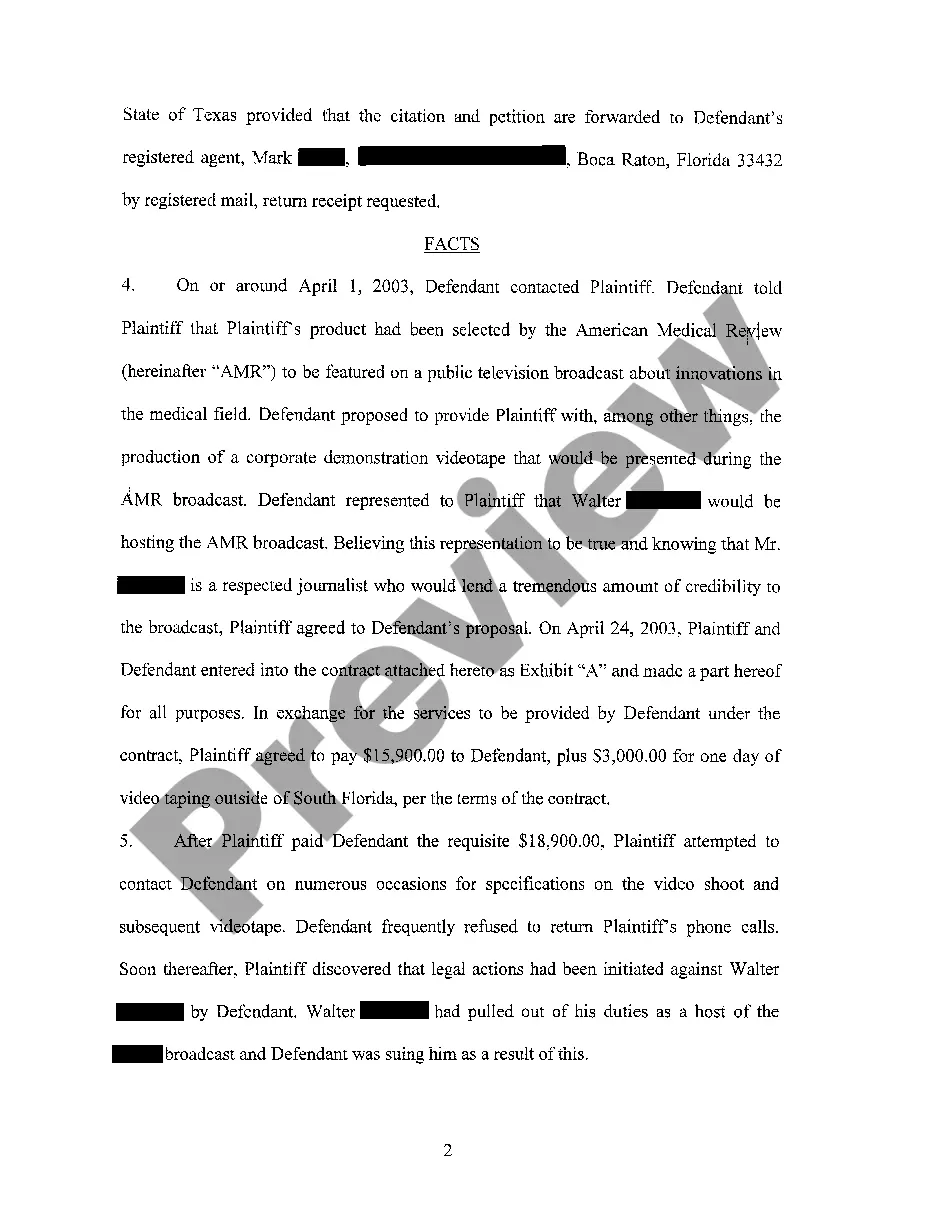
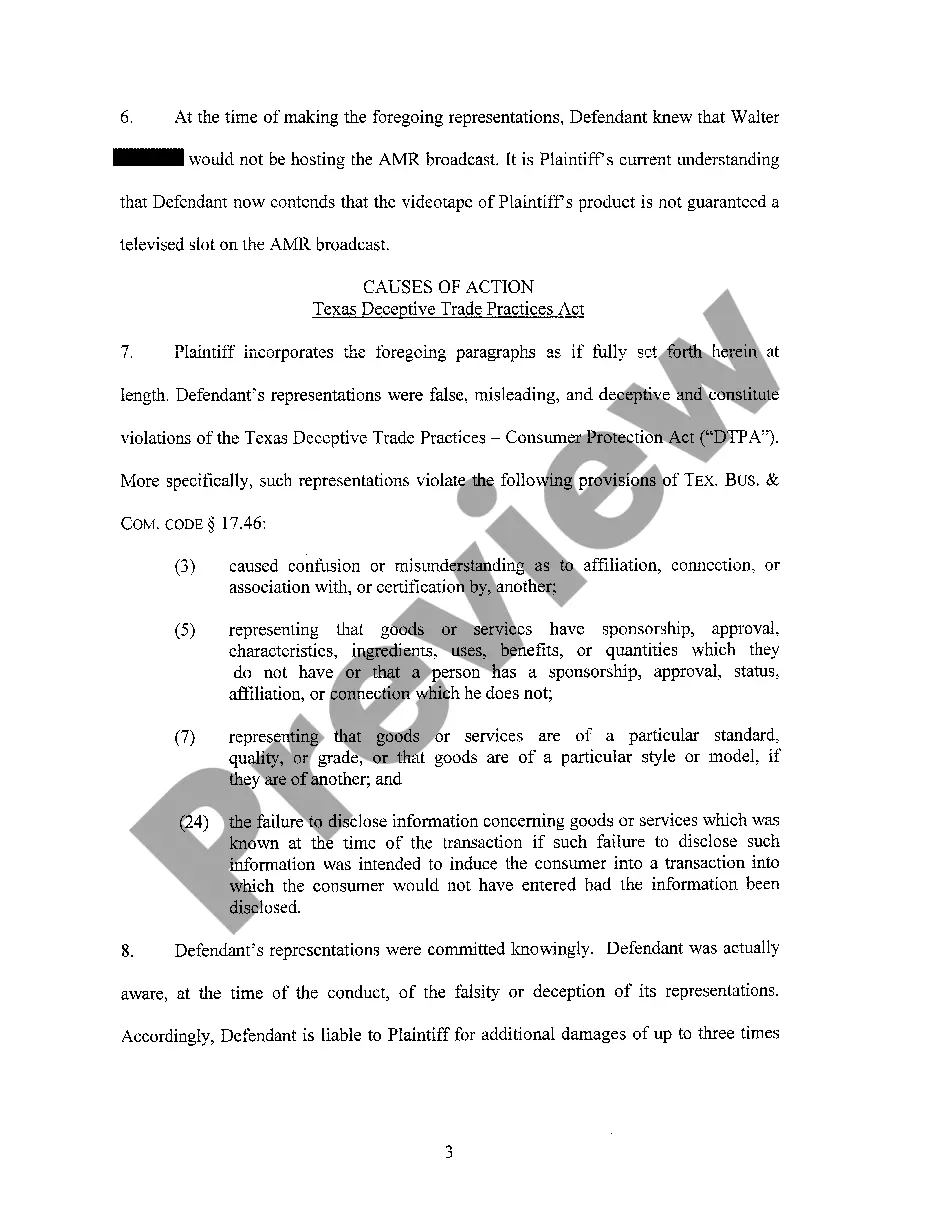
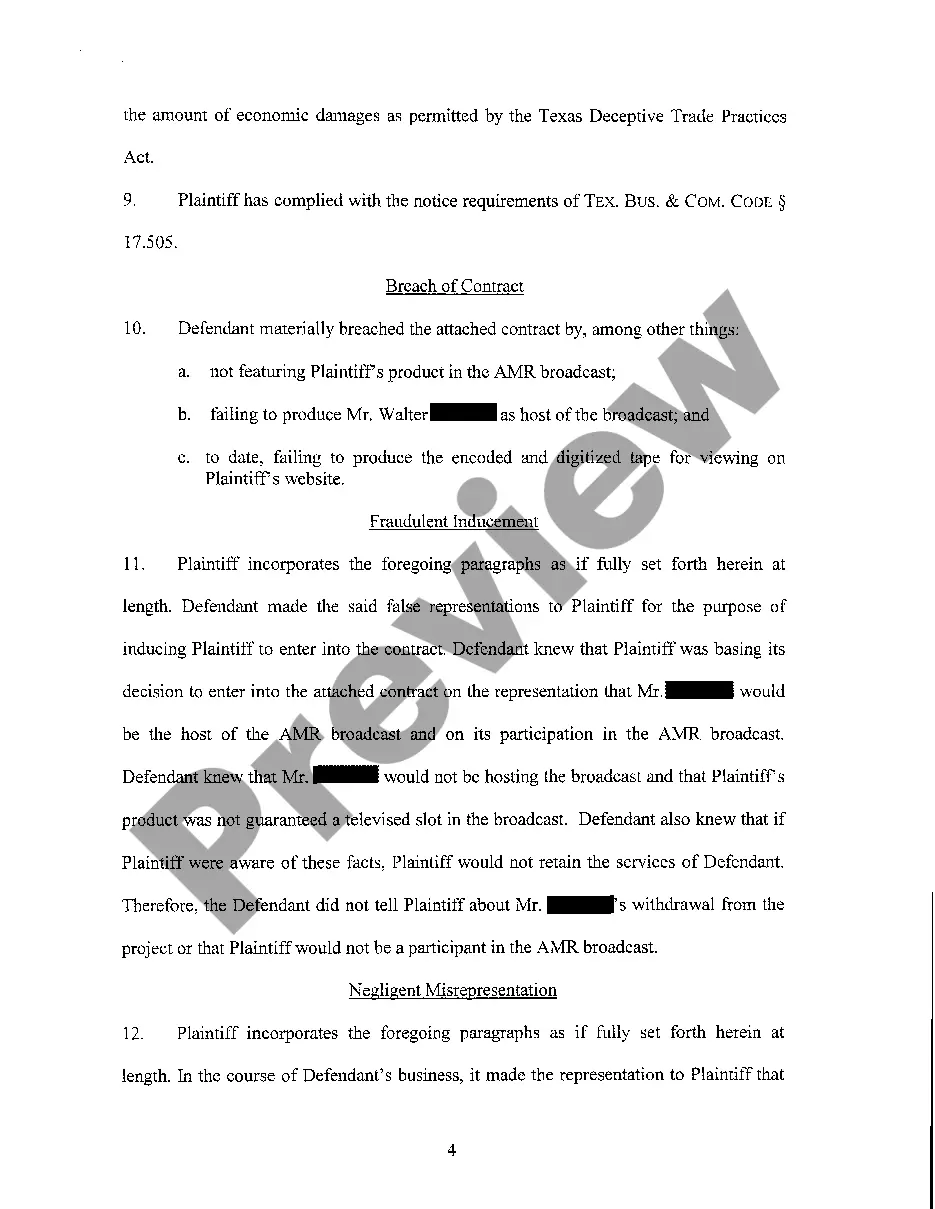
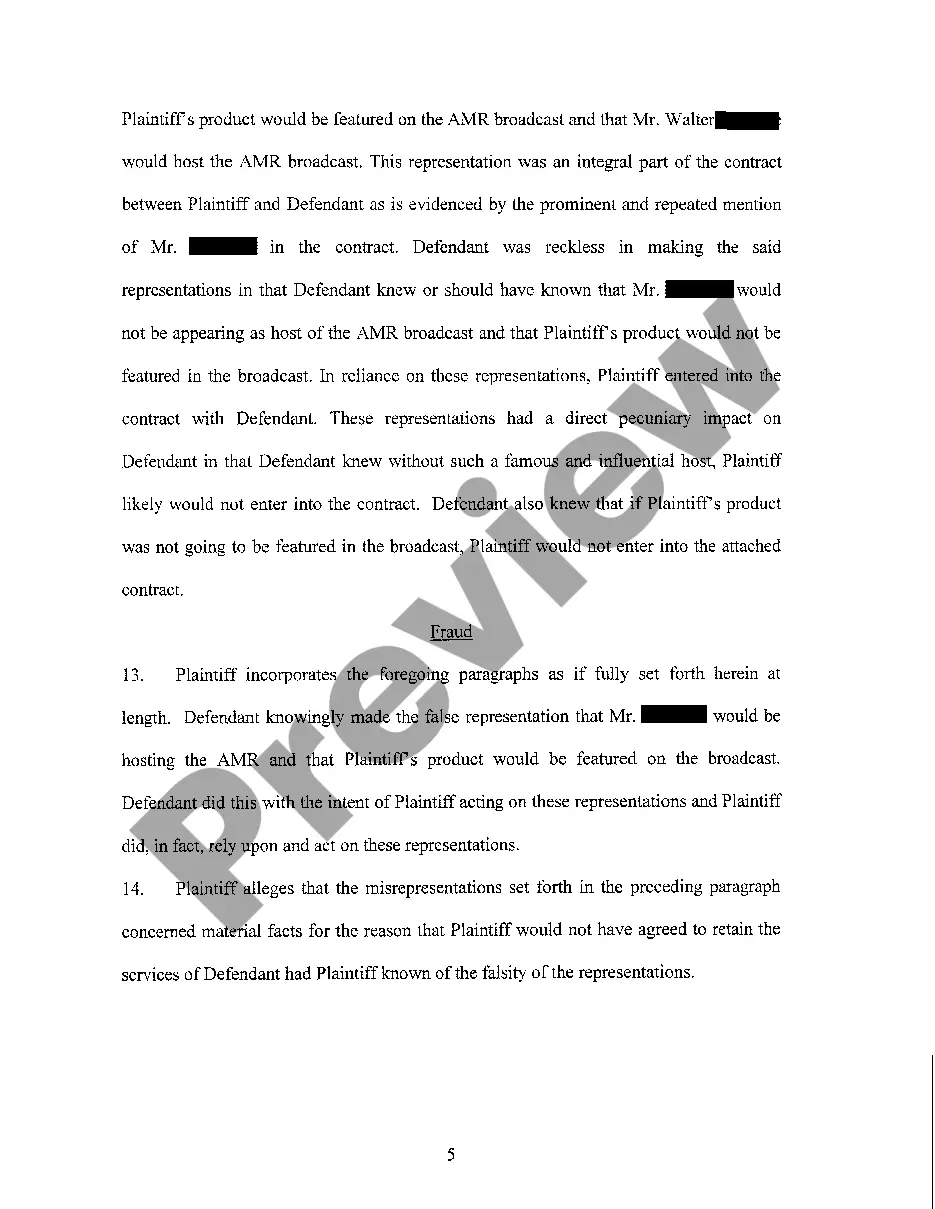
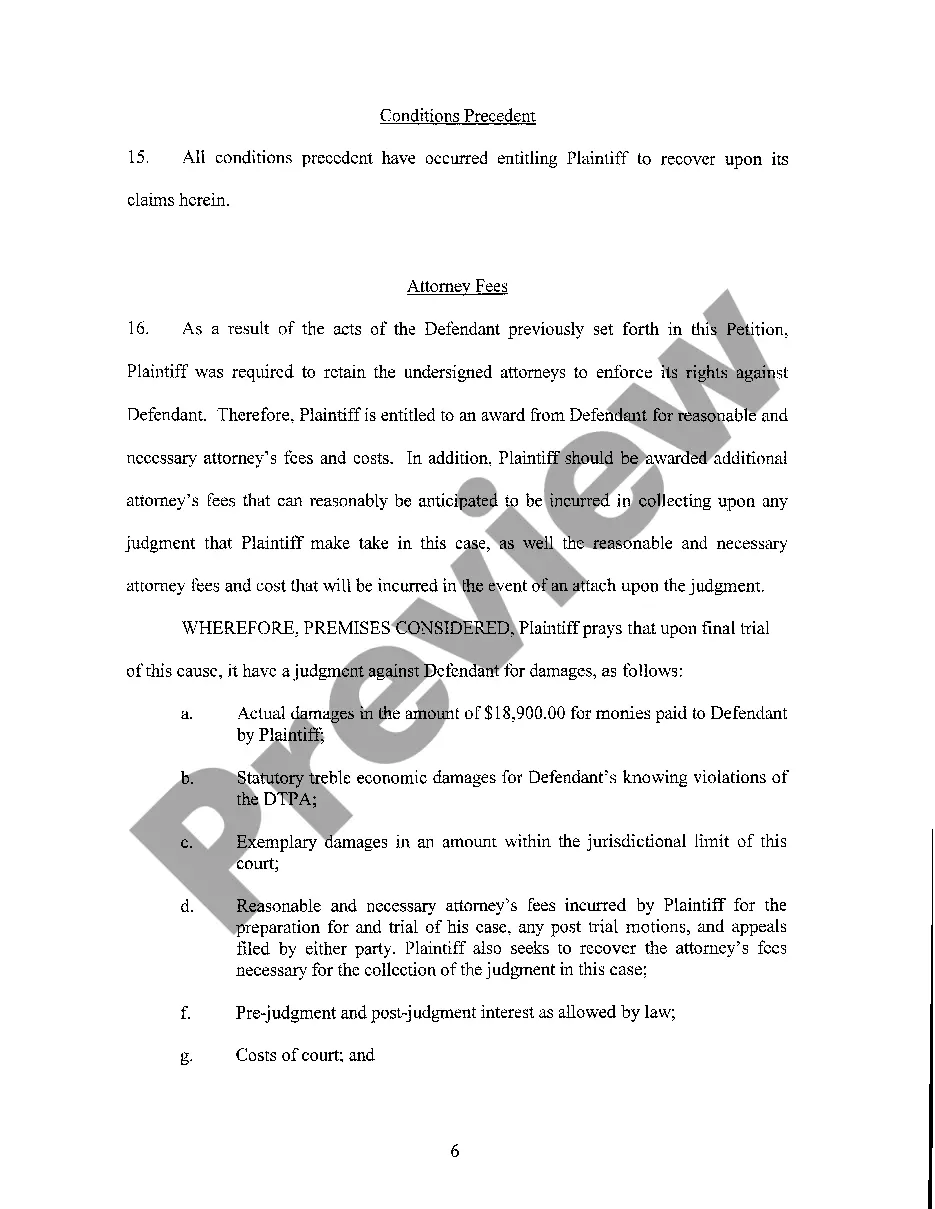
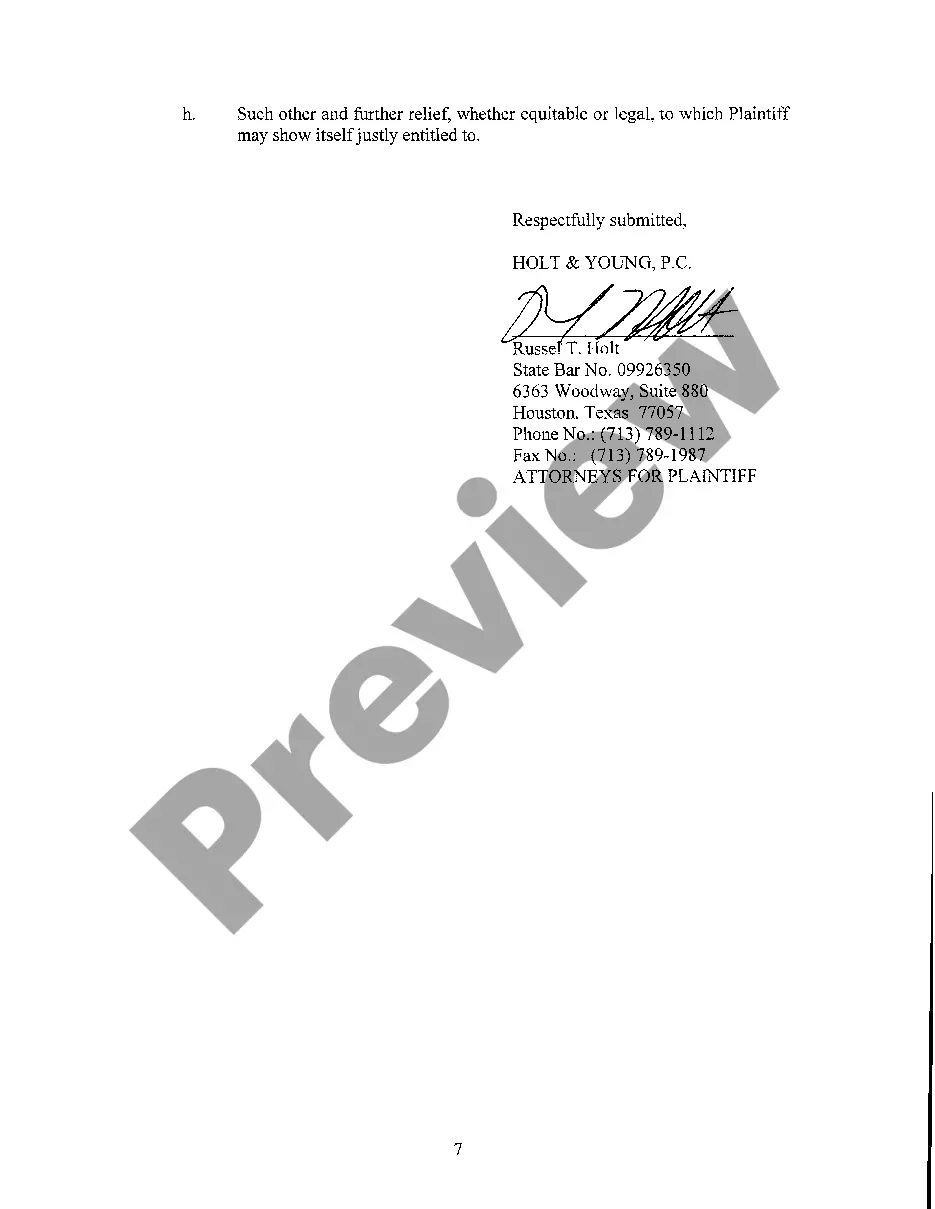
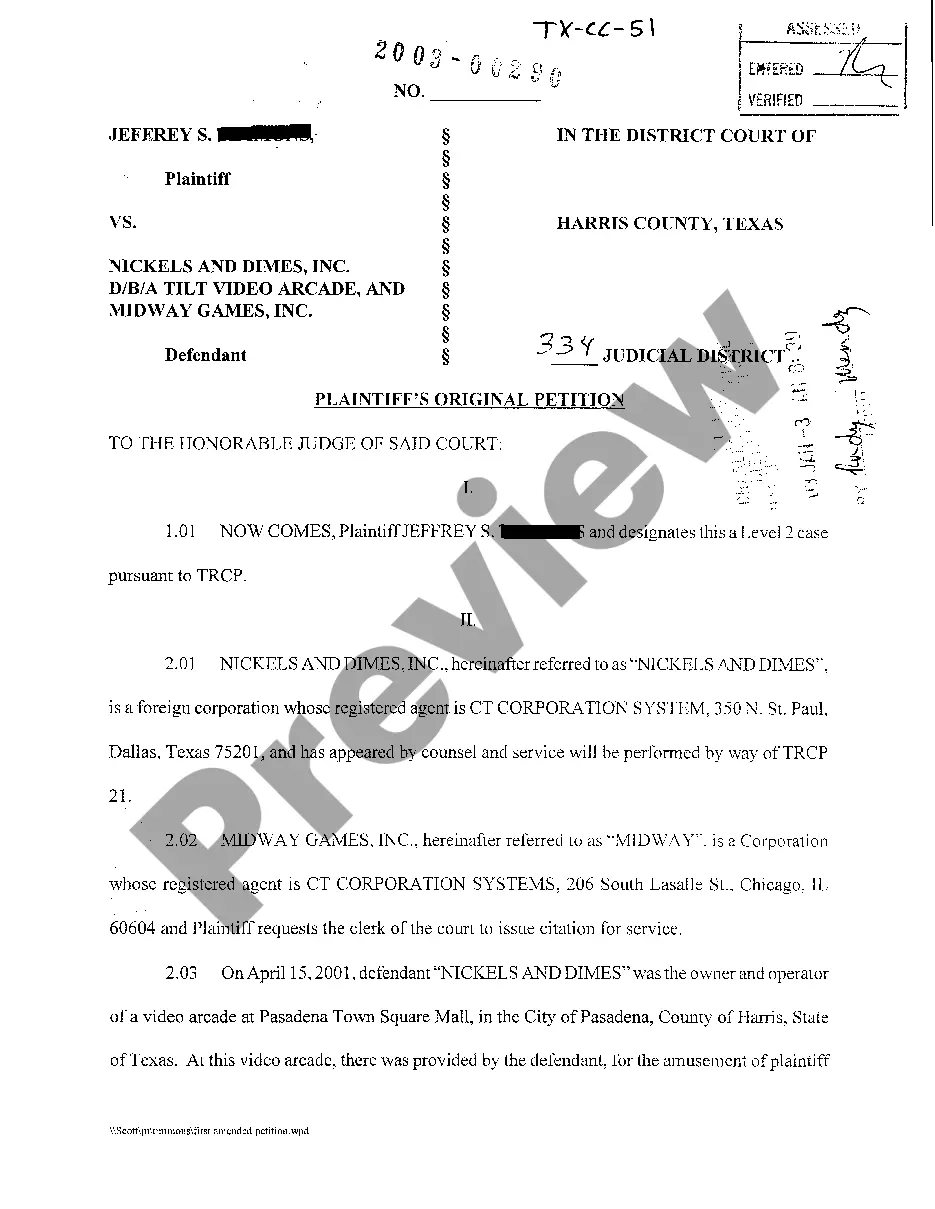
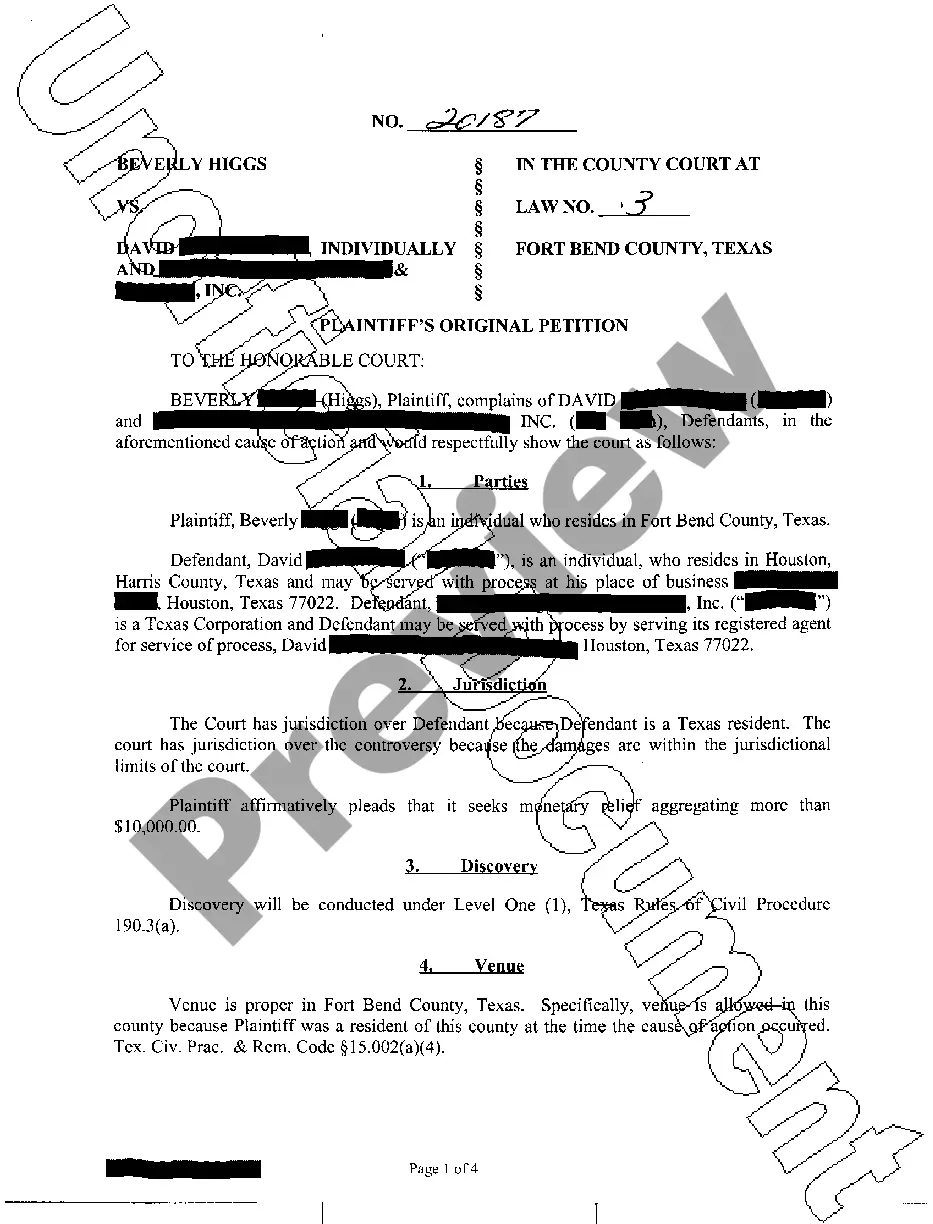
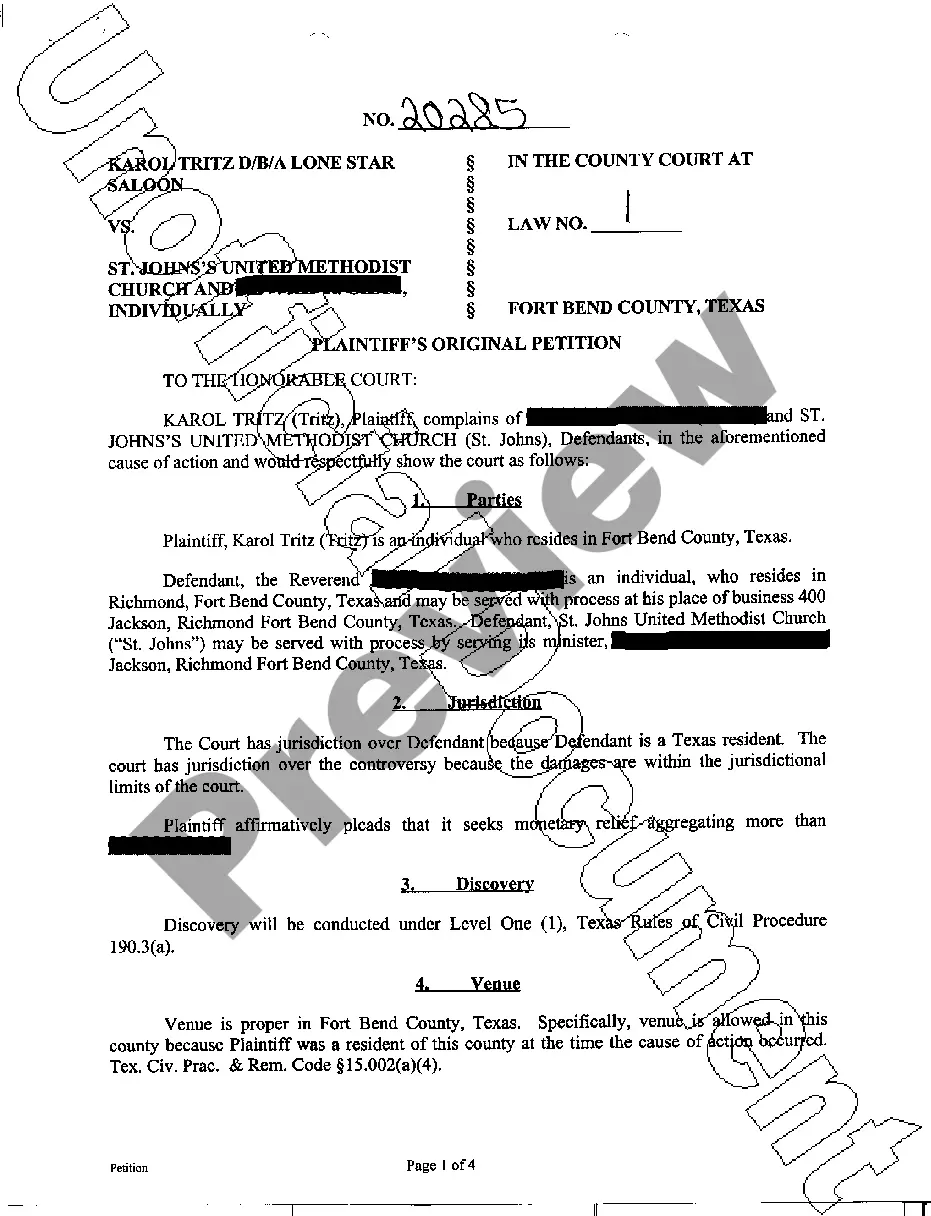
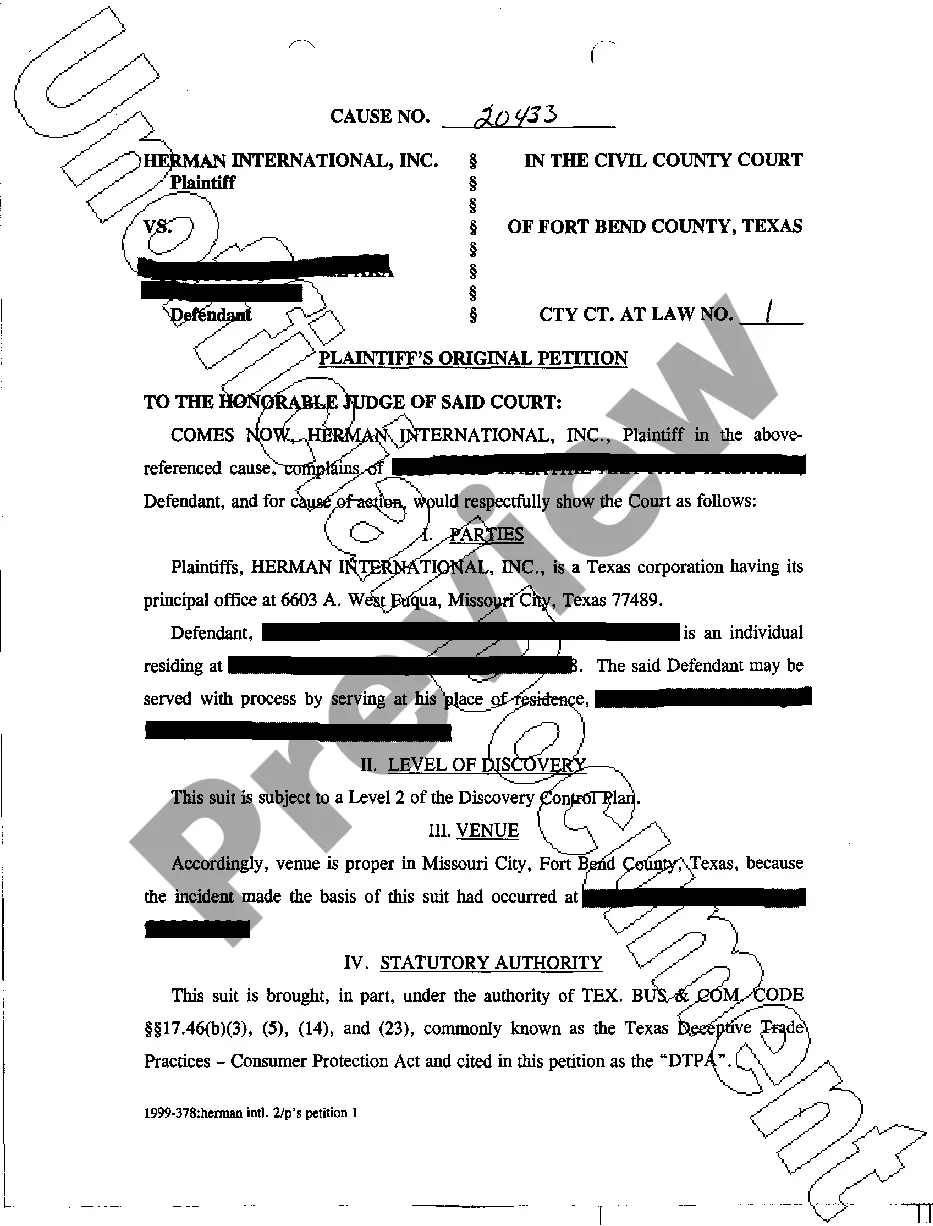
Texas Plaintiff's Original Petition regarding Deceptive Trade Practices
Does this form need to be notarized?
This form usually doesn’t need to be notarized. However, local laws or specific transactions may require it. Our online notarization service, powered by Notarize, lets you complete it remotely through a secure video session, available 24/7.
Form popularity
FAQ
A DTPA lawsuit generally must be filed within two years after the date on which the false, misleading, or deceptive act or practice occurred. If the deceptive act took place over a period of time, then, to be safe, you should begin suit two years from the date of the first such action.
The Deceptive Trade Practices Act (DTPA) is designed to protect consumers from false promises made by businesses offering goods or services. While a DTPA claim is not at the center of a product liability case involving injuries, it can be a component of obtaining a fair settlement from an insurance company.
The DTPA protects consumers from false, misleading, and deceptive statements or business practices.The causation standard that a DTPA consumer must prove is that the representations were a producing cause of their injuries. Additionally, the DTPA defendant's actions must be in connection with the transaction.
The Texas Deceptive Trade Practices-Consumer Protection Act ("DTPA") was enacted on May 21, 1973.The primary purpose of the DTPA is to protect consumers against false, misleading, and deceptive business and insurance practices, unconscionable actions, and breaches of warranty.
The underlying purpose of the Texas Deceptive Trade Practices Consumer Protection Act (DTPA) is to protect consumers against false, misleading, and deceptive business practices, unconscionable actions, and breaches of warranty and to provide efficient and economical procedures to secure such protection.
DEFINITION OF A CONSUMER: Section 17.45(4) of the DTPA defines consumer as an individual, partnership, corporation, this state, or a subdivision or agency of this state who seeks or acquires by purchase or lease, any goods or services, except that the term does not include a business consumer that has assets of $25