New York Notice of Default in Payment of Rent as Warning Prior to Demand to Pay or Terminate for Residential Property
About this form
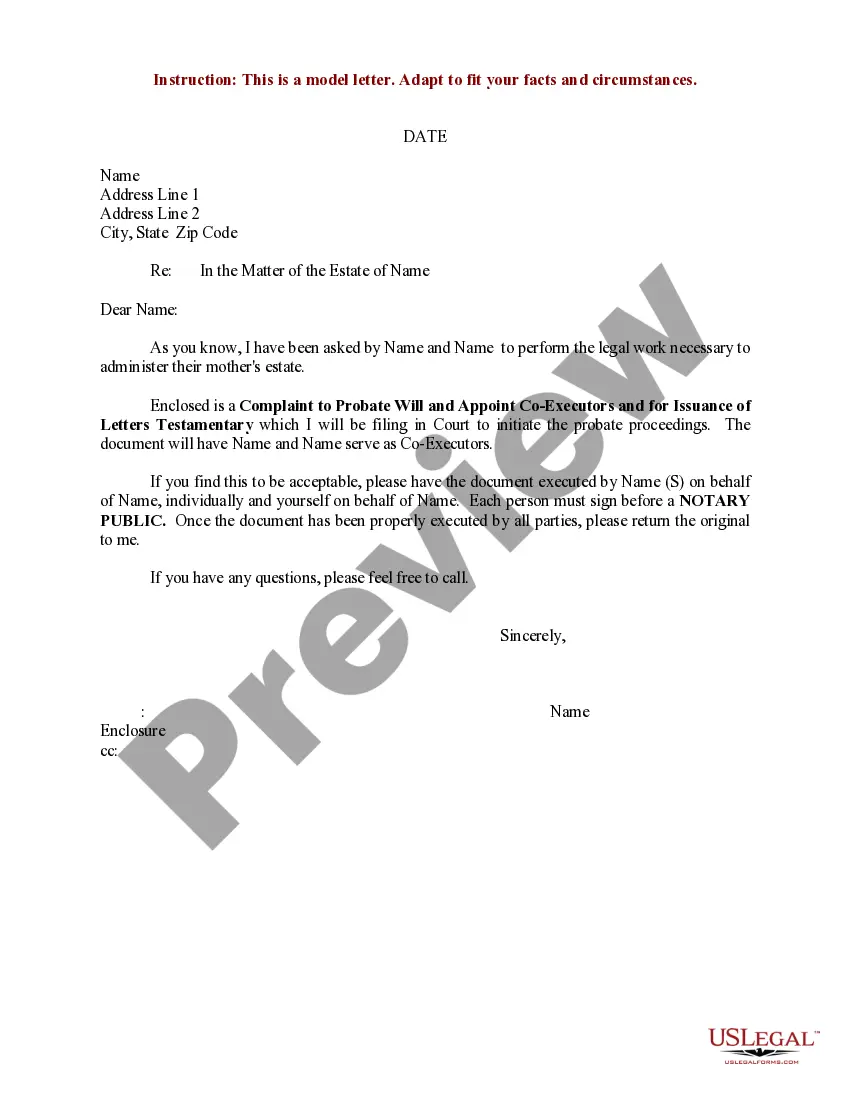
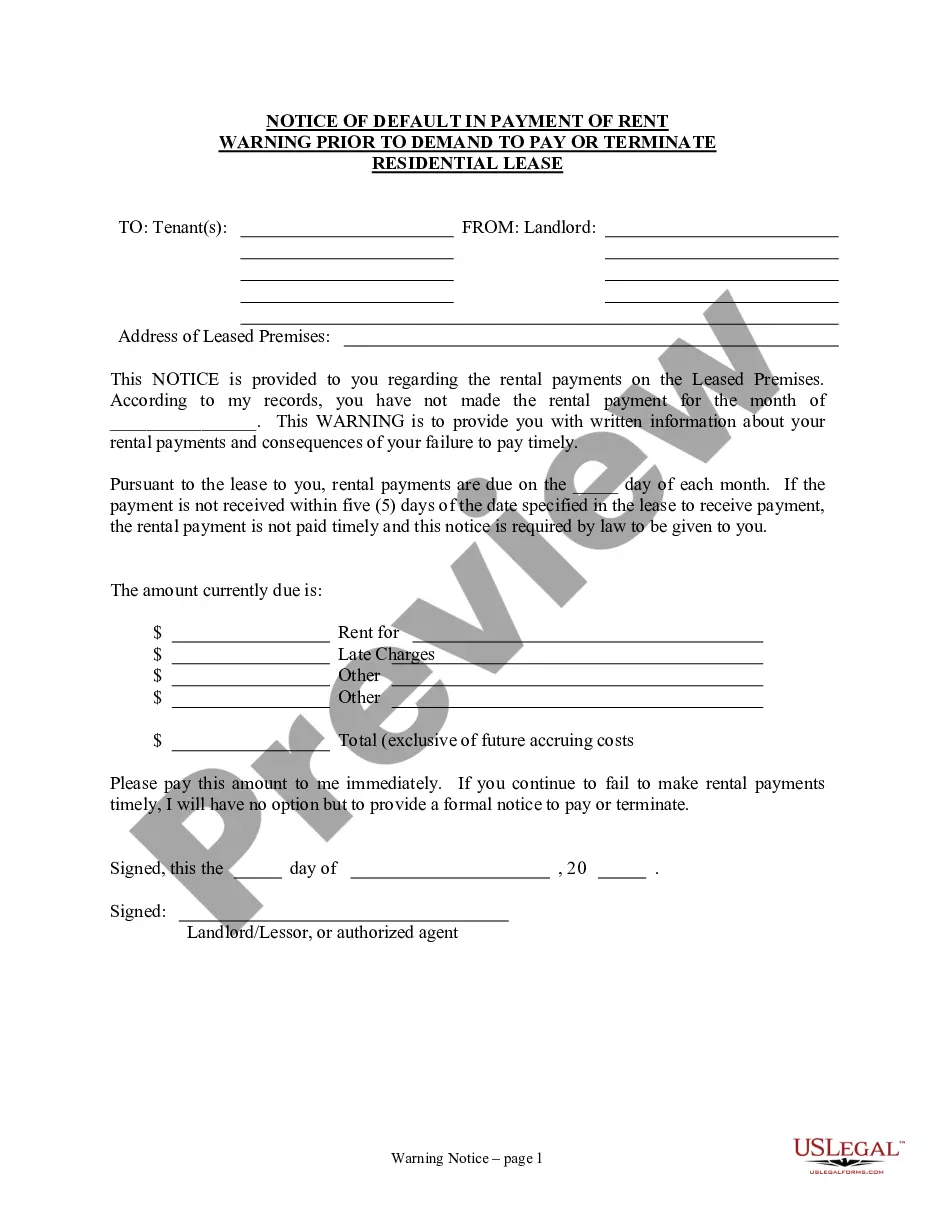
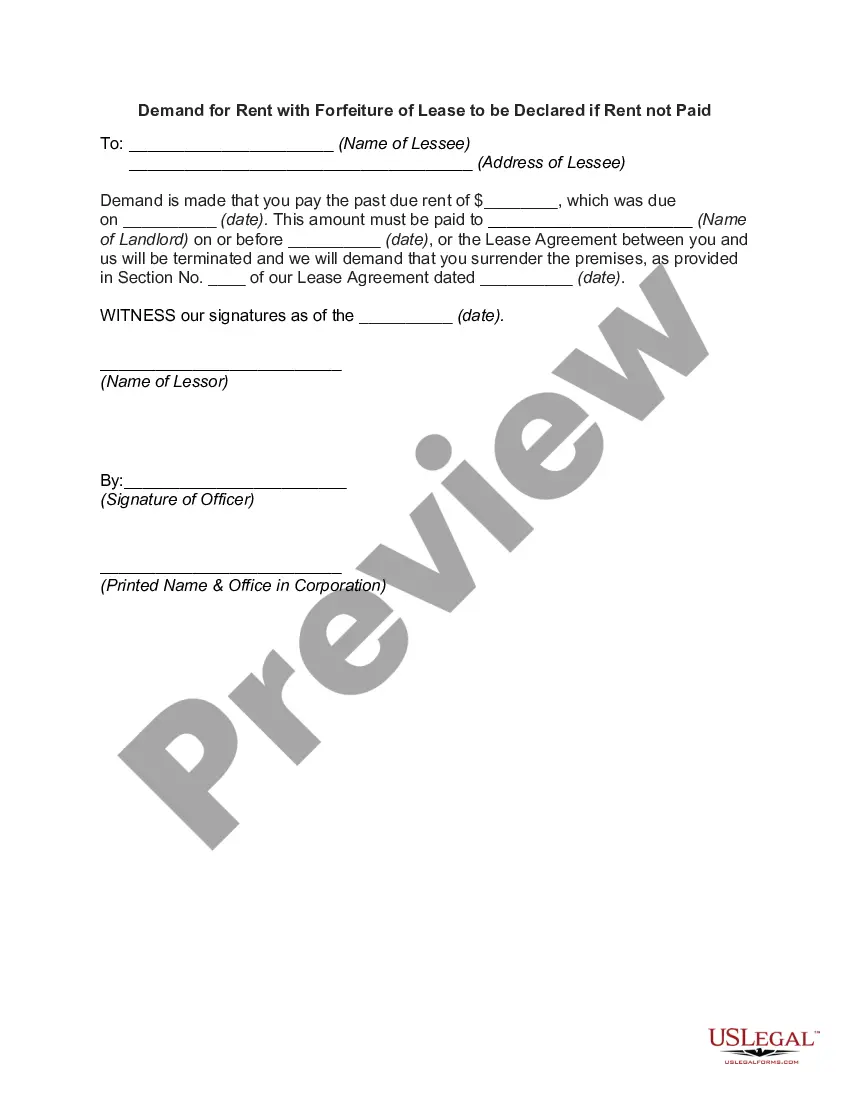
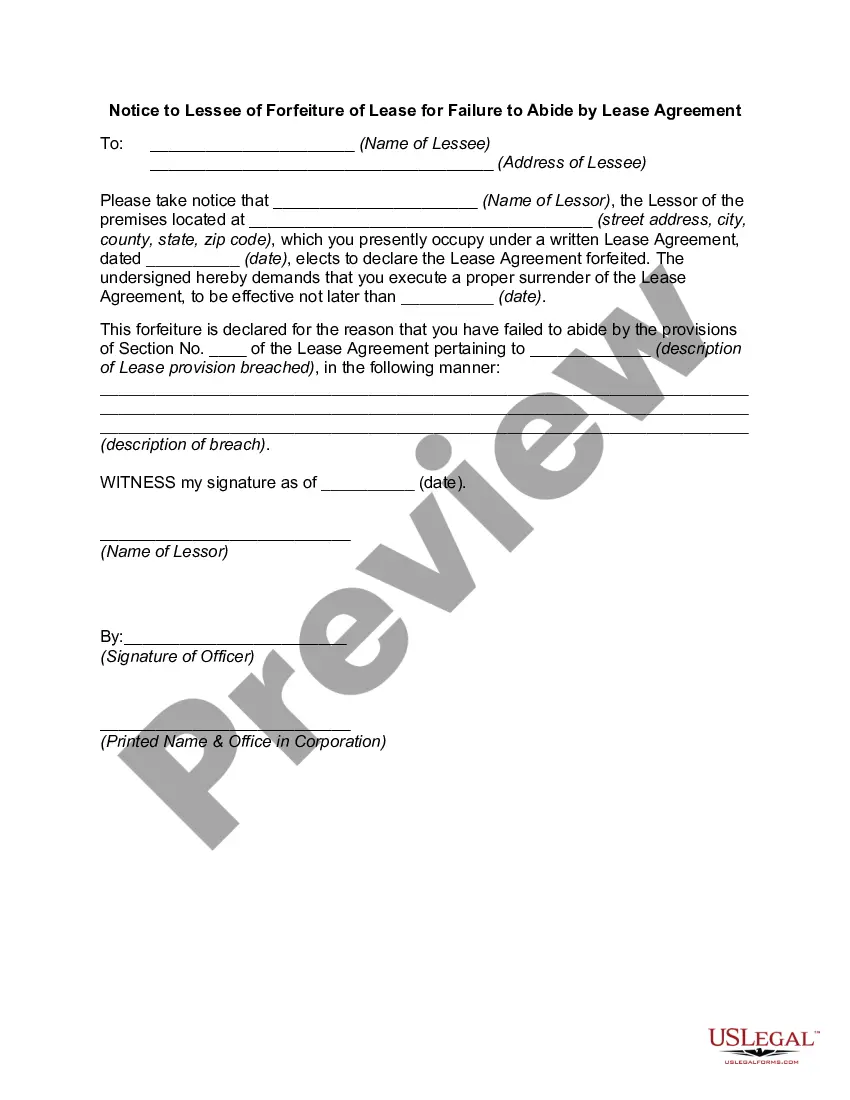
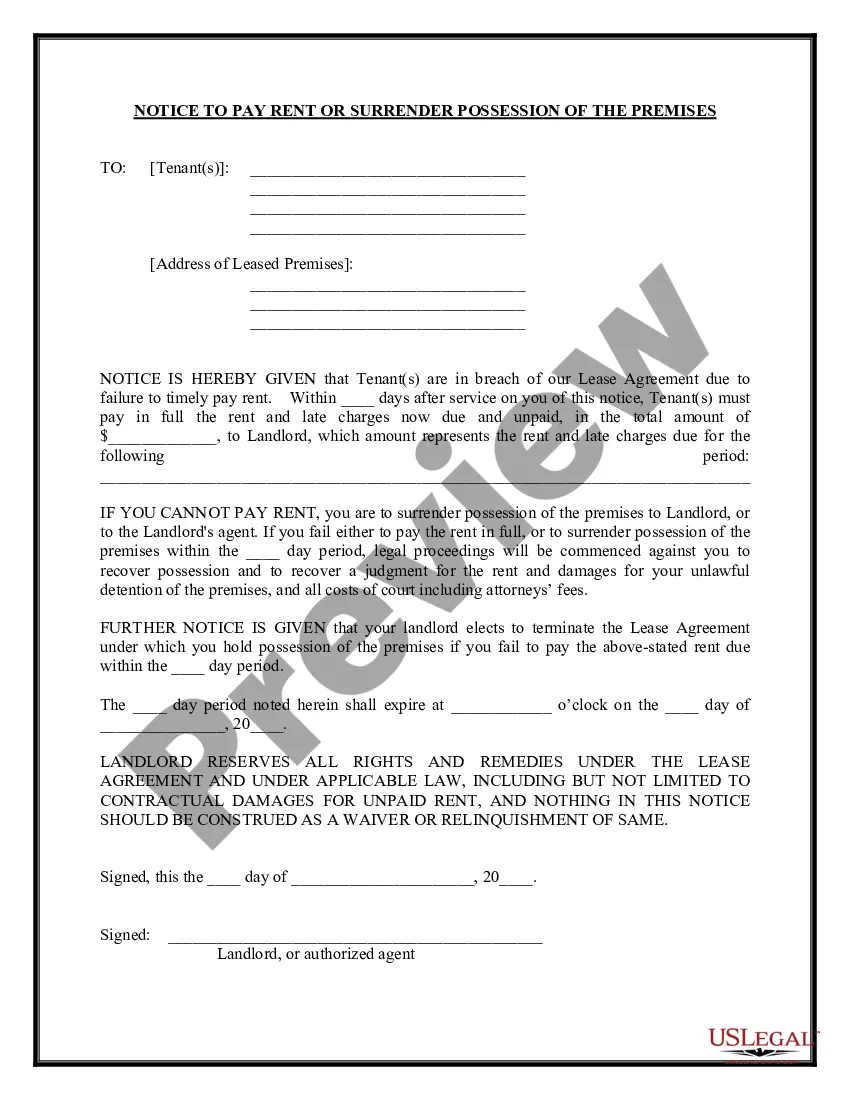
This Notice of Default in Payment of Rent as Warning Prior to Demand to Pay or Terminate for Residential Property is a legal document used by landlords to inform tenants that they have failed to pay rent on time. This form serves as an official warning, advising the tenant of their overdue payments and the potential consequences of continued non-payment. It is distinct from other notices as it specifically addresses residential property and communicates a default concerning rent payment, allowing landlords to remind tenants of their obligations before taking further legal actions.
Main sections of this form
- Tenant information, including their name and address of the leased premises.
- Details of the rent due, including the specific month and amounts owed.
- Statement of the due date for rent payments as per the lease agreement.
- Consequences of failing to pay rent, including potential lease termination.
- Landlord's signature to validate the notice.
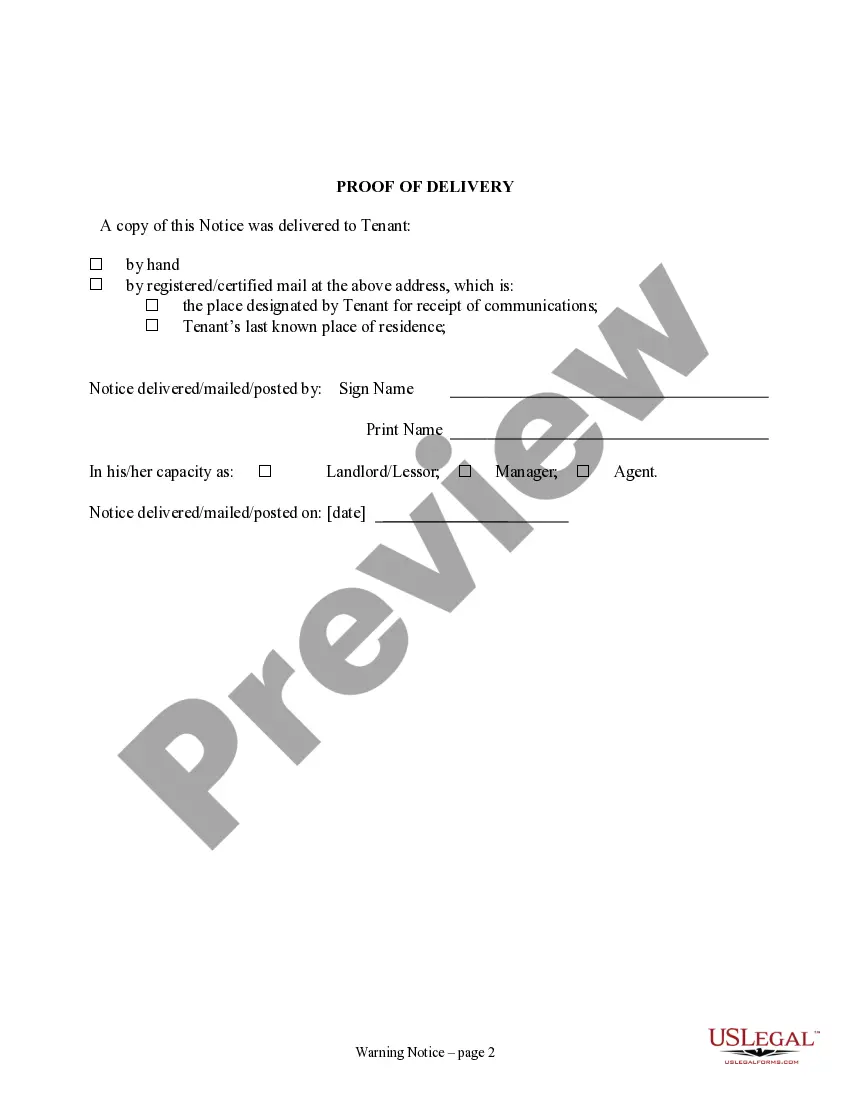
- Proof of delivery options to ensure the tenant receives the notice.

When this form is needed
This form should be used when a tenant has missed a rent payment or has not paid rent by the agreed-upon due date. It serves as an official reminder of their obligation and outlines the potential repercussions for failing to pay rent, specifically informing them of the possibility of lease termination. This notice allows landlords to address payment issues formally before proceeding with more severe legal actions, such as eviction proceedings.
Who can use this document
This form is intended for:
- Landlords or property managers seeking to notify tenants of non-payment of rent.
- Residential property owners who want to remind tenants of their lease obligations.
- Legal representatives of landlords who need a formal document to address tenant default.
Instructions for completing this form
- Identify the parties involved by filling in the tenant's name and the address of the leased property.
- Specify the month for which rent is due and the exact amount owed, including any late fees.
- Clearly state the deadline for rent payment, according to the lease agreement.
- Include the landlordâs signature and the date the notice is issued.
- Document the method of delivery, whether by hand, mail, or posted at the property.
Is notarization required?
This form does not typically require notarization unless specified by local law. Notarization can add an extra layer of legitimacy, but in most cases, delivering the notice according to the stipulated methods suffices to meet legal requirements.
Get your form ready online
Our built-in tools help you complete, sign, share, and store your documents in one place.
Make edits, fill in missing information, and update formatting in US Legal Forms—just like you would in MS Word.
Download a copy, print it, send it by email, or mail it via USPS—whatever works best for your next step.
Sign and collect signatures with our SignNow integration. Send to multiple recipients, set reminders, and more. Go Premium to unlock E-Sign.
If this form requires notarization, complete it online through a secure video call—no need to meet a notary in person or wait for an appointment.
We protect your documents and personal data by following strict security and privacy standards.
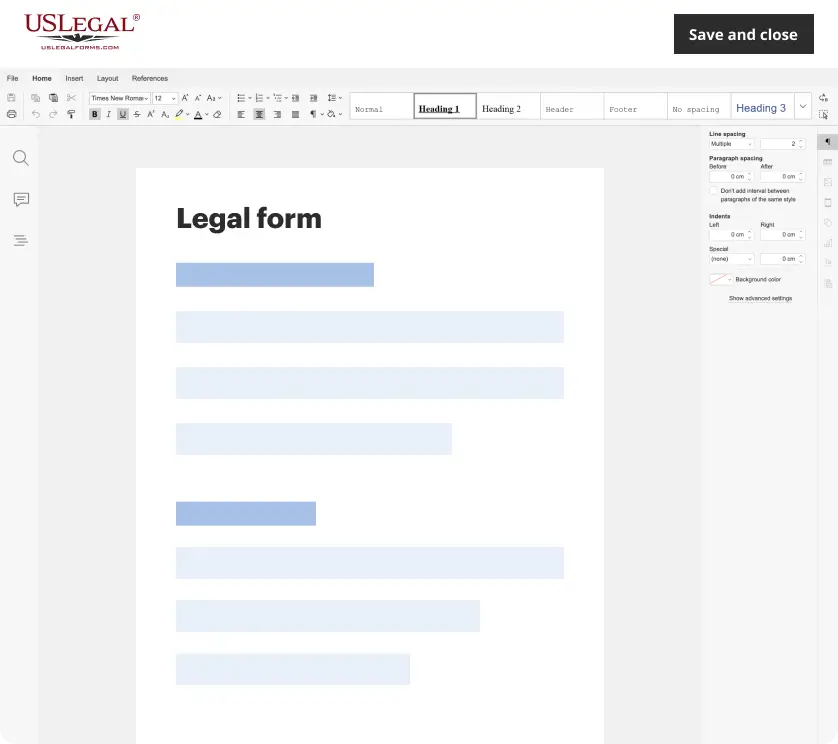
Make edits, fill in missing information, and update formatting in US Legal Forms—just like you would in MS Word.
Download a copy, print it, send it by email, or mail it via USPS—whatever works best for your next step.
Sign and collect signatures with our SignNow integration. Send to multiple recipients, set reminders, and more. Go Premium to unlock E-Sign.
If this form requires notarization, complete it online through a secure video call—no need to meet a notary in person or wait for an appointment.
We protect your documents and personal data by following strict security and privacy standards.
Mistakes to watch out for
- Failing to provide accurate amounts of overdue rent.
- Not specifying the correct month for which rent is due.
- Omitting the landlord's signature, which can invalidate the notice.
- Not adhering to the required notice period set by state law.
- Neglecting to document the delivery method, which is crucial for legal purposes.
Advantages of online completion
- Immediate access to a professionally drafted legal document tailored for your needs.
- Convenient download, allowing for easy storage and printing.
- Editable fields, enabling customization based on specific tenant and property information.
- Reliable and up-to-date, ensuring compliance with current legal standards.
Legal use & context
- The notice serves as a formal record of communication regarding rent default.
- Failure to deliver this notice accurately may affect future eviction proceedings.
- Understanding the legalities of notice periods helps landlords protect their rights.
What to keep in mind
- This notice is an essential step in addressing tenant payment defaults.
- Clear communication of terms can help resolve issues before escalation.
- Adhering to state regulations ensures the form's effectiveness and legality.
Looking for another form?
Form popularity
FAQ
Can a landlord evict you for no reason? The short answer is no. Landlords have several guidelines to follow regarding evictions and will need to take tenants to housing court prior to giving them the boot. The most common reasons a landlord may move to evict fall into two categories: nonpayment and holdover.
Late Fees. Late fees can only be charged if rent is received more than five days after the due date established in the lease, and cannot exceed $50 or five percent of the rent, whichever is less. The 14 day return of a security deposit does not apply to rent regulated tenants.
In New York, property is generally presumed abandoned if there has been no activity in the account for a set period of time, usually between two and five years.
No. The landlord must go to court, must win the case, and then must pay a fee to have a law enforcement officer properly evict you.
The notice must state that the tenant has 14 days to pay rent or move out of the rental unit. If the tenant does not pay the rent or move out of the rental unit within the 14 days, the landlord can begin eviction proceedings against the tenant (see N.Y. Real Prop. Acts § 711(2)).
If you want to evict a month-to-month renter with no lease in place, you must give 30-days notice before you ask for eviction.
It begins on the first day of the month and ends on the last day of the month. If Joe's landlord wants Joe to move out by September 30, the landlord would have to give Joe notice on or before July 1. A tenant must give the landlord one tenancy month's written notice.
Your landlord can enter your apartment at any time and without notice in an emergency, and at a reasonable time after providing appropriate notice if the entry is either: To provide necessary or agreed upon repairs or services, or. In accordance with the lease, or.
In New York 5 Page 9 City, 30 days' notice is required, rather than one month. Landlords do not need to explain why the tenancy is being terminated, they only need to provide notice that it is, and that refusal to vacate will lead to eviction proceedings.