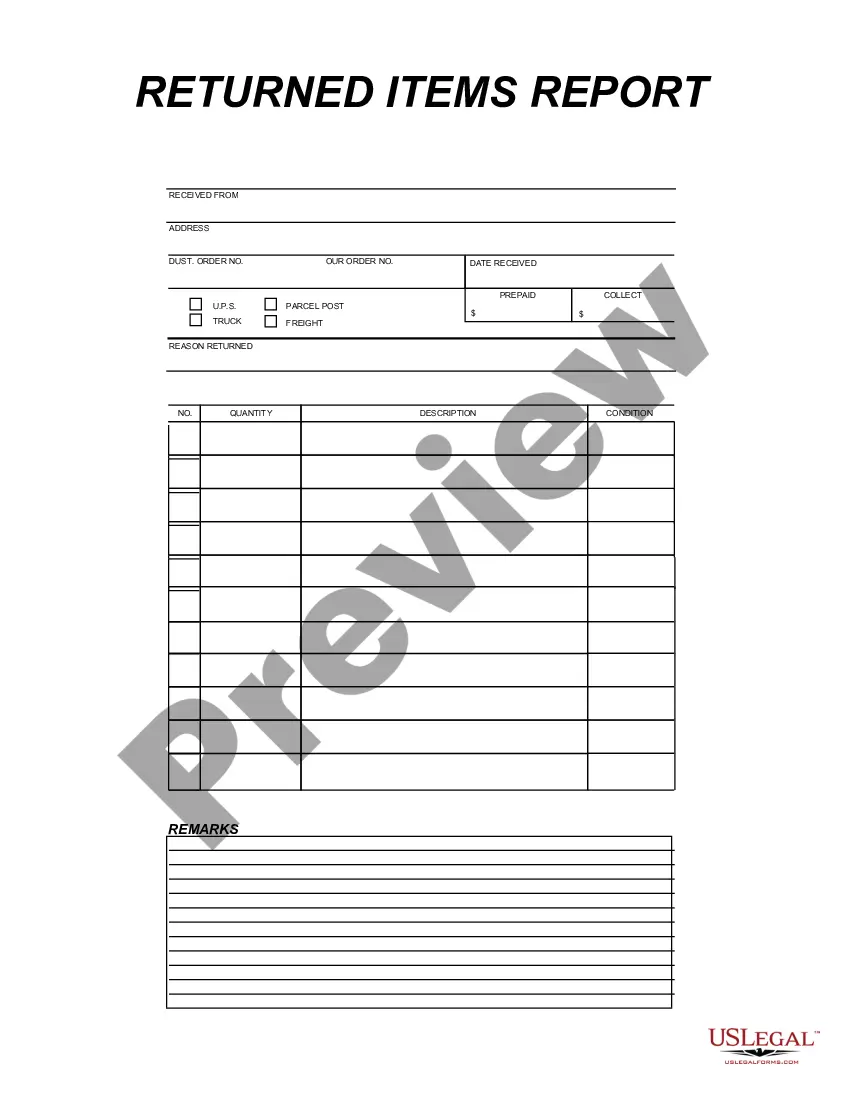
Returned Items Report
About this form
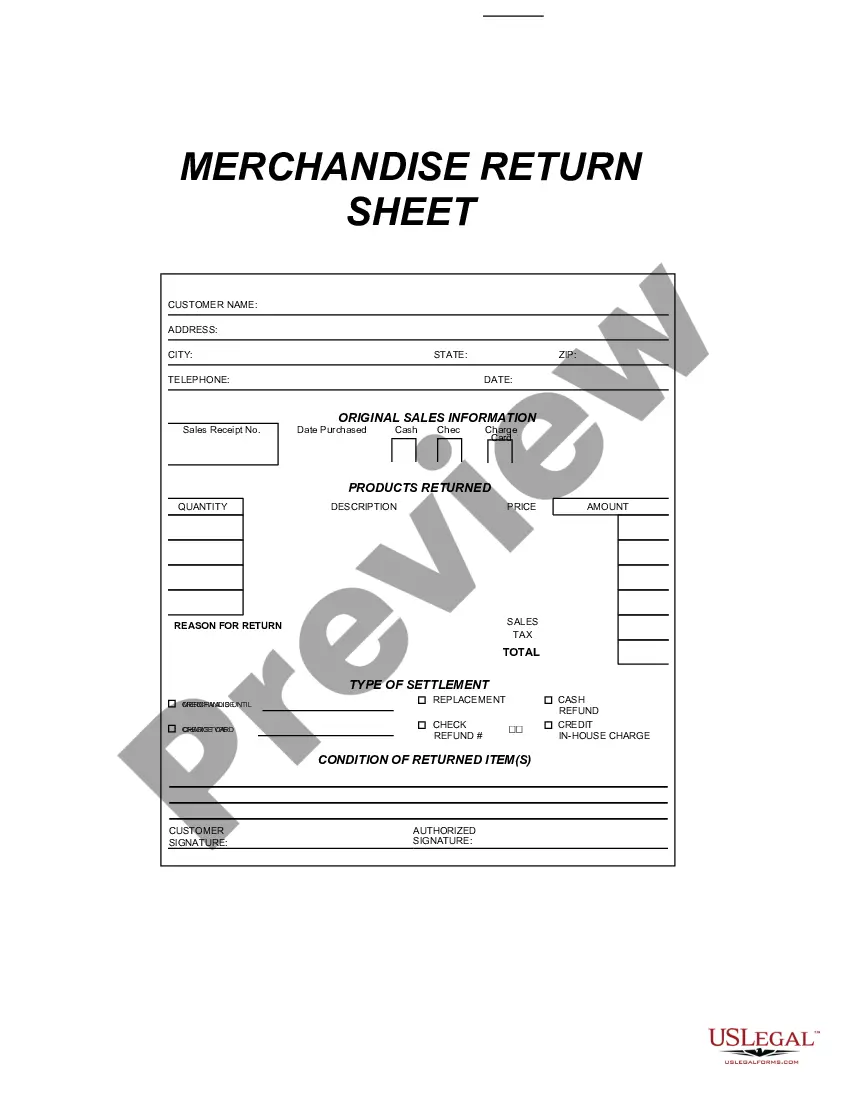
The Returned Items Report is a specific business form used to document items that have been returned to a company. This form serves as a record, highlighting the order information, reasons for return, and condition of the returned items. It is distinct from other forms by providing a structured way to track and manage returned goods systematically, helping businesses keep accurate inventory and reduce discrepancies.
Main sections of this form
- Received from Address: The address from which the items were returned.
- Order Numbers: Includes both the company's order number and the returning order number for reference.
- Date Received: The date the returned items were logged.
- Prepaid or Collect: Indicates whether the shipping cost was prepaid or charged to the returner.
- Reason Returned: A field to specify why the items were returned.
- Quantity and Description: Details on the number of items returned and their description.
- Condition and Remarks: Space to comment on the condition of returned items and any additional remarks.
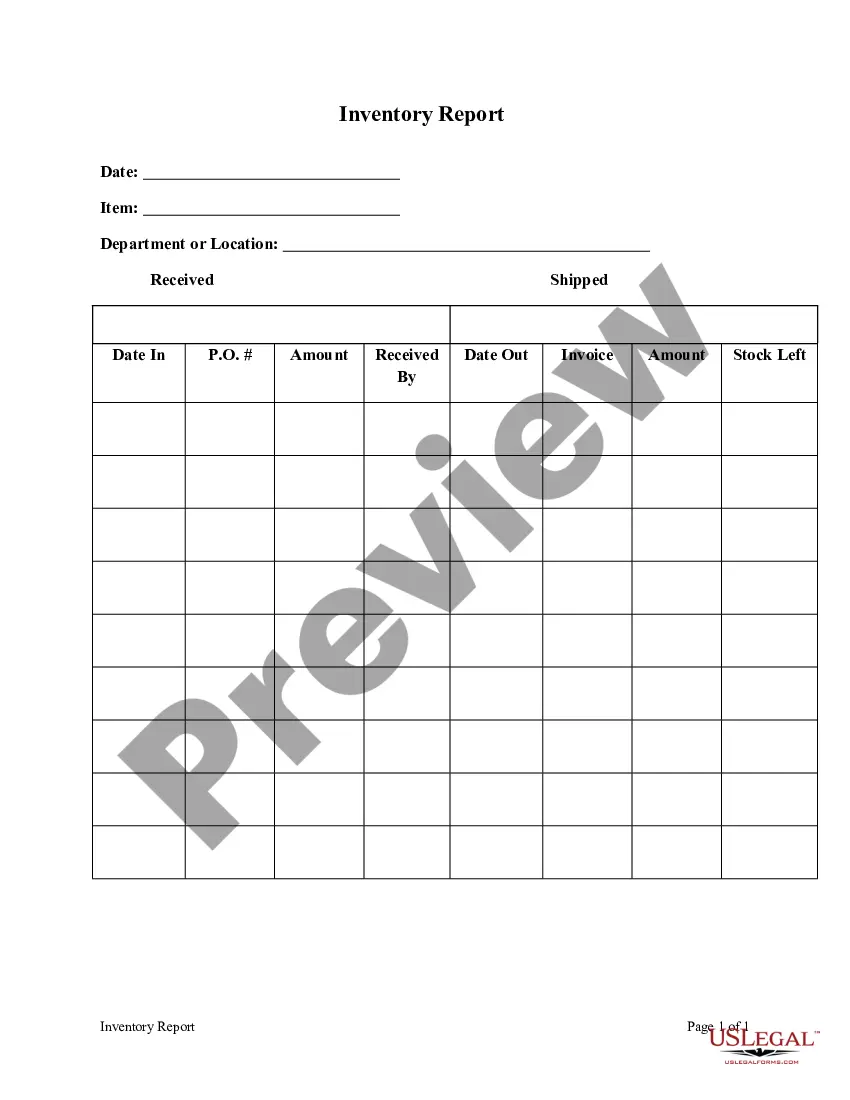
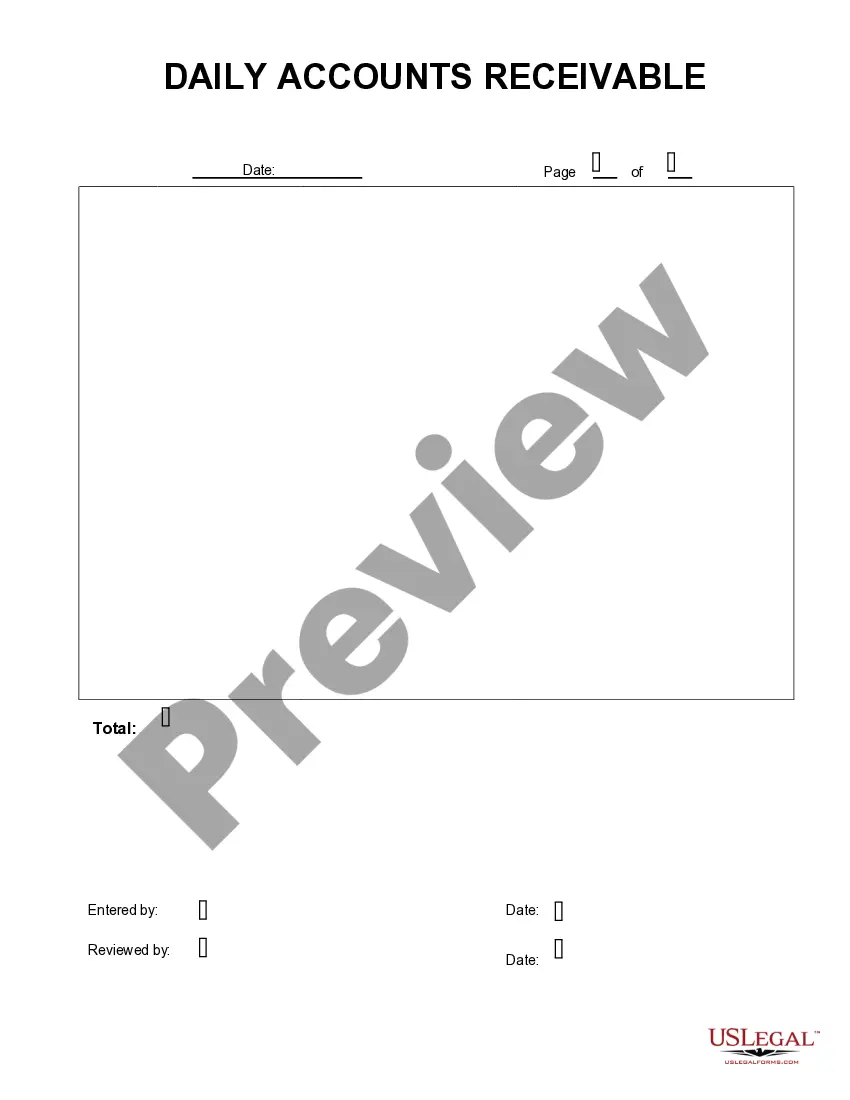
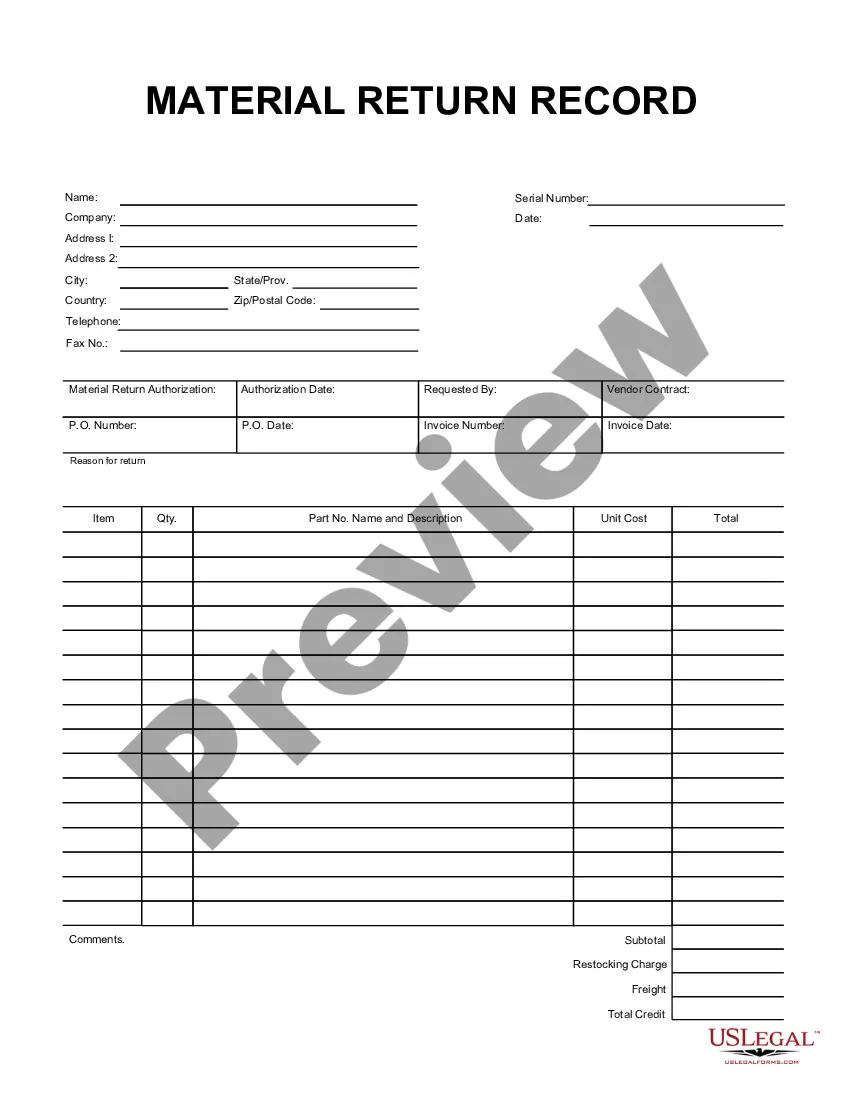
When to use this form
This form should be utilized anytime a business receives returned goods from customers or suppliers. It is particularly useful when tracking returns for defective items, incorrect shipments, or any items that do not meet customer expectations. By recording this information, businesses can analyze return trends and address customer concerns effectively.
Who needs this form
- Retail businesses managing product returns.
- Wholesalers dealing with defective goods.
- E-commerce companies tracking customer returns.
- Any organization that needs to document returned items for inventory control.
How to prepare this document
- Identify the source: Fill in the received from address where the items are being returned from.
- Enter the order numbers: Include both your order number and the returning party's order number.
- Specify the date: Record when the items were received.
- Indicate shipping terms: Mark whether shipping costs are prepaid or if they will be collected.
- Detail the return reason and condition: Fill in the reason for return and assess the condition of the items.
- Provide remarks: Add any additional comments relevant to the return.
Does this document require notarization?
Notarization is not commonly needed for this form. However, certain documents or local rules may make it necessary. Our notarization service, powered by Notarize, allows you to finalize it securely online anytime, day or night.
Get your form ready online
Our built-in tools help you complete, sign, share, and store your documents in one place.
Make edits, fill in missing information, and update formatting in US Legal Forms—just like you would in MS Word.
Download a copy, print it, send it by email, or mail it via USPS—whatever works best for your next step.
Sign and collect signatures with our SignNow integration. Send to multiple recipients, set reminders, and more. Go Premium to unlock E-Sign.
If this form requires notarization, complete it online through a secure video call—no need to meet a notary in person or wait for an appointment.
We protect your documents and personal data by following strict security and privacy standards.

Make edits, fill in missing information, and update formatting in US Legal Forms—just like you would in MS Word.

Download a copy, print it, send it by email, or mail it via USPS—whatever works best for your next step.

Sign and collect signatures with our SignNow integration. Send to multiple recipients, set reminders, and more. Go Premium to unlock E-Sign.

If this form requires notarization, complete it online through a secure video call—no need to meet a notary in person or wait for an appointment.

We protect your documents and personal data by following strict security and privacy standards.
Common mistakes
- Neglecting to specify the reason for return.
- Leaving out order numbers, which can cause confusion.
- Failing to check the condition of items before submission.
- Not filing the form properly after completing it.
Why complete this form online
- Easy to edit and customize for your needs.
- Accessible from any device with internet connectivity.
- Streamlined management of returns, enhancing record-keeping.
- Immediate availability for download, saving time and ensuring compliance.
Main things to remember
- The Returned Items Report is essential for accurately documenting product returns.
- Timely completion of the form helps maintain clear communication with customers.
- Ensures that businesses keep track of inventory and financial implications of returned items.
Looking for another form?
Form popularity
FAQ
Amazon actually liquidates a lot of its returned merchandise. Amazon's team either does so by selling the goods themselves on Amazon Warehouse, or by selling it to e-commerce liquidation websites.
No matter the condition of the product, whether it was returned unopened or slightly used, it is rarely resold as a new product and its price is considerably cut.
The short answer is yes, it is possible. So, here is the law, and how to stay out of trouble. The practice of buying clothing, wearing it once or twice and returning it to the store is called wardrobing and it costs stores almost $10 billion dollars a year.
Whether you write or receive a bounced check also called a nonsufficient funds, or NSF, check it will cost you. Write one and you'll owe your bank an NSF fee of between $27 and $35, and the recipient of the check is permitted to charge a returned-check fee of between $20 and $40 or a percentage of the check amount.
The Returns report generates a list of returned sales. Understand why your clients are unhappy with their purchases by analyzing the reasons for their returns.
As many commenters have posted, it really depends on what exactly is being returned. Packages that been opened may be resold as 'open box' items or refurbished items; some can be sold as 'used', though this depends on the company or online seller (such as Amazon or eBay).
Target's Return Policy Most unopened items sold by Target in new condition and returned within 90 days will receive a refund or exchange. Some items sold by Target have a modified return policy noted on the receipt, packing slip, Target policy board (refund exceptions), Target.com or in the item description.
Prevent customers from buying the wrong product. Craft good (and maybe even creative) return policies. Consider loosening up your policies for holiday returns. Prep and motivate your staff. Promote exchanges, store credit, or gift cards instead of cash returns.
A check that is not paid by the bank on which it is written (drawn). In that case the check is returned as "NSF" or not sufficient funds.A check could also be returned unpaid because the account was closed or due to a stop payment order requested by the maker of the check.