Montana Mineral Deed - Individual to Trustees of Trust
What is this form?
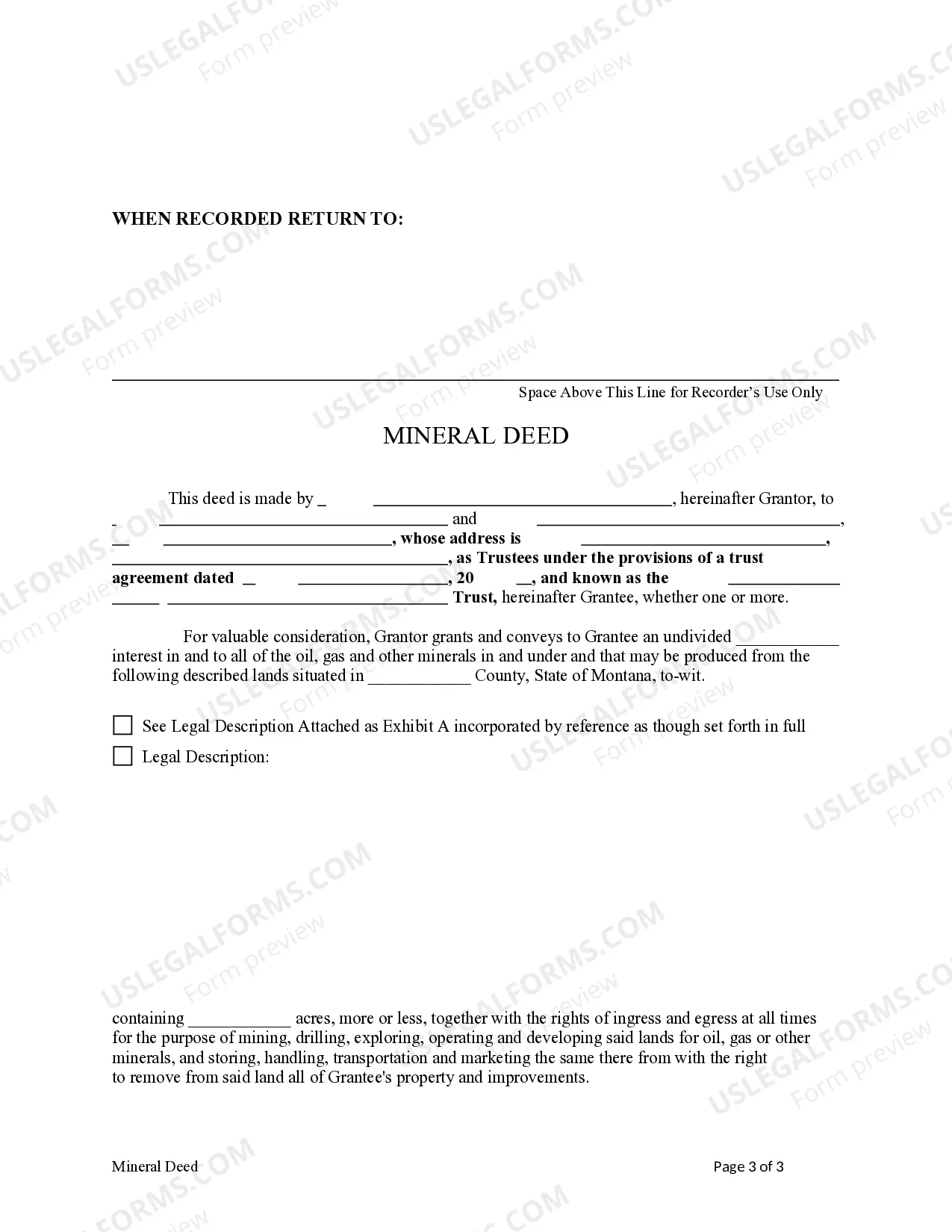
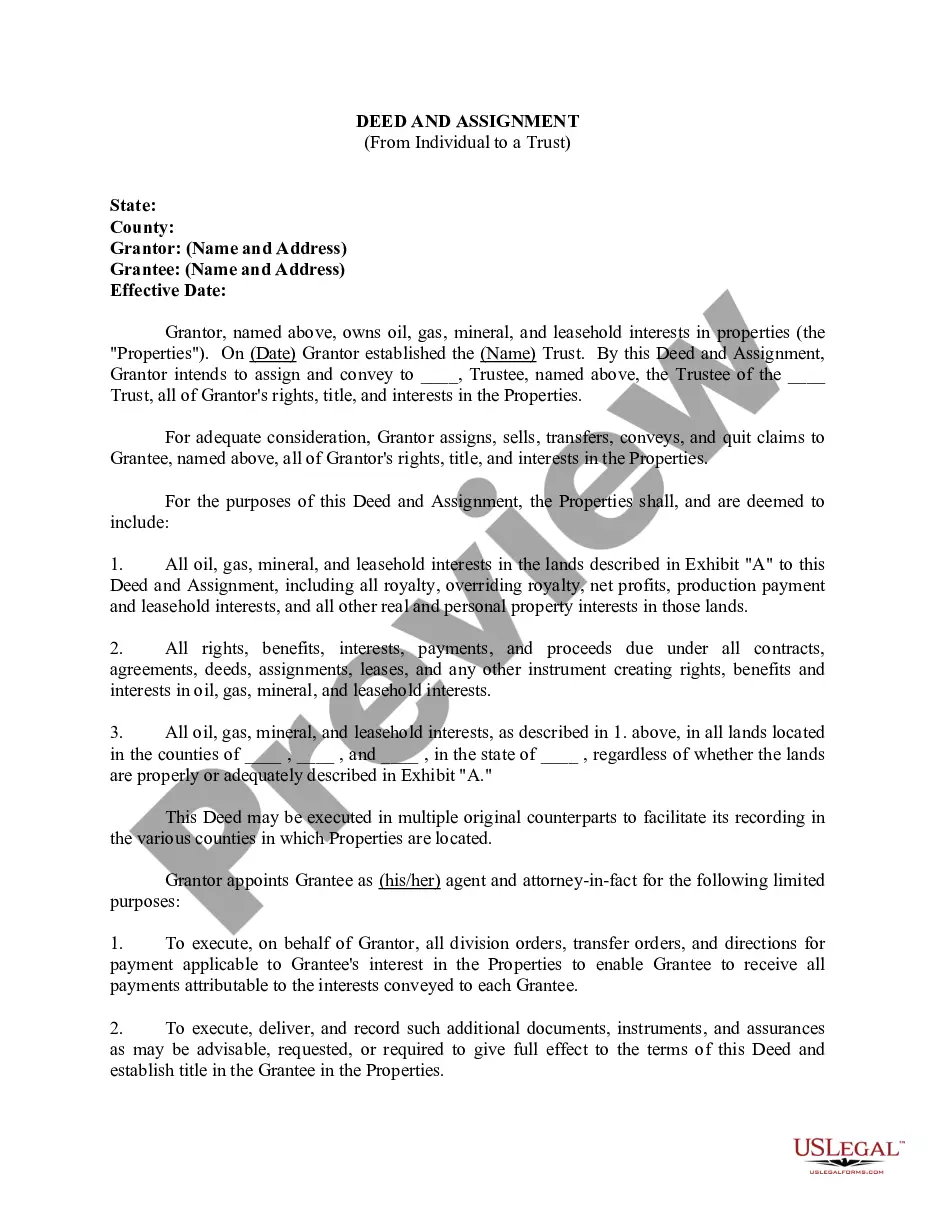
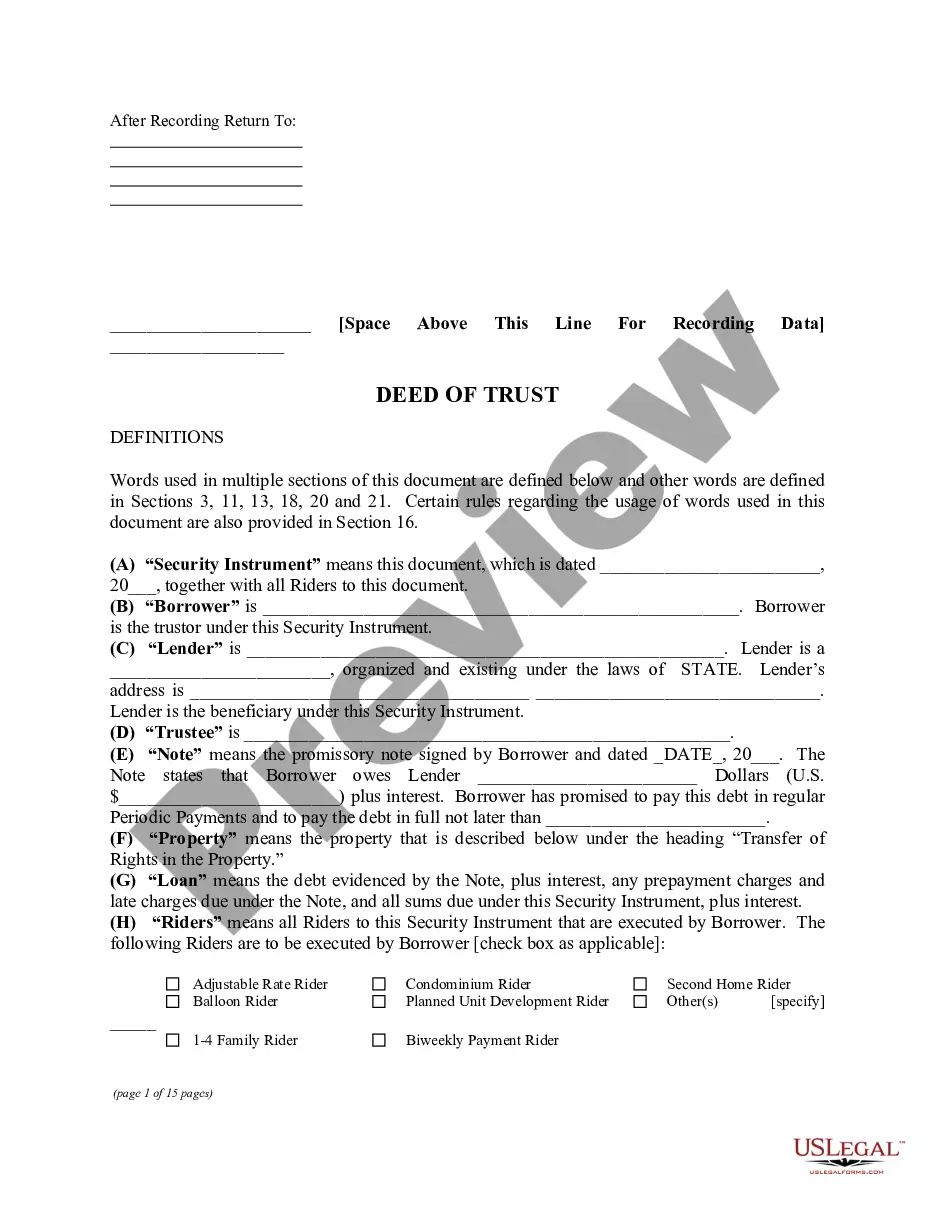
The Mineral Deed - Individual to Trustees of Trust is a legal document used to transfer mineral rights in property from an individual (Grantor) to a trust (Grantees). This form is specifically tailored for use in the State of Montana and is designed to comply with state statutory laws. Unlike other deeds, this document addresses the unique considerations involved in transferring mineral interests to a trust, ensuring the transaction is legally sound and properly documented.
Key components of this form
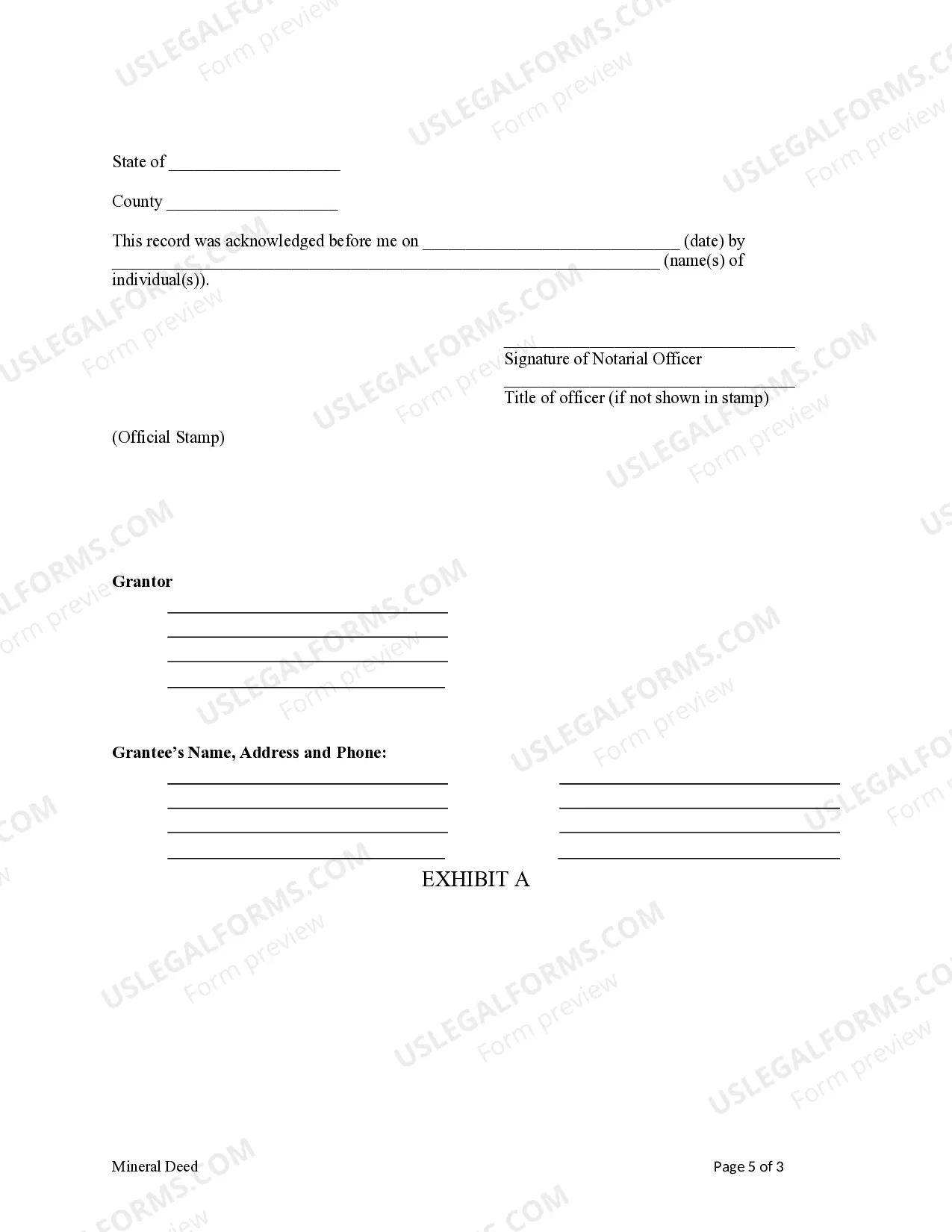
- Identification of Grantor and Grantee: Names and addresses of the individual transferring the mineral rights and the trustees receiving them.
- Legal description of the property: A detailed description of the property to ensure clarity in what mineral rights are being transferred.
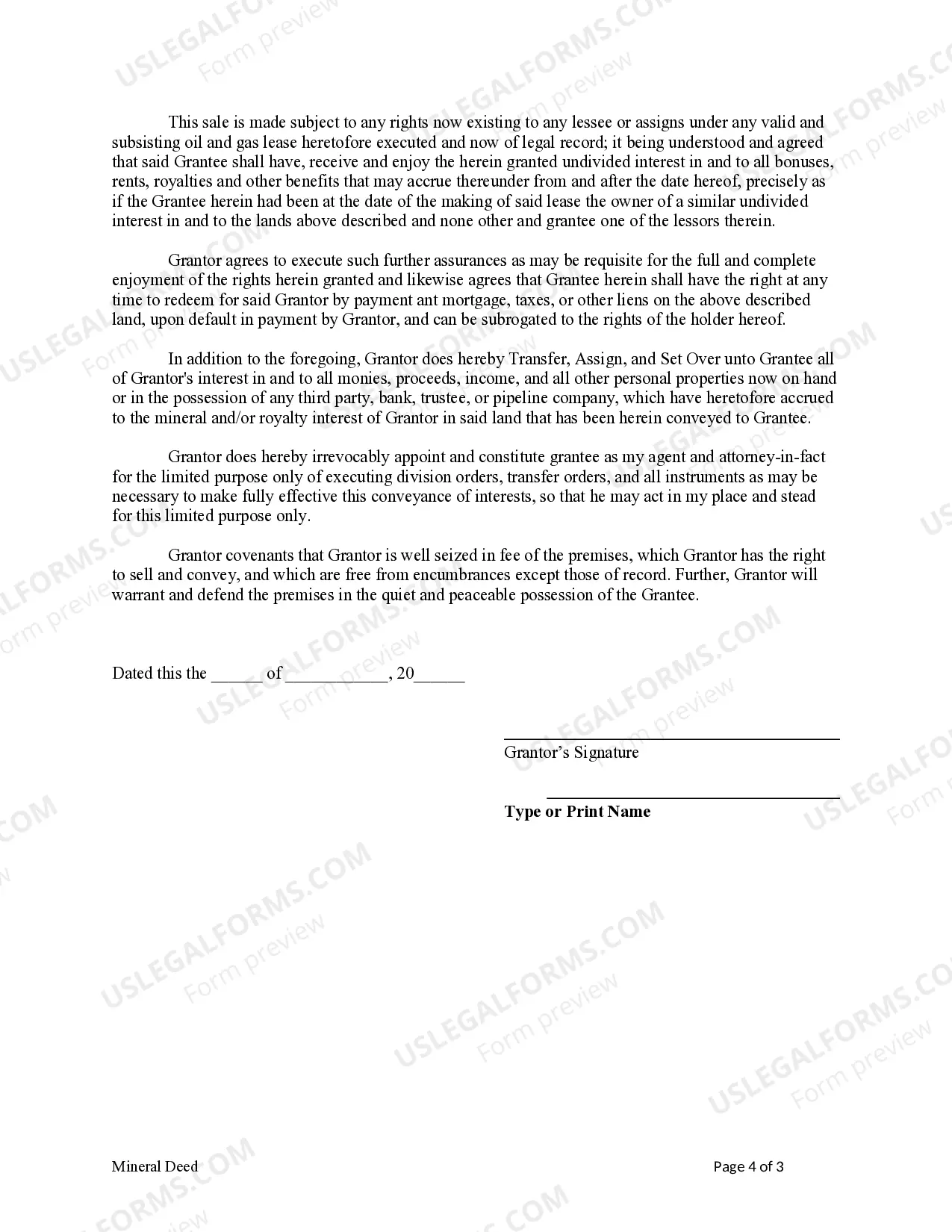
- Covenants and warranties: Statements where the Grantor affirms their right to transfer the property and guarantees it is free from encumbrances unless stated.
- Agent designation: Establishes that the Grantee acts on behalf of the Grantor for all necessary legal actions regarding the mineral rights.
- Signature and date lines: Space for the Grantor to sign and date the document, validating the transfer.



When to use this form
This form should be used when an individual wishes to transfer their mineral rights to a trust, ensuring that the trust can manage those rights for the benefit of its beneficiaries. This is particularly useful in estate planning scenarios where the owner wants to secure the future use of mineral interests without subjecting them to probate or personal taxation.
Who this form is for
- Individuals who are the current owners of mineral rights.
- Trustees who are responsible for managing assets under a trust.
- Estate planners looking to organize and transfer mineral interests for tax or succession planning purposes.
Instructions for completing this form
- Identify the parties: Fill in the names and addresses of both the Grantor and the Grantees (trustees).
- Specify the property: Provide a clear legal description of the mineral rights being conveyed.
- Include warranties: Ensure the Grantor's claims about their ownership are clearly stated.
- Designate the agent: If necessary, specify that Grantee is authorized to act on behalf of the Grantor.
- Enter dates and signatures: The Grantor must sign and date the document to complete the process.
Does this document require notarization?
To make this form legally binding, it must be notarized. Our online notarization service, powered by Notarize, lets you verify and sign documents remotely through an encrypted video session.
Get your form ready online
Our built-in tools help you complete, sign, share, and store your documents in one place.
Make edits, fill in missing information, and update formatting in US Legal Forms—just like you would in MS Word.
Download a copy, print it, send it by email, or mail it via USPS—whatever works best for your next step.
Sign and collect signatures with our SignNow integration. Send to multiple recipients, set reminders, and more. Go Premium to unlock E-Sign.
If this form requires notarization, complete it online through a secure video call—no need to meet a notary in person or wait for an appointment.
We protect your documents and personal data by following strict security and privacy standards.
Make edits, fill in missing information, and update formatting in US Legal Forms—just like you would in MS Word.
Download a copy, print it, send it by email, or mail it via USPS—whatever works best for your next step.
Sign and collect signatures with our SignNow integration. Send to multiple recipients, set reminders, and more. Go Premium to unlock E-Sign.

If this form requires notarization, complete it online through a secure video call—no need to meet a notary in person or wait for an appointment.
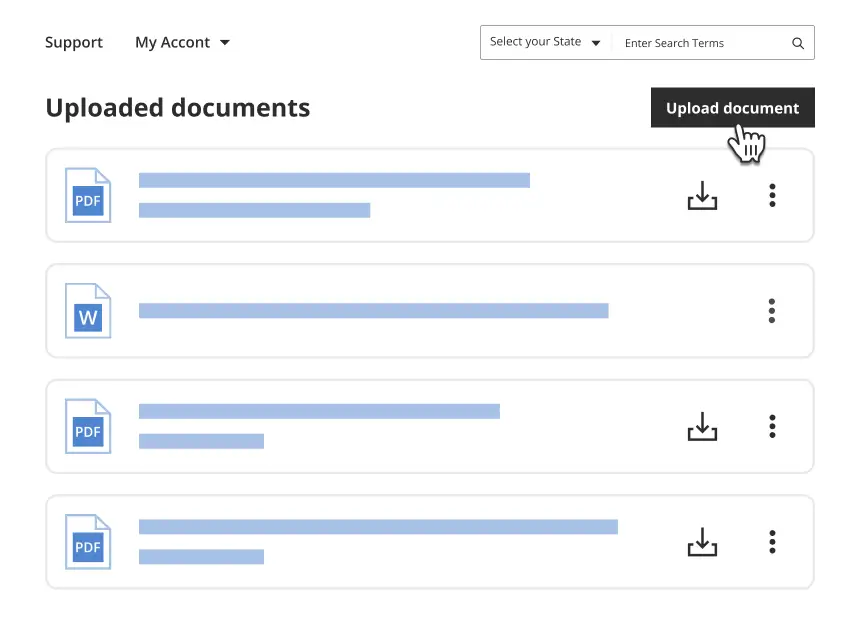
We protect your documents and personal data by following strict security and privacy standards.
Typical mistakes to avoid
- Failing to provide a complete legal description of the mineral rights.
- Not signing or dating the document, which can invalidate the deed.
- Neglecting to confirm that the Grantor has the authority to transfer the rights.
Why use this form online
- Convenience of completing the form from home without the need for legal consultations.
- Editability allows users to fill the form digitally, ensuring accuracy.
- Access to up-to-date legal templates drafted by licensed attorneys.
Quick recap
- The Mineral Deed facilitates the transfer of mineral rights to a trust in a legally compliant manner.
- It's important to correctly fill out the form to avoid common mistakes that could invalidate the deed.
- This form serves a vital role in estate planning and asset management concerning mineral interests.
Looking for another form?

Form popularity
FAQ
Determine the Current Title and Vesting to Your Property. Prepare a Deed. Be Aware of Your Lender and Title Insurance. Prepare a Preliminary Change of Ownership Report. Execute Your Deed. Record Your Deed. Wait for the Deed to be Returned. Keep the Property in the Trust.
The advantages of placing your house in a trust include avoiding probate court, saving on estate taxes and possibly protecting your home from certain creditors. Disadvantages include the cost of creating the trust and the paperwork.
Transferring Real Property to a Trust You can transfer your home (or any real property) to the trust with a deed, a document that transfers ownership to the trust. A quitclaim deed is the most common and simplest method (and one you can do yourself).
A trustee deedsometimes called a deed of trust or a trust deedis a legal document created when someone purchases real estate in a trust deed state, such as California (check your local laws to see what is required in your state). A trust deed is used in place of a mortgage.
Party information: names and addresses of the trustor(s), trustee(s), beneficiary(ies), and guarantor(s) (if applicable) Property details: full address of the property and its legal description (which can be obtained from the County Recorder's Office)
As of 2019, attorney fees can range from $1,000 to $2,500 to set up a trust, depending upon the complexity of the document and where you live. You can also hire an online service provider to set up your trust. As of 2019, you can expect to pay about $300 for an online trust.
To move assets into a revocable trust you must put them into the trust's name and file or record this information. Change the property's title on any real estate you own, and file the change with the recorder in the county where the property is located.
Some owners are put off using solicitors duke to the deed of trust cost. Individuals can write out their own, and use someone else as a witness. However, this may have errors or not be a legally binding document. The investment of getting a deed of trust when buying a property is often worth it in the long term.
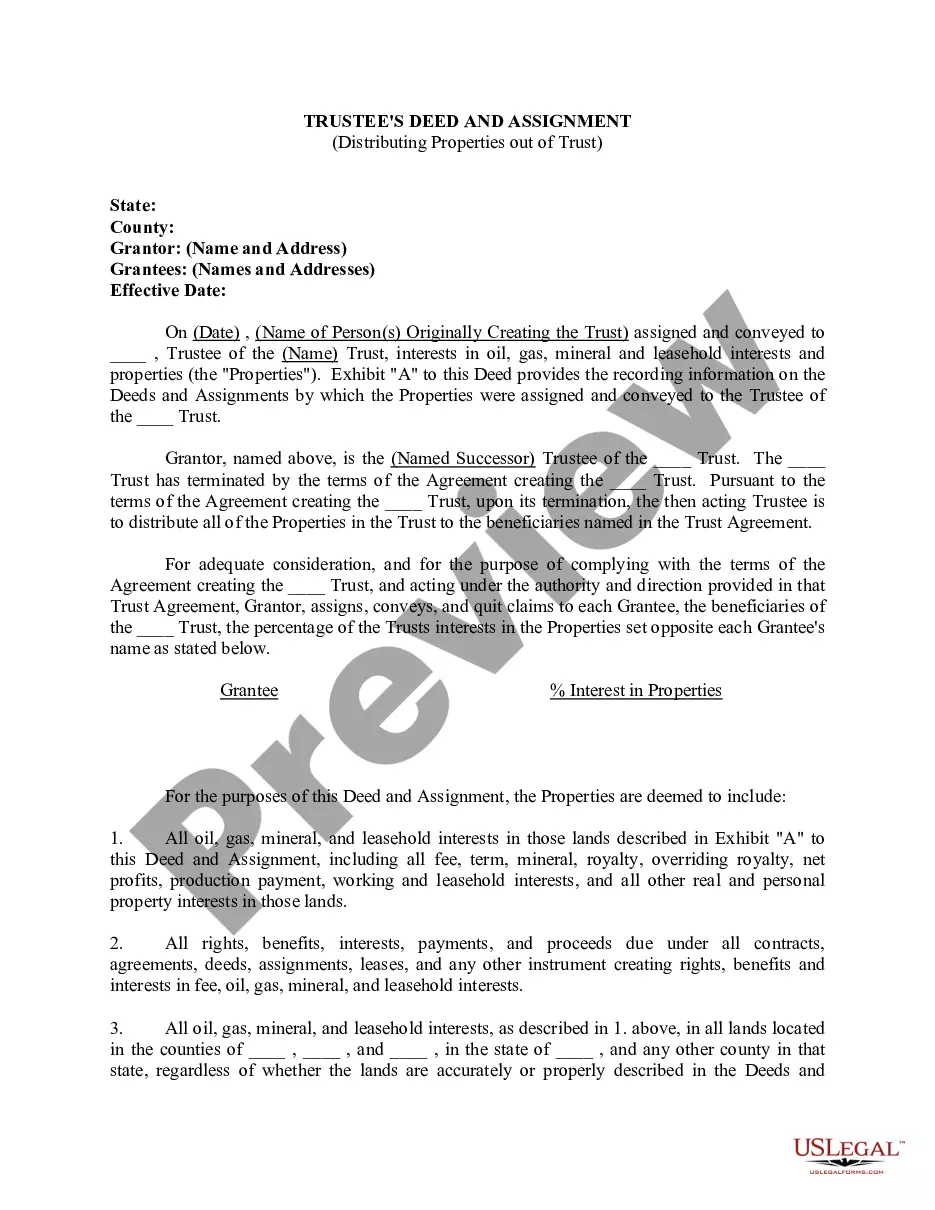
When you're ready to transfer trust real estate to the beneficiary who is named in the trust document to receive it, you'll need to prepare, sign, and record a deed. That's the document that transfers title to the property from you, the trustee, to the new owner.