Iowa Acknowledgment for Oath or Affirmation
What this document covers
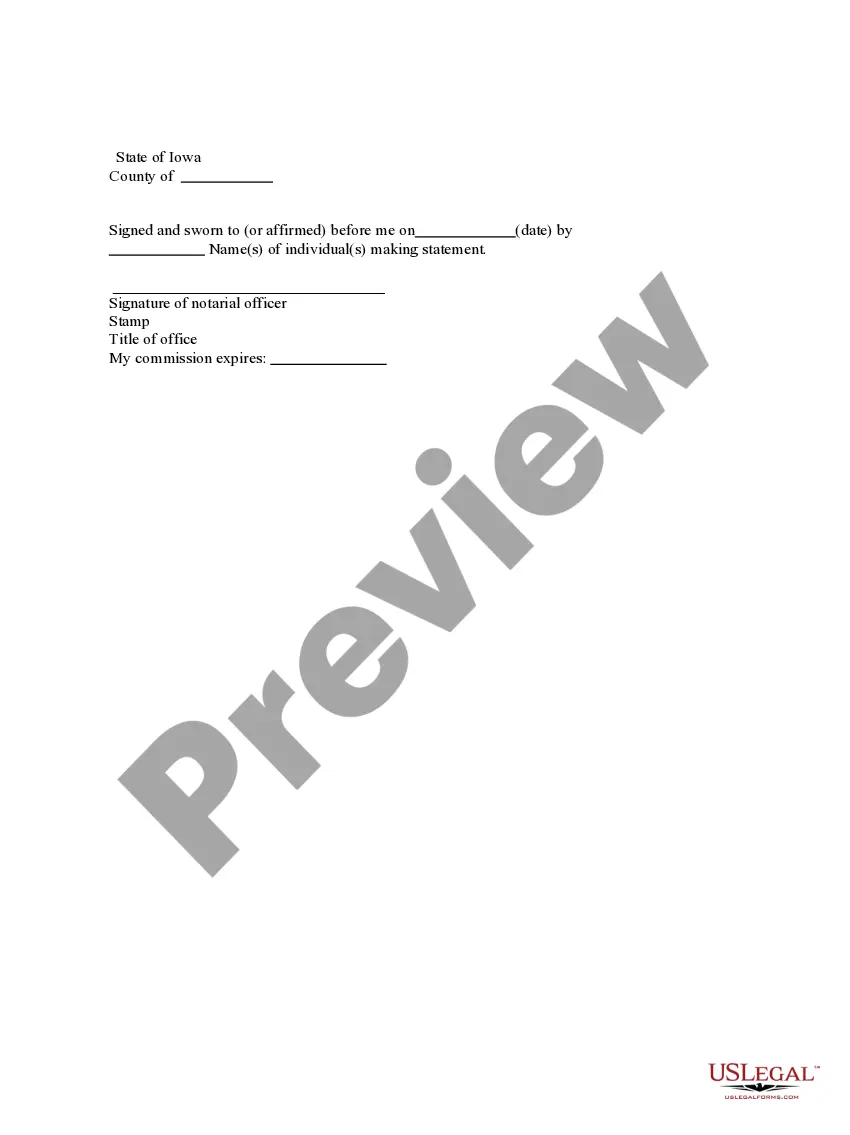
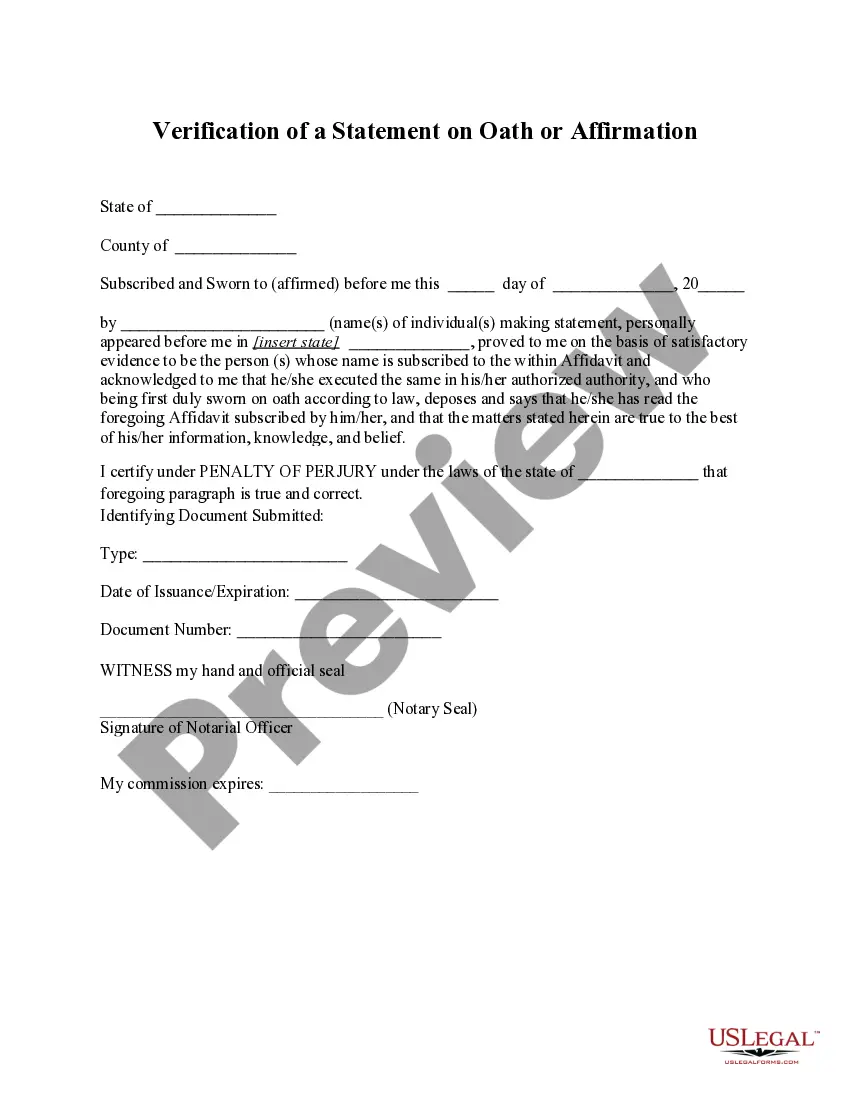
The Acknowledgment for Oath or Affirmation is a legal document used to certify that an individual has sworn or affirmed the truthfulness of a statement before a notarial officer. This form is essential in situations where legal verification of one's declarations is required and sets itself apart from other notarial forms by specifically dealing with oaths and affirmations.
Form components explained
- Signature of the notarial officer: This section includes the name and title of the individual notarizing the document.
- Date of acknowledgment: The exact date when the oath or affirmation was taken must be documented.
- Name(s) of the individual(s) making the statement: This field requires clear identification of the person swearing or affirming.
- Commission expiration: Indicates the validity period of the notary's license, ensuring compliance with local laws.
- Stamp: The official seal or stamp employed by the notarial officer, validating the acknowledgment.

When this form is needed
You should use the Acknowledgment for Oath or Affirmation in situations requiring a sworn statement, such as legal affidavits, witness testimonies, or when submitting documents that require an attestation of truth to official bodies. This form is particularly useful when individuals need to assure the validity of their statements in legal proceedings or formal agreements.
Who this form is for
- Individuals required to provide a sworn statement in court or legal matters.
- Participants in legal proceedings where affirmations of truthful testimony are necessary.
- Anyone submitting documents or applications that stipulate a notarized oath or affirmation.
Completing this form step by step
- Identify the parties involved: Clearly state the name(s) of the individual(s) making the statement.
- Enter the date: Specify the exact date when the oath or affirmation is being made.
- Signature of the notarial officer: The notary must sign and include their title.
- Affix the notary's stamp: Apply the official seal or stamp to validate the document.
- Check for completeness: Ensure all sections are filled out correctly before submission.
Notarization guidance
This document requires notarization to meet legal standards. US Legal Forms provides secure online notarization powered by Notarize, allowing you to complete the process through a verified video call, available 24/7.
Get your form ready online
Our built-in tools help you complete, sign, share, and store your documents in one place.
Make edits, fill in missing information, and update formatting in US Legal Forms—just like you would in MS Word.
Download a copy, print it, send it by email, or mail it via USPS—whatever works best for your next step.
Sign and collect signatures with our SignNow integration. Send to multiple recipients, set reminders, and more. Go Premium to unlock E-Sign.
If this form requires notarization, complete it online through a secure video call—no need to meet a notary in person or wait for an appointment.
We protect your documents and personal data by following strict security and privacy standards.

Make edits, fill in missing information, and update formatting in US Legal Forms—just like you would in MS Word.

Download a copy, print it, send it by email, or mail it via USPS—whatever works best for your next step.

Sign and collect signatures with our SignNow integration. Send to multiple recipients, set reminders, and more. Go Premium to unlock E-Sign.

If this form requires notarization, complete it online through a secure video call—no need to meet a notary in person or wait for an appointment.

We protect your documents and personal data by following strict security and privacy standards.
Common mistakes to avoid
- Failing to provide the date of acknowledgment.
- Not having the notary sign or stamp the document.
- Incorrectly formatting the names of the individuals involved.
- Omitting the commission expiration date.
- Submitting the form without verifying completeness.
Benefits of using this form online
- Convenience: Access and complete the form from anywhere at any time.
- Editability: Easily modify the form details to fit your specific needs.
- Reliability: Ensure compliance with legal standards through professionally drafted forms.
Looking for another form?
Form popularity
FAQ
An oath or affirmation involves a declaration of truth, while an acknowledgment pertains to confirming the validity of a document. Essentially, an oath or affirmation is more about a personal commitment to honesty, whereas an acknowledgment verifies the authenticity of signatures and documents. Understanding these distinctions is crucial when dealing with the Iowa Acknowledgment for Oath or Affirmation.
Administering an oath for a sworn statement follows a similar process to standard oaths. Begin by clearly stating the importance of the sworn statement, then have the individual raise their right hand and recite the oath. This practice helps ensure the individual's integrity in legal matters, a vital aspect of the Iowa Acknowledgment for Oath or Affirmation.
The primary difference lies in their functions; an oath or affirmation declares a commitment to truthfulness, while an acknowledgment certifies that a person voluntarily signed a document. Both steps are crucial, especially during the Iowa Acknowledgment for Oath or Affirmation process, as they establish the legitimacy of legal transactions and the reliability of testimonies.
An acknowledgment of signature occurs when a notary public confirms the identity of a signer and verifies that they willingly signed a document. For instance, if you sign a legal contract in front of a notary, they provide an acknowledgment, which is essential for the Iowa Acknowledgment for Oath or Affirmation. This step adds credibility and legal weight to your signature.
An acknowledgment is a formal declaration before an authorized official such as a notary, by a person who has signed a document, that the document is his or her act. The person acknowledging the document must personally appear before the notary.
Require Personal Appearance. Review The Document. Screen The Signer And Verify The Facts. Record The Notarization. Complete The Notarization.
The certificate of a notary public, justice of the peace, or other authorized officer, attached to a deed, mortgage, or other instrument, setting forth that the parties thereto personally appeared before him on such a date and acknowledged the instrument to be their free and voluntary act and deed. Read v.
For an acknowledgment, the signer must always: Be positively identified by the Notary. The Notary must always identify the signer for an acknowledgement; whether the signer personally knows the Notary, presents an ID document, or is identified by a credible witness depends on the circumstances.
A notary acknowledgement ensures that the signer of the document is indeed the person named in the document. The function of the notary in this case is to verify the identity of the signer. On the other hand, a notary is asked to perform a Jurat, when the signer takes an oath or makes an affirmation.
For an acknowledgment, the signer must always: Be positively identified by the Notary. The Notary must always identify the signer for an acknowledgement; whether the signer personally knows the Notary, presents an ID document, or is identified by a credible witness depends on the circumstances.