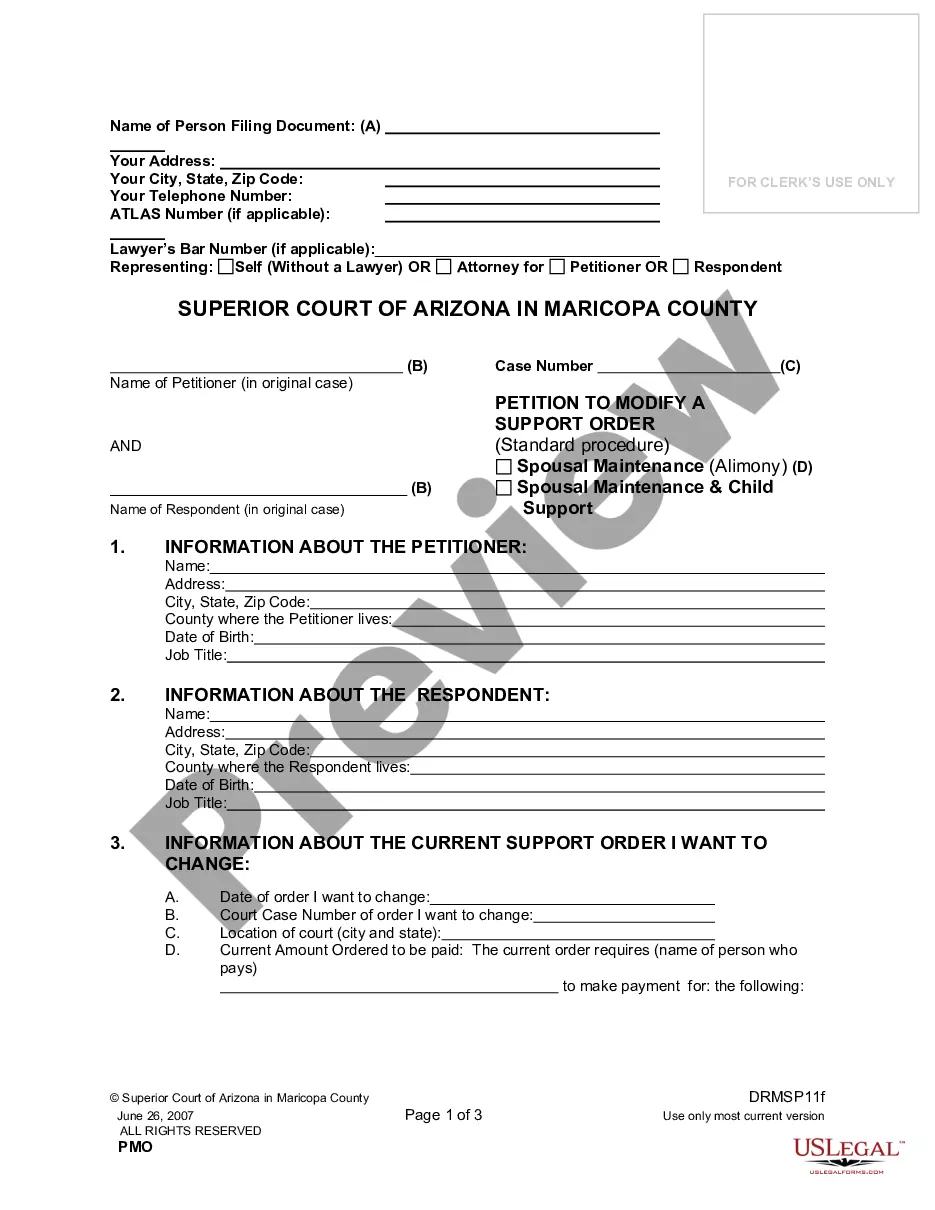
Mississippi Letter from Landlord to Tenant for Failure to keep premises as clean and safe as condition of premises permits - Remedy or lease terminates
Overview of this form
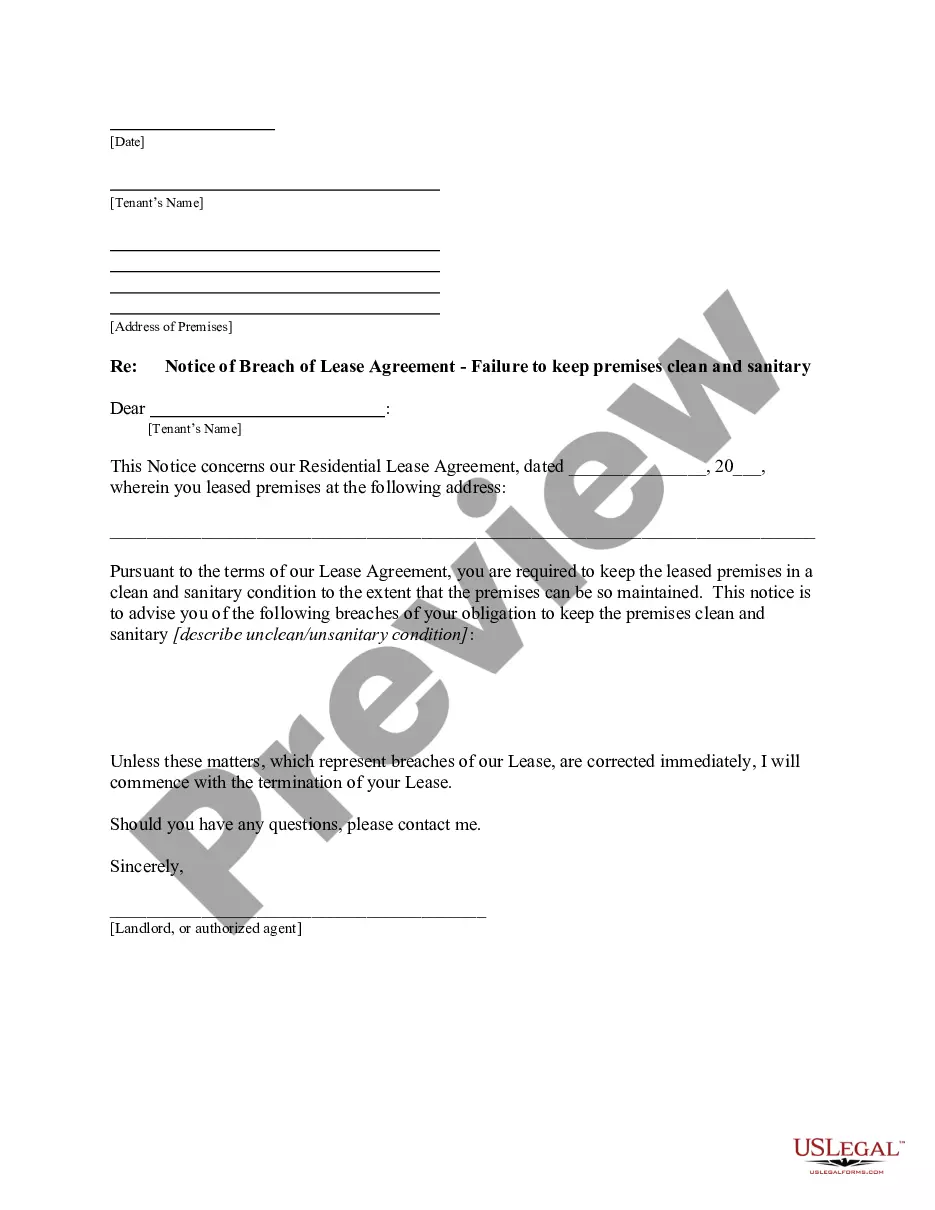
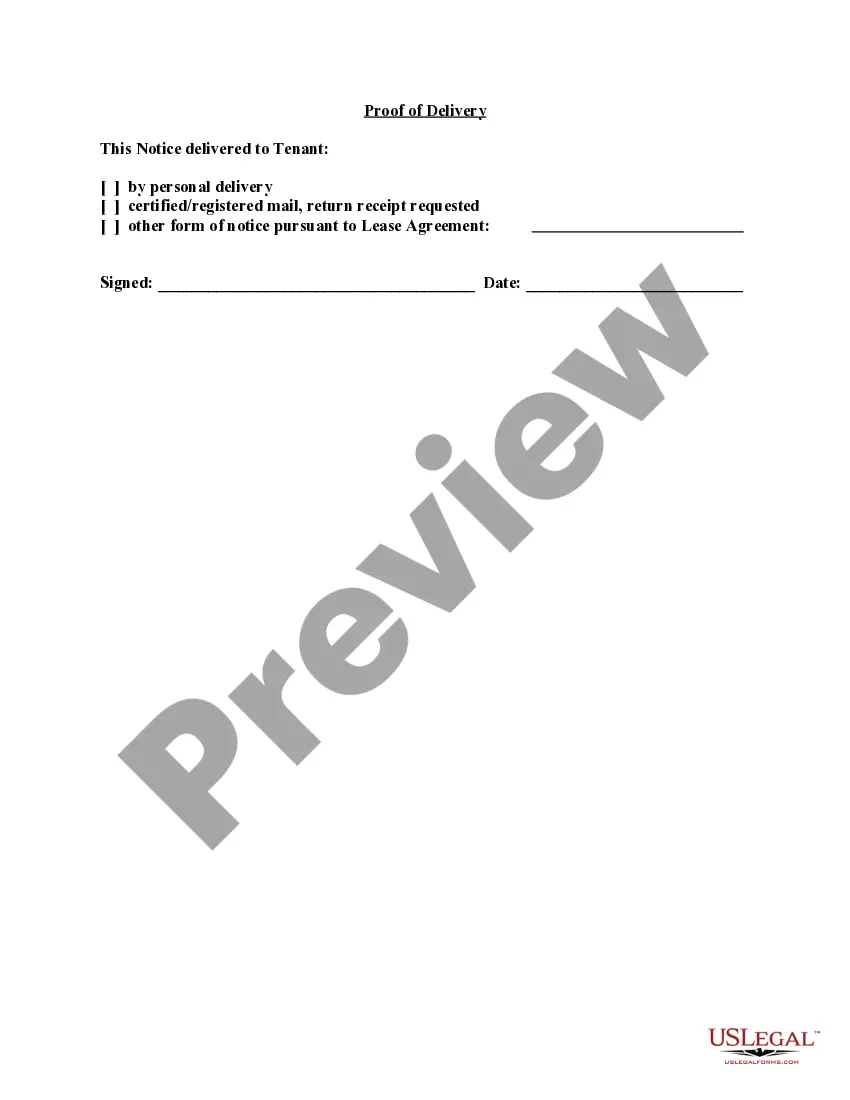
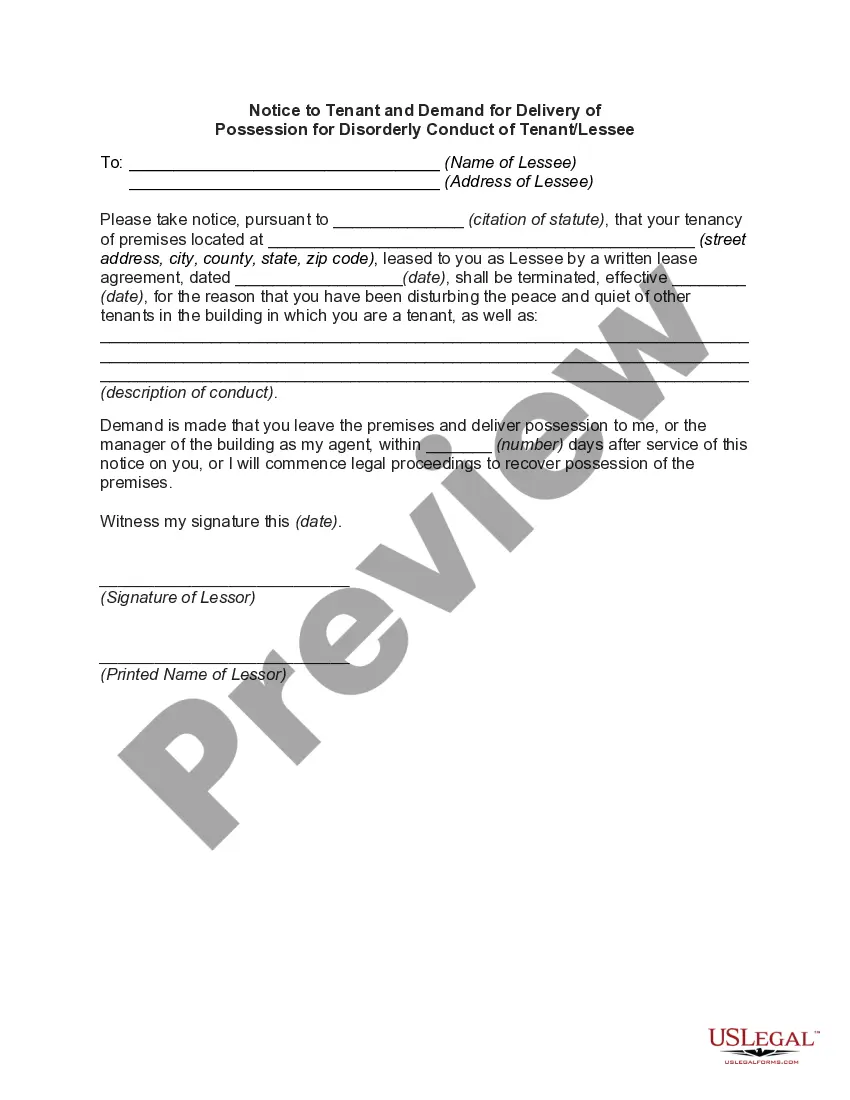
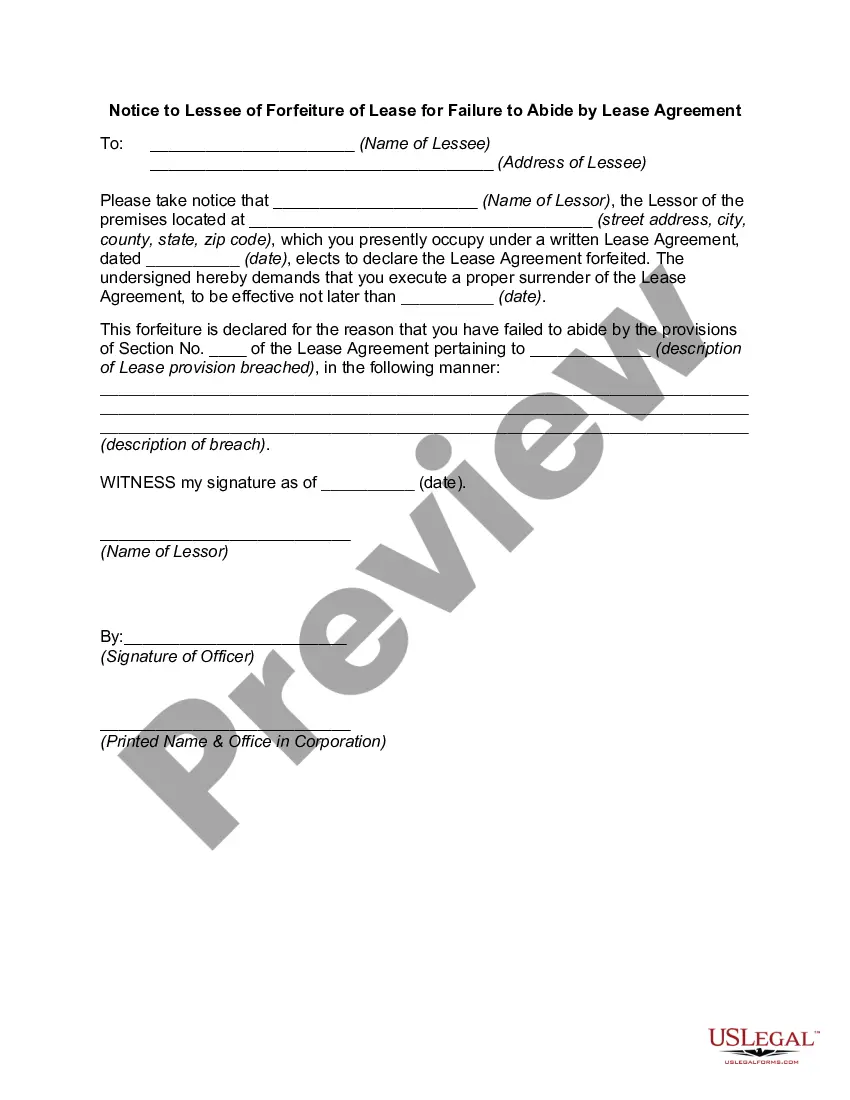
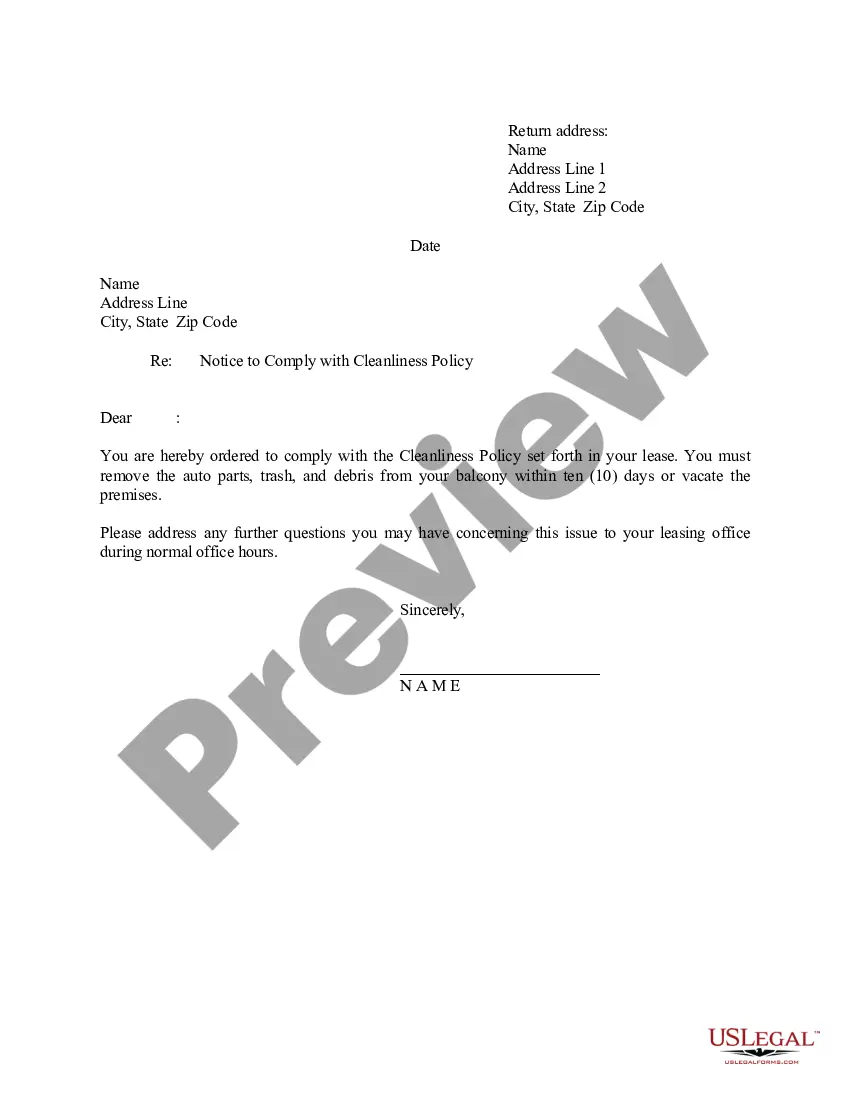
This Letter from Landlord to Tenant for Failure to Keep Premises Clean and Safe is a formal notice that informs a tenant of their obligation to maintain the leased property in a clean and sanitary condition. It serves as a reminder of breaches regarding cleanliness and safety, providing tenants with an opportunity to remedy these issues. Unlike other tenant notices, this form specifically addresses cleanliness, making it crucial for landlords wanting to enforce lease agreements regarding property standards.
Form components explained
- Identification of the landlord and tenant.
- Description of the unclean or unsanitary conditions observed.
- Reference to the Lease Agreement outlining the tenant's obligations.
- Time frame for the tenant to remedy the stated issues.
- Consequences if the tenant fails to address the conditions, including potential lease termination.


When this form is needed
This form should be used when a landlord observes that a tenant has not maintained the property in a clean and sanitary condition as required by their lease. It is appropriate in situations where the landlord wants to formally notify the tenant of specific breaches, allowing the tenant an opportunity to rectify the issues or face potential lease termination.
Who this form is for
- Landlords who own rental properties.
- Property managers overseeing leased properties.
- Tenants who have received a notice regarding cleanliness issues and want to understand their obligations.
How to complete this form
- Identify the landlord and tenant by entering their names and contact information.
- Describe the unclean or unsanitary conditions that have been observed in the premises.
- Cite the relevant lease agreement clause that outlines the tenant's responsibility for cleanliness.
- Specify a reasonable time frame for the tenant to remedy the identified issues.
- Indicate the potential consequences if the issues are not resolved, including possible lease termination.
- Sign and date the notice to make it official.
Notarization guidance
This form does not typically require notarization unless specified by local law. Always check local requirements to ensure compliance.
Get your form ready online
Our built-in tools help you complete, sign, share, and store your documents in one place.
Make edits, fill in missing information, and update formatting in US Legal Forms—just like you would in MS Word.
Download a copy, print it, send it by email, or mail it via USPS—whatever works best for your next step.
Sign and collect signatures with our SignNow integration. Send to multiple recipients, set reminders, and more. Go Premium to unlock E-Sign.
If this form requires notarization, complete it online through a secure video call—no need to meet a notary in person or wait for an appointment.
We protect your documents and personal data by following strict security and privacy standards.

Make edits, fill in missing information, and update formatting in US Legal Forms—just like you would in MS Word.

Download a copy, print it, send it by email, or mail it via USPS—whatever works best for your next step.

Sign and collect signatures with our SignNow integration. Send to multiple recipients, set reminders, and more. Go Premium to unlock E-Sign.

If this form requires notarization, complete it online through a secure video call—no need to meet a notary in person or wait for an appointment.

We protect your documents and personal data by following strict security and privacy standards.
Common mistakes
- Failing to provide specific examples of unclean conditions.
- Not referencing the correct lease agreement clause.
- Omitting to provide a clear time frame for tenants to respond.
- Not signing the notice, making it less official.
Advantages of online completion
- Convenience of downloading and printing the form immediately.
- Editability allows landlords to customize the content as needed.
- Access to attorney-drafted templates ensures legal reliability.
Legal use & context
- This form is recognized as an official notice to a tenant, helping establish a legal record of communication regarding property conditions.
- Failure to provide this notice may prevent landlords from proceeding with further legal action regarding lease enforcement.
- Compliance with state-specific regulations is essential for the notice to be enforceable.
What to keep in mind
- The form serves to notify the tenant of cleanliness obligations under the lease.
- Specific breaches must be clearly detailed for effective communication.
- Landlords should ensure compliance with state regulations when using this notice.
Looking for another form?
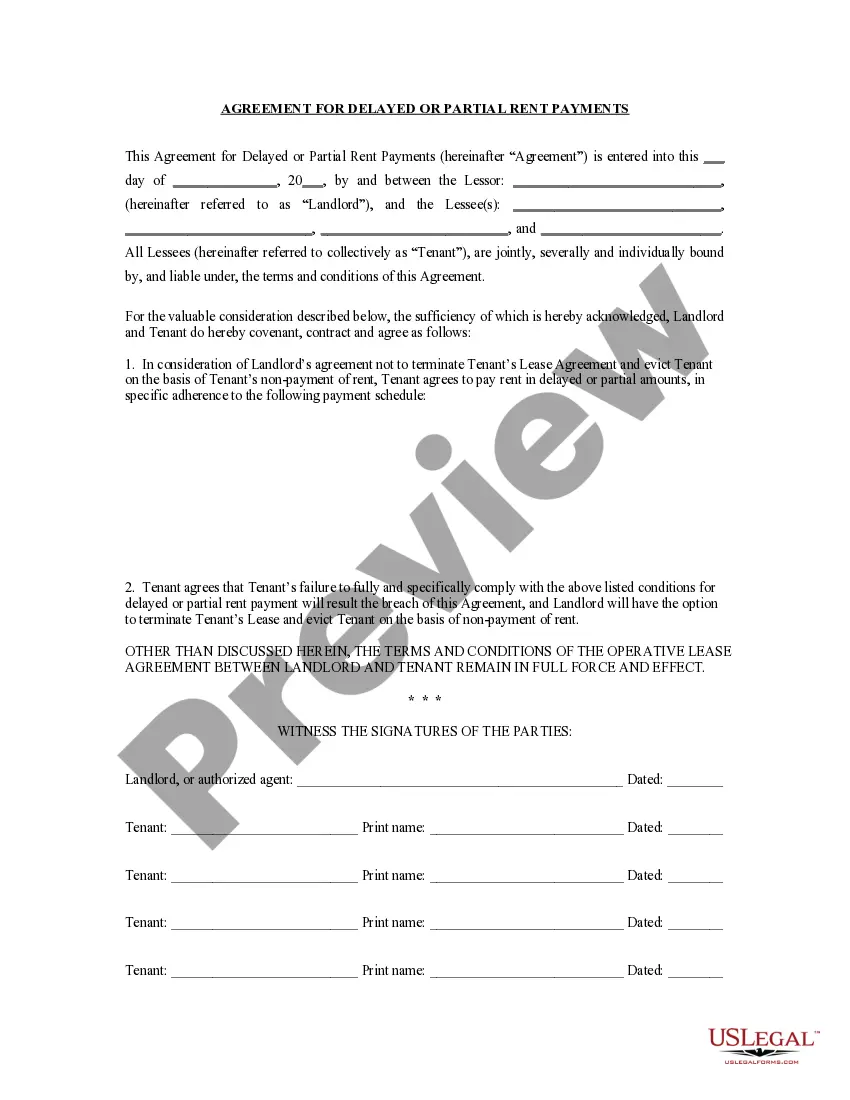
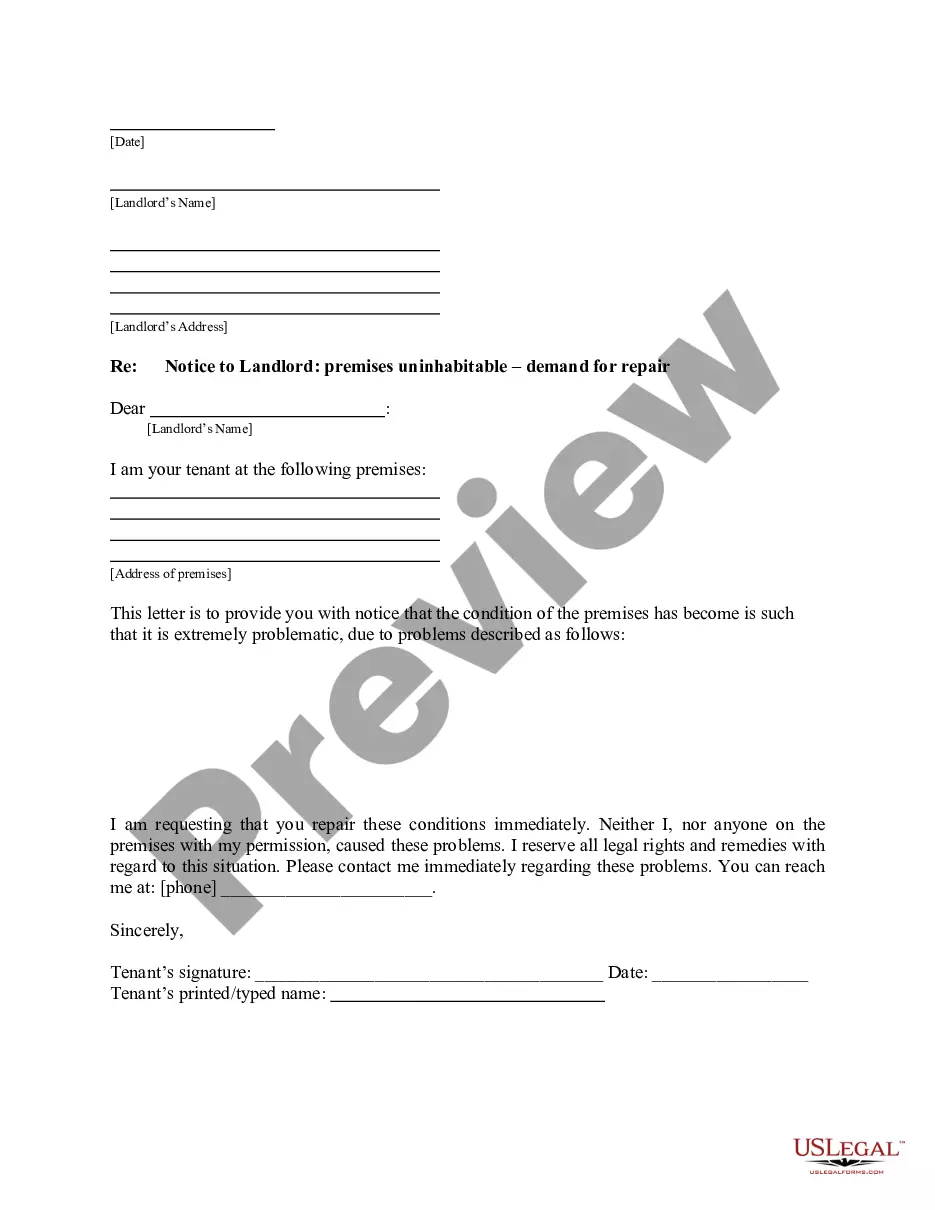
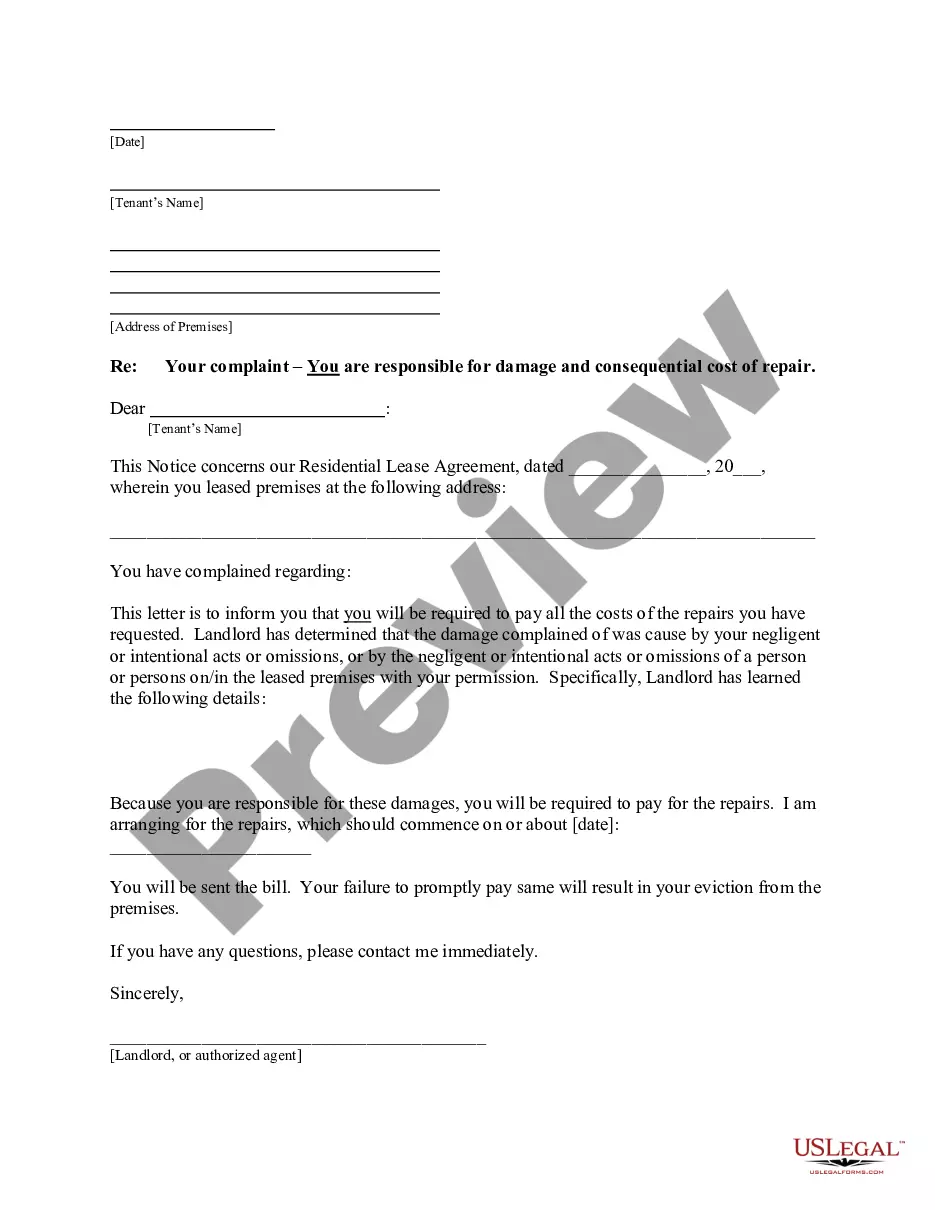
Form popularity
FAQ
Landlords are required to provide a safe environment for their tenants. In many states, landlords are legally responsible for the failure to keep tenants safe from dangerous conditions on a property or safe from criminal activity.
Contact us at (888) 700-9995.
Filing a complaint with state or local health or building inspectors (who may fine a landlord who fails to correct the problem within a set amount of time, or actually condemn the property in severe cases) suing the landlord for the difference between the monthly rent and the value of the unit with defects, or.
Landlords have a responsibility to ensure the property meets health and safety laws. Landlords must also provide and maintain locks or other security devices to ensure the property is reasonably secure.
This includes keeping the property clean, safe and habitable. The landlord must adhere to all building codes, perform necessary repairs, maintain common areas, keep all vital services, such as plumbing, electricity, and heat, in good working order, must provide proper trash receptacles and must supply running water.
What is the Law? In California, there is no legal definition for unsafe living conditions. Generally, the rule of thumb is that if your living environment affects your health or safety, then it can be considered an unsafe living condition.
Fundamental responsibilities of landlords include: providing and maintaining the property in a clean and reasonable standard; giving proper receipts and maintaining records of all transactions pertaining to the tenancy; paying council rates and taxes; maintaining locks to ensure the property's security; and lodging the
The landlord had a duty to reasonably maintain the property; The landlord knew or should have known of the dangerous condition; The landlord breached their duty by failing to repair/fix the dangerous condition;