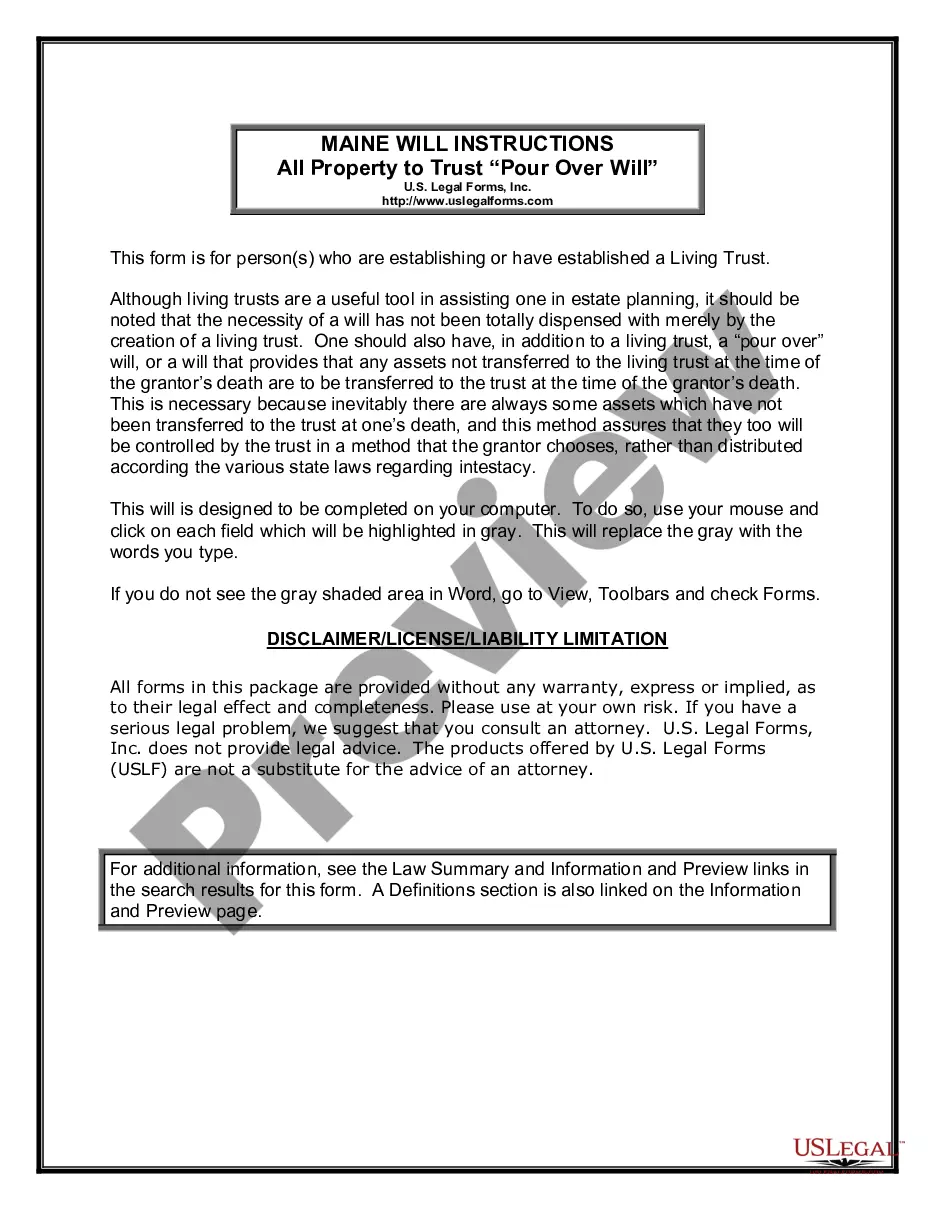
Maine Last Will and Testament with All Property to Trust called a Pour Over Will
What is this form?
The Last Will and Testament with All Property to Trust, also known as a Pour Over Will, is a legal document that directs how your assets will be managed after your death. This specific will is designed for individuals who have established or are in the process of establishing a Living Trust. Unlike a standard will, a Pour Over Will ensures that any property not already transferred to your trust at the time of your death will be allocated to the trust upon your passing. This helps avoid intestacy laws and ensures your assets are handled according to your wishes.
Key parts of this document
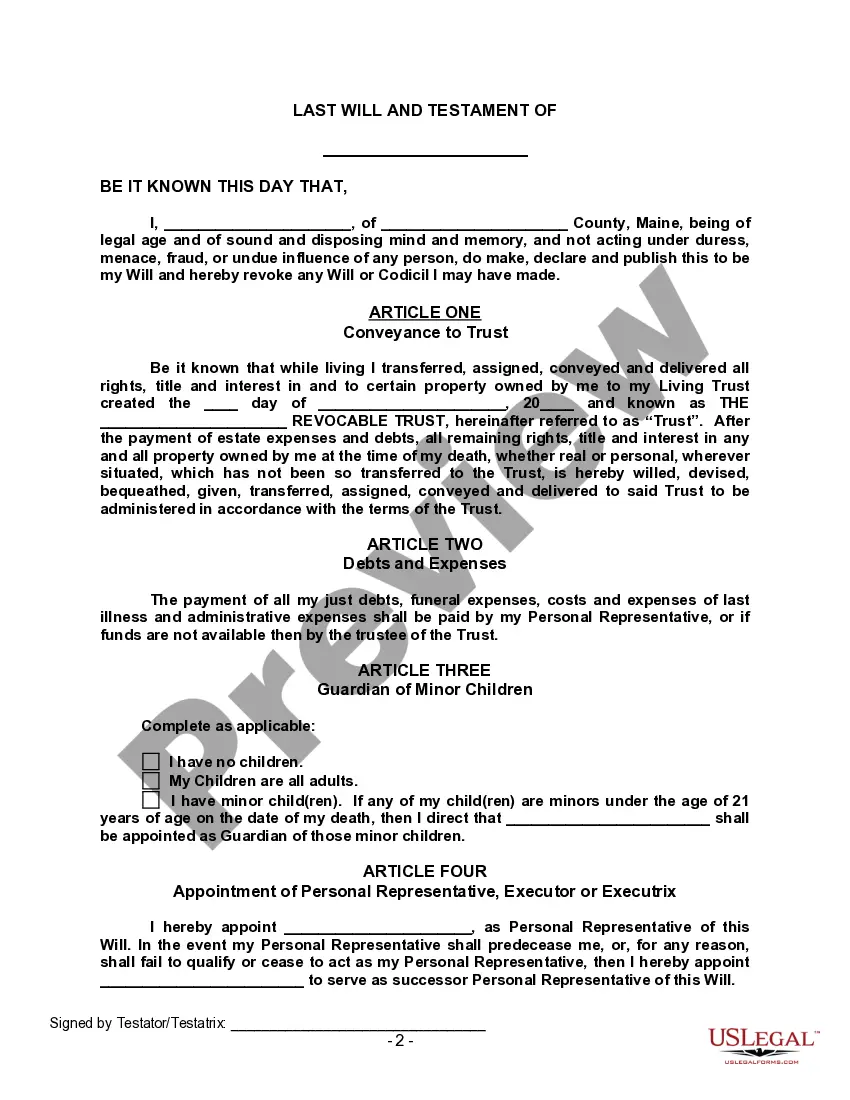
- Conveyance to Trust: Specifies that assets not transferred to the trust during your lifetime are to be transferred upon death.
- Debts and Expenses: Outlines how debts, funeral costs, and other expenses will be settled.
- Guardian of Minor Children: Provides directives for the guardianship of minor children, if applicable.
- Appointment of Personal Representative: Designates an individual to execute the will.
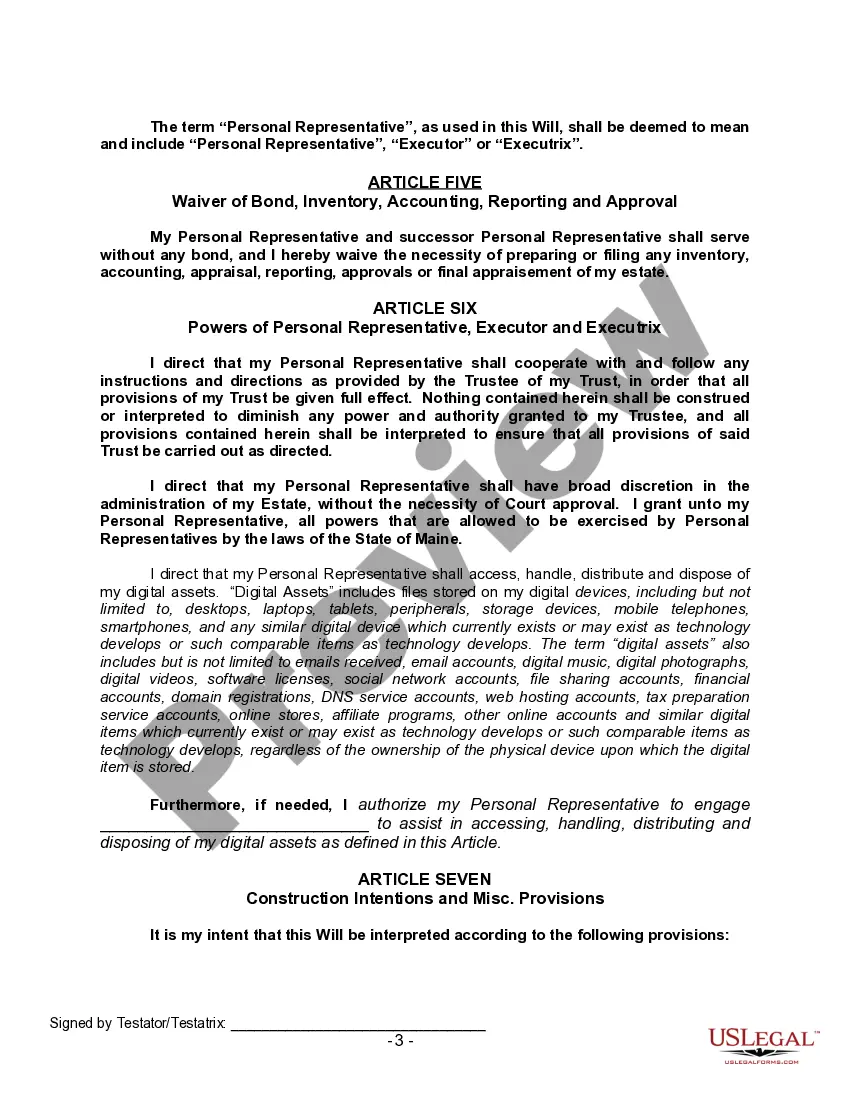
- Waiver of Bond: States that no bond is required for the personal representative.
- Powers of Personal Representative: Grants authority to the personal representative to manage the estate without court approval.




When this form is needed
This form should be used when you have a Living Trust established or are in the process of creating one. It is especially important if you want to ensure that any assets not included in the trust before your death are still transferred to the trust's control efficiently. Additionally, if you have minor children, this will help designate guardianship for them, if necessary.
Who this form is for
Individuals who should consider using this form include:
- People who have created or are creating a Living Trust.
- Individuals wanting a comprehensive estate plan that efficiently manages all assets.
- Parents of minor children needing to establish guardianship directives.
- Anyone wishing to ensure their wishes are legally documented and enforced after their passing.
Completing this form step by step
- Begin by identifying yourself as the testator and providing your personal information.
- Clearly state the name of your Living Trust and the date it was established.
- Specify any assets that have not been transferred to the trust that you wish to pour over.
- Designate a guardian for any minor children if applicable.
- Choose a personal representative to execute your will.
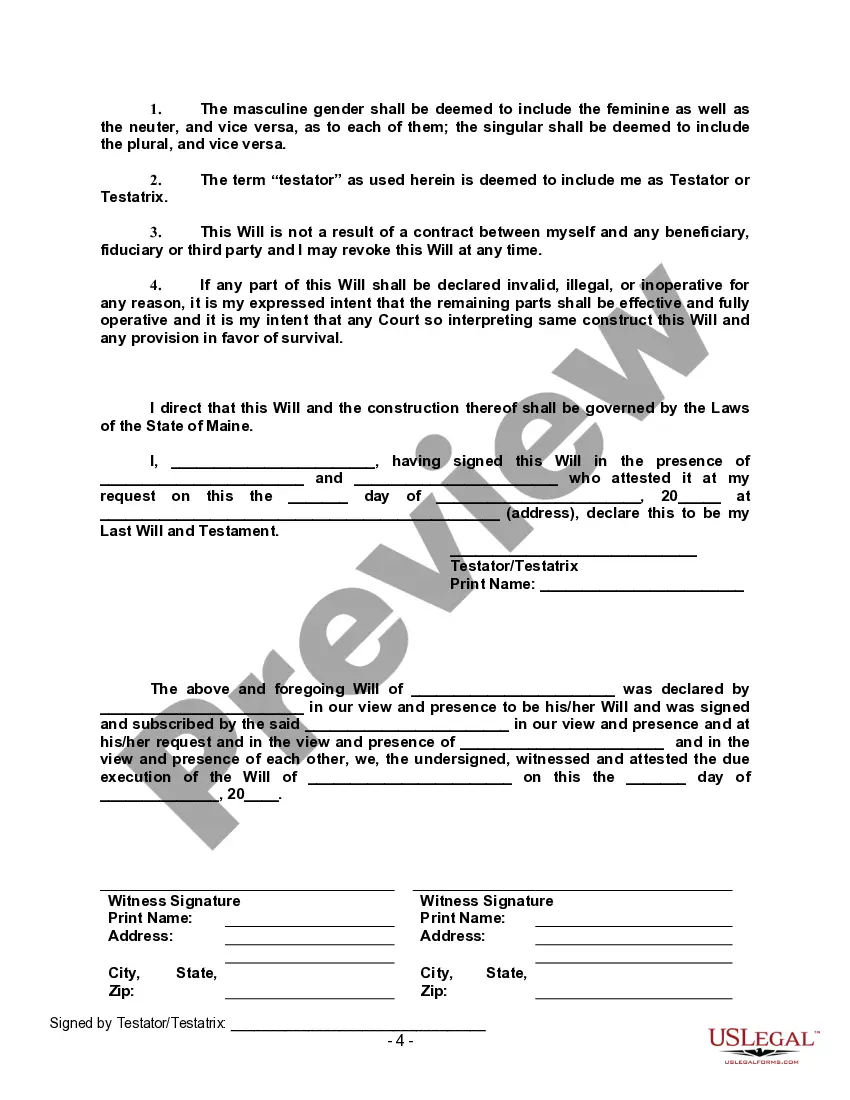
- Sign the document in the presence of witnesses as required by Maine law.
Is notarization required?
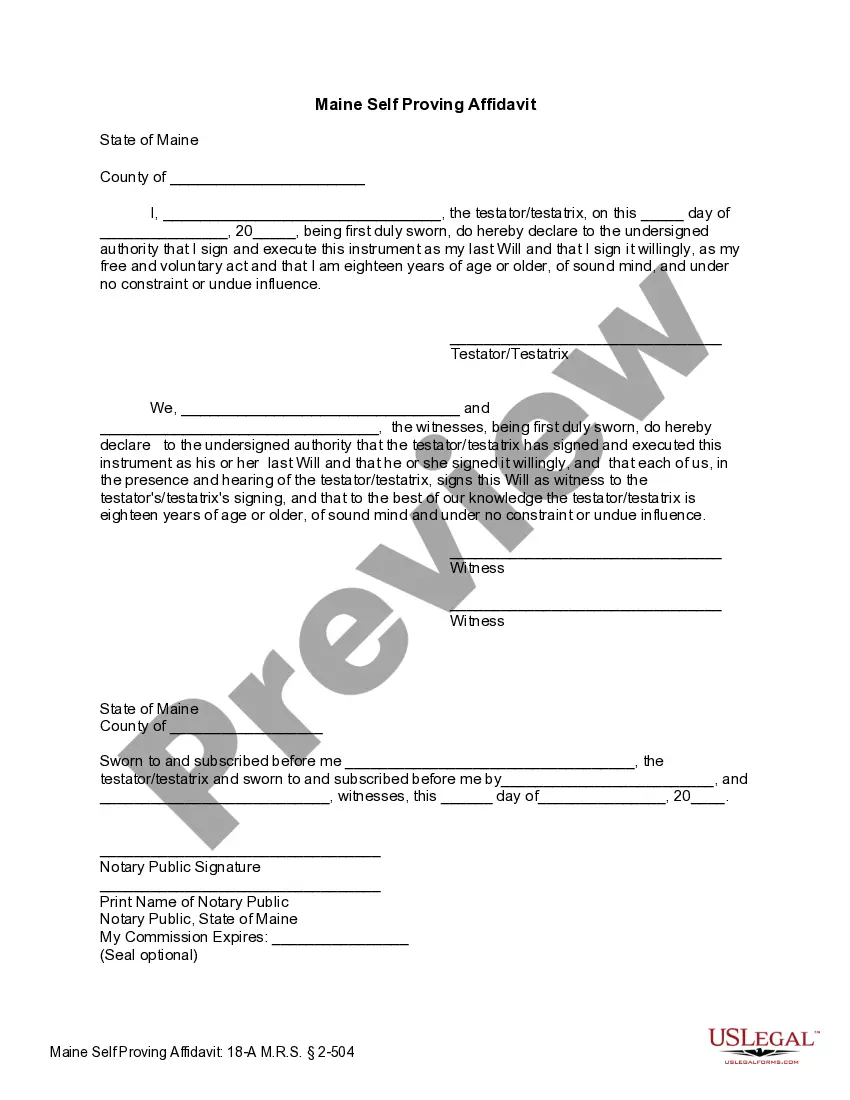
This document requires notarization to meet legal standards. US Legal Forms provides secure online notarization powered by Notarize, allowing you to complete the process through a verified video call, available 24/7.
Get your form ready online
Our built-in tools help you complete, sign, share, and store your documents in one place.
Make edits, fill in missing information, and update formatting in US Legal Forms—just like you would in MS Word.
Download a copy, print it, send it by email, or mail it via USPS—whatever works best for your next step.
Sign and collect signatures with our SignNow integration. Send to multiple recipients, set reminders, and more. Go Premium to unlock E-Sign.
If this form requires notarization, complete it online through a secure video call—no need to meet a notary in person or wait for an appointment.
We protect your documents and personal data by following strict security and privacy standards.

Make edits, fill in missing information, and update formatting in US Legal Forms—just like you would in MS Word.

Download a copy, print it, send it by email, or mail it via USPS—whatever works best for your next step.

Sign and collect signatures with our SignNow integration. Send to multiple recipients, set reminders, and more. Go Premium to unlock E-Sign.

If this form requires notarization, complete it online through a secure video call—no need to meet a notary in person or wait for an appointment.

We protect your documents and personal data by following strict security and privacy standards.
Common mistakes to avoid
- Failing to update the will after significant life changes, such as marriage or the birth of a child.
- Not clearly designating beneficiaries or guardians, leading to potential disputes.
- Potentially neglecting to sign the document in front of witnesses, affecting its validity.
- Forgetting to review and transfer all assets into the trust prior to death.
Why complete this form online
- Convenience: Access the form anytime and complete it from the comfort of your home.
- Editability: Easily modify the document as your circumstances change with our user-friendly interface.
- Reliability: Forms are drafted by licensed attorneys to ensure compliance with legal standards.
Looking for another form?
Form popularity
FAQ
Make a List of All Your Assets. Be sure to include make a list of your assets that includes everything you own. Find the Paperwork for Your Assets. Choose Beneficiaries. Choose a Successor Trustee. Choose a Guardian for Your Minor Children.
Create the initial document. Start by titling the document Last Will and Testament" and including your full legal name and address. Designate an executor. Appoint a guardian. Name the beneficiaries. Designate the assets. Ask witnesses to sign your will. Store your will in a safe place.
In Maine, anyone aged 18 or older who is of sound mind can make a Will. When you write your Will, you list all your property and who you want to give it to after you die (these people are called your beneficiaries).
An estate plan that includes a trust costs $1,000 to $3,000, versus $300 or less for a simple will. What a living-trust promoter may not tell you: You don't need a trust to protect assets from probate. You can arrange for most of your valuable assets to go to your heirs outside of probate.
To start the probate process, you need to file an Application for Probate in the probate court in the county where the decedent lived. In Maine, each county has its own probate court. If there is a Will, it needs to be submitted to the probate court. The probate judge will decide whether or not the Will is valid.
Important: Although a revocable trust supersedes a will, the trust only controls those assets that have been placed into it. Therefore, if a revocable trust is formed, but assets are not moved into it, the trust provisions have no effect on those assets, at the time of the grantor's death.
No, in Maine, you do not need to notarize your will to make it legal. However, Maine allows you to make your will "self-proving" and you'll need to go to a notary if you want to do that. A self-proving will speeds up probate because the court can accept the will without contacting the witnesses who signed it.
In addition, Maine allows a will to be made without witnesses if it is written by hand by the testator and signed at the end. 18-A M.R.S.A. § 2-503. This is called a holographic will.
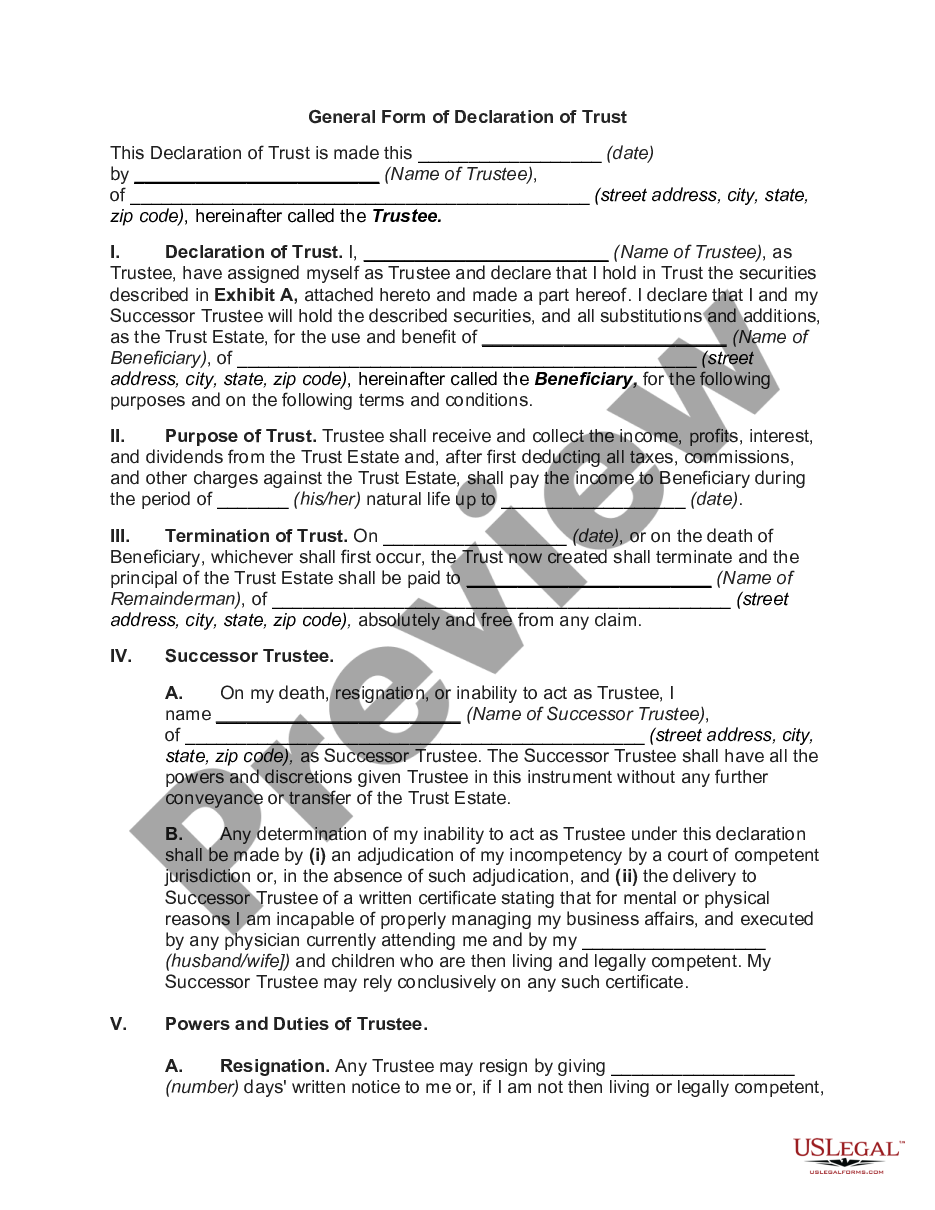
Many people find that they can successfully set up their own living trust without the help of a lawyer. Making a living trust takes a more work than writing a will because a living trust requires that you take the additional step of transferring property into the trust.