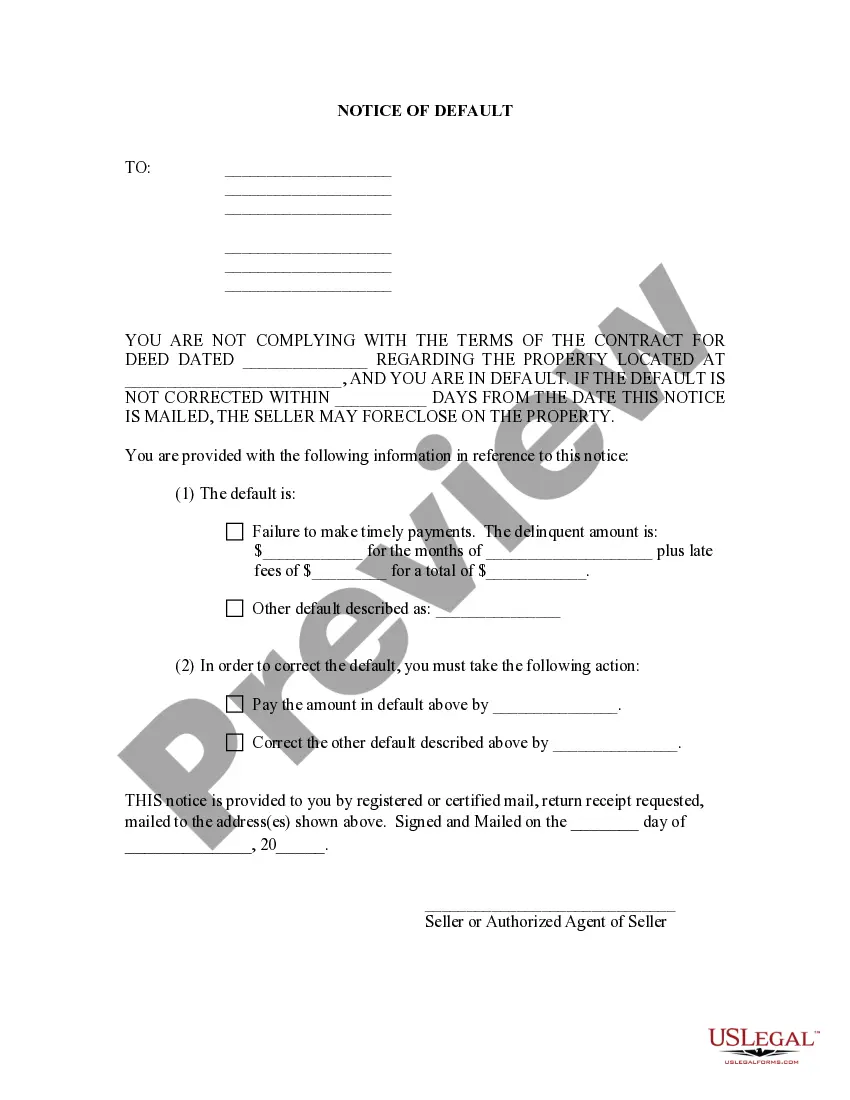
Kentucky General Notice of Default for Contract for Deed
What is this form?
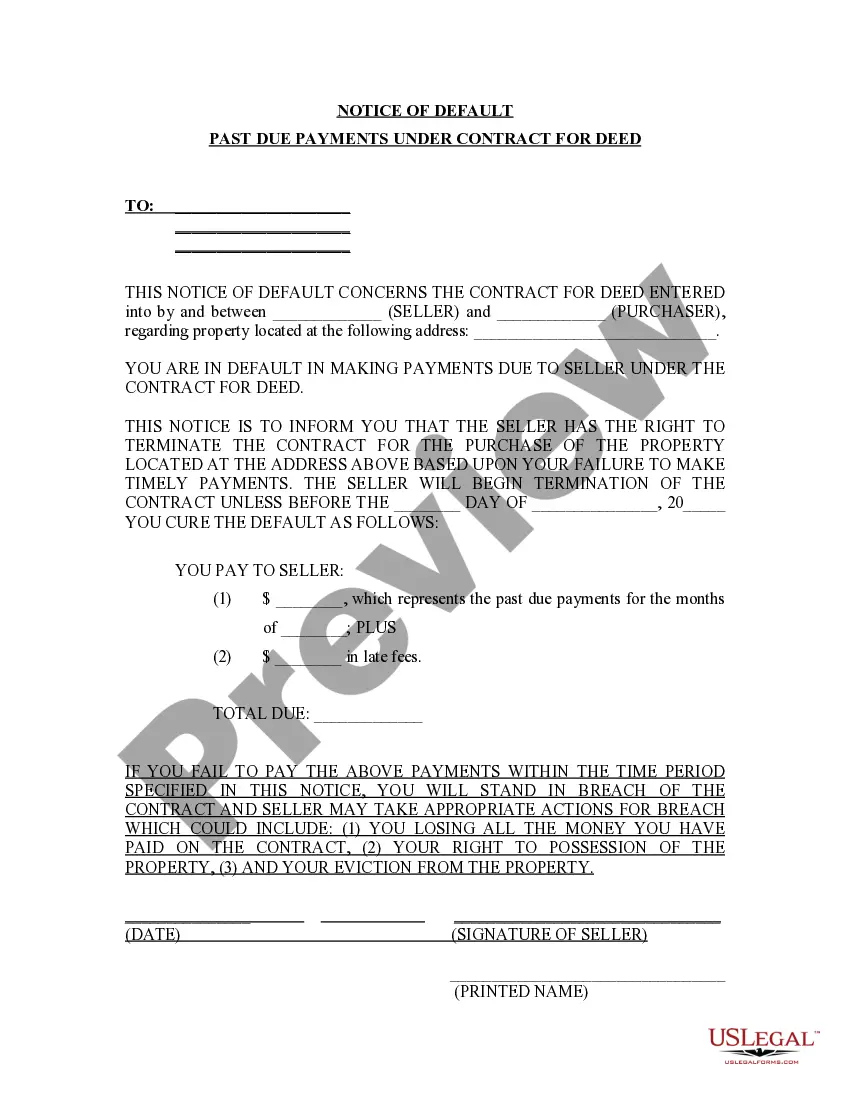
The General Notice of Default for Contract for Deed is a legal document used by sellers to inform purchasers that they are in default of their contractual obligations. This form outlines the reasons for the default, details the actions required to cure the default, and specifies the remedies that the seller may pursue if the purchaser fails to rectify the situation. Unlike similar forms, this notice delineates the seller's rights and the next steps clearly, ensuring legal clarity for both parties involved.
What’s included in this form
- Identification of parties involved in the contract.
- Description of the default, including specific contract breaches.
- Instructions on how the purchaser can cure the default.
- Notification of the seller's intended actions if the default is not cured.
- Signature lines for both the seller and purchaser.
When this form is needed
This form is typically used when a purchaser has failed to make required payments or fulfill other essential obligations under a contract for deed. It serves as a formal notification to the purchaser, allowing them an opportunity to address the issues before the seller takes further legal action, such as terminating the contract or pursuing foreclosure.
Who needs this form
- Sellers of property under a contract for deed seeking to notify purchasers of a default.
- Purchasers who need to understand the implications of being in default.
- Real estate professionals and attorneys guiding clients through contract for deed transactions.
How to prepare this document
- Identify the sellerâs and purchaserâs names and addresses.
- Detail the specific reasons for the default, referencing the relevant provisions of the contract.
- Specify the steps the purchaser must take to cure the default, including any deadlines.
- Indicate the sellerâs planned remedies if the default is not resolved.
- Ensure both parties sign and date the notice to validate it.
Is notarization required?
This form does not typically require notarization unless specified by local law. It is recommended to check state regulations to ensure compliance with any recording requirements.
Get your form ready online
Our built-in tools help you complete, sign, share, and store your documents in one place.
Make edits, fill in missing information, and update formatting in US Legal Forms—just like you would in MS Word.
Download a copy, print it, send it by email, or mail it via USPS—whatever works best for your next step.
Sign and collect signatures with our SignNow integration. Send to multiple recipients, set reminders, and more. Go Premium to unlock E-Sign.
If this form requires notarization, complete it online through a secure video call—no need to meet a notary in person or wait for an appointment.
We protect your documents and personal data by following strict security and privacy standards.
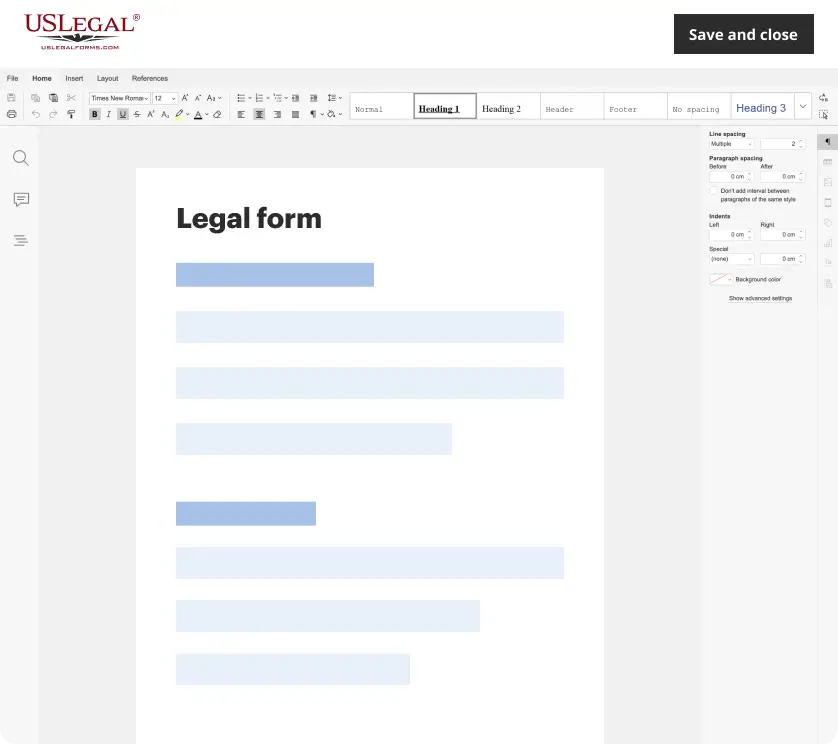
Make edits, fill in missing information, and update formatting in US Legal Forms—just like you would in MS Word.
Download a copy, print it, send it by email, or mail it via USPS—whatever works best for your next step.
Sign and collect signatures with our SignNow integration. Send to multiple recipients, set reminders, and more. Go Premium to unlock E-Sign.

If this form requires notarization, complete it online through a secure video call—no need to meet a notary in person or wait for an appointment.
We protect your documents and personal data by following strict security and privacy standards.
Mistakes to watch out for
- Failing to specify the exact nature of the default.
- Neglecting to include required deadlines for curing the default.
- Omitting the seller's remedies in case of continued default.
- Not providing accurate contact information for both parties.
- Not signing the document, leading to potential legal challenges.
Benefits of using this form online
- Convenient access to a professionally drafted legal document.
- Editable templates allow customization to fit specific needs.
- Immediate downloading and printing for quick use.
- Drafted by licensed attorneys to ensure compliance with legal standards.
- No need for travel - complete the document from the comfort of your home.
Legal use & context
- Establishes a formal record of notice to the Purchaser regarding default.
- Helps protect the Sellerâs rights in the event of further legal action.
Main things to remember
- The General Notice of Default is crucial for notifying a Purchaser in default of a contract for deed.
- It outlines both the default and the necessary steps to remedy the situation.
- Ensure compliance with local laws for proper execution.
Looking for another form?
Form popularity
FAQ
Failure to record a deed effectively makes it impossible for the public to know about the transfer of a property. That means the legal owner of the property appears to be someone other than the buyer, a situation that can generate serious ramifications.
In the first instance, if your deed is not recorded, there is nothing in the public record to stop the seller from conveying the property to another person.The second situation could happen if your seller fails to pay his or her debts and the seller's creditors file liens or judgments against your property.
This means that if you default and can?t make your payments, you lose the property and all of the money you have already paid into it (often including repairs and improvements). Unlike a traditional mortgage, a defaulting buyer in a contact for deed may only have 30-60 days to cure the default or move out.
The buyer should record the contract for deed with the county recorder where the land is located and does so normally within four months after the contract is signed, though the time may vary depending on state law.
Contrary to normal expectations, the Deed DOES NOT have to be recorded to be effective or to show delivery, and because of that, the Deed DOES NOT have to be signed in front of a Notary Public. However, if you plan to record it, then it does have to be notarized as that is a County Recorder requirement.
Contact the other party and ask whether they are willing to negotiate the cancellation of the contract. Offer the other party an incentive to cancel the contract for deed.