Indiana New Resident Guide
Overview of this form
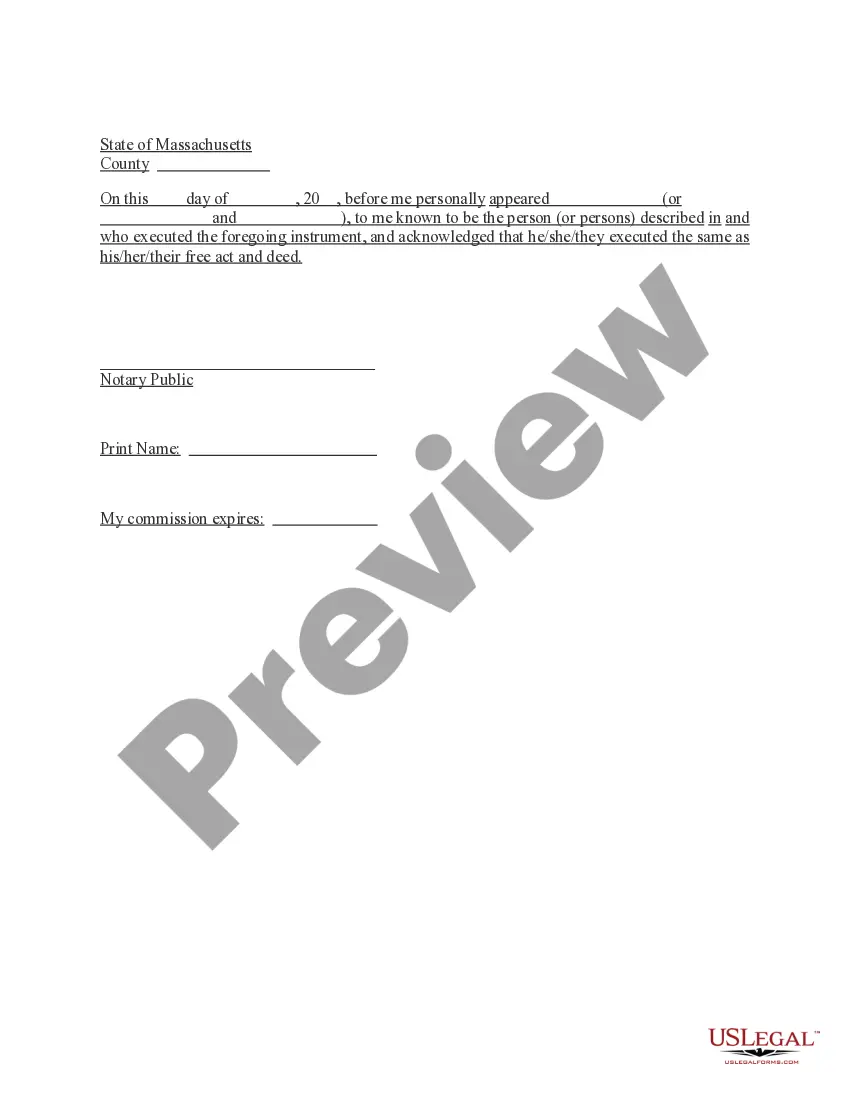
The New Resident Guide is an informational form designed to assist individuals who have recently moved to a new state. It outlines essential requirements related to residency, voter registration, identification cards, driver's licenses, and vehicle title and registration. Unlike other legal forms that may focus on specific aspects of moving, this guide serves as a comprehensive resource for new residents to ensure they fulfill their obligations in their new state.
Form components explained
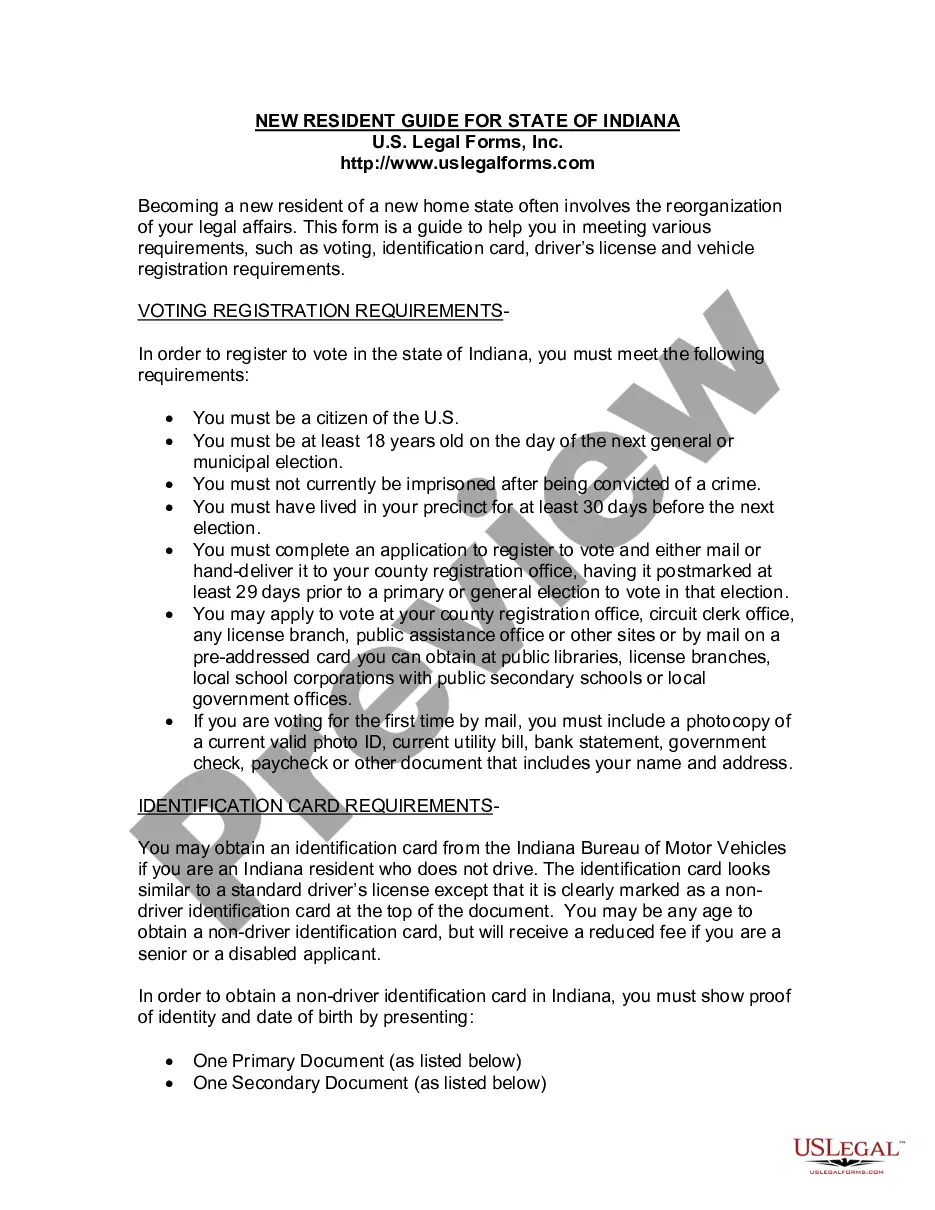
- Voting registration requirements and procedures.
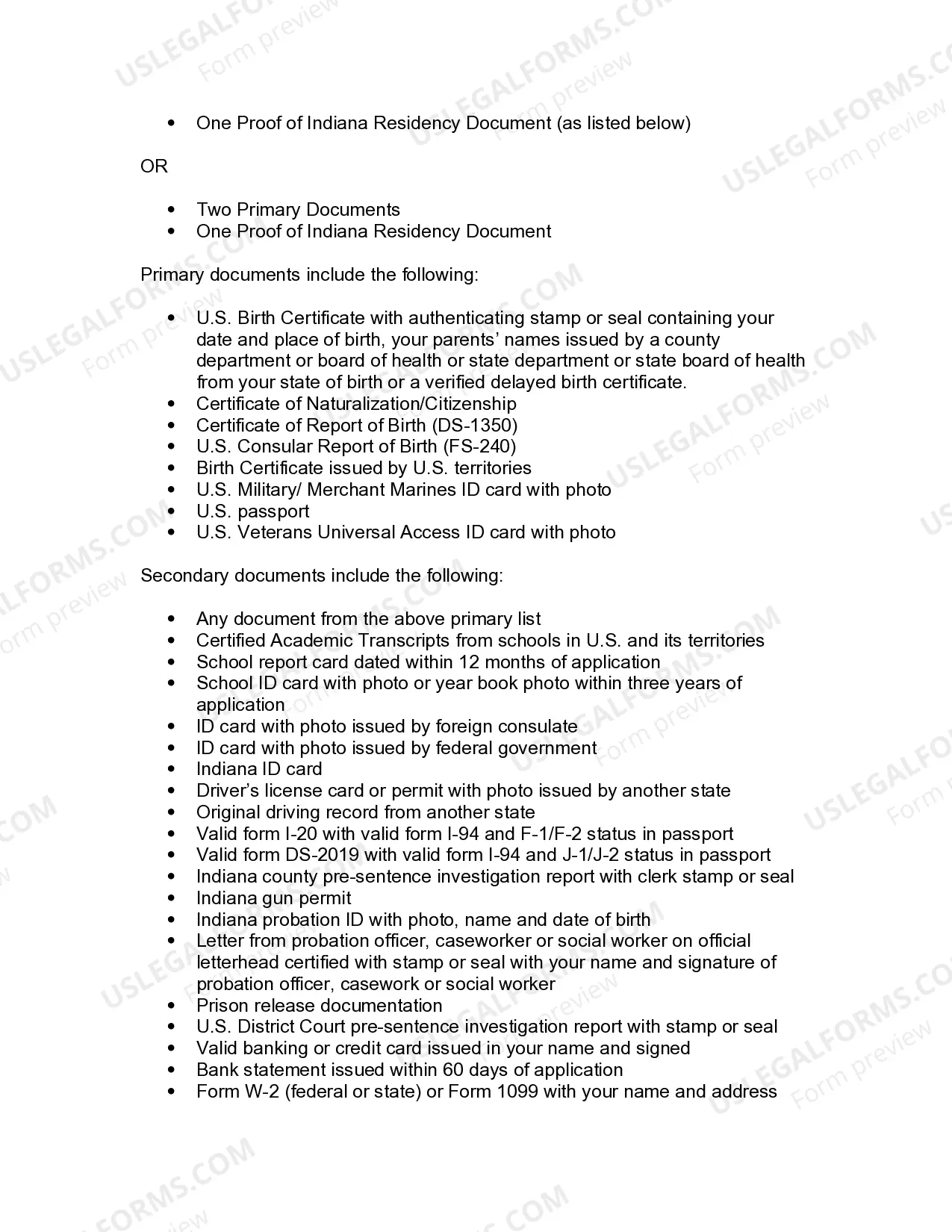
- Eligibility criteria for obtaining an identification card.
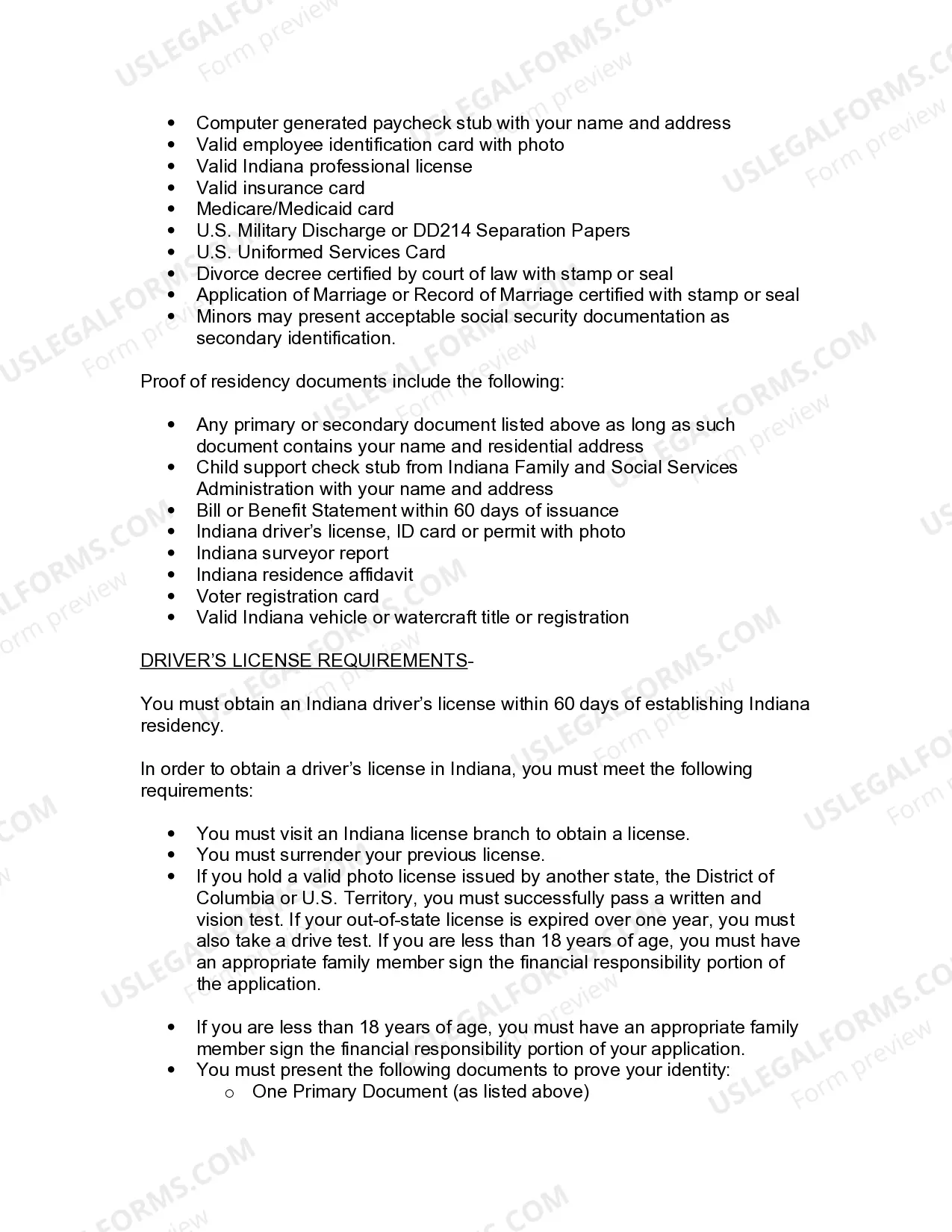
- Steps to apply for a driver's license.
- Vehicle registration and title application information.
- Proof of residency and identification necessary for various applications.
Situations where this form applies
This form should be used when you relocate to a new state and need to understand the legal requirements for establishing residency. You will find it especially helpful for navigating the processes of registering to vote, obtaining identification, applying for a driver's license, and registering your vehicle within your new state.
Who needs this form
This guide is intended for:
- Individuals and families moving to a new state.
- New residents unfamiliar with state-specific legal requirements.
- First-time voters in a new state looking to register.
- Anyone needing to obtain identification or a driver's license in their new state.
How to complete this form
- Review the residency requirements listed for voting, identification, and vehicle registration.
- Gather necessary documents as proof of identity, residency, and any other specified criteria.
- Complete the voter registration application and ensure it is submitted by the deadline.
- Visit the local Bureau of Motor Vehicles or appropriate agency for identification and driver's license applications.
- Apply for vehicle registration at the license branch, providing all required documentation.
Does this document require notarization?
This form does not typically require notarization to be legally valid. However, some jurisdictions or document types may still require it. US Legal Forms provides secure online notarization powered by Notarize, available 24/7 for added convenience.
Get your form ready online
Our built-in tools help you complete, sign, share, and store your documents in one place.
Make edits, fill in missing information, and update formatting in US Legal Forms—just like you would in MS Word.
Download a copy, print it, send it by email, or mail it via USPS—whatever works best for your next step.
Sign and collect signatures with our SignNow integration. Send to multiple recipients, set reminders, and more. Go Premium to unlock E-Sign.
If this form requires notarization, complete it online through a secure video call—no need to meet a notary in person or wait for an appointment.
We protect your documents and personal data by following strict security and privacy standards.

Make edits, fill in missing information, and update formatting in US Legal Forms—just like you would in MS Word.

Download a copy, print it, send it by email, or mail it via USPS—whatever works best for your next step.

Sign and collect signatures with our SignNow integration. Send to multiple recipients, set reminders, and more. Go Premium to unlock E-Sign.

If this form requires notarization, complete it online through a secure video call—no need to meet a notary in person or wait for an appointment.

We protect your documents and personal data by following strict security and privacy standards.
Avoid these common issues
- Missing application deadlines for voter registration.
- Not providing sufficient proof of residency or identity.
- Failing to schedule an appointment if required by the local agency.
- Assuming that previous state documents automatically transfer to the new state.
Benefits of completing this form online
- Convenience of accessing the guide from anywhere with an internet connection.
- Easy to download and print for personal use.
- Up-to-date information reflecting current legal requirements.
Key takeaways
- Understanding residency requirements is vital for settling in a new state.
- Registering to vote and obtaining an ID are key steps to establish residency.
- Preparation is crucial; gather all necessary documents before visiting local offices.
Looking for another form?
Form popularity
FAQ
HOLD YOUR INSTRUCTION PERMIT FOR AT LEAST 180 DAYS. COMPLETE AN APPROVED DRIVER ED PROGRAM OR WAIT LONGER. APPLY IN PERSON. SUBMIT YOUR DRIVING LOG. SUBMIT AN APPLICATION. BRING DOCUMENTATION. PASS A VISION TEST. PASS A DRIVING SKILLS EXAM.
General purposes: Residency is established by registering to vote, enrolling a child in school, paying taxes, or living in the state for 183 days without a residence in another state. New residents of Indiana have 60 days to get an Indiana driver's license.
Proof of your new Indiana residency. Proof of your identity, lawful status in the U.S., and Social Security number. Proof of your current driver's license. Proof of your ability to drive, through a knowledge examination and/or a driving skills test. Proof of your visual ability.
If you maintain legal residence in another state, but live in Indiana for 183 days, you qualify as a resident. Additionally, all voters registered in Indiana immediately qualify as residents of the state, effectively reducing the waiting period to 27 days.
Step 1: Visit any BMV office locations. Step 2: Pass the vision screening. Step 3: Pass the written driving knowledge test. Step 4: Have your picture taken.
An Indiana resident is an individual that maintains a legal residence in the state for the entire year. If you live in Indiana only part of the year but maintain a home full year, keep your Indiana driver's license and/or keep your Indiana voting rights, you are considered a resident.
The applicant must permanently reside in Indiana for 12 continuous months for a primary purpose other than attending an institution of higher education, prior to the first day of classes of the academic semester or session for which residence classification is sought.
If you are at least 18 years of age and have held a valid out-of-state driver's license from the state of your prior residence, you must visit a BMV branch to present one of the following three items: your current out-of-state driver's license, a copy of your official driving record or a verification letter.