Illinois Contractor's Verified Statement of Labor and Materials and amount due - Mechanic Liens - Corporation or LLC
Overview of this form
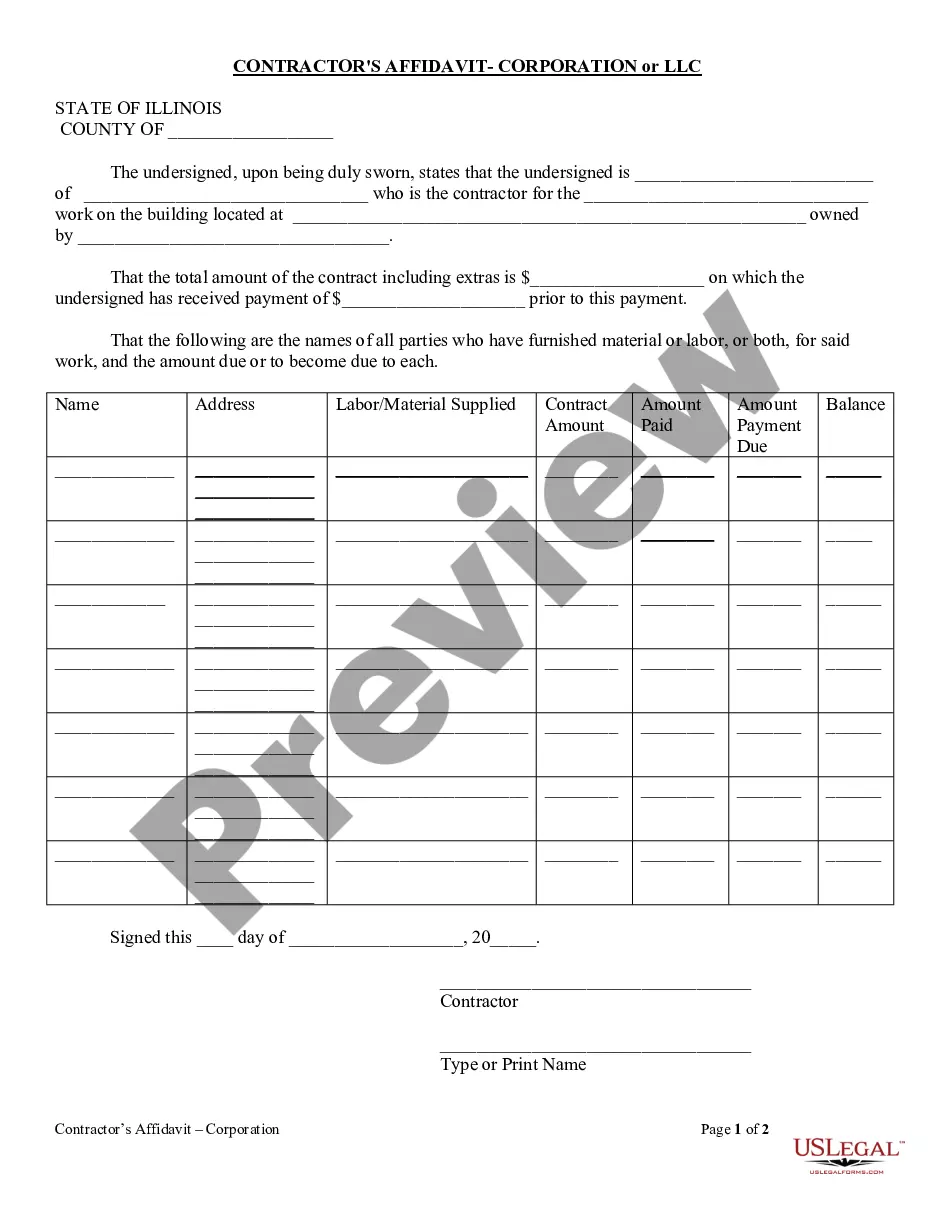
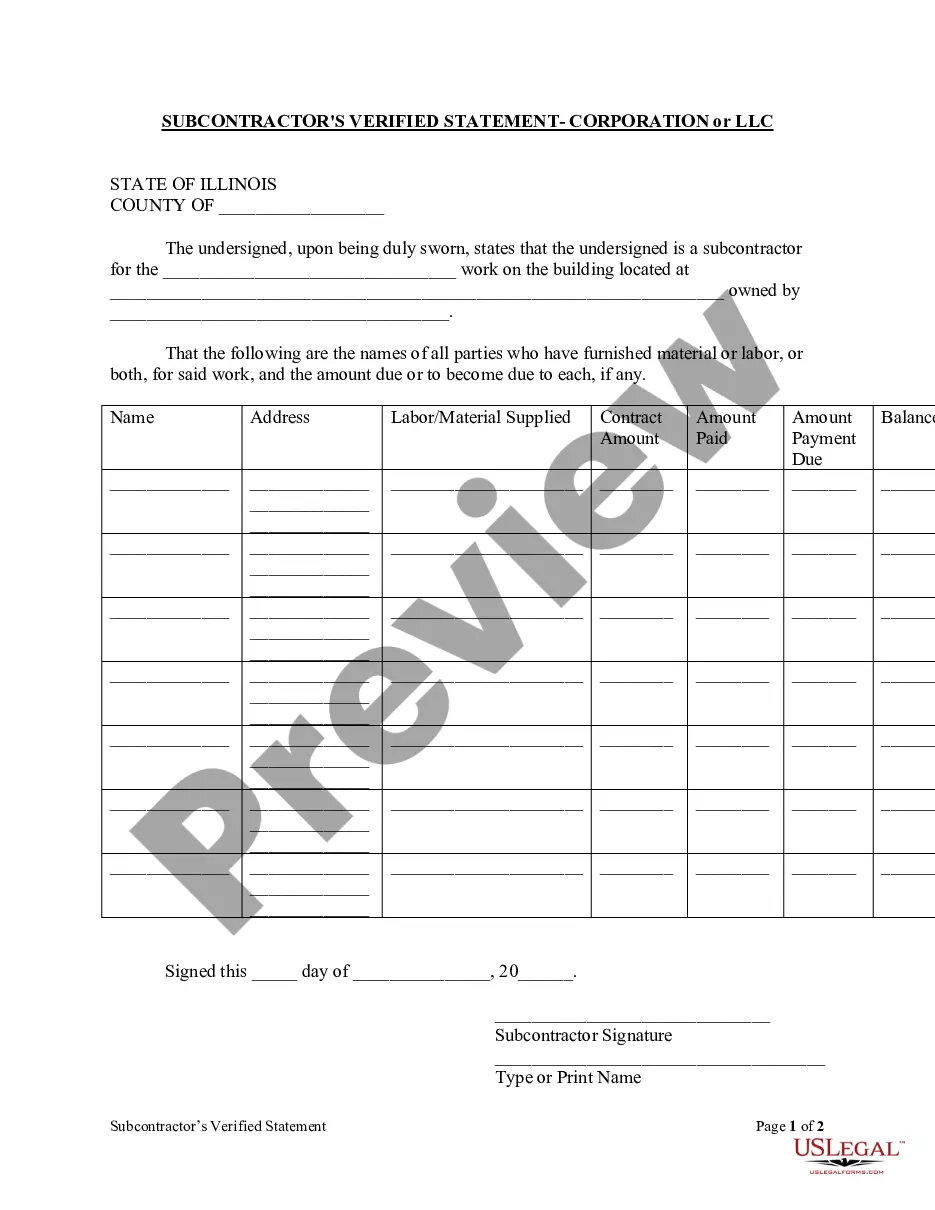
The Contractor's Verified Statement of Labor and Materials and Amount Due is a legal document used by corporate or LLC contractors in Illinois. It serves to inform the property owner about all parties who have supplied labor or materials and outlines the amounts due to each. This form is essential for compliance with Illinois law, specifically t770 ILCS 60/5, ensuring that the owner is properly notified before making any payments to the contractor. Unlike other notices, this form specifically addresses corporate entities and LLCs, making it crucial for contractors operating in these structures.
Key components of this form
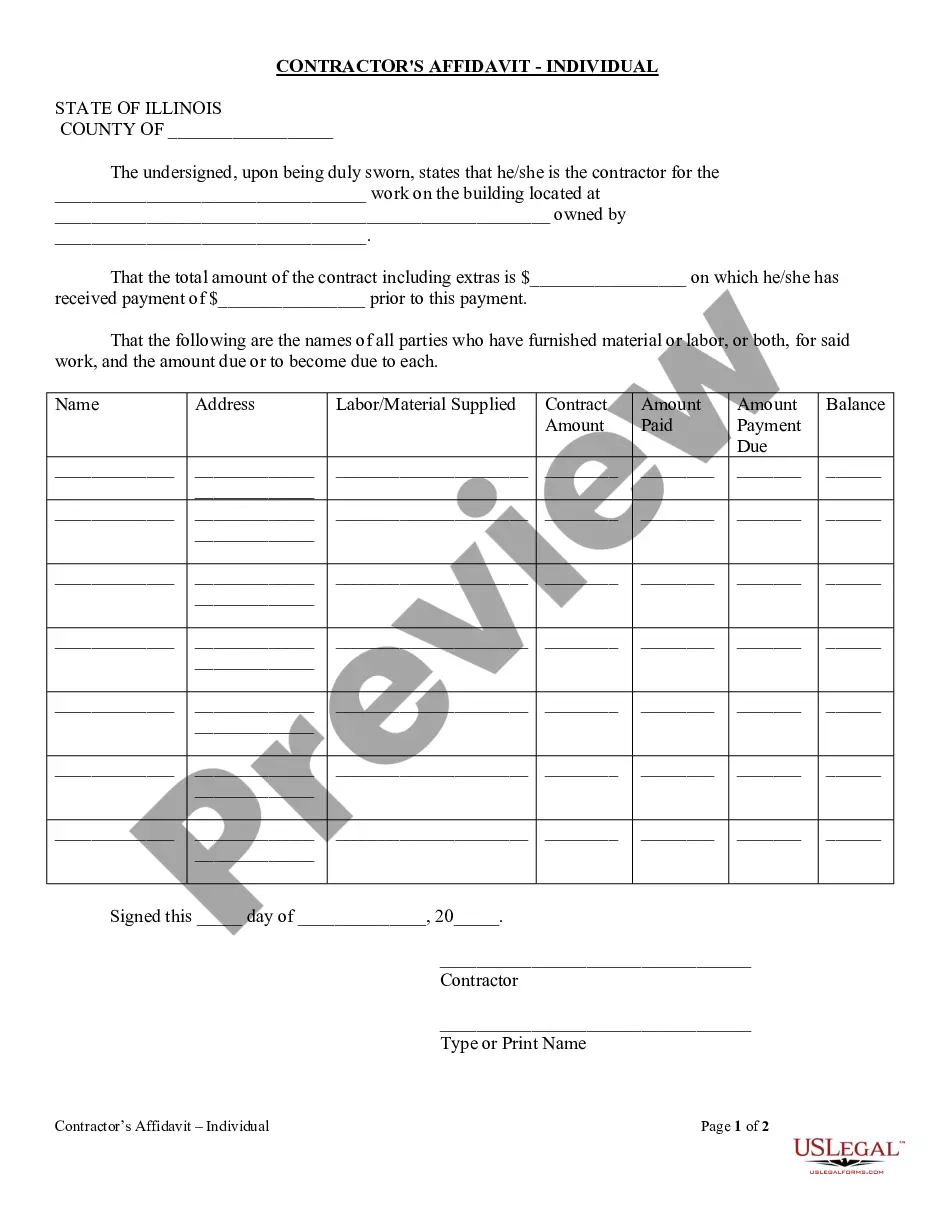
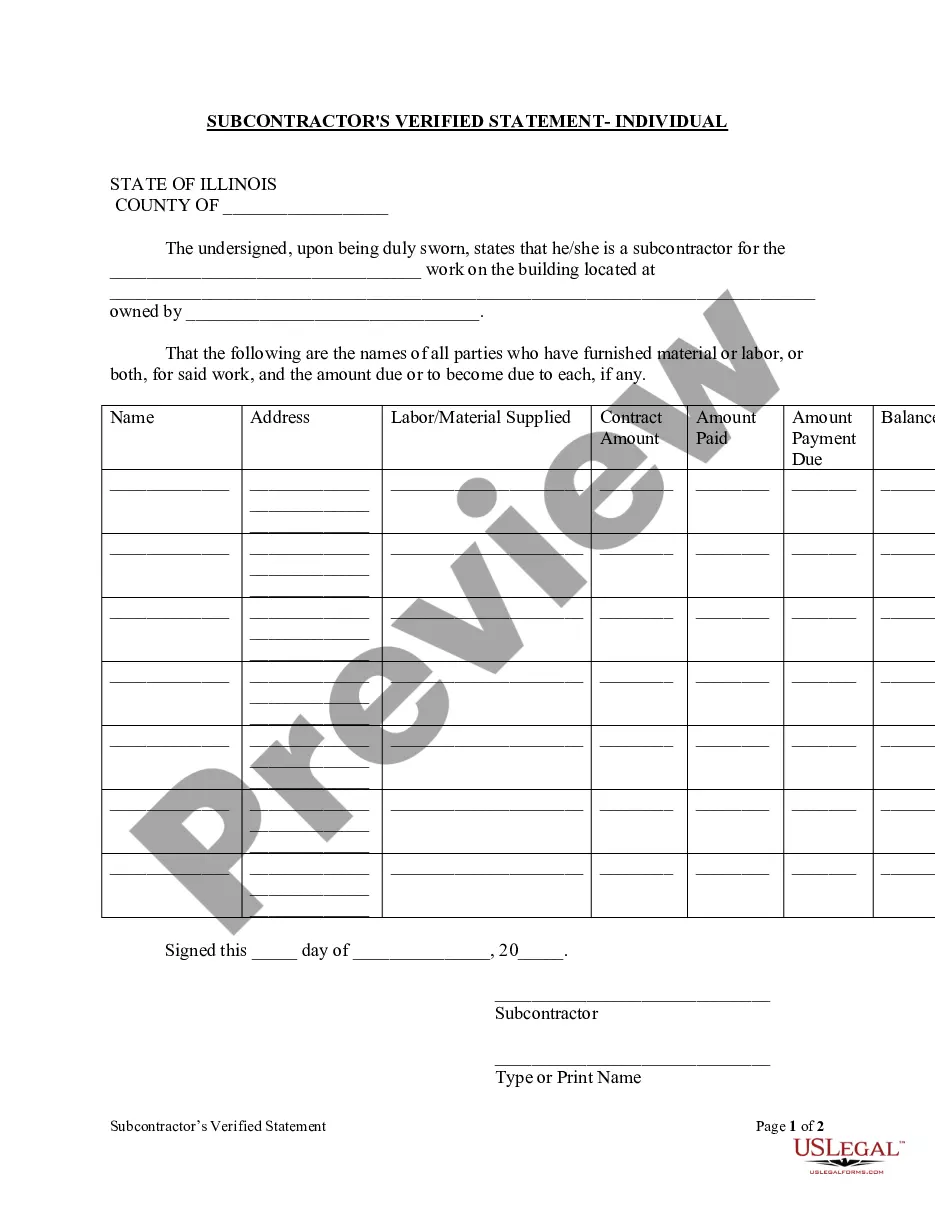
- Identification of the contractor and the property owner.
- Details about the construction work performed.
- Total contract amount and payment received prior to the statement.
- List of all parties who supplied labor or materials, including amounts due.
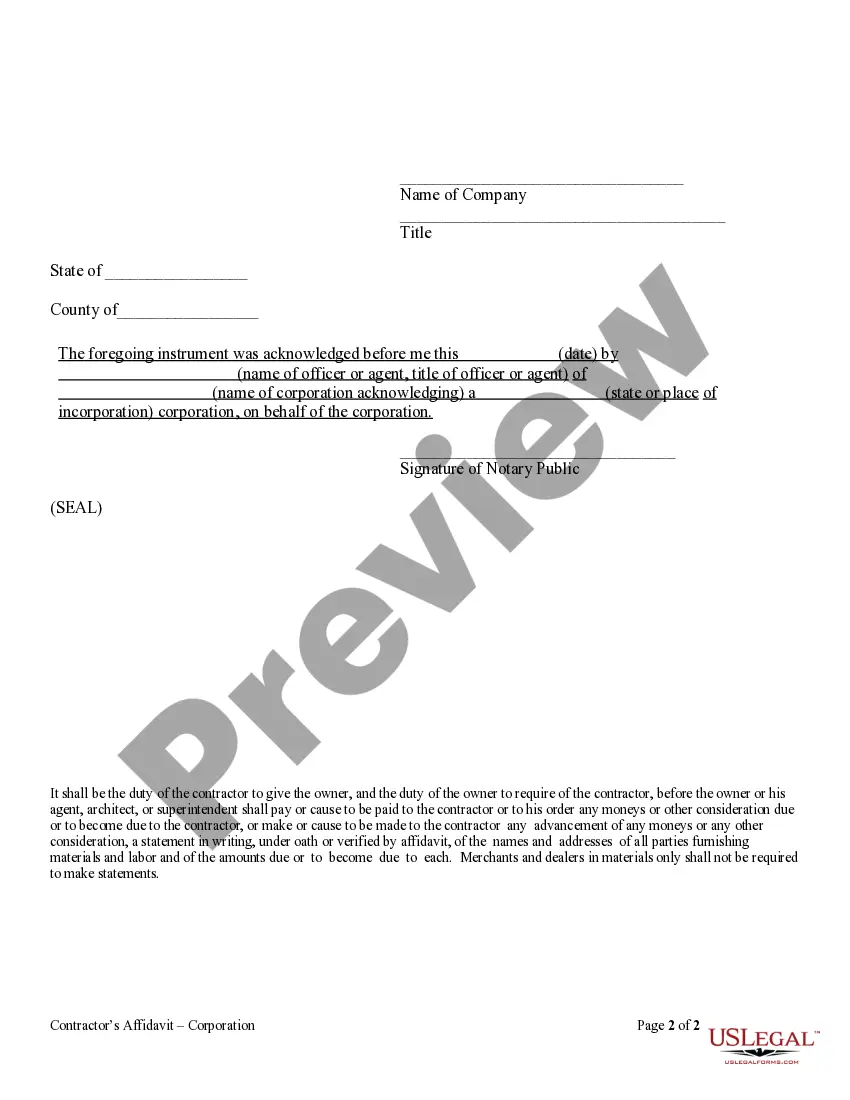
- Signature of the contractor and possibly a notary public.
When to use this form
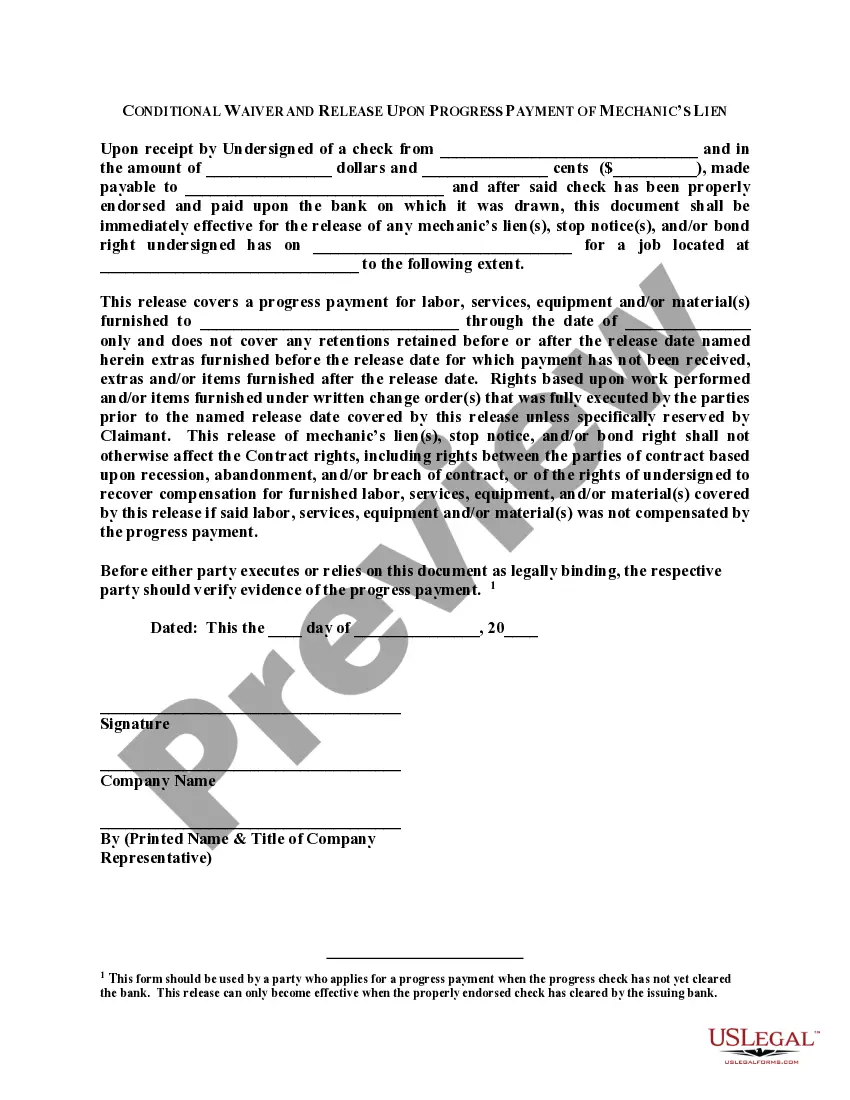
This form should be used when a corporate or LLC contractor is nearing the completion of a project and needs to provide the property owner with a detailed statement of labor and materials. It is especially important to utilize this form before the owner disburses any final payment, ensuring that all suppliers and laborers are acknowledged and compensated accordingly.
Who should use this form
This form is intended for:
- Contractors operating as a corporation or LLC in Illinois.
- Property owners who intend to pay contractors for completed work.
- Suppliers and subcontractors involved in a construction project.
Instructions for completing this form
- Identify the contractor by entering the name and title of the person completing the form.
- Provide the full address of the property where the work was performed.
- Enter the total contract amount and any payments already received.
- List all parties who provided labor or materials with corresponding amounts due.
- Sign and date the form under the contractor's signature section, then have it notarized if necessary.
Notarization requirements for this form
This form needs to be notarized to ensure legal validity. US Legal Forms provides secure online notarization powered by Notarize, allowing you to complete the process through a verified video call, available anytime.
Get your form ready online
Our built-in tools help you complete, sign, share, and store your documents in one place.
Make edits, fill in missing information, and update formatting in US Legal Forms—just like you would in MS Word.
Download a copy, print it, send it by email, or mail it via USPS—whatever works best for your next step.
Sign and collect signatures with our SignNow integration. Send to multiple recipients, set reminders, and more. Go Premium to unlock E-Sign.
If this form requires notarization, complete it online through a secure video call—no need to meet a notary in person or wait for an appointment.
We protect your documents and personal data by following strict security and privacy standards.

Make edits, fill in missing information, and update formatting in US Legal Forms—just like you would in MS Word.

Download a copy, print it, send it by email, or mail it via USPS—whatever works best for your next step.

Sign and collect signatures with our SignNow integration. Send to multiple recipients, set reminders, and more. Go Premium to unlock E-Sign.

If this form requires notarization, complete it online through a secure video call—no need to meet a notary in person or wait for an appointment.

We protect your documents and personal data by following strict security and privacy standards.
Common mistakes
- Failing to list all parties who furnished labor or materials.
- Incorrectly stating the total amount due.
- Not obtaining notarization, if required.
- Leaving out the contractor's signature or date.
Advantages of online completion
- Convenience of downloading and filling the form at your own pace.
- Editability allows for easy corrections if needed.
- Reliability in ensuring all necessary legal elements are included to protect all parties involved.
Looking for another form?
Form popularity
FAQ
In order to enforce a lien, the contractor, subcontractor or supplier must file a lawsuit. The deadline to file a lawsuit is two years from the last date work was performed or materials were supplied. A recorded lien is valid for these two years, but a failure to sue within that time frame voids the lien.
The process of bonding off a mechanics lien starts after a claimant has filed a mechanics lien. After the claim is made, a general contractor or a property owner can contact a surety bond company to purchase a surety bond that replaces the value of the lien that was filed against the property.
The deadline for contractors and subcontractors to file their statement of mechanic's lien is four months (not 120 days) from the last date of work (exclusive of warranty work or other work performed free of charge), or from the last date that materials were supplied to the project.
Negotiate with the contractor who placed the lien (the "lienor" to remove it. Obtain a lien bond to discharge the lien, or. File a lawsuit to vacate the lien.
How long does a judgment lien last in Illinois? A judgment lien in Illinois will remain attached to the debtor's property (even if the property changes hands) for seven years.
The deadline for contractors and subcontractors to file their statement of mechanic's lien is four months (not 120 days) from the last date of work (exclusive of warranty work or other work performed free of charge), or from the last date that materials were supplied to the project.
Posting a Bond Asselta says to expect to pay 110 percent of the lien amount. Submit the bond to the court. The lien will then transfer to the bond and clear the property's title. Wait for the contractor claimant to foreclose on the lien in the allotted period to dispute the lien in court.
Formalize a defense for disputing the amount of the lien. Gather supporting documentation for your rebuttal, depending on the type of lien. Contact the agent representing the creditor to dispute the amount of the claim. Negotiate a payment settlement with the creditor if you cannot pay the amount you owe in full.
What is a contractor's sworn statement? A sworn statement is a construction document that lists the contractors and suppliers that provide material or labor to a construction project. It includes information about who is owed money, how much they are owed, and the remaining balance on their contract.