Illinois Subcontractor's Verified Statement - Mechanic Liens - Corporation or LLC
About this form
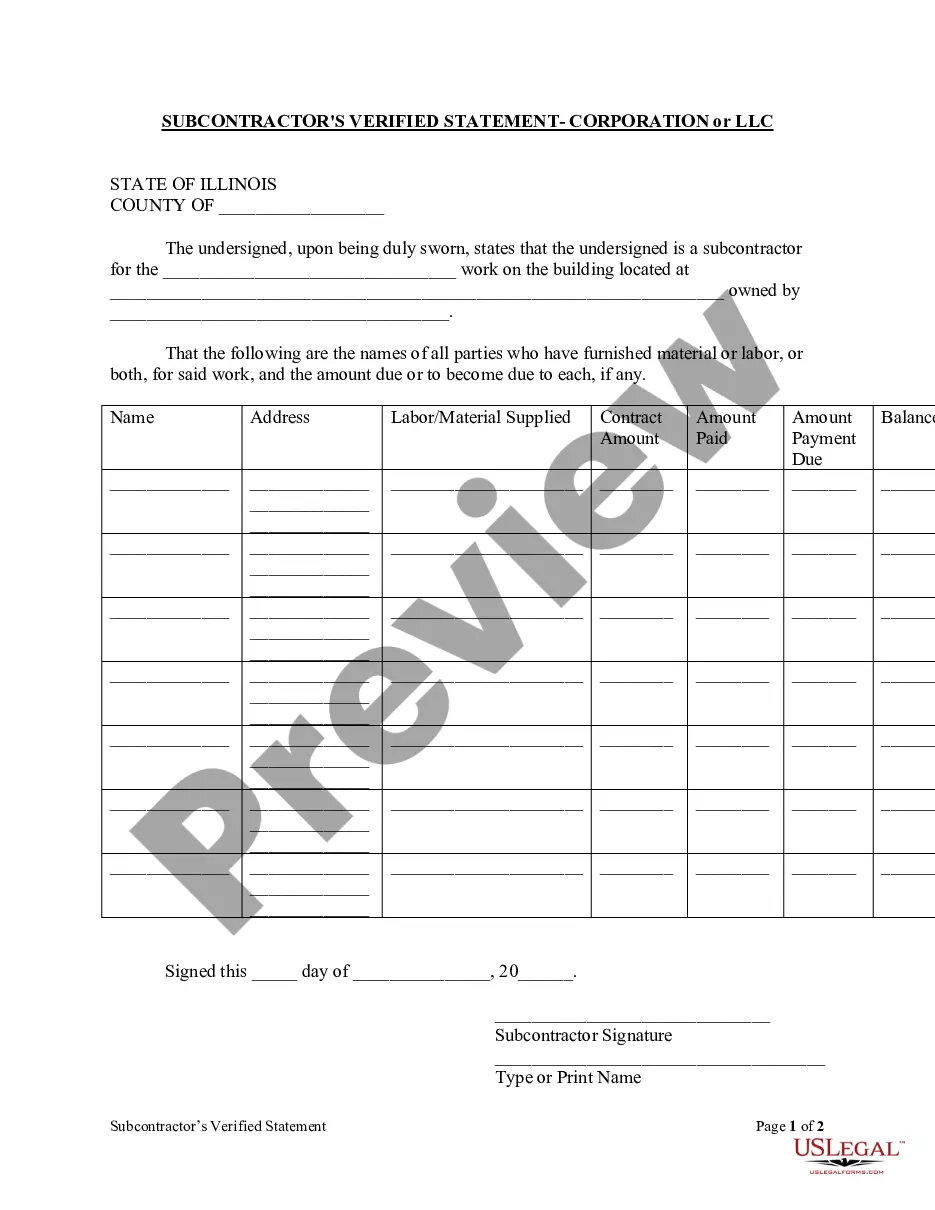
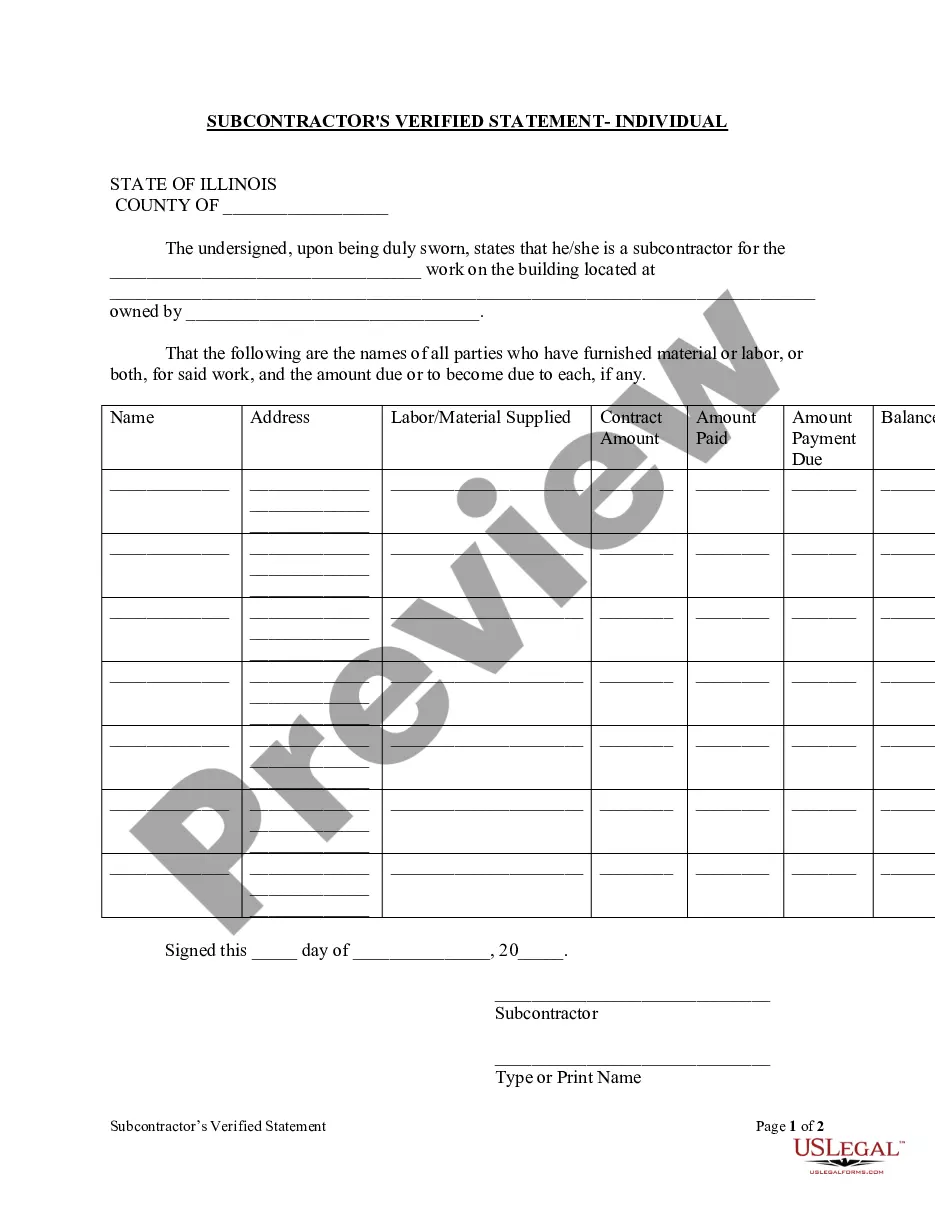
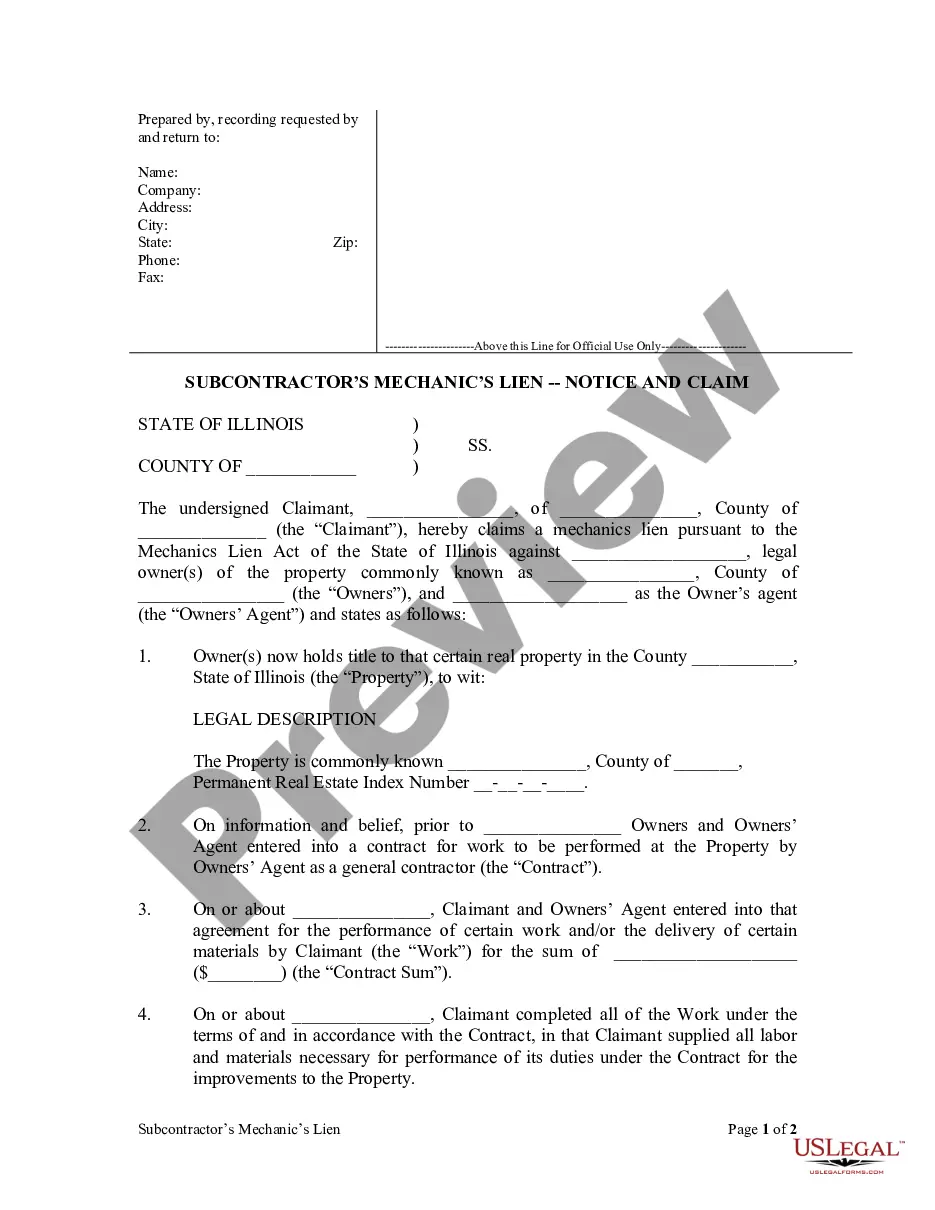
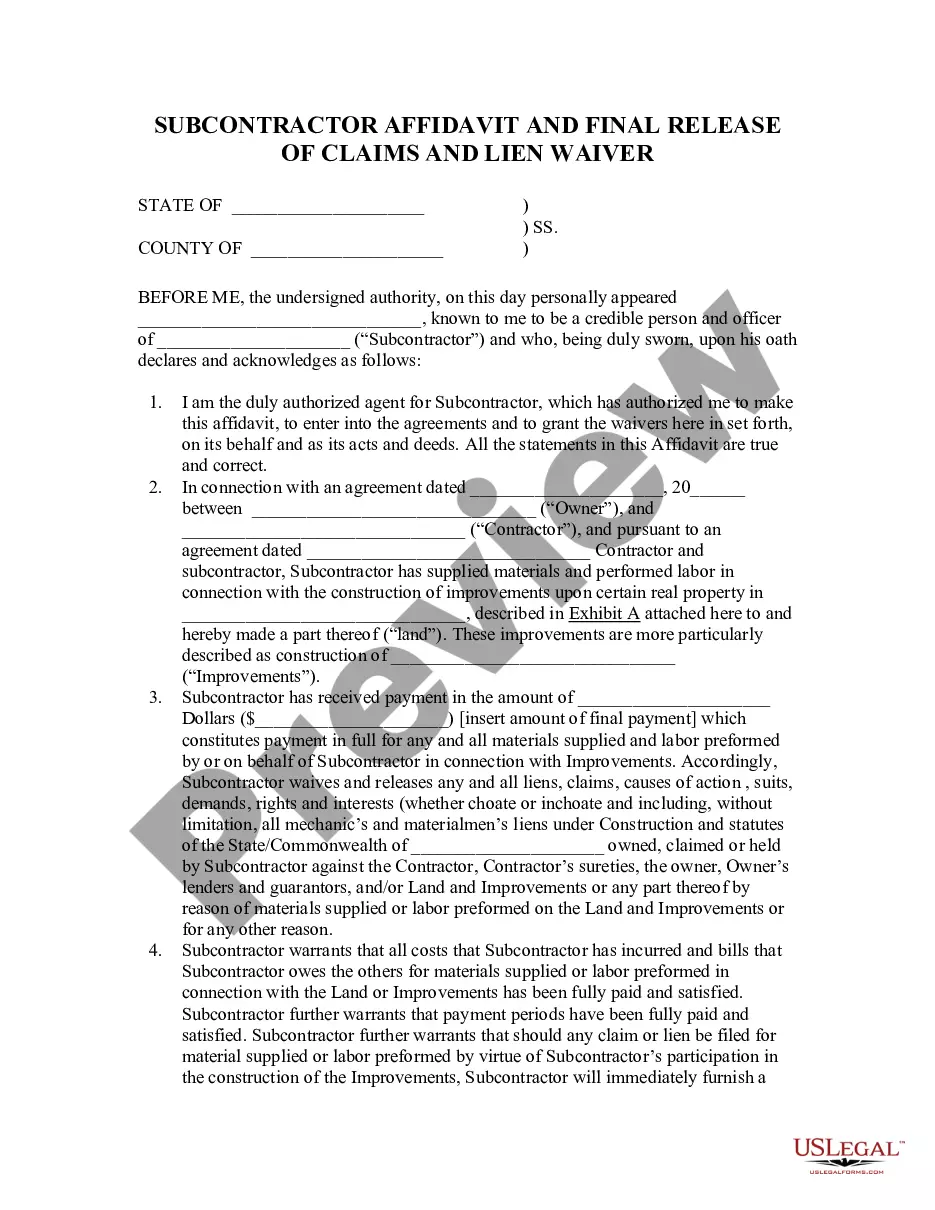
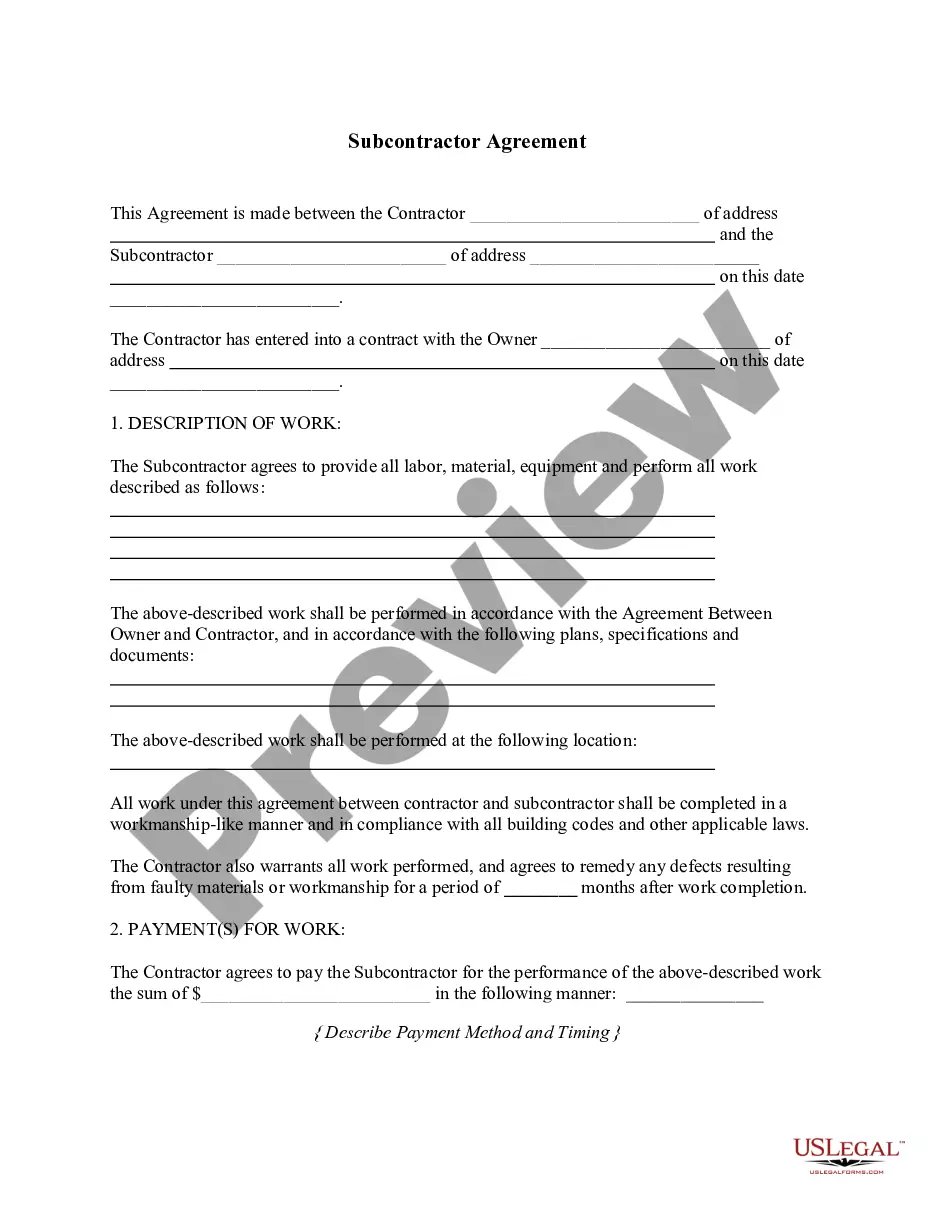
The Subcontractor's Verified Statement is a legal document specifically designed for subcontractors in Illinois as required under 770 ILCS 60/22. This form serves as a response to requests from property owners or contractors for a detailed account of materials and labor provided on a project, including payment status. It is distinct from other lien forms in that it focuses on providing transparency regarding payment obligations to subcontractors involved in construction work for a corporation or LLC.
Main sections of this form
- Identification of the subcontractor and the project location
- Names and addresses of all parties who supplied labor or materials
- Contract amounts, amounts already paid, and balances due
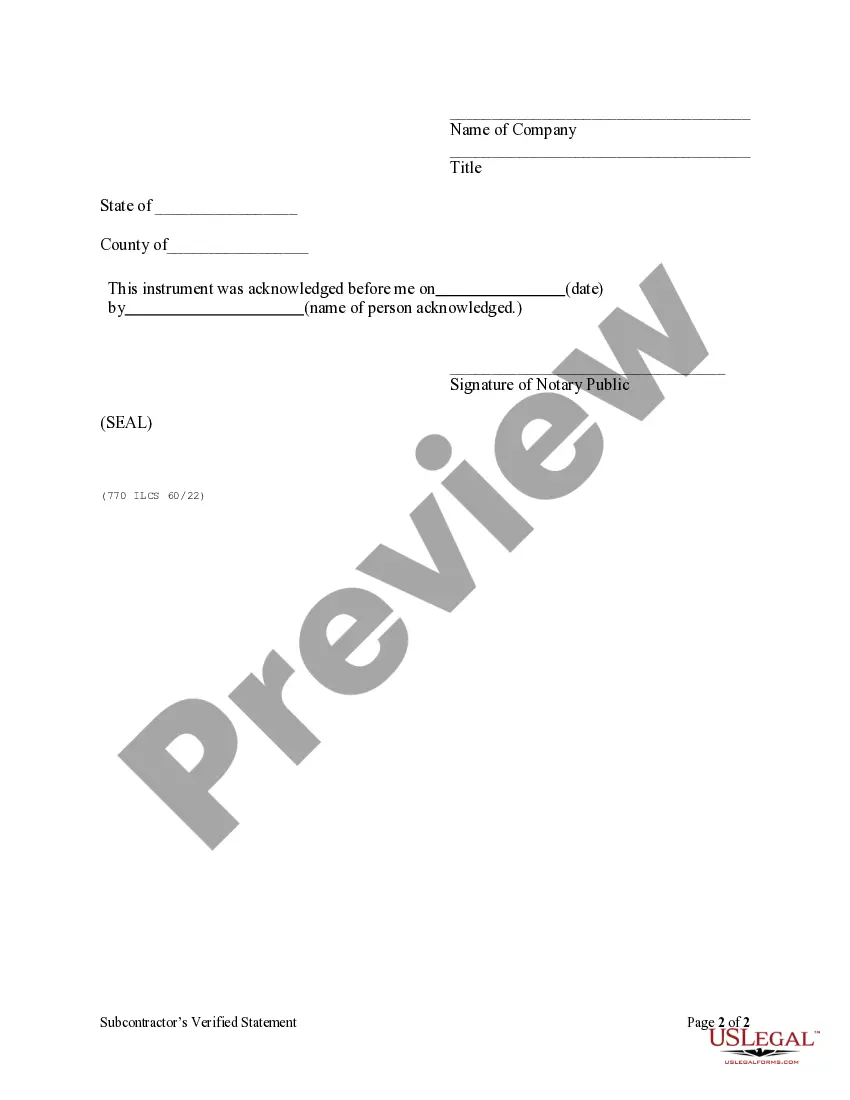
- Signature fields for the subcontractor and a notary public
- Date of signing and verification
When to use this document
This form should be used when a subcontractor receives a written request from an owner or contractor for information regarding materials and labor supplied to a construction project. It is essential for ensuring that all parties are aware of the amounts due to subcontractors, thereby protecting their rights in case of disputes over payments.
Intended users of this form
- Subcontractors providing labor or materials for construction projects in Illinois
- Corporations or LLCs that engage subcontractors for construction work
- Homeowners or project owners requesting verification of subcontractor claims
- Contractors responsible for overseeing construction projects
Instructions for completing this form
- Identify the subcontractor's name and the project location.
- List all parties who have provided labor or materials, including their addresses.
- Enter the total contract amount, amount paid, and balance due for each party listed.
- Sign and date the form, ensuring it's notarized if required.
- Submit the completed form to the requesting owner or contractor.
Is notarization required?
This document requires notarization to meet legal standards. US Legal Forms provides secure online notarization powered by Notarize, allowing you to complete the process through a verified video call, available 24/7.
Get your form ready online
Our built-in tools help you complete, sign, share, and store your documents in one place.
Make edits, fill in missing information, and update formatting in US Legal Forms—just like you would in MS Word.
Download a copy, print it, send it by email, or mail it via USPS—whatever works best for your next step.
Sign and collect signatures with our SignNow integration. Send to multiple recipients, set reminders, and more. Go Premium to unlock E-Sign.
If this form requires notarization, complete it online through a secure video call—no need to meet a notary in person or wait for an appointment.
We protect your documents and personal data by following strict security and privacy standards.

Make edits, fill in missing information, and update formatting in US Legal Forms—just like you would in MS Word.

Download a copy, print it, send it by email, or mail it via USPS—whatever works best for your next step.

Sign and collect signatures with our SignNow integration. Send to multiple recipients, set reminders, and more. Go Premium to unlock E-Sign.

If this form requires notarization, complete it online through a secure video call—no need to meet a notary in person or wait for an appointment.

We protect your documents and personal data by following strict security and privacy standards.
Avoid these common issues
- Failing to list all subcontractors involved in the project.
- Not providing accurate payment amounts, leading to disputes.
- Omitting the notary section, rendering the form invalid.
- Not including the date of signing, which can lead to issues with the document's effectiveness.
Advantages of online completion
- Immediate access to download the form without waiting for physical shipment.
- Edit and customize the form easily to suit your specific project needs.
- Reliable templates drafted by licensed attorneys, ensuring compliance with local laws.
- Convenience of creating and managing your legal documents from any location.
Key takeaways
- The Subcontractor's Verified Statement is essential for ensuring payment transparency in construction projects.
- This form must be completed accurately to protect subcontractors' rights.
- Notarization is required for the form to hold legal validity.
- Using online templates streamlines the process and increases reliability.
Looking for another form?


Form popularity
FAQ
Mechanic's liens create a cloud on title, meaning that they appear in public property records. Liens are sometimes said to travel with the land, meaning that anyone who buys your house would take the property subject to the contractor's lien (or, more likely, demand that you pay it off first).
Under Illinois law, any mechanics lien should be filed in the County Recorder of Deeds where the property being liened is located. This is crucial as the lien must be filed not only in the correct county but the correct office as well. The fees and specific document formatting vary depending on your county.
In Texas, a mechanics lien expires after 1 or 2 years, depending on the type of project. A lien claimant will need to enforce their mechanics lien before the deadline. 1 year after termination, completion, or abandonment or the project.
In order to enforce a lien, the contractor, subcontractor or supplier must file a lawsuit. The deadline to file a lawsuit is two years from the last date work was performed or materials were supplied. A recorded lien is valid for these two years, but a failure to sue within that time frame voids the lien.
The deadline for contractors and subcontractors to file their statement of mechanic's lien is four months (not 120 days) from the last date of work (exclusive of warranty work or other work performed free of charge), or from the last date that materials were supplied to the project.
Negotiate with the contractor who placed the lien (the "lienor" to remove it. Obtain a lien bond to discharge the lien, or. File a lawsuit to vacate the lien.
The people who can file mechanic's liens are identified by state law. A subcontractor or supplier to a subcontractor may not be able to file a lien. Also, unlicensed contractors are often barred from filing a mechanic's lien.
Mechanics Liens must be recorded by a "subcontractor" within 90 days of "completion" or "cessation of work" and a general contractor who has a direct contract with the owner must record within 90 days of completion or of cessation of labor, unless completion or cessation of labor has occurred.
To enforce the lien, the contractor must file a lawsuit within 90 days from the date of recording the lien. If this deadline is passed, the contractor may not be able to enforce the lien and may be required to remove the lien.