Compensation Committee
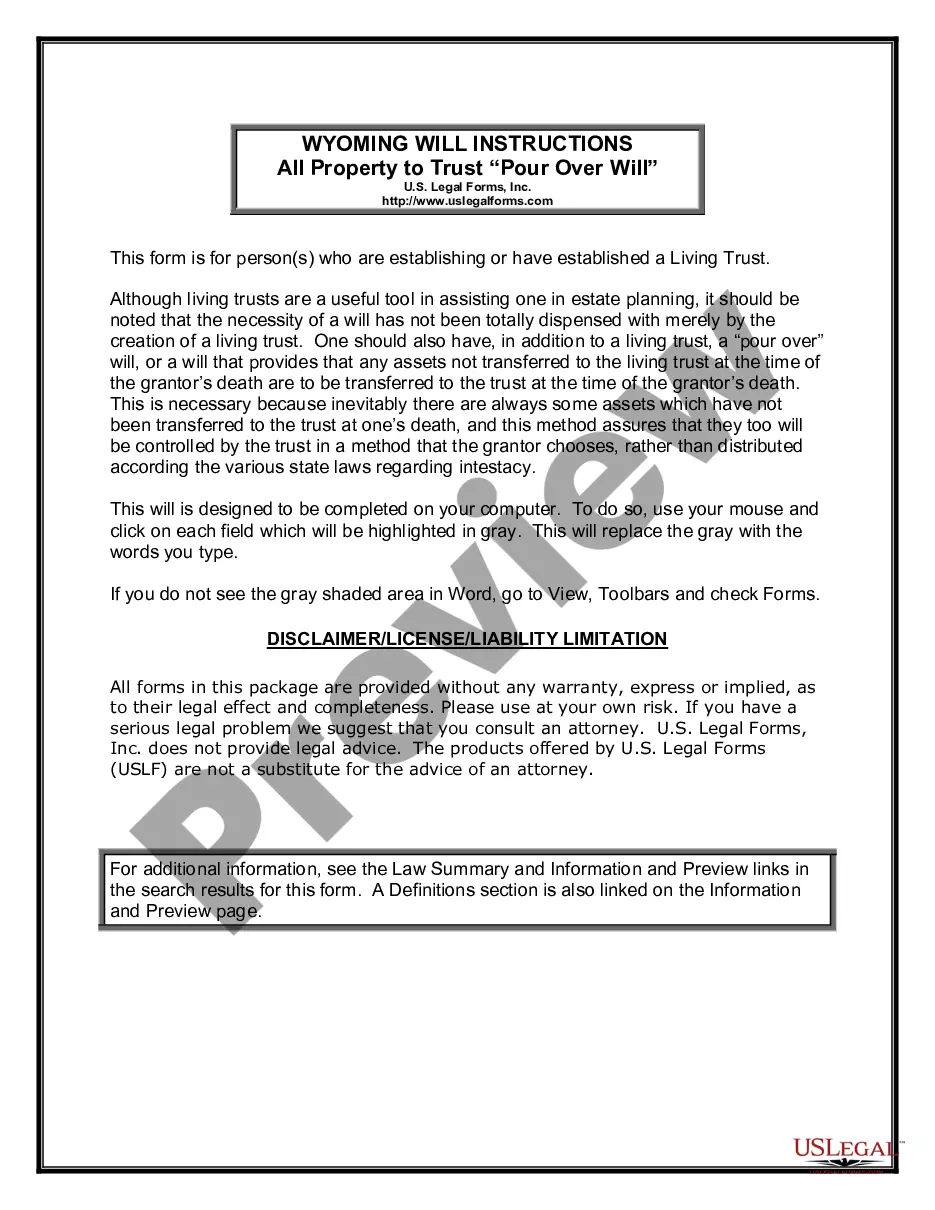
About this form
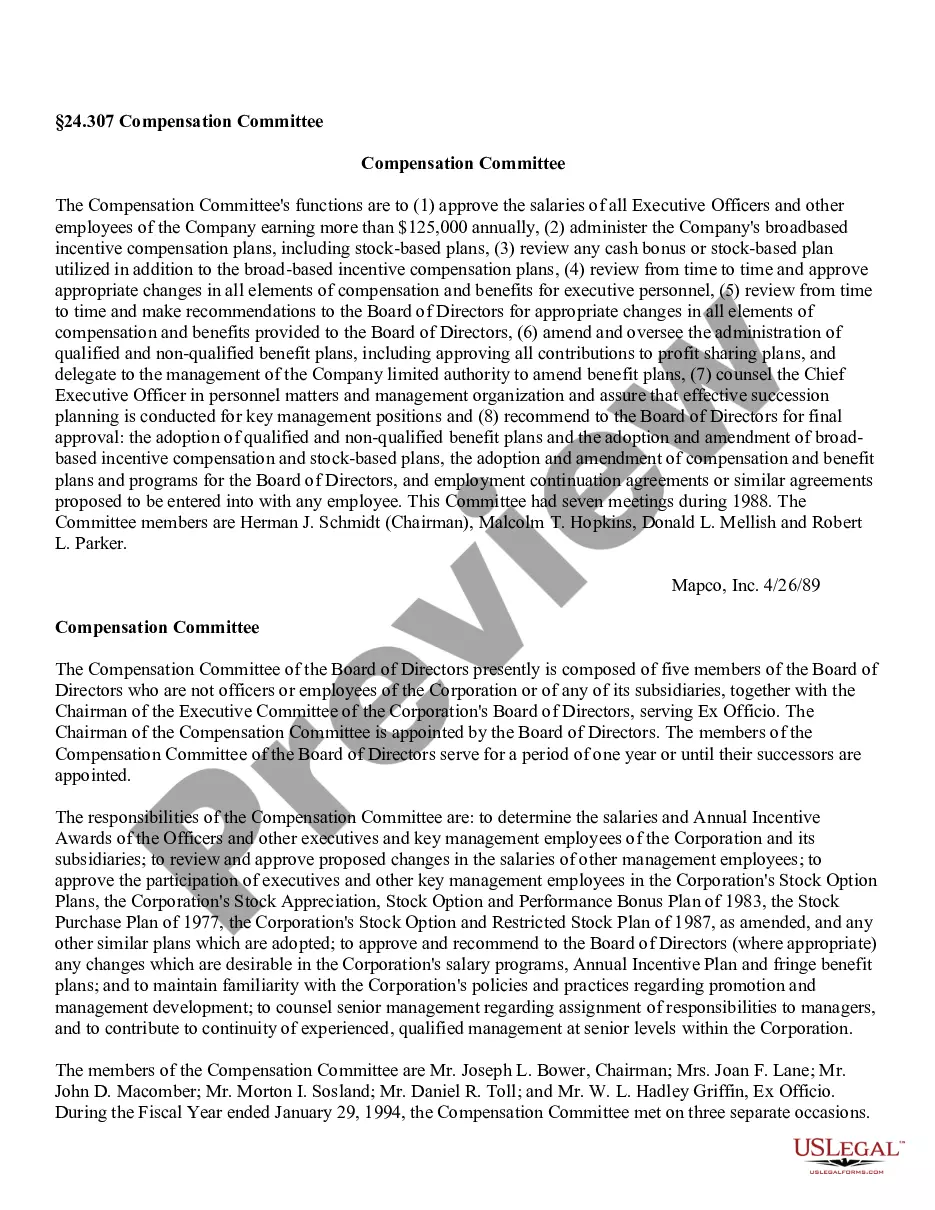
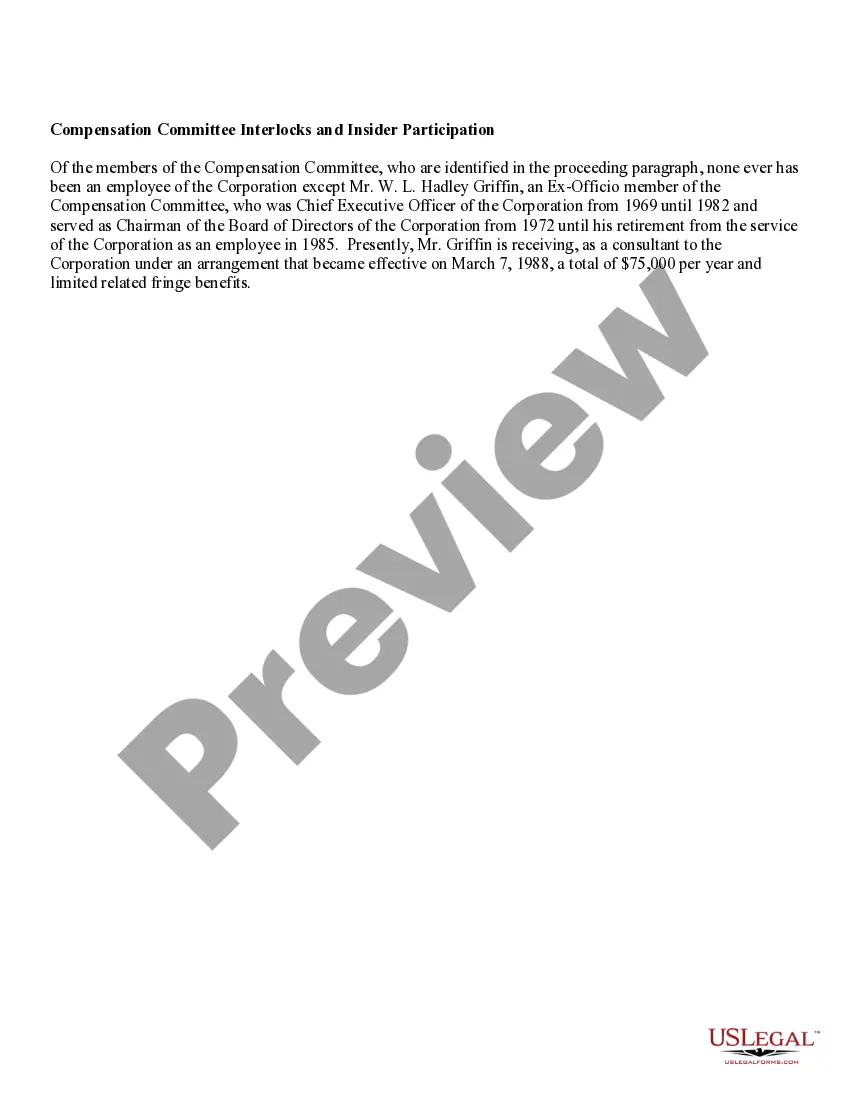
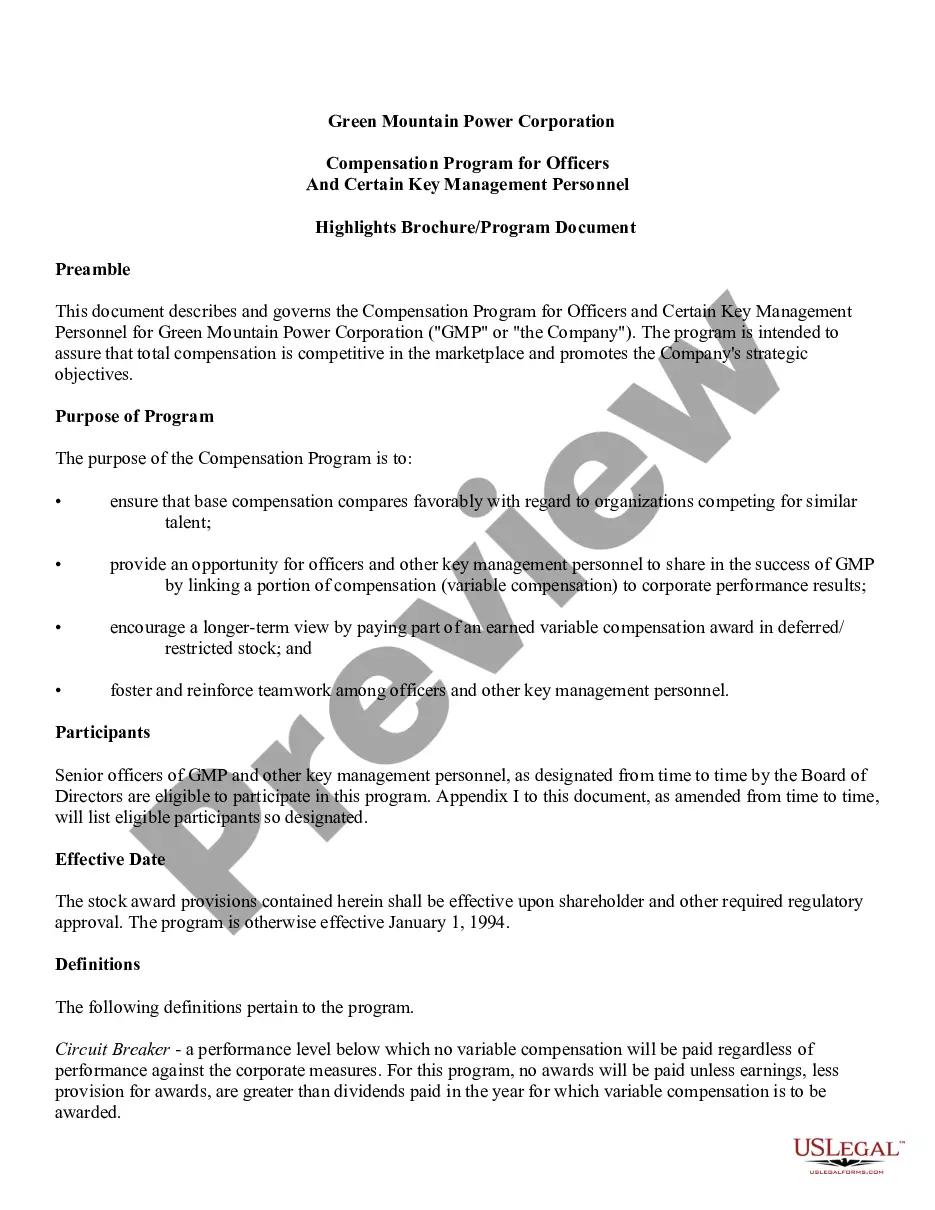
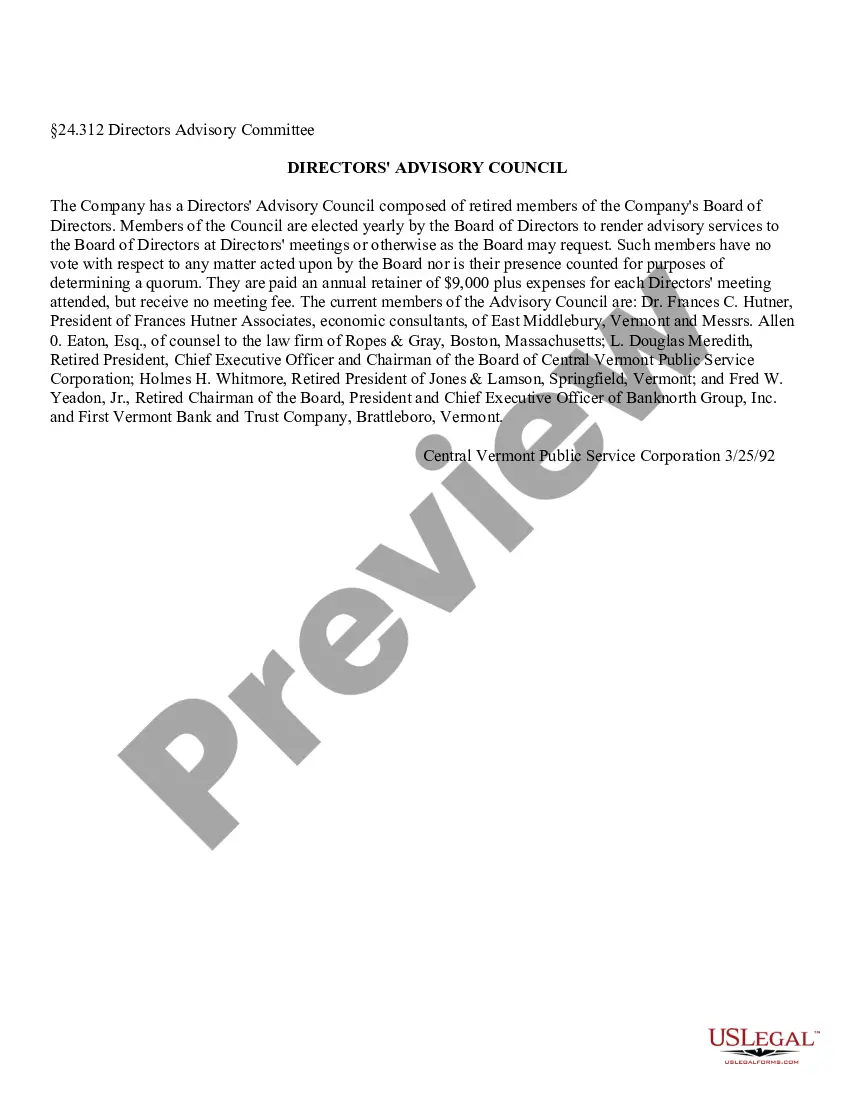
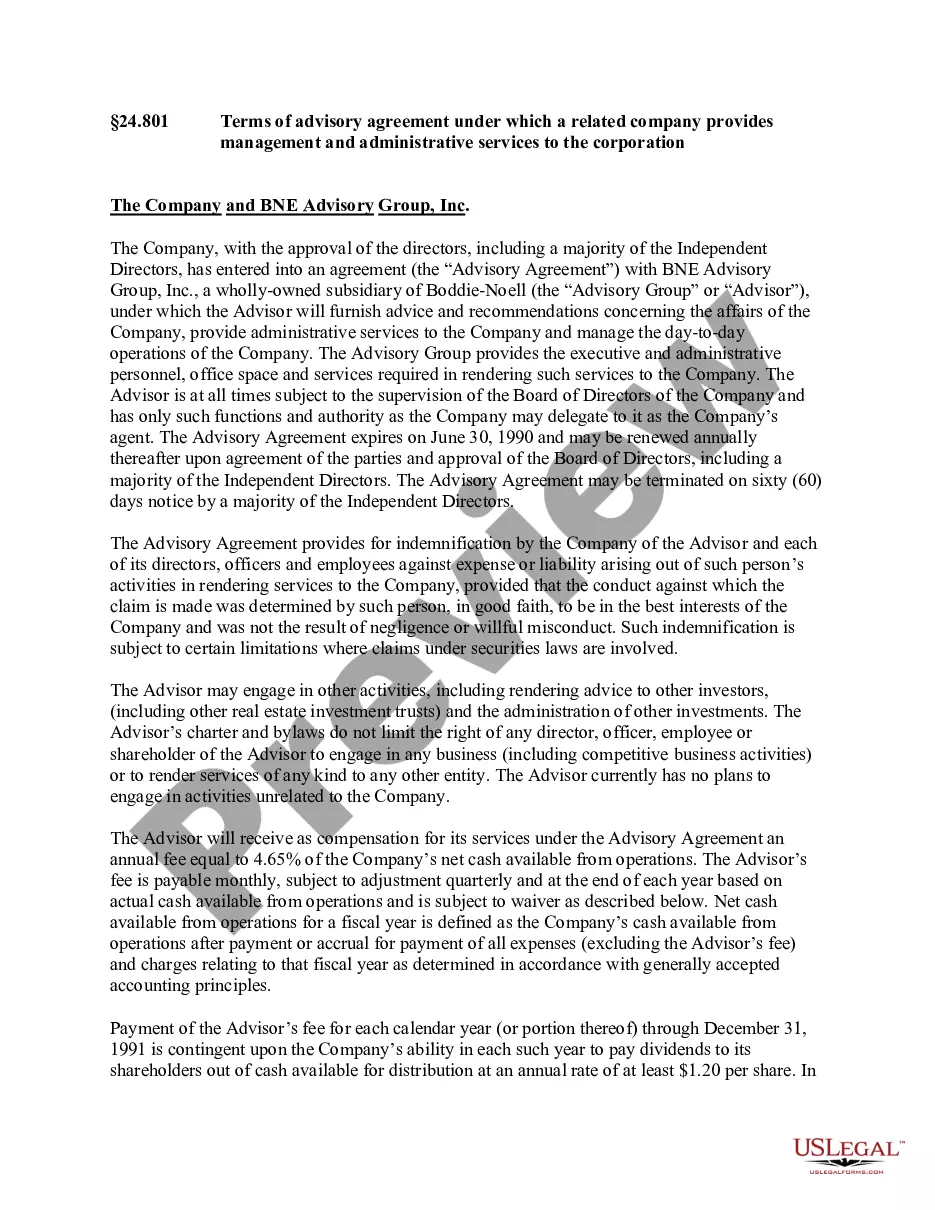
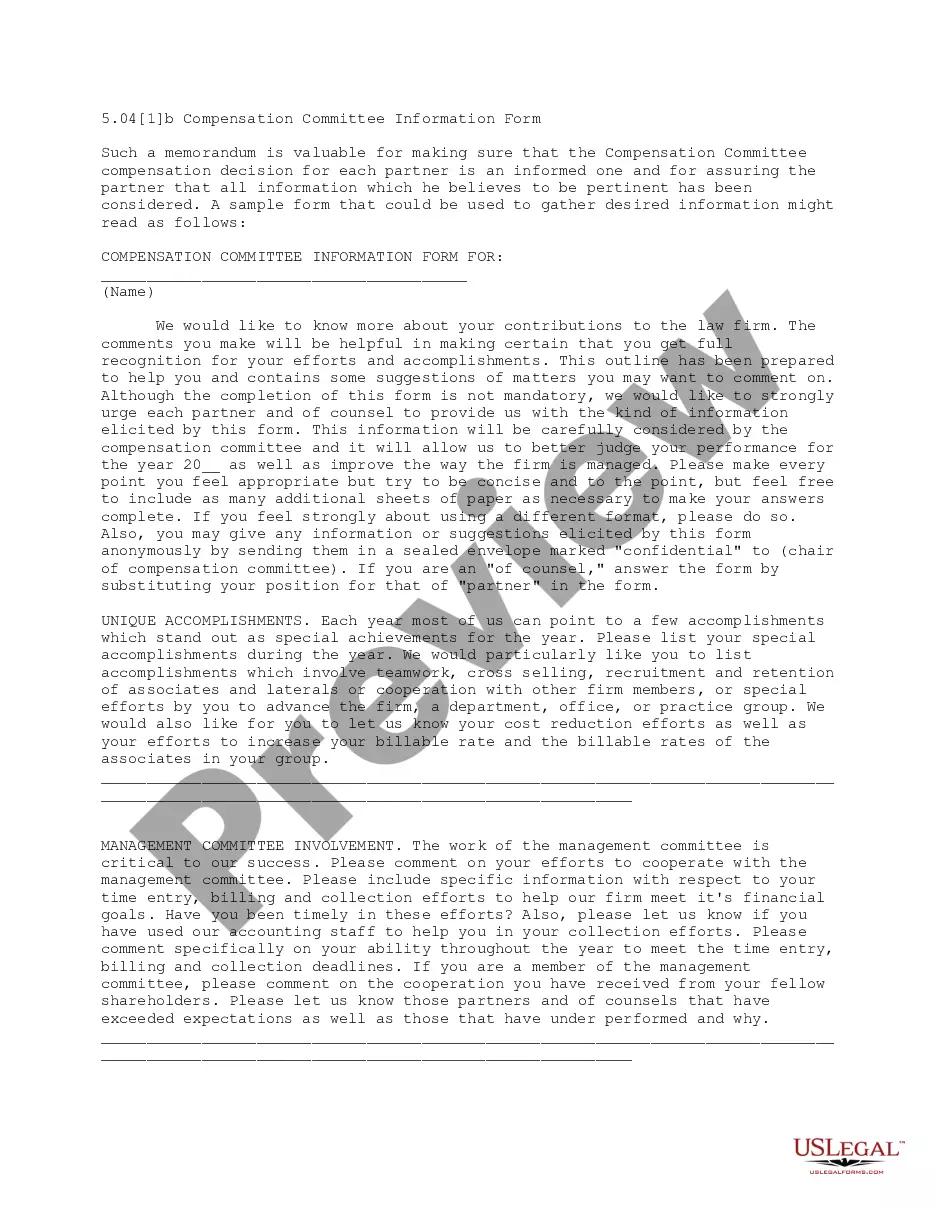
The Compensation Committee form is a legal document designed for use in corporate governance. It outlines the structure, roles, and responsibilities of the Compensation Committee which primarily focuses on determining and approving compensation for executive officers and key management within a corporation. This form differs from similar organizational documents by specifically addressing compensation policies and practices including salary, bonuses, and incentive plans, making it essential for companies looking to formalize their compensation procedures.
Form components explained
- Approval of executive salaries and compensation plans
- Administration of incentive compensation programs
- Review of additional cash bonus and stock-based plans
- Recommendations for changes in compensation for executive personnel
- Oversight and amendments of benefit plans
When this form is needed
This form is typically used when a corporation is establishing, reviewing, or formalizing the procedures of its Compensation Committee. It is particularly useful during annual salary reviews, implementation of new incentive compensation plans, or when adjusting existing compensation structures for compliance with corporate governance standards.
Who needs this form
- Corporate boards of directors
- Human resources management teams
- Legal advisors specializing in corporate governance
- Executive management teams overseeing compensation strategies
How to prepare this document
- Identify the members of the Compensation Committee and their roles.
- Outline the specific functions and responsibilities assigned to the Committee.
- Detail the procedures for approving executive salaries and bonuses.
- Document any amendments to existing benefit plans.
- Ensure all necessary signatures are obtained from Committee members and the Board of Directors.
Notarization requirements for this form
This form does not typically require notarization to be legally valid. However, some jurisdictions or document types may still require it. US Legal Forms provides secure online notarization powered by Notarize, available 24/7 for added convenience.
Get your form ready online
Our built-in tools help you complete, sign, share, and store your documents in one place.
Make edits, fill in missing information, and update formatting in US Legal Forms—just like you would in MS Word.
Download a copy, print it, send it by email, or mail it via USPS—whatever works best for your next step.
Sign and collect signatures with our SignNow integration. Send to multiple recipients, set reminders, and more. Go Premium to unlock E-Sign.
If this form requires notarization, complete it online through a secure video call—no need to meet a notary in person or wait for an appointment.
We protect your documents and personal data by following strict security and privacy standards.

Make edits, fill in missing information, and update formatting in US Legal Forms—just like you would in MS Word.

Download a copy, print it, send it by email, or mail it via USPS—whatever works best for your next step.

Sign and collect signatures with our SignNow integration. Send to multiple recipients, set reminders, and more. Go Premium to unlock E-Sign.

If this form requires notarization, complete it online through a secure video call—no need to meet a notary in person or wait for an appointment.

We protect your documents and personal data by following strict security and privacy standards.
Avoid these common issues
- Failing to update the committee composition annually.
- Not specifying the parameters for salary reviews and approvals.
- Neglecting state-specific compensation regulations.
Why use this form online
- Convenient access and easy download in multiple formats.
- Editable templates to customize for specific corporate needs.
- Reliability derived from templates drafted by licensed attorneys.
Summary of main points
- The Compensation Committee form is essential for corporate governance regarding executive compensation.
- It outlines key responsibilities and processes to ensure fair and transparent salary determinations.
- Using this form helps align corporate practices with legal requirements and best practices.
Looking for another form?
Form popularity
FAQ
Many companies find it appropriate to appoint one or two members of the audit committee, one or two other non-executive directors, as well as the CEO and the CFO as members of the risk committee.
Executive compensation packages frequently include a number of indirect pay or noncash privileges called perquisites or perks. Employers have long used special perks and fringe benefits to attract, reward and improve the productivity of executives.
Because many executives are in high tax brackets, their compensation often is provided in ways that offer significant tax savings. Therefore, their total compensation packages are more significant than their base pay.Salaries of executives vary by type of job, size of organization, region of the country, and industry.
Salary, plus any bonuses or commissions. Paid holiday, vacation and sick days. Medical, dental and vision insurance. 401(k) or another retirement savings plan.
The finest way of maintaining consistency between shareholders interest and compensation committee is to listen to the shareholders plea and reactions to certain decisions along with their three mandatory duties.
The Risk Committee (the Committee) is an independent committee of the Board of Directors that has, as its sole and exclusive function, responsibility for the oversight of the risk management policies and practices of the Corporation's global operations and oversight of the operation of the Corporation's global risk
The Committee has overall responsibility for monitoring and approving the risk policies and associated practices of the Company. The risk management committee is also responsible for reviewing and approving risk disclosure statements in any public documents or disclosures.
Step 1: Do Your Research. Step 2: Understand Your Value Is Not Tied to Your Current Compensation Level. Step 3: Remember That Executive Compensation Is Not Only About Salary. Step 4: Don't Be the First to Name a Price. Step 5: Be Prepared to Provide a Counter Offer.
Base Pay. Perhaps the most straight forward and familiar piece of executive compensation, most participants in the 2014 survey determine base pay using market pricing, much like any other employee's salary. Short-Term Incentive. Long-Term Incentive. Benefits. Perquisites (aka Perks)