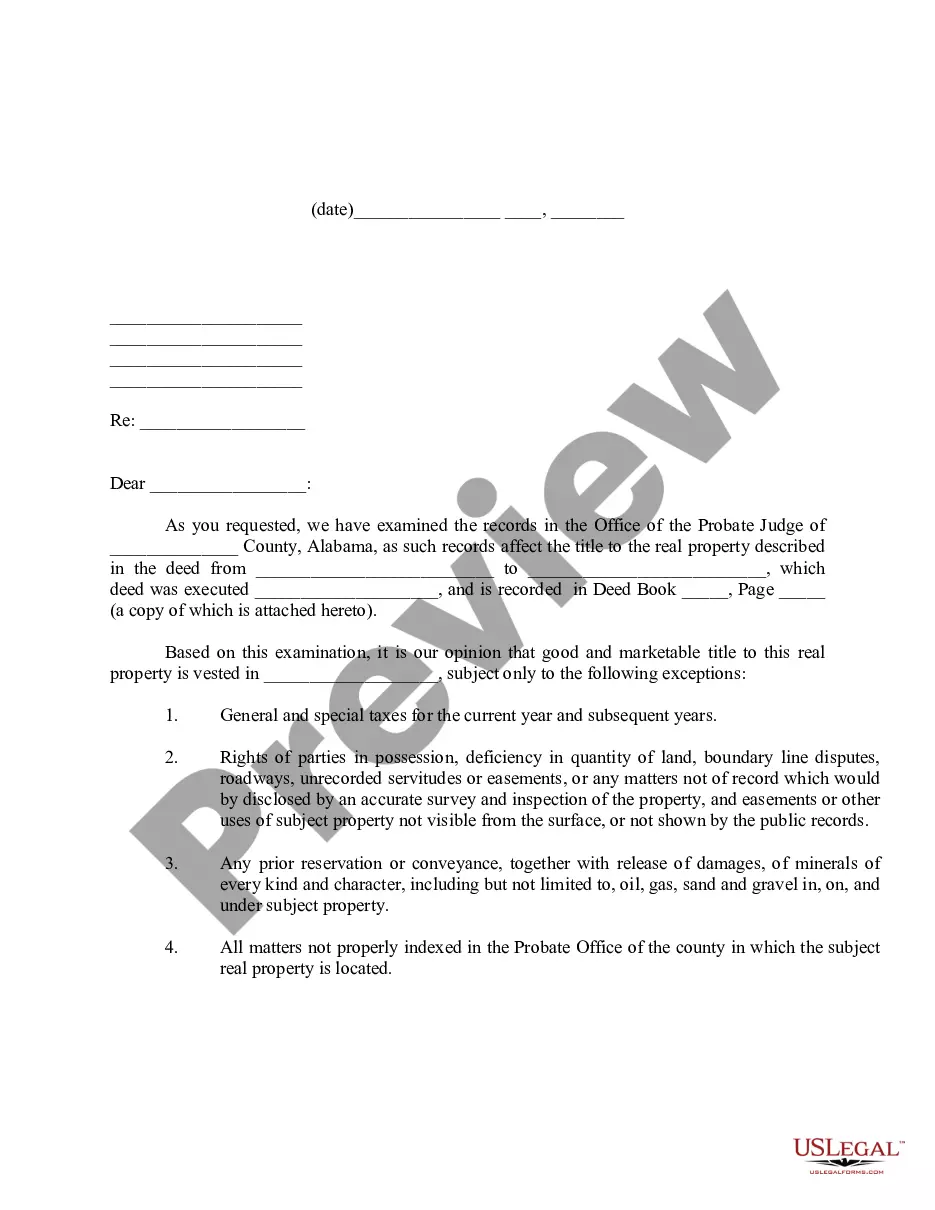
Idaho Plumbing Contract for Contractor
Understanding this form
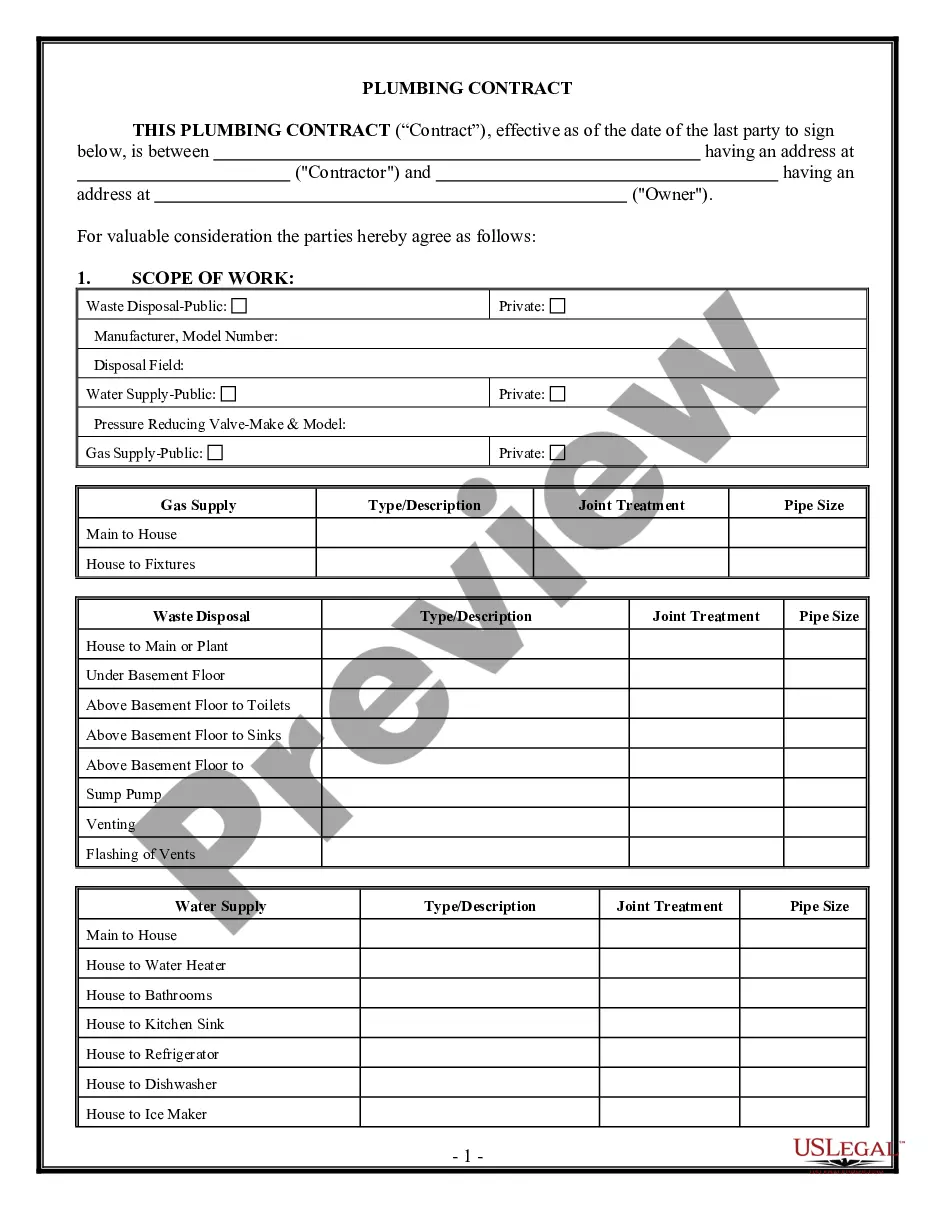
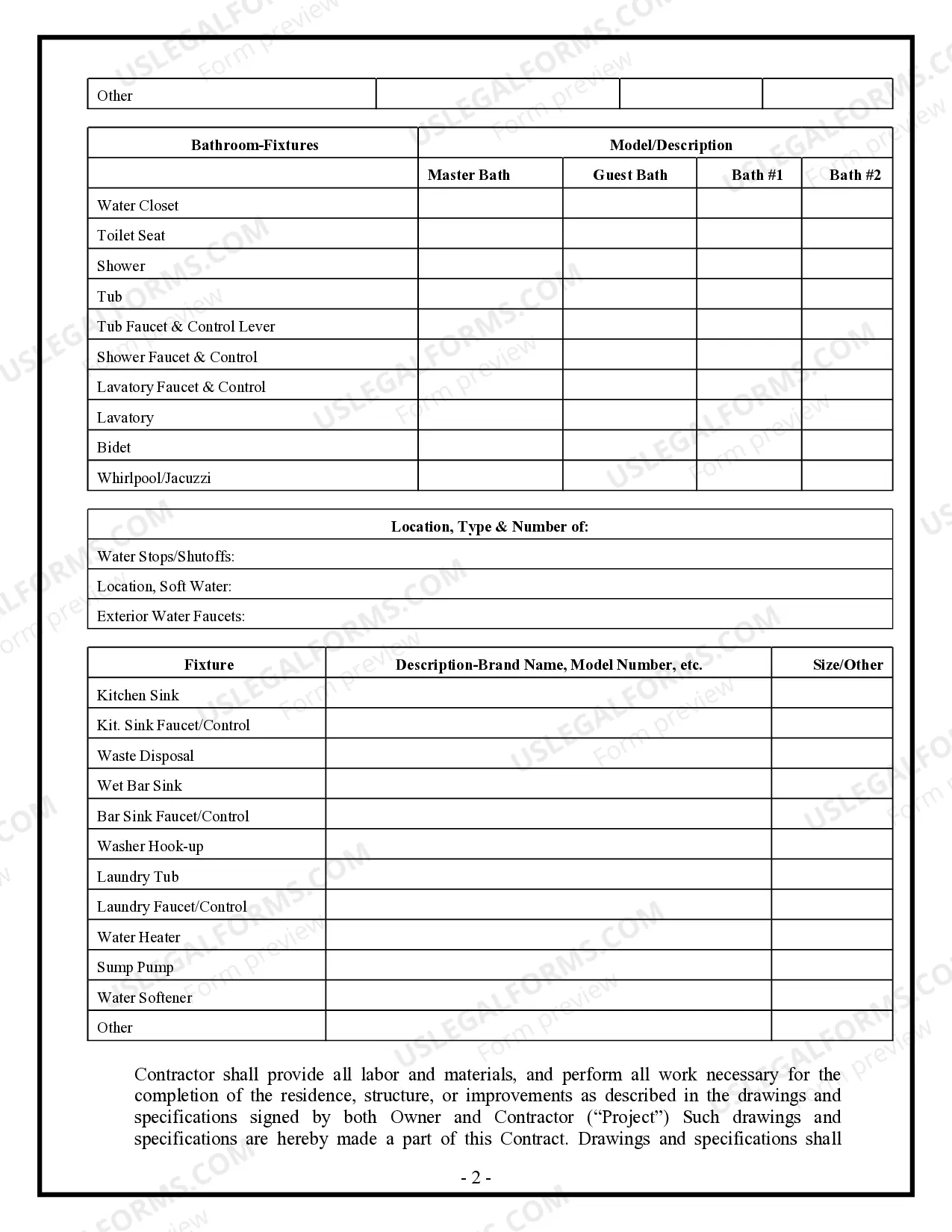
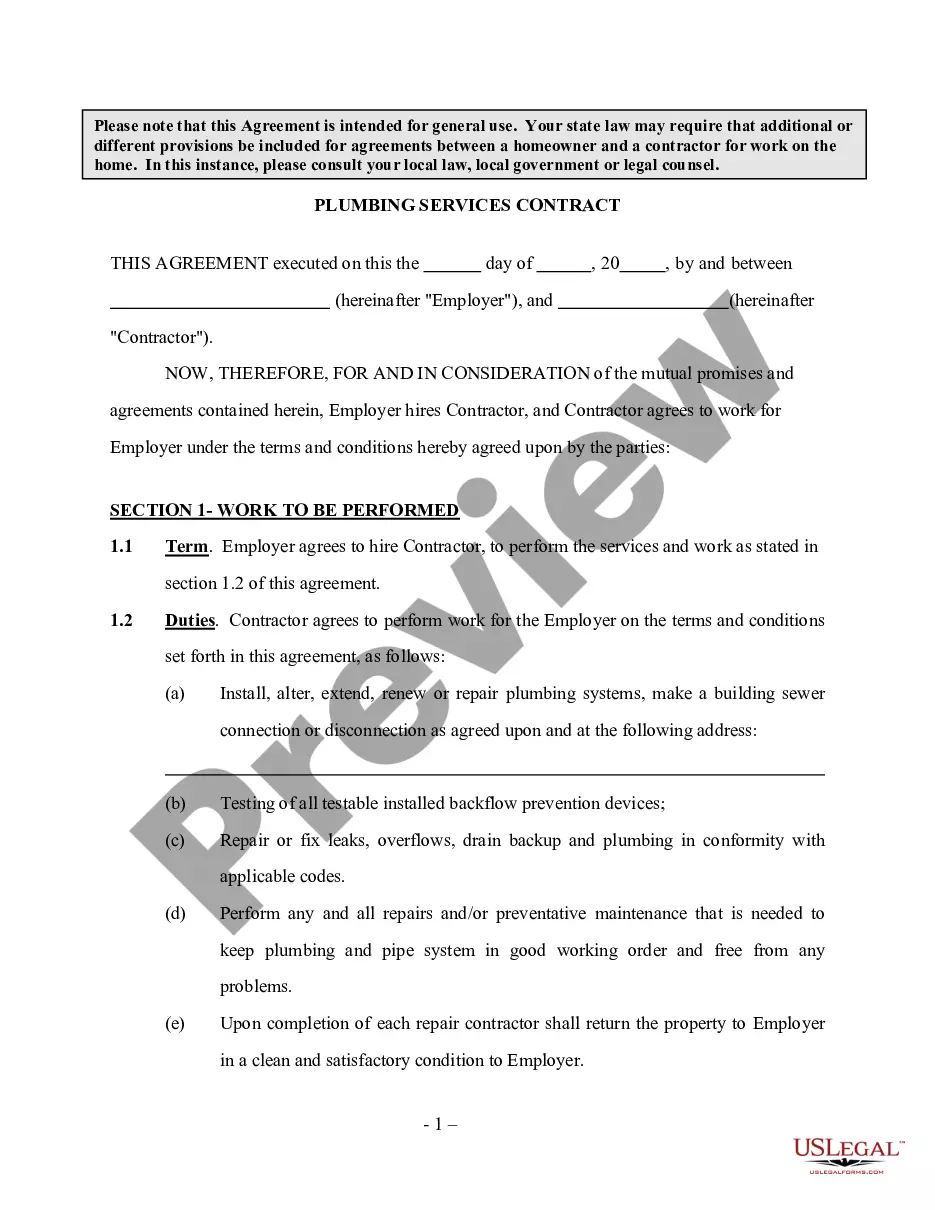
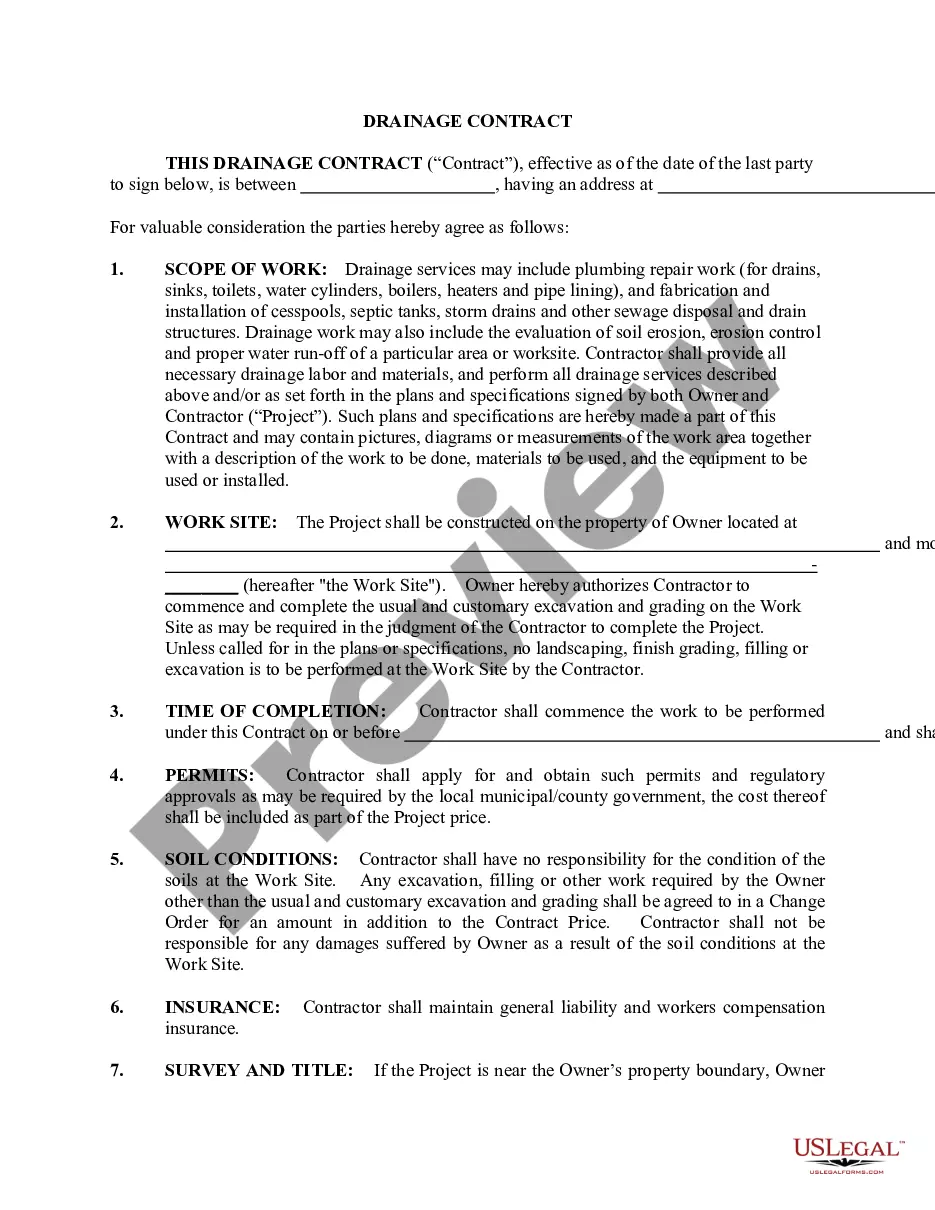
The Plumbing Contract for Contractor is a legal document designed for use between plumbing contractors and property owners. This form establishes the agreement regarding the terms of plumbing work, including payment arrangements, project scope, and various administrative responsibilities. Unlike generic contracts, this form is specifically tailored to comply with the laws of Idaho, ensuring it meets local legal standards and protects both parties involved in the project.
Key parts of this document
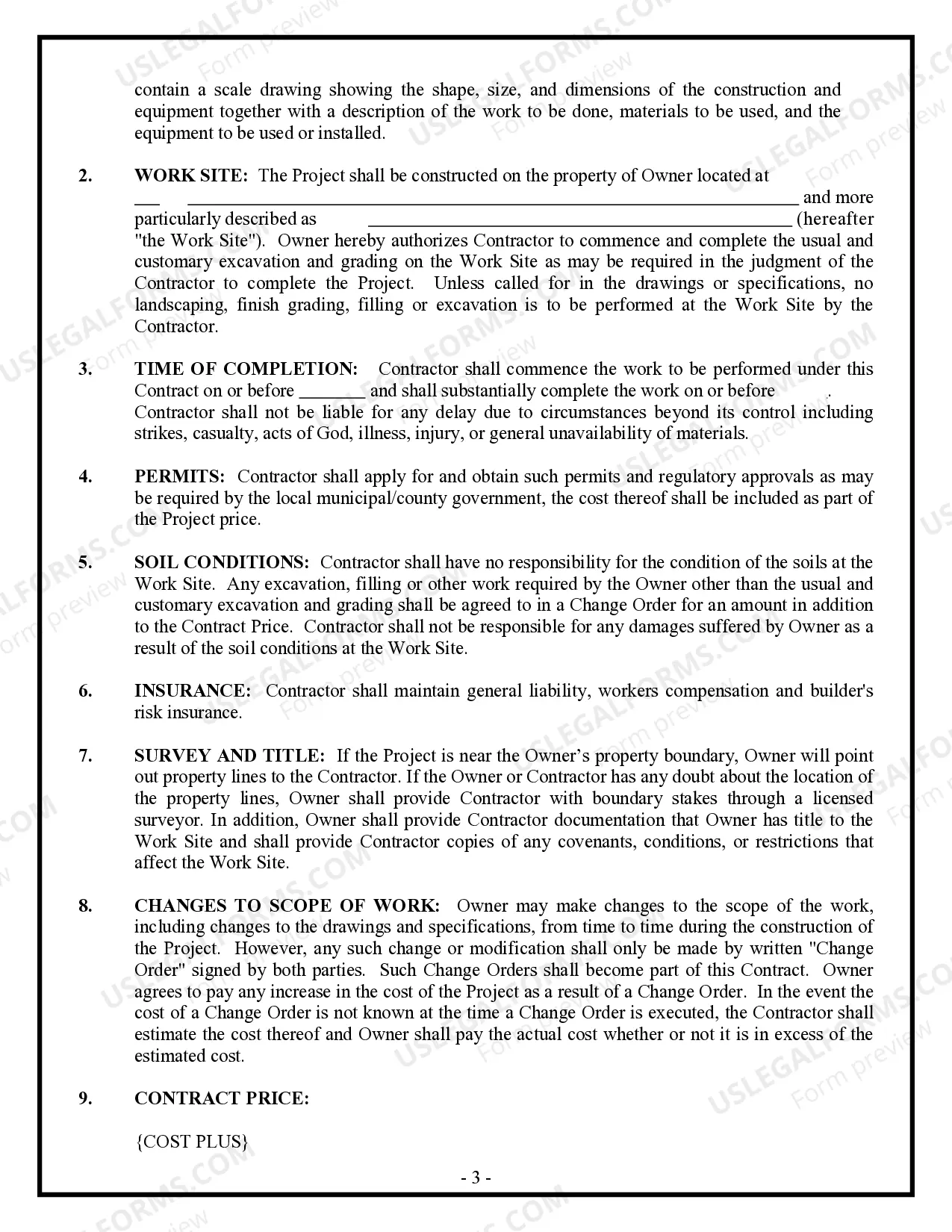
- Permits: Specifies contractor responsibilities for obtaining necessary permits and approvals.
- Soil Conditions: Outlines liability concerning soil conditions at the work site.
- Insurance: Requires the contractor to maintain appropriate liability and workers' compensation insurance.
- Changes to Scope of Work: Details how changes to the project scope must be documented and agreed upon.
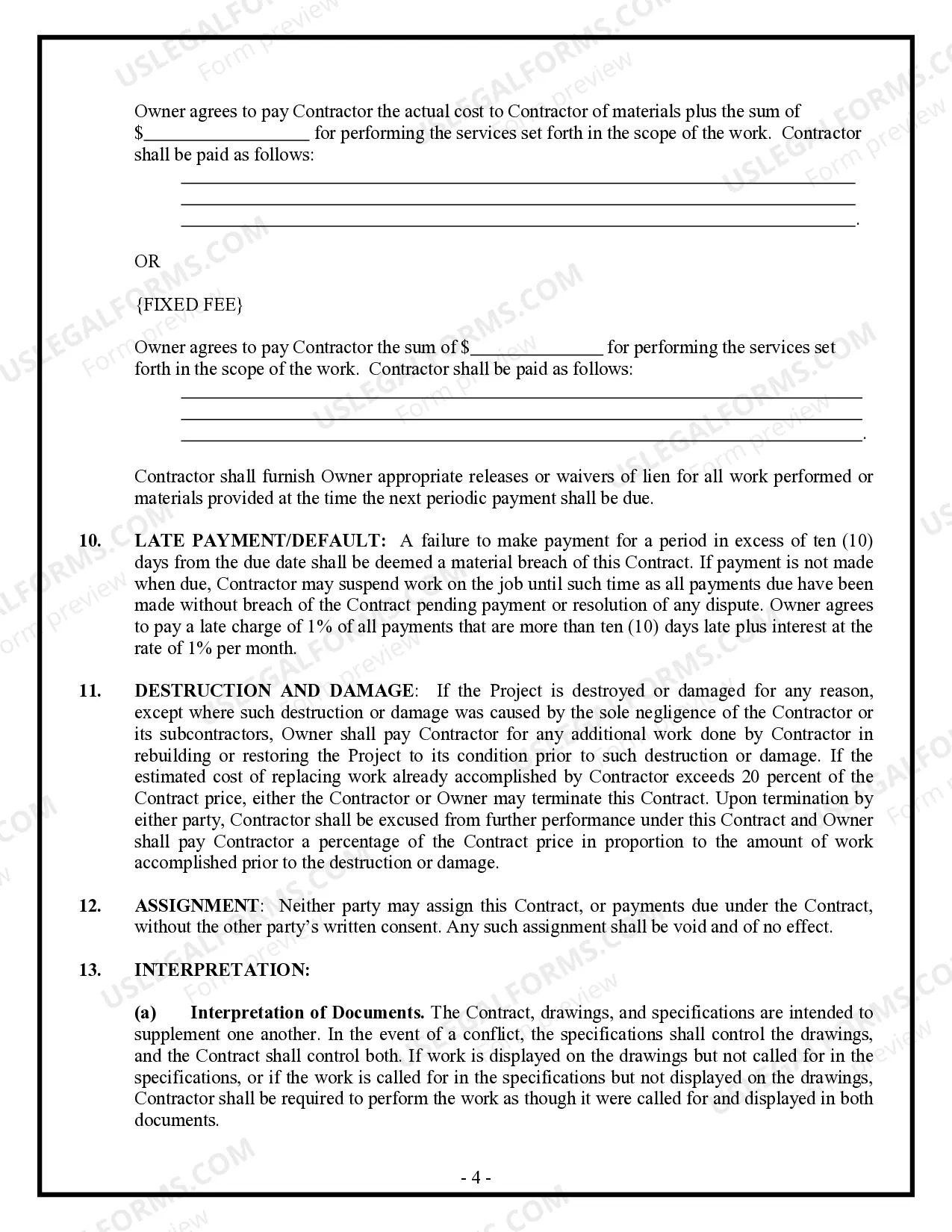
- Late Payment/Default: Discusses consequences for late payments and breach of contract by the owner.
- Destruction and Damage: Addresses responsibilities in the event of project damage or destruction.
When to use this form
This Plumbing Contract is essential when a property owner hires a plumbing contractor for new installations, repairs, or renovations. It should be utilized in projects where the scope of work and payment terms are negotiated, particularly when changes may occur during the project. This form provides a clear framework for both parties, ensuring that expectations and responsibilities are understood from the outset.
Intended users of this form
This Plumbing Contract is suitable for:
- Property owners who need plumbing services.
- Professional plumbing contractors looking to formalize agreements.
- Individuals or businesses contracting plumbing work in Idaho.
Instructions for completing this form
- Identify the parties: Clearly state the names and contact information of the contractor and property owner.
- Specify the project details: Include descriptions of the work to be performed, along with any relevant timelines.
- Outline payment terms: Determine and document whether a cost-plus or fixed fee payment arrangement will be used.
- Include permit information: Ensure contractor responsibilities for obtaining permits are properly addressed.
- Sign and date: Both parties must sign and date the contract to make it legally binding.
Does this form need to be notarized?
In most cases, this form does not require notarization. However, some jurisdictions or signing circumstances might. US Legal Forms offers online notarization powered by Notarize, accessible 24/7 for a quick, remote process.
Get your form ready online
Our built-in tools help you complete, sign, share, and store your documents in one place.
Make edits, fill in missing information, and update formatting in US Legal Forms—just like you would in MS Word.
Download a copy, print it, send it by email, or mail it via USPS—whatever works best for your next step.
Sign and collect signatures with our SignNow integration. Send to multiple recipients, set reminders, and more. Go Premium to unlock E-Sign.
If this form requires notarization, complete it online through a secure video call—no need to meet a notary in person or wait for an appointment.
We protect your documents and personal data by following strict security and privacy standards.

Make edits, fill in missing information, and update formatting in US Legal Forms—just like you would in MS Word.

Download a copy, print it, send it by email, or mail it via USPS—whatever works best for your next step.

Sign and collect signatures with our SignNow integration. Send to multiple recipients, set reminders, and more. Go Premium to unlock E-Sign.

If this form requires notarization, complete it online through a secure video call—no need to meet a notary in person or wait for an appointment.

We protect your documents and personal data by following strict security and privacy standards.
Typical mistakes to avoid
- Failing to specify payment terms and project scope clearly.
- Not obtaining necessary permits before commencing work.
- Neglecting to document changes to the scope of work in written Change Orders.
- Forgetting to obtain signatures from both parties, which can lead to disputes later on.
Benefits of using this form online
- Convenient access to legal documentation from anywhere with an internet connection.
- Editability allows for tailored agreements specific to each project.
- Reliable templates drafted by licensed attorneys ensure legal compliance.
- Quick download for immediate use in ongoing projects.
Legal use & context
- This contract establishes a legally enforceable agreement between the parties involved.
- It addresses critical matters such as payment, scope of work, and liability.
- Proper completion and execution are necessary for the contract to hold up in a legal dispute.
Looking for another form?


Form popularity
FAQ
Residential contractors build and renovate homes or manage such projects from start to finish. The residential contractor typically secures permits, supervises labor and enlists specialized subcontractors such as plumbers and electricians.
Generally speaking, a general contractor is someone who manages a team of subcontractors to help do various types of construction projects in your home. A custom home builder, however, is specialized in building custom homes and is able to complete this specific type of project start to finish on their own.
Usually, anything that subcontractors would be liable for, general contractors may also be liable for (with the caveat that if the contractor has to pay for damages, the subcontractor who is legally responsible will often reimburse the general contractor).
A general rule of contributory negligence is that a main contractor is not liable for the negligence of its independent subcontractor. There are some exceptions to this rule, including: The main contractor had actual knowledge that the sub-contractor's work had been done in a foreseeably dangerous way and condoned it.
A subcontractor will carry out duties on behalf of a contractor - who is responsible for their health, safety, and actions - and might be an individual or an organisation. However, the employees of a contractor are not considered subcontractors, they must be separate altogether.
All contractors are required by Idaho law to be registered with the Idaho Contractors Board, which is a division of the State of Idaho, Bureau of Occupational Licenses.However, if you are working on a public works project, you will also need licensing with the Idaho Division of Building Safety.
(The general contractor is often referred to as a principal and the subcontractor as an independent contractor.) A general contractor is not ordinarily liable for the negligence of an independent contractor such as a subcontractor.
Usually, anything that subcontractors would be liable for, general contractors may also be liable for (with the caveat that if the contractor has to pay for damages, the subcontractor who is legally responsible will often reimburse the general contractor).
For example, a building contractor may hire a subcontractor to complete the electrical wiring part of the contractor's building job. The contractor is responsible to the client for the building job including the part performed by the subcontractor.