Iowa Company Employment Policies and Procedures Package
What this form package covers
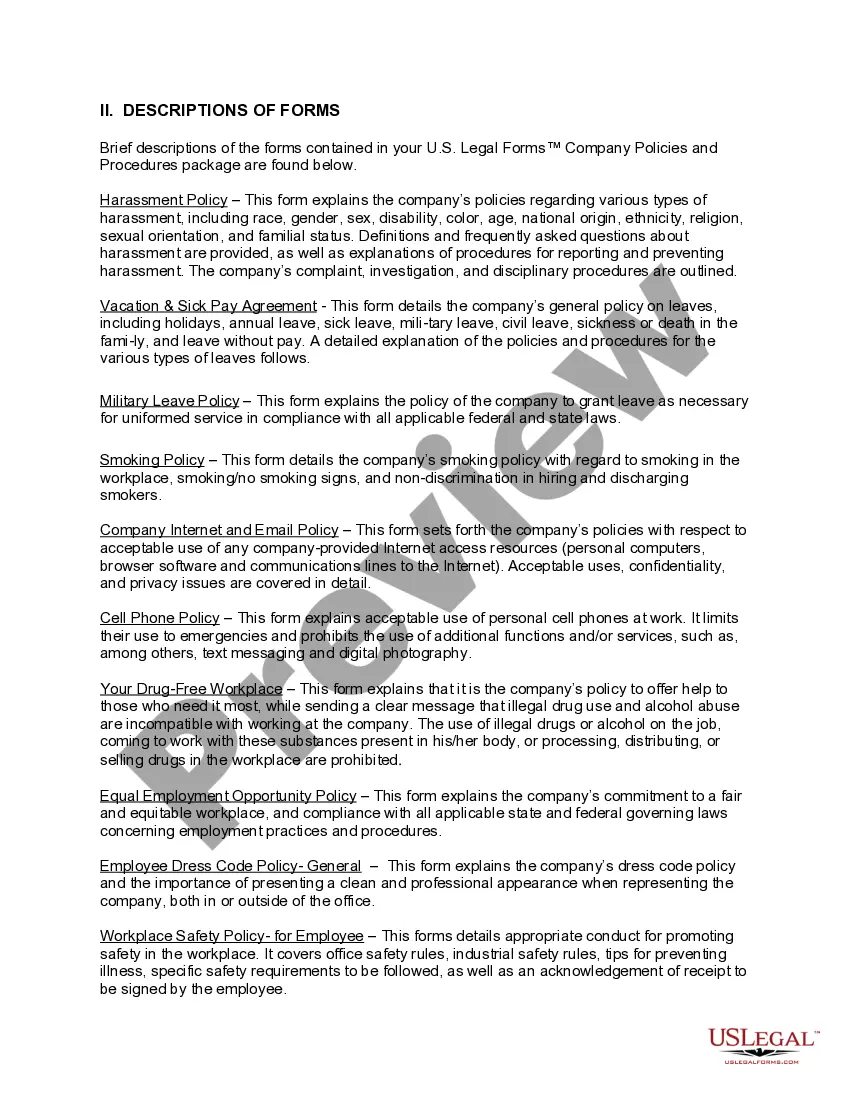
The Iowa Company Employment Policies and Procedures Package is a comprehensive collection of essential forms designed to help businesses in Iowa establish clear policies for their workforce. This package aims to promote uniform understanding among employees, reduce the risk of grievances, and ensure a smooth onboarding process for new hires. Unlike generic templates, these forms are specifically drafted by licensed attorneys to address Iowa's unique legal landscape.
Forms you’ll find in this package
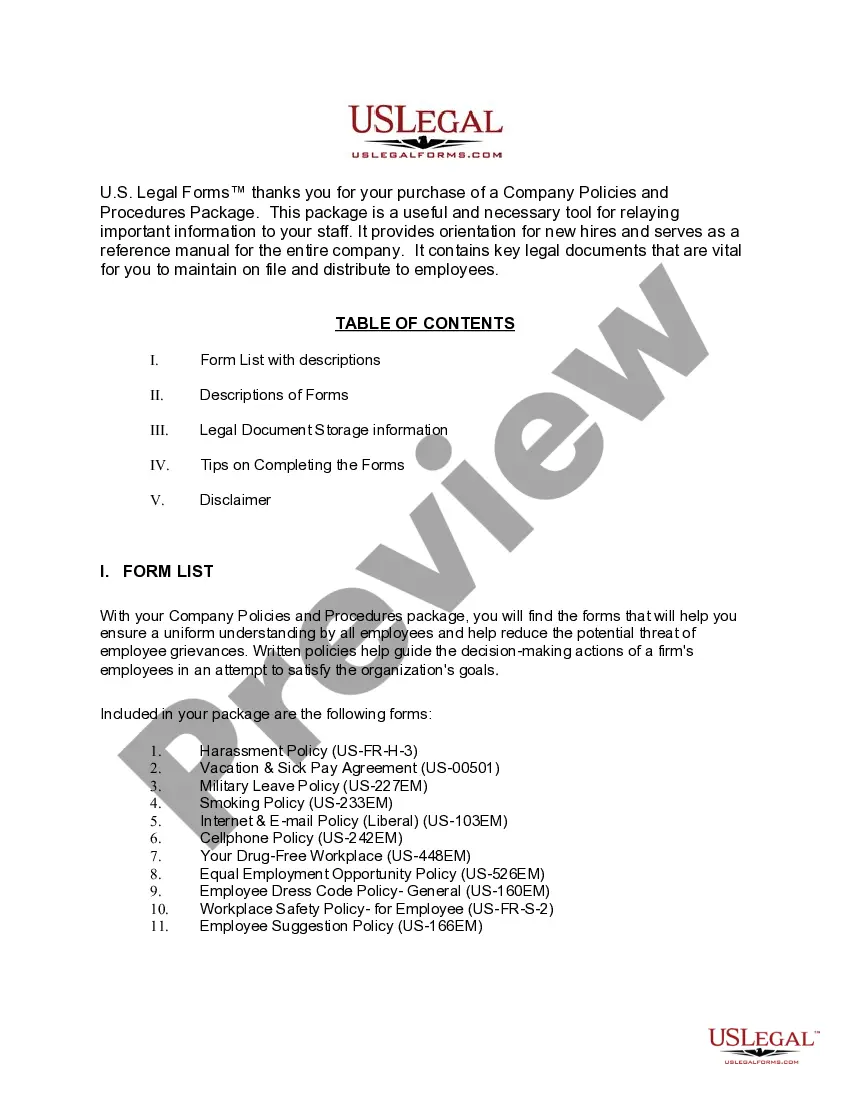
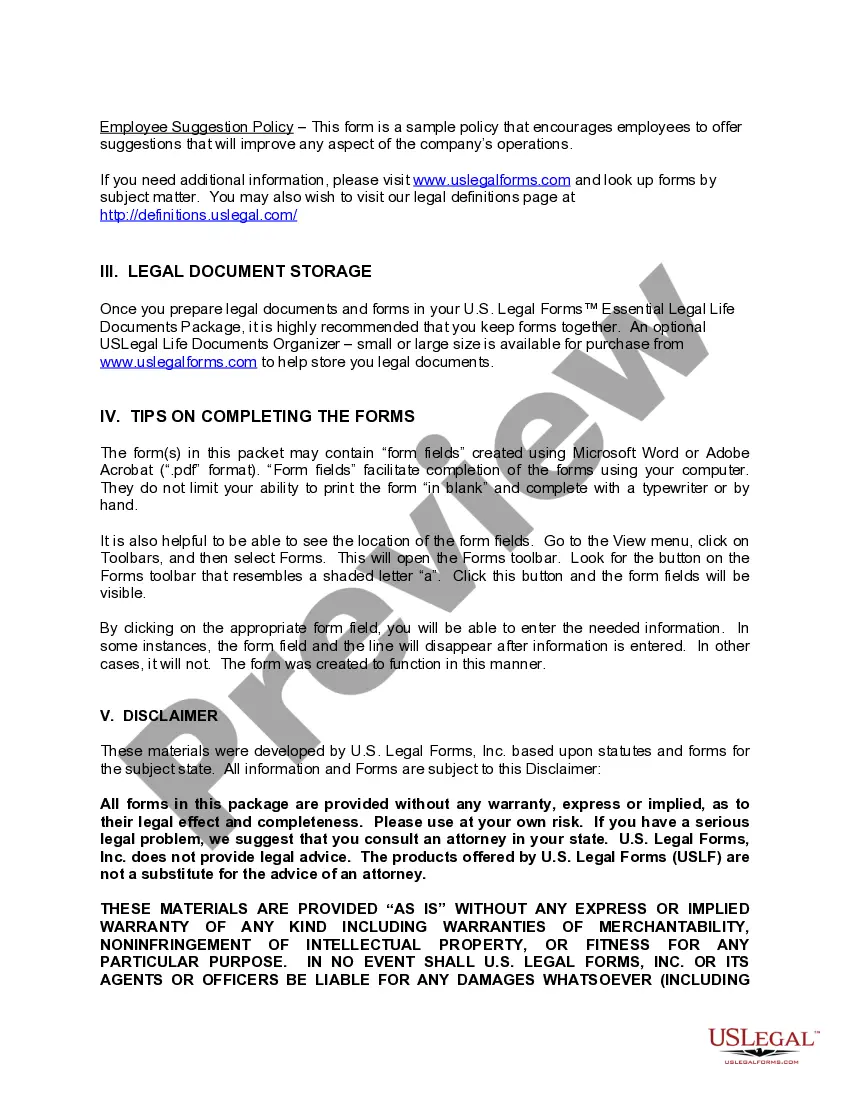
- Employee Agreement - Vacation and Sick Pay
- Company Internet and Email Policy - Liberal
- Employee Dress Code Policy - General
- Employee Suggestion Policy
- Military Leave Policy
- Smoking Policy
- Employee Cell Phone Usage Policy
- Your Drug-Free Workplace
- Equal Employment Opportunity Policy Statement
- Employee - Company Harassment Policy - Workplace
- Workplace Safety Policy - For Employee
Situations where these forms applies
This package should be utilized when:
- Starting a new business in Iowa that requires employment policies.
- Onboarding new employees to clarify workplace expectations.
- Updating existing policies to remain compliant with Iowa state laws.
- Addressing employee grievances through established procedures.
Intended users of this form package
- Business owners in Iowa seeking to formalize employee policies.
- HR managers responsible for employee onboarding and policy enforcement.
- Small to medium-sized enterprises requiring structured employment guidelines.
- Companies looking to create a safe and compliant work environment.
How to prepare this document
- Review all included forms carefully to understand their purpose.
- Customize the forms with your company's name, contact information, and specific policies.
- Ensure that all employees read and acknowledge receipt of the policies.
- Distribute the forms to all employees and maintain copies for your records.
- Regularly review and update policies as necessary to stay compliant with changing laws.
Notarization requirements for forms in this package
Most forms in this package do not require notarization. However, local laws or specific situations may demand it. Our online notarization service, powered by Notarize, lets you complete the process through a verified video call, available anytime.
Get your form ready online
Our built-in tools help you complete, sign, share, and store your documents in one place.
Make edits, fill in missing information, and update formatting in US Legal Forms—just like you would in MS Word.
Download a copy, print it, send it by email, or mail it via USPS—whatever works best for your next step.
Sign and collect signatures with our SignNow integration. Send to multiple recipients, set reminders, and more. Go Premium to unlock E-Sign.
If this form requires notarization, complete it online through a secure video call—no need to meet a notary in person or wait for an appointment.
We protect your documents and personal data by following strict security and privacy standards.

Make edits, fill in missing information, and update formatting in US Legal Forms—just like you would in MS Word.

Download a copy, print it, send it by email, or mail it via USPS—whatever works best for your next step.

Sign and collect signatures with our SignNow integration. Send to multiple recipients, set reminders, and more. Go Premium to unlock E-Sign.

If this form requires notarization, complete it online through a secure video call—no need to meet a notary in person or wait for an appointment.

We protect your documents and personal data by following strict security and privacy standards.
Mistakes to watch out for
- Failing to distribute policies to all employees.
- Not customizing forms to reflect specific business practices.
- Overlooking state-specific legal requirements during policy implementation.
- Neglecting to regularly update policies as laws change.
Why use this package online
- Convenient access to all forms in a downloadable format, allowing for easy customization.
- Reliability with documents prepared by licensed attorneys well-versed in Iowa law.
- Edit forms as needed to fit your company's specific guidelines and procedures.
- Immediate access to updates or revisions when laws change, ensuring compliance.
Legal use & context
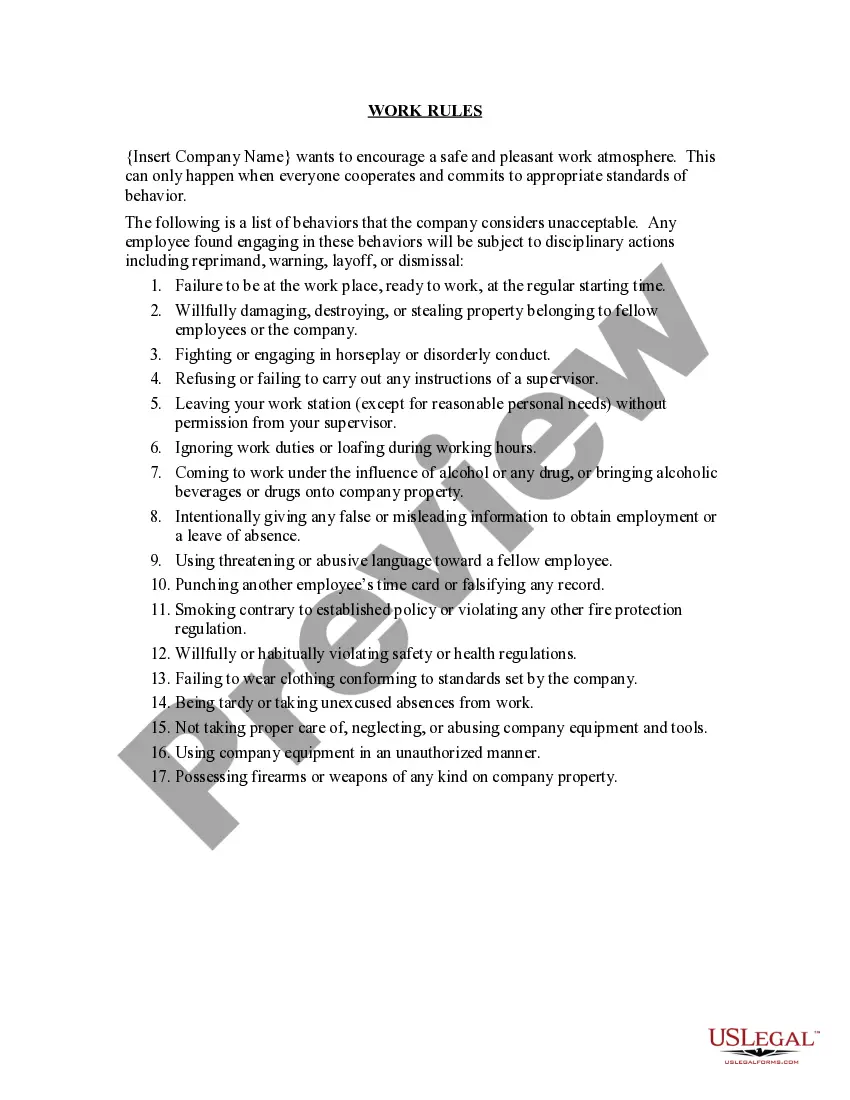
- These forms aim to provide clear guidance for employee conduct and organizational policies.
- Enforceability depends on proper implementation and distribution among employees.
- Non-compliance with these policies could lead to legal repercussions or employee grievances.
What to keep in mind
- The Iowa Company Employment Policies and Procedures Package is essential for compliance and employee clarity.
- All included forms are tailored to Iowa laws and drafted by legal professionals.
- Proper distribution and understanding of these policies can significantly reduce potential grievances.
Looking for another form?

Form popularity
FAQ
Iowa does not have a prevailing wage law that governs wage rates on government project or service contracts. Under certain circumstances, employers in Iowa may be required to pay residents wage rates established by federal prevailing wage rates and rules.
What kind of breaks are required under Iowa law? Iowa has no laws mandating meal breaks for adults. An employer does not have to pay you for a break during which you are completely relieved of your job duties. Your employer can require you to stay on the business premises during your break.
Iowa law places limitations on hours that may be worked by employees under the age of 18. Drivers must have at least 10 hours off duty following 12 consecutive hours of work; and they may not work for more than a total of 12 hours during any 24-hour period, which must then be followed by at least 8 hours off duty.
Iowa Law Doesn't Require Meal or Rest Breaks In other words, although breaks are not required, employers must pay employees for time they spend working and for shorter breaks during the day.
General employment policies and practices. Anti-Discrimination policy. Anti-harassment policy. Discipline policy. Health and safety policy. Compensation policy. Employee benefits policy. Work conditions and hours.
What is the difference between employee handbooks and policies and procedures manuals? An employee handbook is written with employees as the intended audience.A policies and procedures manual is a reference tool for managers and supervisors.
Company History. While not required, a brief section discussing the company's history and its mission can help set the tone for an employee handbook. Paid Time-Off Policy. Employee Behavior. Pay and Promotions. Benefits.
At-will employer/disclaimer. injury reporting. equal employment opportunity. harassment/discrimination. hours of work/meal breaks. FMLA. Internet/e-mail. reasonable accommodation.
What kind of breaks are required under Iowa law? Iowa has no laws mandating meal breaks for adults. An employer does not have to pay you for a break during which you are completely relieved of your job duties. Your employer can require you to stay on the business premises during your break.