Hawaii Small Estate Affidavit for Estates under $100,000
Understanding this form
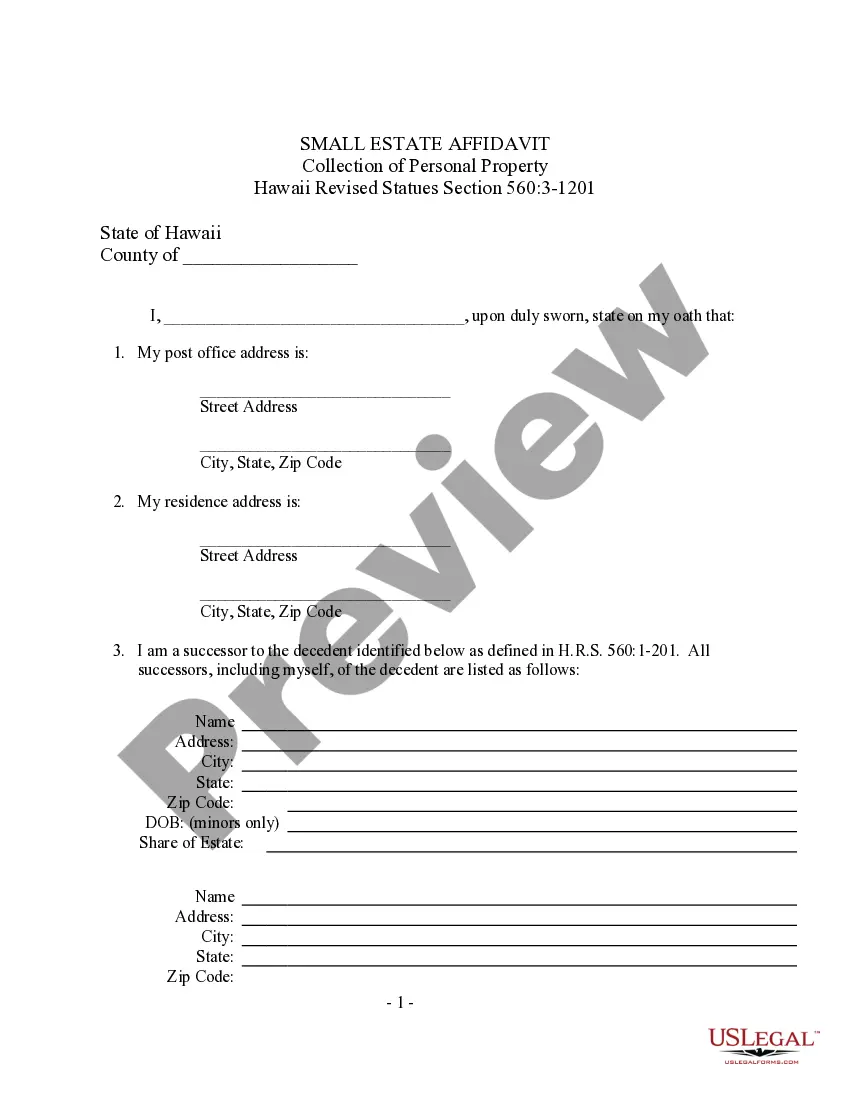
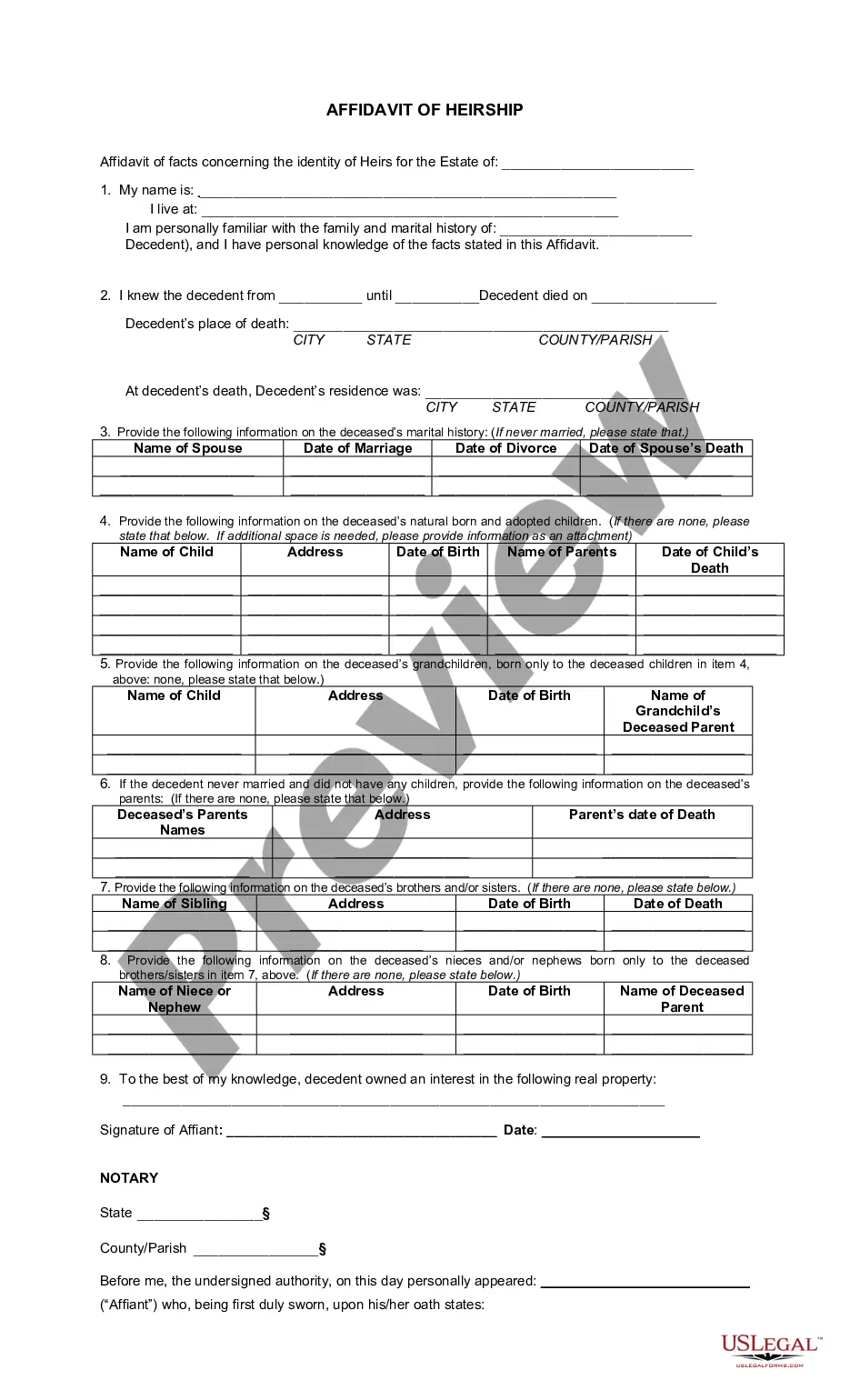
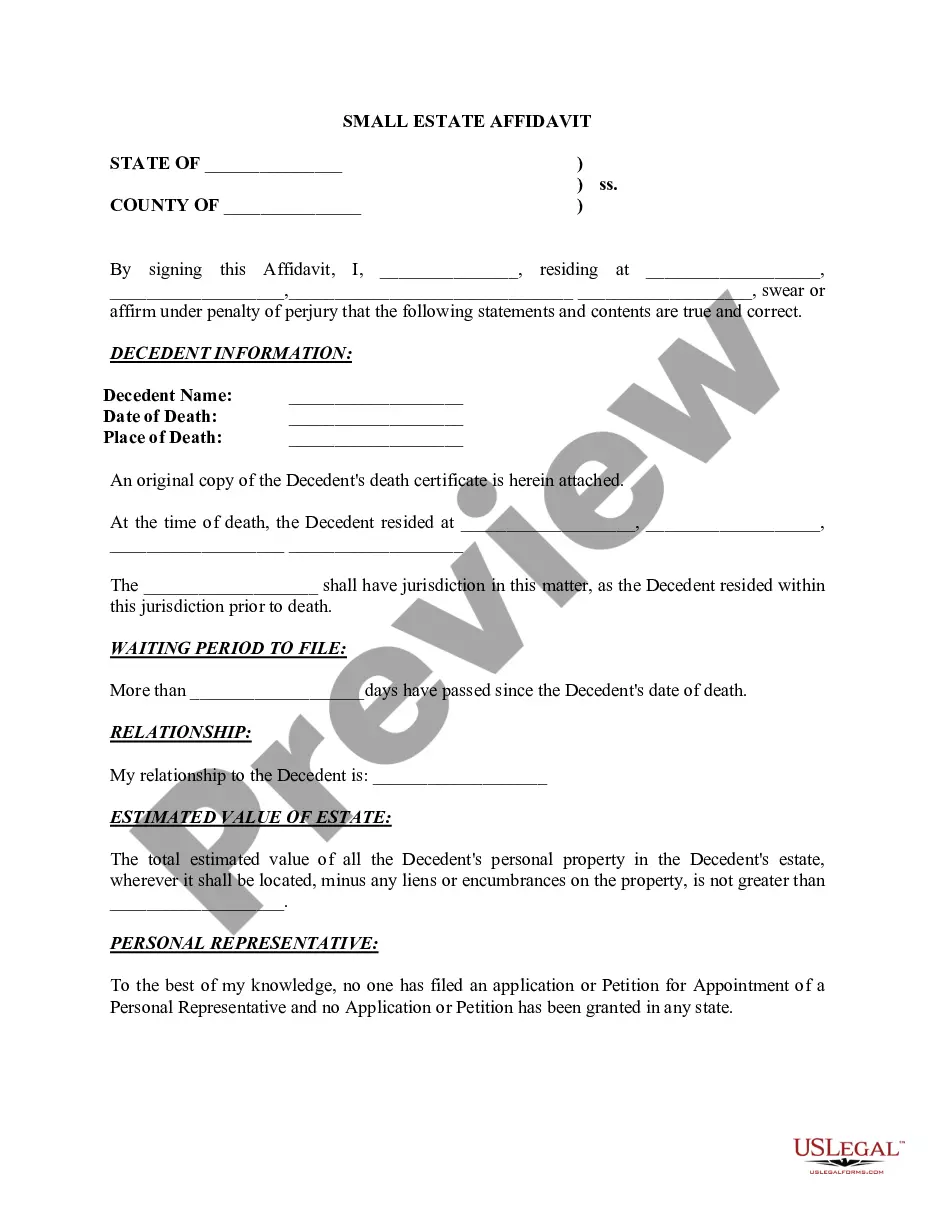
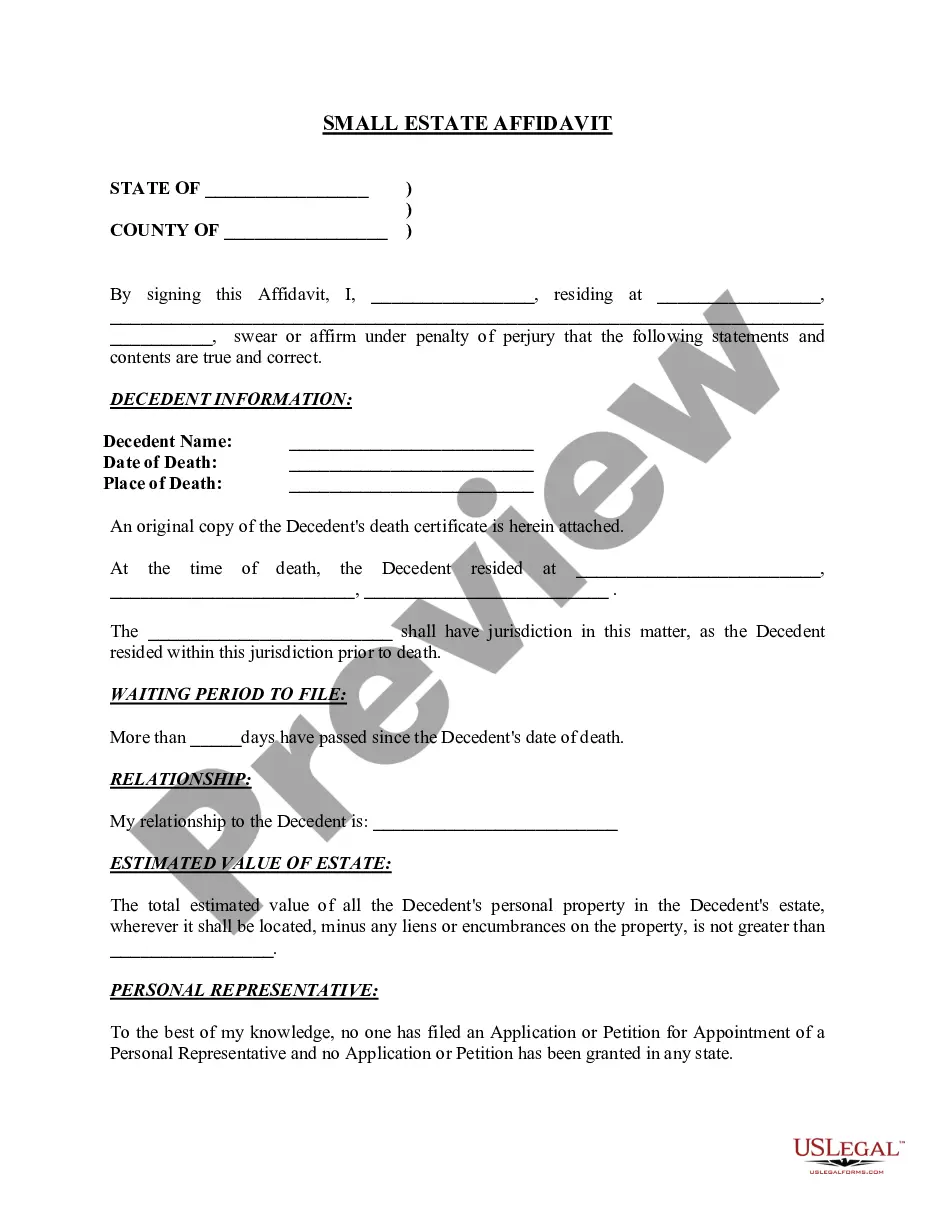
The Small Estate Affidavit for Estates under $100,000 is a legal document that allows an interested party, typically a successor to the deceased, to collect or distribute the assets of an estate valued at less than $100,000. This affidavit helps streamline the process of claiming entitlement to the deceasedâs property without the need for formal probate, making it a vital tool for managing small estates. Unlike other estate forms, this affidavit is specifically designed for smaller estates and simplifies the transition of assets to the rightful heirs.
Main sections of this form
- Affiant's information: Includes the name and address of the person making the affidavit.
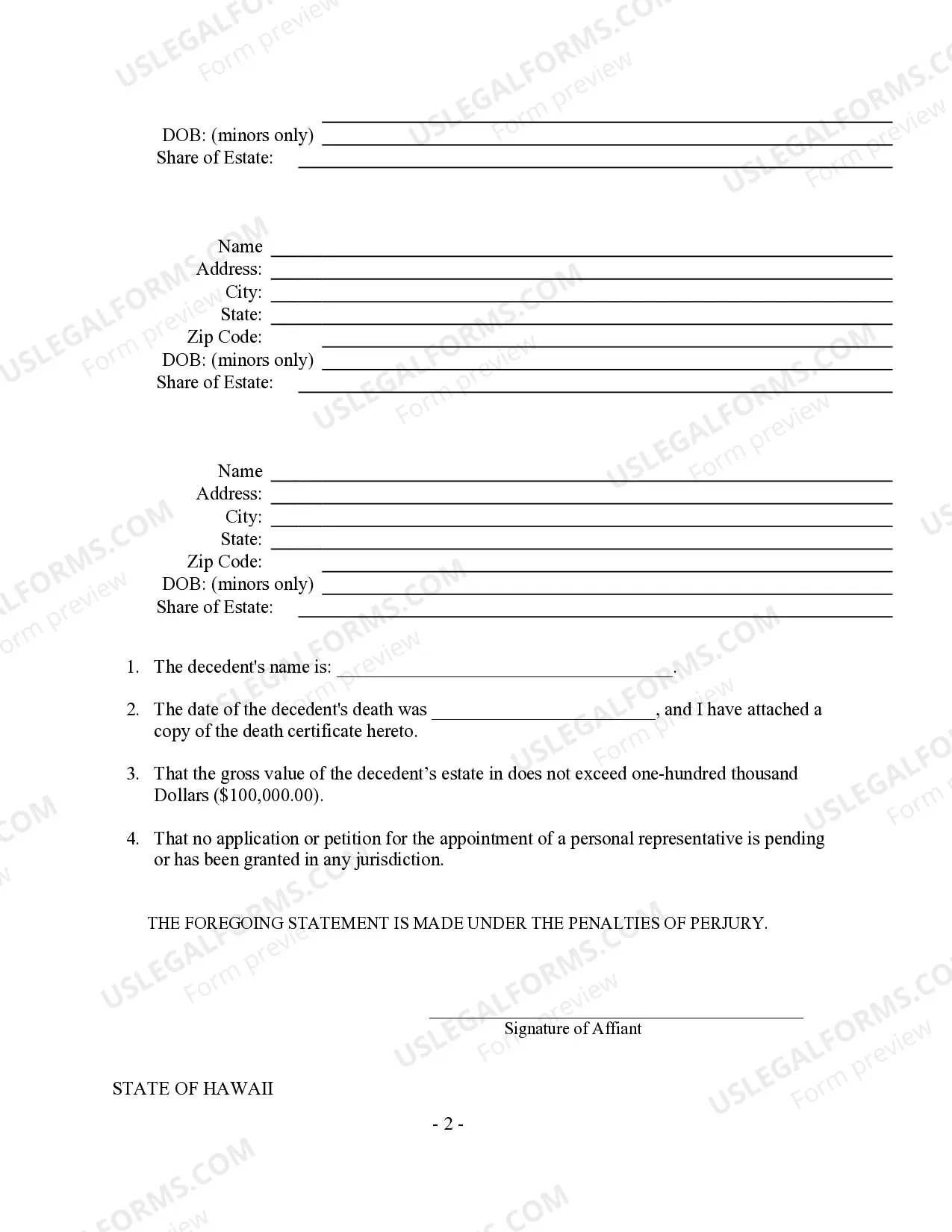
- Decedent's details: Identification of the deceased, including their name and date of death.
- Successors' information: Listing all successors/beneficiaries and their respective shares of the estate.
- Value declaration: A statement confirming the total estate value does not exceed $100,000.
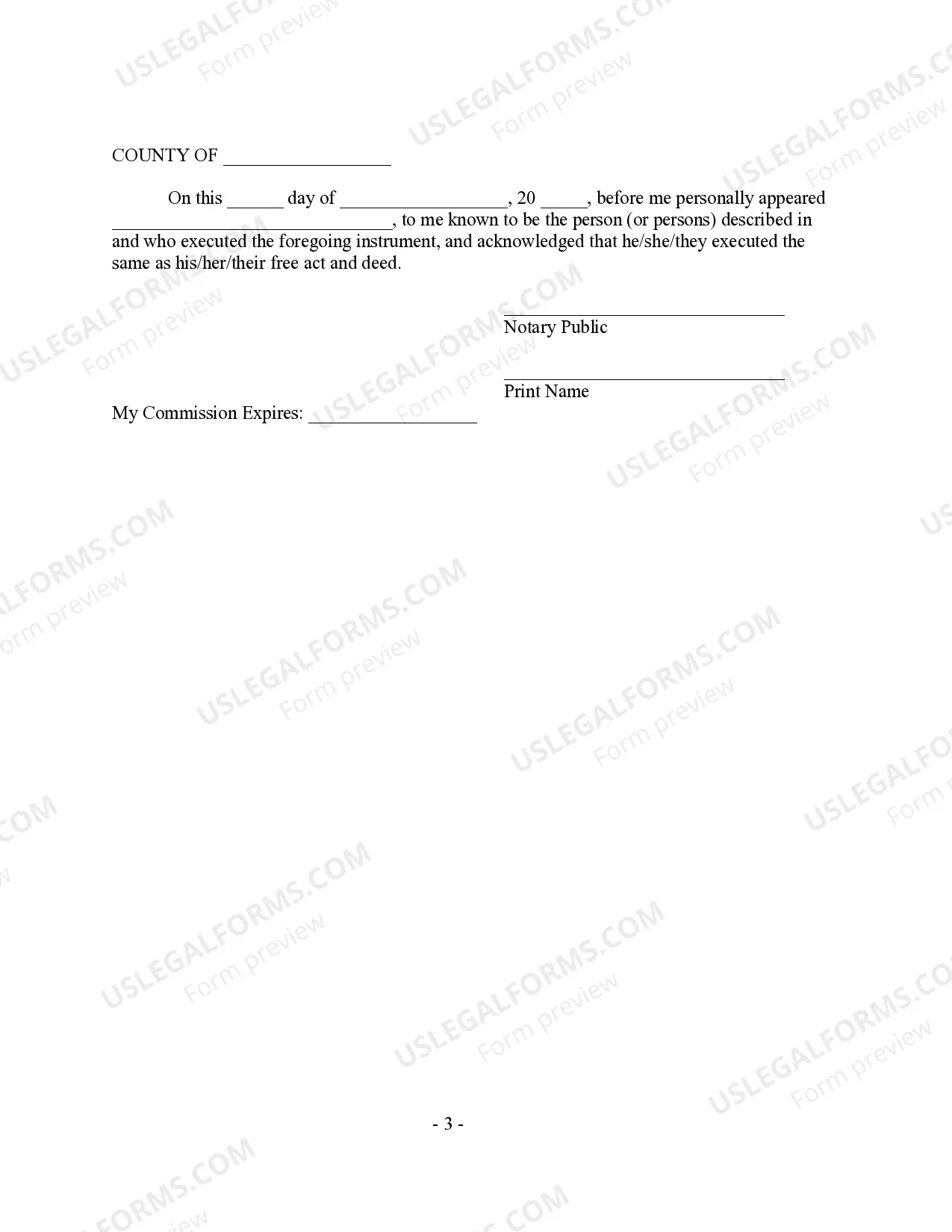
- Notarization section: Requires a notarization to validate the affidavit upon completion.
Common use cases
This form is applicable when a loved one passes away, and their estate is valued at under $100,000. It can be used to efficiently gain access to the deceased's personal property, including bank accounts, vehicles, or real estate, without the complexities involved in formal probate proceedings. It is particularly beneficial for families looking to settle estate matters quickly and with minimal legal involvement.
Intended users of this form
This form is intended for:
- Successors of the deceased, such as family members or close relatives.
- Personal representatives who need to administer the estate.
- Anyone managing the deceased's estate valued under $100,000.
- Individuals seeking to collect assets without going through probate.
How to complete this form
- Identify the affiant: Enter your name and both mailing and residence addresses.
- List all successors: Include the names, addresses, and shares of the estate for each successor.
- Provide decedent's information: Fill in the deceased's name and date of death along with a copy of the death certificate.
- State the gross value: Confirm that the total estate value is under $100,000.
- Sign and date: Ensure the affidavit is signed in front of a notary public.
Is notarization required?
Yes, this form must be notarized to be legally valid. It is essential for the affiant to sign the affidavit in front of a notary public, ensuring the authenticity of the document. US Legal Forms provides an integrated online notarization service, available 24/7, allowing for secure video calls without the need for travel.
Get your form ready online
Our built-in tools help you complete, sign, share, and store your documents in one place.
Make edits, fill in missing information, and update formatting in US Legal Forms—just like you would in MS Word.
Download a copy, print it, send it by email, or mail it via USPS—whatever works best for your next step.
Sign and collect signatures with our SignNow integration. Send to multiple recipients, set reminders, and more. Go Premium to unlock E-Sign.
If this form requires notarization, complete it online through a secure video call—no need to meet a notary in person or wait for an appointment.
We protect your documents and personal data by following strict security and privacy standards.
Make edits, fill in missing information, and update formatting in US Legal Forms—just like you would in MS Word.
Download a copy, print it, send it by email, or mail it via USPS—whatever works best for your next step.
Sign and collect signatures with our SignNow integration. Send to multiple recipients, set reminders, and more. Go Premium to unlock E-Sign.

If this form requires notarization, complete it online through a secure video call—no need to meet a notary in person or wait for an appointment.
We protect your documents and personal data by following strict security and privacy standards.
Avoid these common issues
- Failing to include all successors and their respective shares.
- Not attaching a copy of the death certificate as required.
- Overlooking the notarization step, which is essential for validity.
- Incorrectly stating the total value of the estate, potentially exceeding the $100,000 limit.
Advantages of online completion
- Convenient access: Download and complete the form at your own pace.
- Editability: Easily modify the document to suit your specific needs.
- Expertly crafted: Form templates are created by licensed attorneys to ensure legal compliance.
- Time-saving: Streamlines the process of handling small estate claims without a lawyer.
Looking for another form?
Form popularity
FAQ
In Hawaii, a small estate is defined as one where the total value of personal property does not exceed $100,000. This amount is crucial when deciding whether to use the Hawaii Small Estate Affidavit for Estates under $100,000 for settling the deceased’s affairs. If the estate meets this criteria, heirs may avoid the lengthy probate process, simplifying asset distribution considerably. Tools and forms available through platforms like USLegalForms can enhance this process.
Rule 50 in Hawaii probate refers to rules governing the handling of small estates, specifically allowing a simplified process for properties valued at $100,000 or less. It allows heirs to file a Hawaii Small Estate Affidavit for Estates under $100,000, promoting efficiency by avoiding full probate. This rule benefits family members by facilitating quicker access to assets and reducing overwhelming legal burdens.
In Hawaii, the small estate limit is set at $100,000 for personal property, which is relevant for the Hawaii Small Estate Affidavit for Estates under $100,000. This means if the total value of the deceased’s personal assets does not exceed this amount, heirs can use the affidavit process to collect these assets without going through a lengthy probate process. Conversely, if the estate exceeds this limit, full probate procedures may be required.
To write a small estate affidavit, start by obtaining the correct form for the Hawaii Small Estate Affidavit for Estates under $100,000. Next, you should provide essential details about the deceased, such as their full name, date of death, and a list of their assets. Ensure to include any debts that may need to be addressed. Finally, sign and have the affidavit notarized before submitting it to the appropriate court.
Yes, Hawaii does have a small estate affidavit specifically for estates valued under $100,000. This legal tool simplifies the process of settling smaller estates, helping you avoid the probate process. It serves as a great resource for personal representatives managing such estates.
Obtaining a Hawaii Small Estate Affidavit for Estates under $100,000 typically takes a few weeks, depending on your situation. You will need to prepare the affidavit and have it signed in front of a notary. Once submitted, the processing time may vary, so it's wise to plan accordingly.
To open a bank account for an estate, start by gathering essential documents like the death certificate and the Hawaii Small Estate Affidavit for Estates under $100,000. Visit the bank as the appointed personal representative, and present these documents to complete the account opening process. Be prepared for any additional paperwork the bank may require.
Yes, you can open an estate account without probate by using a Hawaii Small Estate Affidavit for Estates under $100,000. This affidavit provides a legal way to access necessary funds and manage the estate without the complications of probate. This is especially useful when dealing with smaller estates.
To open an estate checking account, you will generally need a death certificate, a valid identification, and the Hawaii Small Estate Affidavit for Estates under $100,000. Additionally, banks might ask for any other documents that specify your authority as the personal representative. Always check with the bank for their exact requirements.
In Hawaii, estates valued at more than $100,000 must go through probate. This is where the Hawaii Small Estate Affidavit for Estates under $100,000 becomes beneficial, as it allows smaller estates to avoid this lengthy and often costly process. Understanding these thresholds can help you decide the best course of action.