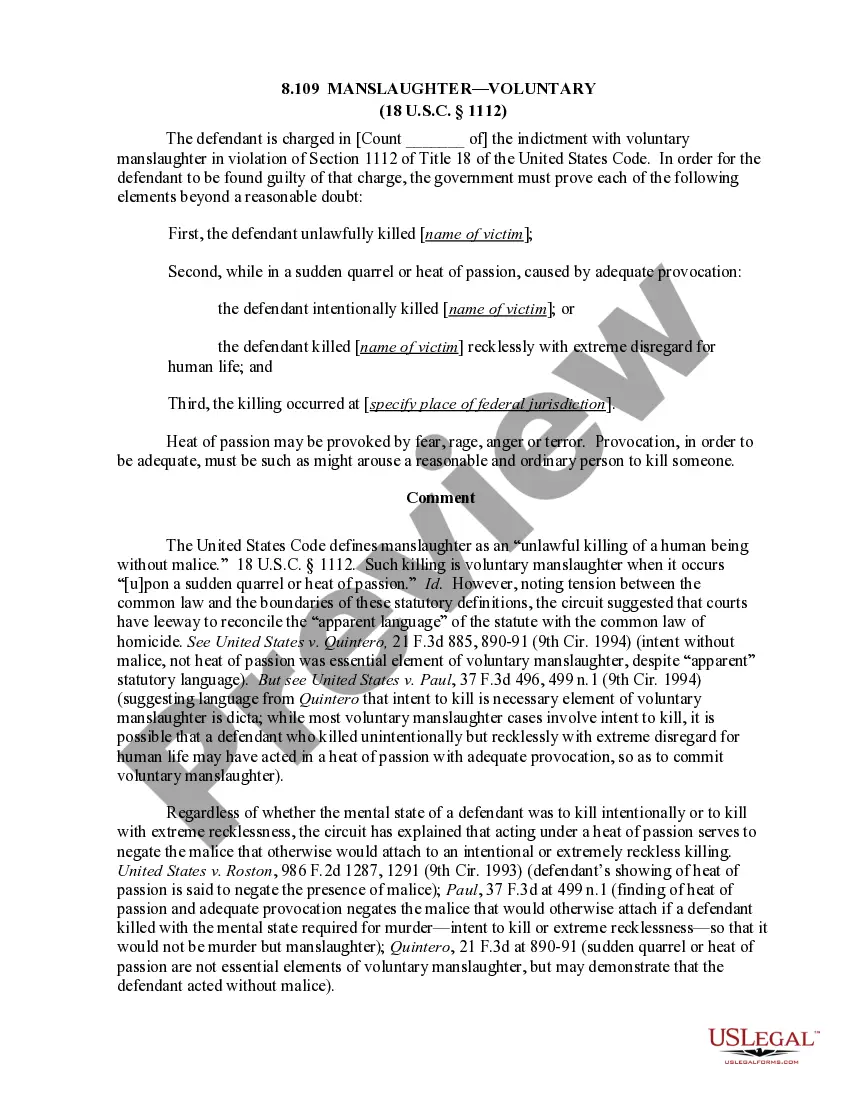
VOLUNTARY MANSLAUGHTER / 18 U.S.C. Sec. 1112
What is this form?
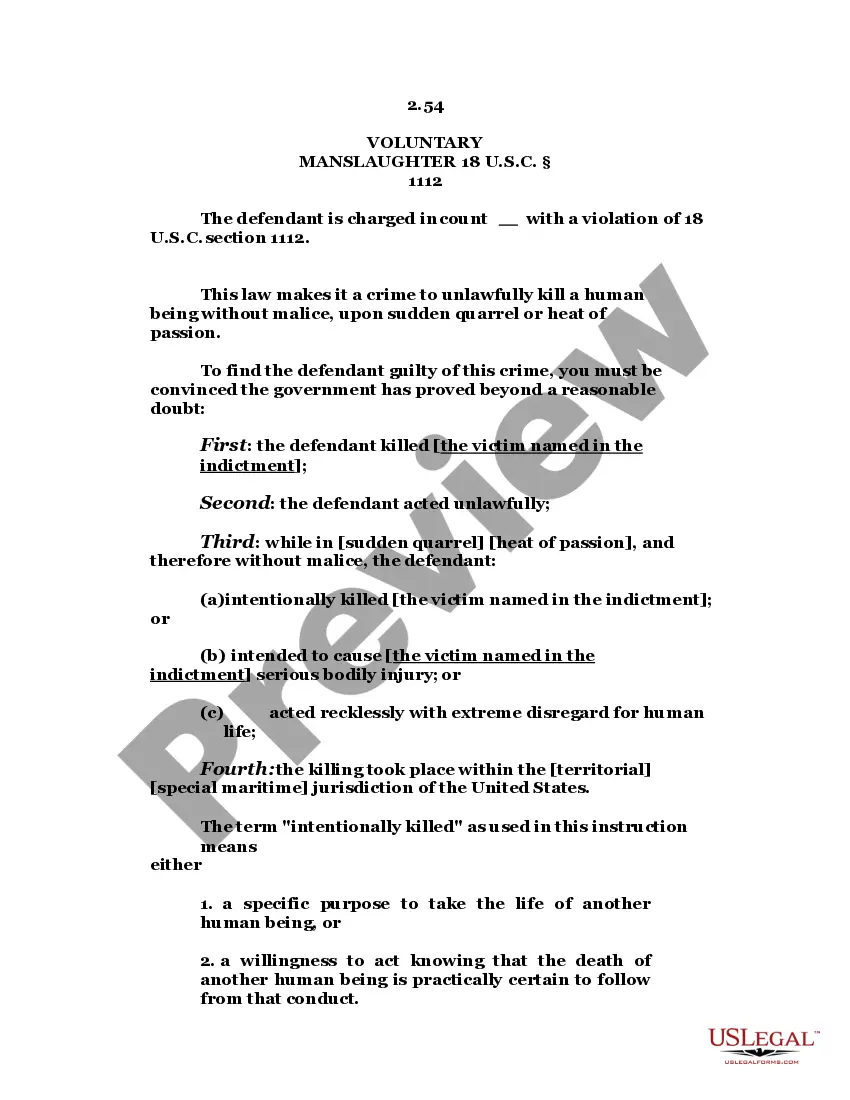
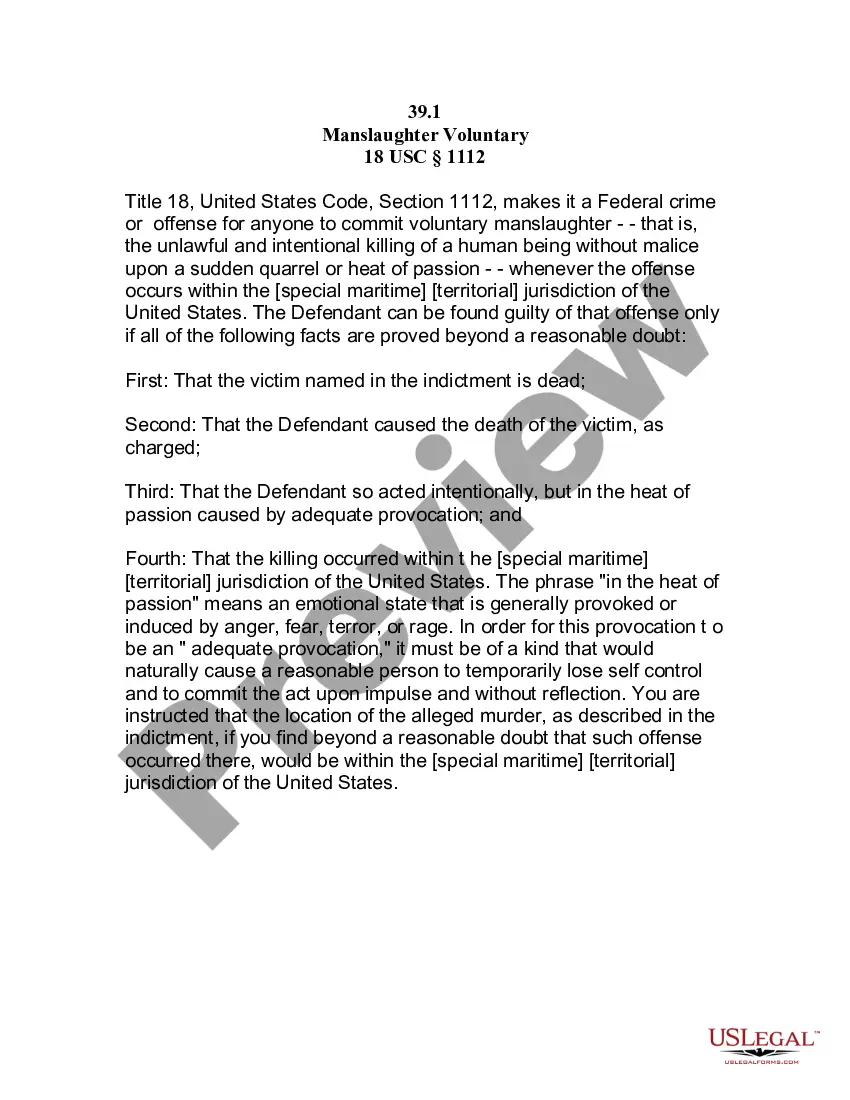
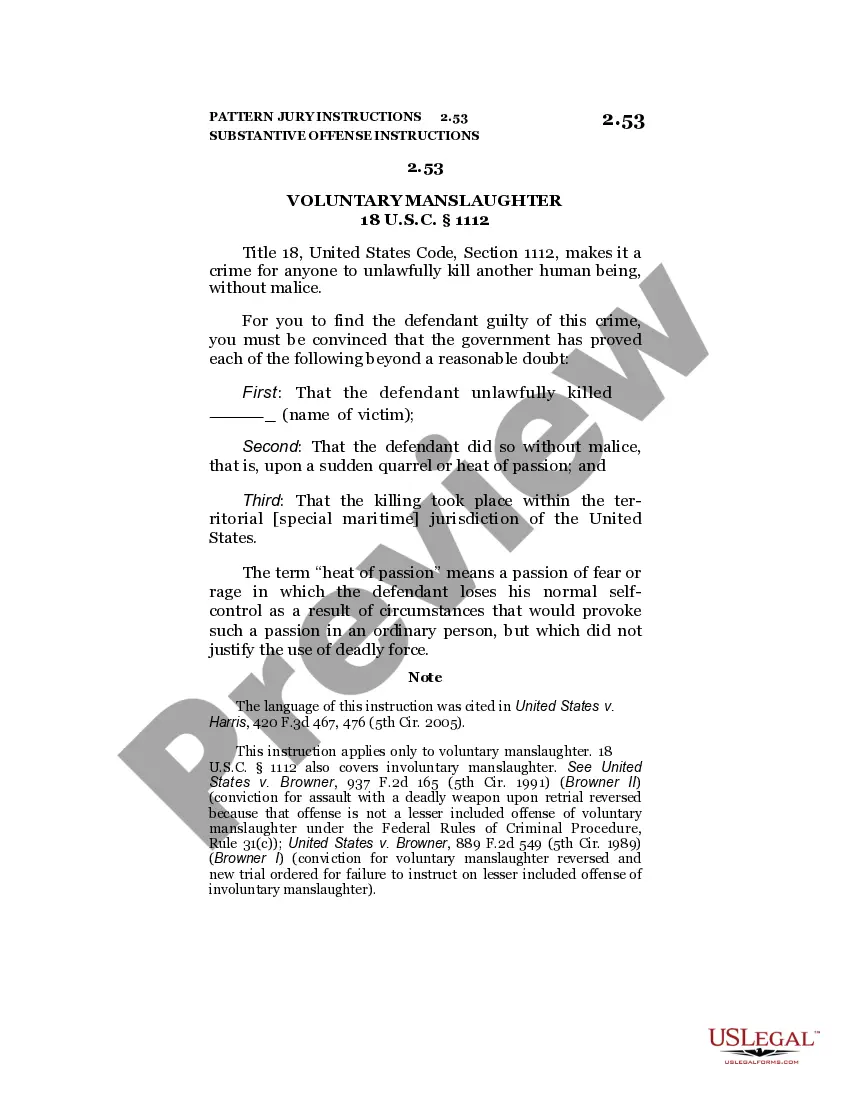
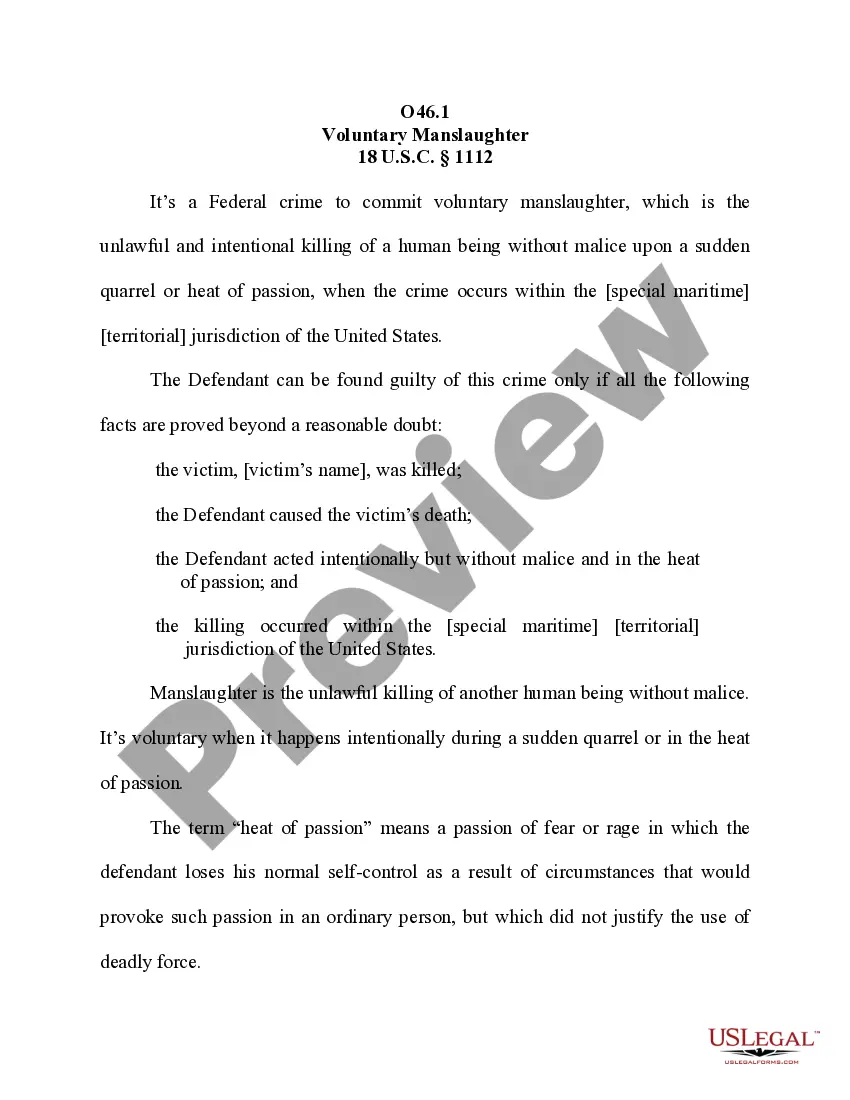
The Voluntary Manslaughter form under 18 U.S.C. Sec. 1112 is a legal document specifically designed to address the unlawful killing of a human being without malice, typically stemming from a sudden quarrel or heat of passion. It distinguishes voluntary manslaughter from other forms of homicide by focusing on the defendant's mental state during the act. This form is integral for legal proceedings where the circumstances of a killing warrant a lesser charge than murder, acknowledging the emotional and situational factors involved.
Key components of this form
- The identification of the defendant and the victim involved in the unlawful act.
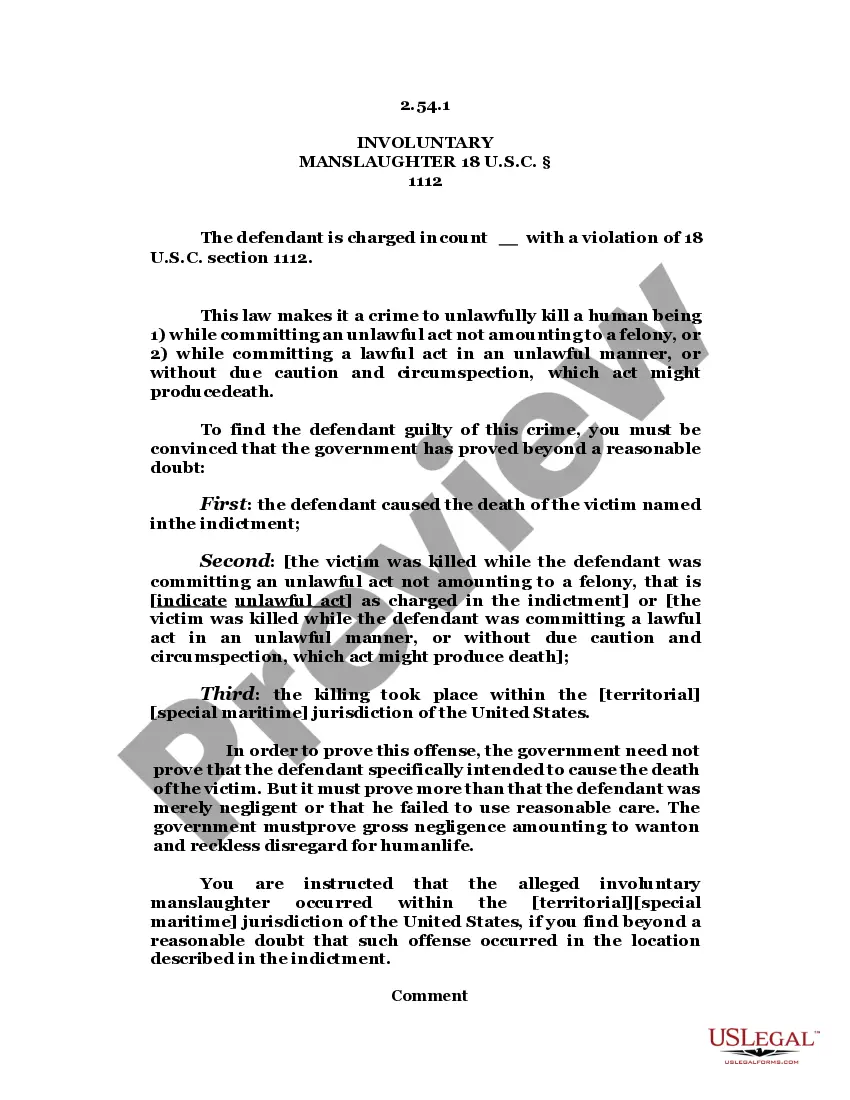
- A clear statement outlining that the killing occurred unlawfully and intentionally, or through reckless behavior.
- Definitions of key legal terms, such as "heat of passion" and "intentionally killed."
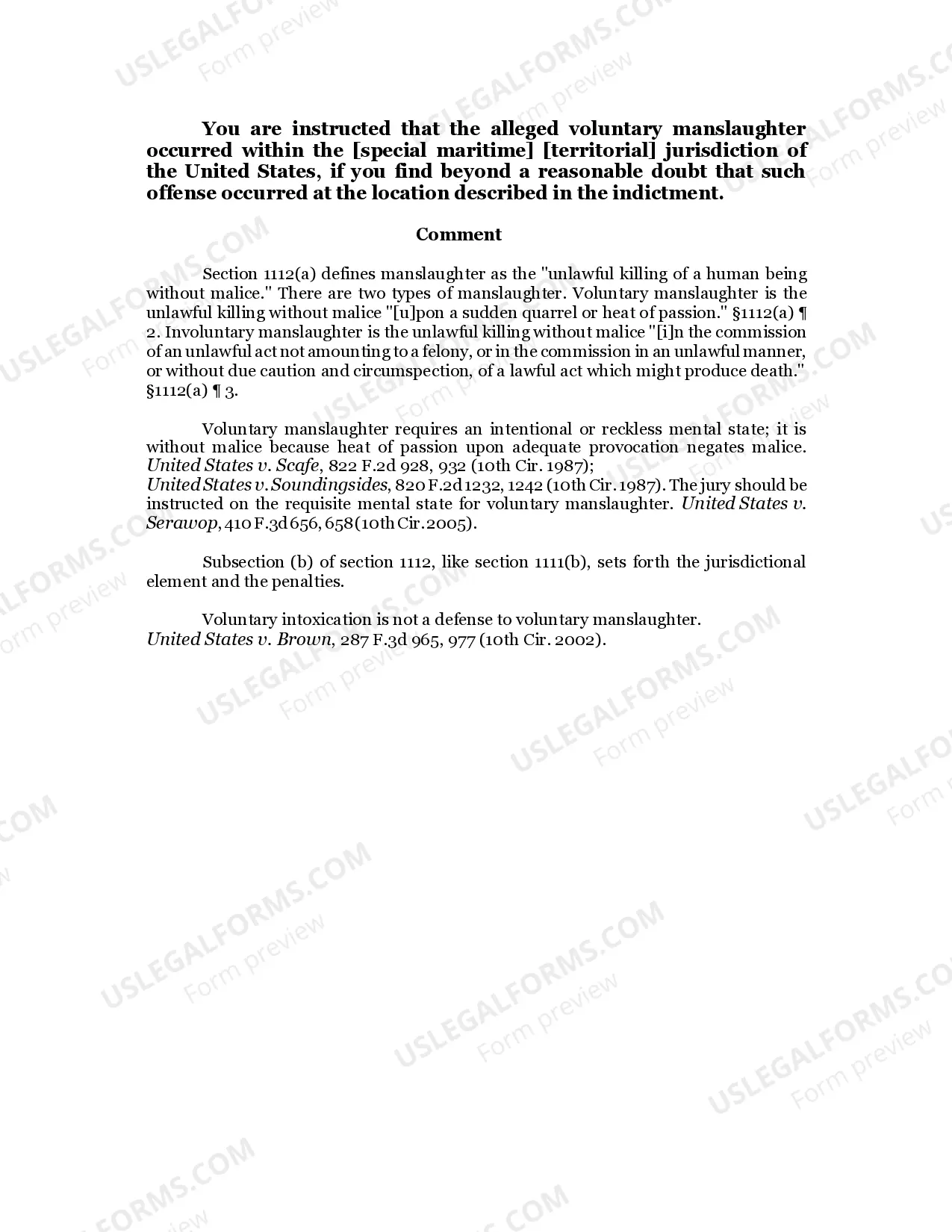
- Jurisdictional details confirming the offense occurred within U.S. jurisdiction.
- Additional comments regarding the legal context of voluntary manslaughter compared to other forms of homicide.

When this form is needed
This form should be used in legal cases where a defendant is being charged with voluntary manslaughter. It is relevant in situations where a killing occurred due to a sudden emotional disturbance, evidencing a lack of premeditation or malice. The form is essential for ensuring proper jury instructions are provided in cases that meet the criteria set forth by 18 U.S.C. Sec. 1112.
Intended users of this form
- Attorneys representing clients in homicide cases.
- Defendants facing charges of voluntary manslaughter.
- Judges requiring a structured legal framework for jury instructions in manslaughter cases.
How to prepare this document
- Identify and enter the names of the defendant and the victim in the respective fields.
- Specify the circumstances of the incident that led to the charge of voluntary manslaughter.
- Clarify the mental state of the defendant at the time of the incidentâwhether it was a sudden quarrel or heat of passion.
- Ensure the jurisdiction for the alleged offense is accurately indicated.
- Review the completed form for accuracy and clarity before submission.
Notarization requirements for this form
This form does not typically require notarization unless specified by local law. It is advisable to check the jurisdictional requirements to confirm if notarization is necessary for legal validity.
Get your form ready online
Our built-in tools help you complete, sign, share, and store your documents in one place.
Make edits, fill in missing information, and update formatting in US Legal Forms—just like you would in MS Word.
Download a copy, print it, send it by email, or mail it via USPS—whatever works best for your next step.
Sign and collect signatures with our SignNow integration. Send to multiple recipients, set reminders, and more. Go Premium to unlock E-Sign.
If this form requires notarization, complete it online through a secure video call—no need to meet a notary in person or wait for an appointment.
We protect your documents and personal data by following strict security and privacy standards.

Make edits, fill in missing information, and update formatting in US Legal Forms—just like you would in MS Word.

Download a copy, print it, send it by email, or mail it via USPS—whatever works best for your next step.

Sign and collect signatures with our SignNow integration. Send to multiple recipients, set reminders, and more. Go Premium to unlock E-Sign.

If this form requires notarization, complete it online through a secure video call—no need to meet a notary in person or wait for an appointment.

We protect your documents and personal data by following strict security and privacy standards.
Mistakes to watch out for
- Failing to accurately specify the circumstances surrounding the killing.
- Omitting critical definitions of terms that may confuse jurors.
- Incorrectly stating the jurisdiction where the offense occurred.
- Neglecting to consult local laws that may affect the application of the form.
Why use this form online
- Convenience of downloading the form at any time from anywhere.
- Editability allows for customization to fit specific legal needs.
- Reliable templates drafted by licensed attorneys to ensure legal accuracy.
Looking for another form?
Form popularity
FAQ
So, for example, if the victim fires a gun or swings an axe at the defendant and misses, and the defendant turns around and kills the victim, the assault that the victim first perpetrated against the defendant can be considered adequate provocation so that the victim's death will be ruled a voluntary manslaughter.
Manslaughter is the unlawful killing of a human being without malice. It is of two kinds: Voluntary?Upon a sudden quarrel or heat of passion.
Involuntary: The court will consider manslaughter involuntary when the defendant had no intent to kill, but accidentally or inadvertently killed someone as a result of negligent, careless, or dangerous behavior. Accidentally firing a gun and killing someone is an example of involuntary manslaughter.
Voluntary manslaughter can be charged if a person is being robbed or burglarized and kill the person when the robber could have been stopped without that sort of force. Assisted suicide can also be considered voluntary manslaughter, even if the deceased consented to this type of death.
If you're convicted of Voluntary Manslaughter, you face a term of up to eleven years in a state prison and a fine of up to $10,000. Furthermore, Voluntary Manslaughter is punishable under California's ?Three Strikes? system.
Voluntary manslaughter involves the intentional killing of a person in which the offender did not have prior intent to kill. The defendant may have the intention of causing serious injury short of death.
SECTION 16-3-50. Manslaughter. A person convicted of manslaughter, or the unlawful killing of another without malice, express or implied, must be imprisoned not more than thirty years or less than two years.
Voluntary manslaughter is intentionally killing another person in the heat of passion and in response to adequate provocation. Involuntary manslaughter is negligently causing the death of another person.