Voluntary Manslaughter
Understanding this form
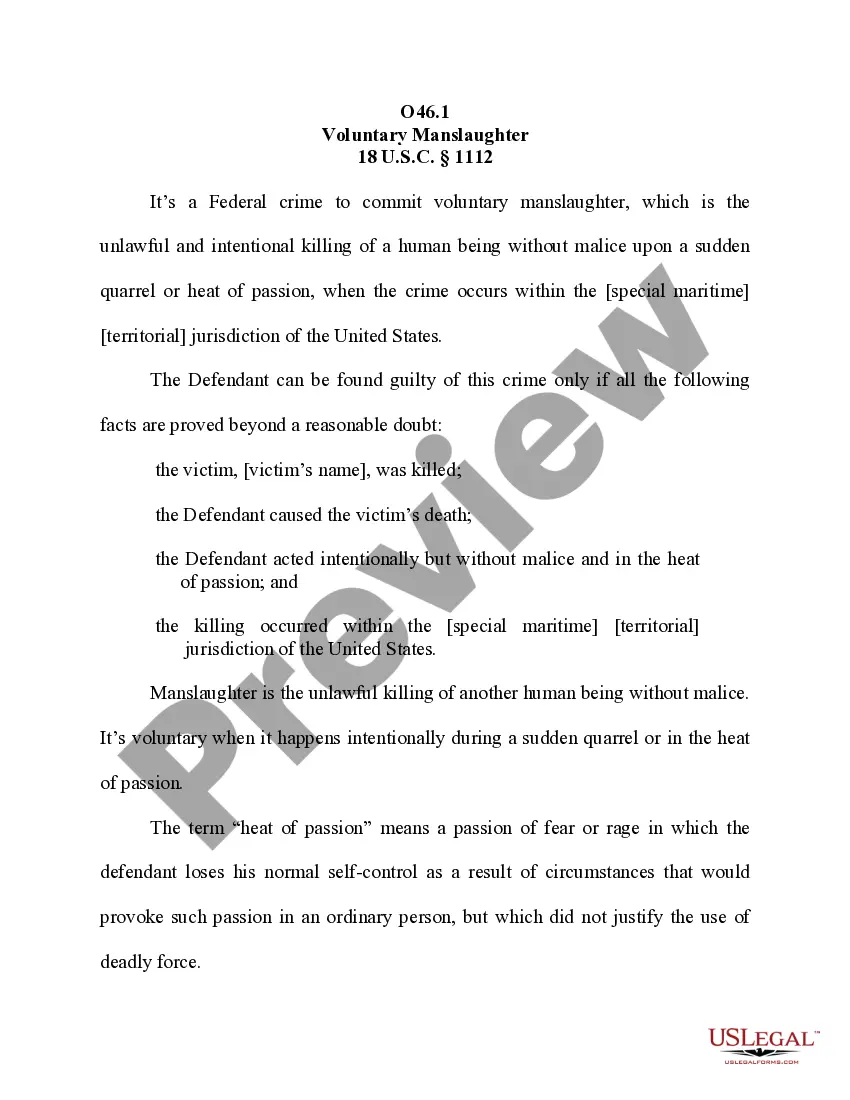
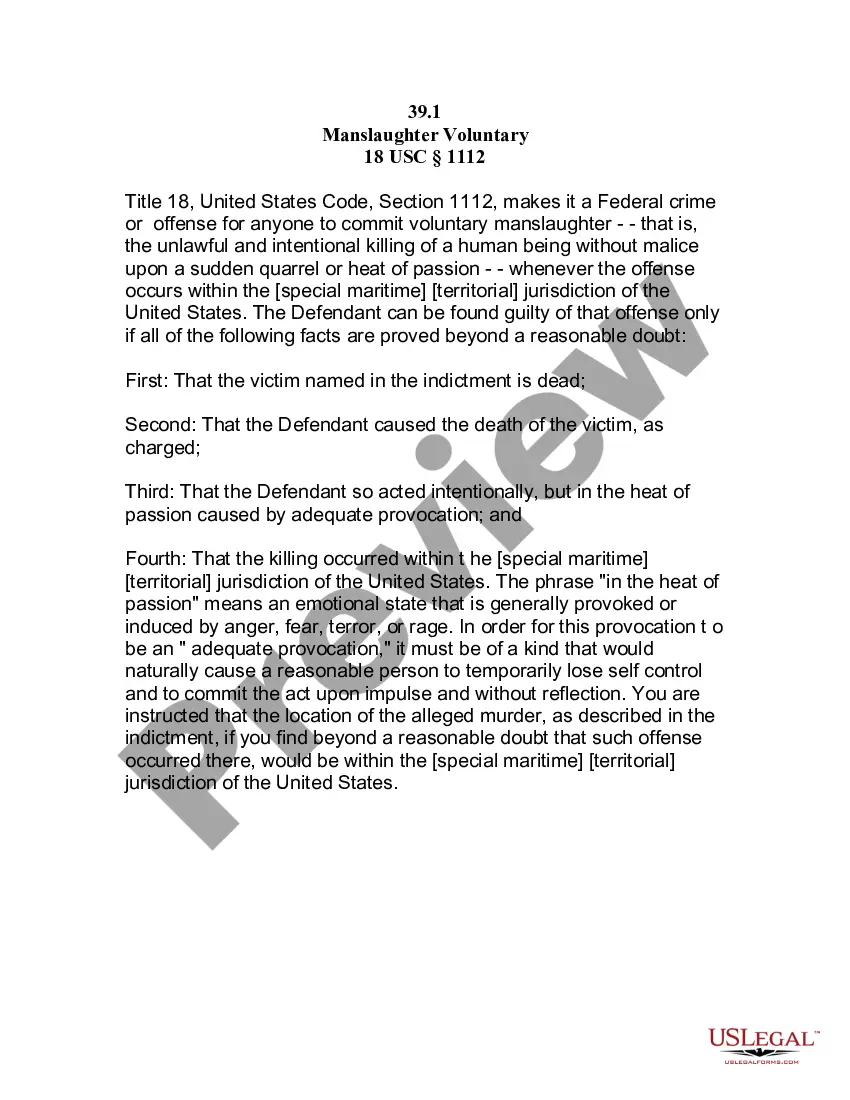
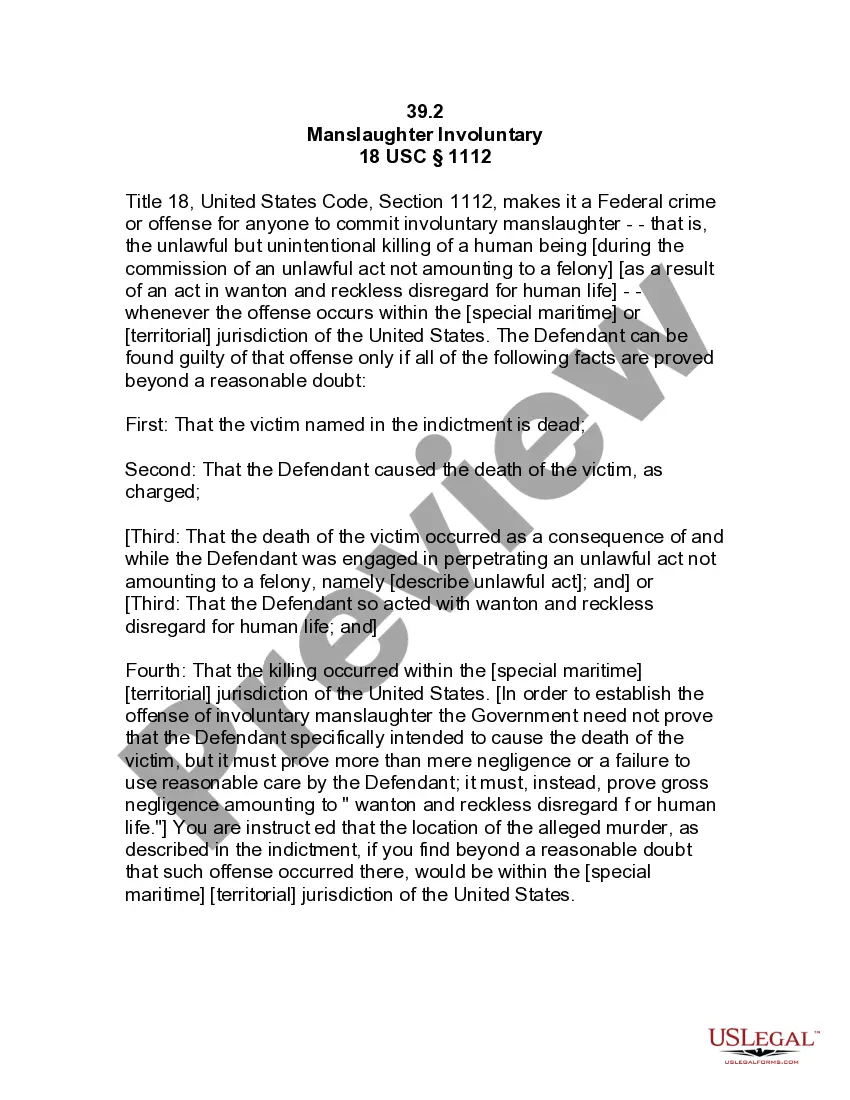
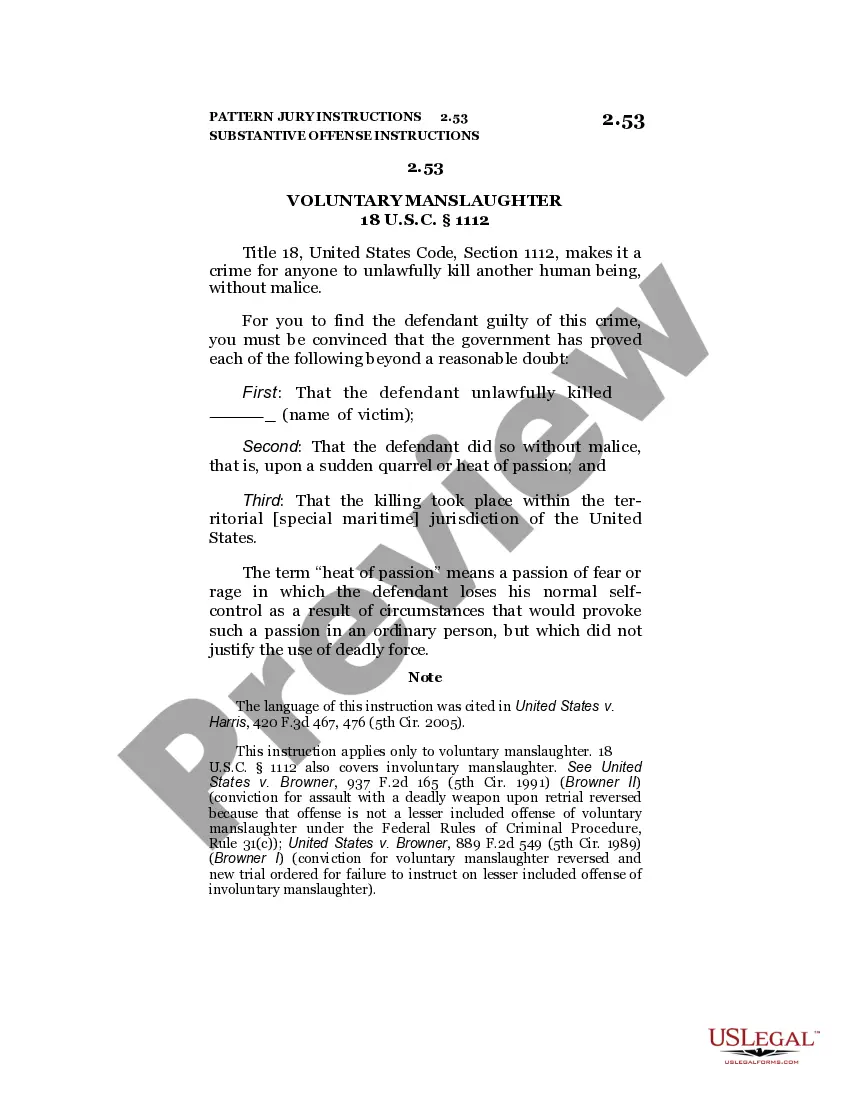
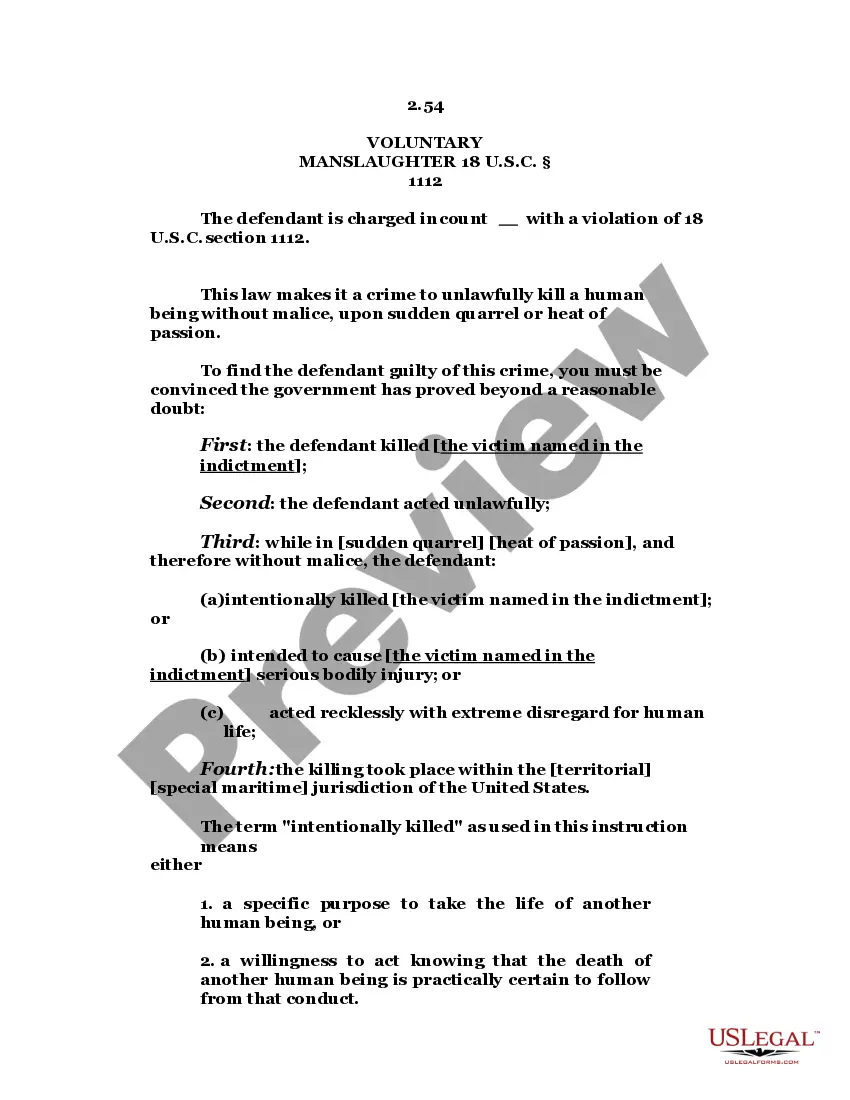
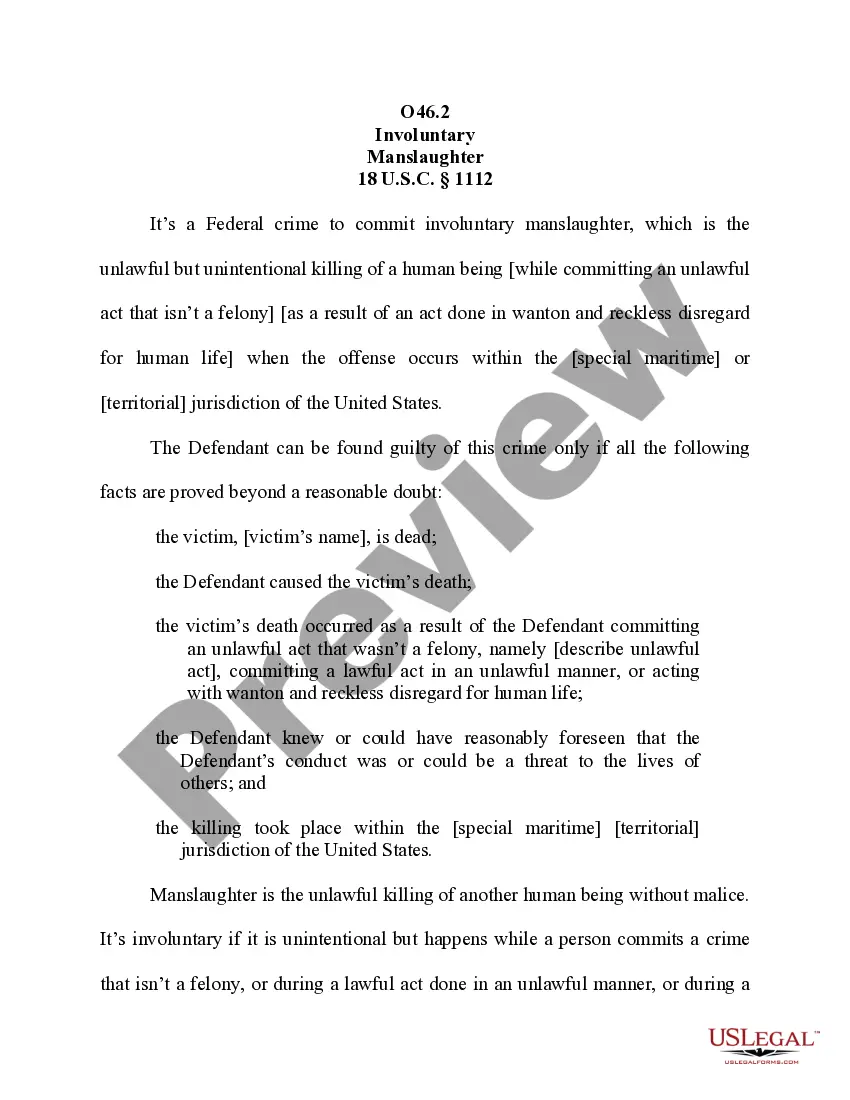
The Voluntary Manslaughter form contains jury instructions from the 11th Circuit Federal Court of Appeals. This form outlines the legal definition and elements required to prove voluntary manslaughter under federal law. Specifically, it distinguishes voluntary manslaughter as the intentional killing of another person, occurring in sudden quarrels or heated passion, without malice. Unlike other forms of homicide, voluntary manslaughter involves these critical contextual factors that can mitigate the severity of the charge.
Key parts of this document
- The defendant's actions that led to the victim's death.
- The requirement for the act to be intentional yet without malice.
- The notion of 'heat of passion' that explains the defendant's mental state.
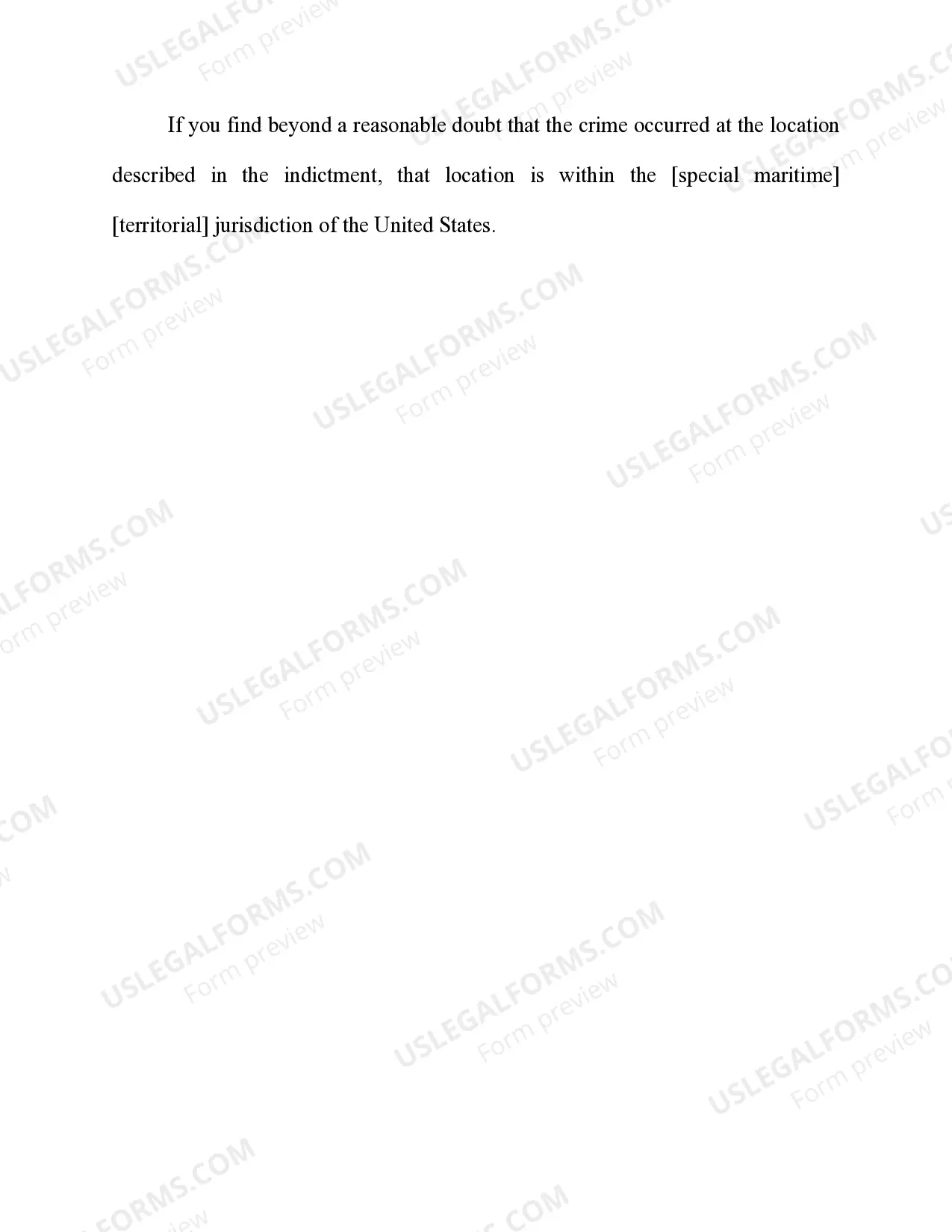
- Jurisdiction requirements showing the crime occurred within U.S. territorial or maritime areas.
When to use this form
This form is used in legal cases involving allegations of voluntary manslaughter. It is applicable when a situation arises where a defendant kills another person due to provocation or during a sudden emotional outburst. This form is crucial in guiding jury interactions to ensure that they understand and accurately apply the legal standards specific to this type of case.
Who should use this form
This form is intended for:
- Legal professionals preparing jury instructions for cases involving voluntary manslaughter.
- Defendants accused of voluntary manslaughter seeking to understand the charges against them.
- Judges and court officials needing standardized instructions for jury evaluation in manslaughter cases.
Steps to complete this form
- Identify the facts surrounding the case, including details about the victim and defendant.
- Ensure that the definitions of voluntary manslaughter and associated legal terms are clearly explained to the jury.
- Specify that the victim was killed and confirm the defendant's role in causing the death.
- Emphasize the context of heat of passion that might explain the defendant's actions.
- Present evidence that confirms the jurisdiction where the crime took place is within U.S. territorial or maritime law.
Notarization guidance
This form does not typically require notarization to be legally valid. However, some jurisdictions or document types may still require it. US Legal Forms provides secure online notarization powered by Notarize, available 24/7 for added convenience.
Get your form ready online
Our built-in tools help you complete, sign, share, and store your documents in one place.
Make edits, fill in missing information, and update formatting in US Legal Forms—just like you would in MS Word.
Download a copy, print it, send it by email, or mail it via USPS—whatever works best for your next step.
Sign and collect signatures with our SignNow integration. Send to multiple recipients, set reminders, and more. Go Premium to unlock E-Sign.
If this form requires notarization, complete it online through a secure video call—no need to meet a notary in person or wait for an appointment.
We protect your documents and personal data by following strict security and privacy standards.

Make edits, fill in missing information, and update formatting in US Legal Forms—just like you would in MS Word.

Download a copy, print it, send it by email, or mail it via USPS—whatever works best for your next step.

Sign and collect signatures with our SignNow integration. Send to multiple recipients, set reminders, and more. Go Premium to unlock E-Sign.

If this form requires notarization, complete it online through a secure video call—no need to meet a notary in person or wait for an appointment.

We protect your documents and personal data by following strict security and privacy standards.
Mistakes to watch out for
- Failing to adequately explain the concept of 'heat of passion' to the jury.
- Not providing sufficient context for why the defendant acted intentionally without malice.
- Overlooking the jurisdictional requirements in the jury instructions.
- Assuming jurors will understand the legal implications without clear guidance.
Advantages of online completion
- Quick access to accurate and legally sound jury instructions
- Convenient download options for immediate use in legal proceedings
- Editability to fit specific case details and requirements
- Reliability stemming from being drafted by licensed attorneys
Legal use & context
- Voluntary manslaughter differs from murder due to the absence of malice and the influence of passion.
- This form serves as legal guidance for juries in understanding the standards of proof required for conviction.
- Understanding the nuances in the definition can significantly impact trial outcomes.
Looking for another form?
Form popularity
FAQ
Voluntary manslaughter can be charged if a person is being robbed or burglarized and kill the person when the robber could have been stopped without that sort of force. Assisted suicide can also be considered voluntary manslaughter, even if the deceased consented to this type of death.
Legally, first-degree murder/felony murder refers to the premeditated killing of a human being. Second-degree murder refers to unplanned intentional killings, whereas third-degree murder/Manslaughter is unintentional/unplanned killing of a human.
Involuntary Manslaughter Penalties and Sentencing: Federal Level. The base sentence for involuntary manslaughter under federal sentencing guidelines is a 10 to 16 month prison sentence, which increases if the crime was committed through an act of reckless conduct.
Voluntary manslaughter happens when another person is killed without premeditation, malice, or deliberation. For example, this type of killing may occur in the heat of passion. While the offender did mean to kill or inflict bodily harm, they did not premeditate the homicide.
Voluntary manslaughter is intentionally killing another person in the heat of passion and in response to adequate provocation. Involuntary manslaughter is negligently causing the death of another person.
Voluntary manslaughter requires an intentional act that is a felony or that is likely to cause death or great bodily harm. Involuntary manslaughter, in contrast, may be based on an intentional act that is not naturally dangerous to human life or upon an act of culpable negligence.
Voluntary manslaughter involves the intentional killing of a person in which the offender did not have prior intent to kill. The defendant may have the intention of causing serious injury short of death.