Sample Letter for Writ of Garnishment
Overview of this form
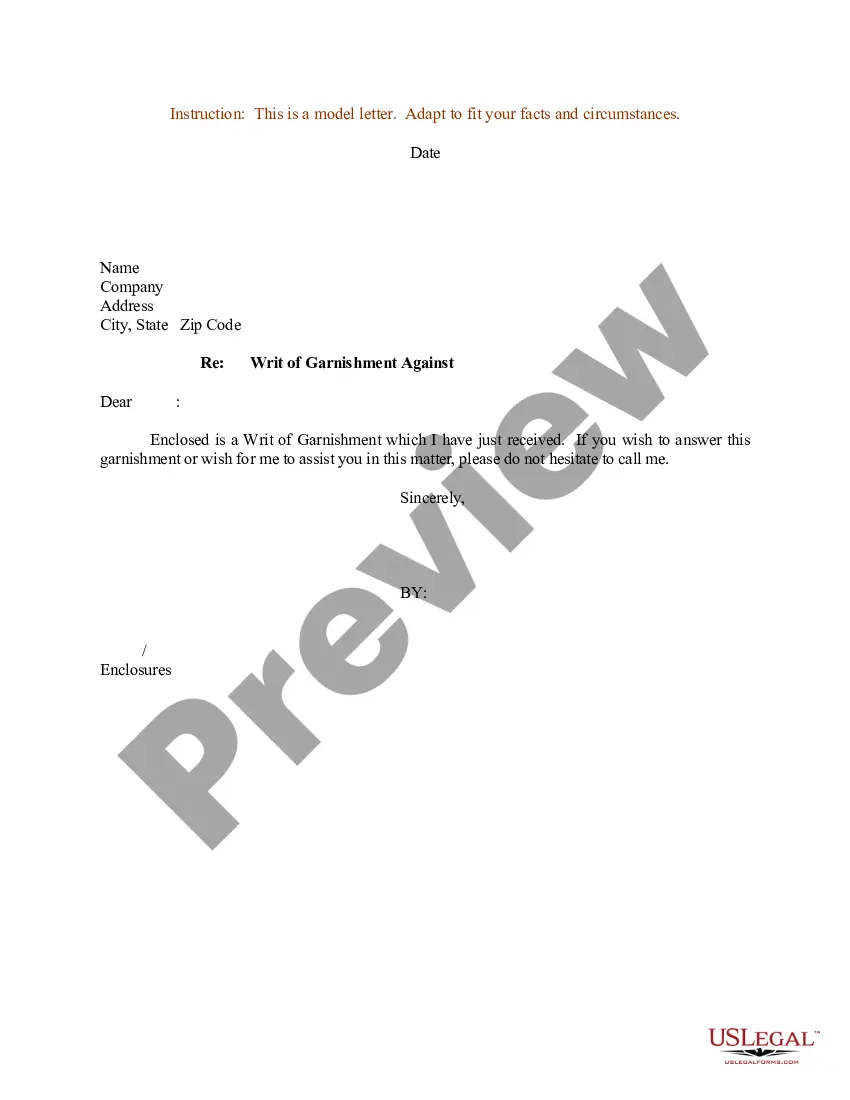
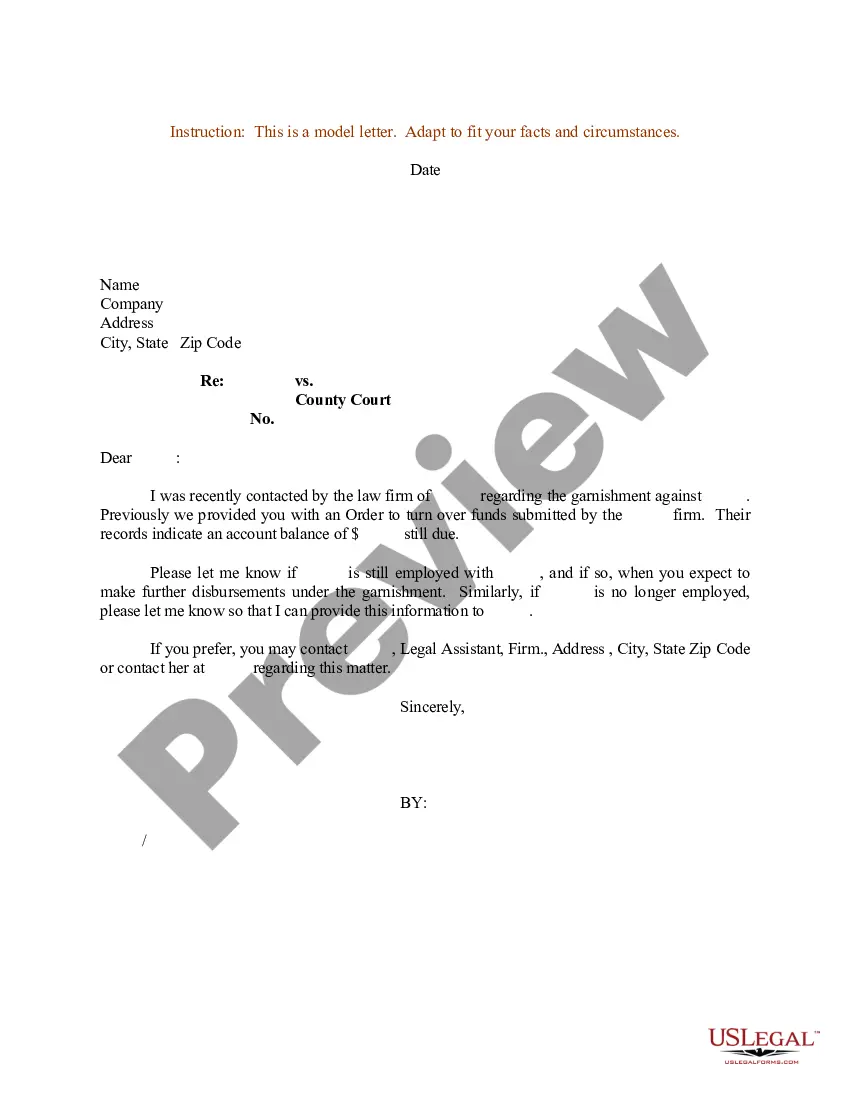
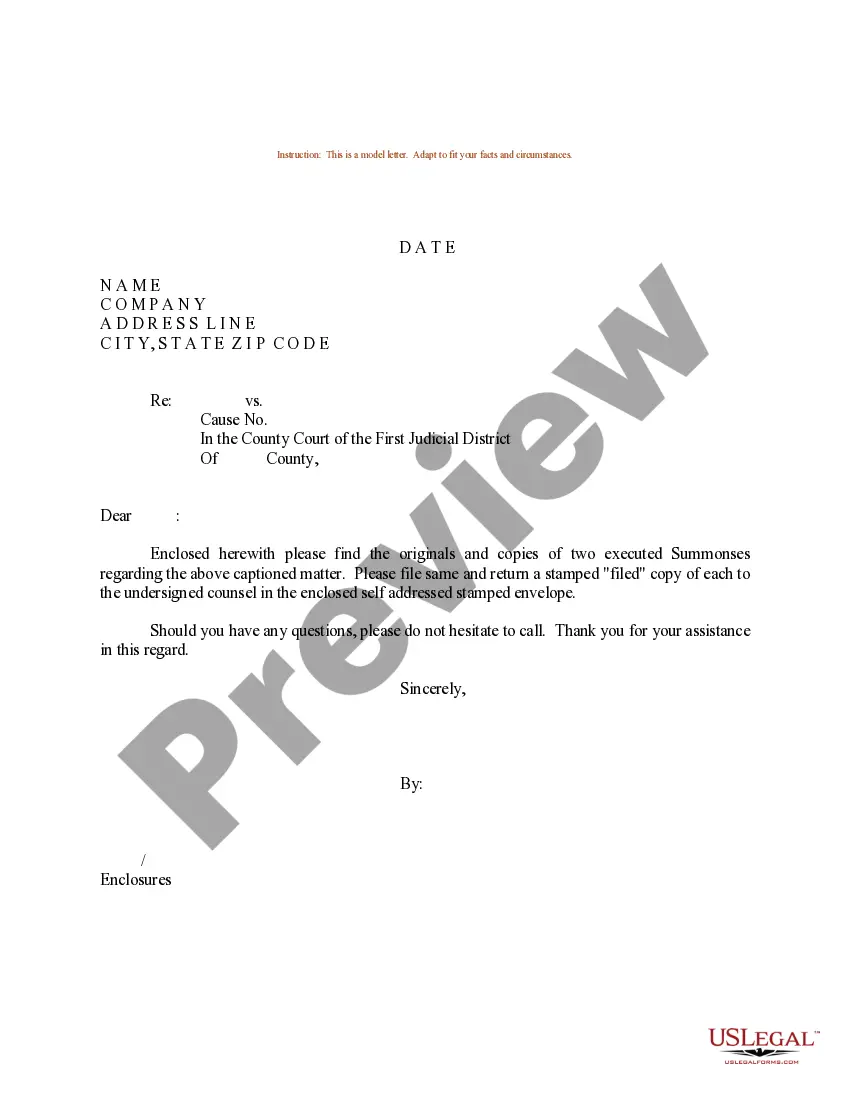
The Sample Letter for Writ of Garnishment is a legal document designed to request a court-ordered garnishment of a debtor's assets. This form serves as an initial communication to the employer or financial institution to withhold a portion of the debtor's wages or accounts for the purpose of repaying a debt. Unlike other debt collection methods, a writ of garnishment is a legal order that must be properly executed, ensuring compliance with state laws and due process.
What’s included in this form
- Date of the letter
- Debtor's name and contact information
- Creditor's name and contact information
- Details of the garnishment, including the amount owed
- Instructions for compliance
- Signature line for the creditor


When to use this document
This form should be used when a creditor has obtained a judgment against a debtor and wishes to enforce the debt through garnishment. It is particularly relevant in scenarios where the debtor has a regular source of income or funds in a bank account, allowing the creditor to collect payments directly from those sources. Use this form to initiate the garnishment process legally and with proper documentation.
Who this form is for
Individuals and entities eligible to use this form include:
- Certain creditors with a valid court judgment against a debtor
- Lawyers representing creditors seeking garnishment
- Financial institutions involved in processing garnishments
Completing this form step by step
- Enter the date at the top of the letter.
- Provide the debtor's name and contact information in the appropriate fields.
- Fill in your name and contact information as the creditor.
- Clearly state the amount owed and specify the type of garnishment being requested.
- Include instructions on how the employer or financial institution should comply with the request.
- Sign the letter to validate the request.
Does this form need to be notarized?
Notarization is generally not required for this form. However, certain states or situations might demand it. You can complete notarization online through US Legal Forms, powered by Notarize, using a verified video call available anytime.
Get your form ready online
Our built-in tools help you complete, sign, share, and store your documents in one place.
Make edits, fill in missing information, and update formatting in US Legal Forms—just like you would in MS Word.
Download a copy, print it, send it by email, or mail it via USPS—whatever works best for your next step.
Sign and collect signatures with our SignNow integration. Send to multiple recipients, set reminders, and more. Go Premium to unlock E-Sign.
If this form requires notarization, complete it online through a secure video call—no need to meet a notary in person or wait for an appointment.
We protect your documents and personal data by following strict security and privacy standards.

Make edits, fill in missing information, and update formatting in US Legal Forms—just like you would in MS Word.

Download a copy, print it, send it by email, or mail it via USPS—whatever works best for your next step.

Sign and collect signatures with our SignNow integration. Send to multiple recipients, set reminders, and more. Go Premium to unlock E-Sign.

If this form requires notarization, complete it online through a secure video call—no need to meet a notary in person or wait for an appointment.

We protect your documents and personal data by following strict security and privacy standards.
Common mistakes to avoid
- Failing to include the correct amount owed.
- Not providing accurate debtor contact details.
- Omitting essential garnishment instructions.
- Forgetting to sign the letter, which may invalidate the request.
Why use this form online
- Easy access: Downloadable in Word format for convenience.
- Editability: Customize the form to suit your specific needs.
- Reliability: Use professionally drafted templates created by licensed attorneys.
Looking for another form?

Form popularity
FAQ
What you can do about wage garnishment.You have to be legally notified of the garnishment. You can file a dispute if the notice has inaccurate information or you believe you don't owe the debt. Some forms of income, such as Social Security and veterans benefits, are exempt from garnishment as income.
Include in your letter what steps you plan to take to address the default, such as making a reasonable effort at a payment plan. Mention any circumstances that have changed recently to make your ability to pay off the debt more likely. This conveys to the creditor your goodwill toward satisfying the debt.
Judgment proof is a description of a person who does not have enough assets for a creditor to seize when a court order requires debt repayment. A debtor who is broke and unemployed can be considered judgment proof, as can a debtor who only has certain legally protected types of assets or income.
Make sure you state you are exercising your rights under the Fair Debt Collection Practices Act. Include a sentence or two describing why you are judgment-proof For example: I am judgment proof because I am living only on Social Security benefits, own limited exempt property, and cannot meet current expenses.
In most states, employers answer a writ of garnishment by filling out the paperwork attached to the judgment and returning it to the creditor or the creditor's attorney.
If you are served with a garnishment summons, do not ignore these documents because they do not directly involve a debt that you owe. Instead, you should immediately freeze any payments to the debtor, retain the necessary property, and provide the required written disclosure.
The Order dissolves the existing writ of garnishment. It means that whatever was being garnished, wages or bank accounts, are no longer subject to the writ of garnishment.
If your income is protected from garnishment and you have no assets (house, property, savings etc.) with which to pay your debt, you may be 'Judgment Proof'. Income that can NOT be garnished: TANF, GAU, SSI, SSDI, SSA, Food Stamps, child support, pension, etc. Income that can be garnished is wages from employment.
Garnishment, or wage garnishment, is when money is legally withheld from your paycheck and sent to another party. It refers to a legal process that instructs a third party to deduct payments directly from a debtor's wage or bank account. Typically, the third party is the debtor's employer and is known as the garnishee.