Involuntary Manslaughter
Overview of this form
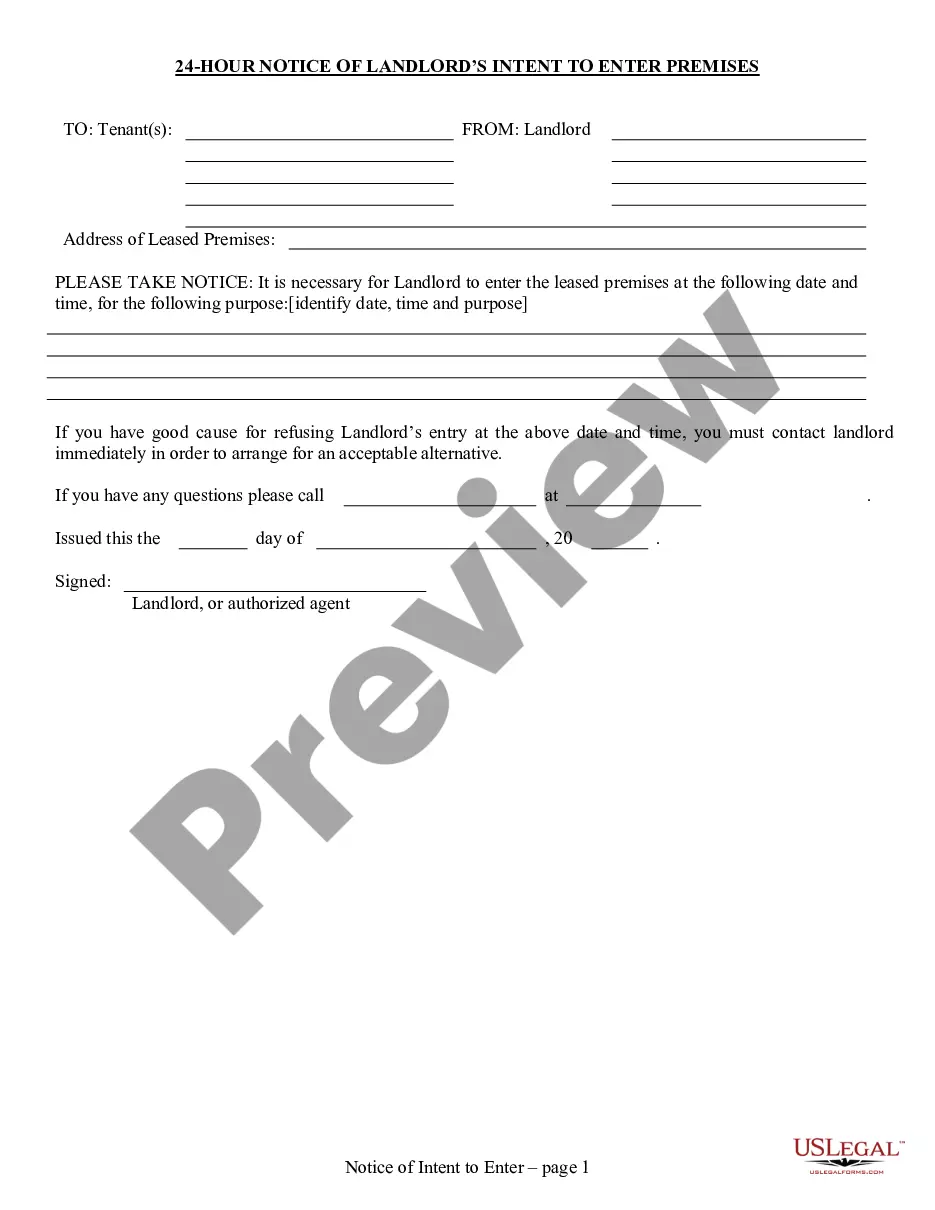
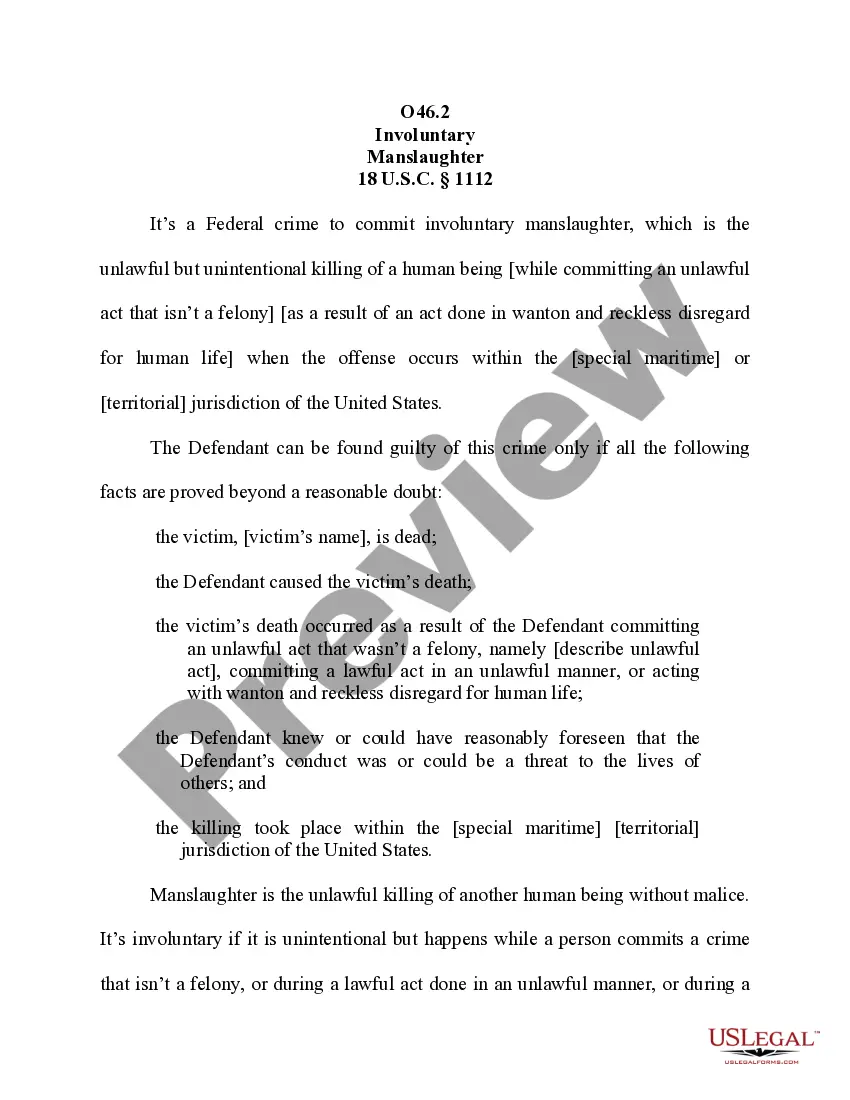
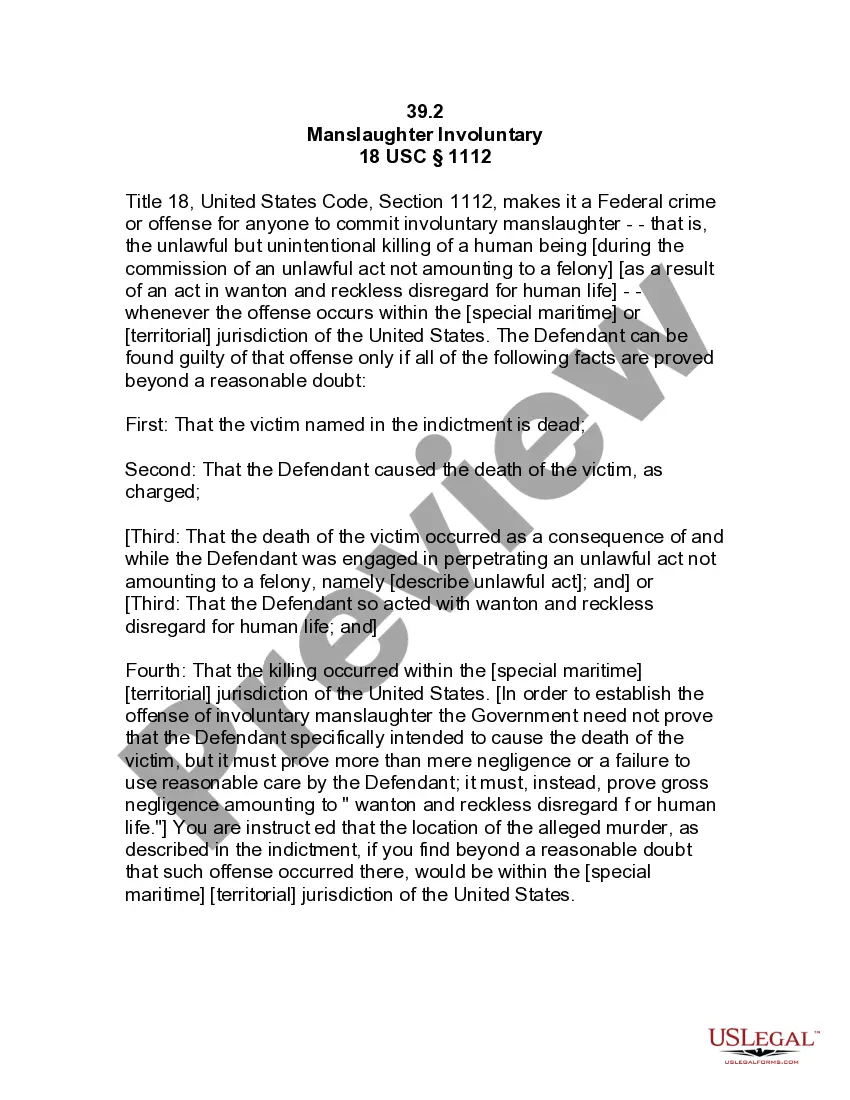
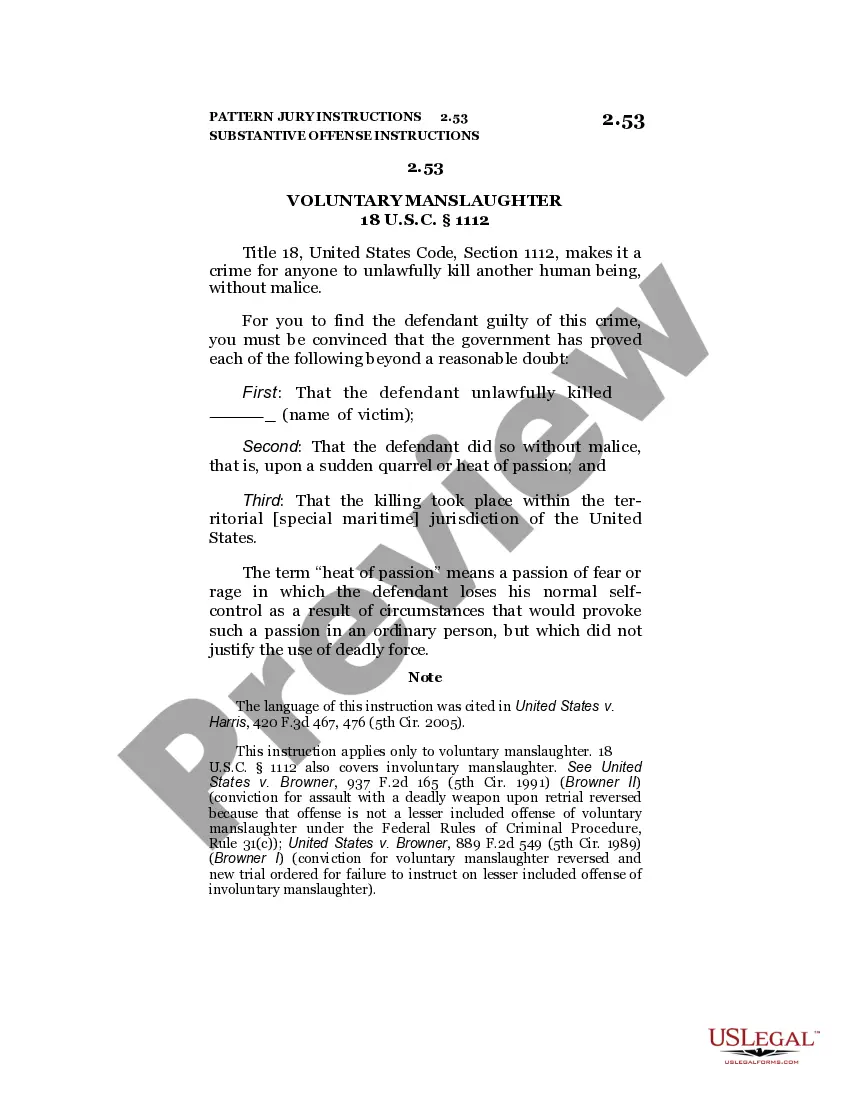
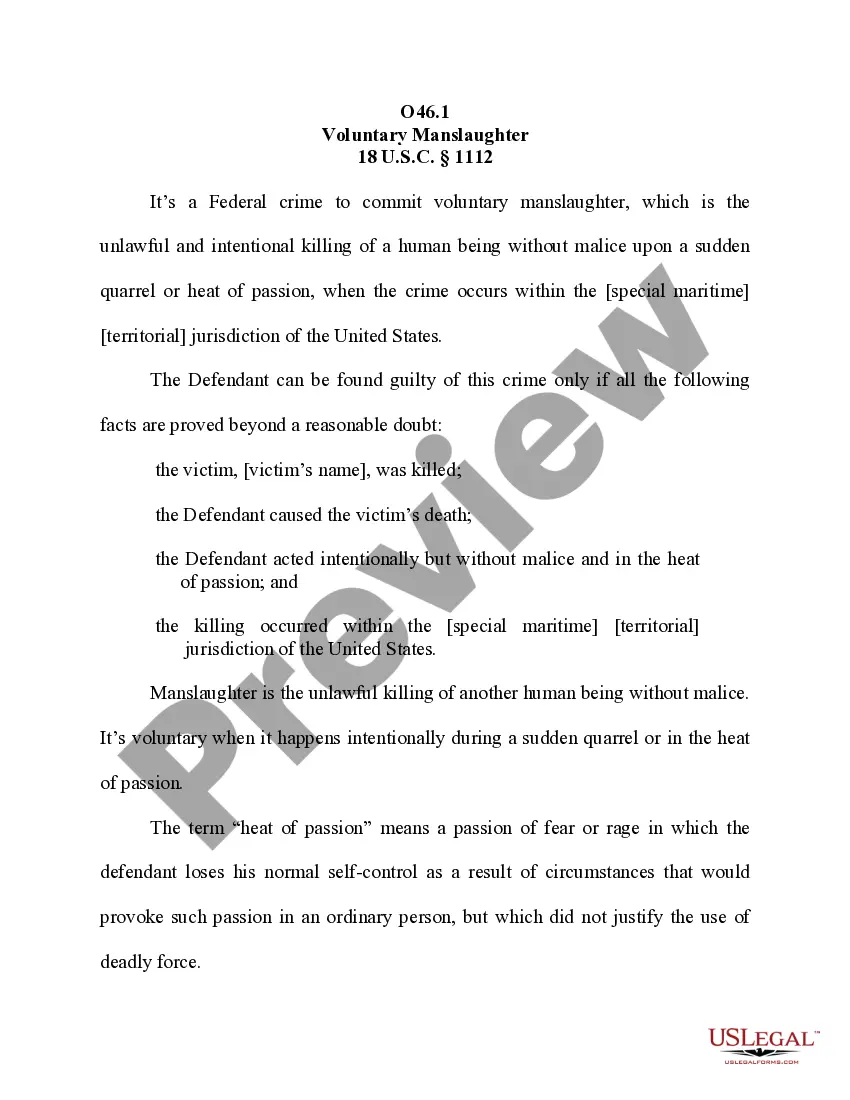
The Involuntary Manslaughter form outlines the legal framework for addressing involuntary manslaughter charges under federal law. This form is crucial for understanding the elements that constitute this crime, distinguishing it from other types of homicide, such as voluntary manslaughter. By using this form, users can grasp the requirements needed to establish guilt in an involuntary manslaughter case, as well as the specific conditions under U.S. jurisdiction that apply.
What’s included in this form
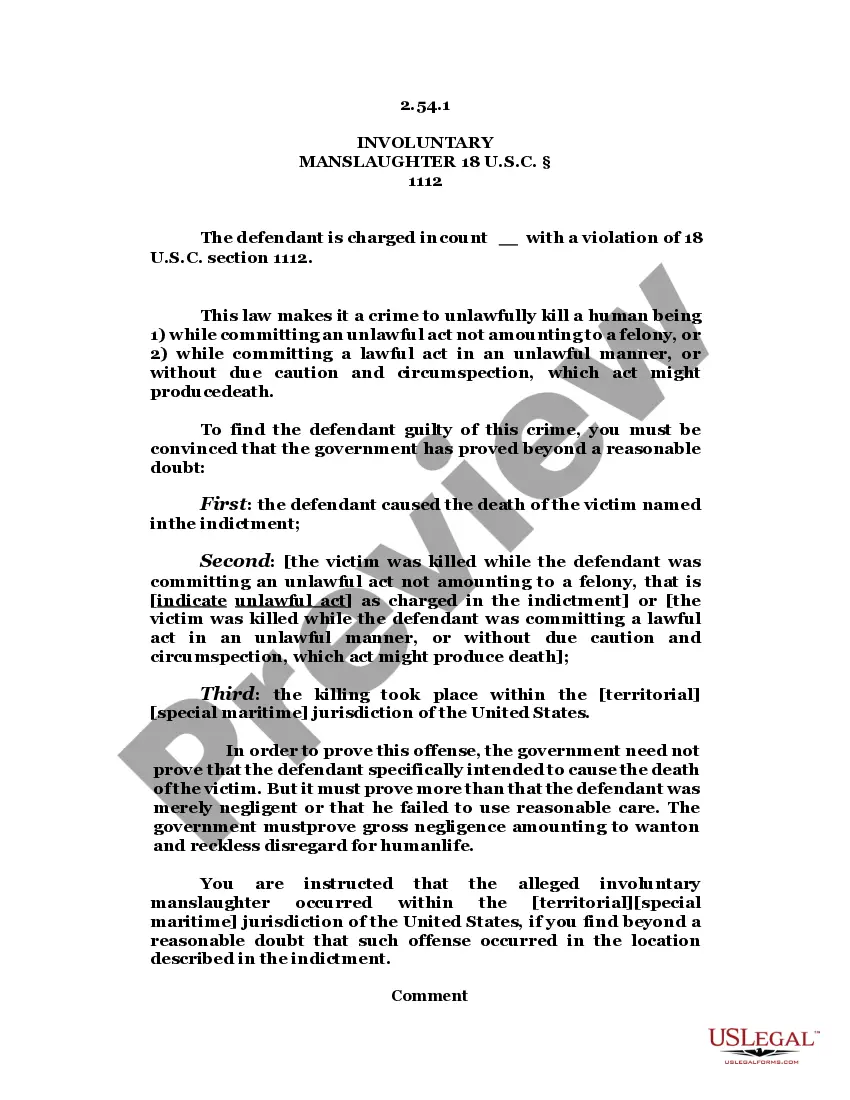
- Definition of involuntary manslaughter under 18 U.S.C. § 1112.
- Criteria that must be proved beyond a reasonable doubt to establish guilt.
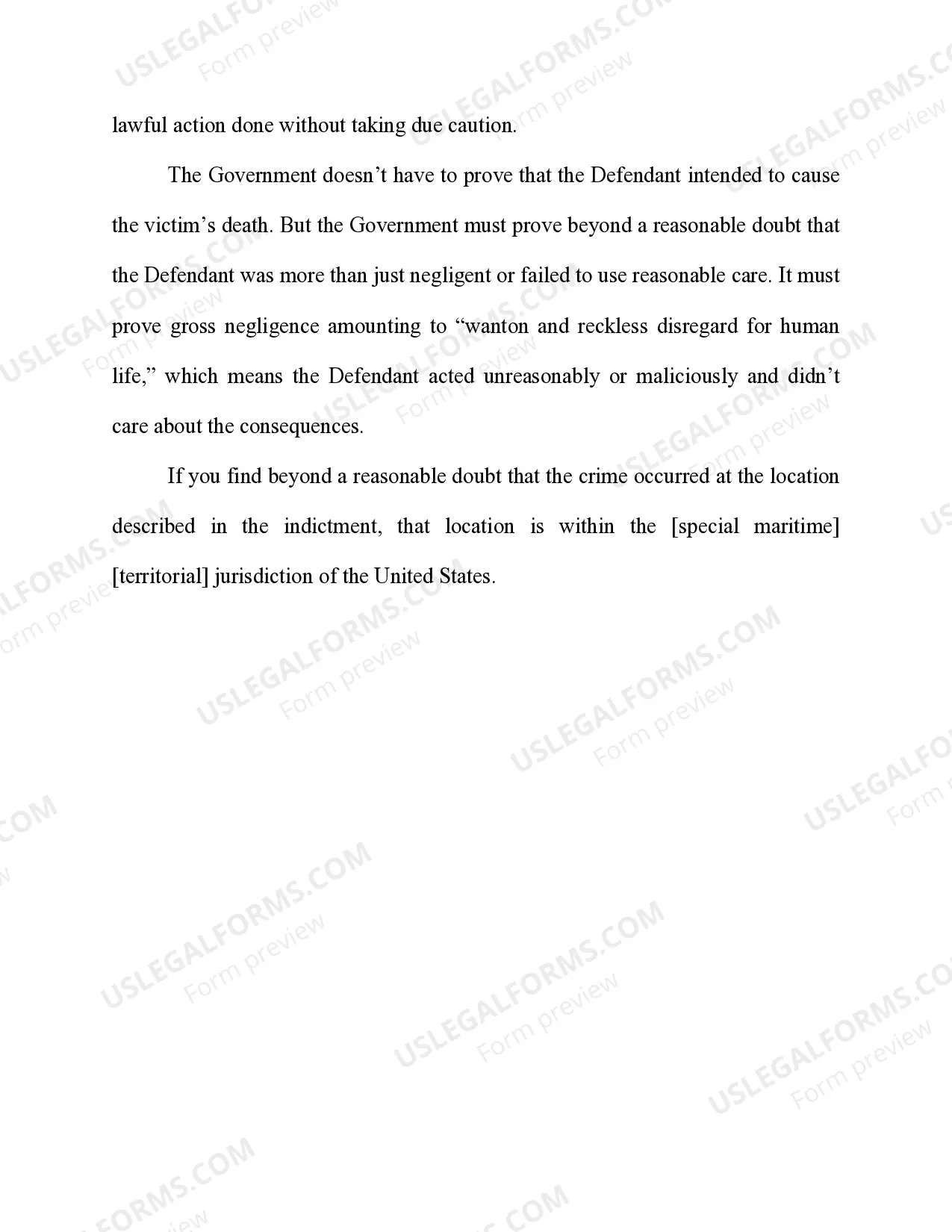
- Explanation of gross negligence and what constitutes "wanton and reckless disregard for human life."
- Details on jurisdictional requirements for the crime to be adjudicated.
When to use this document
This form is used in legal contexts when charges of involuntary manslaughter are brought against a defendant. It serves to outline the legal standards that need to be met for prosecution, particularly in cases where death has resulted from an unlawful act that is not a felony or from an act performed without reasonable care. It is essential for defense attorneys in preparing legal arguments and for prosecutors in establishing the basis for charges.
Who should use this form
- Defense attorneys representing clients accused of involuntary manslaughter.
- Prosecutors seeking to establish the elements necessary for conviction.
- Legal scholars or students studying federal manslaughter laws.
- Individuals involved in cases where involuntary manslaughter is being considered.
How to complete this form
- Identify the parties involved, including the defendant and the victim.
- Specify the details of the unlawful act leading to the victim's death.
- Describe the circumstances that establish wanton and reckless conduct.
- Confirm the location of the crime to establish jurisdiction.
- Gather any necessary evidence that shows gross negligence.
Does this document require notarization?
This form does not typically require notarization unless specified by local law. For federal criminal proceedings, notarization is generally not a requirement. Always check local jurisdiction rules for any specific documentation needs.
Get your form ready online
Our built-in tools help you complete, sign, share, and store your documents in one place.
Make edits, fill in missing information, and update formatting in US Legal Forms—just like you would in MS Word.
Download a copy, print it, send it by email, or mail it via USPS—whatever works best for your next step.
Sign and collect signatures with our SignNow integration. Send to multiple recipients, set reminders, and more. Go Premium to unlock E-Sign.
If this form requires notarization, complete it online through a secure video call—no need to meet a notary in person or wait for an appointment.
We protect your documents and personal data by following strict security and privacy standards.

Make edits, fill in missing information, and update formatting in US Legal Forms—just like you would in MS Word.

Download a copy, print it, send it by email, or mail it via USPS—whatever works best for your next step.

Sign and collect signatures with our SignNow integration. Send to multiple recipients, set reminders, and more. Go Premium to unlock E-Sign.

If this form requires notarization, complete it online through a secure video call—no need to meet a notary in person or wait for an appointment.

We protect your documents and personal data by following strict security and privacy standards.
Typical mistakes to avoid
- Failing to establish all elements required for proving involuntary manslaughter.
- Confusing involuntary manslaughter with voluntary manslaughter.
- Neglecting proper jurisdiction details.
- Underestimating the importance of demonstrating gross negligence.
Why complete this form online
- Convenience of accessing and downloading the form immediately.
- Editability to customize the form according to specific case details.
- Reliability by ensuring that the form is drafted according to legal standards by licensed attorneys.
What to keep in mind
- The Involuntary Manslaughter form is crucial for understanding federal charges of unintentional killing.
- It provides essential guidelines for legal defense in involuntary manslaughter cases.
- Accurate completion ensures that all relevant details are documented for legal proceedings.
Looking for another form?

Form popularity
FAQ
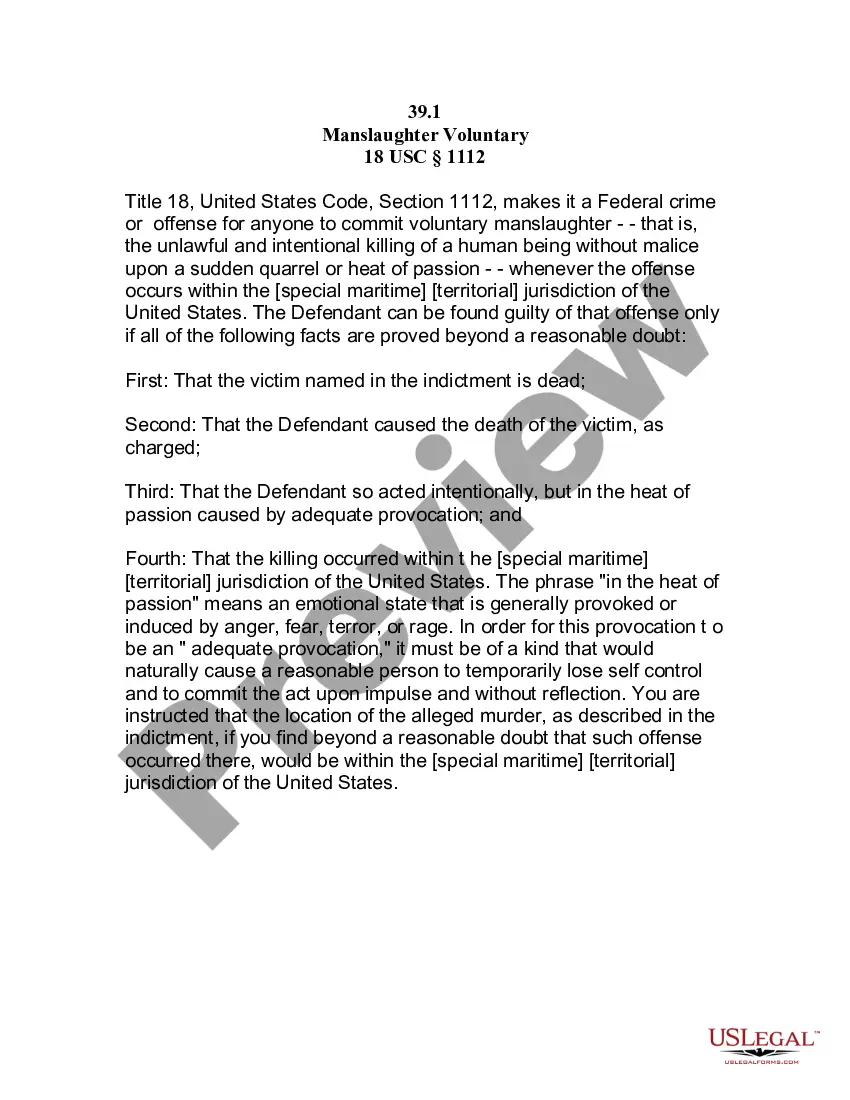
Proving voluntary manslaughter requires the prosecution to show that the defendant was provoked to kill or severely harm the deceased during a quarrel or heat of passion.
Voluntary manslaughter requires an intentional act that is a felony or that is likely to cause death or great bodily harm. Involuntary manslaughter, in contrast, may be based on an intentional act that is not naturally dangerous to human life or upon an act of culpable negligence.
Legally, first-degree murder/felony murder refers to the premeditated killing of a human being. Second-degree murder refers to unplanned intentional killings, whereas third-degree murder/Manslaughter is unintentional/unplanned killing of a human.
Involuntary manslaughter eliminates the need for a prosecutor to prove intent. The prosecutor does not need to prove that a defendant had an intent to kill nor does the prosecutor have to prove that the defendant intended to perform the action that resulted in the death of another.
The elements of involuntary manslaughter are: (1) an unlawful act or a lawful act committed in an unlawful manner; (2) ?criminal negligence?; and (3) death.
To prove manslaughter, the defendant must be able to show the jury that their actions were warranted due to the provoking circumstances and that, if any other reasonable person were in a similar circumstance, they likewise would have retaliated with the same force or similar action.
Involuntary manslaughter occurs when the agent has no intention (mens rea) of committing murder but caused the death of another through recklessness or criminal negligence.
Involuntary: The court will consider manslaughter involuntary when the defendant had no intent to kill, but accidentally or inadvertently killed someone as a result of negligent, careless, or dangerous behavior. Accidentally firing a gun and killing someone is an example of involuntary manslaughter.