District of Columbia New Resident Guide
Understanding this form
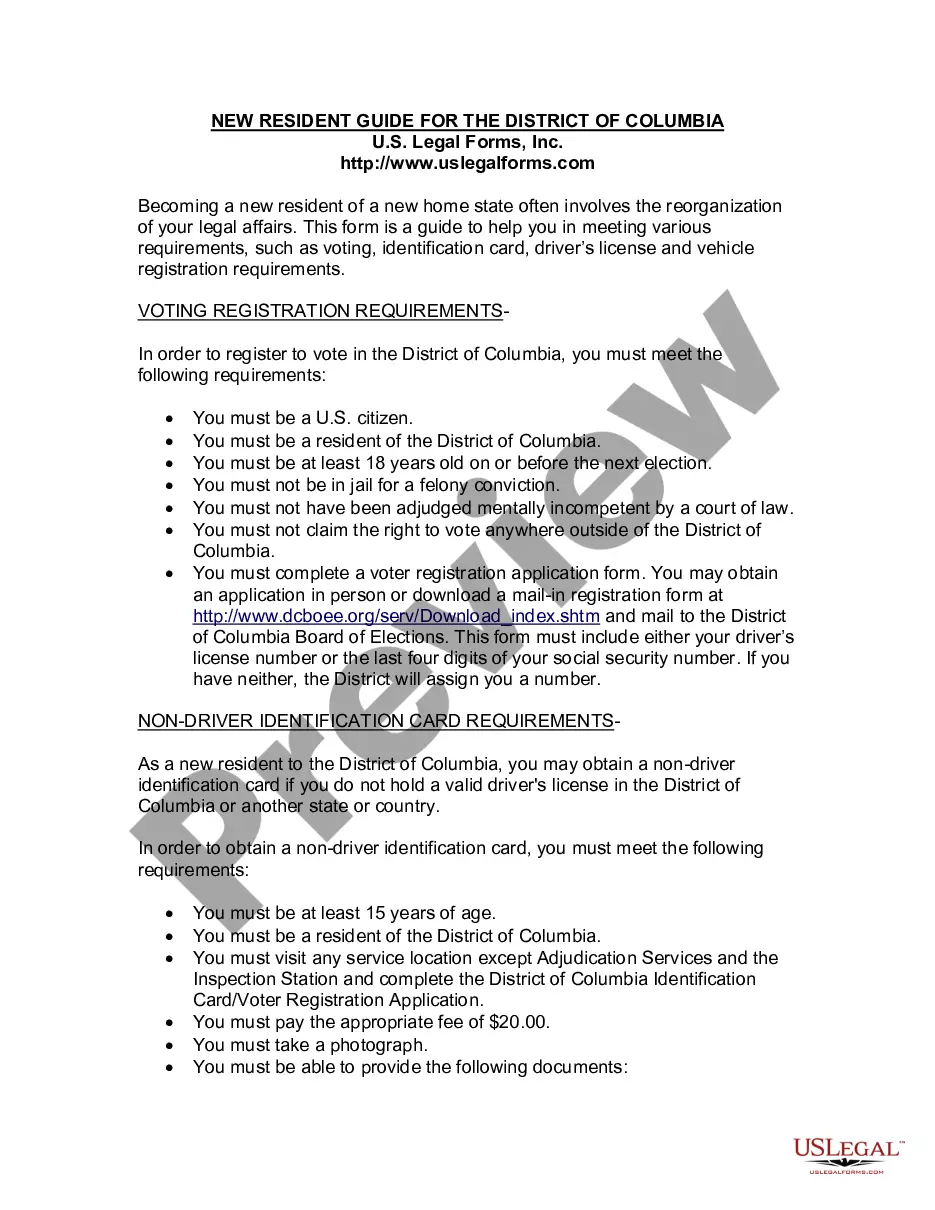
The New Resident Guide is an essential document designed to assist new residents in understanding the various state-specific requirements for establishing residency. This guide covers key areas such as voter registration, identification cards, driverâs licenses, and vehicle registration in your new state. Unlike other forms that may focus on a single aspect of residency, this guide provides a comprehensive overview to help you navigate your new legal obligations effectively.
Key parts of this document
- Voting registration requirements, including eligibility criteria and application processes.
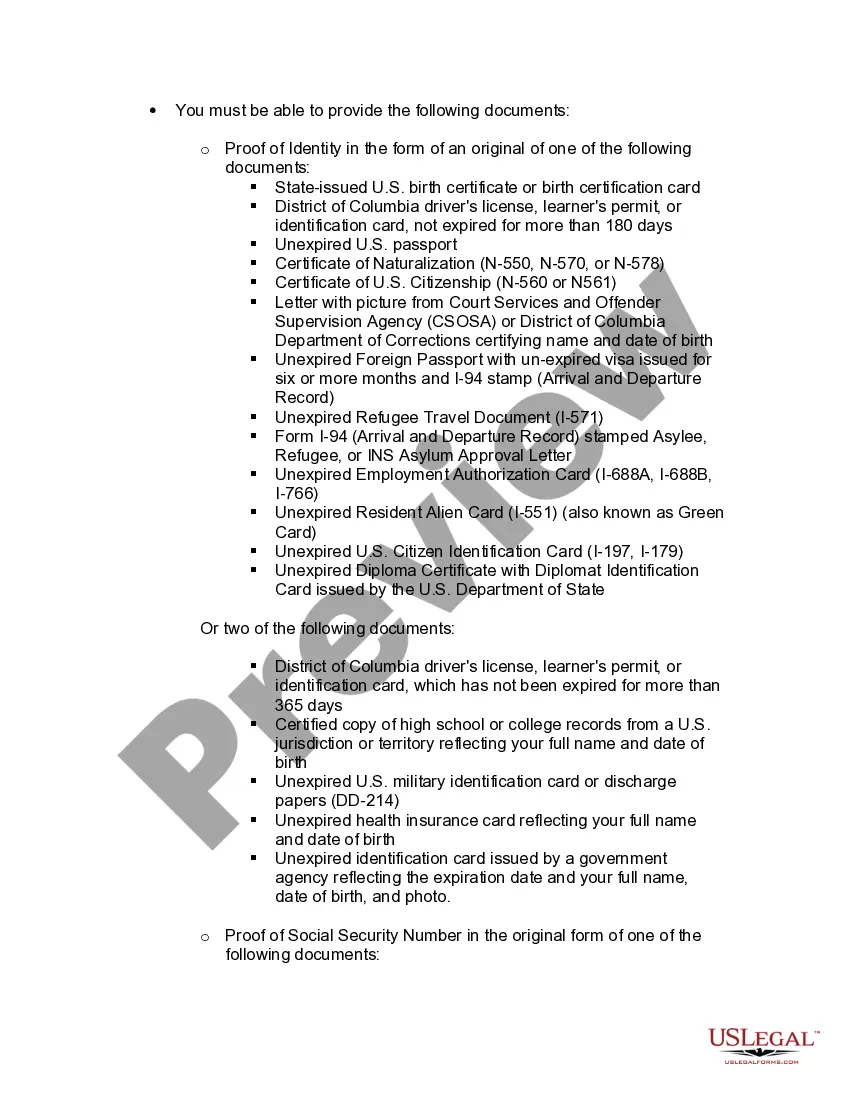
- Non-driver identification card requirements and applicable documentation needed.
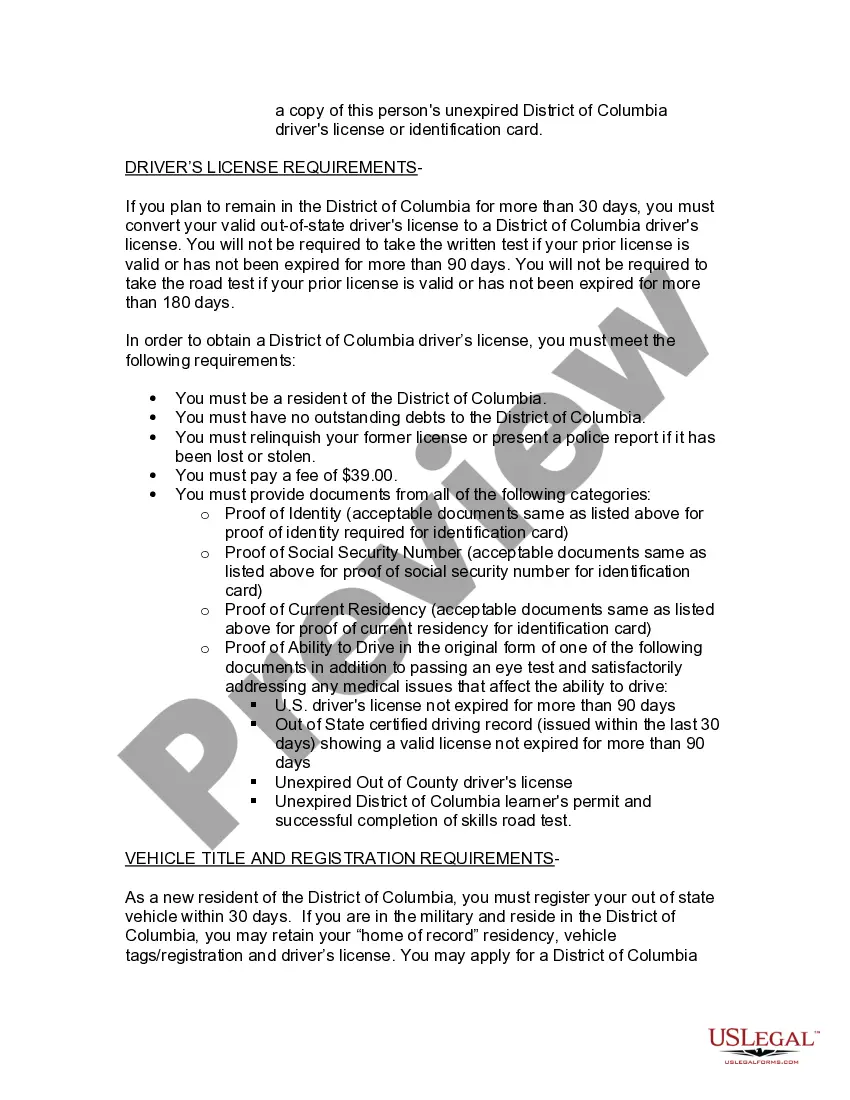
- Driverâs license requirements for new residents, including conversion of out-of-state licenses.
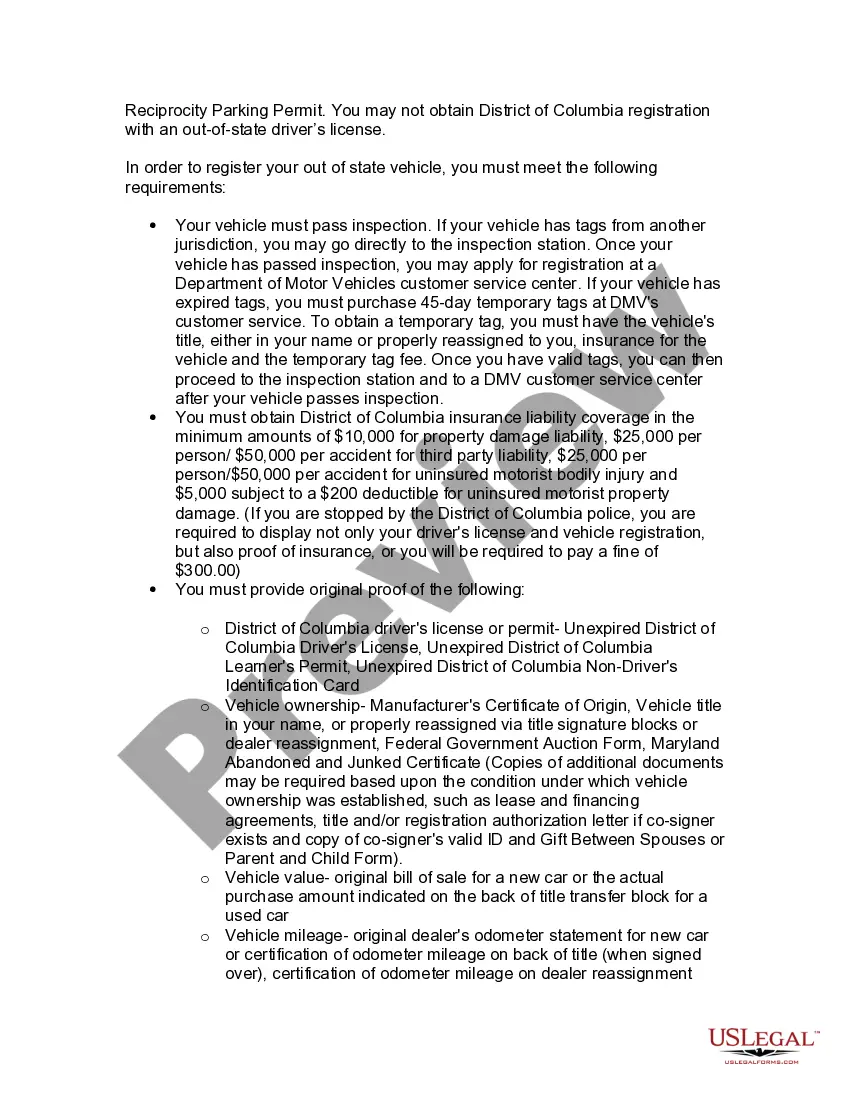
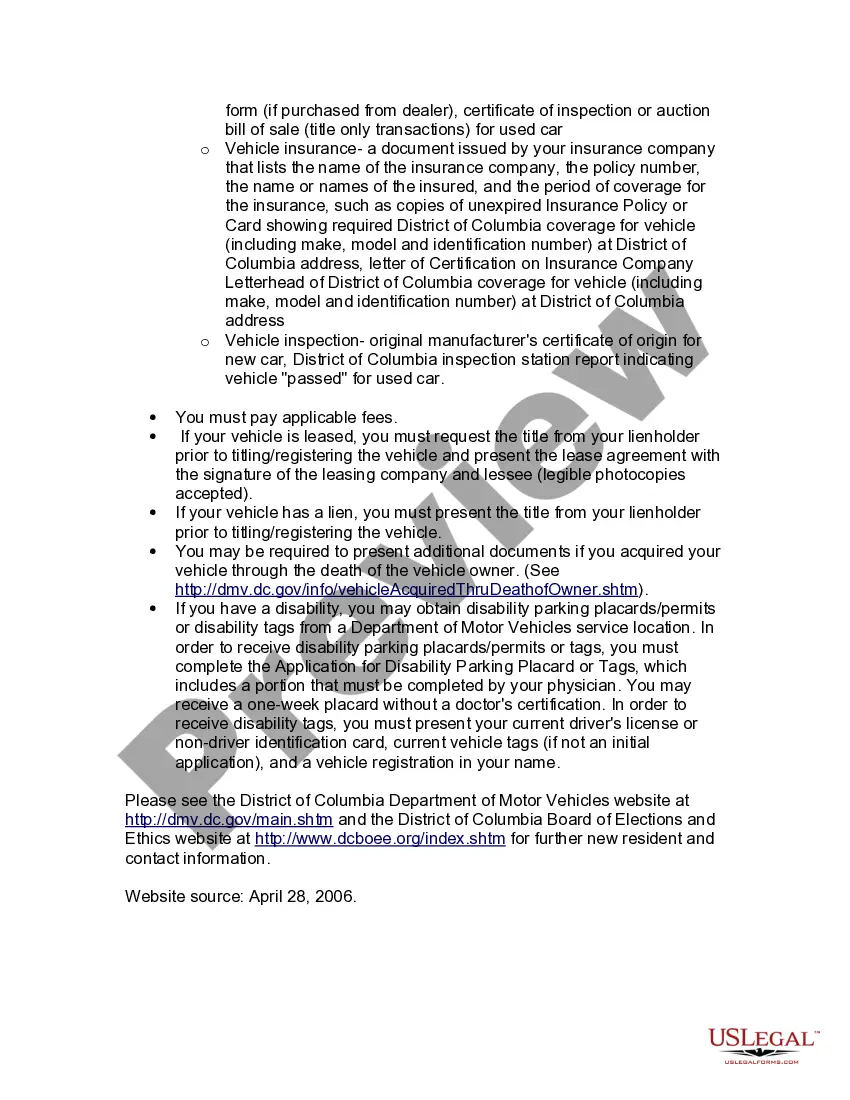
- Vehicle title and registration requirements for your out-of-state vehicle.
- Information on obtaining disability parking permits if applicable.
When this form is needed
This form is particularly useful when you have recently moved to a new state and need to familiarize yourself with local regulations. Use this guide when you need to register to vote, obtain a driverâs license, apply for an identification card, or register your vehicle in your new jurisdiction.
Who should use this form
- Individuals who have recently become residents of a new state.
- Those who need assistance with voter registration and identification documentation.
- New residents who must convert their out-of-state driverâs license.
- Vehicle owners relocating to ensure compliance with vehicle registration laws.
Steps to complete this form
- Review the residency requirements specific to your new state.
- Gather necessary documents for voter registration, ID card, or driverâs license applications.
- Complete the required applications for voter registration and identification cards.
- Submit your vehicle title and registration application within the specified timeframe.
- If applicable, ensure you complete the form for disability parking placards with the necessary medical certification.
Notarization guidance
This form does not typically require notarization unless specified by local law. However, it is important to check the specific requirements in your new state to ensure compliance with any legal standards regarding residency documentation.
Get your form ready online
Our built-in tools help you complete, sign, share, and store your documents in one place.
Make edits, fill in missing information, and update formatting in US Legal Forms—just like you would in MS Word.
Download a copy, print it, send it by email, or mail it via USPS—whatever works best for your next step.
Sign and collect signatures with our SignNow integration. Send to multiple recipients, set reminders, and more. Go Premium to unlock E-Sign.
If this form requires notarization, complete it online through a secure video call—no need to meet a notary in person or wait for an appointment.
We protect your documents and personal data by following strict security and privacy standards.
Make edits, fill in missing information, and update formatting in US Legal Forms—just like you would in MS Word.
Download a copy, print it, send it by email, or mail it via USPS—whatever works best for your next step.
Sign and collect signatures with our SignNow integration. Send to multiple recipients, set reminders, and more. Go Premium to unlock E-Sign.
If this form requires notarization, complete it online through a secure video call—no need to meet a notary in person or wait for an appointment.
We protect your documents and personal data by following strict security and privacy standards.
Common mistakes
- Failing to register to vote before the deadline.
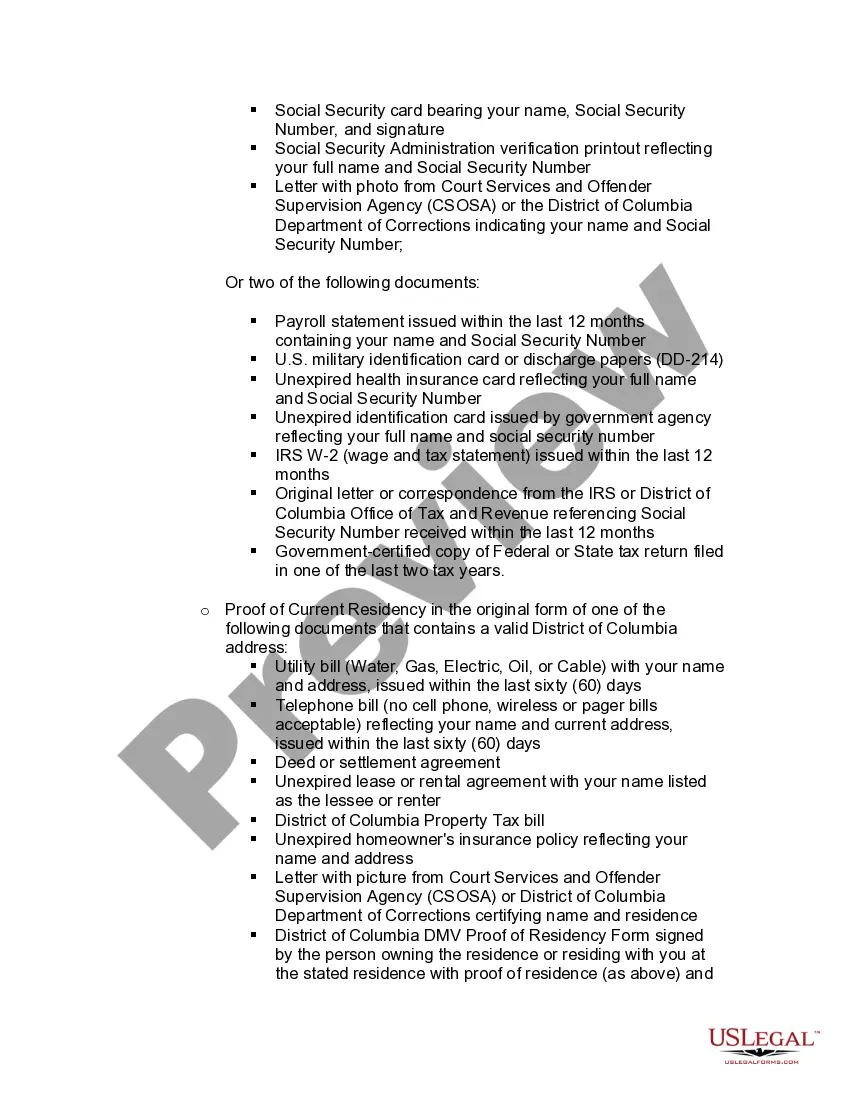
- Not providing sufficient proof of identity or residency when applying for an ID card or driverâs license.
- Missing documentation when submitting vehicle registration applications.
- Overlooking the requirement to convert an out-of-state driverâs license after relocating.
Why use this form online
- Easy access to all necessary information in one comprehensive guide.
- Editable digital format allows for quick updates to personal information.
- Reliable guidance ensures compliance with state-specific legal requirements.
- Convenient download options for future reference.
Key takeaways
- The New Resident Guide simplifies the process of becoming a resident in a new state.
- It outlines essential steps for voter registration, obtaining identification, and vehicle registration.
- Always gather required documents before beginning the application processes.
- Check for state-specific regulations to ensure compliance with local laws.
Looking for another form?
Form popularity
FAQ
To be considered a DC resident, you must establish a permanent home within the city and demonstrate your intent to remain. This can be shown through various documents, including your lease agreement or utility bills. Furthermore, your participation in local activities, such as voting or employment, can reinforce your residency status. The District of Columbia New Resident Guide gives you a thorough understanding of what qualifies you as a resident.
Once you move to the District of Columbia, you typically have 60 days to change your driver's license. It is important to update your license within this timeframe to avoid any fines or legal issues. Be sure to prepare all the required documents before your visit to the DMV. The District of Columbia New Resident Guide provides clear details on the licensing process.
Obtaining residency in the District of Columbia requires that you establish a permanent home within the city. This includes updating your address on relevant documents, such as voter registration and utility accounts. Additionally, maintaining consistent ties to the community will support your status as a DC resident. The District of Columbia New Resident Guide offers valuable insights into the steps required to achieve residency.
After moving to the District of Columbia, you are encouraged to obtain your DC driver's license as soon as possible, generally within 60 days. If you wait longer, you may face additional penalties. To avoid complications, it’s advisable to visit the DMV promptly and start the application process. For more information, the District of Columbia New Resident Guide outlines everything you need to know about licensing.
In the District of Columbia, there is no specific duration required to be considered a resident, but establishing residency generally involves intent to remain in the area. Factors include your living situation, such as owning or renting a home, and your community ties. It’s important to keep in mind that establishing residency does affect various legal requirements, including voting and tuition rates. For personalized steps, the District of Columbia New Resident Guide is a helpful resource.
To obtain a driver's license in the District of Columbia, you must provide proof of identity, residency, and legal presence in the U.S. This typically includes documents such as a birth certificate or passport, a Social Security card, and proof of residency. Familiarizing yourself with these requirements ahead of time ensures a smoother experience. For complete requirements, consult the District of Columbia New Resident Guide.
After moving to the District of Columbia, you must apply for a new license at the DC Department of Motor Vehicles (DMV). Make sure to gather all necessary documents, including proof of residency and identity. Once you have your paperwork ready, you can schedule an appointment with the DMV to streamline the process. The District of Columbia New Resident Guide offers more in-depth steps for your convenience.
To prove residency in the District of Columbia, you will need to provide documents that display your name and address. Acceptable documents may include a utility bill, lease agreement, or bank statement. It is vital to ensure that these documents are current and reflect your DC address. For detailed guidance, refer to the District of Columbia New Resident Guide.
Yes, changing your license is necessary when you move to DC. Your current out-of-state license becomes invalid after a short time. To avoid issues and maintain compliance, you should start the conversion process promptly. The District of Columbia New Resident Guide provides essential information to guide you through this transition effectively.
Yes, you must change your license when you move to DC. Once you establish residency, you are legally required to obtain a DC driver's license within 60 days. This process ensures that you are compliant with local regulations and can access necessary services. The District of Columbia New Resident Guide offers clear steps to facilitate this transition.