California Warning of Default on Commercial Lease
Understanding this form
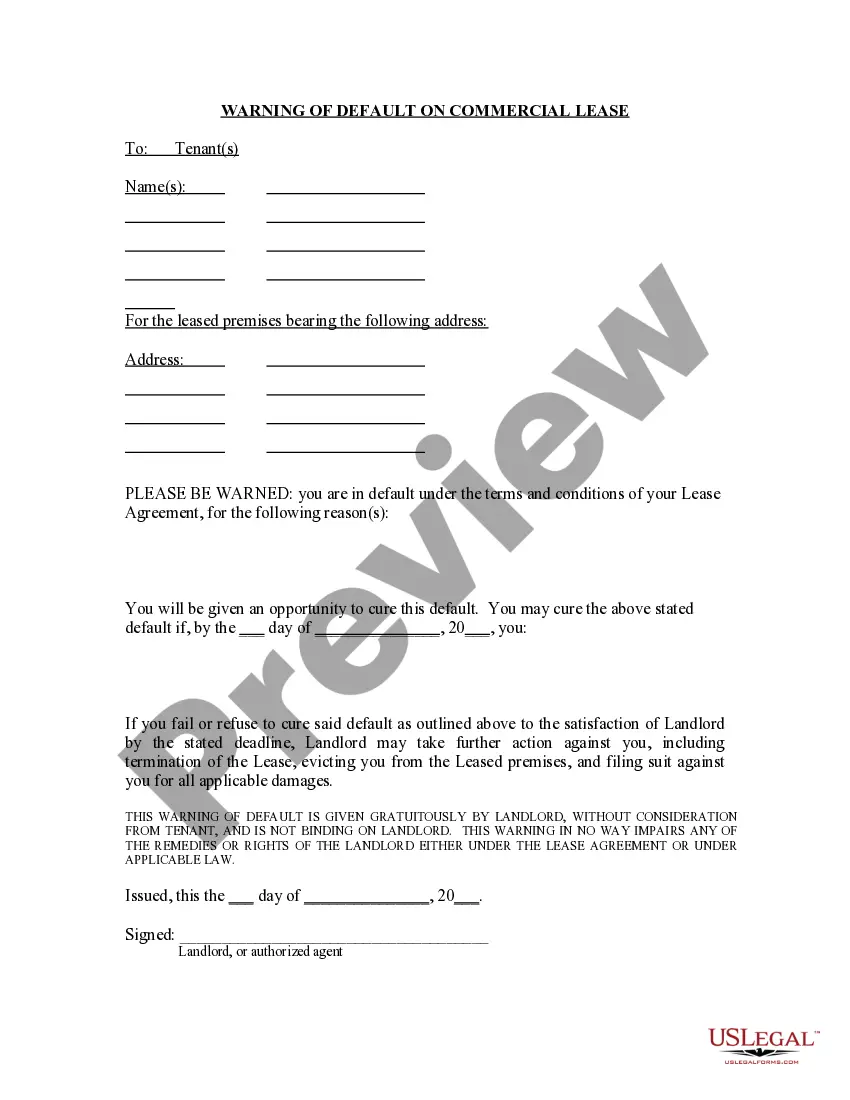
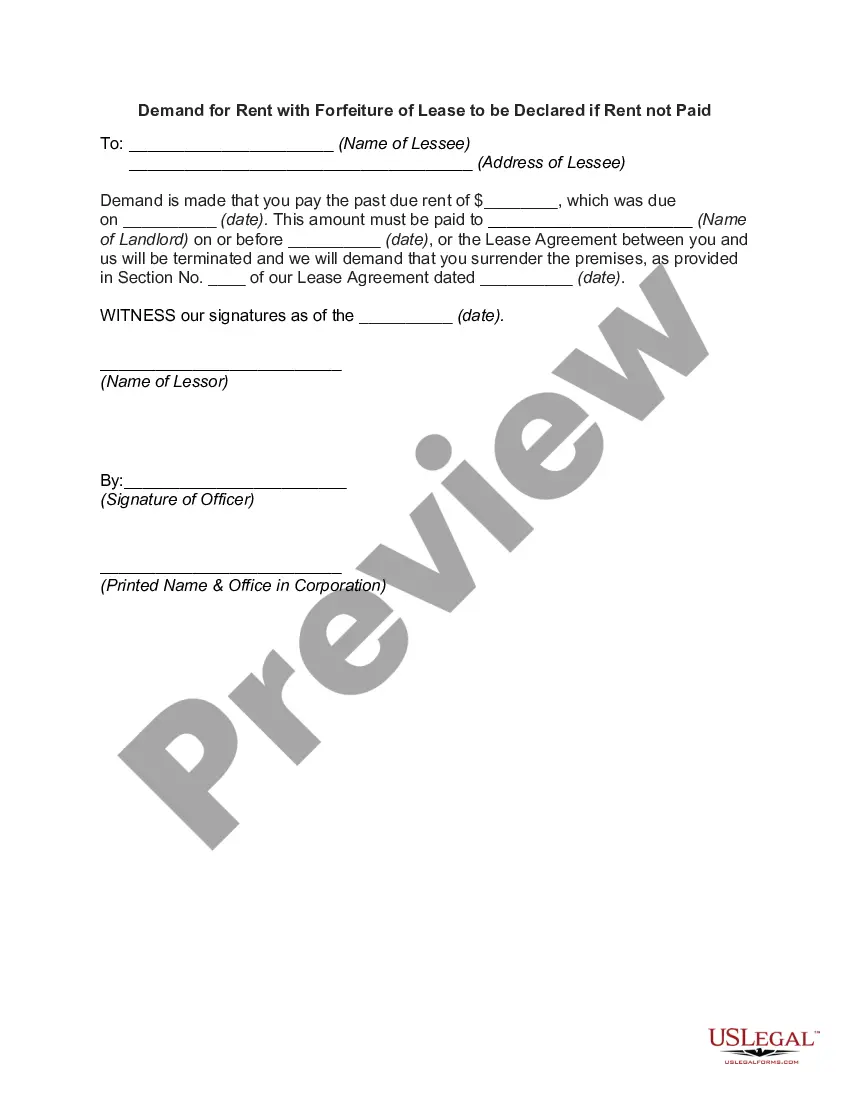
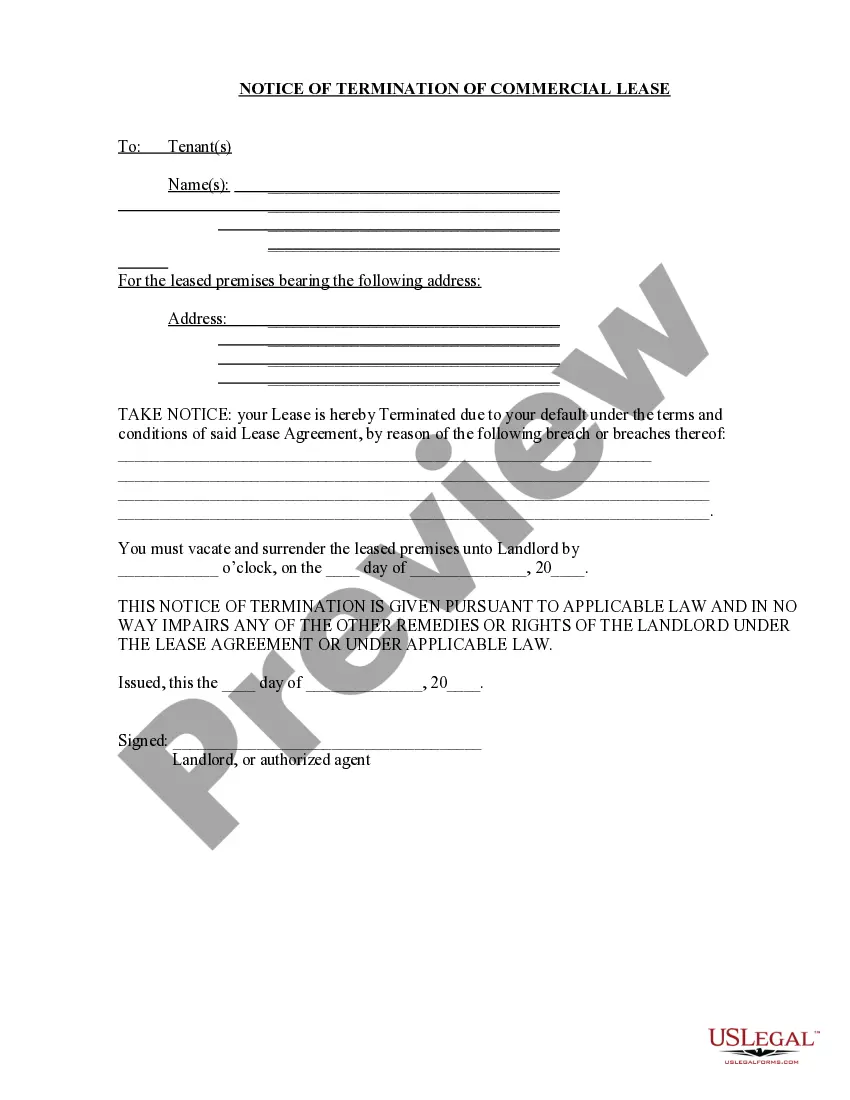
The Warning of Default on Commercial Lease is a notice from a landlord to a tenant, indicating that the tenant may be in default of their lease agreement if certain conditions are not remedied. This form is crucial for landlords to formally communicate concerns about payment or other lease obligations, allowing tenants an opportunity to correct the issues before further actions, such as eviction, are considered. Unlike eviction notices or late payment reminders, this warning is an initial step that emphasizes the landlord's intent to uphold the lease terms while providing the tenant with an opportunity to comply.
What’s included in this form
- Date of the warning issued
- Landlord's signature or written authorization
- Specific conditions that constitute a default
- Clear wording that this warning is gratuitous and non-binding
Situations where this form applies
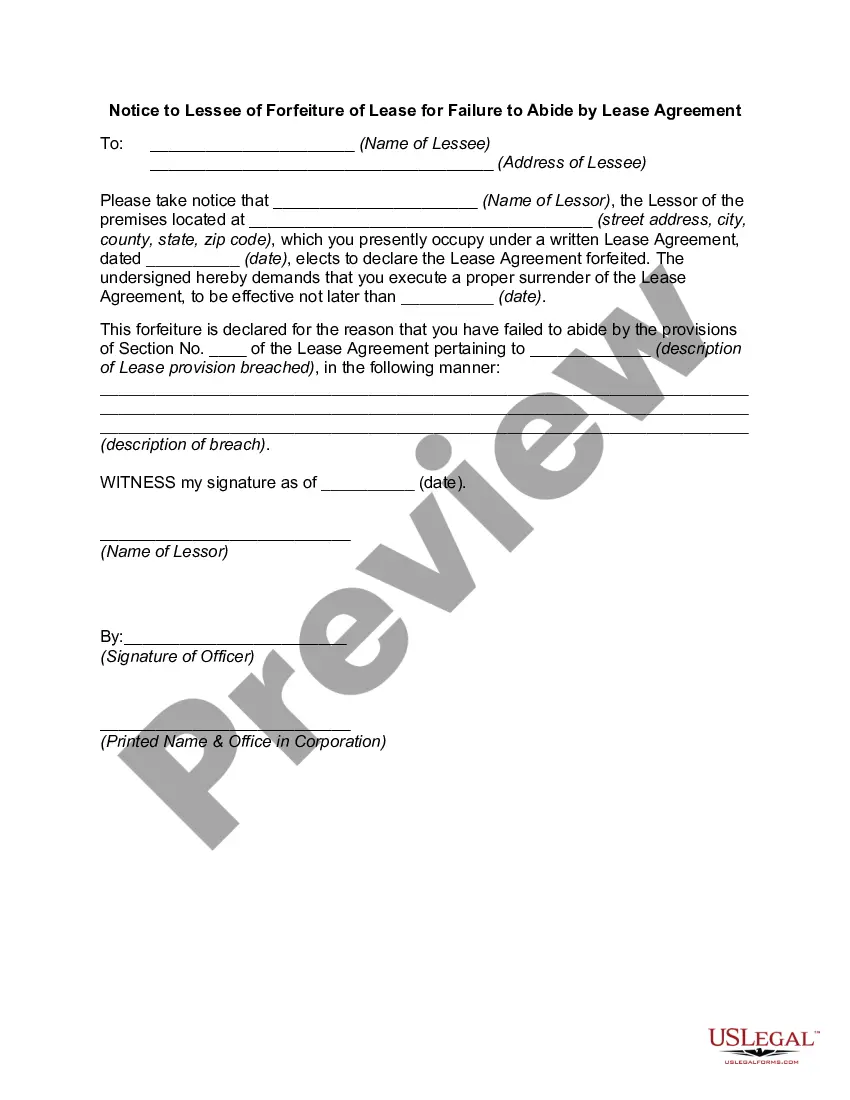
This form is used when a landlord believes that a tenant has failed to meet their obligations under a commercial lease, typically concerning timely payment of rent. It serves as a formal notification prior to taking further legal action. Situations may include late rental payments, failure to maintain the leased property, or any other condition outlined in the lease that could lead to a default. Using this form helps ensure that landlords comply with legal requirements related to tenant notifications before proceeding with eviction or exercising rights to the security deposit.
Who can use this document
- Landlords of commercial properties
- Property management companies
- Real estate professionals managing rental agreements
- Tenants wishing to understand default notifications they may receive
Steps to complete this form
- Enter the date when the warning is issued.
- Specify the day of the month and the month of the warning.
- Clearly outline the conditions that the tenant must remedy to avoid default.
- Sign the document as the landlord or authorized agent.
Is notarization required?
This form does not typically require notarization unless specified by local law. However, it is recommended to check jurisdiction-specific requirements to ensure proper execution.
Get your form ready online
Our built-in tools help you complete, sign, share, and store your documents in one place.
Make edits, fill in missing information, and update formatting in US Legal Forms—just like you would in MS Word.
Download a copy, print it, send it by email, or mail it via USPS—whatever works best for your next step.
Sign and collect signatures with our SignNow integration. Send to multiple recipients, set reminders, and more. Go Premium to unlock E-Sign.
If this form requires notarization, complete it online through a secure video call—no need to meet a notary in person or wait for an appointment.
We protect your documents and personal data by following strict security and privacy standards.

Make edits, fill in missing information, and update formatting in US Legal Forms—just like you would in MS Word.

Download a copy, print it, send it by email, or mail it via USPS—whatever works best for your next step.

Sign and collect signatures with our SignNow integration. Send to multiple recipients, set reminders, and more. Go Premium to unlock E-Sign.

If this form requires notarization, complete it online through a secure video call—no need to meet a notary in person or wait for an appointment.

We protect your documents and personal data by following strict security and privacy standards.
Common mistakes
- Failing to specify what constitutes a default.
- Not providing a clear deadline for the tenant to remedy the default.
- Omitting the landlord's signature or failing to identify the authorized agent.
Benefits of completing this form online
- Convenience of immediate access and downloadable format.
- Easy customization to meet specific lease terms and conditions.
- Reliability in ensuring that the form is drafted with legal precision.
Legal use & context
- Establishes a formal record of the landlord's notice to the tenant regarding lease defaults.
- Protects the landlord's rights by documenting the tenantâs default status before any eviction proceedings.
- Allows for a straightforward resolution process to address defaults before escalation.
Looking for another form?
Form popularity
FAQ
In California, you cannot simply lock out a commercial tenant without following proper legal procedures. If a tenant has defaulted on their lease, the landlord must provide a California Warning of Default on Commercial Lease, which formally notifies the tenant of the breach. Following this notice, landlords must wait a specified period before taking further action, which may include eviction. It is essential to understand the legal framework to avoid any repercussions, and resources like US Legal Forms can guide landlords through this process effectively.
You may default on a lease by failing to make timely rent payments, neglecting to maintain the premises, or breaching any lease terms. Each lease agreement will specify these obligations, so it is important to review them closely. Defaulting can lead to legal consequences, including eviction, which is why it's wise to consider tools like the California Warning of Default on Commercial Lease to address any issues proactively. Making informed decisions can mitigate potential risks and protect your interests.
The landlord default clause specifies the obligations of the landlord within the commercial lease agreement. It outlines what constitutes a landlord's failure to meet their responsibilities, such as maintaining property standards. If a landlord defaults, you may have legal grounds to terminate the lease or seek damages. Understanding this clause is essential to ensure your rights are protected, particularly with a California Warning of Default on Commercial Lease.
When you default on a commercial lease, the landlord may take immediate action to protect their rights. This might include sending a California Warning of Default on Commercial Lease, which serves as an official notice of your failure to meet lease terms. If the issue is not addressed, the landlord can pursue eviction or seek financial damages. It is crucial to communicate with your landlord to resolve the situation quickly.
In California, a commercial landlord must provide a notice of at least three days for a default in rent payment. This is part of the legal process outlined when dealing with a California Warning of Default on Commercial Lease. It's essential for landlords to follow these guidelines to protect their rights and ensure compliance with state laws. Understanding these notice requirements helps both landlords and tenants navigate lease agreements more effectively.
The Commercial Tenant Protection Act in California provides safeguards for commercial tenants against unjust eviction and unreasonable lease terms. This act aims to create a fair balance between landlords and tenants, especially in situations where the California Warning of Default on Commercial Lease is issued. It is essential for tenants to familiarize themselves with these protections to navigate potential disputes effectively. For tailored legal documents related to these protections, US Legal Forms can be a valuable resource.
Events of default in a commercial lease typically include non-payment of rent, violation of lease terms, or failure to maintain the property. Each lease may outline specific conditions that trigger a California Warning of Default on Commercial Lease. Understanding these events is vital for tenants to protect their interests. If you find yourself facing such situations, consider leveraging resources from US Legal Forms for guidance.
A commercial tenant default letter is a formal notice sent by the landlord to inform you of a lease violation. This letter often serves as a California Warning of Default on Commercial Lease and outlines the specific issues that need addressing. It’s crucial to take this letter seriously and respond appropriately to avoid further legal action. Consulting with professionals or platforms like US Legal Forms may help you understand your responsibilities.
If you default on a commercial lease, the landlord may begin legal proceedings against you. Typically, they will issue a California Warning of Default on Commercial Lease, notifying you of the breach. You may need to act quickly to remedy the situation, as failure to do so could lead to eviction and financial consequences. It's important to understand your rights and options during this process.